Studying in Bavaria, Germany
Ansbach
A small Franconian residence town with one university of applied sciences, a Baroque palace and Nuremberg on the S-Bahn.
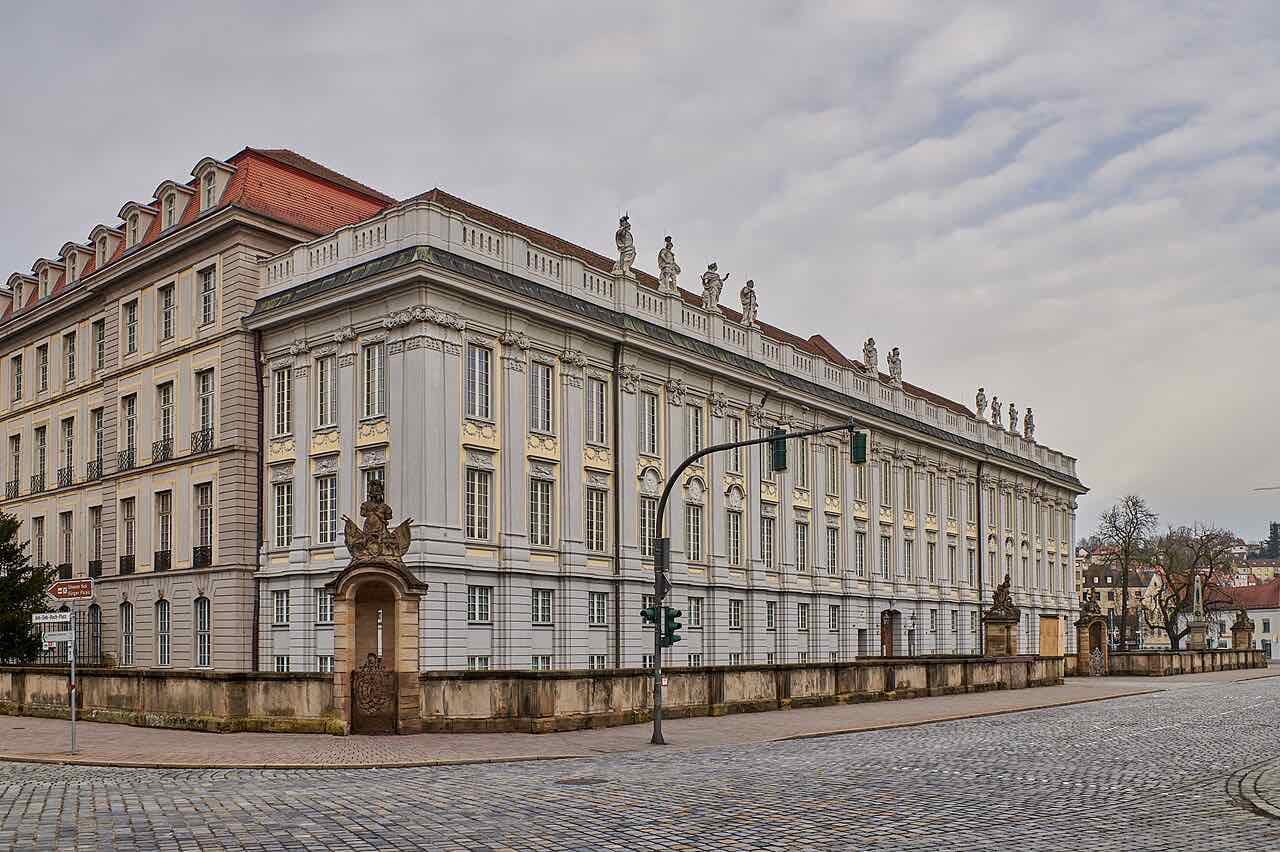
Ansbach is a town of about 40,500 people in Middle Franconia, the seat of the regional government and, for four centuries, the home of the Hohenzollern margraves. The palace, the Baroque garden and the two big old churches are all within a few minutes' walk of each other, and the university campus sits in a former cavalry barracks on the edge of that centre. Hochschule Ansbach is the only university here, with roughly 3,600 students, so you will know people across courses quickly. It teaches several master's programmes and two bachelor's programmes in English, rents dorm rooms on campus for around 270 to 320 euros, and the Nuremberg metropolitan region, with its S-Bahn line, its airport and its much larger international communities, is on your doorstep. It is quiet, and you should decide with that in mind: if you want a big-city nightlife, Ansbach is not it.
- Population
- 40,554 (31 Dec 2025), on 99.91 km2
- Students
- about 3,600 at Hochschule Ansbach (2022), 19 bachelor's and 17 master's programmes at the time
- Tuition for non-EU students
- 1,000 EUR per term on the English-taught programmes listed on the university's pages
- Dorm rooms (Studierendenwerk, Schöneckerstraße)
- total rent 267 to 321 EUR a month from 1 Jan 2026, electricity extra
- Average living costs incl. housing
- 992 EUR a month (university fact sheet 2025/26)
- Trains and airport
- S-Bahn line S4 to Nuremberg Hbf, InterCity trains about every two hours; the nearest international airport is Nuremberg
- Bachwoche Ansbach 2027
- 30 July to 8 August
Part 1
Living in Ansbach
A margraves' town that got a university in 1996
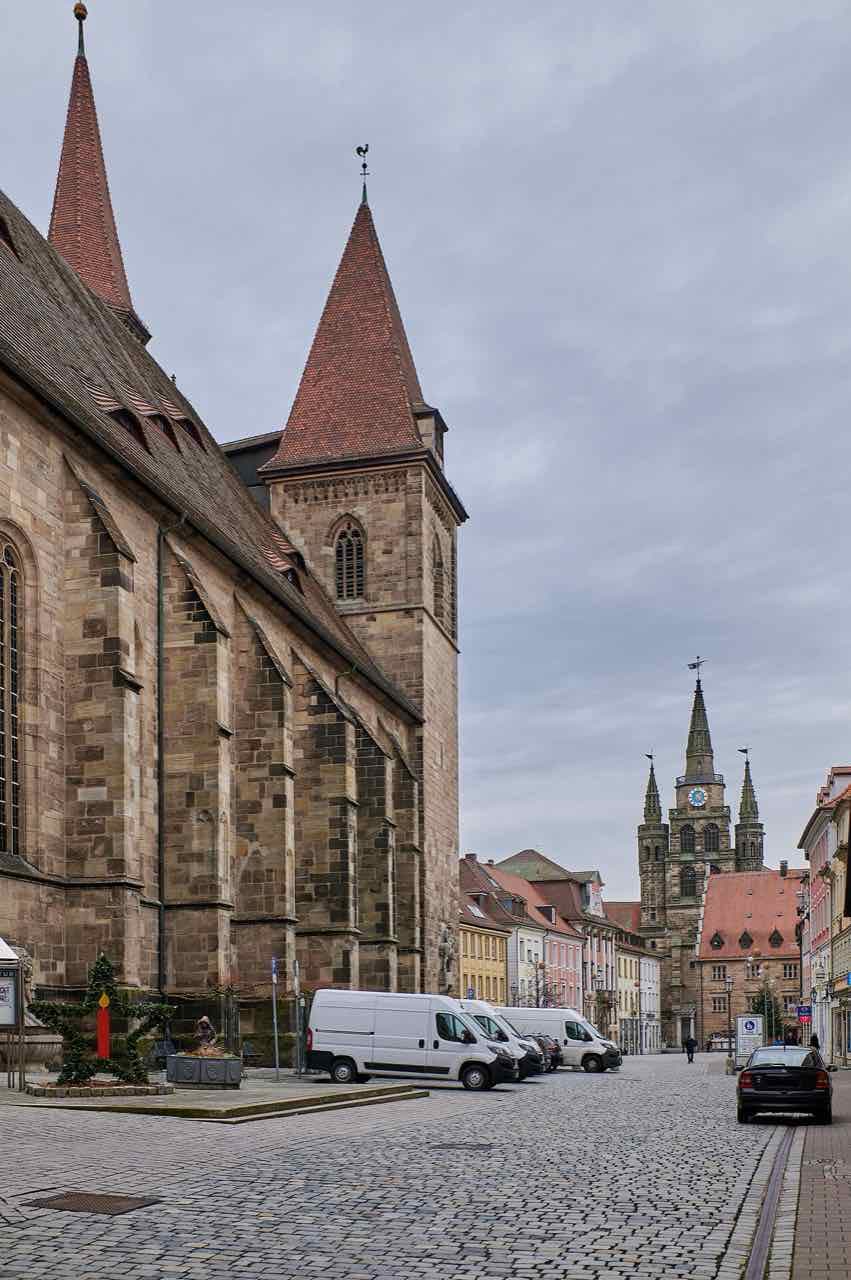
Ansbach grew around a Benedictine monastery founded in 748 by a Frankish nobleman called Gumbert. The Hohenzollern margraves made it their residence from 1385 until the last of them handed the principality to Prussia in 1791. Bavaria took the town over in 1806, and in 1838 it became the seat of the administration of Middle Franconia, which it still is. That history is why such a small town has a Rococo palace with a faience collection, a margraves' garden with an Orangerie, two big old churches and a theatre of its own.
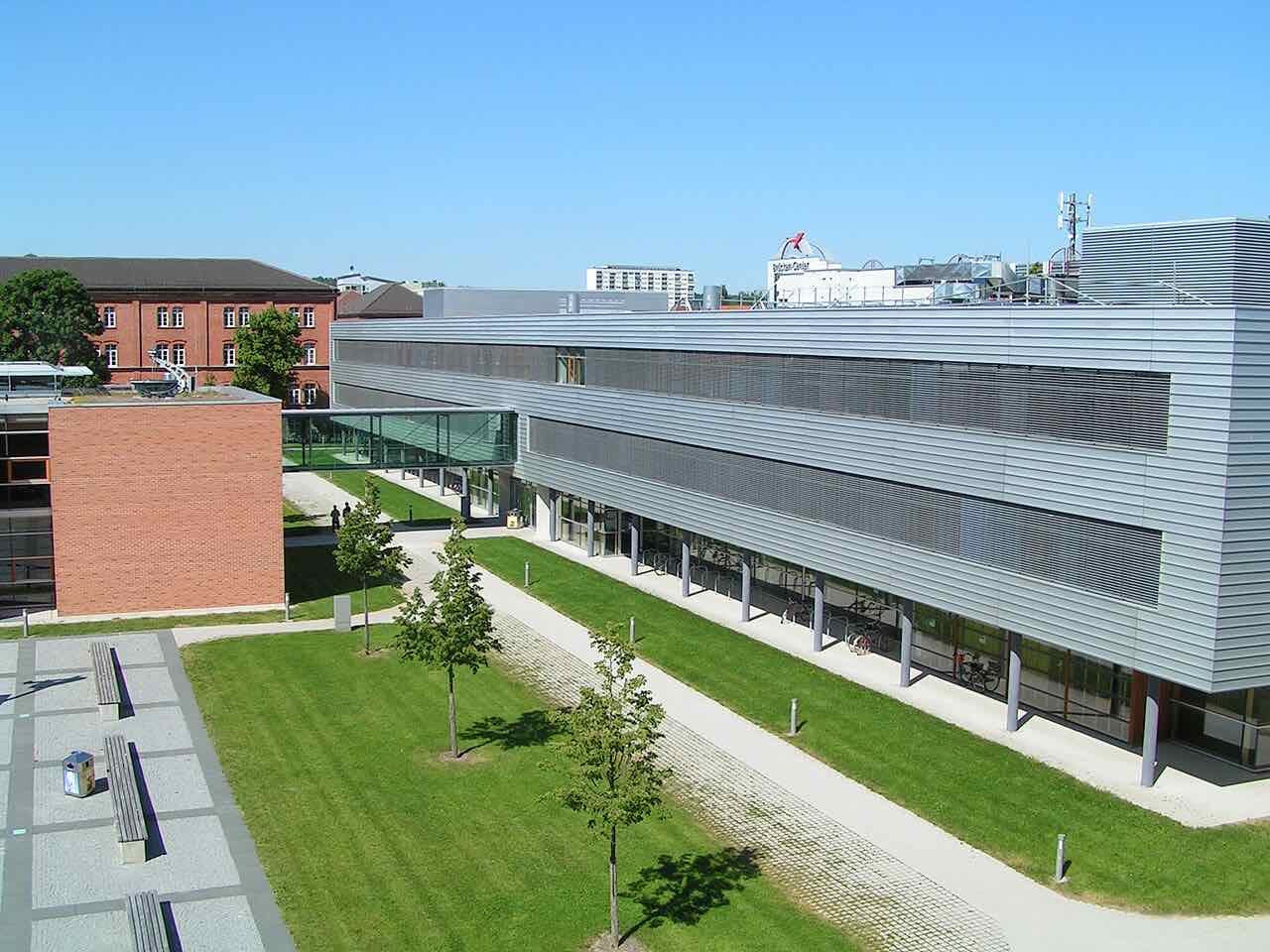
The university is much younger. Hochschule Ansbach started in 1996 with 85 students in business administration, in a barracks that had housed cavalry regiments and later the US Army. The campus buildings still carry their old barracks numbers, so you will hear people say they have a lecture in the 92er or the 50er building. A big red steel sculpture on the central campus, put up in 2003, looks like the letters FH from one angle: the university was called Fachhochschule Ansbach until 2009.
Think of Ansbach as a base, not a destination in itself. Most things you need are within walking or cycling distance, rents are lower than in Nuremberg or Munich, and the bigger city is a short train ride away when you want it.
What to see and do
Almost everything below is in or beside the old town and can be reached on foot from the central station and the campus.
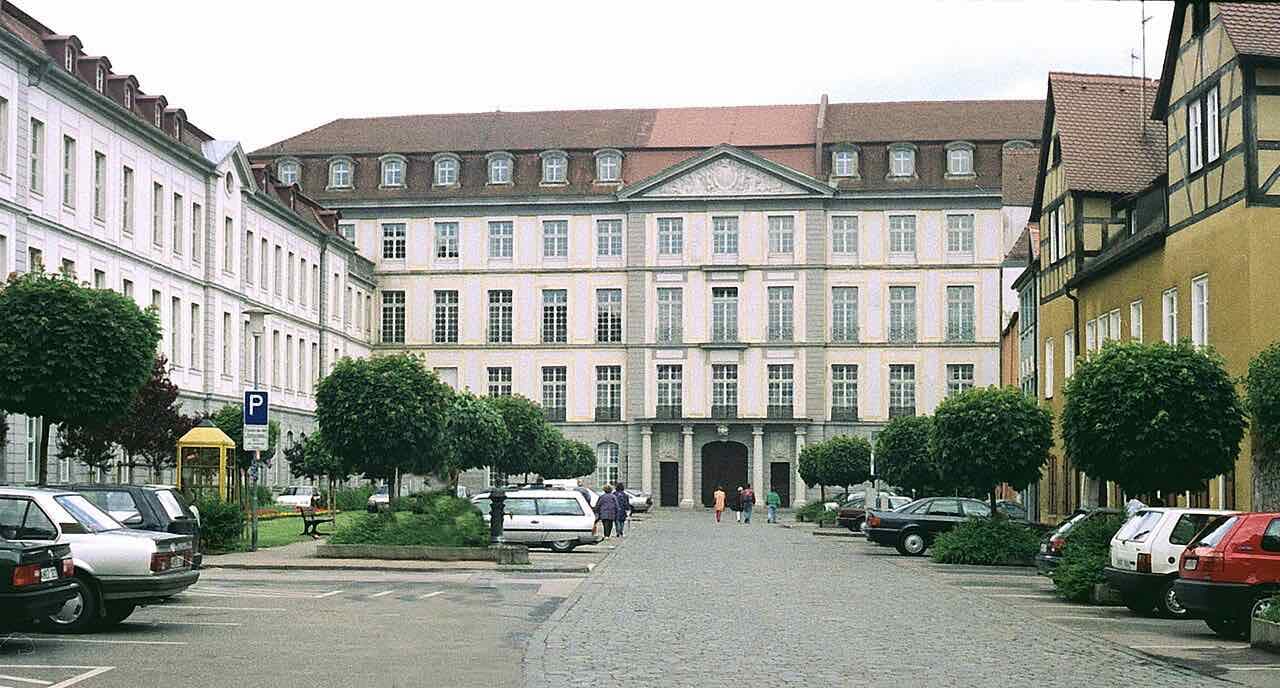
The margraves' palace has the Festsaal with a ceiling fresco by Carlo Carlone, a Mirror Cabinet with Meissen porcelain, and in the Gothic Hall the largest collection of Ansbach faience and porcelain. It opens 9 to 18 in April to September and 10 to 16 in October to March, closed Mondays, entry by guided tour only, 6 EUR or 5 EUR reduced, free under 18 (2026 prices).
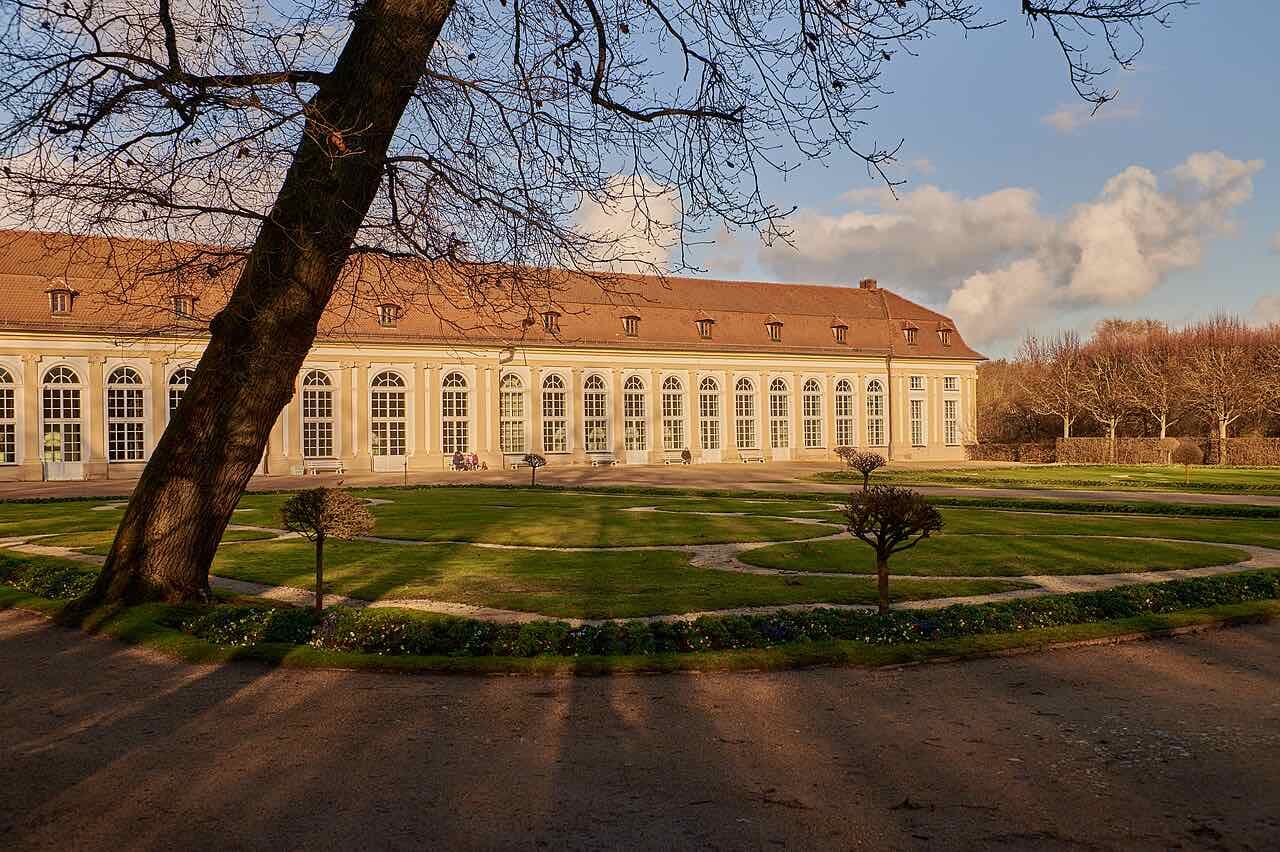
The garden was laid out in Baroque style from 1724 and later reworked as an English landscape park. It is open to the public without a fee, from 7:15 in the morning to between 18:00 and 22:00 depending on the season. Walk the double lime avenue, look at the potted citrus trees in summer and have cake in the Orangerie café. The Kaspar Hauser memorial stone is here too.
St. Gumbertus and St. Johannis ↗
The two big town churches stand close together around Martin-Luther-Platz. St. Gumbertus stands where the monastery was founded in 748, and the city's tourist office lists both churches as sights.
Markgrafenmuseum with the Kaspar Hauser section ↗
Kaspar Hauser, the foundling who was buried in Ansbach in 1833, has his own section in the museum on Kaspar-Hauser-Platz. The museum also covers the margraves and the city's history. It is open Tuesday to Sunday from 12:00 to 17:00.
The Baroque synagogue in Rosenbadstraße was not destroyed in 1938 and is now a museum run by volunteers. In summer it opens on the second and fourth Sunday of the month from 15:00 to 17:00 for 2 EUR.
Theater Ansbach – Kultur am Schloss ↗
Plays, musicals, concerts and children's theatre in several venues, among them the Kleines Haus, the Orangerie and St. Gumbertus. The box office is open Tuesday to Friday.
Kammerspiele and Kulturforum ↗
The Ansbacher Kammerspiele (Maximilianstraße 29) publish their programme on their site. The Kulturforum Ansbach promotes cultural life in town through departments for music, art, literature, architecture and intercultural events.
The town's leisure pool, a few minutes' walk from the campus.
The Ansbach year
Dates are the ones published by the organisers for the next editions.
The old-town festival is held every year in late spring; the next one is on 26 May 2027.
A music festival in the margraves' town, held in odd-numbered years; the next one runs from 30 July to 8 August 2027. The organiser has no student price on its front page, so ask by phone or email.
Rokoko-Festspiele and Kaspar-Hauser-Festspiele ↗
The Rokoko-Festspiele and the Kaspar-Hauser-Festspiele are biennial events, the Rokoko-Festspiele in June or July and the Kaspar-Hauser-Festspiele in July or August of even-numbered years.
The Christmas market opens on 26 November 2026.
The city holds an Interkulturelle Woche, and its Integrationsbeirat organises the International Week against Racism every year; both are a way to meet people from other communities in town.
Weekends and the countryside
The Fränkisches Seenland, a group of artificial lakes with sailing, windsurfing, swimming and cycling around them, is about half an hour from Ansbach according to the university's own student guide. The Altmühlsee and the Großer and Kleiner Brombachsee are the big ones. In summer this is where students go for a day, and the university's student council has organised group trips to a wakeboard park at the Brombachsee.
Rothenburg ob der Tauber, a walled medieval town on the Romantic Road, is where the university has a campus for its intercultural management bachelor's and digital marketing master's. For a bike tour, the Altmühltal cycle path and the Fränkischer Wasserradweg both pass through Ansbach.
Nuremberg is the big city nearby, on the S4. Erlangen, with a large university and a sizeable Indian community, is also in the Nuremberg area.
The town centre
Getting around
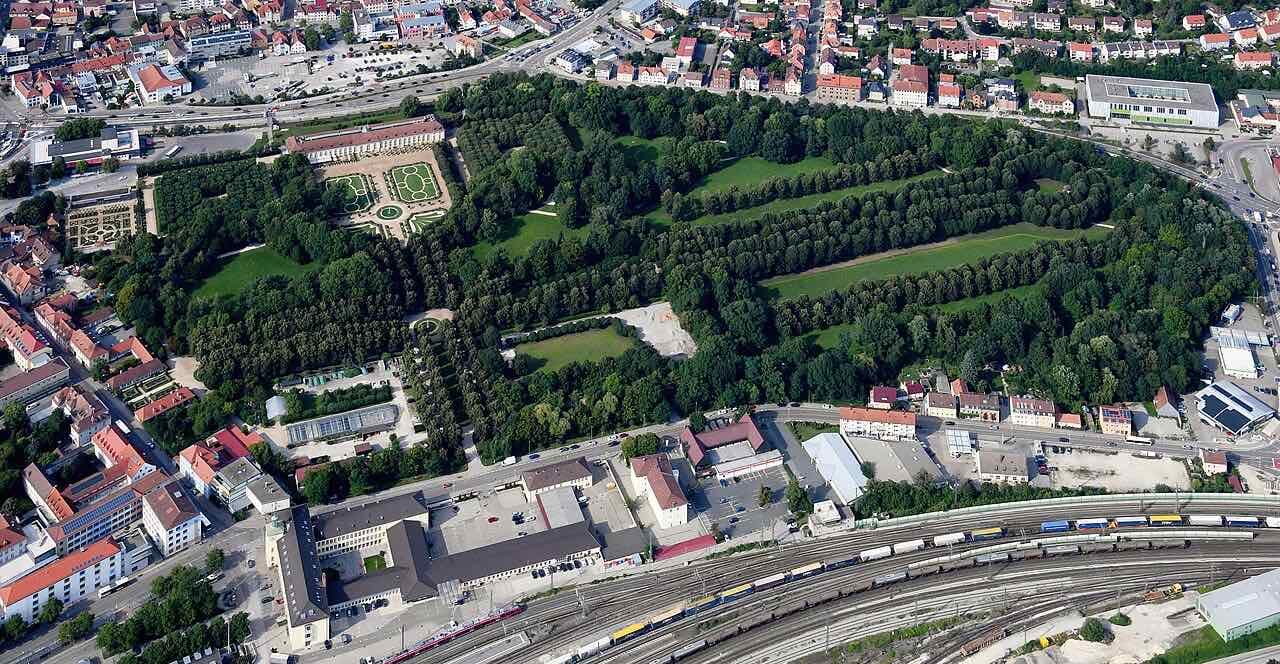
Within Ansbach you walk or cycle. The campus is at Residenzstraße 8, and the university has bike repair stations, e-bike charging points and about 200 covered bike stands on campus. Several local shops sell, repair and rent bikes, and the university lists them for new students.
City buses run on seven lines operated by the local bus company and belong to the Nuremberg-area VGN fare system; a single zone D ticket covers every stop in Ansbach, and you buy or show the ticket when boarding, since card payment is not possible. For longer trips, Deutsche Bahn is the way: the S4 goes to Nuremberg Hbf, and InterCity trains stop here about every two hours towards Nuremberg and towards Stuttgart and Karlsruhe.
Students at Hochschule Ansbach do not get a semester ticket included in their fees. The university points students to the VGN student pages, which list a Bavarian reduced student ticket for 43 EUR per calendar month for students at eligible universities in the VGN area; ask VGN whether your enrolment qualifies before you buy.
What it costs
- Tuition, non-EU students, English-taught degrees
- 1,000 EUR per termsource
- Studierendenwerk dorm, single apartment (about 16 m2)
- 307 EUR total, 321 EUR with balcony or terrace, electricity extrasource
- Studierendenwerk dorm, shared flat room
- 267 to 305 EUR total, electricity extrasource
- Dorm deposit
- 435 to 600 EUR depending on the room typesource
- Average monthly living costs incl. housing
- 992 EURsource
- Blocked account for a student visa
- 11,904 EUR a year (992 EUR a month)source
- Reduced student ticket in the VGN area
- 43 EUR per calendar month, if your university qualifiessource
- Residenz entry
- 6 EUR, 5 EUR reduced, free under 18source
- University sport
- free of chargesource
Figures are as published by the university, the Studierendenwerk and the sights themselves; prices change, so check the linked pages.
Jobs and employers around Ansbach
Ansbach's best-known private employers are manufacturers. Check each employer's own career page for working-student and internship posts.
A plastics and technology company with about 2,100 employees according to its own site, making components for the automotive, healthcare and sports industries; one of the best-known employers in the town.
Robert Bosch GmbH, Brodswinden plant
The German Wikipedia names Bosch's plant in the Brodswinden district, with about 2,500 employees, as one of the main employers in the Ansbach area.
The metering division of the Diehl group has its headquarters in the Eyb district and makes water and heat meters.
Career Service of Hochschule Ansbach ↗
Advises on applications, runs practice days with companies and a company contact fair on campus (held in May according to the first-year brochure) and keeps a job and internship board for students.
Is Ansbach for you?
Ansbach suits you if you want a small campus where you are not just a number, dorm rents you can pay on a student budget, and a town where you can reach a lecture, a lake or a palace garden by bike. The student council's own guide says it plainly: it is not a metropolis, there are no clubs that run until five in the morning, but there are plenty of supermarkets. What you get instead is a manageable town, parties organised by the student council on campus, bars and cafés in the old town, and Nuremberg for the rest.
If you come from a large city in Nigeria, India, Vietnam or China, expect the biggest change to be size and evenings. In return, the university describes itself as small on purpose, and it has an international student advisory service, a buddy programme and an orientation week for newcomers.
Part 2
Student life in Ansbach
Where you can study
Hochschule Ansbach (Ansbach University of Applied Sciences) ↗
The only university in Ansbach, founded in 1996. It has about 3,600 students (2022) in three faculties, Business, Engineering and Media. The central campus at Residenzstraße 8 is a former barracks site; there are further buildings in the Brauhausstraße (the School of Business and Technology for part-time and master's programmes), the Retti Campus (the AI-oriented courses and the AN[ki]T applied AI centre) and the Pixel Campus in the town centre (media projects). Branch campuses are in Feuchtwangen, Herrieden, Rothenburg and Weißenburg. Most bachelor's teaching is in German and needs German at B2; the English-taught degrees are the bachelor's in Applied Sustainable Engineering and Applied Life Science Technologies (taught in English in semesters 1 to 3, then German, starting in the summer semester, English B2 required) and the master's in Applied Biotechnology, International Product and Service Management, Science Communication, Smart Energy Systems and Sustainable Building Systems (the last two in Feuchtwangen). The university lists a tuition fee of 1,000 EUR per term for non-EU students on these programmes. Exchange students are nominated by their home university.
International office ↗Student unions, services and groups
Fachschaft HS Ansbach (student council) ↗
The elected student representation. It sits on the faculty councils and the senate, runs the first-year days (O-Tage), a campus cinema, the Campusfestival and parties, and has working groups for events, politics, internationalisation, sport and more.
Hochschulsport (university sport) ↗
Free sports organised by the Fachschaft's sport group: volleyball, football, badminton, ultimate frisbee and more, with a WhatsApp group per sport. It cooperates with the TSV Ansbach sports club and a bouldering hall.
The Fachschaft group for international students: small get-togethers such as picnics in the Hofgarten and a language café, working with the International Office.
The Fachschaft's LGBT+ group, reachable at contact@lgbt-hs-ansbach.de.
The university's buddy programme: second- and third-semester students are paired with newcomers, and they go on excursions and to get-togethers together. Consultation hours are on Wednesday afternoon.
Studierendenwerk Erlangen-Nürnberg ↗
Runs the Mensa and the PoolBar café on campus, the dorms, BAföG and a psychological counselling service. It also holds an open consultation hour for international students.
Ökumenische Hochschulseelsorge Ansbach ↗
The ecumenical university chaplaincy (Protestant and Catholic) with a room of silence, talks and regular evenings, at Welserstraße 3.
Bands, a choir that meets on Monday evenings, an orchestra that rehearses on Wednesday evenings and dance groups; the results are shown at the Kulturabend at the end of the semester.
Campus and study life
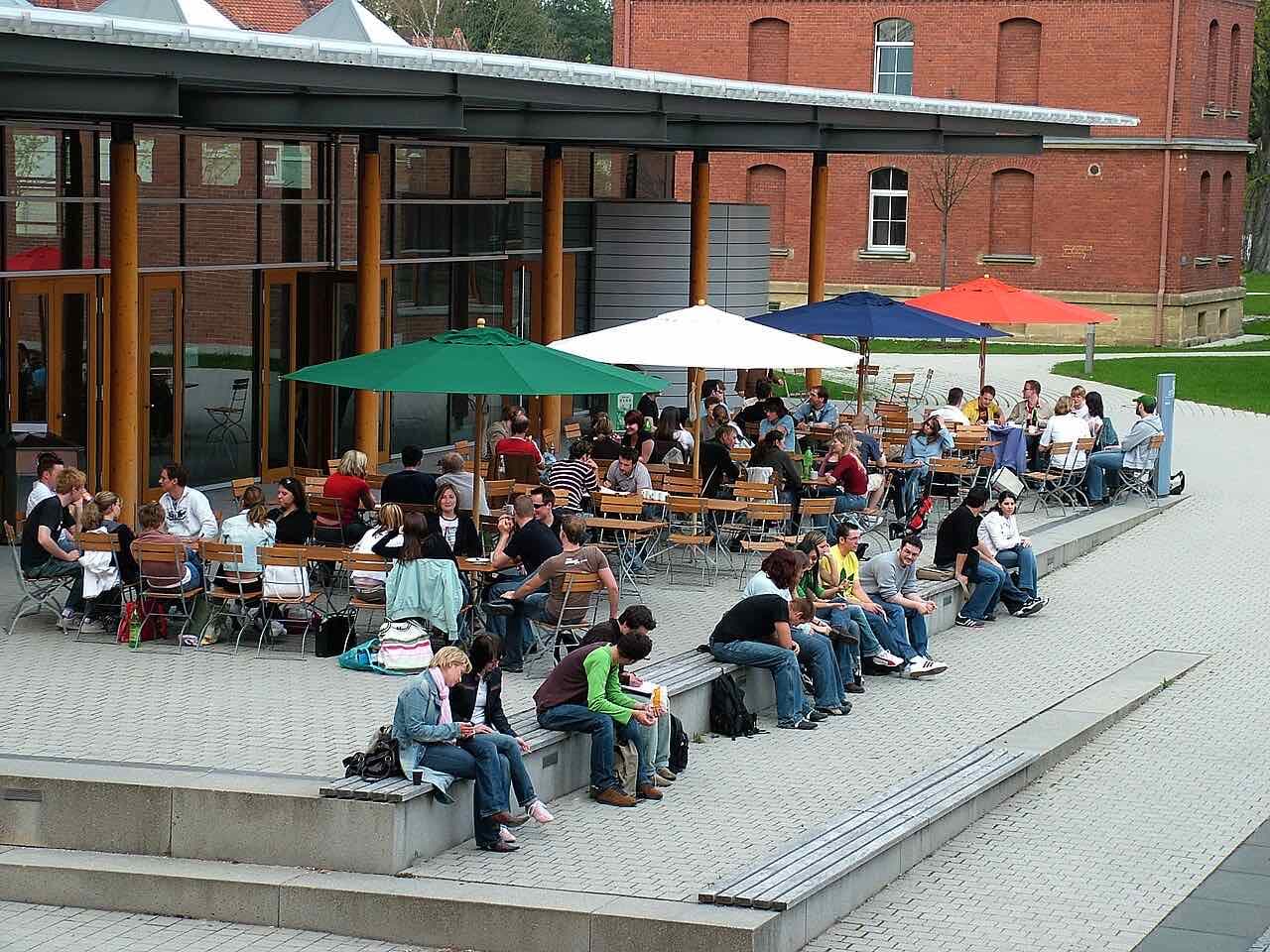
Everything is on one campus: lecture halls in the old barracks and modern buildings, a library with more than 200 study places and over 70,000 printed books, a Mensa with over 300 seats run by the Studierendenwerk, and the PoolBar, a campus café in room 92.0.14. Your CampusCard is your student ID, library card and the card you load with money to pay in the Mensa.
The Fachschaft runs most of the social life: first-year days, a campus cinema, sports and parties on campus. The university also has its own Rabbit Radio and a student city magazine called KASPAR, produced by a teaching newsroom. The Language Centre offers English, Spanish, French, Italian, Chinese, Russian and Arabic.
Winter semester starts on 1 October and summer semester in mid-March. The International Office runs an orientation week one week before each term for international first-year students, and the International Student Advisory Service helps with health insurance, appointments at public offices and opening a bank account.
Where to live
Hochschule Ansbach does not arrange housing, so start looking as soon as you are admitted. The International Student Advisory Service warns that fake ads are common: never pay in advance for keys sent by post.
Studierendenwerk dorm, Schöneckerstraße 11 ↗
On the campus: 114 furnished single apartments of about 16 m2 with their own shower and kitchenette, shared flats and one wheelchair-friendly apartment, with a bike cellar and laundry. Total rent is 267 to 321 EUR in 2026, electricity extra.
Evangelisches Siedlungswerk, Hölderlinstraße ↗
A student hall near the campus with flat-rate electricity and service costs.
Renovated rooms of 13 to 24 m2, each with its own bathroom and a shared kitchen on the first floor, some with a mini kitchen.
Studierendenwerk WohnService and online application ↗
Dorm places in Ansbach are applied for through the Studierendenwerk's WohnService in Nuremberg, after the university has nominated you if you come as an exchange student.
Fachschaft guide to finding a room ↗
A student-written list of where to search: newspaper ads, the noticeboards in the Mensa and the Campus Center, WG-Gesucht and local Facebook groups.
Your first weeks
- 1
Before you travel
Apply on the university's online portal; for degrees you also need the uni-assist preliminary review and the language certificate. Open-admission programmes accept applications from 2 May to 15 September for the winter semester and 1 December to 1 March for summer; restricted programmes close 15 July and 15 January. Student visas often take 4 to 12 weeks, so ask the embassy early.
- 2
On arrival
Register your address at the Bürgerbüro, Nürnberger Straße 32, within two weeks of moving in; you can book an appointment online or take a ticket on site. Bring your passport and the landlord's confirmation of residence (Wohnungsgeberbestätigung). The office is open Monday to Friday, with the longest hours on Thursday.
- 3
In week one
Join the orientation week for international students and meet your buddy. Open a bank account, and have your health insurance checked by a German statutory insurer so you can enrol; the university needs proof of insurance, a passport photo for the CampusCard and the fees at enrolment.
- 4
Before your visa runs out
Apply for the residence permit for study at the Ausländerbehörde, Nürnberger Straße 61 (phone 0981 51-5970). It needs proof of enrolment, health insurance and money, and you should apply before the visa expires.
- 5
In the first month
Join one Fachschaft event and one sport. Ask the Welcome Center (welcome@hs-ansbach.de) for help with housing, forms and language courses.
Working next to your studies
The Career Service helps with applications and keeps the university job and internship board. A company contact fair takes place on campus every year, with 40 to 50 companies taking part according to the 2022 brochure. Your residence permit says how much you may work during your studies; the university's visa page tells full-time students they can work up to 20 hours a week, and your permit is what counts, so check it with the Ausländerbehörde before you start a job.
Ansbach has factories and a regional government, so the kinds of work you will find are working-student posts in engineering and IT, jobs in retail and hospitality, and campus jobs. For a job closer to your degree than a shop job, look at employers in the wider Nuremberg area as well.
Food, money and daily life
In the Mensa you pay cashless with the card you load at the terminals; the same card system works in all Studierendenwerk canteens in the region. The student guide counts about 270 small and mid-sized shops in the old town, with fresh food sold twice a week on Martin-Luther-Platz, and cafés and restaurants. The student-written guide points out that there are plenty of supermarkets, so nobody goes hungry.
The Studierendenwerk offers psychological counselling at the university, a social counselling service, and an open consultation hour for international students on Fridays in Erlangen, in English if you prefer. Check its pages for the current times.
Students from Vietnam, Pakistan, Ghana, Nepal and Bangladesh
Ansbach has no embassy, consulate or association page for these countries that a student could walk into. Nepal and Bangladesh have their embassies in Berlin. For the other countries below, these are the nearest real contacts, and the Welcome Center and the Global Friendship Hub can introduce you to fellow students from your country.
Its consular section handles passports and citizenship matters, and the site carries news for Vietnamese students and the community in Germany.
Passport, attestation and e-visa services with a student registration page; the site also lists an honorary consul for Bavaria and the consulate general in Frankfurt.
Nürnberger Initiative für Afrika (NIfA), for students from Ghana ↗
No Ghanaian association in Ansbach has a page of its own; NIfA in Nuremberg is the closest network, and the Ghana embassy is in Berlin.
Where you come from matters here
Pick your home country: food, faith, community groups and the consulate that serves you, checked 21 October 2026.
🇮🇳 Living in Ansbach as an Indian student
Ansbach has no Indian association with its own page to point you to, but the Welcome Center says it welcomes students from India, and the Indian community in nearby Erlangen is large. The Indian consulate for Bavaria is in Munich.
Consulate General of India, Munich ↗
Responsible for Bavaria and Baden-Württemberg. Passports, visas, OCI cards, attestation, emergency certificates and consular camps in other cities, with online appointment booking.
Shiva-Vishnu-Tempel-Verein, Erlangen ↗
The Indian association in Erlangen has started building what it calls the first Hindu temple in northern Bavaria, at Eltersdorf by the railway line, with the aim of offering worship, music, language classes for children and festivals. More than 3,500 Indians live in Erlangen according to the report.
🇳🇬 Living in Ansbach as a Nigerian student
There is no Nigerian association or consulate in Ansbach. The embassy is in Berlin, there is a consulate general in Frankfurt, and the Nigerian community in Bavaria is organised from Munich.
Passport applications and renewals, document legalisation and emergency travel certificates at the embassy; visa applications go through the service provider VFS. Appointments for passports are booked online.
Nürnberger Initiative für Afrika (NIfA) ↗
A network of African and African-German associations in the Nuremberg region, registered since 2023, which runs the Akwaba Africa days, a library and advice for people with an African migration background on Tuesdays and Thursdays, by appointment.
Nigerian Community Germany Bayern e.V. ↗
The Bavarian Nigerian association; its 2020 board election was held at the African Centre in Munich, and the newly elected chairman promised to help Nigerian students find work during and after their studies.
🇨🇲 Living in Ansbach as a Cameroonian student
Ansbach has no Cameroonian organisation or consular office. Consular matters go through the embassy in Berlin, and the nearest African community network is NIfA in Nuremberg.
Embassy of Cameroon, Berlin – Consular Affairs Service ↗
At Ulmenallee 32, Berlin, for passports, consular cards, visas and other documents. The consular service is open Monday to Wednesday from 11:00 to 12:30.
Nürnberger Initiative für Afrika (NIfA) ↗
A Nuremberg network of Africans and people interested in Africa, with advice sessions on Tuesdays and Thursdays and the Akwaba Africa days in summer.
🇺🇸 Living in Ansbach as an American student
Ansbach is home to a large US Army garrison, so you will meet Americans here who are not students. Access to its installations is controlled by the garrison, so check its rules before you plan a visit.
A garrison with nine sites in Ansbach and Illesheim; it runs child and youth programmes, schools, a clinic, housing and a Military and Family Support Center.
Holy Family Catholic Community and Christ-König parish ↗
The garrison's Catholic community held joint Masses with the local Christ-König parish in Ansbach in 2022 and 2023, which is one way for American Catholics to meet people in town.
🇨🇳 Living in Ansbach as a Chinese student
There is no Chinese consulate or student association in Ansbach. The Chinese consulate general in Bavaria is in Munich, and Nuremberg has a Chinese language and culture institute.
Consulate General of the People's Republic of China, Munich ↗
Consular protection, passports and travel documents and notarisation; the site is in Chinese.
Konfuzius-Institut Nürnberg-Erlangen ↗
Chinese courses from beginner level, HSK exams (next one on 7 November 2026), a German-Chinese tandem evening, culture workshops and events in Nuremberg, Virchowstraße 23.
English-taught programmes in Ansbach
Soonest open deadline first. Every entry links to its official source.
Is Ansbach right for you? Ask us. Free.
Tell us your passport, grades and budget. We compare Ansbach with the other places you could study, then apply for you. You never pay us.
Get my free plan