Studying in North Rhine-Westphalia, Germany
Bonn
A calm Rhine city with a big research university, Beethoven's birthplace and the United Nations on campus, 24 km from Cologne.
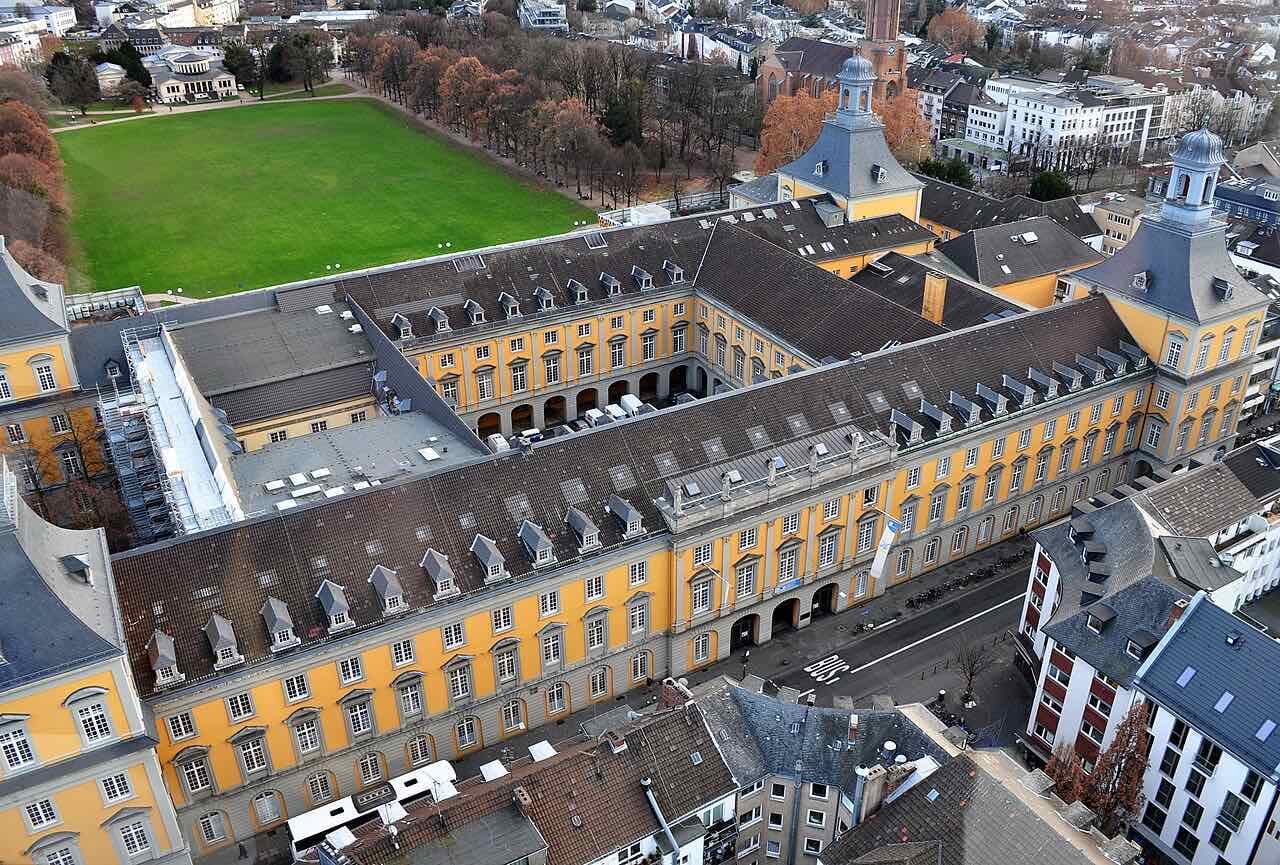
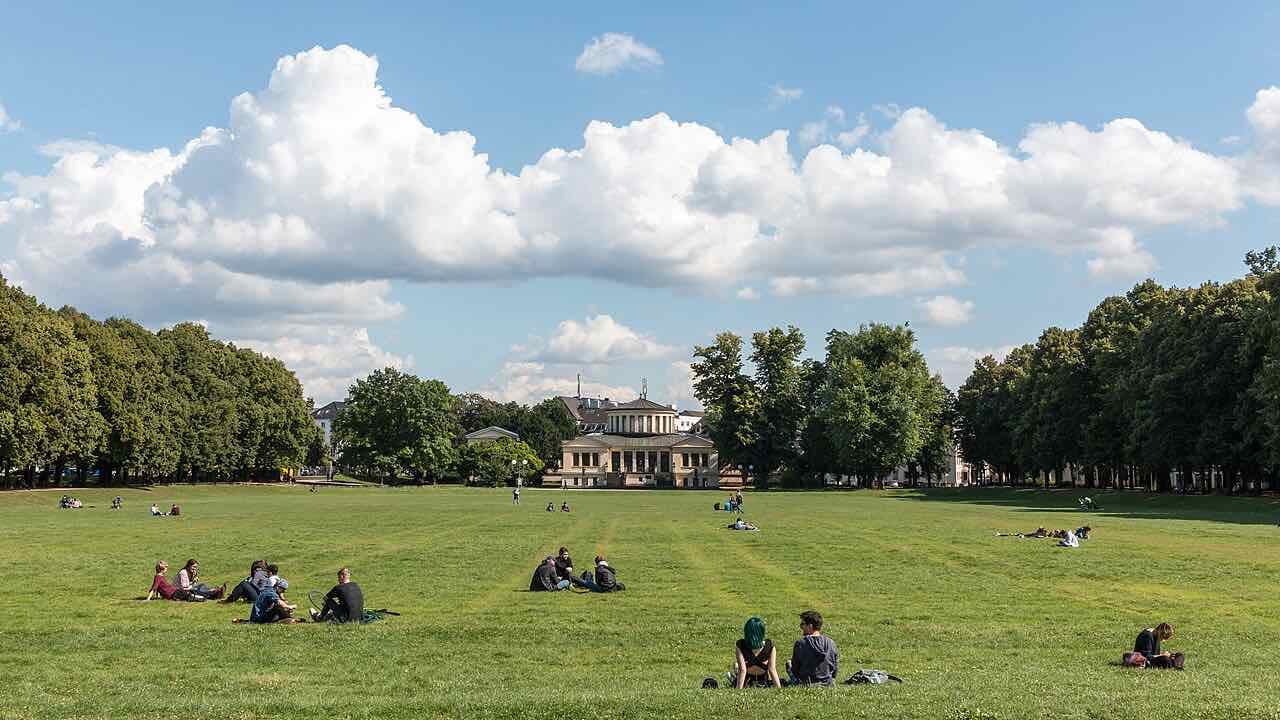
Bonn is a city of about 324,000 on the left bank of the Rhine, and for most of your time here it will feel smaller than that. It was the capital of West Germany from 1949 to 1990, and the buildings of that era are still around you: the Haus der Geschichte on the Museum Mile, federal ministries, the UN Campus in the old parliament district. Bonn is also where Beethoven was born, and a place with an unusual mix of employers for its size, from Deutsche Telekom and Deutsche Post DHL to the DAAD, the German Academic Exchange Service. The University of Bonn has about 31,500 students and eight Clusters of Excellence, and its yellow main building stands right next to the Hofgarten lawn where students spend sunny afternoons. Cologne is 24 km away, and the hills of the Siebengebirge are across the river.
- Population
- 323,587 (31 December 2025)
- Student dorms (Studierendenwerk Bonn)
- 29 residential units with about 3,781 places in Bonn, Sankt Augustin and Rheinbach; rents listed from 215 to 812 EUR
- Proof of funds for a student visa
- 992 EUR a month, 11,904 EUR a year
Part 1
Living in Bonn
A capital that became a university and UN city
Bonn began as a settlement of the Ubii in the first century BC and became part of the Roman province of Lower Germania. The university was founded by the Prussian government in 1818. The years that shaped today's city came after 1949, when Bonn became the seat of government of West Germany. When the government moved to Berlin in 1999, the Berlin-Bonn Act kept a large federal presence here, and about a third of the ministerial jobs were still in Bonn as of 2019.
In place of ministries, Bonn built a second identity as an international city. It has the highest number of UN institutions in Germany, 20 in total, including the climate secretariat (UNFCCC), the desertification secretariat (UNCCD) and the UN Volunteers programme. The state's official list of foreign representations gives the UN Campus address as Platz der Vereinten Nationen 1, and lists the European Commission's regional office at Bundeskanzlerplatz 2 d. For a student of economics, law, politics, environment or development, it means that guest lectures, conferences and internships are a short tram ride away rather than a flight.
Bonn has an oceanic climate, so winters are mild and grey and summers are warm, with about 767 mm of rain a year. Housing is the thing newcomers feel first.
What to see and do
Most places below are within a bike ride or a few Stadtbahn stops of the university, and several are free or cheap for students.
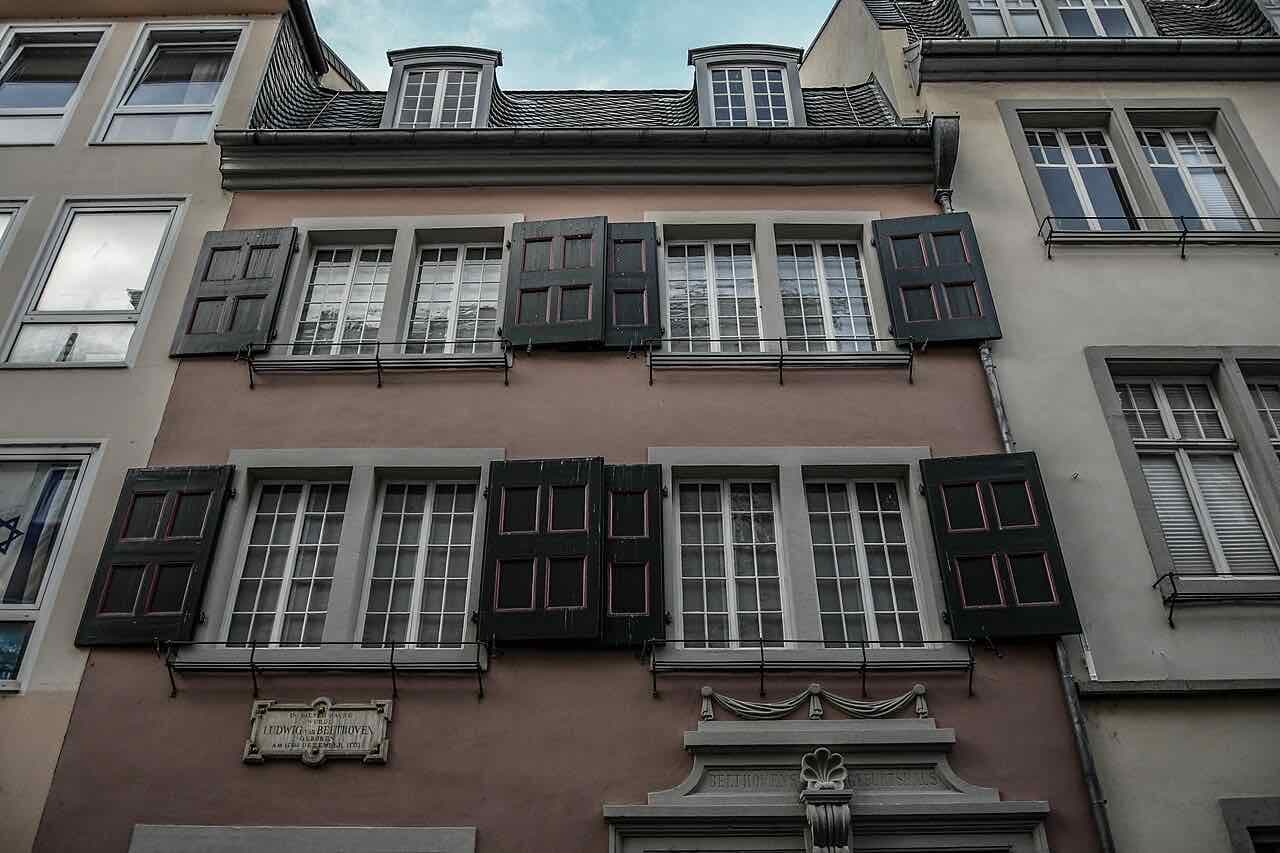
Ludwig van Beethoven was born in December 1770 in the house at Bonngasse 20. Exhibitions are open Wednesday to Monday from 10:00 to 18:00, and an adult ticket is 15 EUR. The special exhibition Beethoven by Warhol runs from 9 September 2026 to 5 April 2027.
Beethovenfest and Beethoven Frühling ↗
The Beethovenfest is held in Bonn every year in August and September. In 2027, the 200th anniversary year of his death, a spring edition called Beethoven Frühling runs from 18 March to 4 April.
Five museums sit along one mile: Museum Koenig, the Haus der Geschichte, the Bundeskunsthalle, the Kunstmuseum Bonn and the Deutsches Museum Bonn, which has an AI exhibition called Mission KI.
Admission is free. The permanent exhibition, at Willy-Brandt-Allee 14, tells how Germany developed after 1945 and is built to be interactive.
Helmut-Kohl-Allee 4. A day ticket is 14 EUR and a reduced one is 7 EUR. The ELLAH-Card costs 25 EUR a year for under-27s, and students up to 25 get it free with proof.
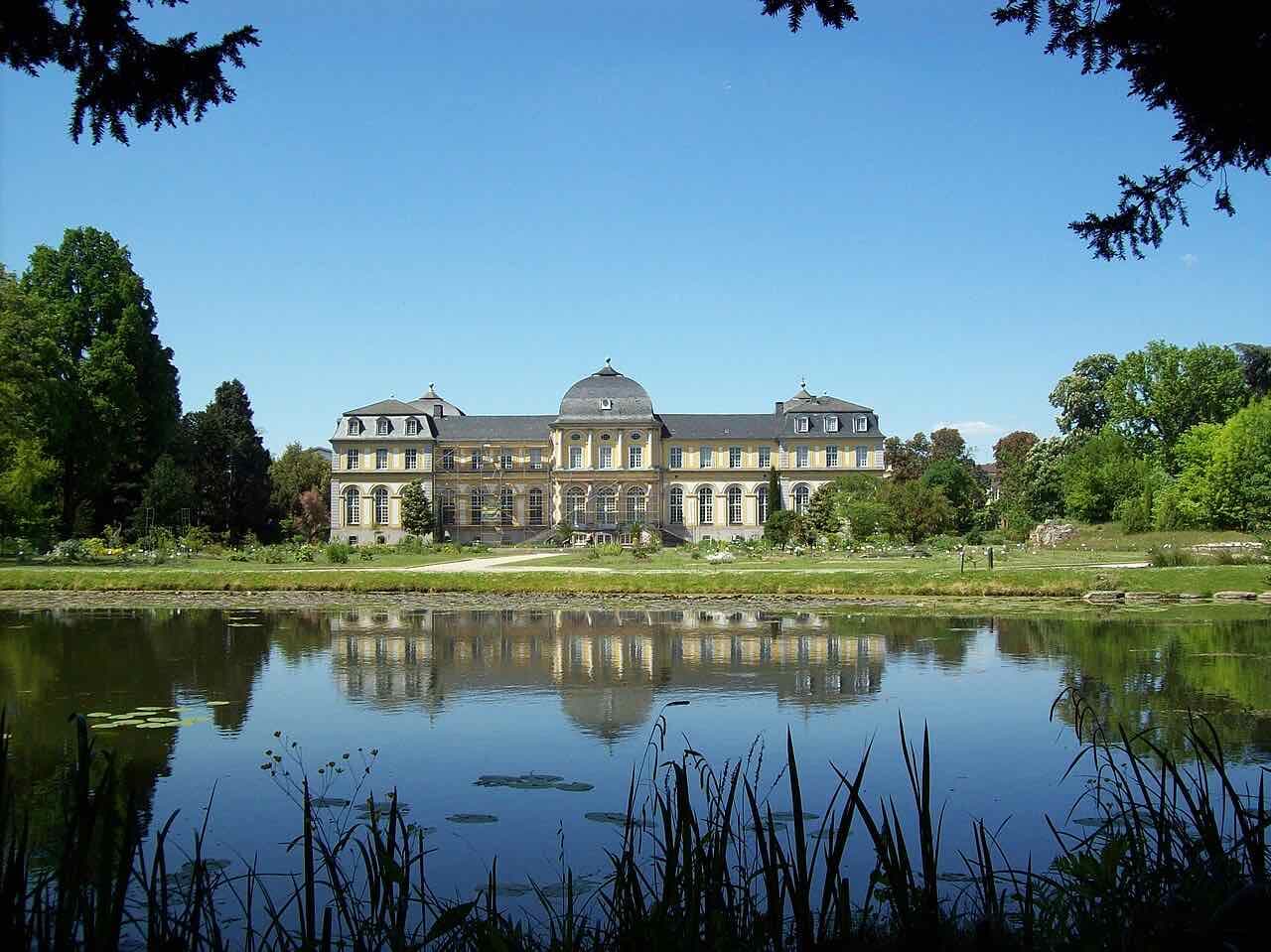
The University of Bonn's botanical gardens at Meckenheimer Allee 171 have the palace garden with old trees, glasshouses with plants from around the world and a collection of carnivorous plants.
Bonn carnival opens each year on 11 November at 11:11. Weiberfastnacht, the women's carnival, has its origin in Beuel, and the Rosenmontag parade has about 80 floats and more than 200,000 spectators. The 2025/26 session marked 200 years of Bonn carnival.
The Rhine, the Siebengebirge and weekends outdoors
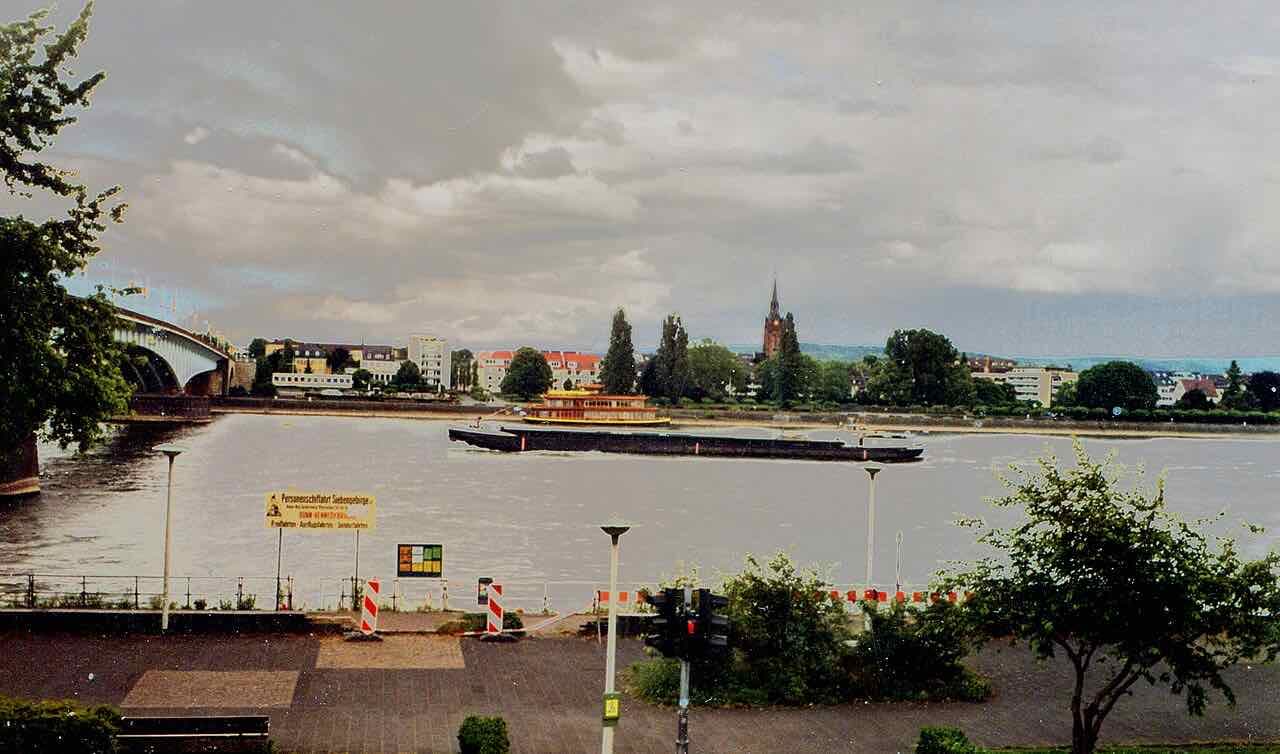
The river is the city's backyard. The Rheinaue park was built for the 1979 Bundesgartenschau and has nearly 45 km of paths. From April to October a large flea market is held there on the third Saturday of the month. Excursion boats run from Easter to late October, and the classic trip is a round trip between Bonn and Königswinter of about two hours. The Beethoven Radweg is a roughly 20 km cycling loop along the Rhine into the Siebengebirge.
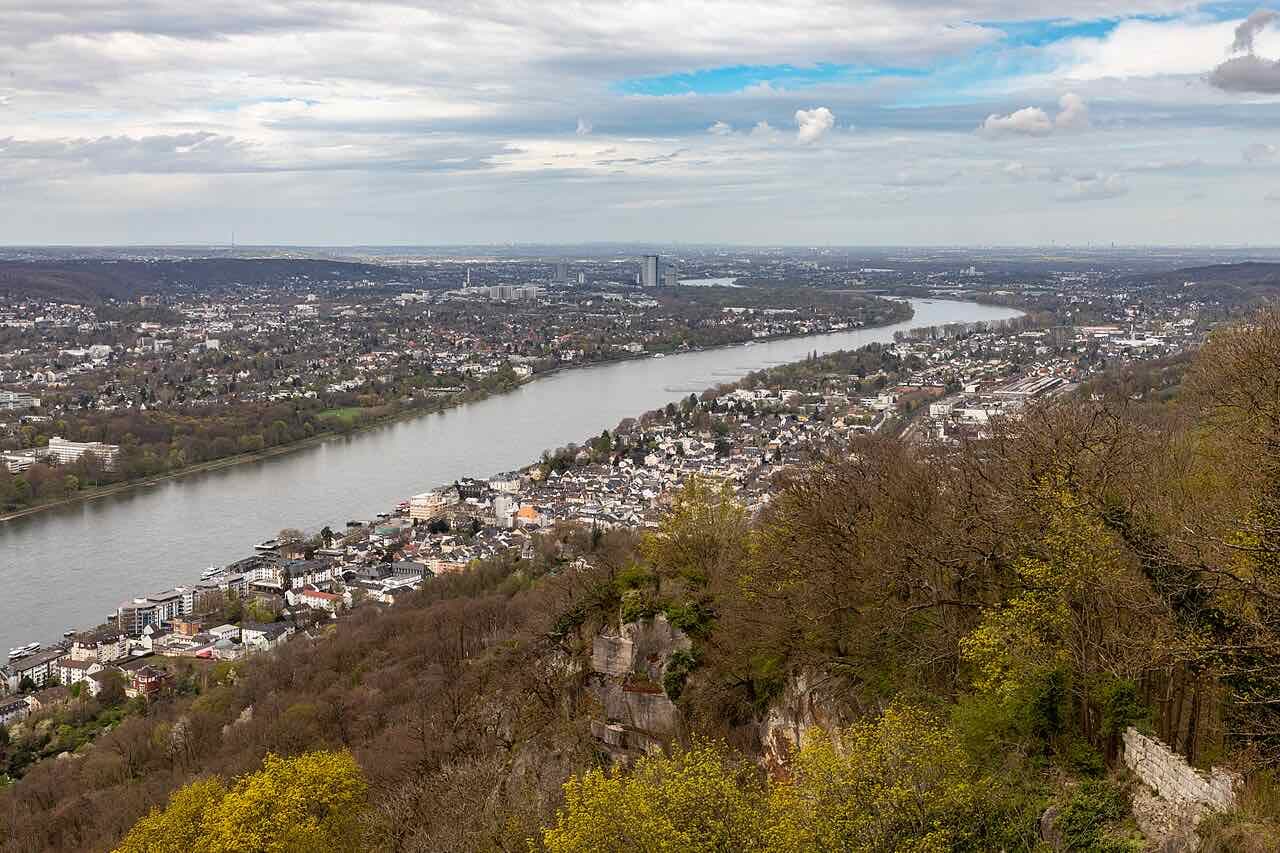
The Siebengebirge are hills on the east bank of the Rhine, southeast of the city, with the Großer Ölberg at 460 m. Germany's oldest cogwheel railway, open since 1883, climbs the Drachenfels from the old town of Königswinter on a 1,520 m line, and the viewpoint at the top is where the photo on this page was taken. Hiking Society Bonn organises Sunday hikes, usually starting with a group train or tram from Bonn Hauptbahnhof, and its blog is written in German and English.
In late March or April, the cherry trees in the old town bloom. That is a good reason to walk through the centre once without a plan.
Palaces, parks and the river
What it costs
- Monthly living costs (University of Bonn estimate)
- about 1,000 EUR, mainly rentsource
- Dorm rent, all Studierendenwerk Bonn buildings
- from 215 EUR (13 to 30 m2 at Im Krausfeld 16) up to 812 EUR (Bismarckstraße 4, larger apartments)source
- Share of dorm places under 350 EUR warm rent
- around 62 percentsource
- Student health insurance if you have no cover
- about 135 EUR a monthsource
- Broadcasting fee (Rundfunkbeitrag)
- 18.36 EUR a month per apartment or dorm room, paid once per shared flatsource
- Stew in the Mensa
- 1.00 EUR for students, as an example from the Studierendenwerk's own pagesource
- Proof of funds for the visa
- 992 EUR a month (11,904 EUR a year)source
Bonn charges no tuition at the university, but the cost of a room is what decides your budget. Check the current figures before you apply.
Where the work is
Bonn is a headquarters town. None of this is a promise of a job, but it is where internships, working-student jobs and thesis partners come from.
The group's headquarters are in Bonn and house the group management functions and global teams from each business unit. Its careers site has a section for students and graduates.
Telekom has its head office in Bonn. Its careers site lists jobs and application information in English.
The German Academic Exchange Service is at Kennedyallee 50. It funds international exchange for students and researchers, and many of the scholarships you may apply for come from here.
UN Campus and the UN information office ↗
The official state list gives the UN information service in Bonn as an address on the UN Campus, Platz der Vereinten Nationen 1, with the email info@unbonn.org. UN bodies advertise internships and volunteer roles on their own sites.
The University of Bonn, including its clinics, is the third-largest employer in the city. Student assistant jobs in institutes are a common way to earn and to learn.
Getting around and getting out
Bonn is part of the Verkehrsverbund Rhein-Sieg and has a Stadtbahn light-rail network, tram lines and about 30 bus lines. The Deutschland-Semesterticket is part of what you pay each semester: the University of Bonn issues it in its app, and Hochschule Bonn-Rhein-Sieg students see theirs in the ticketing overview after logging in with their university account. Because of it, a weekend trip to Cologne, Düsseldorf or the Eifel costs you nothing extra.
Cologne Bonn Airport is about 15 km from the centre, and Düsseldorf Airport is within an hour by car. Most international students fly into one of the two. A bicycle is worth buying: the university, the Hofgarten, the Rhine and the Museum Mile are all close together.

Part 2
Student life in Bonn
Where you can study
Rheinische Friedrich-Wilhelms-Universität Bonn ↗
Founded in 1818, with about 31,500 students and eight Clusters of Excellence, which the university says is more than any other German university. It offers more than 200 academic disciplines across the old town, Poppelsdorf and the Venusberg clinics. The university charges no tuition. Bachelor's programmes taught in German need German at B2 to apply and C1 (DSH-2) to enrol; English-taught degrees are mostly master's programmes, for example Artificial Intelligence, Applied Linguistics and Agricultural and Food Economics, and you can filter the degree list for English. Non-EU applicants must always apply, even for programmes without admission limits.
International office ↗Hochschule Bonn-Rhein-Sieg (H-BRS) ↗
About 9,000 students at campuses in Sankt Augustin, Rheinbach and Hennef, in five departments: management sciences, computer science, engineering and communication, natural sciences, and social policy and social security studies. Its international study page lists eight programmes taught entirely or mostly in English: International Business (BSc), Applied Biology (BSc), Marketing (MSc), Autonomous Systems (MSc), Game Technologies (MSc), International Media Studies (MA), Biomedical Sciences (MSc) and Social Protection (MSc). Check each programme page for its campus.
International office ↗Alanus Hochschule für Kunst und Gesellschaft ↗
A state-recognised private university in Alfter, between Cologne and Bonn, with more than 20 bachelor's and master's programmes in architecture, fine arts, education, eurythmy, art therapies and performing arts. Most teaching is in German. The Master's in Eurythmy in English and the Master's in Waldorf pedagogy are offered in English, and some business courses are too.
International office ↗b-it, Bonn-Aachen International Center for Information Technology ↗
Not a separate university but a joint institute of the University of Bonn, RWTH Aachen, H-BRS and three Fraunhofer institutes, based on the Poppelsdorf campus at Friedrich-Hirzebruch-Allee 6. It runs master's programmes in Autonomous Systems, Human-Centered Intelligent Systems and Life Science Informatics. Degrees are awarded by the partner universities.
Student unions, services and groups
AStA of the University of Bonn ↗
The general students' committee runs legal advice, the Renting for Help scheme, the housing board, an emergency fund, a bicycle workshop and a computer help desk. It is moving to Nassestraße 9, south of the Hofgarten, in autumn 2026.
Student groups listed by the AStA ↗
A list of 64 groups in 11 categories, from debating and Model UN to choirs, hiking and cycling. It includes groups for Indian, Arab, Indonesian, Kurdish, Ukrainian and Luxembourgish students, and Christian and Jewish student groups.
AStA of Hochschule Bonn-Rhein-Sieg ↗
Represents the H-BRS student body, organises university sports, negotiates the semester ticket and runs events. Offices are in room C 001 in Sankt Augustin and G 103 in Rheinbach, and any H-BRS student can join.
The student parliament, the AStA and a Fachschaft for each department, from management sciences in Rheinbach and Sankt Augustin to social policy in Hennef.
Runs the dorms, the Mensa canteens, psychological counselling, writing help, advice for studying with impairments and the Freitisch scheme of free meals. Its counselling is free and confidential.
University sports at Nachtigallenweg 86, with a fitness centre in Hall 5 and climbing. You need to register and pay for a Semesterkarte to book courses, and the winter programme starts on 19 October 2026.
Run by the University of Bonn's International Office at Poppelsdorfer Allee 53. A Chit-Chat Lounge every Monday evening, cooking evenings, film nights and country evenings, with free drinks at the lounge and no booking needed.
Pairs new international students with a Bonn student who helps with registering as a resident, a bank account and health insurance. Mentees apply in Mobility-Online at least three weeks before arriving, and the winter semester window is 25 July to 15 November 2026.
A student choir, orchestra and vocal ensemble that rehearse weekly at the university, with auditions at the start of the semester. Concerts need a free ticket reserved online.
BIMUN, Bonn International Model United Nations ↗
An annual Model UN conference run by a registered association in the city centre, which also holds a lecture series and get-togethers.
The campus radio for the University of Bonn and H-BRS, where students make shows on music, film, literature and local queer life.
Sunday hikes in the Siebengebirge, the Ahr valley, the Sieg and the Eifel, usually 10 to 21 km, with a blog in German and English.
Campus life in the city
The University of Bonn does not have a single campus. The main building in the old town is the former electoral palace, with the Hofgarten lawn beside it, and much of the science side is on the Poppelsdorf campus, with the clinics on the Venusberg. The Mensa am Hofgarten and Mensa CAMPO are the main canteens, both open from 11:30 to 14:30 on weekdays, and the Studierendenwerk also runs a bistro on the Venusberg and a study room on the ground floor of CAMPO.
H-BRS is a different experience. Its campuses are in Sankt Augustin and Rheinbach, outside the city, with a Mensa and a café at each. The Rheinbach hall has been closed after the 2021 flood, and a food truck serves hot meals there. Plan your commute when you look for a room, because both campuses are outside the city centre.
Ghana, Bangladesh and Nepal have no consulate on the NRW list, so passport and visa matters for them go through their embassies. A lot of your social life happens in initiatives rather than lectures. The AStA lists 64 student groups, the International Club meets every Monday, and the university's International Office runs Welcome Days and the Welcome Buddy Program for new arrivals. In the cold months, the cheap options are the Mensa, a Hochschulsport course and a concert at the Collegium musicum.
Housing: dorms, the AStA scheme and the open market
Rooms are the hard part of studying in Bonn, and the university says plainly that rising prices and demand make finding one difficult.
29 residential units with about 3,781 places in Bonn, Sankt Augustin and Rheinbach, and about 62 percent of places are under 350 EUR warm rent. You apply only through the online form on the website, no admission letter is needed, applications stay valid for 12 months, and monthly offers start 4 to 6 weeks before a move-in date. Applying for 1 August can improve your chances, and so does applying for several buildings.
Dorms are wired into StudNet at gigabit speed. More than 350 student volunteers act as tutors and run welcome evenings, and international tutors help foreign students move in.
Renting for Help (Wohnen für Hilfe) ↗
The AStA matches students with people who have a spare room. You help in the household for about one hour a month per square metre and pay only the running costs. Care services are excluded.
Living in Bonn, from the University ↗
The university's page explains that the International Office does not allocate rooms but gives search guidance, and mentions churches and charities as possible short-term options for your first nights.
Your first weeks
- 1
Before you travel
Non-EU students apply for a national visa at the German embassy once they have an admission letter. Book a room or at least a few nights, as housing is scarce at the start of each semester.
- 2
Week 1
Register your address within two weeks of moving in if you will stay more than three months. The university's planning page says you can book online with the Bürgeramt or visit the offices in Bad Godesberg, Beuel or Hardtberg. Bring the registration form, your landlord's confirmation and your ID.
- 3
Week 1 to 2
Open a bank account with your registration certificate and your student or enrolment documents. Take out statutory student health insurance if you have no cover, or get an exemption certificate if your home insurance is adequate.
- 4
Week 2
Pay the semester contribution by bank transfer to get your student ID and your university email. The Deutschland-Semesterticket is part of it. Register for the Rundfunkbeitrag online.
- 5
Within three months
Non-EU students apply for a residence permit at the city's foreigners office, within the first three months or within the validity of the visa. Processing takes a few weeks, so start early.
- 6
First month
Go to the Welcome Days, sign up for the Welcome Buddy Program or Chit-Chat Lounge, and register for Hochschulsport when booking opens.
Working next to your studies
Students from outside the EU, Iceland, Liechtenstein, Norway and Switzerland may work 140 full days or 280 half days a year. Student assistant jobs at the university are not limited, but you must tell the foreigners office. Freelance work needs the foreigners office's permission. The statutory minimum wage has been 13.90 EUR an hour since January 2026, and a mini-job of up to 556 EUR a month is tax-free for students. The AStA has a job board, and the Studierendenwerk and AStA offer a financial start-up grant for first-semester students in social need.
Do not count on a job to pay your blocked account. The visa requirement is 992 EUR a month, and a student job is for a bit of extra money and a first line on your CV.
Food, sport and nights out
Mensa am Hofgarten, Mensa CAMPO, the Casino ZEF/ZEI, the Venusberg bistro and food trucks. Hot dishes change daily, with vegetarian and vegan options, and you pay with a Mensa card or EC card at H-BRS. A stew costs 1.00 EUR for students.
Hochschulsport offers courses each semester, a fitness centre and climbing. Prices are tiered by tariff group, and the programme becomes subject to VAT from winter 2026/27, which raises fees. H-BRS students can also use its AStA's sports offers.
The Collegium musicum, the International Choir and the university's Asia and USA evenings are low-cost ways to meet people. The Bundeskunsthalle's ELLAH-Card gives under-27s a year of access for 25 EUR.
Cologne, 24 km away, is the bigger city for nights out. Carnival season, from 11 November to Rosenmontag, is the one time Bonn itself is loud.
Where you come from matters here
Pick your home country: food, faith, community groups and the consulate that serves you, checked 21 October 2026.
🇮🇳 Living in Bonn as an Indian student
The Consulate General of India in Frankfurt is responsible for North Rhine-Westphalia. Bonn has an Indian student association shared with Cologne, and the International Club holds an Asia evening each autumn.
Consulate General of India, Frankfurt ↗
Friedrich-Ebert-Anlage 26, 60325 Frankfurt am Main. The official state list names it as the consulate for Hessen, North Rhine-Westphalia, Rhineland-Palatinate and Saarland, and its site gives hours from 9:00 to 17:30 on weekdays and application submission from 9:30 to 12:30.
Indian Students Association of Bonn-Cologne ↗
Listed by the AStA among the University of Bonn's student groups as the Indian student community for the two cities.
International Club Asia Evening ↗
The University of Bonn's International Club lists an Asia Evening on 29 October 2026 among its country-themed evenings, open to German and international students.
🇳🇬 Living in Bonn as a Nigerian student
Nigeria has an embassy in Berlin and a consulate general in Frankfurt, which covers North Rhine-Westphalia. Student contacts in Bonn run through the AStA's list of groups and the International Club.
Neue Jakobstraße 4, 10179 Berlin. It takes passport submissions Monday to Thursday from 10:00 to 14:00, requires a National Identification Number for the enhanced e-passport, and sends visa applications to the provider VFS Global.
Consulate General of Nigeria, Frankfurt ↗
Weißfrauenstraße 12, 60311 Frankfurt am Main. The state list names North Rhine-Westphalia in its consular district, together with Hessen, Baden-Württemberg, Bayern and Rhineland-Palatinate.
🇻🇳 Living in Bonn as a Vietnamese student
Vietnam's consulate general is in Frankfurt and the embassy is in Berlin. The AStA's list of student groups has no Vietnam-specific group.
Consulate General of Vietnam, Frankfurt ↗
Villa Hanoi, Kennedyallee 49, 60596 Frankfurt am Main. Consular visitors enter through Rubensstraße 30, and consular hours are Monday, Wednesday and Thursday from 09:00 to 12:00 and 14:00 to 17:00. Contact for visas and procedures is visa@vietnam-generalkonsulat.de.
Its site has consular procedures and fee schedules, and says that electronic passport applications have been accepted at the embassy since 1 April 2026.
🇵🇰 Living in Bonn as a Pakistani student
Pakistan has a consulate general in Frankfurt and an honorary consul in Düsseldorf, both responsible for North Rhine-Westphalia.
Consulate General of Pakistan, Frankfurt ↗
Eschenbachstraße 28, 60596 Frankfurt am Main. Its site lists passports, document attestation, NADRA services, visas and student registration, and some services are online only.
Honorary Consul of Pakistan, Düsseldorf ↗
Hildebrandtstraße 15, 40215 Düsseldorf. The state list gives its consular district as North Rhine-Westphalia, with office hours on Tuesday, Wednesday and Thursday.
🇨🇲 Living in Bonn as a Cameroonian student
Cameroon's embassy is in Berlin. There is no Cameroonian consulate on the NRW state list.
Ulmenallee 32, 14050 Berlin. It handles passports, consular cards, wedding procedures and powers of attorney, and appointments are requested through its contact page.
Student groups listed by the AStA ↗
The list has no Cameroon-specific group, but it names several nationality-based ones, and the International Club is open to everyone.
🇺🇸 Living in Bonn as an American student
The U.S. Consulate General in Düsseldorf serves North Rhine-Westphalia, and the International Club has an evening for students heading on exchange to North America or Australia.
U.S. Consulate General, Düsseldorf ↗
Willi-Becker-Allee 10, 40227 Düsseldorf. The official state list shows its consular district as the whole state of North Rhine-Westphalia, with hours from 9:00 to 17:00 on weekdays.
A publicly and privately funded association for transatlantic events in NRW, held mostly in Cologne and Düsseldorf. It also offers free EducationUSA counselling on applying, financing and visas for study in the United States.
USA/Canada/Australia Evening, International Club ↗
An evening at the International Club, on 3 November 2026, about planning a semester abroad in those countries.
🇨🇳 Living in Bonn as a Chinese student
The Chinese Consulate General is in Düsseldorf and covers all of North Rhine-Westphalia. The city of Bonn is twinned with Chengdu.
Consulate General of the People's Republic of China, Düsseldorf ↗
Schanzenstraße 131, 40549 Düsseldorf. The state list gives its consular district as the state of North Rhine-Westphalia, and its site has an education section and information on passport applications through its online app.
Chinesisch-Deutsch Stammtisch (Kultur Jiaozi) ↗
A Chinese-German cultural exchange group that the AStA lists among the University of Bonn's student groups.
English-taught programmes in Bonn
Soonest open deadline first. Every entry links to its official source.
- Geography of Environmental Risks and Human SecurityUniversity of Bonn · BonnmasterNo tuition31 Oct 2026Closing soon
- ChemistryUniversity of Bonn · BonnmasterNo tuition07 Jan 2027Open
- International Media Studies (MA)Hochschule Bonn-Rhein-Sieg · Bonnmaster15 Feb 2027Open
- Life Science Informatics (b-it)University of Bonn · BonnmasterNo tuition01 Mar 2027Open
- Drug Regulatory AffairsUniversity of Bonn · Bonnmaster16 Mar 2027Open
- EconomicsUniversity of Bonn · BonnmasterNo tuition31 Mar 2027Open
- Medical Immunosciences and InfectionUniversity of Bonn · BonnmasterNo tuition31 Mar 2027Open
- Molecular Cell BiologyUniversity of Bonn · BonnmasterNo tuition31 Mar 2027Open
- NeurosciencesUniversity of Bonn · BonnmasterNo tuition31 Mar 2027Open
- Immunobiology: From Molecules to Integrative SystemsUniversity of Bonn · BonnmasterNo tuition30 Apr 2027Open
- BiochemistryUniversity of Bonn · BonnmasterNo tuition30 Apr 2027Open
- Plant SciencesUniversity of Bonn · BonnmasterNo tuition01 May 2027Open
- PalaeontologyUniversity of Bonn · BonnmasterNo tuition15 May 2027Open
- Organismic Biology, Evolutionary Biology and Palaeobiology (OEP-Biology)University of Bonn · BonnmasterNo tuition15 May 2027Open
- Mobile RoboticsUniversity of Bonn · BonnmasterNo tuition31 May 2027Open
- Agricultural Sciences and Resource Management in the Tropics and Subtropics (ARTS)University of Bonn · BonnmasterNo tuition30 Jun 2027Open
- Strategy and International Security (MSIS)University of Bonn · BonnmasterNo tuition15 Jul 2027Open
- Crop SciencesUniversity of Bonn · BonnmasterNo tuition15 Jul 2027Open
- Global HealthUniversity of Bonn · Bonnmaster15 Jul 2027Open
- MSc in Human-Centred Intelligent Systems (HCIS)RWTH Aachen University · BonnmasterNo tuition15 Jul 2027Open
- Planetary HealthUniversity of Bonn · BonnmasterNo tuition15 Jul 2027Open
- Geodetic EngineeringUniversity of Bonn · BonnmasterNo tuition31 Aug 2027Open
- Bonn-Cologne Graduate School of Physics and Astronomy: MSc in PhysicsUniversity of Bonn · BonnmasterNo tuitionSee sourceCheck source
- Bonn-Cologne Graduate School of Physics and Astronomy: MSc in AstrophysicsUniversity of Bonn · BonnmasterNo tuitionSee sourceCheck source
- Computer ScienceUniversity of Bonn · BonnmasterNo tuitionSee sourceCheck source
- North American Studies (NAS)University of Bonn · BonnmasterNo tuitionSee sourceCheck source
- Biblical StudiesUniversity of Bonn · BonnmasterNo tuitionSee sourceCheck source
- Artificial IntelligenceUniversity of Bonn · BonnmasterNo tuitionSee sourceCheck source
- Agricultural, Food and Environmental Policy Analysis (AFEPA)University of Bonn · BonnmasterSee sourceCheck source
- Agricultural and Food Economics (AFECO)University of Bonn · BonnmasterNo tuitionSee sourceCheck source
- Ecumenical and Extended Ecumenical StudiesUniversity of Bonn · BonnmasterNo tuitionSee sourceCheck source
- MathematicsUniversity of Bonn · BonnmasterNo tuitionSee sourceCheck source
- Comparative Theological StudiesUniversity of Bonn · BonnmasterNo tuition30 Sept 2026Deadline passed
- Dependency and Slavery StudiesUniversity of Bonn · BonnmasterNo tuition15 Sept 2026Deadline passed
- Slavery StudiesUniversity of Bonn · BonnmasterNo tuition15 Sept 2026Deadline passed
- English Literatures and CulturesUniversity of Bonn · BonnmasterNo tuition15 Sept 2026Deadline passed
- Physics of the Earth and AtmosphereUniversity of Bonn · BonnmasterNo tuition15 Sept 2026Deadline passed
- Applied LinguisticsUniversity of Bonn · BonnmasterNo tuition15 Sept 2026Deadline passed
Is Bonn right for you? Ask us. Free.
Tell us your passport, grades and budget. We compare Bonn with the other places you could study, then apply for you. You never pay us.
Get my free plan