Studying in Lower Saxony, Germany
Braunschweig
A medieval duke's city with Germany's oldest technical university and a research cluster around it.
Braunschweig (Brunswick in English) is the second-largest city in Lower Saxony, with about 253,000 people, and it is a city where the research institute is as normal as the cathedral. Henry the Lion made it the capital of his duchy in 1142, and his castle, his lion and his cathedral still stand on one square. Around that old centre sit the Technische Universität, a national metrology institute, an infection-research centre and the car industry of the Wolfsburg region. For a student that means engineering and science on your doorstep, a real city centre you can cross by bike in minutes. Parks and a ring of green surround the centre, and Hannover (70 km by road) and Wolfsburg (30 km) are the nearest bigger places.
- Residents with a foreign or dual nationality
- 26 % (66,200 people) in 2024
- Largest foreign nationalities (end of 2024)
- Turkey, Ukraine, Poland, Syria, then China (1,887) and India (1,394)
- By road to the centre
- Hannover 70 km, Wolfsburg 30 km, Hamburg 180 km
Part 1
Living in Braunschweig
A duke's capital that became a research town
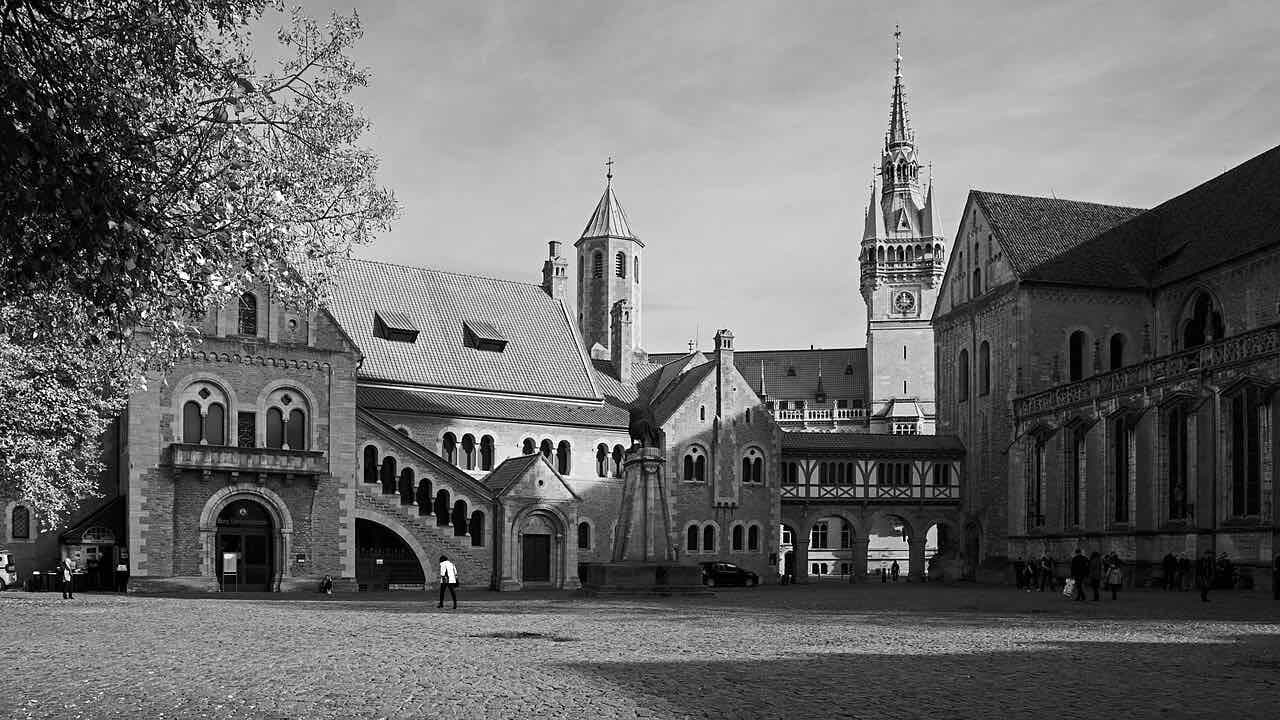
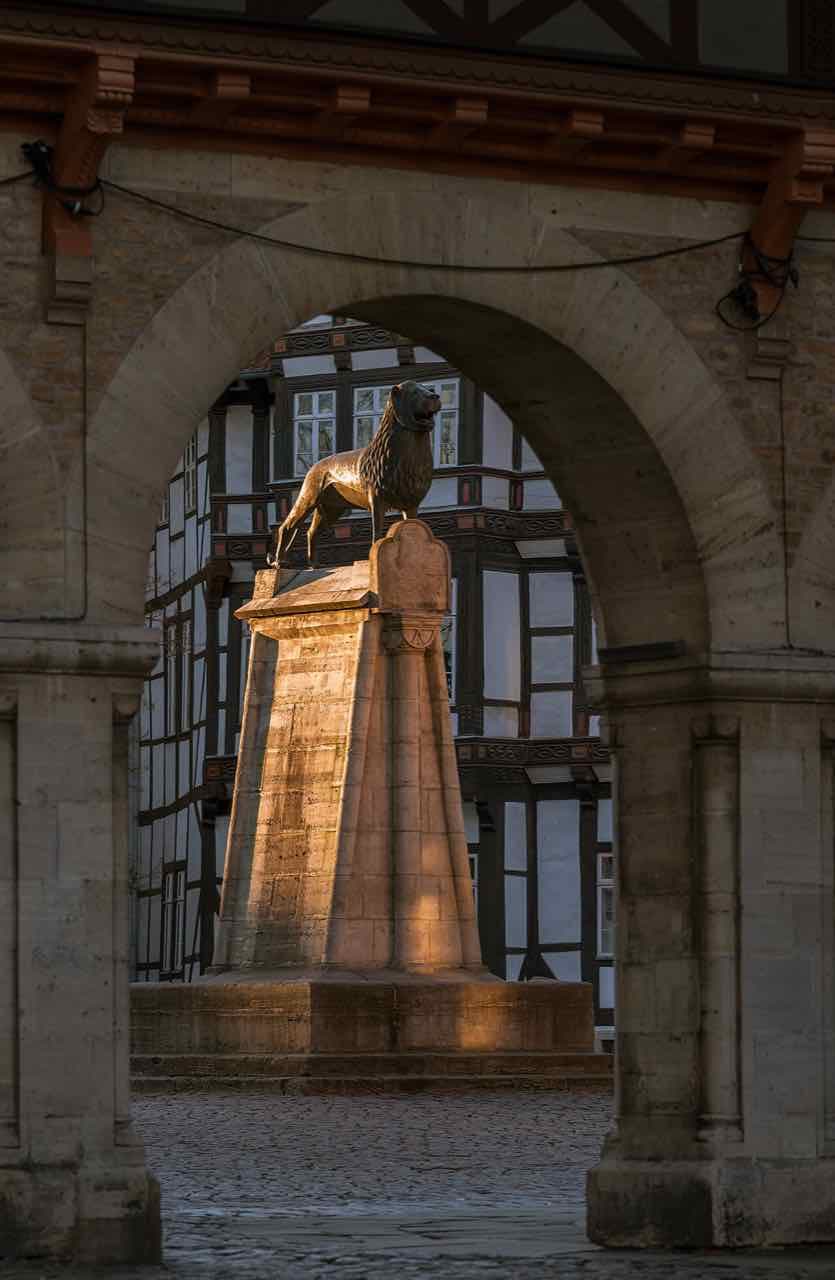
Henry the Lion made Braunschweig the capital of his duchy in 1142, had the cathedral of St Blasius built and turned Burg Dankwarderode into his residence. The castle you see today was rebuilt in the 19th century, and the bronze lion on Burgplatz is a copy of the one from 1166; the medieval original is kept indoors. The city belonged to the Hanseatic League from the 13th to the 17th century, and it lies at the farthest point on the Oker river that boats could reach.
The scholarly side is old too. The Technische Universität traces back to the Collegium Carolinum of 1745, and Gotthold Ephraim Lessing's play Emilia Galotti had its first performance here. Today the city is known for research: it is home to Volkswagen, Siemens, Bosch and Continental sites, and Wikipedia reports that on 2019 data it had the highest research and development intensity in the EU.
What to see in the first month
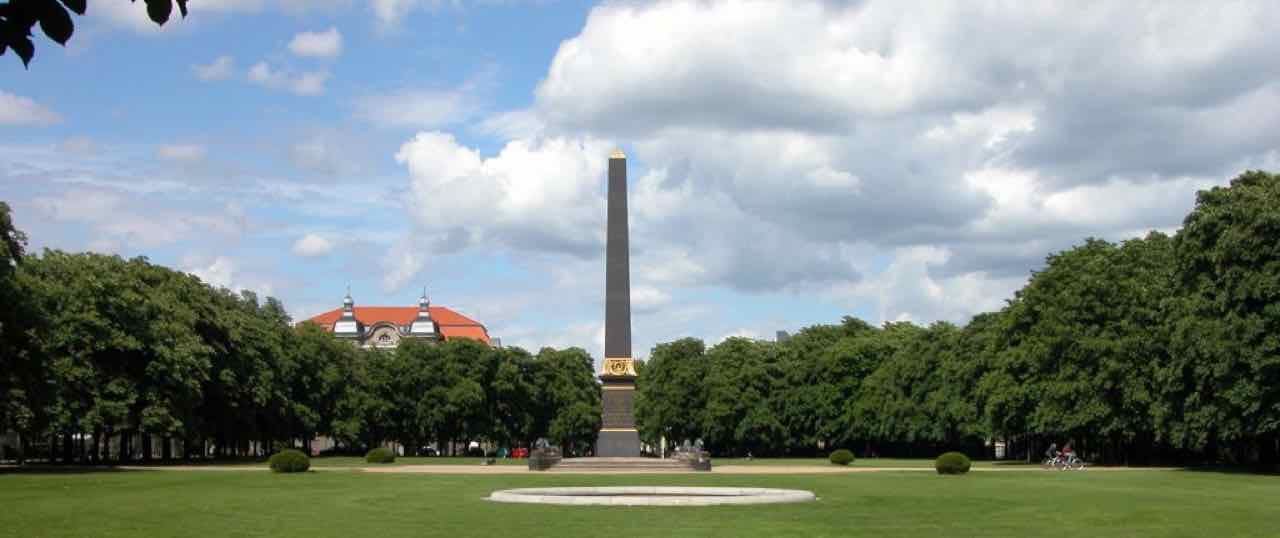
Most of this is within a few minutes of each other, inside the ring of green that follows the old defences.
Burgplatz, Burg Dankwarderode and the cathedral ↗
The square where Henry the Lion's city started. The cathedral is among the ten most-visited Protestant churches in Germany.
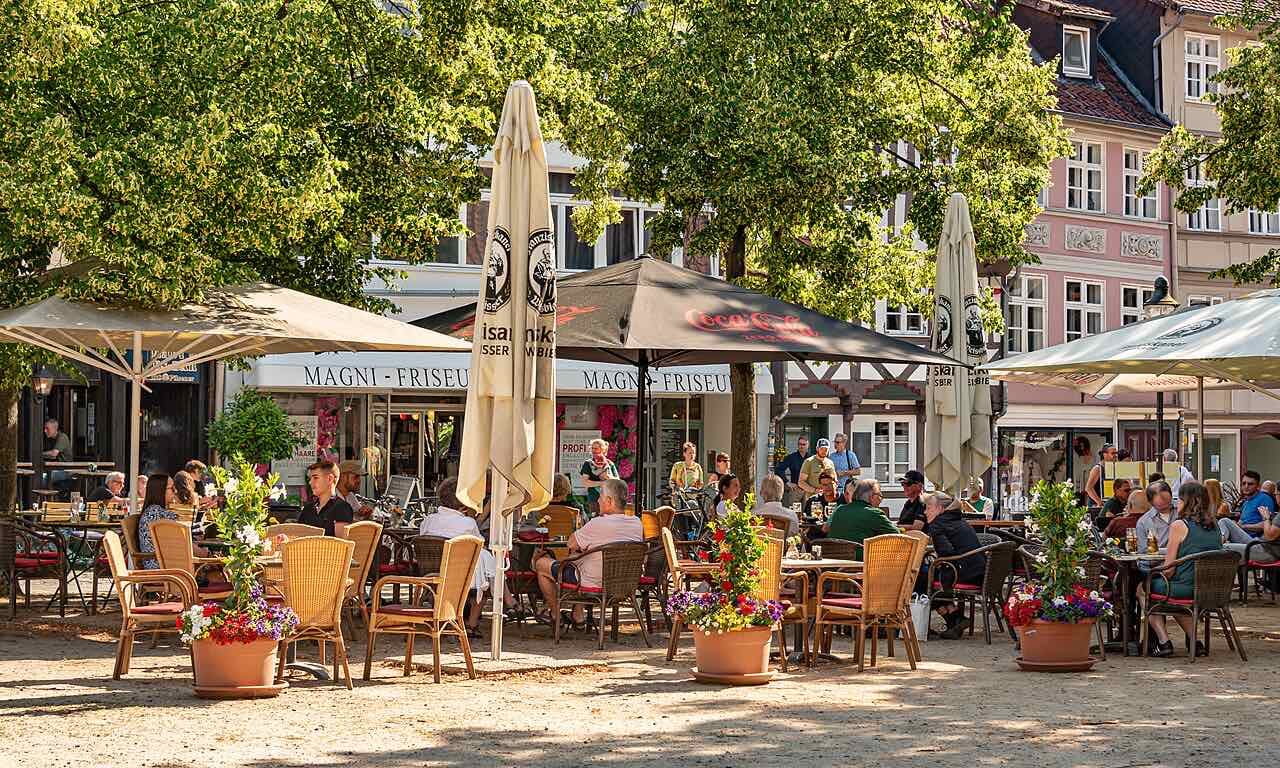
The old quarter around the Magnikirche, with narrow lanes and small half-timbered houses. The city's tourism page calls it the place where the Middle Ages become tangible; in summer the squares fill with café tables.
Schloss and the Quadriga
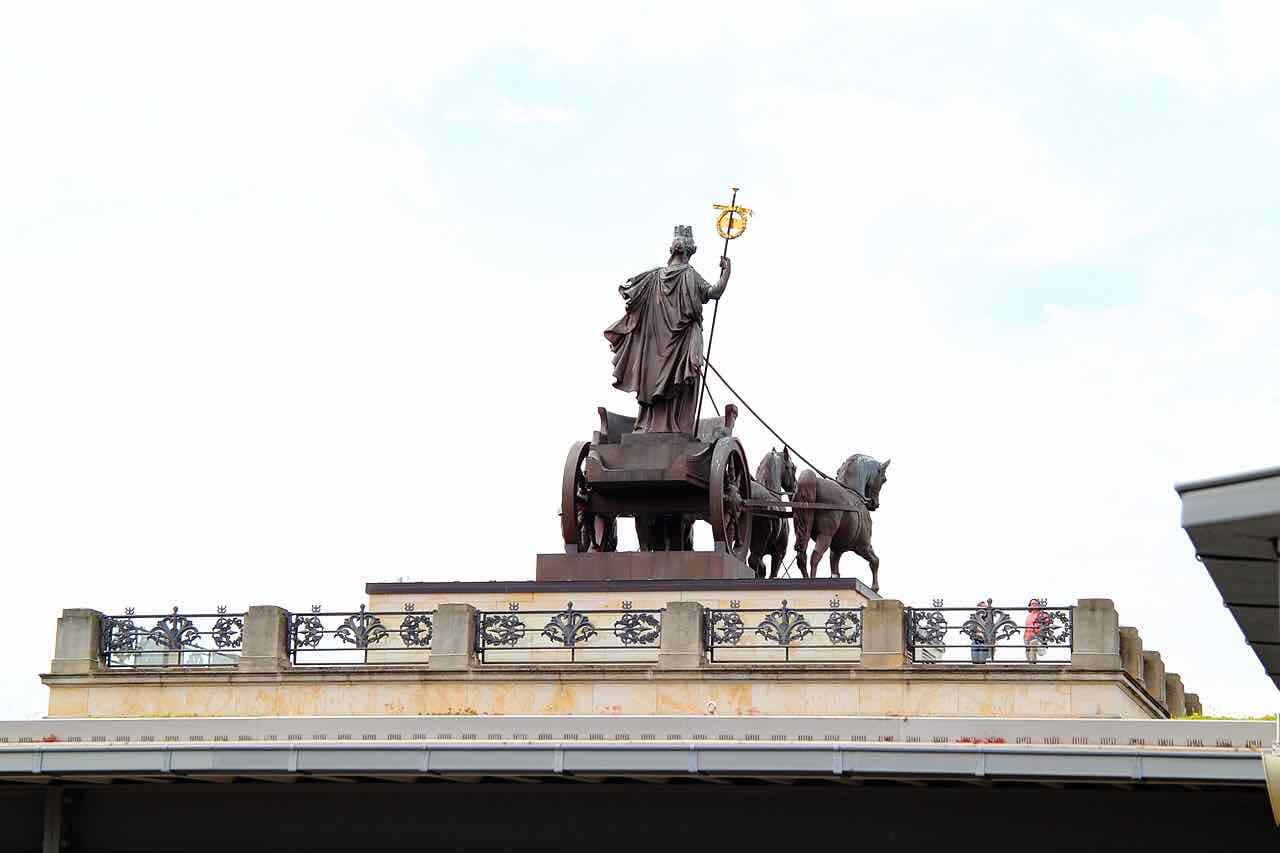
The palace was reconstructed between 2005 and 2007 and now holds the Schloss-Arkaden shopping centre. The Quadriga on its roof is described as the largest in Europe.
Museums
The Herzog Anton Ulrich-Museum (founded 1754, with works by Rubens, Vermeer and Rembrandt), the Braunschweigisches Landesmuseum (1891), the Naturhistorisches Museum (Germany's oldest natural history museum, opened 1754) and the Städtisches Museum on the Löwenwall.
Green spaces along the Oker at the edge of the centre, listed by the city as a quiet retreat.
Green, flat and made for bikes
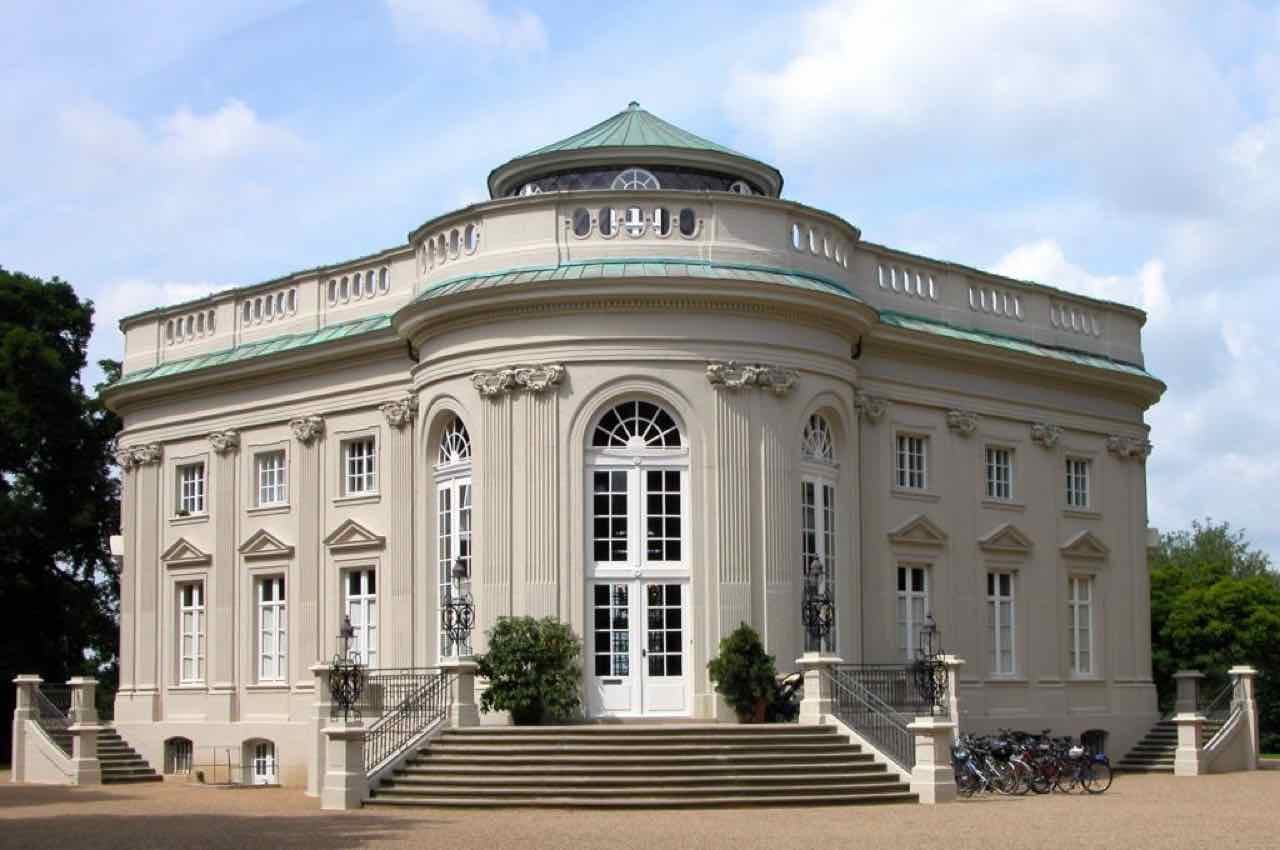
The Löwenwall follows the old Oker floodways and forms an unbroken green belt around the inner city. Further out are Richmondpark (laid out in 1768, with the small Schloss Richmond), the 47-hectare Prinz-Albrecht-Park, the 42-hectare Bürgerpark and the 240-hectare Westpark. The nature reserve at Riddagshausen is the largest green area in the city.
The TU's own events programme includes a 'Student Quest: Braunschweig by Bike' in late October 2026, which is one of the ways the university introduces international students to the city.
Around the centre
Getting around and getting away
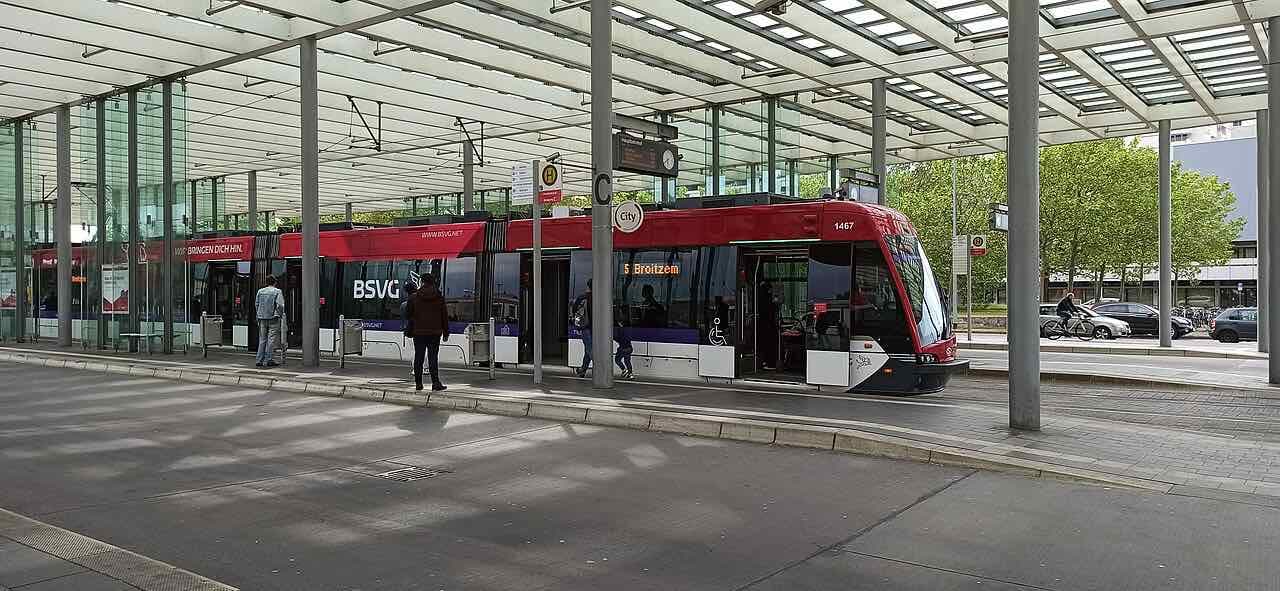
The Hauptbahnhof opened in 1960 and has IC and ICE services as well as regional trains. Trams and buses are run by the Braunschweiger Verkehrs-GmbH within the Verkehrsverbund Region Braunschweig, and the city runs battery buses charged by induction. Hannover is 70 km and Wolfsburg 30 km by road; Hamburg is 180 km. The airport at Waggum has operated since 1935.
The AStA's page on the semester ticket also covers the 49-euro Deutschlandticket, so check there what your semester fee includes before buying a separate ticket.
What it costs
- Room in a shared flat
- EUR 300 to 500source
- Small private apartment
- EUR 400 to 500 basic rent; EUR 550 to 650 with extra charges, electricity, heating and internetsource
- Dorm: single room in a 2- or 4-person flat (Wilhelmsgarten)
- EUR 449.50 to 515.50, furnished, internet includedsource
- Dorm: single apartment (Wilhelmsgarten)
- EUR 415.50 to 709.50, with own kitchen and bathroomsource
- TU estimate of total monthly living costs
- EUR 1,135 (accommodation 500, food 250, public health insurance 140, leisure and sport 100, the rest smaller items)source
- Broadcasting licence fee (GEZ)
- EUR 18.36 per household per month; one payment for a whole shared flatsource
Figures from the TU's pages for international students and the Studierendenwerk. Dorm rents are per month including service charges.
Jobs and employers
Wikipedia names Volkswagen, Siemens, Bosch and Continental among the big employers in the city, along with Salzgitter AG, Jägermeister and Nordzucker. The Physikalisch-Technische Bundesanstalt, Germany's national metrology institute, has its main site at Bundesallee 100, and the Helmholtz Centre for Infection Research is based at Inhoffenstraße 7. Check each employer's own site for student jobs and thesis topics.
The TU's International House runs a 'Study & Work Experience Exchange' and employer events such as 'Coffee, Cake & Career', both on its October 2026 programme, and an excursion to Eintracht Braunschweig on building career networks through clubs and volunteering.
Football and festivals
Eintracht Braunschweig was a founding member of the Bundesliga in 1963 and won the German championship in 1967, and the TU's International House has run an excursion to the club. The city's tourism page also links a Festival of Lights city trip, and the Haus der Vielfalt announced a Latin American market for 24 October 2026.
Part 2
Student life in Braunschweig
Where you can study
Technische Universität Braunschweig ↗
The city's main university, founded as the Collegium Carolinum in 1745. It has six faculties, among them mechanical engineering, electrical engineering and physics, architecture and civil engineering, and life sciences, and it reports two Clusters of Excellence and an eighth place nationwide in third-party funding. The programme finder lists 111 degree programmes, and its language filter counts 11 taught in English. The main address is Universitätsplatz 2.
International office ↗Hochschule für Bildende Künste Braunschweig (HBK) ↗
An art university founded in 1963 at Johannes-Selenka-Platz 1. It offers seven bachelor's and six master's programmes, plus a Diplom and a Meisterschüler programme in Freie Kunst. Subjects include Freie Kunst, Visuelle Kommunikation, Design in der digitalen Gesellschaft, Transformation Design, Kunstwissenschaft, Medienwissenschaften and Kunstpädagogik.
International office ↗Ostfalia Hochschule für angewandte Wissenschaften (Wolfenbüttel) ↗
Officially Hochschule Braunschweig/Wolfenbüttel. It reports 10,200 students and twelve faculties, among them vehicle technology, computer science, mechanical engineering, electrical engineering, law, business and social work. Its campuses are in Wolfenbüttel, Salzgitter, Wolfsburg and Suderburg; its address is in Wolfenbüttel, the town next to Braunschweig.
International office ↗A state-recognised Berufsakademie at Salzdahlumer Straße 160 with dual three-year bachelor's programmes in business administration (B.A.) and business informatics (B.Sc.). You apply to a partner company and to the academy at the same time. It reports 193 students in summer 2024 and 45 partner companies, so it is a small, company-based route and not a general-purpose university.
Physikalisch-Technische Bundesanstalt (PTB) ↗
Germany's national metrology institute, a federal institution with its main site at Bundesallee 100 in Braunschweig. Not a place to enrol, but a major employer for physicists and engineers and a source of theses and doctorates.
Helmholtz Centre for Infection Research (HZI) ↗
A Helmholtz research centre with its main campus at Inhoffenstraße 7 in Braunschweig and five other sites in Germany. Its career pages list a Graduate School and a PhD programme in epidemiology.
Student unions, services and groups
The student committee at Katharinenstraße 1, next to Mensa 1. It runs the semester ticket and refunds, social and financial counselling, legal advice, an international consultation hour, a cultural ticket and a bike workshop, and has referates including Internationale Studis, Sozialreferat, Studis mit Kind and accessibility.
Studierendenwerk OstNiedersachsen ↗
Runs the ten dorms in Braunschweig, the Mensas and cafeterias, and social and psychological counselling. Its housing Servicepoint is at Rebenring 64.
The Erasmus Student Network section, which runs the buddy programme together with the TU International House. Sign up on its incomings page; contact braunschweig@esn-germany.de.
An integration programme for new students: you are paired with a German student mentor who looks after a mixed group of German and international students for a full semester.
TU International Student Initiatives ↗
The TU's list of student groups for international students: the AStA International Students' office, the Chinese students' association, ESN, the Indian Student Community and the Malaysian Braunschweig Association.
Association of Chinese Students and Researchers Braunschweig ↗
A student and scholar group for newcomers and for culture, sport and academic events. Interest groups have included a football club and a Hanfu club.
Katholisches Hochschulzentrum (KHG) ↗
A contact point for Catholic students at Schleinitzstraße 17, with the Sielkamp dorm, counselling and working groups. Its autumn programme includes a semester-opening service and a welcome barbecue.
Campus and study culture
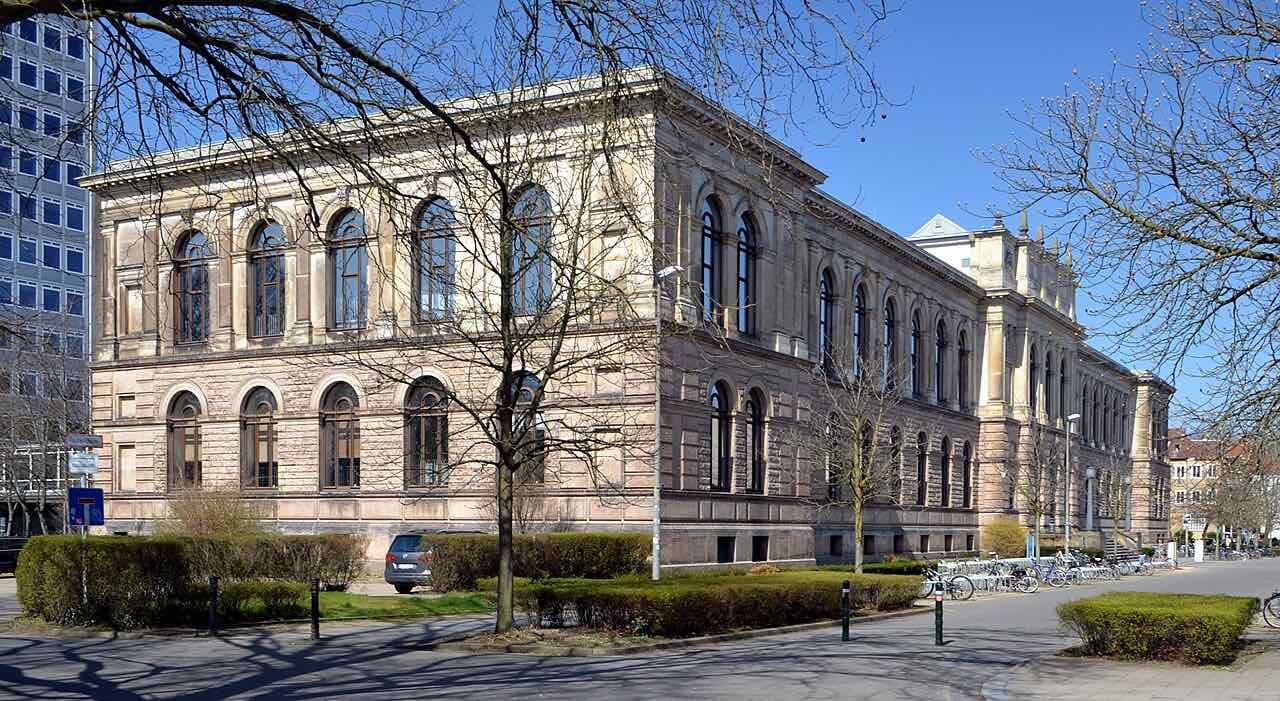
The TU is a technical university, and the study culture is technical: lectures plus a lot of exercise groups, labs and project work. The old main building, the Altgebäude, stands in sandstone in the middle of the campus, and the AStA and Mensa 1 share the address Katharinenstraße 1, and Mensa 2 is at Beethovenstraße 15.
The TU's International House runs a Welcome Week at the start of each semester. The programme for winter semester 2026/27 ran from 12 to 17 October with a kick-off, campus tours, study information events, practical workshops and an excursion in the region. During the semester its programme includes international lunch breaks, German-English and other language tandems, and city trips.
Finding a room
The TU does not provide housing, and it advises starting four to six months before you arrive, ideally before your admission letter comes. The market is tightest at the start of the semester. The Studierendenwerk runs ten halls with over 2,200 places and 20 guest rooms; most have waiting lists, and you must click the link in the confirmation email that arrives every 14 days or you are removed. When a place is offered you have two days to sign and return the contract. The ten halls are APM Rebenring, An der Schunter, Hans-Sommer-Straße, HF 10, Karlstraße, Langer Kamp, Michaelishof, Weststadt, Wiesenstraße and Wilhelmsgarten.
For private rooms, never transfer a deposit or rent before you have signed a tenancy agreement or received the keys. A deposit can be up to three months' basic rent, and the AStA's legal advice can look at a contract with you. Book your first nights somewhere before you leave home.
Where to eat
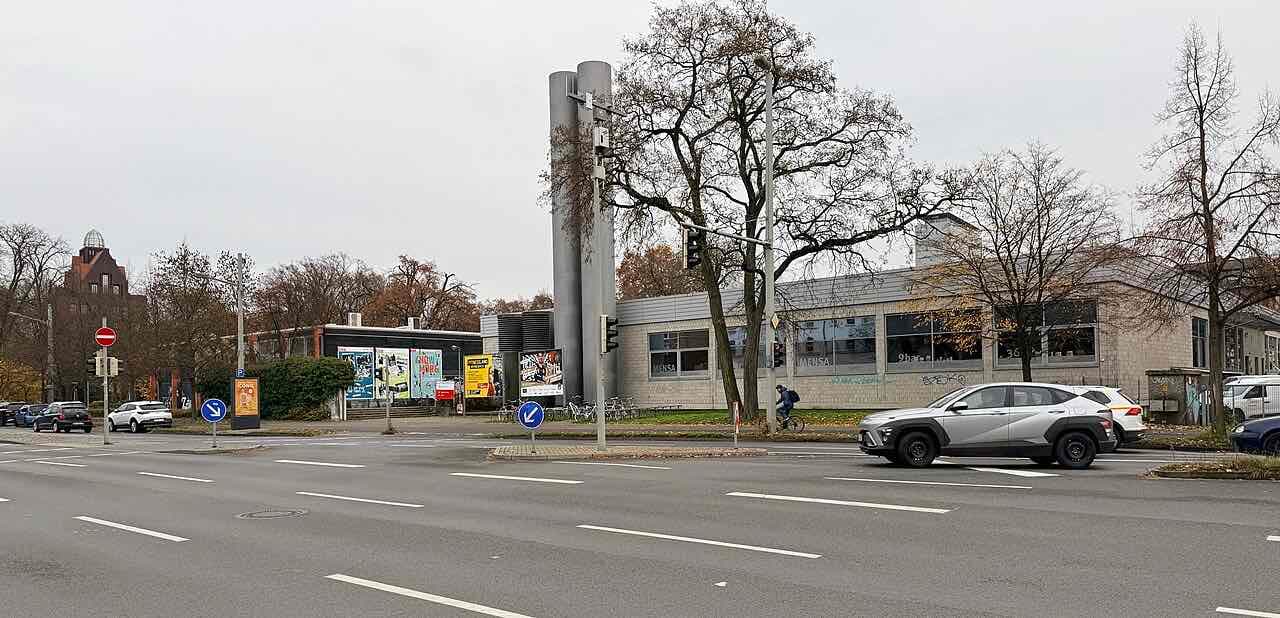
The Studierendenwerk lists six places in Braunschweig.
At Katharinenstraße 1, next to the AStA. The Chinese students' association has held its weekly lunch break here.
At Beethovenstraße 15.
Kantina Kreativa, bistro4u NFF, 9bar and ProbierWERK ↗
Smaller cafeterias, bistros and a coffee bar run by the Studierendenwerk. See the menu plan for what is open and the prices.
Meeting people, sport and nights out
The quickest ways in are the buddy programme (run by ESN with the International House), inTU, the free language tandems and the international lunch breaks, plus a Facebook group called International Students at TU Braunschweig. Many events are free; some excursions have a small fee.
Beyond the university, the Magniviertel and the Altstadtmarkt are where people sit outside in summer, and the Haus der Vielfalt at Am Nordbahnhof 1A runs a language Sprechcafé every Tuesday afternoon from 3 November 2026.
Your first weeks
- 1
Before you travel
Apply for a dorm place at the Studierendenwerk or start your private search, and book a bed for the first nights. For the visa the TU says you must show EUR 11,904 for one year.
- 2
First days
Register your address at the Bürgerservice, Bohlweg 33. Meldeangelegenheiten need an appointment first, via braunschweig.de/termine or 0531 470-1.
- 3
First two weeks
Join Welcome Week or the semester programme at the International House, and sign up for the buddy programme through ESN.
- 4
Residence permit
Apply online through the city's Serviceportal; the Ausländerbehörde is at Friedrich-Seele-Straße 7 and works by appointment. A digital photo is required: the on-site SpeedCapture costs EUR 6 per person.
- 5
Work
As a non-EU student you may work up to 140 full days or 280 half days a year, and your permit must allow it. Above EUR 556 a month you pay pension contributions, which non-EU students can have refunded.
- 6
Money
Apply for the Niedersachsen scholarship if it fits: for winter 2026/27 the TU is awarding 174 state scholarships of EUR 500 each, with a deadline of 9 November.
Where you come from matters here
Pick your home country: food, faith, community groups and the consulate that serves you, checked 21 October 2026.
🇮🇳 Living in Braunschweig as an Indian student
India is the sixth-largest foreign nationality in the city, with 1,394 people at the end of 2024, and Indian students are among the larger groups at the TU. A Hindu temple, Sri Shankara Narayana Hindu Peedam, is listed at Saarbrückener Straße 252 B in the 38116 postcode, but it has no website that we could read, so ask the Indian Student Community where people go.
Indian Student Community (ISC TUBS) ↗
A student group that builds friendships and peer support among Indian students and promotes cultural exchange. It is listed by the TU; find it on Instagram.
Tiergartenstraße 17, 10785 Berlin. India's consulates are in Frankfurt, Hamburg and Munich; check on the embassy's site which one covers Lower Saxony.
🇳🇬 Living in Braunschweig as a Nigerian student
Nigeria is not among the ten largest foreign nationalities in Braunschweig, and we found no Nigerian association with its own website here. The embassy is in Berlin, and the city can point you to groups.
Neue Jakobstraße 4, 10179 Berlin. Passport applications are accepted Monday to Thursday, 10:00 to 14:00; visas go through the VFS centre at Zimmerstraße 68.
City integration team, Sozialreferat ↗
Annette Schulz handles associations and events and can tell you which migrant associations exist; the city says there are about 80 international associations.
🇻🇳 Living in Braunschweig as a Vietnamese student
Vietnam is not among the ten largest nationalities in the city, and we found no Vietnamese association or pagoda in Braunschweig. The embassy is in Berlin.
Consular services, procedure guides and a fee schedule on its site. It also warns of scam calls from people pretending to be embassy staff or police.
City list of international associations ↗
The city's page on international associations: it names the Tunisian and German-Palestinian associations at Kohlmarkt 11 and the Haus der Vielfalt, and says there are about 80 in total. Ask the contact on the Ansprechpersonen page for others.
🇳🇵 Living in Braunschweig as a Nepali student
Nepal is not among the largest nationalities here, and we found no Nepali association in Braunschweig. The embassy is in Berlin.
Guerickestraße 27, 10587 Berlin. Handles passports, visas, document attestation and power of attorney.
A house at Am Nordbahnhof 1A, run by the VHS, where migrant and intercultural associations meet and where public events and a weekly language Sprechcafé take place.
🇨🇳 Living in Braunschweig as a Chinese student
China is the fifth-largest foreign nationality in the city, with 1,887 residents at the end of 2024, and the TU lists a Chinese students' and researchers' association.
Association of Chinese Students and Researchers Braunschweig ↗
Registered at the TU. It organises orientation for newcomers, a weekly Chinese Lunch Break at Mensa 1 (as of its 2023 page), a Spring Festival gala with other northern German associations, and interest groups.
Consulate General of China, Hamburg ↗
The nearest Chinese consulate general we could confirm; its site has a consular district overview, so check there whether Lower Saxony belongs to it.
English-taught programmes in Braunschweig
Soonest open deadline first. Every entry links to its official source.
- Data ScienceTechnische Universität Braunschweig · BraunschweigmasterNo tuition15 Jan 2027Open
- Business Engineering in Urban MobilityTechnische Universität Braunschweig · Braunschweigmaster31 Jan 2027Open
- Solar System Physics (SSP)Technische Universität Braunschweig · BraunschweigmasterNo tuition15 Mar 2027Open
- Quantum Technologies in Electrical and Computer Engineering (QTEC)Technische Universität Braunschweig · BraunschweigmasterNo tuition15 Mar 2027Open
- Battery and Hydrogen TechnologyTechnische Universität Braunschweig · BraunschweigmasterNo tuition15 Jul 2027Open
- Computational Sciences in Engineering (CSE)Technische Universität Braunschweig · BraunschweigmasterNo tuition15 Jul 2027Open
- Artificial Intelligence for Molecular SciencesTechnische Universität Braunschweig · BraunschweigmasterNo tuition15 Jul 2027Open
- Microelectronics Engineering: Electrical Engineering and Information TechnologyTechnische Universität Braunschweig · BraunschweigmasterNo tuition15 Jul 2027Open
- Communications Engineering and Data Science (CoDaS)Technische Universität Braunschweig · BraunschweigmasterSee sourceCheck source
Is Braunschweig right for you? Ask us. Free.
Tell us your passport, grades and budget. We compare Braunschweig with the other places you could study, then apply for you. You never pay us.
Get my free plan