Studying in Saxony, Germany
Dresden
A baroque capital on the Elbe with a technical university, a large chip industry and the Saxon Switzerland rocks just outside.
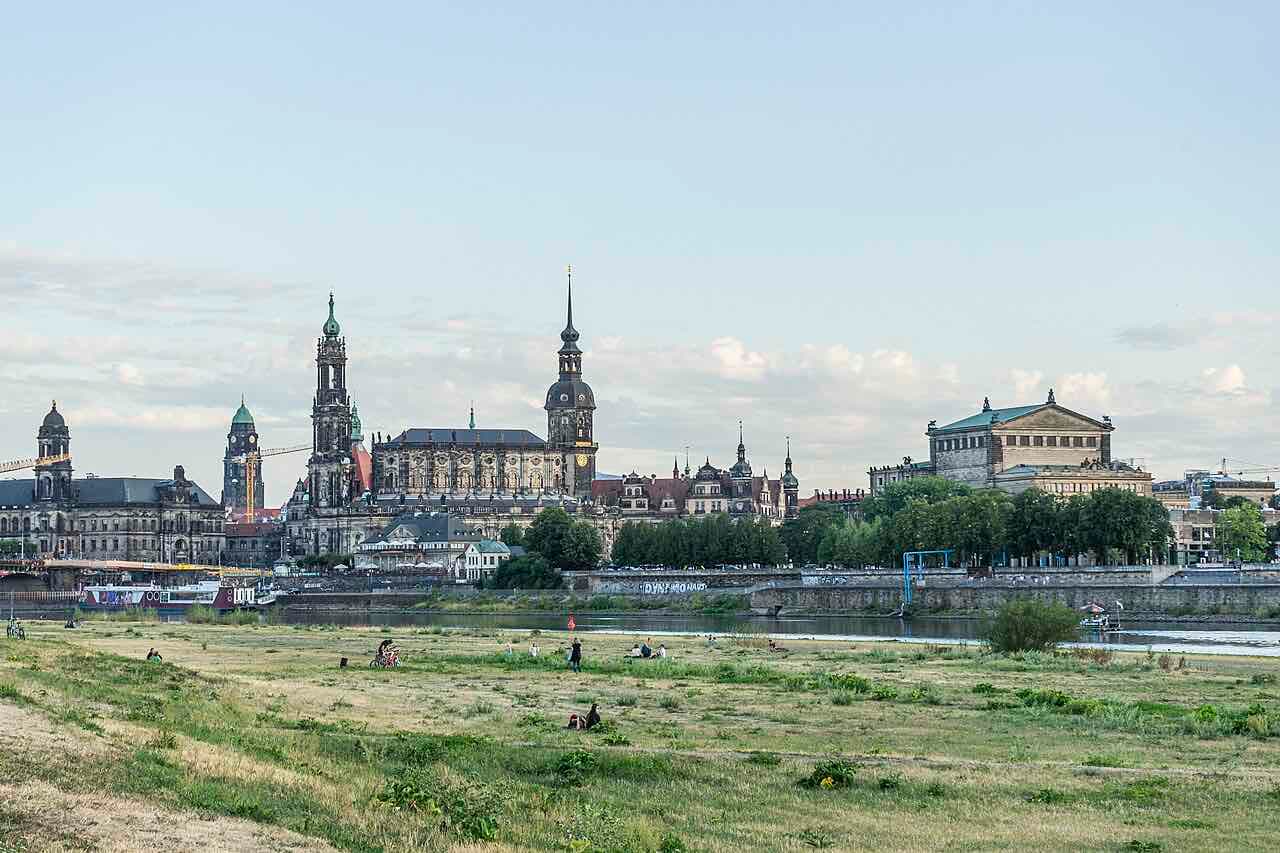
Dresden is the capital of Saxony and lies on both sides of the Elbe, with about 563,000 people. The old centre was destroyed in the Second World War and rebuilt piece by piece, and the Frauenkirche, the Zwinger and the Semperoper now stand again beside a river with wide meadows where students sit on summer evenings. TU Dresden is a German Excellence University with about 29,000 students from 128 countries, and around it sit a university of applied sciences, three art and music universities, Max Planck and Fraunhofer institutes and a cluster of chip makers known as Silicon Saxony. Berlin, Leipzig and Prague are each a train ride away, the Elbe Sandstone Mountains begin just outside the city, and the Neustadt has one of the liveliest bar scenes in Germany.
- Students at TU Dresden
- about 29,000, around 21% international, from 128 countries
- Semester contribution (TU Dresden, winter 2026/27)
- 361 EUR, including 234.18 EUR for the semester ticket
- Dorm places (Studentenwerk Dresden)
- 28 halls with 5,730 places in Dresden
- Blocked account for a student visa (2026)
- at least 992 EUR a month
- Striezelmarkt 2025
- 26 November to 24 December, 2.2 million visitors
Part 1
Living in Dresden
A city that was rebuilt, and still is
Dresden is first mentioned in a document in 1206 and became the residence of the Saxon rulers in 1485. The Neustadt on the right bank got its name after the old town on that side burned down in 1685. In the GDR years, from 1952 to 1990, Dresden was the capital of its own district, and in 1990 it became the capital of Saxony again.
The centre was destroyed in the Second World War, and every year on 13 February thousands of residents gather to remember it. The Frauenkirche stood as a ruin for about fifty years and was rebuilt between 1994 and 2005. The baroque skyline you see from the river is largely reconstruction, while the Äußere Neustadt, which had limited damage in the war, kept its large area of 19th-century apartment buildings.
In 2009 UNESCO removed the Elbe Valley in Dresden from the World Heritage List.
What to see and do
Most of the old centre fits in a one-hour walk, and a lot of it is free to look at from outside. Check opening hours and any student prices on each site.
The domed church on the Neumarkt. It is an open church with a daily programme of visits, organ music and services, and you can climb the dome for the view over the city.
Staatliche Kunstsammlungen Dresden ↗
The state art collections run the Albertinum, the Residenzschloss with the Grünes Gewölbe, the Zwinger with the Semperbau, the Kupferstich-Kabinett, the Münzkabinett and the Rüstkammer. Start with one building rather than trying them all in a weekend.
Brühl Terrace and the Elbe waterfront ↗
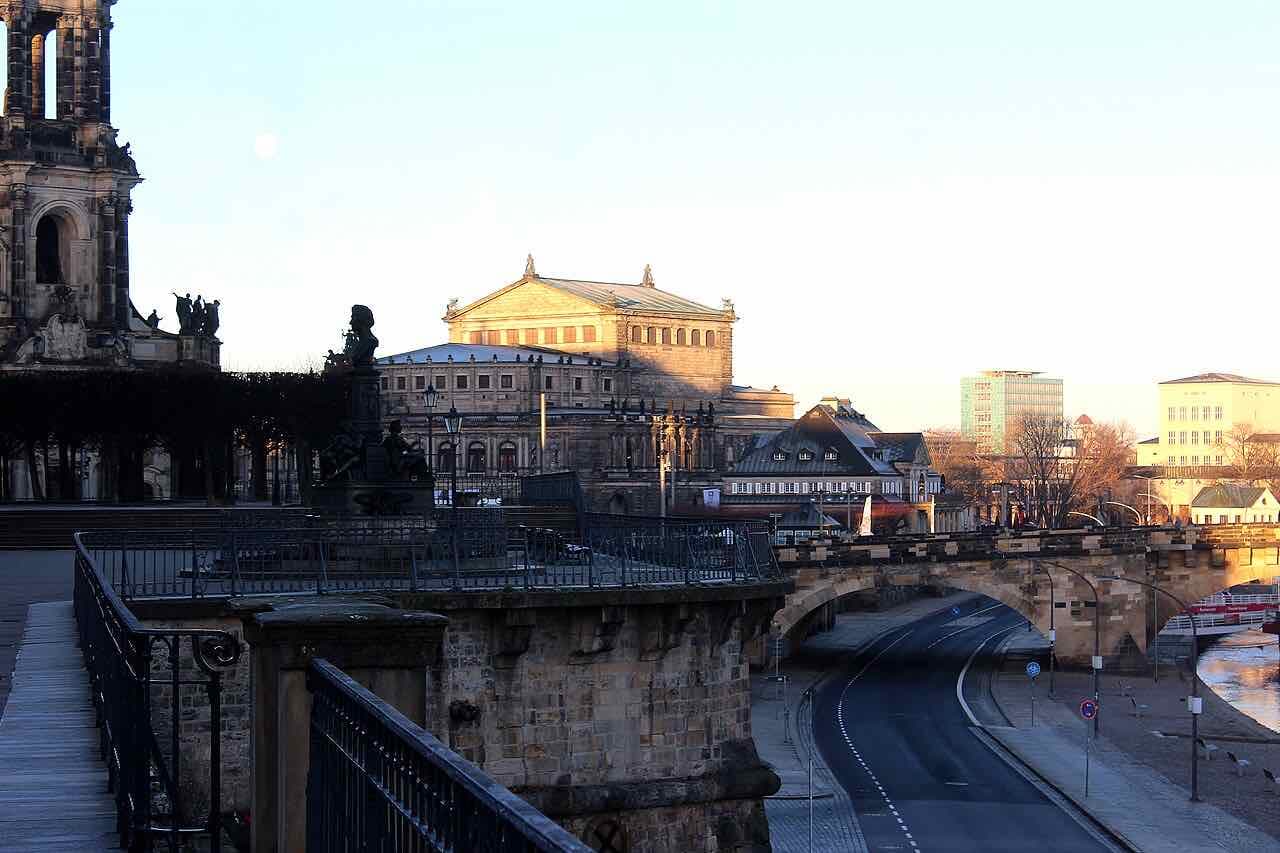
The terrace above the river leads from the Albertinum towards the Hofkirche and the Semperoper. Below it, the Elbe meadows on the Neustadt side are where the city goes to sit, cycle and look back at the old town.
A park of about 1.8 km2, public since 1814, with a small baroque palace in the middle, the zoo, the botanical garden and a miniature railway that runs from April to October.
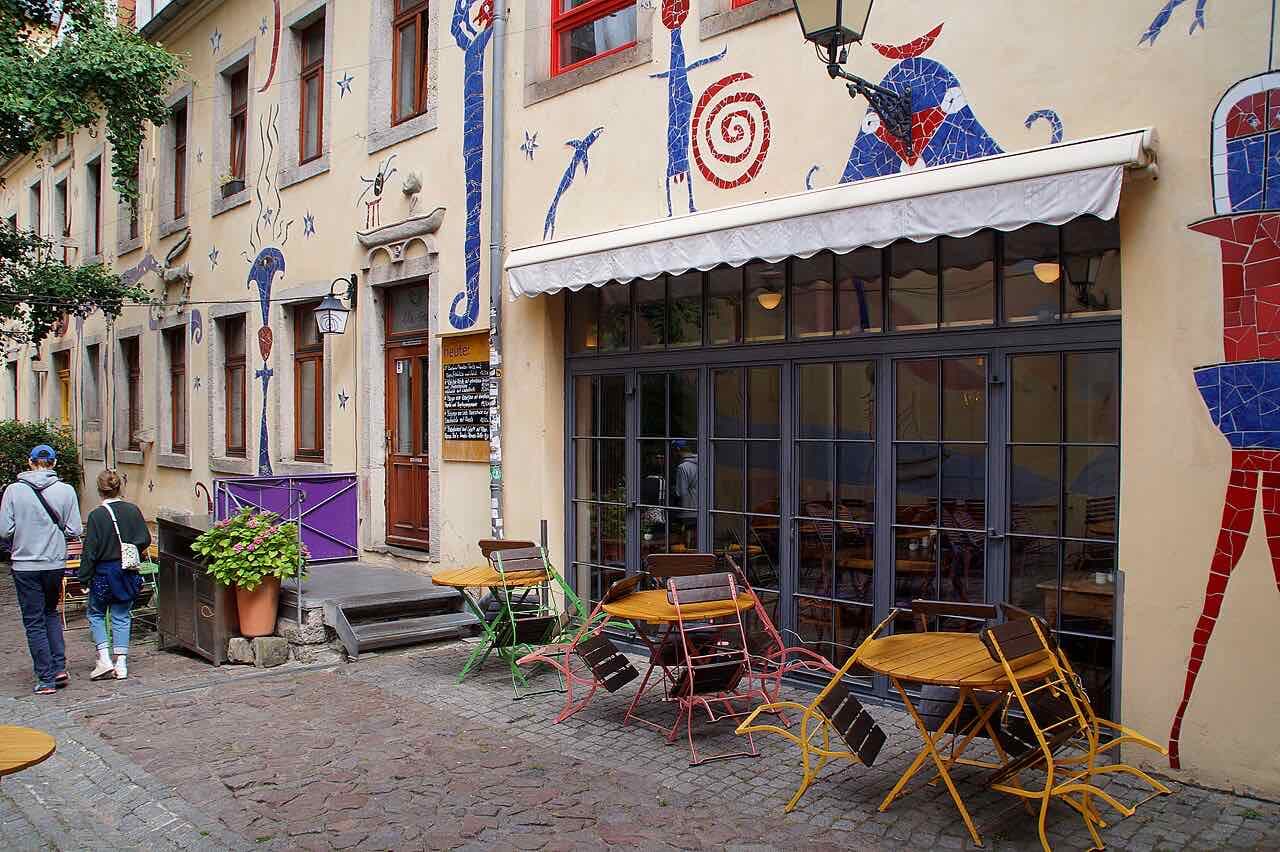
Five connected courtyards in the Äußere Neustadt, each decorated differently, with cafés, small shops and galleries. One courtyard has drainpipes that make notes when it rains.
Dresden's Christmas market on the Altmarkt, first documented in 1434. It starts on the Wednesday before the first Advent and runs to Christmas Eve, with the Stollen festival the Saturday before the second Advent.
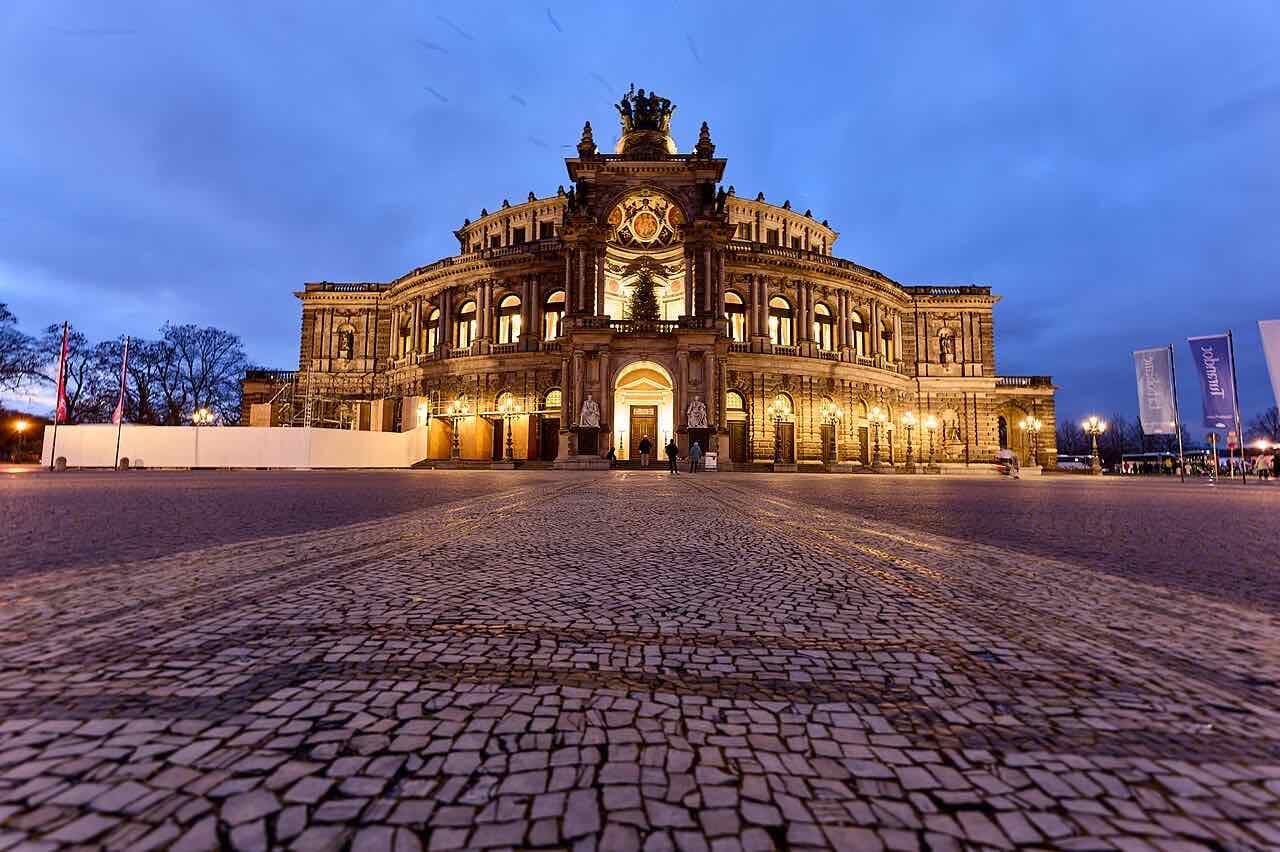
The opera house on Theaterplatz. The student association faranto has included opera visits in its programme for international students, so ask your international office or buddy group before you buy a full-price ticket.
Culture on the doorstep
River, parks and rocks: weekends outdoors
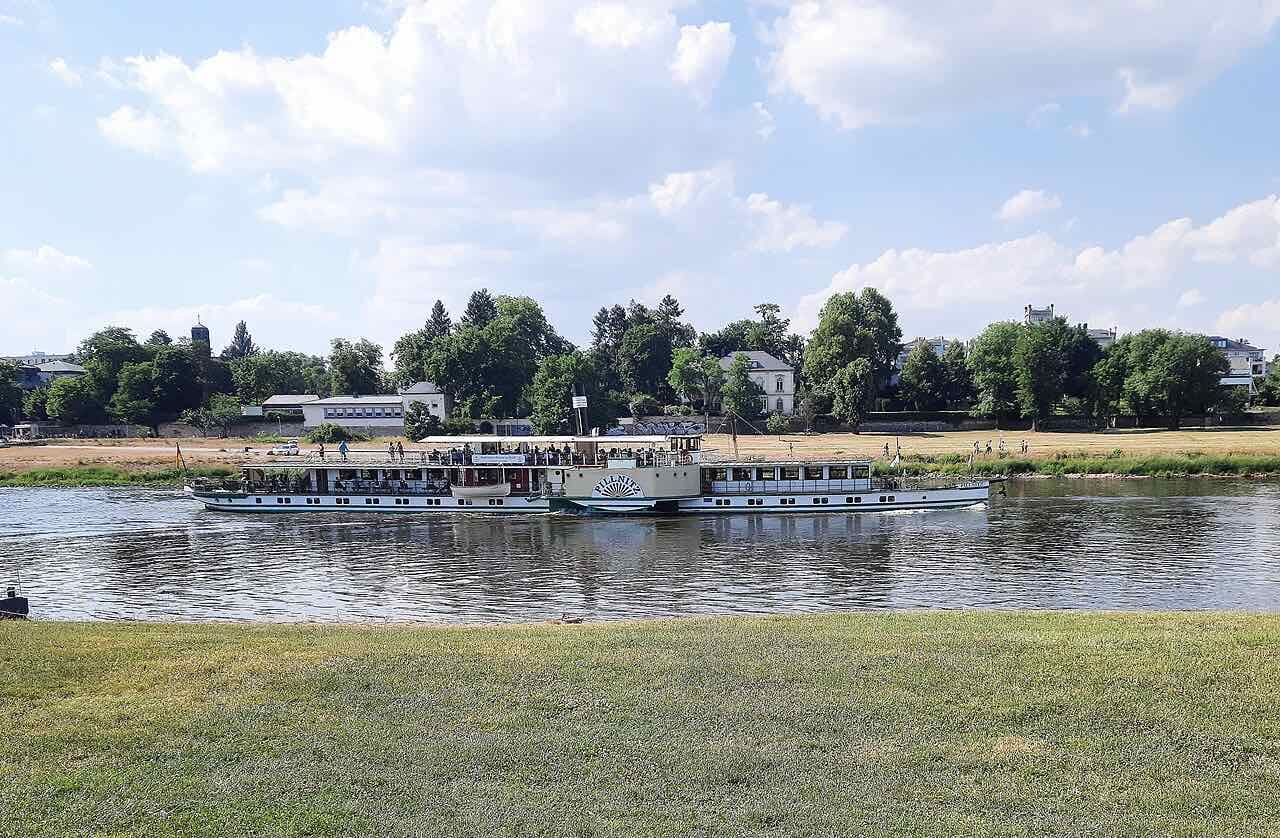
The Elbe runs through the city for about 30 km, and the Elbe meadows along it stretch for nearly 20 km. Steamboat service on the Elbe began in 1837, and paddle steamers still run on the river.
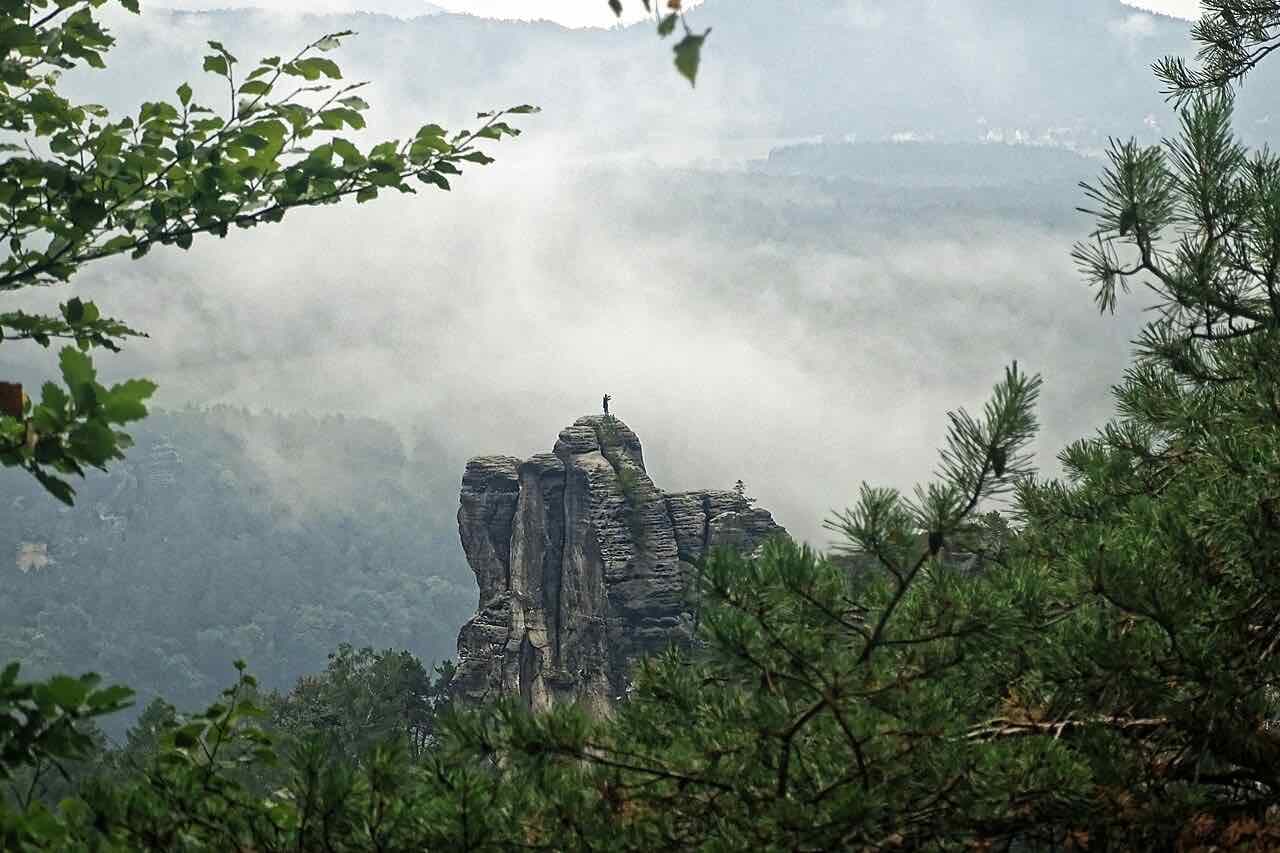
The Dresdner Heide in the north-east is a woodland of about 6,100 hectares that the city describes as its most important recreation area. The Großer Garten is the green heart of the south. Leave the city and the Elbe Sandstone Mountains begin: Saxon Switzerland National Park was founded in 1990, covers 93.5 km2 and is Saxony's only national park. The Bastei rock formation above the Elbe is its best-known viewpoint.
Check the national park site before a hike: it carries a ticker on the clearing of storm damage in the area between Rathen and Hohnstein.
Getting around
You will not need a car. The semester ticket is part of your semester contribution, and the city is built for trams.
Dresdner Verkehrsbetriebe runs twelve tram lines on a network of about 200 km, plus buses and a night service called GuteNachtLinie. On Fridays, Saturdays and before holidays night buses leave every 30 minutes between 22:45 and 04:45, with Postplatz as the hub.
The S-Bahn has three lines. Dresden Hauptbahnhof and Dresden-Neustadt are the two main stations, with main lines to Berlin, Prague, Leipzig and Chemnitz.
The semester contribution at TU Dresden includes 234.18 EUR for the semester ticket in winter 2026/27. Other universities charge their own contribution, so ask yours what it covers.
Dresden Airport is on the northern edge of the city, and a direct IC 17 train links Dresden with Berlin Brandenburg Airport.
Work and employers: Silicon Saxony
Dresden's economy is led by microelectronics. The industry association Silicon Saxony has about 600 member companies, many of them in the north of Dresden, and its members include GlobalFoundries Dresden, Infineon Technologies Dresden and Siemens. The name goes back to a 1998 Time magazine article. Around them are research institutes of the Max Planck, Fraunhofer, Leibniz and Helmholtz societies.
That mix means engineering, computer science, physics and materials science students have real local options for working-student jobs, internships and thesis topics. International students from outside the EU may work 140 full days or 280 half days a year without extra permission.
STAV, the student job agency recognised as a TU Dresden student group, matches students with employers and private households.
Part 2
Student life in Dresden
Where you can study
Technische Universität Dresden (TUD) ↗
Founded in 1828 and a German Excellence University since 2012 with five Clusters of Excellence. About 29,000 students, around 21% of them international, in 17 faculties, and about 6,500 doctoral candidates. It offers 121 degree programmes, 28 of them in English and 26 as double degrees. The campus is in the Südvorstadt, with the central International Office at Mommsenstraße 6, open Tuesday and Thursday 13:00 to 15:00. TU Dresden runs an International Tutoring Programme where students help new international arrivals with campus and paperwork.
International office ↗Hochschule für Technik und Wirtschaft Dresden (HTW Dresden) ↗
Founded in 1992 and the second-largest university in the city, with 4,857 students in 2017. The main campus is at Friedrich-List-Platz 1 near the main station, and parts of the agriculture, environment and chemistry faculty are in Pillnitz. Eight faculties: civil engineering and architecture, design, electrical engineering, spatial information, informatics and mathematics, agriculture, environment and chemistry, mechanical engineering and business administration. More than 400 international students and staff are part of the university. Ask the International Office which programmes are taught in English before you apply.
International office ↗Hochschule für Bildende Künste Dresden (HfBK) ↗
An independent fine arts university with about 550 students and five study programmes: fine arts, restoration, stage and costume design, theatre design and a postgraduate art therapy programme. The sites are on the Brühl Terrace, on Pfotenhauerstraße and on Güntzstraße. Applicants from outside Germany find the steps on a dedicated page.
International office ↗Hochschule für Musik Carl Maria von Weber Dresden ↗
The music university at Wettiner Platz 13. Its programmes include bowed strings, piano, guitar, harp, wind instruments, percussion, voice, composition, conducting, music theory, new music, jazz/rock/pop and music teacher training. The site says its community of about 1,300 people comes from more than 60 countries.
International office ↗Palucca Hochschule für Tanz Dresden ↗
Germany's only independent university for dance. It offers a Bachelor in Dance, Master's degrees in Dance Teaching (work-study) and Choreography, an Artistic Master Class and an apprentice certificate course with the Semperoper Ballett. There is a guest student programme and Erasmus+ exchange for international students.
Evangelische Hochschule Dresden (ehs) ↗
A university of applied sciences for social work, early childhood education, nursing and health, counselling and social management, funded by the Free State of Saxony and the Evangelical-Lutheran Church of Saxony. Programmes in religious and parish education are taught at the Moritzburg campus, and the Johannstadt campus houses the library. The ehs has an international office and an English page for exchange students.
Duale Hochschule Sachsen (DHSN), Dresden campus ↗
A dual university where study is combined with paid work at a practice partner, so students earn a salary from the start and pay no tuition fees. Dresden offers Bachelor's degrees in business (trade, industry, finance and banking, insurance), agricultural management, wood and wood-based materials technology, information technology and more, in business, engineering and social and health sciences. The practice partner supervises you throughout, and the Dresden campus runs communication courses for international students.
SRH University, Campus Dresden ↗
A private university with a campus in Dresden. English-taught programmes here are the full-time Bachelor in Global Hospitality Management, and Master's degrees in International Business with a Healthcare Management track, in Hospitality Management and Leadership, and in International Business and Leadership. A dual Master in Computer Science is taught in English at Dresden and Leipzig. Check the tuition fees on the site before applying.
Fachhochschule Dresden (FHD) ↗
A state-recognised private Fachhochschule in the city, with small groups, full-time and part-time study and study without a numerus clausus. The site describes its campus as central, close to the Großer Garten. Check the fees and the language of instruction on the site.
Dresden International University (DIU) ↗
A state-recognised, non-profit institute attached to TU Dresden that focuses on continuing education. Its programmes sit in management and law, engineering and technology, and life sciences, and include Bachelor's and Master's degrees and certificate courses. It says it has more than 22 years of experience in academic continuing education.
Max Planck Institute of Molecular Cell Biology and Genetics (MPI-CBG) ↗
A basic-research institute with about 500 scientists from over 50 countries working on how cells form tissues, across biology, physics, mathematics and computer science. It is a research institute and not a university.
Max Planck Institute for the Physics of Complex Systems (MPI-PKS) ↗
A Max Planck institute that runs workshops and seminars in complex-systems physics, among them active matter and atomic physics. It is a research institute and not a university.
Max Planck Institute for Chemical Physics of Solids (MPI CPfS) ↗
A Max Planck institute working at the border of solid-state chemistry and condensed-matter physics, on topology and symmetry in modern materials and on materials synthesis. It is a research institute and not a university.
Leibniz Institute for Solid State and Materials Research (IFW Dresden) ↗
A Leibniz institute that studies the physics and chemistry of new materials for storing and transmitting information, converting heat to electricity and storing energy. It is a research institute and not a university.
Helmholtz-Zentrum Dresden-Rossendorf (HZDR) ↗
A Helmholtz research centre in the Dresden area. It is a research institute and not a university.
Student unions, services and groups
Studierendenrat (StuRa) TU Dresden ↗
The student council of TU Dresden at Mommsenstraße 5. It offers study counselling, advice on financing, legal advice, equipment loans and project funding, and recognises about 100 student groups.
Halls of residence, canteens, BAföG, counselling, culture and an international service for students of the Dresden universities. The English pages explain housing and the canteens.
Dresden University Sports Center (DHSZ) ↗
University sport for TU Dresden students with courses in blocks per semester. For winter 2026/27, block A runs from 19 October to 13 December, with registration from 14 October at 17:00 and Freshman Sports Days in September.
The Erasmus Student Network section at TU Dresden, with a peer support programme, events and trips for international students.
A student association founded in 2001 that works with the HTW International Office. Its teams organise events such as hiking in Saxon Switzerland and opera visits, country parties and charity projects, and help incoming students in their first weeks.
International Tutoring Programme (TU Dresden) ↗
Current students act as tutors for new international students, with at least one tutor per faculty. They help with the start of studies, campus and German bureaucracy.
Indian Association Dresden e.V. ↗
Runs a Student Welcome Initiative and festivals such as Diwali and Holi. Listed by TU Dresden's student council as a recognised student group.
Evangelische Studierendengemeinde (ESG) Dresden ↗
A Protestant student community, recognised by the TU Dresden student council, with a weekly programme and a calendar of events. It has a page in English.
Katholische Studierendengemeinde (KSG) "Thomas von Aquin" ↗
The Catholic student community, based in the Eisenstuckstraße, with a newsletter and regular events.
A Christian student group at the university that welcomes new students.
The student job agency that connects students, employers and private households, with job listings in English.
The student radio, which also reports on student groups such as the esports society.
A student network that places students in internships and volunteering projects abroad.
Campus life and study culture
TU Dresden is large and spread over the Südvorstadt, with the central International Office on Mommsenstraße. The student council counts about 100 recognised groups, from a Formula Student racing team and a space-flight society to choirs, a big band, a theatre group and a student radio, so there is room for a hobby next to the degree.
TU Dresden states that you should assume you have to finance your studies yourself, that the course demands a lot of independence and that you will have to deal with authorities and the health system on your own. The International Tutoring Programme exists for exactly this start, and the faculty tutors are the people to ask first.
HTW Dresden teaches in small groups with close contact to the teaching staff and a strong practice focus. The art and music universities are small, the Studentenwerk looks after students of seven Dresden universities, and the Duale Hochschule Sachsen has its own campus and student council.
What it costs
- Semester contribution at TU Dresden, winter 2026/27
- 361 EUR: 248.27 EUR student body fee (234.18 EUR semester ticket, 14.09 EUR student council) and 112.73 EUR Studentenwerk feesource
- Studentenwerk fee from summer semester 2027
- 102.73 EUR, because the canteen share falls from 87.50 to 77.50 EURsource
- Canteen meals (Neue Mensa, Alte Mensa, Mensa Matrix, Siedepunkt)
- the menu of 21 October 2026 lists dishes from 2.35 EUR; each dish shows three prices and the lowest is the student pricesource
- Blocked account (2026)
- at least 992 EUR a month, or a work contract of at least 1,075 EUR gross a monthsource
- Residence permit for study
- 100 EUR for the first one, 93 to 98 EUR for extensions; passport photo at the Ausländerbehörde 6 EURsource
- Dorm rooms
- 28 halls with 5,730 places in Dresden; rent is shown for each hall in the cataloguesource
The semester contribution differs between universities. The student body fee differs between universities. The figures below are for TU Dresden for winter 2026/27; the Studentenwerk fee is the Dresden rate.
Housing
TU Dresden advises you to book accommodation before you arrive, at least for the first few days, and to apply for a Studentenwerk room as soon as you have your admission, because places are limited. The Studentenwerk runs 28 halls in Dresden with 5,730 places. Rooms come furnished, and some halls are assigned to specific faculties under a scheme called WOMIKO, so you can live with students of your own subject.
Beyond the halls there is a private market of furnished student apartments near campus and in the Neustadt, plus flat shares (WGs) that are often rented out for short periods. TU Dresden lists several private providers and the platform wg-gesucht.de on its housing page. If you have nothing on arrival, book a hostel for the first nights, because beds fill up at the start of semester.
Read the Studentenwerk page on the tax on second homes (Zweitwohnungssteuer) before you register.
Student clubs and nights out
Dresden has a set of student-run cellar clubs, and the Neustadt around Alaunstraße is the main bar quarter.
A student club with parties, concerts, theatre, cabaret and readings, and rooms that can be rented for events.
A student club at August-Bebel-Straße 12, open Tuesday, Thursday and Friday 20:00 to 01:00, with karaoke, live concerts and a regular jam session.
A cellar club open on Monday, Thursday and Friday from 20:00, with a Friday bar night, pub quiz, theme parties and concerts.
A student cellar club at Güntzstraße 22, reached by tram lines 1, 2, 4, 10, 12 and 44.
A dark student club for alternative music: rock, metal, gothic, darkwave and punk on Fridays, and pub evenings with darts and billiards during the week.
Concerts, parties, karaoke, game nights and open stage in the Neue Mensa. The Bierstube is open Monday to Friday from 15:30 to 22:30.
A neighbourhood of 18,098 residents with one of the most active bar scenes in Germany, plus the Bunte Republik Neustadt, a city festival held every year since 1990 that drew over 150,000 visitors in 2006.
Your first weeks
- 1
Before you travel
Apply for the visa on the basis of your admission letter, and open a blocked account. The city's guidance says at least 992 EUR a month. TU Dresden cannot speed up visa appointments, so apply early.
- 2
Week 1: housing
Have a room for the first days. Ask your landlord for the written confirmation that you live there.
- 3
Within two weeks of moving in
Register at a Bürgerbüro of the city of Dresden with your passport, the landlord's confirmation and the filled form.
- 4
Enrolment
Complete enrolment by 30 September for the winter semester or 31 March for the summer semester: apply, pay the semester contribution and complete the health insurance formalities. Your statutory health insurer reports your insurance status to the university.
- 5
As soon as you are registered
Email auslaenderbehoerde@dresden.de to book your residence-permit appointment, even if your visa is still valid, and name the permit you want. The Ausländerbehörde sends an invitation about two weeks later.
- 6
In the first weeks
Pick up your Campuscard, join the International Tutoring Programme or the buddy programme of your university, and sign up for sport once registration opens.
Faith and community
Dresden's list of migrant organisations includes many religious communities. These are the ones that are open to students.
Anglican evening prayer in English at the Frauenkirche ↗
Once a month, usually on the third Sunday, the Frauenkirche holds an Anglican evening prayer in English, with free entry and a donation after the service. Check the calendar for the exact date.
DIMCIB - Haus des Friedens, Dar Al-Salam ↗
An association that has run a meeting place at Marschnerstraße 33 since May 2024, with counselling, language courses and religious and intercultural activities, mainly in Arabic and German.
DITIB - Türkisch Islamische Gemeinde zu Dresden ↗
A Turkish Islamic community at Hühndorfer Straße 14. It speaks German and Turkish.
Ahmadiyya Muslim Jamaat Dresden ↗
The Dresden branch of the national Ahmadiyya community, which publishes its national contact lines on its website.
A Baptist congregation that invites newcomers to its services.
Where you come from matters here
Pick your home country: food, faith, community groups and the consulate that serves you, checked 21 October 2026.
🇮🇳 Living in Dresden as an Indian student
Dresden has an active Indian community built around the university, with festivals and a welcome programme for new students. Embassy matters go to the Embassy of India in Berlin.
Indian Association Dresden e.V. ↗
An association at Hans-Dankner-Straße 5 whose members speak English, Hindi, Bengali, Gujarati, Kannada, Malayalam, Marathi, Nepali and Tamil. It celebrates Diwali, Dandiya and Holi, runs a Student Welcome Initiative and a page about life in Dresden.
A Tamil cultural association at Mozartstraße 10 that organises festivals, concerts and exhibitions and gives Tamil language courses open to the public.
A non-profit association founded in 2019 to promote Bengali culture in Saxony. It celebrates Pujo and other festivals and has more than 50 members.
The Indian embassy in Berlin. Its site is the place to check consular services before you travel.
🇳🇬 Living in Dresden as a Nigerian student
The city's list of migrant organisations has no Nigeria-specific association, but there are pan-African organisations in the city that welcome Nigerian students. The embassy is in Berlin.
African Community Dresden e.V. ↗
An association at Bürgerstraße 33 whose members speak Yoruba, Fon, Mandinka, Wolof, Swahili, English, French and German. It runs integration support, courses, workshops and cultural events.
An association for African-European understanding that runs the Weltclub café at Königsbrücker Straße 13 in the Neustadt, with international evenings that students, au pairs and others attend.
An association in Dresden for the empowerment of African structures, which holds panel discussions and information events.
The embassy is at Neue Jakobstrasse 4, 10179 Berlin.
🇻🇳 Living in Dresden as a Vietnamese student
Dresden has a Vietnamese association, and the Vietnamese embassy is in Berlin. The city's list names no other Vietnamese organisation.
Verein der Vietnamesen in Dresden e. V. ↗
A Vietnamese association with its visitor address at Riesaer Straße 32, in the Zentralwerk, working in everyday life and in Vietnamese.
The embassy's site in Vietnamese and German, with notices about scams that use the names of embassy staff.
🇧🇩 Living in Dresden as a Bangladeshi student
Dresden has a Bangladeshi community, a Bengali cultural association and a South Asian association that organises Eid and Iftar events. The embassy is in Berlin.
Bangladeshi Community in Dresden ↗
A community group whose contact is in the city's migrant organisation list, active in language, religion, sport and exchange, and speaking Bengali, English and German.
A Bengali cultural association in Dresden that celebrates Bengali festivals and welcomes friends from other communities.
Dresden South Asian Association ↗
An association at Bautzner Straße 16 with an intercultural programme, International Mother Language Day, Eid festival, Iftar and cricket.
Embassy of Bangladesh, Berlin ↗
The embassy's consular pages cover renunciation of nationality, birth registration and consular fees.
🇳🇵 Living in Dresden as a Nepali student
The city's list of migrant organisations has no Nepal-specific association. Nepali speakers meet in the South Asian groups, and the embassy is in Berlin.
Dresden South Asian Association ↗
Nepali is one of the languages listed for this association, which also uses Urdu, Hindi, Tamil and English and runs cultural events.
Indian Association Dresden e.V. ↗
Nepali is among the languages spoken in this association, and its welcome initiative is open to new students.
The embassy site lists its contact email and a separate consular address.
🇵🇰 Living in Dresden as a Pakistani student
Pakistani students in Dresden have a cultural and language association and a wider South Asian group. Consular services for Saxony are at the Embassy of Pakistan in Berlin.
Pakistanischer Kultur und Sprachverein Dresden e. V. ↗
An association at the Zentralwerk, Riesaer Straße 32, working in Urdu, Punjabi, Hindi and English, with children's and youth activities and a monthly women's meeting open to anyone interested.
Dresden South Asian Association ↗
Urdu, Nepali, Hindi, Tamil and English are spoken here. It organises Eid, Iftar and cricket and an intercultural programme.
The embassy lists Saxony among the states whose residents get consular services in Berlin. Consular hours are Monday to Thursday 09:00 to 12:00.
🇬🇭 Living in Dresden as a Ghanaian student
The city's list of migrant organisations has no Ghana-specific association. Ghanaian students can use the African community groups in Dresden.
African Community Dresden e.V. ↗
An association for the African diaspora in Dresden with advice, courses and workshops and cultural events, open to everyone who wants to share African culture.
The Weltclub café in the Neustadt hosts regular events and parties that welcome internationals and Germans alike, and the association works in French, English and Portuguese among other languages.
An association that works on African empowerment and invites interested people to discussions and information events.
🇨🇲 Living in Dresden as a Cameroonian student
There is no Cameroon-specific association in the city's list. Cameroonian students can use the African groups, and the embassy is in Berlin.
An association whose team works in German, English, French, Portuguese, Spanish and Arabic and runs the Weltclub café at Königsbrücker Straße 13.
African Community Dresden e.V. ↗
An association for people with African roots in Dresden, with languages including French and English, advice and courses.
The embassy in Berlin serves Germany and nine other countries and has a site in English, French and German.
🇨🇳 Living in Dresden as a Chinese student
Dresden has a Chinese-German centre, a Chinese students and scholars association at the university and a service centre. For passports and visas, the Chinese Embassy is in Berlin.
Chinesisch-Deutsches Zentrum e.V. ↗
A centre at Altstrehlen 5 that has existed since 2003, working in Chinese, English and German with sport, culture, children's and youth offers and help for studying and working.
Chinesischer Studenten- und Wissenschaftlerverein Dresden e.V. ↗
A non-profit run by Chinese students and scholars in Dresden, which organises events, publishes information for students and gives support with daily life and studies.
Verein der China ServiceCenter Deutschland e.V. ↗
An association at Gutzkowstraße 30 working in Chinese, German and English on everyday life, language, culture and study.
Embassy of the People's Republic of China, Berlin ↗
The Chinese embassy in Berlin, with a German-language site.
English-taught programmes in Dresden
Soonest open deadline first. Every entry links to its official source.
- Molecular Biosciences and Productive Biosystems (MBioPro)Dresden University of Technology · DresdenmasterNo tuition31 Oct 2026Closing soon
- Computer ScienceDresden University of Technology · DresdenmasterNo tuition15 Jan 2027Open
- International Studies in Intellectual Property Law and Data Law (LLM)Dresden University of Technology · Dresdenmaster15 Jan 2027Open
- Computational Modelling and SimulationDresden University of Technology · DresdenmasterNo tuition31 May 2027Open
- Regenerative Biology and MedicineDresden University of Technology · DresdenmasterNo tuition31 May 2027Open
- Molecular BioengineeringDresden University of Technology · DresdenmasterNo tuition31 May 2027Open
- International Master's Programme in Advanced Computational and Civil Engineering Structural Studies (ACCESS)Dresden University of Technology · DresdenmasterNo tuition31 May 2027Open
- Physics of LifeDresden University of Technology · DresdenmasterNo tuition31 May 2027Open
- German Business Culture and International Management (MA)Hochschule für Technik und Wirtschaft Dresden – University of Applied Sciences · DresdenmasterNo tuition15 Jun 2027Open
- Mathematics in Business and EconomicsDresden University of Technology · DresdenmasterNo tuition15 Jul 2027Open
- Nanoelectronic SystemsDresden University of Technology · DresdenmasterNo tuition15 Jul 2027Open
- TechnomathematicsDresden University of Technology · DresdenmasterNo tuition15 Jul 2027Open
- MathematicsDresden University of Technology · DresdenmasterNo tuition15 Jul 2027Open
- International Business & Leadership – Healthcare Management (MA)SRH University · DresdenmasterRollingApply anytime
- International Business and Leadership (MA)SRH University · DresdenmasterRollingApply anytime
- Global Hospitality Management (BA)SRH University · DresdenbachelorRollingApply anytime
- Hospitality Management and Leadership (MA)SRH University · DresdenmasterRollingApply anytime
- Industrial Management in Microelectronics (IMM), MScDresden International University · DresdenmasterRollingApply anytime
- Implantology and Dental SurgeryDresden University of Technology · DresdenmasterRollingApply anytime
- PeriodontologyDresden University of Technology · DresdenmasterRollingApply anytime
- Restorative and Aesthetic DentistryDresden University of Technology · DresdenmasterRollingApply anytime
- Specialised OrthodonticsDresden University of Technology · DresdenmasterRollingApply anytime
- Advanced General Dental PracticeDresden University of Technology · DresdenmasterRollingApply anytime
- AI, Regulatory Affairs & Transformation in Medical Technology (MBA)Dresden International University · DresdenmasterRollingApply anytime
- Hydro Science and Engineering (HSE)Dresden University of Technology · DresdenmasterNo tuitionSee sourceCheck source
- Master of Intellectual Property Law and Data Law (MIPDaL)Dresden University of Technology · DresdenmasterSee sourceCheck source
- Mobility SystemsDresden University of Technology · DresdenmasterNo tuitionSee sourceCheck source
- Physics (MSc)Dresden University of Technology · DresdenmasterNo tuitionSee sourceCheck source
- Public and International EconomicsDresden University of Technology · DresdenmasterNo tuitionSee sourceCheck source
- Sustainable Electronics and Photonics (SEP)Dresden University of Technology · DresdenmasterNo tuitionSee sourceCheck source
- Transportation Economics and Data ScienceDresden University of Technology · DresdenmasterNo tuitionSee sourceCheck source
- Water Security and Global ChangeDresden University of Technology · DresdenmasterNo tuitionSee sourceCheck source
- Advanced Materials Characterisation and Non-Destructive Testing (MSc)Dresden International University · DresdenmasterSee sourceCheck source
- Air Transport and LogisticsDresden University of Technology · DresdenmasterNo tuitionSee sourceCheck source
- BiochemistryDresden University of Technology · DresdenmasterNo tuitionSee sourceCheck source
- ChemistryDresden University of Technology · DresdenmasterNo tuitionSee sourceCheck source
- Groundwater and Global Change – Impacts and Adaptation (GroundwatCh)Dresden University of Technology · DresdenmasterSee sourceCheck source
- Periodontology and Implant Therapy (MSc)Dresden International University · Dresdenmaster15 Aug 2026Deadline passed
- Industrial Management in Microelectronics (MSc)Dresden International University · Dresdenmaster14 Aug 2026Deadline passed
- Clinical Research (MSc)Dresden International University · Dresdenmaster14 Aug 2026Deadline passed
- Logistics Management (MBA)Dresden International University · Dresdenmaster14 Aug 2026Deadline passed
Is Dresden right for you? Ask us. Free.
Tell us your passport, grades and budget. We compare Dresden with the other places you could study, then apply for you. You never pay us.
Get my free plan