Studying in Bavaria, Germany
Erlangen
A small city with one big university, a medical-technology industry and a twelve-day beer festival on a hill.
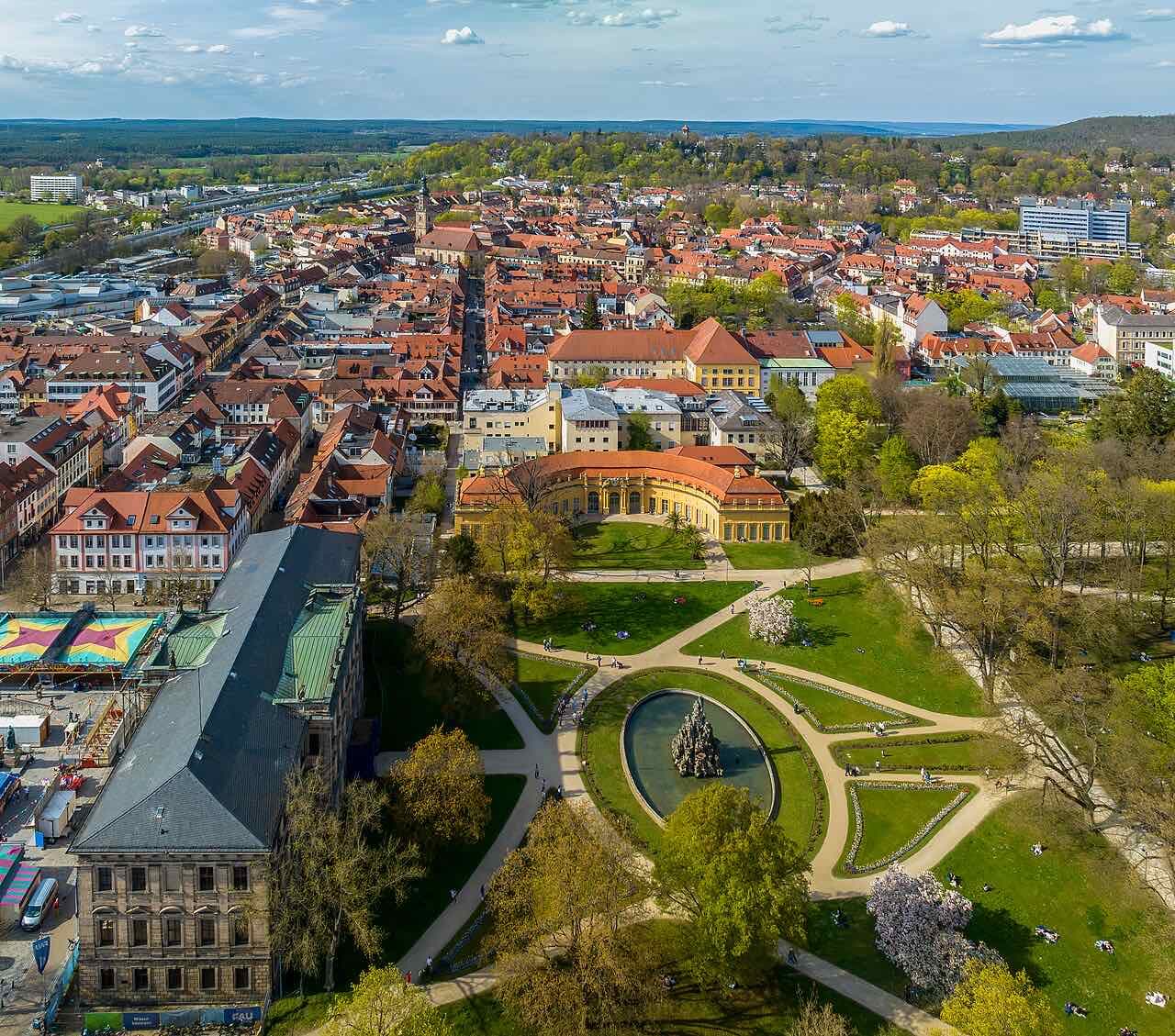
Erlangen has about 120,000 residents and around 40,000 students at the Friedrich-Alexander-Universität (FAU), so the university sets the rhythm of the place, with a palace garden where people sit on the lawns between lectures and the headquarters of Siemens Healthineers in the same city. It is the smallest of Bavaria's big cities and sits in a metropolitan region with Nuremberg and Fürth, so you get a compact university town for daily life and a larger city next door on the S-Bahn line S1. The Indian community is the largest foreign group in the city, the Max Planck Institute for the Science of Light and the Max-Planck-Zentrum für Physik und Medizin run graduate programmes on site, and once a year the whole city goes up the hill to the Bergkirchweih.
- Semester contribution
- 82 euros per semester at FAU (this is not tuition)
- Student transport ticket
- 43 euros per month, the reduced Deutschlandticket for students in the Nuremberg transport area
Part 1
Living in Erlangen
A Huguenot town that became a university town
Erlangen is first named in a document from 1002. The shape you see today comes from 1686, when the margrave of Brandenburg-Bayreuth settled French Huguenot refugees here and had a new town laid out on a strict grid next to the old one. The two towns were merged in 1812. The new town was a planned grid, and the two halves of the centre still differ in age and layout.
The university followed in 1743, when it was moved here from Bayreuth. Since then the town and the university have grown together: Siemens moved its central administration to Erlangen in 1943, and the medical-technology business that became Siemens Healthineers has had its home here since 1947. Today about one in four jobs in the city is in medical technology or healthcare.
What to see in your first weeks
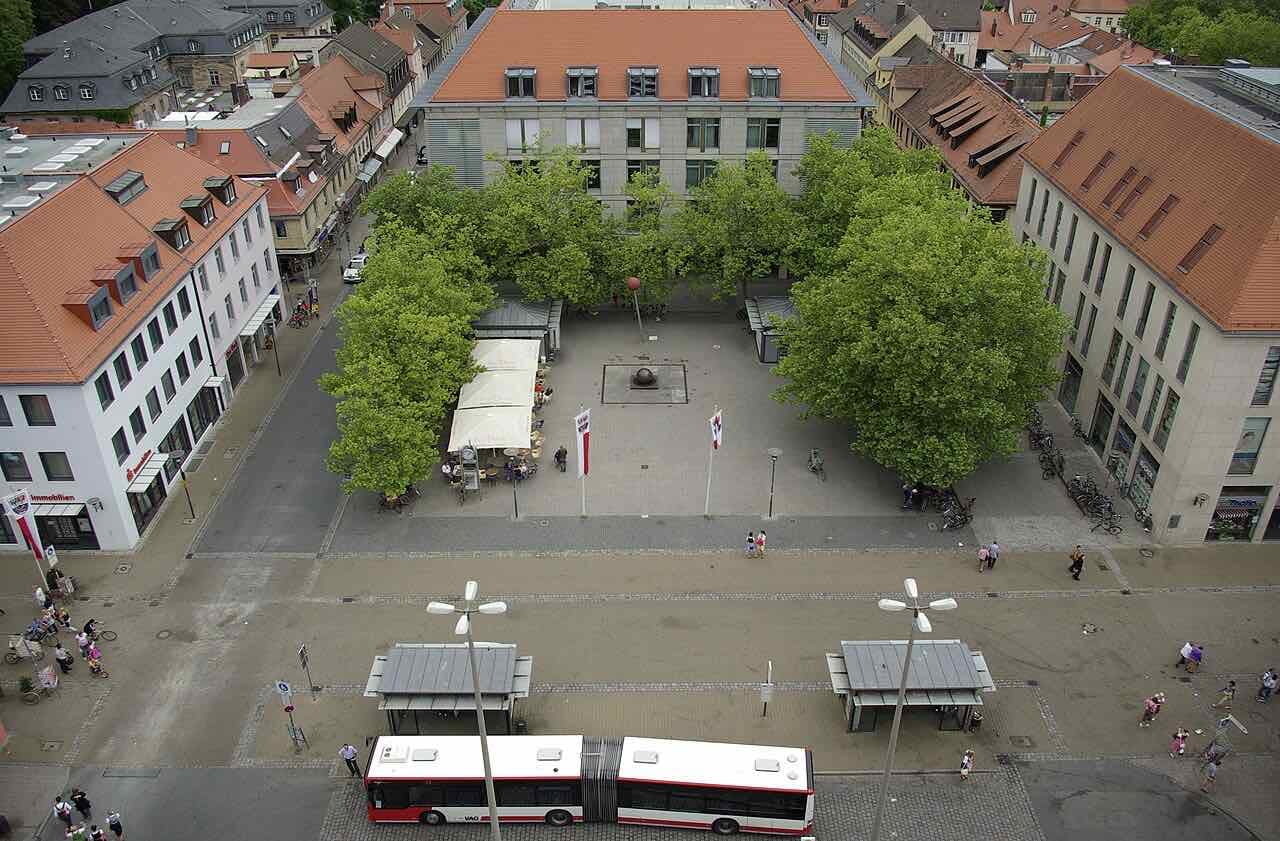
Most of it is walkable or a short bike ride from the old town.
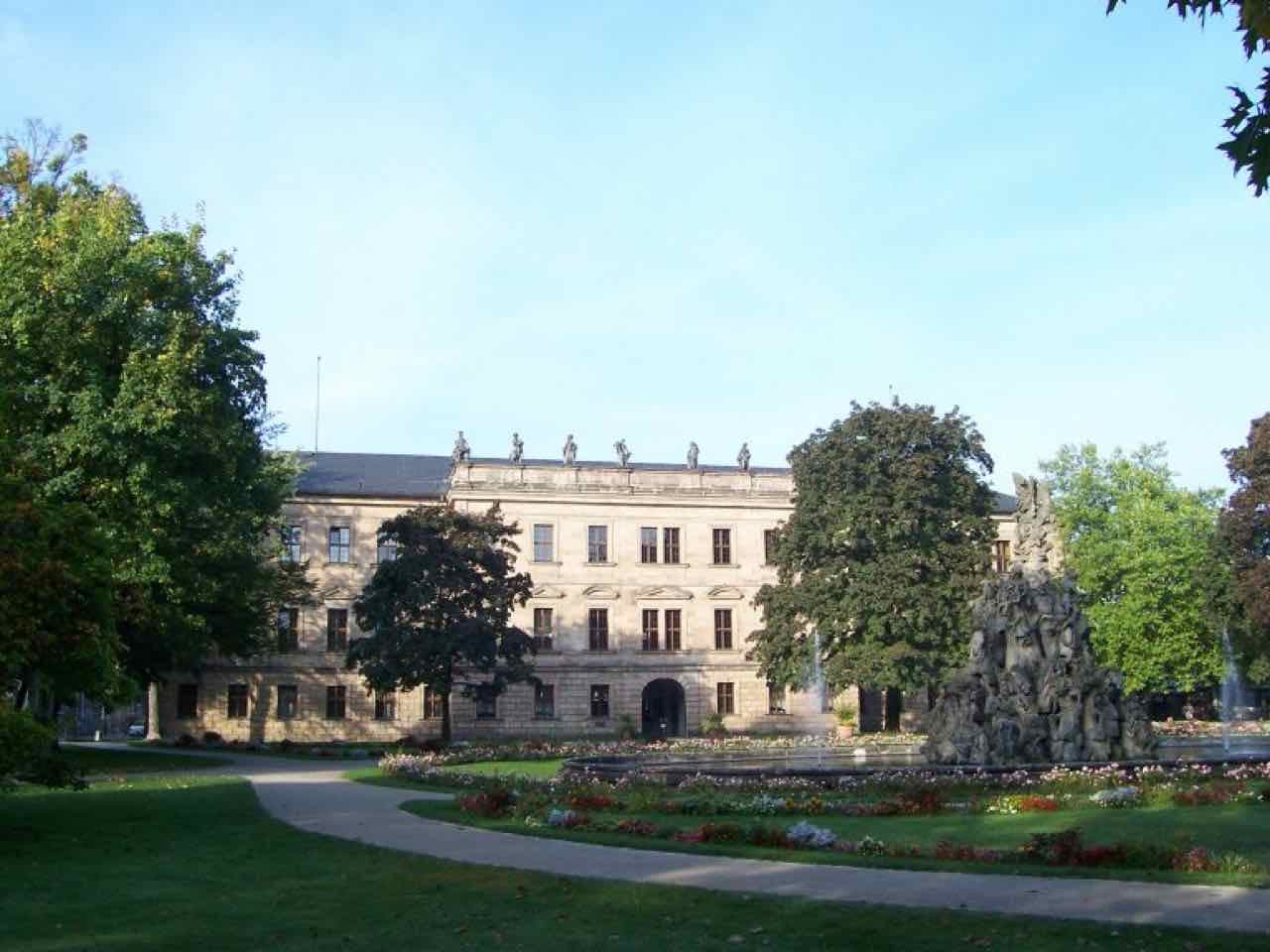
Schlossgarten and the palace ↗
The baroque palace garden sits right behind the old town. Parts of the university administration are in the palace itself, and in good weather the lawns are where students sit between lectures.
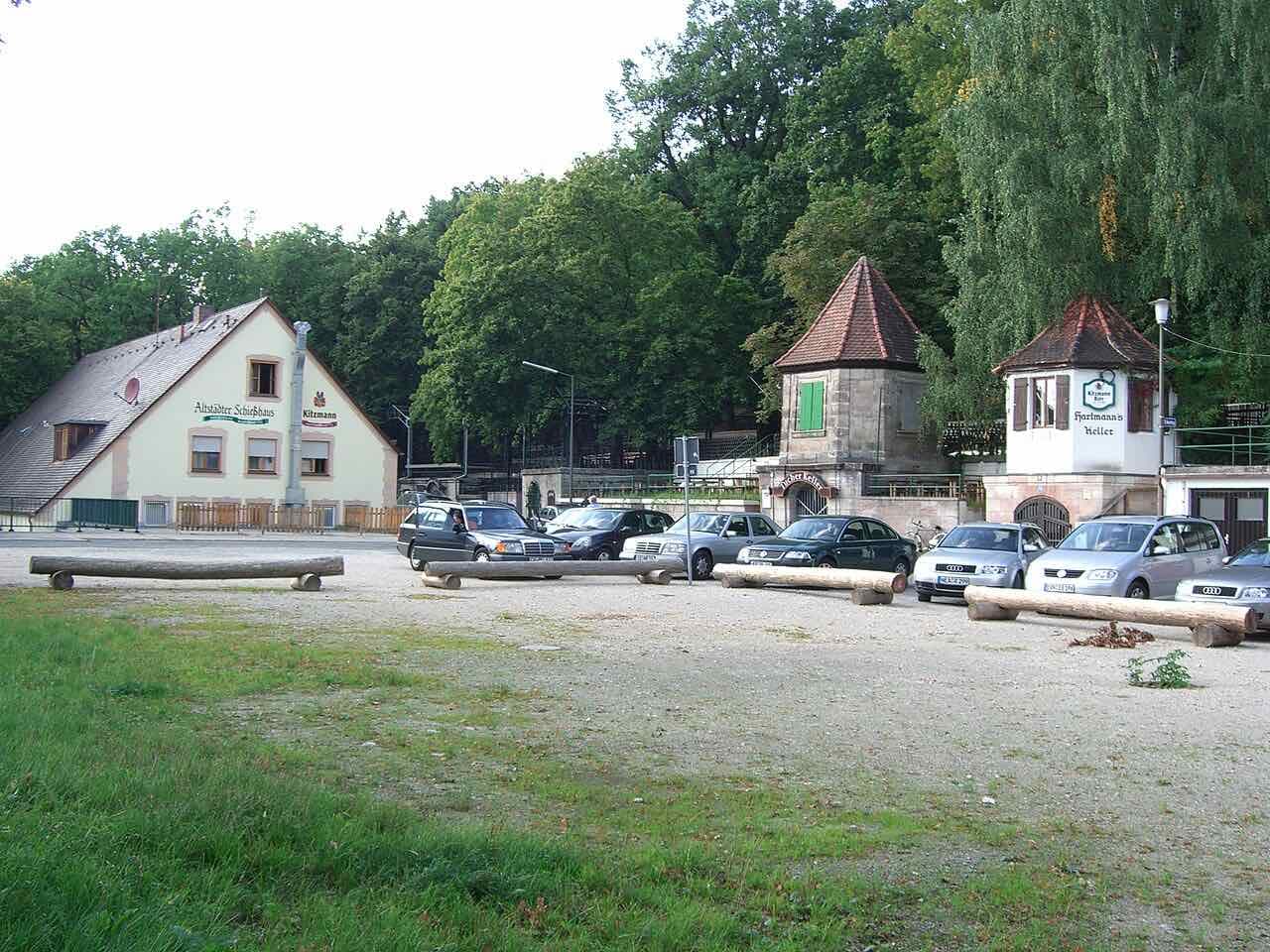
Burgberg and the Kellerviertel ↗
The wooded hill east of the centre is full of old beer cellars cut into the rock. The mayor names the cellar quarter as one of the three places every visitor should see, and it is the site of the Bergkirchweih.
Maintained by the university; the Max Planck Institute's guide to Erlangen also points to its Sunday cave tours from April to September.
The museum of Erlangen's history, in the former old-town city hall.
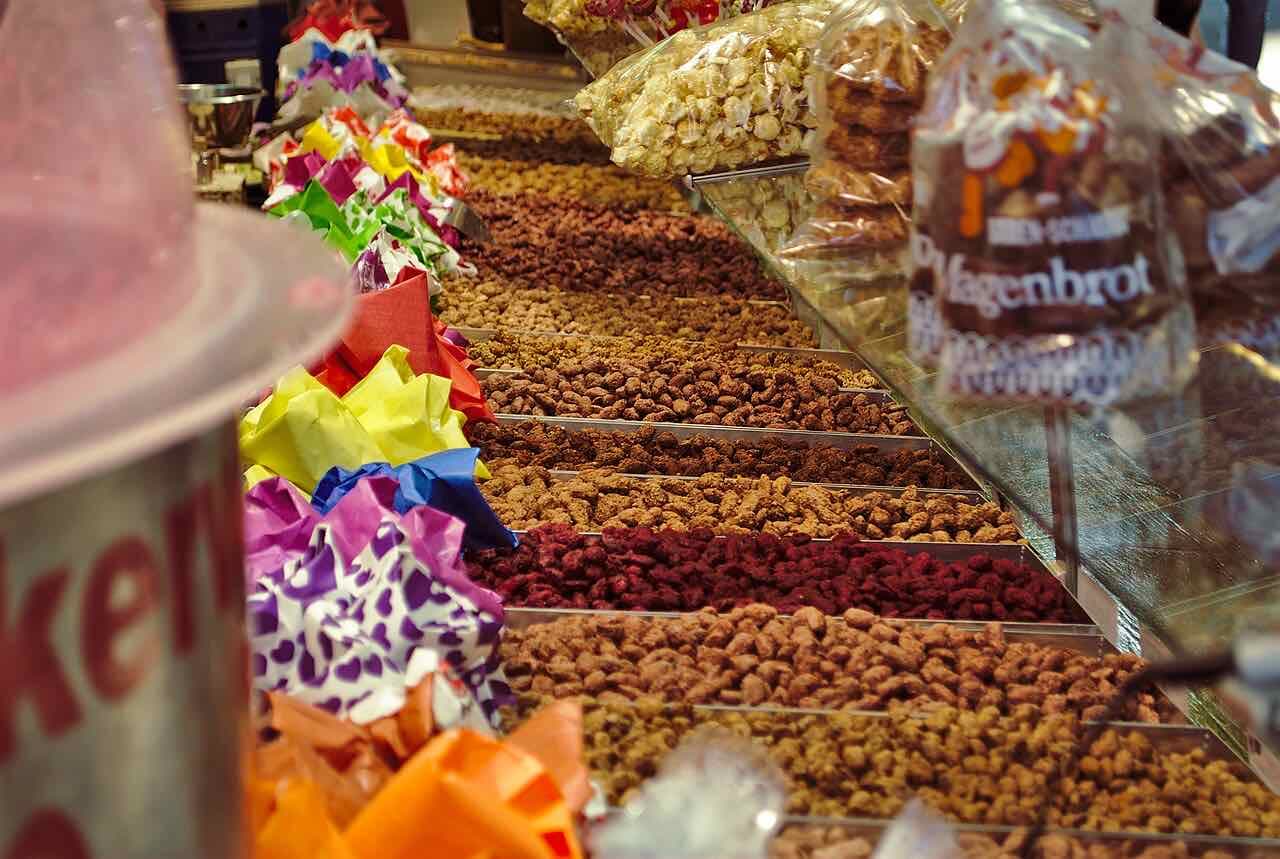
Besides the Bergkirchweih the city runs weekly markets, an August market, a Candlemas market and a series of neighbourhood fairs.
The Bergkirchweih
The Bergkirchweih is the reason Erlangen is known well beyond Franconia. In 2026 it was the 271st edition and ended on 1 June; the next one runs from 13 to 24 May 2027, according to the city. Locals just call it the Berch, and the beer cellars on the Burgberg are the centre of it. The city's festival pages list about a dozen cellars with reservation links, and name free public transport in the inner city among the festival information.
The cellars are run by their own innkeepers and take table reservations through their own links, so check the cellar you want before you plan a group evening.
Nature and weekends
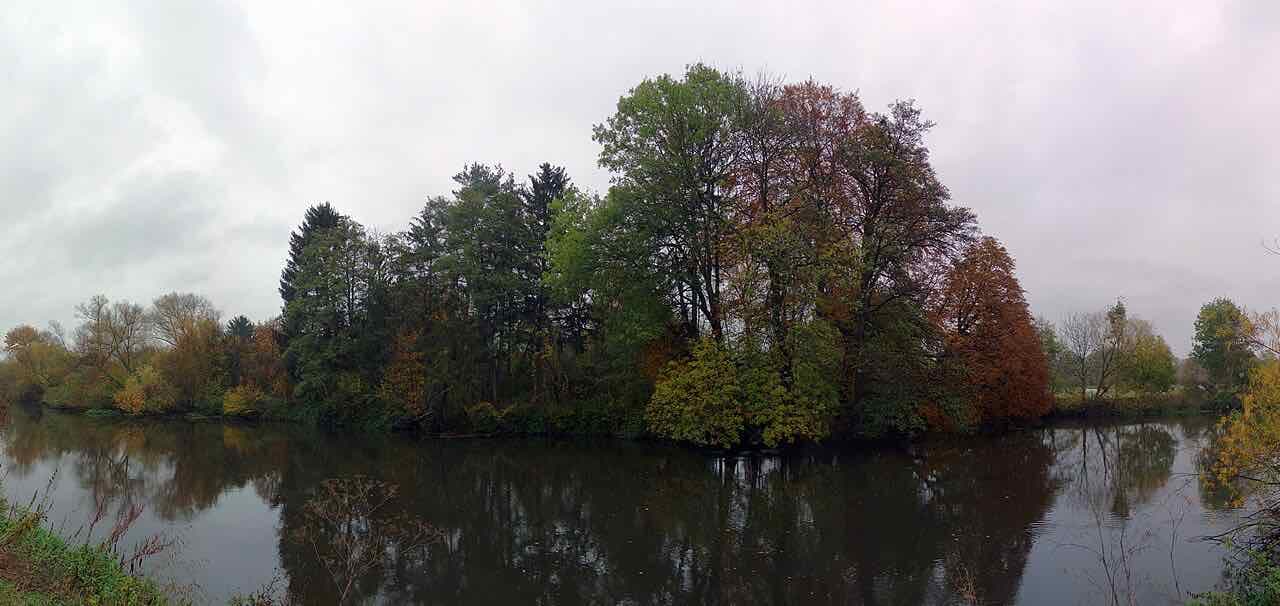
The Regnitz runs through the middle of the city and splits it into two roughly equal halves; the Rhine–Main–Danube canal runs parallel to it in the west. Schmidtsinsel is a wooded island in the Regnitz. Erlangen is known for its bicycle network, and FAU's own guide for new students recommends buying a bike and a sturdy lock, because bike theft is common.
For a bigger day out you do not need a car. The S-Bahn line S1 connects Erlangen with Nuremberg and Fürth, and Nuremberg Airport is 15.6 km south of the city. Nuremberg, the region's big city, is the next stop for anything Erlangen does not have.
What it costs
- Semester contribution (all students)
- 82 euros per semestersource
- Tuition for new non-EU students from summer semester 2027
- 1,000 to 6,000 euros per semester, depending on the degree programme (halved for part-time)source
- Studierendenwerk room, Campus Süd II (single apartment, all costs included)
- 357 euros per month; shared-flat rooms 368 to 439 eurossource
- Average rent in Erlangen, Nuremberg and surroundings (national student survey, 2021)
- 410 euros per month including ancillary costssource
- Food (same survey)
- 198 euros per monthsource
- Public transport, reduced student Deutschlandticket
- 43 euros per monthsource
Studying at FAU has no fees for most students, but students from non-EU countries who enrol for the first time or change subject from summer semester 2027 pay tuition (see below). Everyone pays the semester contribution.
Jobs and employers
The city's economy is shaped by Siemens and the university, and the medical cluster around them.
The medical-technology company is headquartered in Erlangen and grew out of the Siemens medical business that has been based in the city since 1947.
The network of start-ups, companies, universities and research institutes that describes Erlangen as an international cluster for medical technology, medicine and health.
Max Planck Institute for the Science of Light ↗
Basic research on light and matter, founded in 2009 and one of over 80 institutes of the Max Planck Society; it also runs the graduate programmes described under Part 2.
FAU points students to its student-jobs portal and to the stellenwerk student job placement service of the employment agency for Erlangen and Nuremberg.
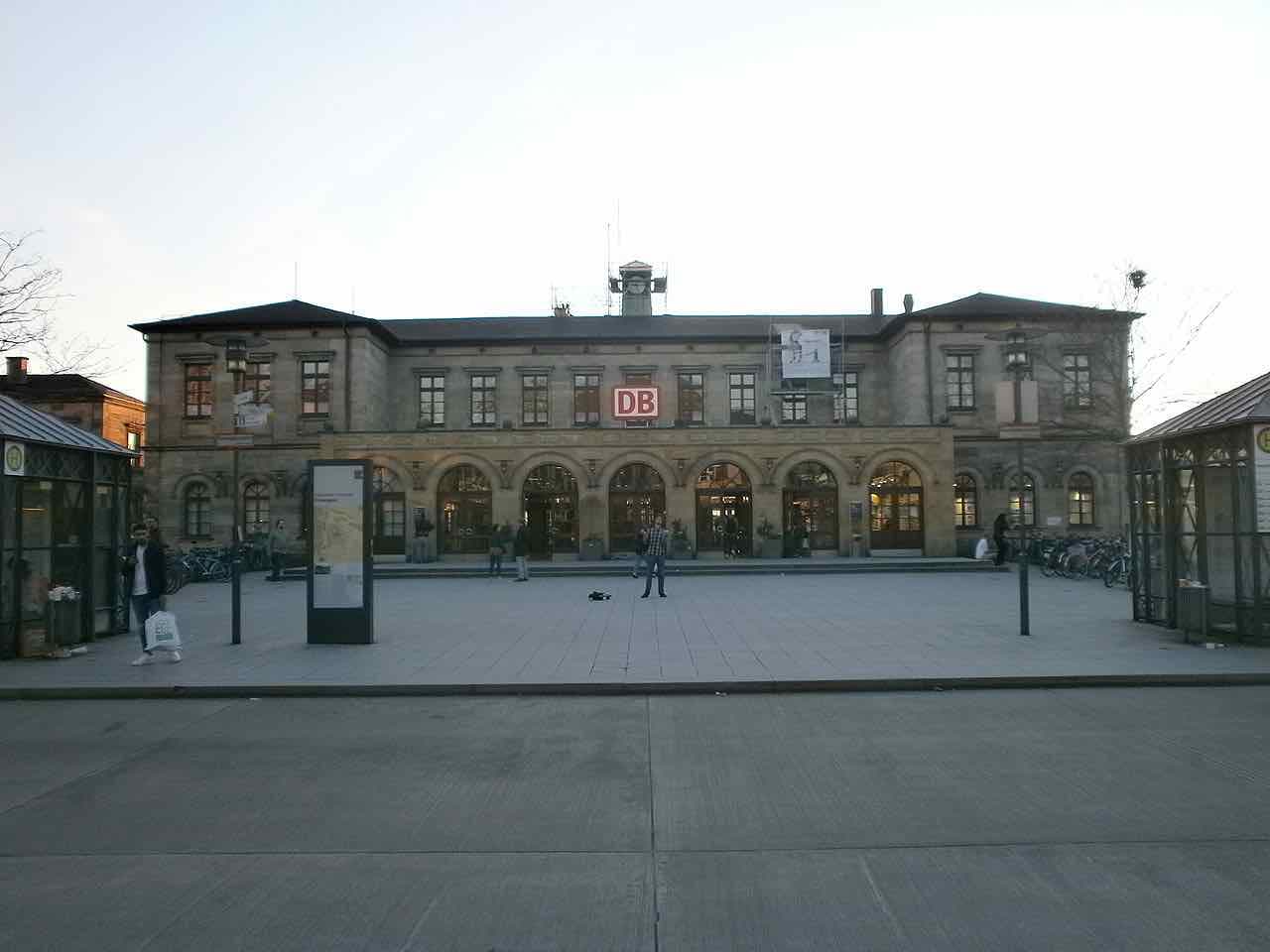
Safety and everyday life
FAU describes the crime rate as relatively low, with bicycle theft the problem to plan for. Emergency numbers are 110 for the police and 112 for fire and ambulance. Smoking is banned in public buildings, restaurants and bars in most of Germany, and everyone must be able to show an ID card or passport on request, so carry it.
Erlangen is a small city, so most daily errands are done by bike. You will also notice how international it is: the city has a long habit of taking people in, going back to the Huguenots, and the three biggest foreign groups in 2020 were Indian, Turkish and Chinese residents.
Part 2
Student life in Erlangen
Where you can study
Friedrich-Alexander-Universität Erlangen-Nürnberg (FAU) ↗
Founded in 1743, with about 40,000 students, more than 600 professors and five faculties: humanities, social sciences and theology; business, economics and law; medicine; sciences; engineering. It lists more than 275 degree programmes, with campuses in Erlangen (Center and South) and Nuremberg. German is the main teaching language, but many lectures and seminars are in English and international degree programmes teach many courses in foreign languages. Non-EU students who enrol for the first time from summer semester 2027 pay tuition per semester.
International office ↗These are not separate universities: master's fellowships and PhD positions run in the framework of the International Max Planck Research Schools, with the master's studies taking place at FAU. The institute says PhD applications are accepted throughout the year, and the programme celebrates 20 years of IMPRS in Erlangen. The Max-Planck-Zentrum für Physik und Medizin works on medical questions from a physics perspective.
International office ↗Technische Universität Nürnberg (UTN) ↗
A new technical university in Nuremberg, established in January 2021 and in its fifth year in 2026. It is a different institution from FAU, in the next city; students from FAU, UTN and Ohm share the same student network.
Technische Hochschule Nürnberg Georg Simon Ohm ↗
The university of applied sciences in Nuremberg, with international programmes and a pathway programme of its own. Its students share the International Student Network with FAU and UTN.
Evangelische Hochschule Nürnberg (EVHN) ↗
A Protestant university in Nuremberg; its students may take part in FAU's university sports courses.
Student unions, services and groups
StuVe, the FAU student representation ↗
The Studierendenvertretung is the official body that represents students' subject, economic and social interests at FAU, from the single subject to the whole of Bavaria. It answers questions about studying, and students from all faculties work in it on a voluntary basis.
Studierendenwerk Erlangen-Nürnberg ↗
Runs the halls of residence, the canteens, BAföG, psychological, social and legal counselling, and an open counselling hour for international students. It also hosts a free Language Café every Wednesday from 6 to 8 p.m. at Campus Süd, Erwin-Rommel-Str. 51a, with German, English, Hindi, Farsi, Turkish and other languages.
Allgemeiner Hochschulsport der FAU ↗
University sport, run by the department of sport science and aimed at the university's students and staff, including students of nearby universities. Its Nuremberg site at Regensburger Straße closed on 31 July 2026, so the course offer is now concentrated in Erlangen and was expanded from the winter semester.
International Student Network Erlangen-Nürnberg-Fürth (ESN) ↗
The local branch of the Erasmus Student Network, run by students from FAU, UTN and TH Ohm. It organises weekly events from trips and meet-ups to pub crawls and parties, and answers questions from international students.
International students, exchange and degree students alike, can register on a matching platform and are paired with volunteer FAU students who help with everyday questions such as where to buy a bike or a phone.
Evangelische Studierendengemeinde (ESG) Erlangen ↗
The Protestant student community at Hindenburgstraße 46 hosts a Tuesday-evening programme and offers pastoral support and coaching for questions about studying or finding a flat.
Katholische Hochschulgemeinde (KHG) Erlangen ↗
Describes itself as an international community of students and young academics, open to every faith and nationality, with a service every Tuesday at 7 p.m. and a shared dinner afterwards.
Campus and study culture
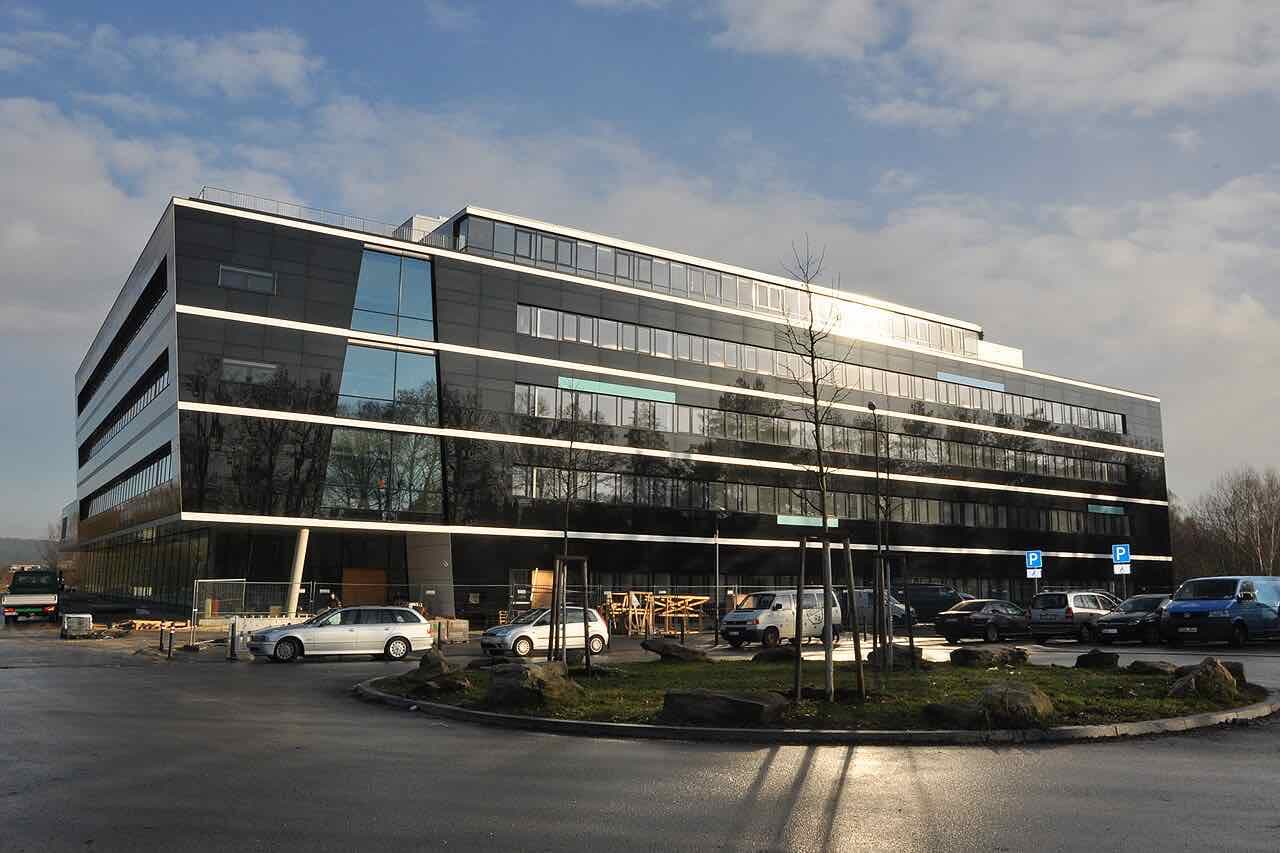
FAU lists three campuses: Campus Erlangen Center, Campus Erlangen South, where the science and engineering faculties are near the Südmensa, and Campus Nuremberg, where departments such as economics and education sit.
FAU does not give you a timetable. You build your own from the course catalogue in campo, and the university's own advice is to plan about 25 to 30 ECTS credits in the first semester and to ask your subject adviser and older students. For many seminars and tutorials you register online in campo or StudOn. The Language Centre offers free German courses throughout the semester, and some degree programmes ask for a language placement test.
If you struggle, the Student Advice Center at Halbmondstraße 6-8 and the international study advice are the first stops; the faculties also have their own international offices.
Where to live
The Studierendenwerk runs 22 halls of residence in four university towns with more than 3,700 places in total. A dozen of the entries are in Erlangen.
370 furnished single apartments averaging 19.4 m², plus shared-flat rooms, next to the science and engineering faculties and the Südmensa. A single apartment costs 357 euros per month all-in; shared-flat rooms 368 to 439 euros.
141 places in the centre at Walter-Flex-Straße 1, with the Mensa Langemarckplatz around the corner.
Central: 88 single flats, 31 double flats and 34 group apartments of three to seven beds.
How to apply and the housing search ↗
Apply as early as you can: places can often be taken up mid-semester, but waiting times and admission limits apply at the start of each semester. Halls generally admit only students already enrolled at a university the Studierendenwerk serves.
Food, sport and evenings
The Studierendenwerk runs canteens and cafés in Erlangen at Langemarckplatz, the Südmensa, Kochstraße and the Chemikum; the menus are published on its site, and it has introduced a plant-based line called GrünWerk.
University sport offers many low-cost courses in Erlangen, and you must register online early. A number of sports clubs in the city take students too. For evenings, the ESN events, the ESG and KHG Tuesday evenings, the Language Café on Wednesdays and the cellars on the Burgberg are the established places to start. The German-American Institute in Nuremberg also runs discussion evenings at the vhs Erlangen Club International; one on the U.S. midterm elections is scheduled for 26 October 2026.
Your first weeks
- 1
Before you travel
If you are from outside the EU, apply for a visa at the German embassy or consulate in your home country. FAU says processing can take 6 to 8 weeks. You also need proof of health insurance to enrol.
- 2
First days: registration
Register your address at the Bürgerservice on the ground floor of the Rathaus, Rathausplatz 1, 91052 Erlangen. You do not need an appointment, or you can book one or register online. FAU's guide says you must register within 14 days; it also requires a permanent address, so hostels do not count.
- 3
Enrolment
Activate your FAU IdM account, enrol and pay the 82-euro semester contribution; re-registration each semester works the same way.
- 4
Residence permit
Students who entered on a student visa convert it into a residence permit for study at the Ausländerbehörde, Rathausplatz 1 (department Ausländerangelegenheiten und Einbürgerungen, auslaenderbehoerde@stadt.erlangen.de). Its listed opening hours are Monday, Tuesday, Thursday and Friday mornings, plus Monday afternoon.
- 5
Bank account
FAU recommends opening a German bank account if you stay longer than three months. Checking accounts can carry fees, so ask before you sign.
- 6
Transport and bike
Buy the reduced student ticket (43 euros per month, valid on local and regional transport across Germany) and a used bike with a good lock, from a shop rather than from strangers on the street.
- 7
Join something
Register for the buddy programme, come to an ESN event, and sign up for a university sport course early.
Working next to your studies
EU and EEA students may work without restriction. Students from outside the EU may work 140 full days or 280 half days per year, and work as a student assistant at the university does not count towards that. Anything beyond requires a permit from the immigration authority or the employment agency. FAU says plainly that the 140-day rule must be taken seriously, because a breach can lead to deportation.
FAU also advises keeping to 20 hours a week during the semester, since above that you become liable for pension contributions. To work at all you need an income tax certificate from the Finanzamt Erlangen (Schubertstraße 10) or the one for your address, and the stellenwerk job placement service in Erlangen at Strümpellstraße 14 lists student jobs.
Around campus
Where you come from matters here
Pick your home country: food, faith, community groups and the consulate that serves you, checked 21 October 2026.
🇮🇳 Living in Erlangen as an Indian student
Indian students and researchers form the largest foreign group in Erlangen: 2,095 residents in 2020 according to the city's statistics as summarised on Wikipedia, and a local report in 2025 counted over 3,500 Indians in the city, many working at Siemens or at the university. The nearest consulate is in Munich.
Consulate General of India, Munich ↗
Registration of Indian nationals living in Bavaria and Baden-Württemberg and other consular services are handled here.
Shiva-Vishnu temple association, Erlangen-Eltersdorf ↗
The Indian community in Erlangen has been building the Shiva-Vishnu temple in Eltersdorf, described as the first of its kind in northern Bavaria; until now the community met in rented rooms. The association says everyone interested is welcome, and plans classes in language, music and dance for children. Construction was only starting in October 2025, so check with the association before you go.
Language Café at the Studierendenwerk ↗
Hindi is one of the languages offered at the free Wednesday-evening Language Café at Campus Süd, which is a simple way to meet other Hindi speakers.
🇳🇬 Living in Erlangen as a Nigerian student
There is no Nigerian consulate in Erlangen. Official business goes through the embassy in Berlin, and a consulate general exists in Frankfurt. For community, the multinational Protestant congregation in the Büchenbach district is one local place that counts Nigerian members.
Neue Jakobstraße 4, 10179 Berlin; the embassy's own site lists its contact details.
Nigerian Consulate General, Frankfurt/Main ↗
Listed on the embassy's website as a separate consular office; ask the embassy which office handles Bavaria before you travel.
International service in Büchenbach ↗
The Protestant parish of Büchenbach held an international service three times a year in the Martin-Luther-Kirche as of 2023, with readings in at least four languages, and its pastor named members from Nigeria, India and other countries.
🇻🇳 Living in Erlangen as a Vietnamese student
There is no Vietnamese consulate in Erlangen; the official point of contact is the embassy in Berlin.
Embassy of Vietnam in Germany, Berlin ↗
The ministry's own portal for the embassy, with announcements about consular services and documents.
Vietnamese embassy information site, Berlin ↗
The embassy's German-language information site with news for Vietnamese citizens in Germany.
🇺🇸 Living in Erlangen as an American student
There is no U.S. consulate in Erlangen; the consulate general is in Munich, and Nuremberg has a German-American institute.
U.S. Consulate General Munich ↗
The U.S. mission in Germany's page for the Consul General in Munich.
Deutsch-Amerikanisches Institut Nürnberg ↗
A cultural institute in Nuremberg with a library and an events programme on U.S. topics, including discussion evenings at the vhs Erlangen.
🇨🇳 Living in Erlangen as a Chinese student
Chinese residents were the third largest foreign group in Erlangen in 2020 (1,416). There is no Chinese consulate in Erlangen; the consulate general is in Munich and the embassy in Berlin.
Consulate General of the People's Republic of China, Munich ↗
The Chinese consulate general in Munich, with news and consular notices.
Embassy of the People's Republic of China, Berlin ↗
The embassy's own site.
English-taught programmes in Erlangen
Soonest open deadline first. Every entry links to its official source.
- MSc Electromobility – ACESFAU Erlangen-Nürnberg · Erlangenmaster30 Oct 2026Closing soon
- MSc ChemistryFAU Erlangen-Nürnberg · Erlangenmaster15 Jan 2027Open
- MSc Molecular ScienceFAU Erlangen-Nürnberg · Erlangenmaster15 Jan 2027Open
- MSc Computational and Applied Mathematics (CAM)FAU Erlangen-Nürnberg · Erlangenmaster15 Jan 2027Open
- Computational Engineering (CE), MScFAU Erlangen-Nürnberg · Erlangenmaster15 Apr 2027Open
- Communications and Multimedia Engineering (CME)FAU Erlangen-Nürnberg · Erlangenmaster15 May 2027Open
- Master of Science Molecular MedicineFAU Erlangen-Nürnberg · Erlangenmaster31 May 2027Open
- MSc Advanced Materials and Processes (MAP)FAU Erlangen-Nürnberg · Erlangenmaster31 May 2027Open
- Artificial Intelligence (AI), MScFAU Erlangen-Nürnberg · Erlangenmaster31 May 2027Open
- Materials Science and Engineering (MSc)FAU Erlangen-Nürnberg · Erlangenmaster31 May 2027Open
- International Max Planck Research School — Physics and Medicine (IMPRS-PM)Max-Planck-Zentrum für Physik und Medizin · Erlangenmaster31 May 2027Open
- International Master's in Physical Activity and HealthFAU Erlangen-Nürnberg · Erlangenmaster31 May 2027Open
- Nanotechnology (MSc)FAU Erlangen-Nürnberg · Erlangenmaster31 May 2027Open
- MSc PhysicsFAU Erlangen-Nürnberg · Erlangenmaster15 Jul 2027Open
- MA English StudiesFAU Erlangen-Nürnberg · Erlangenmaster15 Jul 2027Open
- Chinese Studies with an Optional Focus (MA)FAU Erlangen-Nürnberg · Erlangenmaster15 Jul 2027Open
- Earth System Dynamics and Evolution (MSc)FAU Erlangen-Nürnberg · Erlangenmaster15 Jul 2027Open
- Information and Communication Technology MScFAU Erlangen-Nürnberg · Erlangenmaster15 Jul 2027Open
- International Master's in Geosciences: PaleobiologyFAU Erlangen-Nürnberg · Erlangenmaster15 Jul 2027Open
- MA North American Studies: Culture and LiteratureFAU Erlangen-Nürnberg · Erlangenmaster15 Jul 2027Open
- MSc Autonomy TechnologiesFAU Erlangen-Nürnberg · Erlangenmaster15 Jul 2027Open
- MSc Integrated Immunology (iImmune)FAU Erlangen-Nürnberg · Erlangenmaster15 Jul 2027Open
- MSc Integrated Life Sciences - Biology, Biomathematics, BiophysicsFAU Erlangen-Nürnberg · ErlangenmasterRollingApply anytime
- Clean Energy ProcessesFAU Erlangen-Nürnberg · ErlangenbachelorSee sourceCheck source
- MSc Advanced Optical Technologies (MAOT)FAU Erlangen-Nürnberg · ErlangenmasterSee sourceCheck source
- Medical Engineering — Specialisations: Medical Image and Data Processing | Health and Medical Data Analytics & Entrepreneurship | Medical RoboticsFAU Erlangen-Nürnberg · ErlangenmasterSee sourceCheck source
- BSc Autonomy TechnologiesFAU Erlangen-Nürnberg · ErlangenbachelorSee sourceCheck source
- Artificial Intelligence BScFAU Erlangen-Nürnberg · ErlangenbachelorSee sourceCheck source
- Clean Energy ProcessesFAU Erlangen-Nürnberg · ErlangenmasterSee sourceCheck source
- International Max Planck Research School – Physics of Light (IMPRS-PL)Max Planck Institute for the Science of Light · ErlangenmasterNo tuitionSee sourceCheck source
- Data Science of Human Multimodal Communication (MA)FAU Erlangen-Nürnberg · ErlangenmasterSee sourceCheck source
- Computational Molecular and Materials Science (MSc)FAU Erlangen-Nürnberg · Erlangenmaster15 Jul 2026Deadline passed
Is Erlangen right for you? Ask us. Free.
Tell us your passport, grades and budget. We compare Erlangen with the other places you could study, then apply for you. You never pay us.
Get my free plan