Studying in Schleswig-Holstein, Germany
Flensburg
A harbour town at the end of a fjord, two kilometres from Denmark, with one shared campus for two universities.
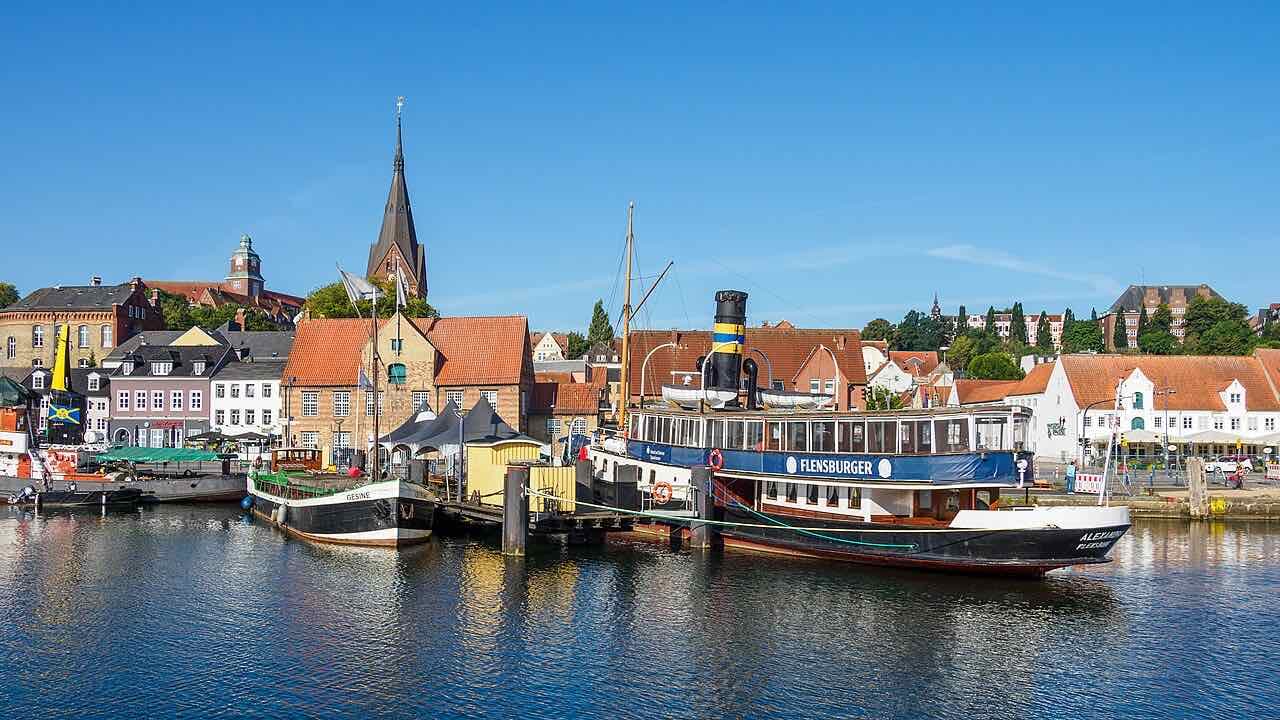
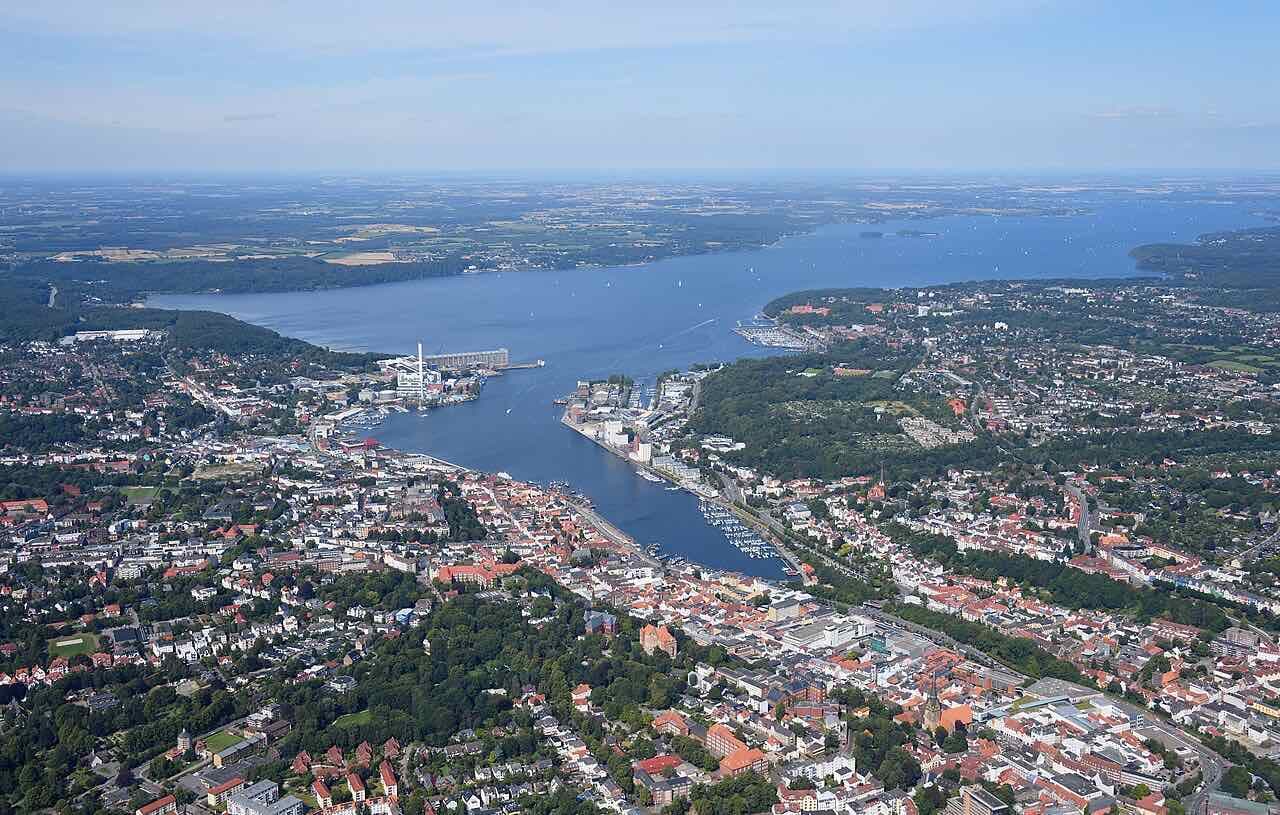
Flensburg is the northernmost town of any size in Germany. It lies at the inner end of the Flensburg Firth, a narrow arm of the Baltic Sea, and the Danish border is listed in the city's own statistics at 2 km. That position shapes everything: Danish minority schools and institutions sit in the same streets as the German ones, the old merchant yards open onto the water, and the harbour keeps a fleet of historic sailing ships. Two higher-education institutions share one green campus on the hill above the fjord, so the town stays small and easy to learn. The city counted 8,786 enrolled students in 2024/25 among about 98,000 residents. It is a quiet place, not a big-city one. If you want a place where you will know your lecturers, find a room in a hall of residence run by the Studentenwerk, and learn German in a town that also speaks Danish, it is worth a serious look. For a big international community from your own country you will look to Kiel and Hamburg, and this page says where.
- State
- Schleswig-Holstein
- Enrolled students
- 8,786 in 2024/25
- Distances (city statistics)
- Danish border 2 km, Kiel 75 km, Hamburg 160 km, Berlin 430 km
- Semester contribution, re-enrolment
- EUF €403.80 and Hochschule Flensburg €392.00 for winter 2026/27; both include the Deutschland-Semesterticket
- Hall of residence rents
- About €236 to €375 a month, depending on the hall
Part 1
Living in Flensburg
A border town built on a harbour
Flensburg grew up around its harbour. Danish settlers founded the town by around 1200, it received town rights in 1284, and its herring trade and port made it an important link between Denmark and the Hanseatic towns. It stayed under Danish rule until 1864, when it passed to Prussia. In the eighteenth century the town refined cane sugar shipped from the Danish West Indies and became known for rum, and one rum distillery, A. H. Johannsen, still operates.
The border never stopped mattering. Flensburg is the cultural centre of the Danish minority in Southern Schleswig, which runs its own schools, libraries and churches here, and the town hosts a Danish consulate general. The city's statistics count 1,941 pupils at the minority's schools in 2023/24. In the same town the federal motor vehicle authority, the Kraftfahrt-Bundesamt, keeps its seat.
What to see and do
Most of it is within walking distance of the harbour. Dates below are the ones the tourism office lists for the coming year.
Historic harbour and Museumshafen ↗
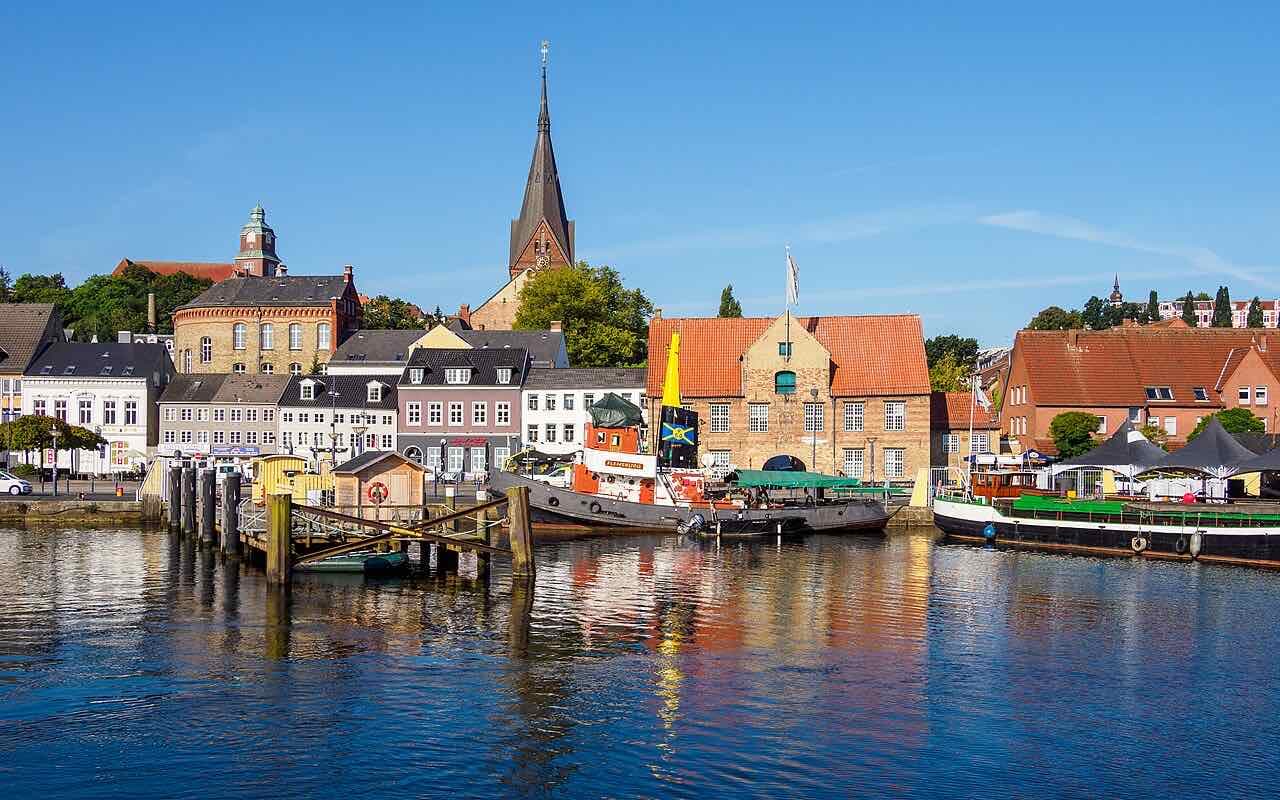
A collection of restored sailing, motor and steam ships, a museum shipyard where old ships are restored and built, the Schifffahrtsmuseum and the saloon steamer Alexandra. The ships are kept going through private initiative.
A harbour festival at the Bohlwerk and Schiffbrücke on 6–9 May 2027, with about 100 historic sailing ships, a traditional regatta, live music and regional food.
Two buildings on the hill above the old town: art and cultural history from the Middle Ages to the 19th century, and art from Schleswig-Holstein from the 19th century to today, with a focus on Jugendstil and Expressionism. Closed on Mondays, open 10:00 to 17:00 otherwise.
A hands-on science museum with about 2,400 square metres of experiment stations on Norderstraße. It grew out of the physics-education institute of the university in the 1980s.
The brewery at Munketoft 12 calls itself Germany's northernmost brewery and is known for the swing-top bottle. It offers guided tours that you book in advance.
A summer festival of concerts, theatre, cabaret and film on stages set up in the merchants' courtyards of the old town, listed for 30 July to 28 August 2027.
A festival of Nordic and Baltic folk music with concerts and workshops in Flensburg and the German-Danish border region, 24 April to 2 May 2027.
Old town and water
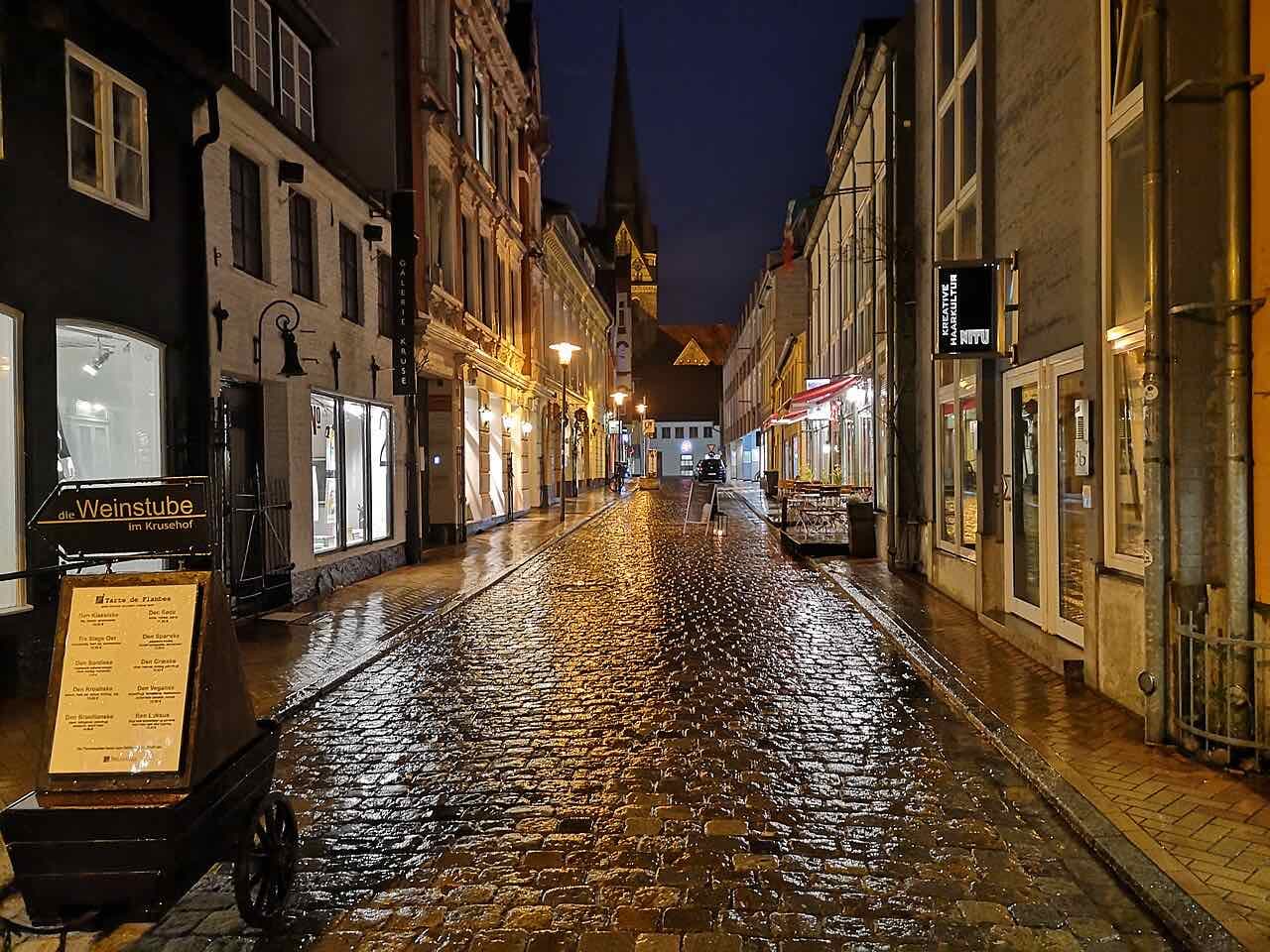
Weekends on the fjord and across the border
The tourism office lists beaches at Flensburg, Glücksburg, Harrislee and Langballig, and across the border in Denmark. Glücksburg has a water castle built between 1582 and 1587 on an island in a lake; in 2026 the entry is €12.50 for adults and €7.50 for students, and from November to March it is open at weekends only.
Denmark is the other obvious weekend. The Danish minority's cultural association SSF publishes its programmes in Danish, German and English, and the festival calendar above mixes both cultures. If you plan to cross the border for longer than a day, check what your residence permit allows before you travel, and ask the Immigration Office if you are unsure.
The Christmas market runs on the Südermarkt from 16 November to 30 December 2026, and in October the Museumshafen hosts an apple market at the Bohlwerk. The weather is cool and often windy: the average annual high is about 12.5 °C, so bring a proper rain jacket.
Getting around
The AStA of the university runs Fjordbeweger, a free cargo-bike lending project with stations around town; one booking can run for at most two days and you are asked to borrow no more than two or three bikes a month.
Your semester fee includes the Deutschland-Semesterticket, a digital Deutschlandticket for students at the participating universities in Kiel, Lübeck and Flensburg. You order it free of charge in the portal once the fee is paid, load it into the NAH.SH app, and reorder it every semester. First-year students at EUF and Hochschule Flensburg can order it only from the first day of the semester. A student ID alone is not a ticket.
Culture and nights out
The city lists ten independent cultural meeting places. These are the ones students tend to hear about first, from the city's own list.
A cultural centre on the city's list of cultural meeting places.
A cultural workshop on the city's list of cultural meeting places.
KRAN, Kultur Raum am Nordertor ↗
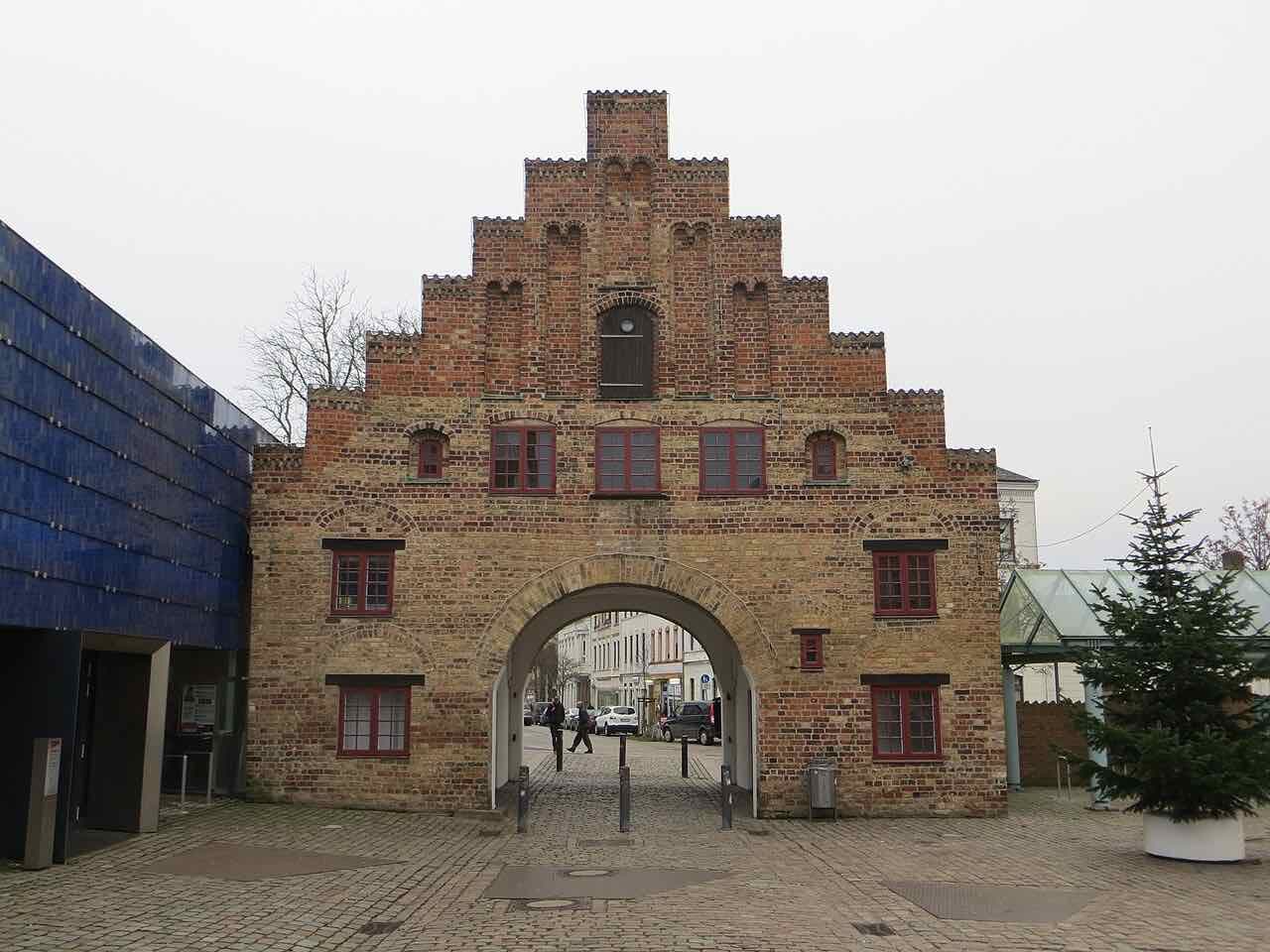
A cultural space near the Nordertor, on the same city list.
A cultural house on the same list, with a Danish name.
A pool and sauna complex of more than 5,000 square metres on Thomas-Fincke-Straße, next to the campus, with a 50-metre sports pool.
What things cost
- Hall of residence room (Studentenwerk SH)
- €236 to €375 a month depending on the hall and room typesource
- EUF, first enrolment, winter 2026
- €463.80 in total, including a €60 registration fee, the €226.80 semester ticket and €89 for the Studentenwerksource
- EUF, re-enrolment each semester
- €403.80source
- Hochschule Flensburg, semester fee, winter 2026/27
- €392.00 (Studentenwerk €89, AStA €16.20, semester ticket €226.80, administration €60)source
- Statutory health insurance, degree students under 30
- About €140 to €150 a monthsource
- Broadcasting licence fee
- €18.36 a month for every household registered in Germanysource
- Proof of funds for a student visa
- At least €992 a month (€11,904 a year)source
- Schloss Glücksburg, student entry
- €7.50 (adults €12.50)source
Numbers are the ones the institutions publish for 2026. Private rents and food prices vary; the Studentenwerk's own price list for canteen meals was not published on the page checked.
Work and employers
Flensburg is an employer town for its size. The city's statistics count 46,361 people in jobs subject to social insurance who work in Flensburg, and almost 24,000 people commute in every day. The unemployment rate was 8.6% at 30 June 2025. The big names are public: the Kraftfahrt-Bundesamt, the federal authority that runs the vehicle and driver registers and approves vehicle types, lists training, study and internship offers on its site, mostly in German. The two universities and the Flensburger Brauerei are other employers in town.
For non-EU students the hours you may work are capped (see the first-weeks steps in the student-life section), so plan your budget around your funds, not around a job.
Safety and everyday life
The city runs an anti-racism and anti-discrimination service with counselling and projects, and the state-level Antidiskriminierungsverband in Kiel offers counselling in Flensburg. If something happens to you because of where you come from, you can use both, and the AStA of each university also offers social counselling.
In an emergency call 112. The central emergency room is at the DIAKO hospital, Knuthstraße 1.
Part 2
Student life in Flensburg
Where you can study
Europa-Universität Flensburg (EUF) ↗
The EUF describes itself as Germany's northernmost university, on a campus directly at the tip of the fjord, and welcomed about 1,600 first-year students for the current year. Its profile areas are education, Europe and transformation, and it offers a dual master's programme in special education teaching. The fully English-taught programmes are the B.A. European Cultures and Society (six semesters, autumn start, a semester abroad is mandatory) and the M.A. European Studies (four semesters, double-degree option). English is one of several teaching languages in the B.A. International Management, the B.A. Social Sciences, the M.A. Culture - Language - Media, the M.A. International Management Studies and the M.Eng. Sustainable Energy. The usual application period is 15 May to 15 July but varies by programme. There are no tuition fees.
International office ↗Flensburg University of Applied Sciences (Hochschule Flensburg) ↗
About 3,000 students study on the shared campus, in four faculties with a strong link to regional industry. Its roots go back to 1852 and a navigation school, and maritime technology is still a core field; the Centre for Maritime Studies has what the university describes as the largest ship bridge simulator in Northern Europe. Bachelor programmes include Applied Computer Science, Business Administration, Mechanical Engineering, Sustainable Energy Systems, Media Informatics, Biotechnology and Food Technology, and Maritime Transport, Nautical Sciences and Logistics. Two master's programmes are taught entirely in English: Applied Biotechnology and Food Science, and Wind Energy Engineering. Some modules of other programmes are in English, so check each programme page. A Studienkolleg is available for applicants who need a preparatory course.
International office ↗Student unions, services and groups
AStA of Europa-Universität Flensburg ↗
The elected student executive, based at Auf dem Campus 1. It offers social counselling and free legal advice, explains the semester fee and refunds of the semester ticket, funds student projects, and runs the Campus Festival and the Fjordbeweger cargo bikes. The office has set hours during the lecture period.
AStA of Hochschule Flensburg ↗
Student volunteers who give advice on housing, money, exam objections and the semester ticket, run a notice board for jobs and rooms, lend event equipment, and look after the sailing boats. Its groups include the Kutterpull-AG and the Tretboot-AG. The office is in building 14 behind the B building.
Studentenwerk Schleswig-Holstein, Flensburg ↗
Runs the seven halls of residence (663 places), the Mensa and the cafeteria, and counselling for student life including a counsellor for Flensburg. It also runs a Study Buddy programme that pairs international and local students, and international residence tutors in the halls.
Sports Center (university sport) ↗
About 200 sport classes a week for members of EUF and Hochschule Flensburg, with guests welcome, running all year and open to join at any time without registration. Tickets are bought at the machine in the entrance hall of the Flens-Arena, and you can add the CampusFitness gym.
CampusENGEL EMERGE Ambassadors ↗
Student volunteers who help new students with enrolment, housing, health insurance, language courses and visa questions, mainly from mid-July to the end of October. They also run Room4You, which connects students with people in the region who have a room to offer.
Café International at Campelle ↗
A casual Hochschule Flensburg get-together for international students and anyone who wants to meet people from around the world or practise a language, with coffee, tea and cake. The event listed is on 26 October 2026, 16:00 to 17:30, with no registration.
A free, volunteer-run cargo-bike lending project in Flensburg that won the 2019 German Bicycle Prize in the service category. You log in, reserve a bike and collect it at a station.
Campus life and study culture
The two universities share one campus. They share the Mensa, the central library, the Audimax and the sports offer, and the Studentenwerk's halls sit on the same hill. The buildings are named after cities: Oslo, Helsinki, Gothenburg, Tallinn and Dublin, and the Campelle is the campus chapel, where events are also held. There is a community garden, beehives and a small university wind turbine with a disc golf goal beside it. The Hochschule counts fewer than 50 students per professor, against an average of 64 at German universities, which it says makes classes feel close.
Both universities keep an international office. The EUF International Center holds an Orientation Week every March and September with a campus and city tour, language courses and a free welcome breakfast; registration is required. Hochschule Flensburg runs a Deutsch-Club for levels A2 and B1, an Intercultural and Diversity Day on 5 November 2026 and the Café International mentioned above.
On campus
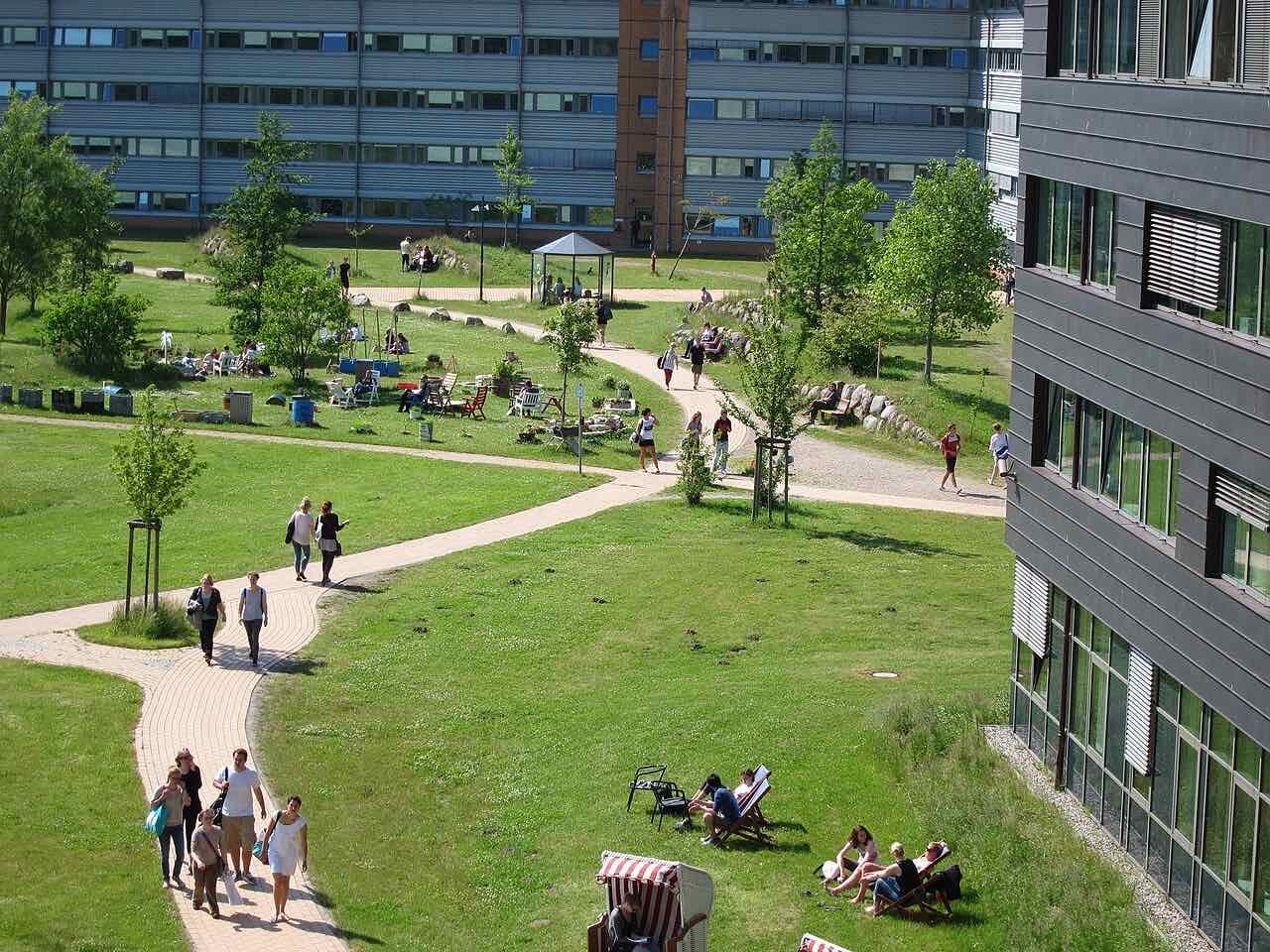
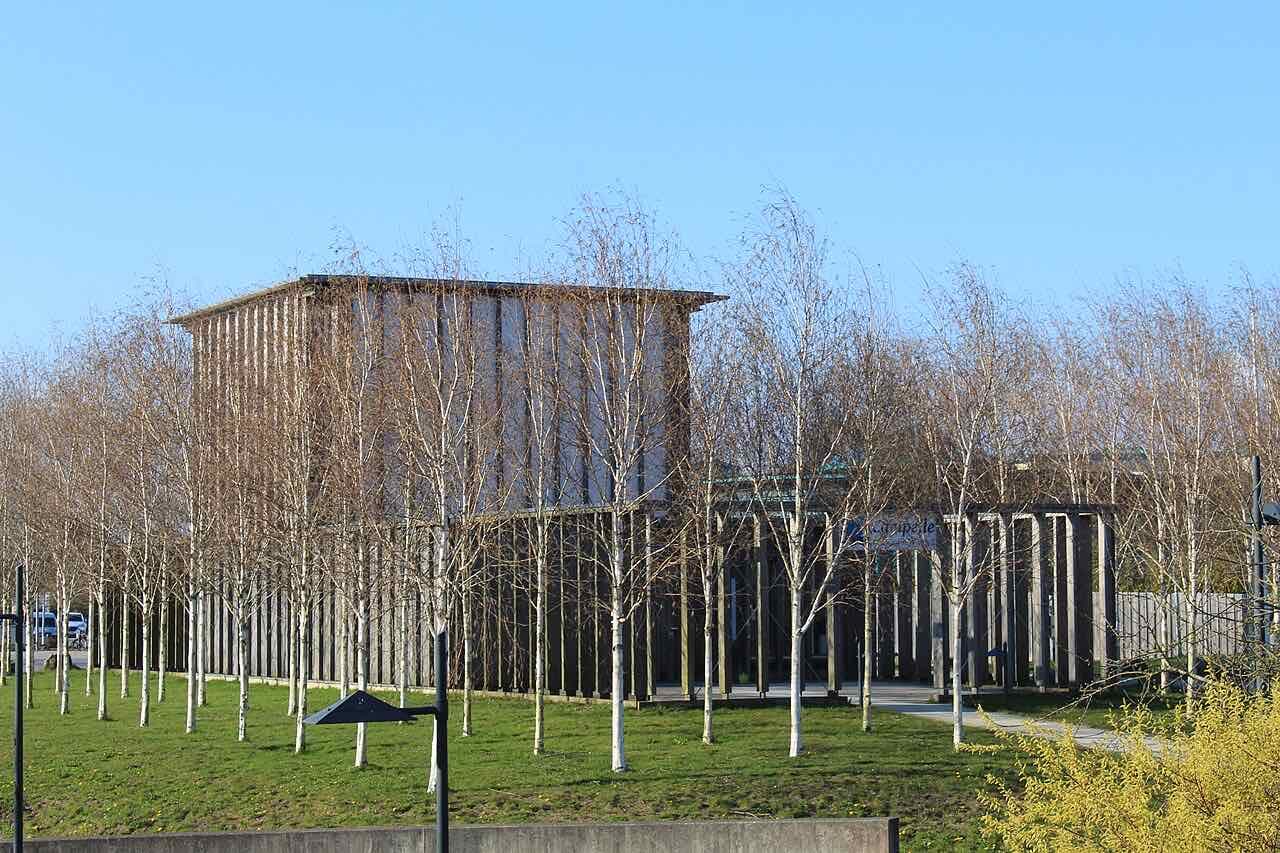
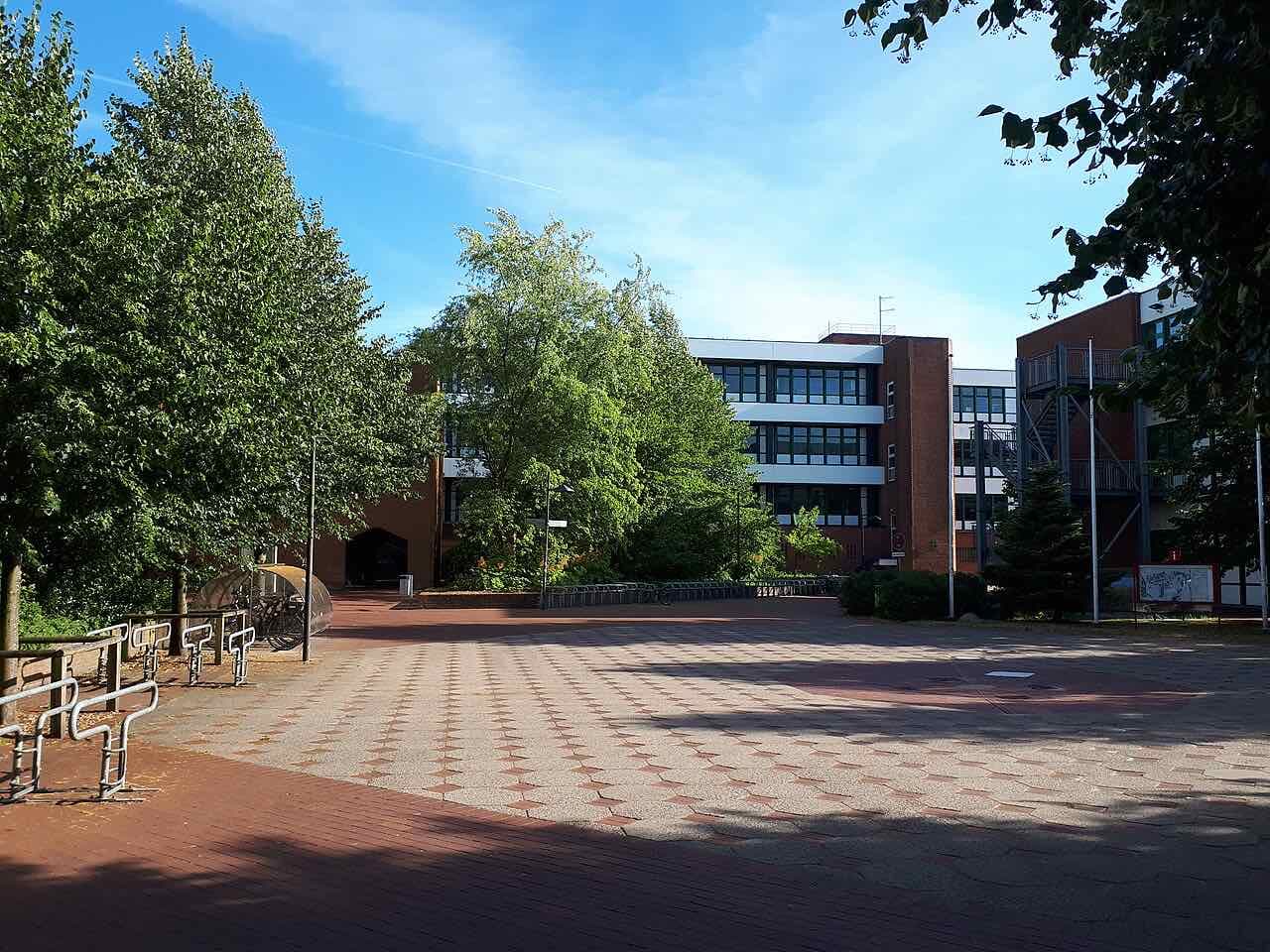
Housing
The Studentenwerk runs seven halls in Flensburg with 663 places in total: House Flensburg and Sandberg on Kanzleistraße, the Campus dormitory, International House, the Emmy Hennings House and the Sophie-Bothilde-Jensen House on and around the campus, and Norderburse. Monthly rents on its page run from €236 for a place in a two-person shared flat to €375 for a single flat in International House or the Sophie-Bothilde-Jensen House. Hochschule Flensburg says rents in Flensburg are below the German average.
Apply early. Studentenwerk contracts usually start on 1 March or 1 September, and if you arrive in April or October you still pay the rent for March or September. Private rooms are hardest to find at the start of each semester. The Studentenwerk's advice is to consider a temporary 3 to 6 month tenancy, to look a little further from campus, and to meet shared flats in person. Shared flats are listed on sites such as wg-gesucht.de, and the CampusENGEL's Room4You scheme can connect you with local hosts.
Food and canteens
The Studentenwerk's Mensa at Thomas-Fincke-Straße 20 serves lunch from 11:15 to 14:00, Monday to Friday, and its Café Lounge is open from 8:00 on Monday to Thursday and 8:30 on Friday during lectures. The cafeteria in the B building, Kanzleistraße 91A, is open Monday to Friday 8:30 to 14:30. Both close on public holidays in Schleswig-Holstein.
Sport and clubs
The Sports Center's roughly 200 weekly classes are the easiest way in, and the Hochschule's own page promises sailing and windsurfing on the fjord for those who want them. The AStA of the Hochschule looks after the university's sailing boats and has a Kutterpull-AG and a Tretboot-AG. For a swim, the Campusbad is next to the campus. If you follow spectator sport, the SG Flensburg-Handewitt plays in the Handball-Bundesliga.
Your first weeks
- 1
Before you travel
Apply for a student visa if you need one, and allow up to two months. A tourist visa is not enough. You must show at least €992 a month in funds.
- 2
Week 1, address
Register your address at the Bürgerbüro, Rathausplatz 1, Room 119. Book an appointment online at buergerbuero.flensburg.de or call 0461 85-2124. Bring your admission letter or enrolment certificate, your passport and the landlord's confirmation of your address.
- 3
Week 1, residence permit
If you came on a 3-month visa, report to the Einwanderungsbüro (Immigration Office), Schleswiger Straße 66, within 7 days. Appointments are booked at abh-termine.flensburg.de. Bring your insurance certificate, student certificate, passport and landlord's confirmation. The fee for a new permit is €100, waived for scholarship holders.
- 4
Weeks 1 to 2, insurance and bank
Take out statutory health insurance. EUF can only complete your enrolment once your insurer sends an electronic notification to the university, so ask the insurer to send it directly. Open a bank account; a current account can take days or weeks, so bring cash for the first weeks.
- 5
After enrolment
Pay the semester fee, then order the Deutschland-Semesterticket in the NAH.SH portal. Come to the Orientation Week and sign up for a buddy through the Studentenwerk or your international office.
- 6
Whenever you start work
With a non-EU study permit you may work up to 140 full days or 280 half days a year, or up to 20 hours a week, or in a mini-job earning at most €556 a month. The same limits apply to voluntary internships. Employers do not always follow these rules, and exceeding them can put your permit and insurance at risk.
Where you come from matters here
Pick your home country: food, faith, community groups and the consulate that serves you, checked 21 October 2026.
🇮🇳 Living in Flensburg as an Indian student
The nearest official address is the Consulate General of India in Hamburg, and for Hindu worship the closest centre with a published programme is in Hamburg too. Both international offices are the place to meet other new students.
Consulate General of India, Hamburg ↗
Kohlhöfen 21, 20355 Hamburg. Its page does not state which German states it serves, so confirm with the consulate (cons.hamburg@mea.gov.in) whether Schleswig-Holstein is in its area.
ISKCON Bhakti-Yoga-Zentrum Hamburg ↗
Krummholzberg 9, 21073 Hamburg. A Sunday festival at 14:00, open to everyone, with kirtan, a talk on the Bhagavad-gita and vegetarian food.
🇳🇬 Living in Flensburg as a Nigerian student
Nigeria has no consulate near Flensburg; the embassy is in Berlin. Flensburg's city list names an African group, Likeminds, and the Kiel women's association below is the closest linked group.
Neue Jakobstrasse 4, 10179 Berlin. Passports by free online appointment; visa applications go through the provider VFS, not the embassy.
Sisters - Frauen für Afrika e. V., Kiel ↗
An association of African and German women in Kiel with open meetings on the third Friday of the month at the Vinetazentrum in Gaarden, with childcare.
🇻🇳 Living in Flensburg as a Vietnamese student
Vietnam has an embassy in Berlin, and the consulate general in Frankfurt does not cover Schleswig-Holstein. The nearest linked Buddhist community is in Hamburg.
The embassy's site lists consular guidance and fees. The Auswärtiges Amt gives the address as Elsenstraße 3, 12435 Berlin.
A Vietnamese Buddhist pagoda in Hamburg-Billbrook, in the Lam Te tradition, that serves Vietnamese Buddhists in Hamburg and the surrounding area.
🇧🇩 Living in Flensburg as a Bangladeshi student
Bangladesh has an embassy in Berlin. The nearest linked mosque community is in Hamburg.
Embassy of Bangladesh, Berlin ↗
Kaiserin-Augusta-Allee 111, 10553 Berlin. The Auswärtiges Amt lists honorary posts elsewhere, none in Schleswig-Holstein.
Bangladesh-Islamisches Zentrum Hamburg e. V. ↗
The Bangladeshi mosque at Adenauer Allee 32, 20097 Hamburg, on the Schura Hamburg member list dated January 2021.
🇵🇰 Living in Flensburg as a Pakistani student
Flensburg has several mosque associations. The city's integration concept lists six, including the Islamisches Kulturzentrum, DITIB-Fatih Moschee and Seyh Said Camii Moschee. Check each mosque's own announcements for prayer times. Pakistan's embassy is in Berlin and its honorary consulate in Hamburg does not cover Schleswig-Holstein.
Mosque associations in Flensburg (city list) ↗
The Integrationskonzept 2024-2026 of the city names the mosque associations and 27 cultural associations; the Stabsstelle Integration passes on contacts (0461 85-1188).
Pakistani mosques in Hamburg (Schura Hamburg members) ↗
Pak Islami Majlis, Brennerstraße 12, and Pak-Islami-Merkez, Brackdamm 18, both in Hamburg. The list is dated January 2021.
Pakistani missions in Germany ↗
Embassy at Schaperstraße 29, Berlin, and an honorary consulate in Hamburg for Hamburg, Bremen and Lower Saxony.
🇬🇭 Living in Flensburg as a Ghanaian student
Ghana has a Consulate General in Hamburg whose district includes Schleswig-Holstein, and a Ghanaian association is active in Kiel.
Consulate General of Ghana, Hamburg ↗
Kajen 6-8, 20459 Hamburg. Per the Auswärtiges Amt its district is Hamburg, Lower Saxony, Schleswig-Holstein and Mecklenburg-Vorpommern. The embassy is in Berlin.
Ghana Union Kiel Schleswig-Holstein (GUKSH) ↗
An association based in Kiel with general meetings, a welfare committee, children's activities and a presence at Kiel Week.
🇨🇲 Living in Flensburg as a Cameroonian student
Cameroon has an honorary consulate in Hamburg whose district includes Schleswig-Holstein; it receives visitors by appointment only. Passports and other full consular services go through the embassy in Berlin.
Honorary Consulate of Cameroon, Hamburg ↗
Rütersbarg 46, 22529 Hamburg, by appointment. District: Hamburg, Bremen, Lower Saxony, Schleswig-Holstein and Mecklenburg-Vorpommern.
Ulmenallee 32, 14050 Berlin. Lists passport, consular card and other services for Cameroonians.
🇺🇸 Living in Flensburg as an American student
The US Consulate General in Hamburg covers Schleswig-Holstein but does not issue visas. The Amerika-Gesellschaft in Kiel is a friendly meeting point for English-language events.
US Consulate General, Hamburg ↗
The Auswärtiges Amt lists its district as Hamburg, Bremen, Mecklenburg-Vorpommern, Lower Saxony and Schleswig-Holstein; it handles no visa services.
Amerika-Gesellschaft Schleswig-Holstein, Kiel ↗
A non-profit since 1964 in the Kennedy-Haus, Walkerdamm 18, Kiel, with talks on US history and culture, English-American conversation groups and EducationUSA advice.
🇨🇳 Living in Flensburg as a Chinese student
The Chinese Consulate General in Hamburg is the nearest official post. The Auswärtiges Amt lists Schleswig-Holstein in its district.
Consulate General of China, Hamburg ↗
Elbchaussee 268, 22605 Hamburg. The Auswärtiges Amt lists its district as Hamburg, Bremen, Lower Saxony and Schleswig-Holstein.
Consulate General of China, Hamburg: own website ↗
The consulate's own site, with news and consular information.
English-taught programmes in Flensburg
Soonest open deadline first. Every entry links to its official source.
- Sustainable Energy, Specialisation Engineering (SEE)Europa-Universität Flensburg · FlensburgmasterNo tuition15 Jan 2027Open
- Sustainable Energy, Specialisation Transition (SET)Europa-Universität Flensburg · FlensburgmasterNo tuition15 Jul 2027Open
- BA European Cultures and Society (EUCS)Europa-Universität Flensburg · FlensburgbachelorNo tuition15 Aug 2027Open
- Wind Energy EngineeringFlensburg University of Applied Sciences · FlensburgmasterNo tuitionSee sourceCheck source
- Master of Arts in European StudiesEuropa-Universität Flensburg · FlensburgmasterNo tuitionSee sourceCheck source
- Sustainable Energy and Development (SEDev)Europa-Universität Flensburg · FlensburgmasterNo tuitionSee sourceCheck source
Is Flensburg right for you? Ask us. Free.
Tell us your passport, grades and budget. We compare Flensburg with the other places you could study, then apply for you. You never pay us.
Get my free plan