Studying in Hesse, Germany
Frankfurt am Main
Germany's financial centre and busiest airport, with a skyline, a European central bank, more than thirty museums and a city where about half the residents have roots abroad.
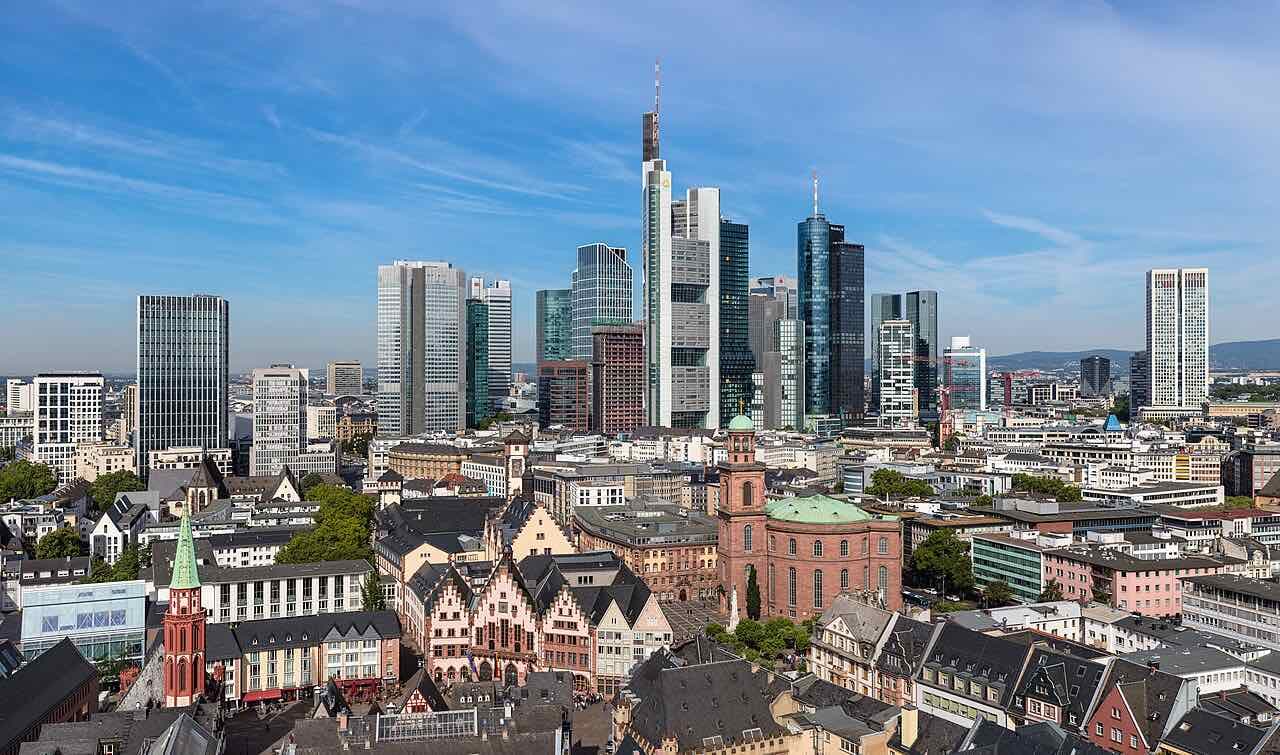
Frankfurt is the German city that looks most like a world city and still has a river, apple-wine taverns and a medieval square at its centre. About 760,000 people live here, and the metropolitan region has about 5.6 million. The European Central Bank, the Bundesbank, the stock exchange and the head offices of Deutsche Bank, Commerzbank, DZ Bank and KfW are all in town, which is why the skyline has its own nickname, Mainhattan. Frankfurt Airport is the busiest in Germany and is known for its large number of direct routes. For a student, the city has a large research university with five campuses (Goethe University), a large university of applied sciences, a business school that holds all three major accreditations, two small art and music schools, and a dual-study university inside an industrial park. English is the working language of many master's programmes and of a lot of daily life. Rooms are hard to find, but about half of the population has a migration background, there are 93 consulates, and many of the communities you might look for already have an address here.
- Main station
- Frankfurt Hauptbahnhof, opened 1888, the second-busiest station in Germany after Hamburg
- Semester contribution (Goethe University, winter 2026/27)
- 408.28 EUR per semester, of which 226.80 EUR is the semester ticket for local and regional transport
- Student dorm rooms (Studierendenwerk, new contracts from 1 Oct 2026)
- mostly about 255 to 500 EUR a month all-in; furnished single rooms start around 255 EUR
- Proof of funds for a residence permit
- at least 992 EUR a month, for example 11,904 EUR in a blocked account
Part 1
Living in Frankfurt am Main
A trading city that kept reinventing itself
Frankfurt was first mentioned in a document in 794 and has been an imperial city since 1372. The name means the ford of the Franks on the Main, and a river crossing is still what the city is about: roads, railways and flight paths all meet here. In the Middle Ages it was a fair town, and today Messe Frankfurt hosts the world's largest book fair every October.
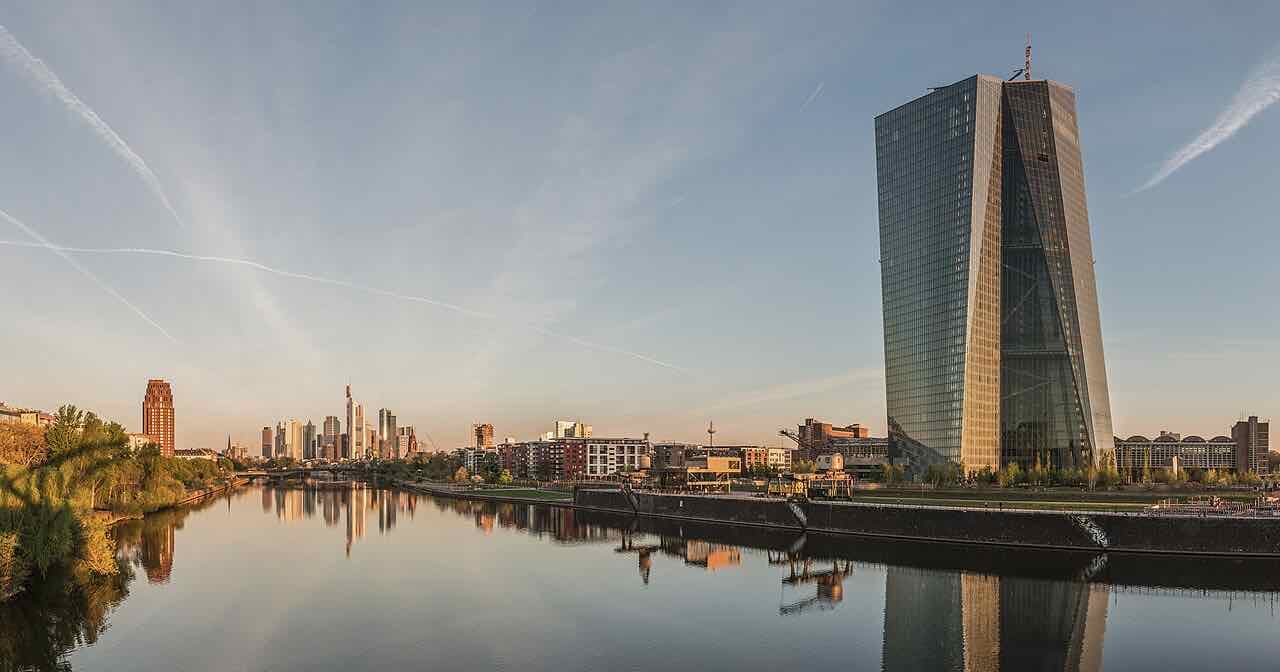
Two moments matter if you want to understand the city's character. In 1848 the first democratically elected German parliament met in St Paul's Church, the Paulskirche, and wrote a constitution for a united Germany; it failed in 1849. And in the decades after the Second World War Frankfurt became the country's financial centre: the Bundesbank, the stock exchange and the big banks are here, and the new seat of the European Central Bank, with a 185 m tower, was finished in the east of the city in late 2014.
Do not confuse it with Frankfurt (Oder). That is a different, much smaller city on the Polish border in Brandenburg, with its own university, the Viadrina. Everything on this page is about Frankfurt am Main, on the river Main in Hesse.
What to see and do in your first months
Most of this is a walk or a short tram ride apart. The Main is the spine: museums on both banks, the skyline across the water, and cycle paths along the river for kilometres.
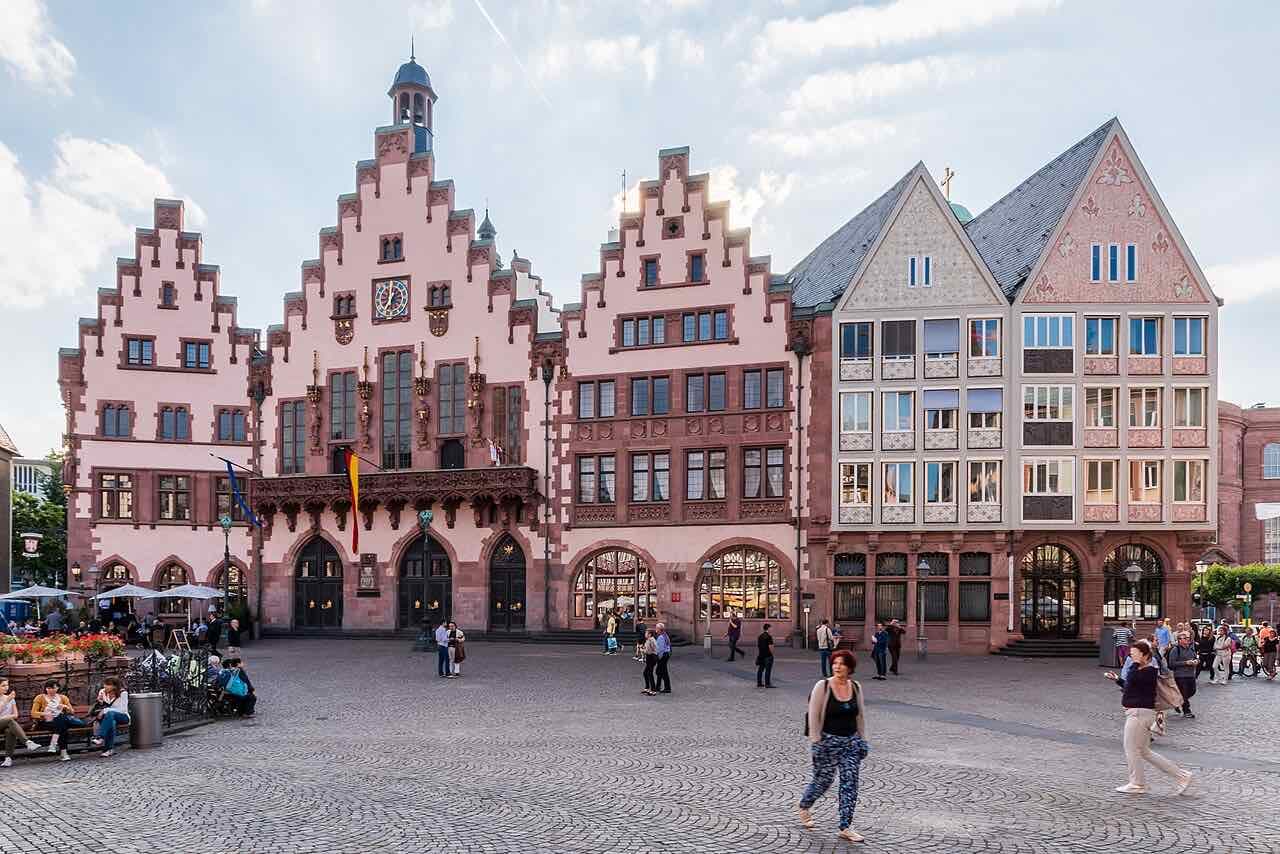
The square in front of the Römer town hall, next to the Dom-Römer Quarter. St Paul's Church, where the 1848 parliament sat, is close by.
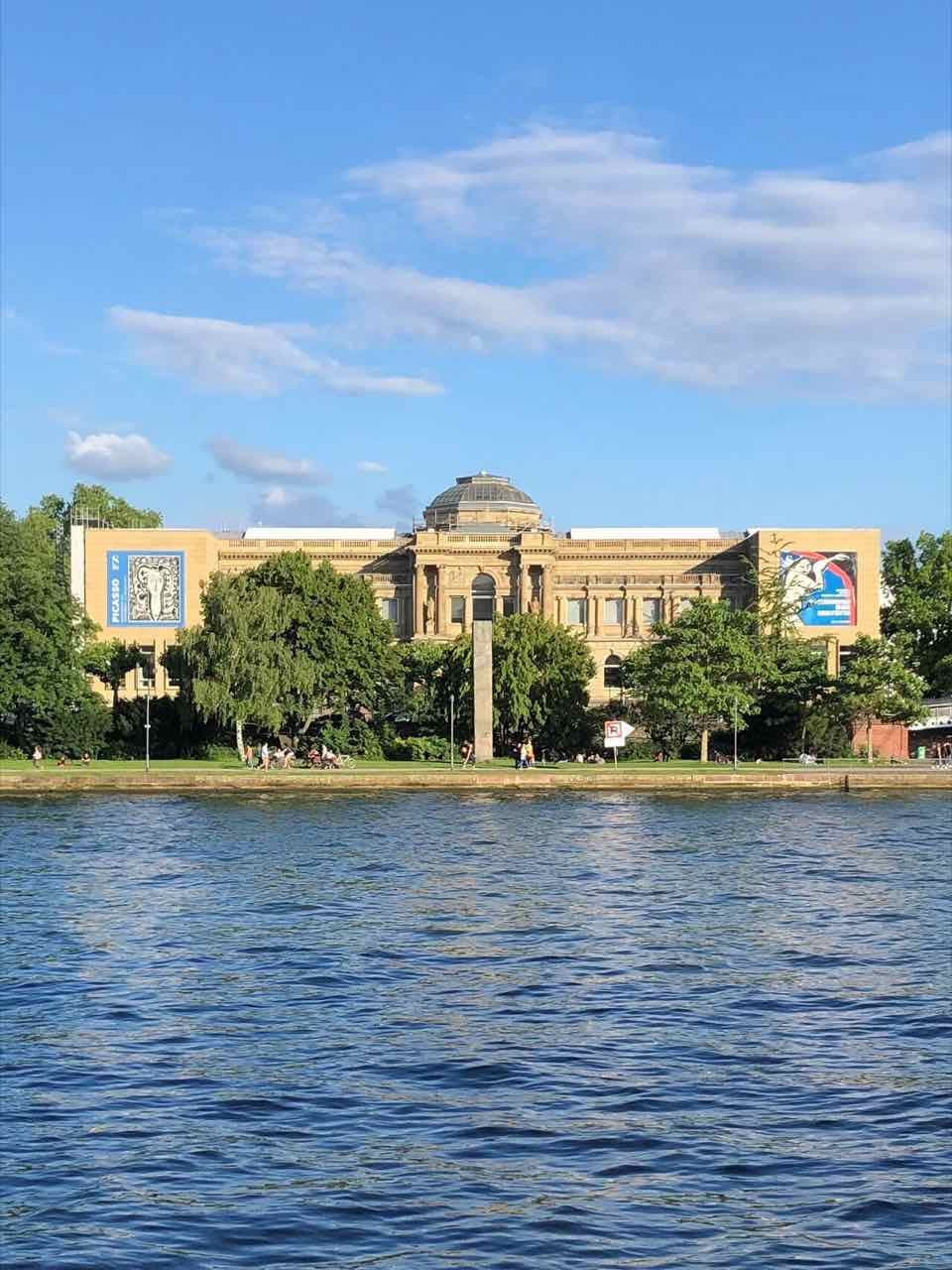
More than 30 museums, most of them on or near the two banks of the Main. The Museumsuferfest at the end of August opens about 20 of them late into the night, with music and food along the river. Check each museum for student prices.
The collection covers 700 years of art, from the Middle Ages to the present, at Schaumainkai 63. Open Tuesday to Sunday, until 9 pm on Thursday; full tickets start at 19 EUR, and on Tuesdays from 3 pm entry is 10 EUR. The rooftop has a view of the skyline.
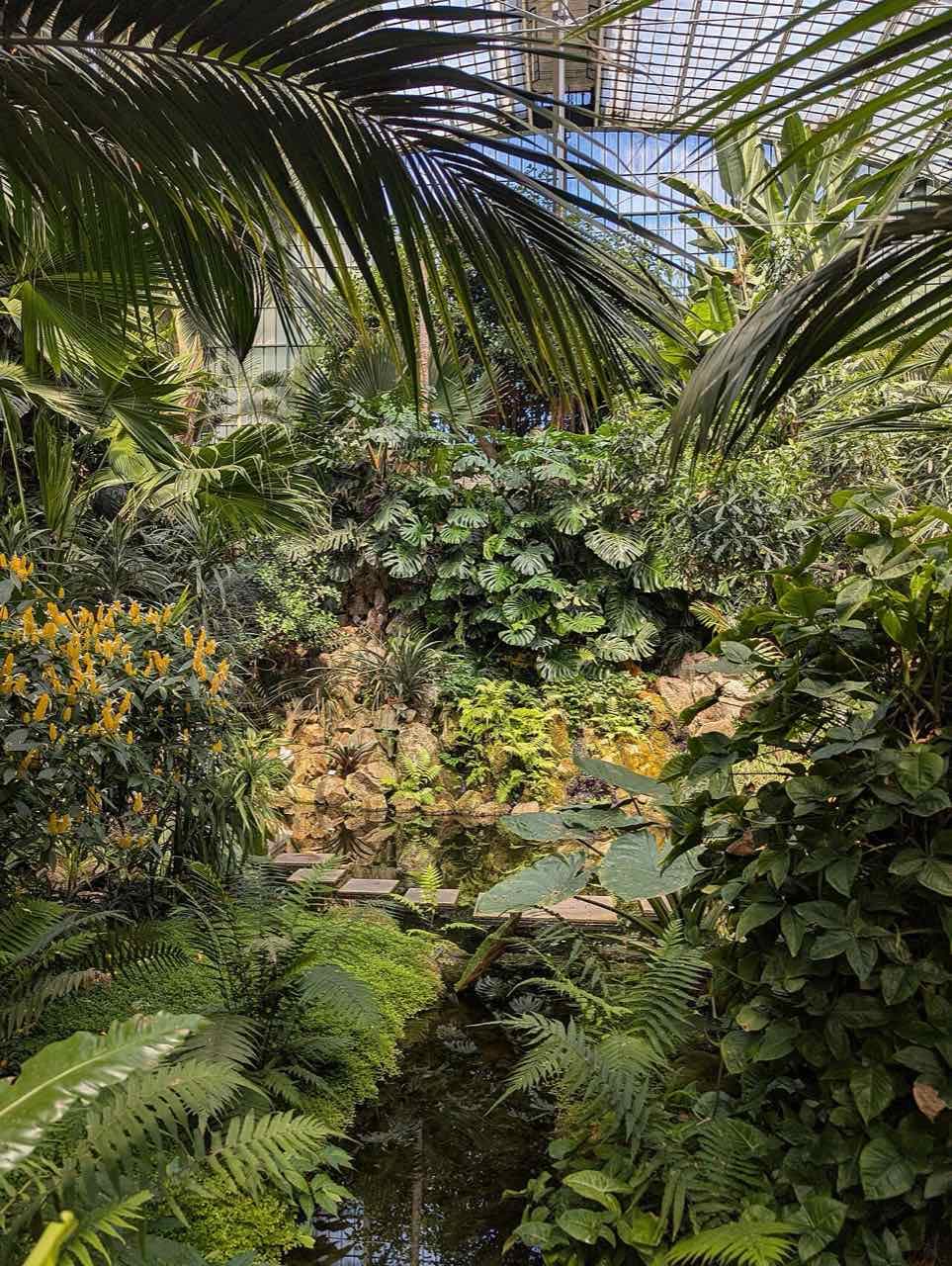
Hesse's largest botanical garden, 22 hectares in the Westend since 1871, with greenhouses and open-air beds. Together with Grüneburgpark and the university's Botanical Garden it forms the largest green area in the inner city.
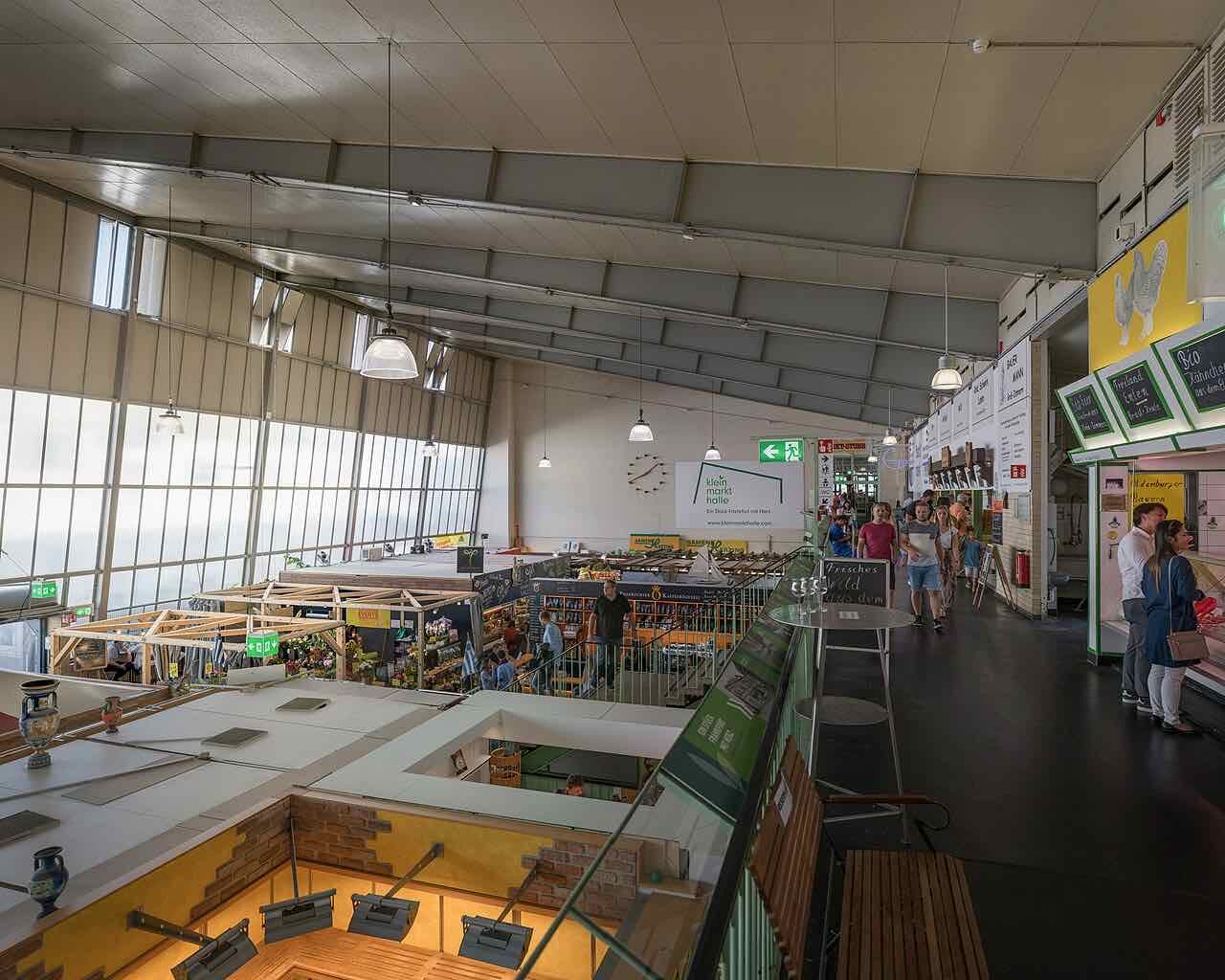
The covered market in the centre, with market stalls and places to eat. A rebuild is under way, and the hall stays open during the works.
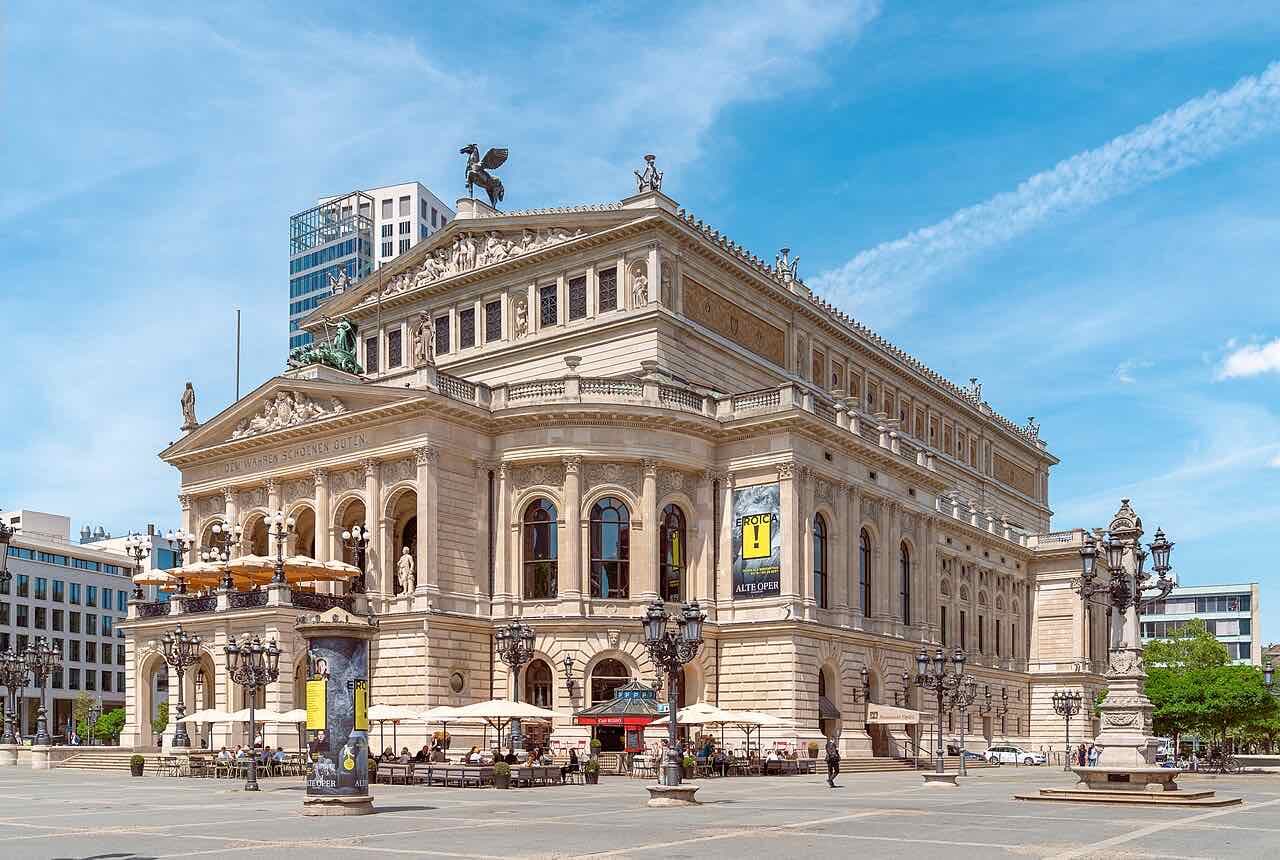
The old opera house, built in 1880, was a ruin until the late 1970s. It is now a concert hall.
Deutsches Filminstitut and Filmmuseum ↗
The German Film Museum, one of the museums on the Museumsufer.
An art venue in the old town that shows changing exhibitions.
Museum bank, opera house and market hall
Apple wine, Sachsenhausen and the Frankfurt way of eating
The local drink is Apfelwein, called Ebbelwoi, Äppler or Stöffsche here: a tart cider of about 5.5 to 7 per cent that is served in a ribbed glass called a Geripptes. A group usually orders a Bembel, the grey stoneware jug, and shares it. Order it sauergespritzt if you want it mixed with about 30 per cent mineral water, or süßgespritzt with lemon soda. Most of the taverns are in Sachsenhausen, south of the river, which is why it is called the Ebbelwoi district.
Original Frankfurter Würstchen with potato salad are the classic dish to try once. Everyday eating is much wider than that: a quarter of the people living here are foreign nationals, and about half have a migration background, so the food in the city comes from many countries.
Parks, the Main and weekends away
About 52 per cent of the city's area is green. Besides the Palmengarten, there are Grüneburgpark (29 hectares), the Ostpark (32 hectares) and the long lawns along the Main. The city lies in the foreland of the Taunus hills, which is where people go for a day of walking.
Frankfurt is also one of the best places in Germany to start a trip. The Hauptbahnhof is the second-busiest station in Germany, and the airport's long-distance station is about ten minutes from it. With the semester ticket, regional trains take you to the other cities of the region: Wiesbaden, Mainz, Darmstadt, Offenbach, Hanau and Bad Homburg.
For sport as a spectator, Eintracht Frankfurt plays in the Bundesliga at the Deutsche Bank Park, the Skyliners play basketball and the Löwen Frankfurt play ice hockey. The Frankfurt Marathon and the Ironman Germany race are held here each year.
Getting around: ticket, trains and the airport
You will not need a car. The city has U-Bahn, trams, S-Bahn and buses, all in the Rhein-Main-Verkehrsverbund (RMV).
Every student at Goethe University pays for it with the semester contribution (226.80 EUR in winter 2026/27) and gets a digital ticket through a university account. It covers buses, trams, U-Bahn, S-Bahn and regional trains (RB, RE) across the whole of Germany, but not long-distance trains such as IC or ICE. Screenshots and printouts of the QR code are not accepted in a check. Other universities negotiate their own tickets, so ask your own student union.
For non-students, or for anyone who needs one beyond the semester ticket, the Deutschlandticket costs 63 EUR a month and covers regional transport nationwide.
The regional transport association that runs timetables, tickets and the app for Frankfurt and the area around it.
The airport operator. The airport has its own long-distance station, about ten minutes by train from the main station.
What it costs
- Semester contribution, Goethe University (winter 2026/27)
- 408.28 EUR per semester, including the 226.80 EUR semester ticketsource
- Studierendenwerk dorm: small furnished single room
- about 255 to 300 EUR a month in the cheapest houses (for example Bockenheimer Landstraße 135, Porthstraße 1-3, Ginnheimer Landstraße 42)source
- Studierendenwerk dorm: single apartment
- about 350 to 520 EUR a month; larger or newer apartments such as Platensiedlung reach about 490 to 700 EURsource
- Hostel HOME (Studierendenwerk, Bockenheim): first weeks
- 630 EUR a month for a 3-month stay, 750 EUR a month from 30 nights, 30 EUR a night from 7 nights; bed linen included, no depositsource
- Statutory health insurance, student rate
- about 139 to 144 EUR a monthsource
- Deutschlandticket (if you do not use the semester ticket)
- 63 EUR a monthsource
- Frankfurt School tuition (private university)
- set by the school for each programme; see its programme pagessource
Frankfurt is more expensive than most German student cities, mainly because of rent. These are the figures published by the university and the Studierendenwerk, not estimates.
Jobs, finance and who hires students
The headquarters of the European Central Bank, the Deutsche Bundesbank, Deutsche Börse, Deutsche Bank, Commerzbank, DZ Bank, KfW, DekaBank and Helaba are all in Frankfurt, and a lot of consulting, law and fintech work is done around them. The airport is the main hub of Lufthansa and the base of the airport operator Fraport, and the trade-fair company Messe Frankfurt reported about 349 events and 4.8 million visitors worldwide in its 2025 figures. The Industriepark Höchst in the west is the home of Provadis Hochschule and its partner companies.
That makes Frankfurt a good place to look for internships and working-student jobs if you study finance, business, law, logistics, computer science or chemistry, and a harder one if you only speak English and want a casual job. For non-EU students, the working-time rules in the student life section apply to every one of these jobs.
Employers worth knowing
Each of these has a careers page for students and graduates. The ECB and the large banks also run formal graduate and trainee programmes with fixed application dates.
The central bank of the euro area has its seat in the Ostend, in the former wholesale market hall plus a 185 m tower finished in 2014. Its careers pages list student, graduate and specialist roles.
Germany's central bank, with its main offices in Frankfurt.
Operator of the Frankfurt Stock Exchange and of clearing and market-data businesses.
The central institution of the German cooperative banks, with its headquarters in a skyscraper in the Westend.
Landesbank Hessen-Thüringen, based in the Main Tower.
Lufthansa's primary hub is Frankfurt Airport; the group's careers site lists student and graduate roles.
The trade-fair operator that runs the Frankfurt grounds; it reported about 766 million EUR in sales for 2025 and events worldwide.
The world's largest book fair, held each October; the next one is 6 to 10 October 2027. It is a source of short-term event and publishing work.
Industriepark Höchst (Infraserv) ↗
The industrial park in Höchst, in the west of the city, where Provadis Hochschule has its campus.
Consulates in Frankfurt, and embassies in Berlin
Frankfurt hosts 93 consular missions. Four of them matter for students from the countries this site covers: India, China, Pakistan and the United States all have a consulate general here. For Vietnam, Nigeria, Ghana, Cameroon, Nepal and Bangladesh the embassy is in Berlin, and you reach it by train.
Consulate General of India, Frankfurt ↗
Passport, visa, OCI and attestation services, with an online appointment system, and a page on studying in Germany for Indian students.
Consulate General of the People's Republic of China, Frankfurt ↗
The consulate's own site is in Chinese; it covers consular services, notices and office hours, and links to the visa service centre in Frankfurt.
Consulate General of Pakistan, Frankfurt ↗
Eschenbachstraße 28, 60596 Frankfurt am Main; consular services for Pakistanis, with trade promotion and support for the Pakistani community; the consular area is shared with the embassy in Berlin by federal state.
U.S. Consulate General Frankfurt ↗
The largest U.S. consular post in the world, serving American residents and visa applicants.
The embassy for Vietnamese citizens in Germany; the site is in Vietnamese.
Neue Jakobstraße 4, 10179 Berlin; passport and visa contacts are listed on its site.
Serves Cameroon's citizens in Germany and in several other countries.
Guerickestraße 27, 10587 Berlin; consular services are handled by email.
Part 2
Student life in Frankfurt am Main
Where you can study
Founded in 1914 as a citizens' university and now one of Germany's large research universities, with more than 40,000 students and 16 faculties on five campuses: Westend (the main campus, with the former IG Farben building), Bockenheim, Riedberg for the natural sciences, Niederrad for the university hospital, and Ginnheim for sport. It is a member of the U15 group of research universities; its faculties include law, economics and business, medicine, physics, computer science and biology, and it is home to the Institute for Social Research, the base of the Frankfurt School of social theory. The English-taught offer is mainly at master's level, for example Management Science, Money, Macro and Finance, International Economics and Economic Policy, the Global Finance and Economics MSc, Modern East Asian Studies, Interdisciplinary Neuroscience and several LLM programmes. Tuition for most of these is free, but some LLM and finance programmes charge fees. The Internationales Studienzentrum runs the Studienkolleg and German courses.
International office ↗Frankfurt University of Applied Sciences (Frankfurt UAS) ↗
More than 15,000 students from over 100 nations study on one city campus at Nibelungenplatz 1 in the Nordend, in four faculties: architecture and civil engineering, computer science and engineering, business and law, and social work and health. Most degrees are taught in German; the English-taught master's programmes include Global Logistics, Advanced Architecture, High Integrity Systems and Information Technology, all without tuition. The International Office offers advising, a buddy programme for incoming students, and Welcome Days for English-taught degrees; CampusSport runs the university sport.
International office ↗Frankfurt School of Finance & Management ↗
A private, state-recognised business school at Adickesallee 32-34 in the Nordend. It traces back to the Bankakademie founded in 1957 and merged with the Hochschule für Bankwirtschaft in 2007. It holds all three major business-school accreditations (AACSB, EQUIS and AMBA). The school teaches in English: bachelor's degrees in Business Administration, Computational Business Analytics and Management, Philosophy and Economics, and master's degrees in Finance, Management, Financial Technology, Artificial Intelligence and Data Science, Real Estate and Leadership in Sustainable Finance, plus MBA programmes. Tuition is charged, so look at scholarship options early.
International office ↗Hochschule für Musik und Darstellende Kunst Frankfurt (HfMDK) ↗
Hesse's only university of music and the performing arts, with about 900 students. Departments cover instruments and voice, composition, conducting, church music, music education, musical theatre, acting and dance. It has an English website and its own international office. It grew out of the Hoch Conservatory (1878) and has had its own building since 1956.
International office ↗Städelschule (Hochschule für Bildende Künste) ↗
A small art school founded in 1817 from an endowment by the banker Johann Friedrich Städel. It has about 150 students in the visual arts, takes around 20 new students a year, and teaches in English; about three quarters of the students come from abroad. Since 2019 it has been funded by the state of Hesse.
International office ↗A private university in the Industriepark Höchst (building B845) that describes itself as the university of industry. It runs dual and part-time programmes in cooperation with more than 100 partner companies: bachelor's in business administration, transport and logistics management, international business, chemical engineering, biopharmaceutical science, business information management and computer science, and master's in technology and management. Dual study means you study while working with a partner company.
International office ↗Sankt Georgen Graduate School of Philosophy and Theology ↗
A Jesuit institution in Sachsenhausen, at Offenbacher Landstraße 224, founded in 1926. It has about 260 students, half of them postgraduates, many of them priests from around the world, and offers Catholic theology and a bachelor's in practical theology, as well as licentiate and doctoral degrees. Lay students have been admitted since 1976.
Hochschule für Gestaltung Offenbach (HfG) ↗
An art and design university in Offenbach am Main, the city that joins Frankfurt directly on the east. It takes part in Erasmus+ projects, offers international advisory services and has an English website; the Studierendenwerk Frankfurt runs its cafeteria.
International office ↗Student unions, services and groups
The students' union of Goethe University. It negotiates the semester ticket, offers counselling and help, runs the cafe Cafe KoZ, publishes the AStA-Zeitung, funds student projects such as the Uni-Kino and keeps a bed exchange and housing tips.
The students' union of Frankfurt UAS. It runs the semester ticket office, a Call a Bike offer with 60 free minutes, a bike workshop on Tuesdays and Thursdays, a legal-insurance and cultural-ticket service, an interest-free emergency loan for semester fees, and an international office.
Studierendenwerk Frankfurt am Main ↗
The student services organisation for Goethe University, Frankfurt UAS, HfMDK and HfG, with 34 residences, canteens and cafes, BAföG advice, psychosocial counselling, legal advice, a student-jobs board, an emergency fund and a page for international students.
Hochschulsport Goethe University ↗
More than 150 courses at Campus Ginnheim, Riedberg and Westend, plus a gym and a boathouse on the Main. Booking opens each semester in an online system.
The sports programme of Frankfurt UAS, with a semester schedule, competitive sports and a sports office in Building 10.
Recognised student groups at Goethe University ↗
More than 30 groups, including AIESEC, 180 Degrees Consulting, Enactus, MainMUN, Nightline Frankfurt, Rock your Life, Viva con Agua, Hack Frank, Black UniConnect FFM and groups for Turkish, Georgian and Alevi students. The university lists all of them with contacts.
A confidential listening service run by trained students, open from 20:00 to midnight: by phone on Tuesdays and Thursdays and by chat on Mondays, Wednesdays and Fridays.
Studieren ohne Grenzen, Frankfurt ↗
A student group that supports scholarships and education projects for young people in the Global South, open to new members from any faculty.
The local branch of the international student organisation, a recognised student group at Goethe University.
180 Degrees Consulting Frankfurt ↗
Students from all faculties of Goethe University who advise social enterprises and non-profits, founded in 2015.
ESG Frankfurt (Protestant student community) ↗
A student church at the campus, with counselling, an international programme in English, interfaith dialogue, a choir and an open living room.
KHG Frankfurt (Catholic student community) ↗
Based at Siolistraße 7 on Campus Westend. It offers free, confidential social counselling for international students on study, residence and work questions regardless of religion, a Meet and Read series, a student choir and student housing through the Bauverein.
Erasmus Student Network Germany ↗
The national site of the Erasmus Student Network, which runs local sections for exchange students; Goethe University and Frankfurt UAS also run their own buddy programmes.
Campus life and study culture
Frankfurt does not have one campus where everything happens. Goethe University is spread over five sites, and a normal week can mean the Westend campus for lectures, Riedberg for a lab and the city centre for everything else. The semester ticket makes the other cities of the region easy to reach.
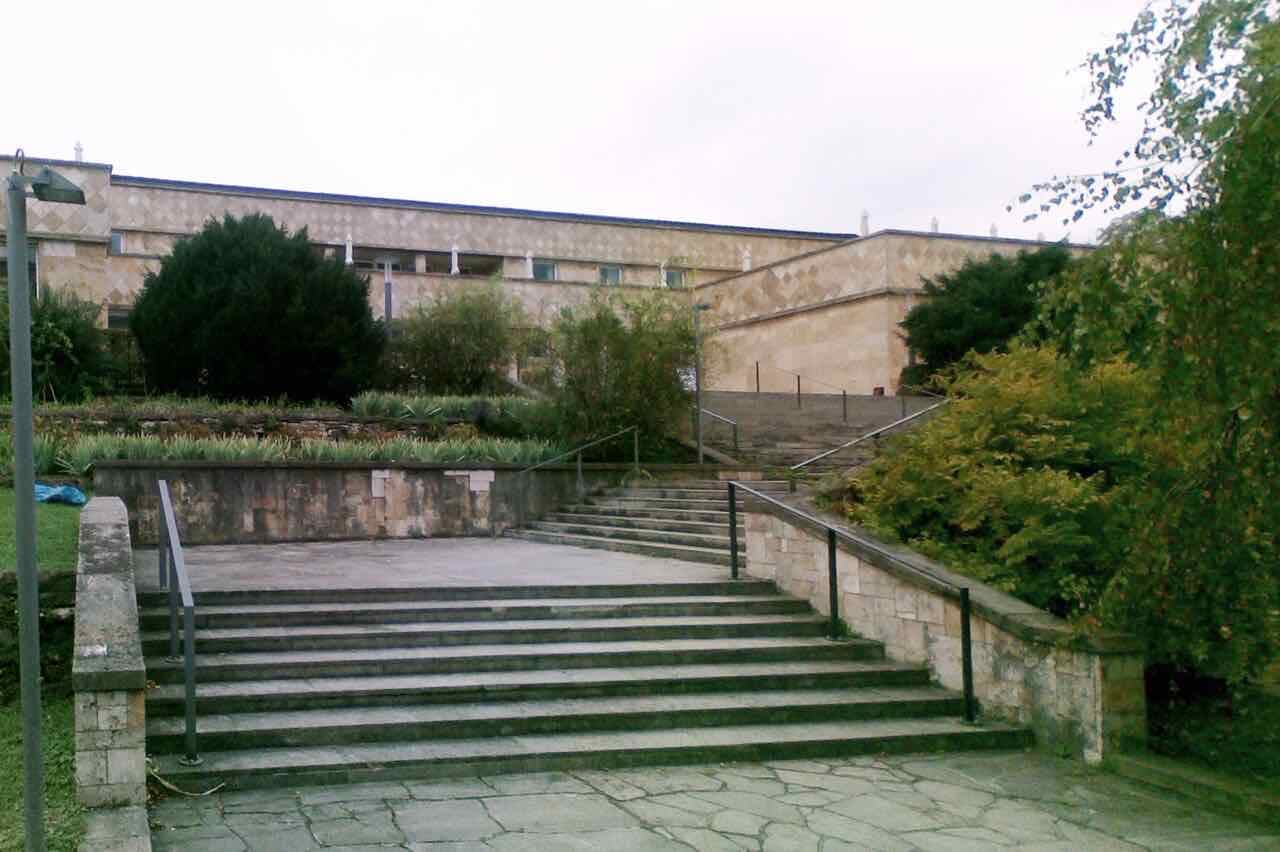
The Westend campus is the one most people picture, with the IG Farben building by Hans Poelzig, a large green campus and cafeterias. Frankfurt UAS has its campus at Nibelungenplatz in the Nordend and describes its study programmes as practice-oriented. Frankfurt School ranks first in Germany for employability in the 2026 Times Higher Education ranking, according to its own site.
Student life is organised around the faculty rather than the whole university: the Fachschaften (faculty student councils) are the first contact in your department. At Goethe University there are more than 30 recognised student groups and a student participation portal. At Frankfurt UAS the Fachschaften and the student parliament are listed on the AStA site.
Housing: how hard it is, and what to do first
Frankfurt is one of the hardest cities in Germany to find a room in. The Studierendenwerk runs 34 residences, with about 3,726 places in 30 buildings near the universities, and its own news page speaks of 2,400 students waiting for a place. Apply for a room as soon as you have an admission letter.
Furnished single rooms, shared rooms and small apartments, all-inclusive rents from about 255 EUR up to about 700 EUR for the largest. The new rent table applies to contracts from 1 October 2026. The houses include Ginnheimer Landstraße (292 apartments at 429 EUR), Ludwig-Landmann-Straße (261 rooms with shower, 304 to 466 EUR), Sandhofstraße (172 apartments, 466 to 601 EUR) and Riedbergallee (298 apartments, 379 to 390 EUR).
The Studierendenwerk's own hostel for the first weeks: furnished en-suite single rooms, no deposit, bed linen and cleaning included. A 3-month stay costs 630 EUR a month for students with an enrolment certificate (limited quota); from 30 nights it is 750 EUR a month.
General information and application ↗
How the allocation works, where the housing service is (Rostocker Straße 2 on Campus Westend, weekdays 9:00 to 15:00) and the allocation guidelines.
The Studierendenwerk's tutoring and mentoring programme in the residences, for meeting people in your house.
Catholic student residences (Bauverein) ↗
The Bauverein Katholische Studentenheime runs the Friedrich-Dessauer-Haus in Hausen (616 places), the Alfred-Delp-Haus on Campus Westend (175 rooms) and two smaller houses, and accepts students regardless of faith.
Housing advice from Frankfurt UAS ↗
A guide for finding a room and tenants' rights, and a list of temporary housing options after arrival.
Canteens, cafes and eating cheaply
The Studierendenwerk runs the canteens and cafés of Goethe University (Bockenheim, Westend, Riedberg and Niederrad), Frankfurt UAS, HfMDK and the HfG in Offenbach. The big ones are the Mensa Casino on Campus Westend, the Mensa Pi x Gaumen at Riedberg and the Mensa essWERK at Frankfurt UAS; each day's menu is on the Studierendenwerk site. The Studierendenwerk offers a student rate for cashless payment.
Away from campus, the Kleinmarkthalle in the centre has stalls and places to eat.
Sport, clubs and nights out
Hochschulsport at Goethe University offers more than 150 courses and the university gym; Frankfurt UAS has CampusSport. Courses are booked online; for winter 2026/27 booking opened at the start of October.
For an evening, Sachsenhausen has the Apfelwein taverns, the Alte Oper has concerts, the Städel holds a Städel Night as an evening party in the museum, and the Museumsuferfest at the end of August opens about 20 museums late. Eintracht Frankfurt plays its home games in the Bundesliga.
Counselling and support
The Studierendenwerk has free counselling for money, BAföG, legal questions, psychosocial problems, studying with a child or with an impairment, and an emergency fund for students in a sudden financial bind. Nightline Frankfurt listens in the evening. The AStA of Goethe University lists advice services, the AStA of Frankfurt UAS offers anti-discrimination and queer counselling, an international office and an emergency loan for semester fees, and the KHG's social counselling is open to international students of any faith.
Frankfurt UAS has an international student advisor in Building 1, Room 2, with open sessions every Wednesday from 13:00 to 15:00 where student assistants help with forms; the office also issues certificates for the immigration authority. Goethe University has International Student Services for applicants and counselling for enrolled students, and the Internationales Studienzentrum for the Studienkolleg and German courses.
Your first weeks, in order
- 1
Before you arrive
Apply for a Studierendenwerk room (rents are low but demand is high) or book Hostel HOME for the first three months. Open a blocked account if your embassy asks for one: the amount for a residence permit is 11,904 EUR, which is 992 EUR for each of twelve months.
- 2
Week 1: address registration
Register your address at the Citizens' Office (Bürgeramt) for your district; it is mandatory, and EU citizens are told to do it about a week after moving in. Non-EU students register here first and then go to the immigration office.
- 3
Week 1 to 2: health insurance
Join a statutory health insurer at the student rate of about 139 to 144 EUR a month. The insurer sends your insurance certificate to the university for enrolment; EU students can show their EHIC instead.
- 4
Week 2: enrol and get your ticket
Enrol with the registrar's office and pay the semester contribution. At Goethe University your semester ticket is a digital QR code you pick up with your university account; screenshots do not count in a check.
- 5
Within 3 months: residence permit
If you are from outside the EU or EEA, apply for your residence permit at the Ausländerbehörde Frankfurt within three months of arrival. Take a passport valid for at least a year, health insurance and proof of 992 EUR a month. Your International Office can issue certificates for the authority.
- 6
Weeks 1 to 4: orientation
Go to your welcome week or Welcome Days (Frankfurt UAS runs separate Welcome Days for English-taught degrees), your Fachschaft orientation, and an introductory session at the International Office. Register for German courses at the Internationales Studienzentrum or the Frankfurt UAS language centre.
- 7
Month 2 onward: work
Student jobs at the university are allowed without limit. Other jobs for non-EU students are capped at 140 full days or 280 half days a year without special approval; more needs approval from the Ausländerbehörde, and a job connected to your subject is easier to approve. EU students do not need a permit, but above 20 hours a week during the semester you pay full social contributions.
Check before you go
Semester fees change every term: the Goethe University contribution rose from 381.28 EUR in winter 2025/26 to 408.28 EUR in winter 2026/27, because the semester ticket and the Studierendenwerk contribution both went up. Check the current figure for your university before you budget.
The proof-of-funds figure (992 EUR a month) and the work-day limits come from the Frankfurt UAS International Office and can change with federal rules. Confirm with the Ausländerbehörde and your embassy before you apply.
The dorm rents above apply to new contracts from 1 October 2026. Always check the current Studierendenwerk rent table when you apply.
Where you come from matters here
Pick your home country: food, faith, community groups and the consulate that serves you, checked 21 October 2026.
🇮🇳 Living in Frankfurt am Main as an Indian student
India has a Consulate General in Frankfurt, ISKCON runs a Krishna temple in Offenbach, and the Syro-Malabar, Syro-Malankara and Tamil Catholic communities hold services in their own languages. About 7,600 Indian citizens lived in the city in 2022, one of the largest groups of foreign residents.
Consulate General of India, Frankfurt ↗
Passport, OCI, attestation and visa services with online appointments, and a page about studying in Germany.
A Krishna temple in Offenbach, just across the city border, with a Sunday festival every week from 13:00 that includes teaching, singing and vegetarian prasadam.
Syro-Malabar Catholic community, Frankfurt ↗
Holy Mass in Malayalam on the first, second and third Sunday of the month at 16:00 in St. Christophorus, An den Drei Steinen 42b, Preungesheim.
Syro-Malankara Catholic community ↗
Mass in Malayalam and German on the first Friday at 18:00 and the fourth Sunday at 16:00 in Herz-Jesu, Eckenheimer Landstraße 324.
Tamil Catholic community, Frankfurt ↗
Mass in Tamil on the second Sunday of the month at 17:00 in St. Elisabeth, Bockenheim.
🇳🇬 Living in Frankfurt am Main as a Nigerian student
Nigeria has no consulate in Frankfurt; the embassy is in Berlin. The nearest community places are African English-speaking church groups and the STUBE programme for students from Africa, Asia and Latin America.
Neue Jakobstraße 4, 10179 Berlin. Passport and visa contacts are listed, together with the National Identification Number enrolment centres in Germany.
African English-Speaking Catholic Parish ↗
Mass in English on the first and third Sunday of the month at 14:00 in Maria Hilf, Rebstöckerstraße 70, Gallus, followed by time together. Contact is by email or phone as listed by the city's Catholic parishes.
ESG Frankfurt: international work ↗
The Protestant student community runs international programmes, interfaith dialogue and counselling for students of any background, and a page on the immigration office.
🇻🇳 Living in Frankfurt am Main as a Vietnamese student
Vietnam has an embassy in Berlin, and a Vietnamese Buddhist monastery and a Vietnamese Catholic community in the Frankfurt area give you a place to celebrate Tet and keep your own traditions.
A Vietnamese Buddhist Zen monastery at Hanauer Landstraße 443, near the tram stop Dieselstraße (lines 11 and 12). Meditation is on Wednesdays from 19:00; it holds seminars and celebrates Tet, the Vietnamese New Year, on 6 February 2027.
Vietnamese Catholic community St. Emmanuel Phung ↗
Mass in Vietnamese in St. Anna, Am Hohen Weg 19, in Hausen on the third Sunday of odd-numbered months; the website is in Vietnamese.
The embassy for Vietnamese citizens in Germany, with consular information in Vietnamese.
🇵🇰 Living in Frankfurt am Main as a Pakistani student
Pakistan has a Consulate General in Frankfurt, in Eschenbachstraße. The Rat der Religionen Frankfurt includes Muslim communities among its members.
Consulate General of Pakistan, Frankfurt ↗
Eschenbachstraße 28, 60596 Frankfurt am Main, phone 069 6986 7850. Consular services, trade promotion and guidance for the Pakistani community.
Embassy of Pakistan, Berlin: consular services ↗
Passport, attestation and e-visa information for Pakistanis in Germany, and the rules on which consulate handles which federal state.
Liberal-Islamischer Bund, Frankfurt congregation ↗
A liberal Muslim congregation that meets in Frankfurt by registration at frankfurt@lib-ev.de; prayers are led in turns by people of different genders and are open to non-members.
🇬🇭 Living in Frankfurt am Main as a Ghanaian student
Ghana's embassy is in Berlin. In Frankfurt, the African English-speaking Catholic parish is the closest organised community, and the student groups at the universities are a good way to meet other African students.
African English-Speaking Catholic Parish ↗
Mass in English twice a month in Maria Hilf, Gallus, listed by the Catholic parishes of other mother tongues.
KHG Frankfurt social counselling ↗
Free and confidential advice for international students on residence and work rules, money problems and study problems, regardless of religion.
🇨🇲 Living in Frankfurt am Main as a Cameroonian student
Cameroon's embassy is in Berlin. French-speaking students will find a French-language Catholic parish, and English-speaking Cameroonians the English-speaking parishes.
The embassy for Cameroonian citizens in Germany and nine other countries, with pages in English, French and German.
Paroisse catholique francophone de Francfort ↗
A French-speaking Catholic parish; Mass is every Sunday at 11:00 at Maria Himmelfahrt, Linkstraße 64, Griesheim.
International English-Speaking Catholic Parish ↗
Mass in English in the centre, in Bornheim and in Liederbach.
🇺🇸 Living in Frankfurt am Main as an American student
The U.S. Consulate General Frankfurt is the largest U.S. consular post in the world. Hesse has had a partnership with the U.S. state of Wisconsin for 50 years, and Goethe University is closely linked to it. The English-speaking Catholic parish and AmCham Germany are two places to meet people in English.
U.S. Consulate General Frankfurt ↗
Services for American citizens and visa applicants; the consulate serves the American resident community.
AmCham Germany, Frankfurt office ↗
The American Chamber of Commerce in Germany has its Frankfurt office at Börsenplatz 13-15; it runs events and networking for people interested in transatlantic business.
International English-Speaking Catholic Parish ↗
Mass in English at St. Leonhard in the centre (Tuesday 18:00, Saturday 17:00) and at Heilig Kreuz in Bornheim (Sunday 9:30), as well as in Liederbach on Sundays.
🇨🇳 Living in Frankfurt am Main as a Chinese student
China has a Consulate General in Frankfurt, and the Confucius Institute teaches Chinese language and culture. There were about 4,600 Chinese citizens in the city in 2022. A Chinese-language Catholic group meets monthly.
Consulate General of the People's Republic of China, Frankfurt ↗
Consular services, notices and office hours, in Chinese on its own site; there is also a visa service centre in Frankfurt.
Konfuzius-Institut Frankfurt am Main ↗
Chinese language courses with course counselling, and a calendar of events on China.
Catholic group in Chinese, Frankfurt ↗
Bible study and Mass in Chinese on the last Saturday of the month at 15:00 in St. Ignatius, Gärtnerweg 60, in the Westend, listed by the city's Catholic parishes of other mother tongues.
English-taught programmes in Frankfurt am Main
Soonest open deadline first. Every entry links to its official source.
- MSc Interdisciplinary Neuroscience (INS)Goethe University Frankfurt · Frankfurt am MainmasterNo tuition15 Mar 2027Open
- Information Technology (IT)Frankfurt University of Applied Sciences · Frankfurt am MainmasterNo tuition15 Apr 2027Open
- Master of Science in International Economics and Economic PolicyGoethe University Frankfurt · Frankfurt am MainmasterNo tuition15 May 2027Open
- Money, Macro and Finance (MSc)Goethe University Frankfurt · Frankfurt am MainmasterNo tuition15 May 2027Open
- Management Science (MSc)Goethe University Frankfurt · Frankfurt am MainmasterNo tuition15 May 2027Open
- Master of Science in Global Finance and Economics (MSc GFE)Goethe University Frankfurt · Frankfurt am Mainmaster30 Jun 2027Open
- Master's in Financial Technology (MSc)Frankfurt School of Finance & Management · Frankfurt am Mainmaster30 Jun 2027Open
- Master of Artificial Intelligence & Data Science (MSc)Frankfurt School of Finance & Management · Frankfurt am Mainmaster30 Jun 2027Open
- Master of Finance (MSc)Frankfurt School of Finance & Management · Frankfurt am Mainmaster30 Jun 2027Open
- Master's in Real Estate (MSc)Frankfurt School of Finance & Management · Frankfurt am Mainmaster30 Jun 2027Open
- Master's in Management (MSc)Frankfurt School of Finance & Management · Frankfurt am Mainmaster30 Jun 2027Open
- Sustainable and Digital Aviation (MEng)RheinMain University of Applied Sciences · Frankfurt am MainmasterNo tuition15 Jul 2027Open
- International Master's Programme – LLM in Legal TheoryGoethe University Frankfurt · Frankfurt am Mainmaster15 Sept 2027Open
- High Integrity Systems (HIS)Frankfurt University of Applied Sciences · Frankfurt am MainmasterNo tuitionRollingApply anytime
- Master of Laws in International Banking, Securities & Finance (for Graduates from Asia)Goethe University Frankfurt · Frankfurt am MainmasterSee sourceCheck source
- Bachelor's in Computational Business Analytics (BSc)Frankfurt School of Finance & Management · Frankfurt am MainbachelorSee sourceCheck source
- Master of Laws in Finance (LLM Finance)Goethe University Frankfurt · Frankfurt am MainmasterSee sourceCheck source
- Global LogisticsFrankfurt University of Applied Sciences · Frankfurt am MainmasterNo tuitionSee sourceCheck source
- Bachelor's in Management, Philosophy & Economics (BSc)Frankfurt School of Finance & Management · Frankfurt am MainbachelorSee sourceCheck source
- Advanced Architecture — From Urban Design to Building ConstructionFrankfurt University of Applied Sciences · Frankfurt am MainmasterNo tuitionSee sourceCheck source
- Bachelor's in Business Administration (BSc)Frankfurt School of Finance & Management · Frankfurt am MainbachelorSee sourceCheck source
- Master of Leadership in Sustainable FinanceFrankfurt School of Finance & Management · Frankfurt am MainmasterSee sourceCheck source
- Master of Science with Tracks in Quantitative Accounting, Quantitative Economics, Quantitative Finance and Quantitative Marketing (MSQ)Goethe University Frankfurt · Frankfurt am MainmasterNo tuitionSee sourceCheck source
- Master's in Modern East Asian Studies (MEAS)Goethe University Frankfurt · Frankfurt am MainmasterNo tuition15 Aug 2026Deadline passed
- Full-Time MBAFrankfurt School of Finance & Management · Frankfurt am Mainmaster31 Jul 2026Deadline passed
- Part-Time MBAFrankfurt School of Finance & Management · Frankfurt am Mainmaster31 Jul 2026Deadline passed
- Executive MBA (part-time)Frankfurt School of Finance & Management · Frankfurt am Mainmaster31 Jul 2026Deadline passed
- MBA International Healthcare ManagementFrankfurt School of Finance & Management · Frankfurt am Mainmaster31 Jul 2026Deadline passed
Is Frankfurt am Main right for you? Ask us. Free.
Tell us your passport, grades and budget. We compare Frankfurt am Main with the other places you could study, then apply for you. You never pay us.
Get my free plan