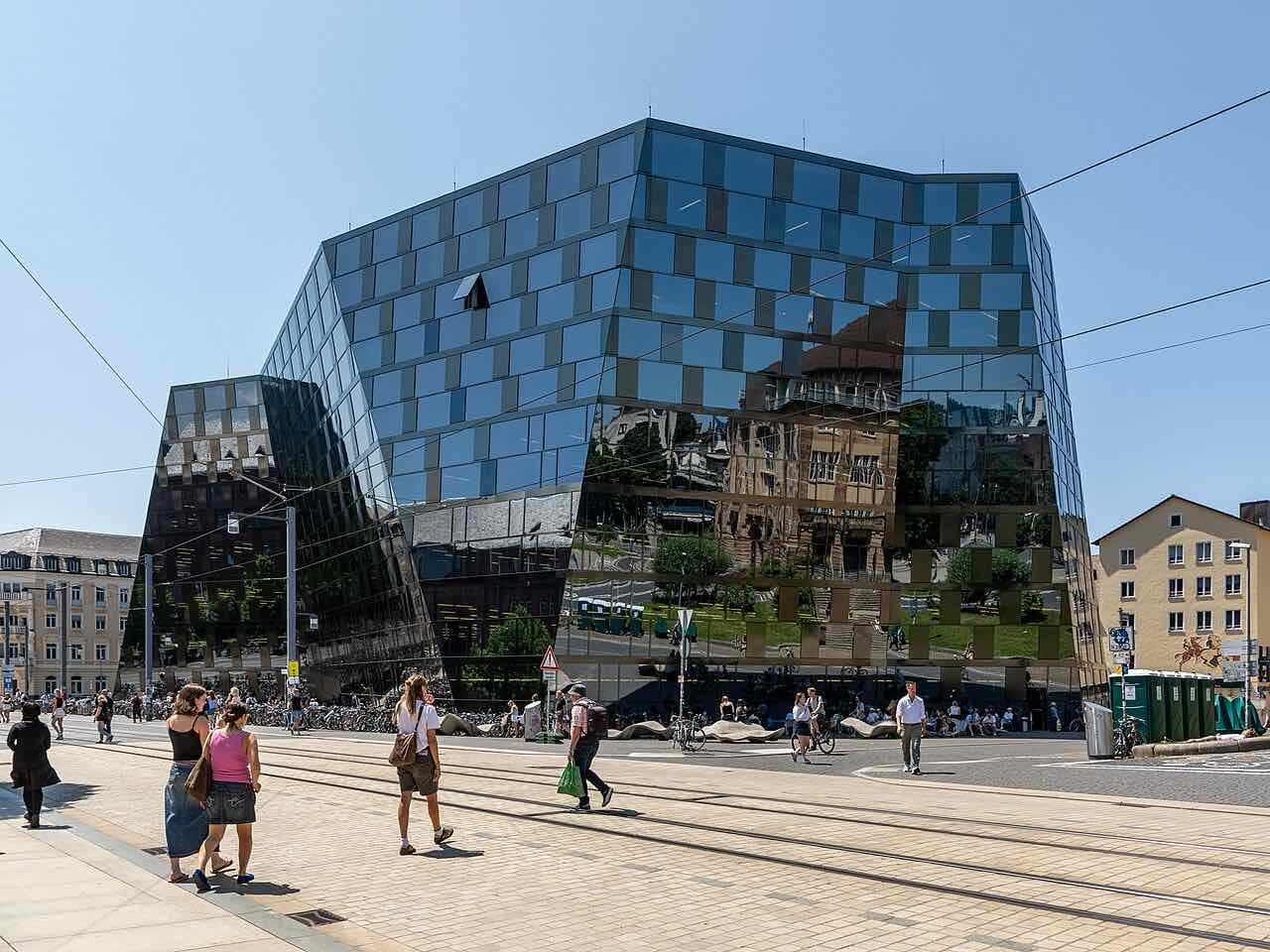
Studying in Baden-Württemberg, Germany
Freiburg im Breisgau
A university town at the edge of the Black Forest, a short ride from France and Switzerland.
Freiburg is a city of about 238,000 where the University has been teaching since 1457 and the Black Forest starts at the edge of town. You can have a lecture in the morning, ride a cable car up Schauinsland in the afternoon and be at a farmers' market in Vauban, a former French army base turned eco-district, the next day. Five more higher-education institutions sit in the same city, from a music conservatoire to two church-run universities, and the University belongs to Eucor, an alliance with Basel, Strasbourg, Haute-Alsace and Karlsruhe. The weather is on your side too: the long-term average is about 1,824 hours of sunshine a year. Rooms are scarce and the German language matters for most degrees, so start early. For a student who wants a compact, green, international place to spend three or four years, Freiburg has a lot going for it.
- Population
- About 238,000 in the city
- State
- Baden-Württemberg, in the south-west of Germany
- Students at the University
- Roughly 25,000, more than 4,000 of them international
- Higher-education institutions
- Six, including a campus of Furtwangen University
- Nearest big airport
- EuroAirport Basel-Mulhouse-Freiburg, about 70 km south, on the French side
- Switzerland
- About 42 km to the south
Part 1
Living in Freiburg im Breisgau
A market town that became a university town
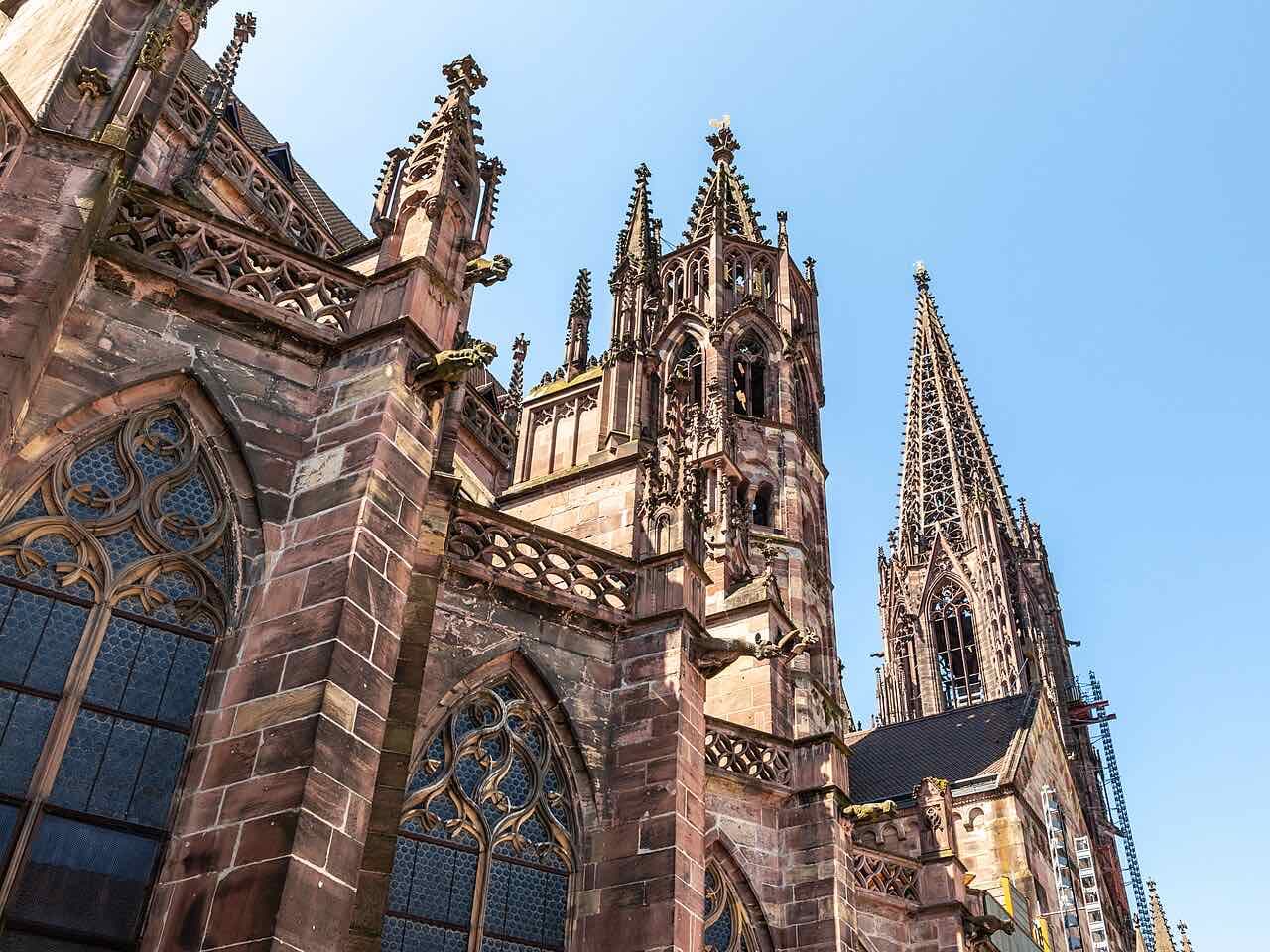
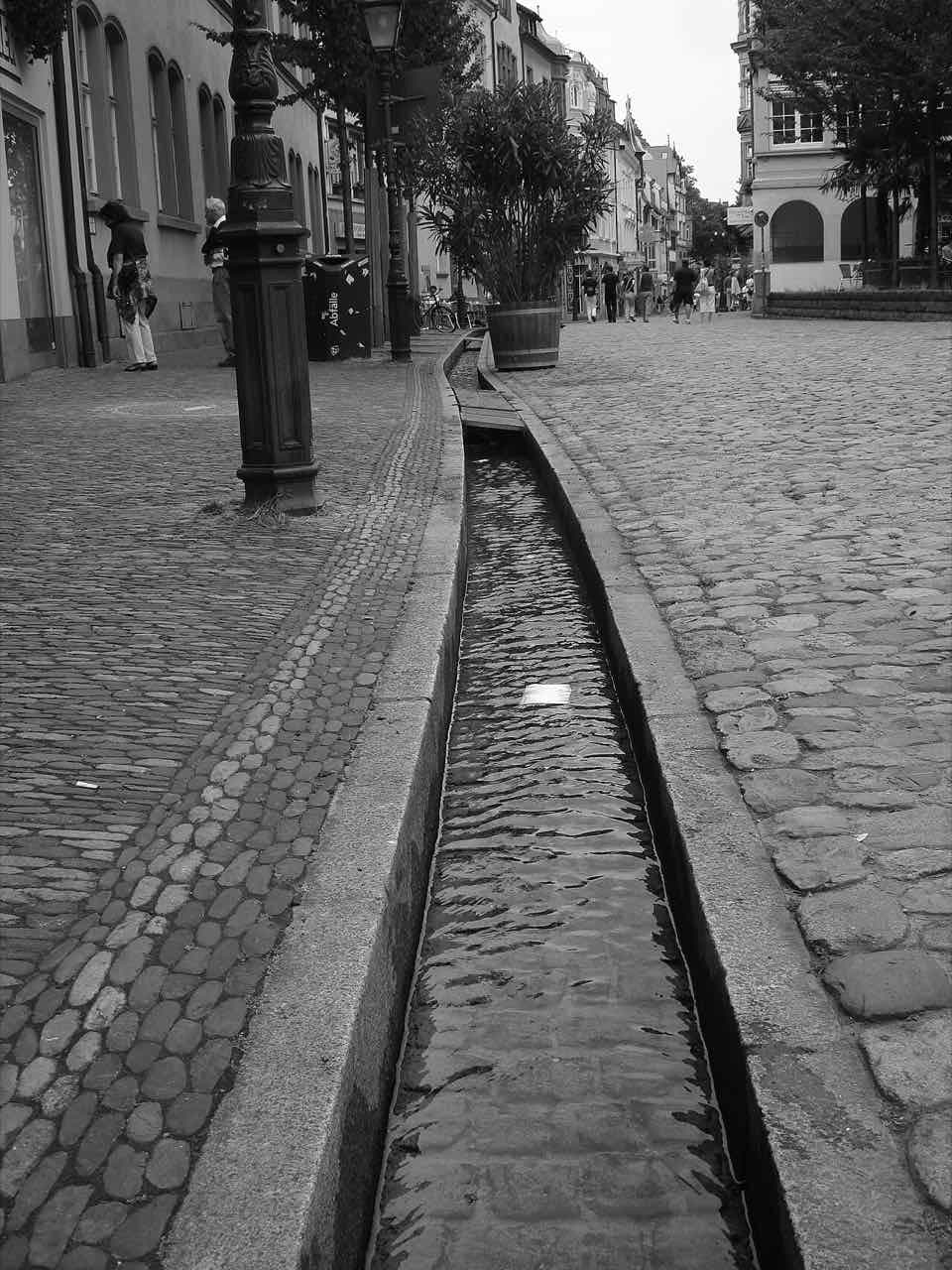
Freiburg was founded in 1120 by Konrad and Duke Berthold III of the House of Zähringen as a free market town, and the University followed in 1457, making it one of the oldest in Germany. The old town still has its medieval layout. The Minster, a Gothic church in red sandstone, was begun around 1200, and its west tower is 116 metres tall. Near it stands the red-fronted Historisches Kaufhaus from 1520, and along the streets run the Bächle, narrow water channels that were probably laid out when the town was founded.
The Bächle are the thing every student learns about in the first week: on a warm day people sit on the kerb with their feet in them. The Schwabentor, one of the surviving town gates, marks the edge of the old centre on the Schlossberg side.
Green on purpose
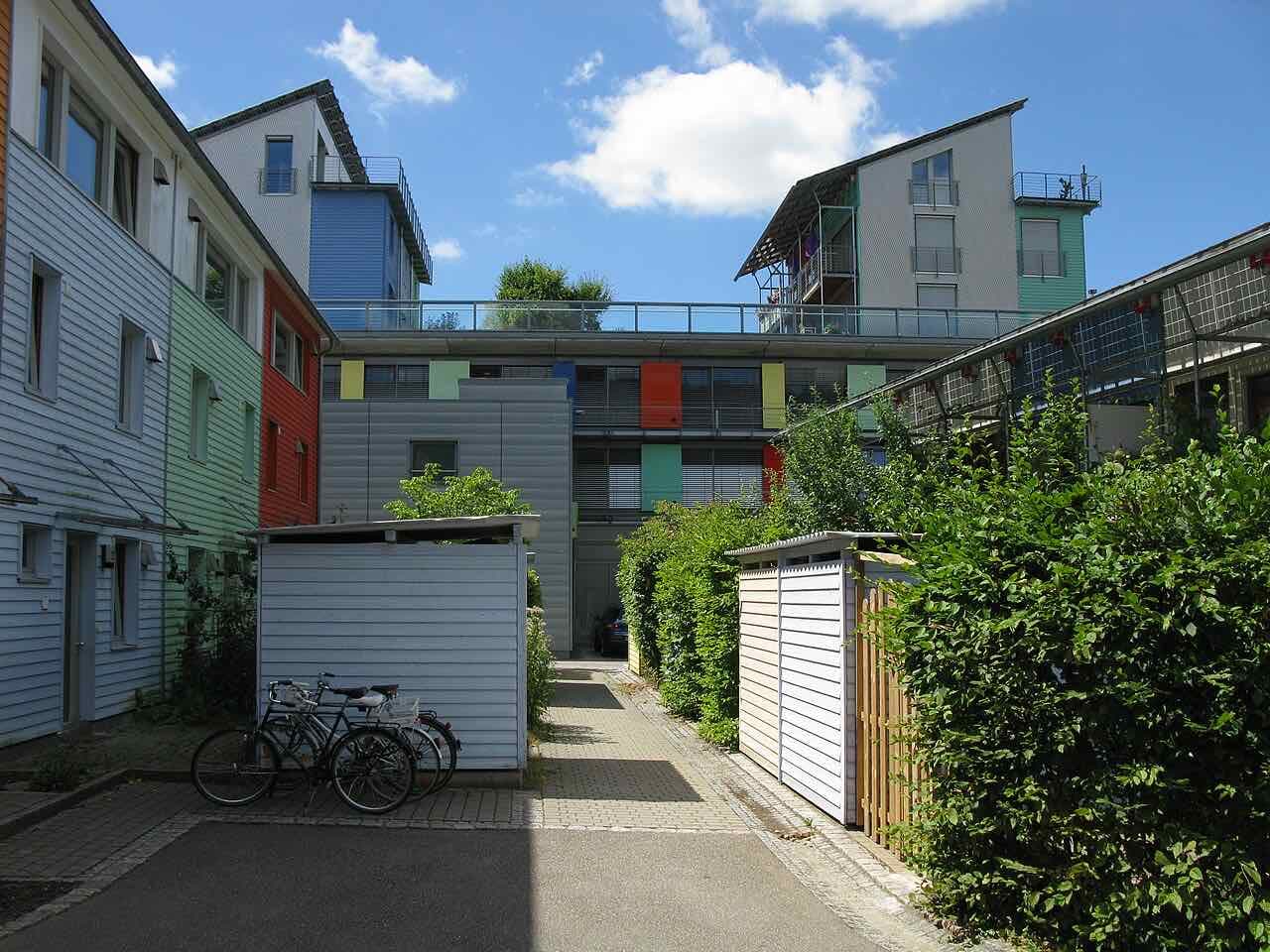
Freiburg markets itself as an eco-city, and some of that is policy rather than slogan. In 1995 the council limited municipal construction to low-energy buildings, and the Greens have been the largest party in the council since 2004. The clearest example is Vauban, a former French Army base redeveloped from the late 1990s as a model district for about 5,000 people, with solar power on many homes.
For a student the everyday effects are simple. A large part of the centre is car-free and the tram network is the backbone of local transport. The city also hosts the International Solar Energy Society and ICLEI, a network of local governments for sustainability, and the solar research institute Fraunhofer ISE, with around 1,300 employees, cooperates with the University of Freiburg's INATECH institute.
What to see and do in your first months
Most of it is walkable from the University and costs nothing.
Freiburg Minster and the Münstermarkt ↗
The market on Münsterplatz sells produce from regional farms, and it is where you buy a Lange Rote, the long red sausage the city is known for.
Allow an afternoon to walk the old town: Minster, Historisches Kaufhaus, the water channels and the gates.
A hill at the edge of town with the ruins of a castle, a 360-degree view over the old town and the Minster, and sunset views towards the Vosges. Access is free at any time. You can walk up or take the Schlossbergbahn from the Stadtgarten.
Besides the Münstermarkt, there are weekly markets in districts such as Vauban (Alfred-Döblin-Platz), Rieselfeld, Weingarten and Zähringen, so you usually have one close to where you live.
The Black Forest on your doorstep
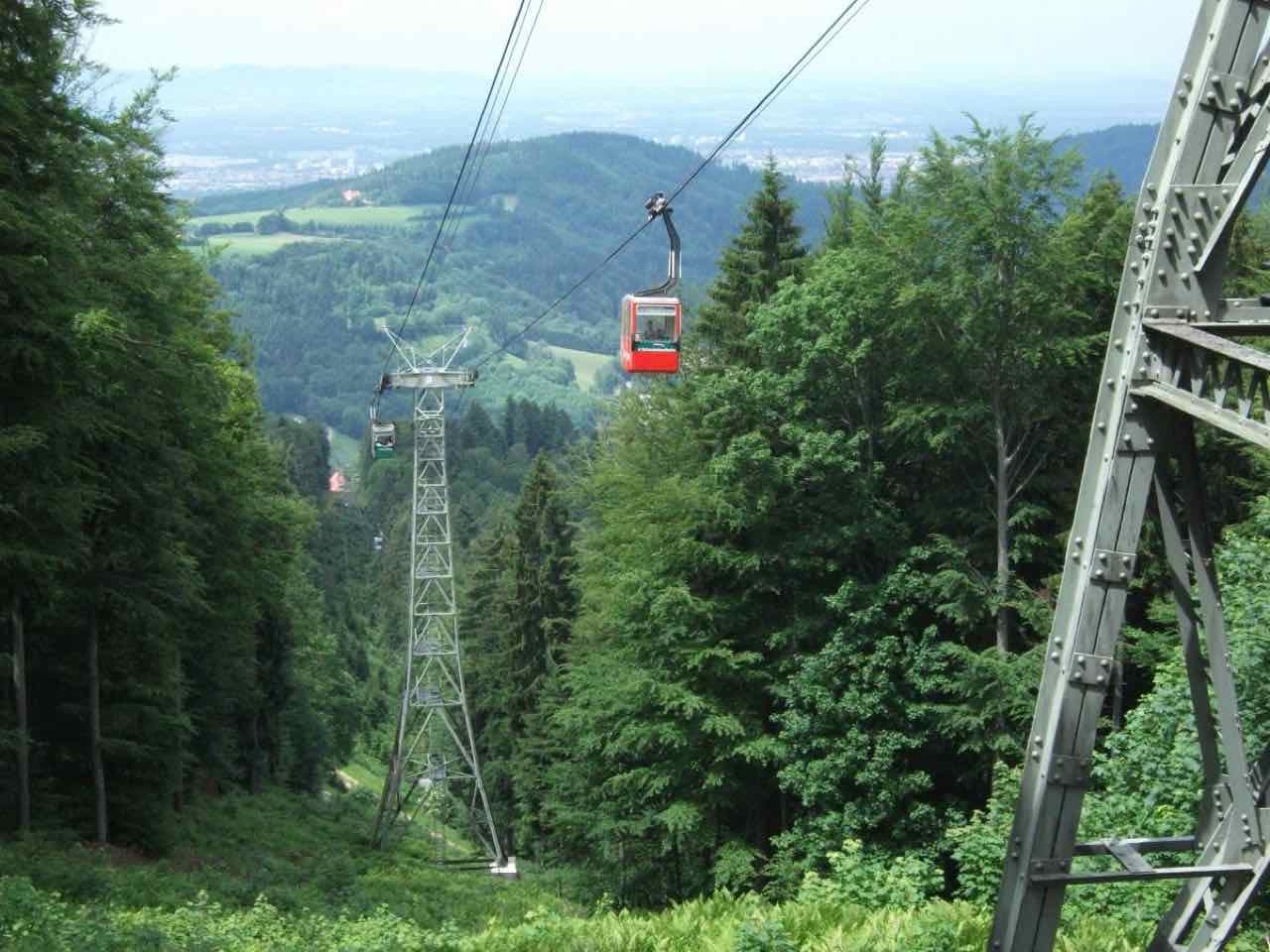
Schauinsland is the local mountain. The Schauinslandbahn cable car runs from the valley station behind Günterstal to the top in about 20 minutes (it is 3,600 metres long and has run since 1930), and the foot of it is about 20 minutes by bus or tram from the centre. At the top there is an easy circular walk of just under an hour, and a former silver, lead and zinc mine that you can visit on a guided tour.
Further out, the tourist office lists Belchen (1,414 m, free of trees, with views as far as the Alps), Feldberg, Schluchsee, and the Black Forest's long-distance and wine trails. It does not publish travel times to them, so look up a bus or train on the day.
France and Switzerland next door
Freiburg sits in the Upper Rhine region, where three countries meet.
An alliance of five universities: Basel, Freiburg, Haute-Alsace, Karlsruhe (KIT) and Strasbourg. Students can take courses at a partner university across the border, and there are joint and double degrees, for example a Franco-German double Master of Law.
A student travel programme run since 1994 by older students. It offers hikes in the Black Forest and the Alps, and city trips to Zürich, Basel, Strasbourg, Stuttgart or Heidelberg at low prices.
EuroAirport and the Swiss border ↗
The EuroAirport lies about 70 km south of Freiburg in France, and the Swiss border is about 42 km away. Zürich is 130 km, Stuttgart 200 km and Frankfurt 260 km.
Getting around
The VAG tram network is the backbone of local transport, with a tram every 7 to 8 minutes on the main lines, and about 70% of residents live within 500 metres of a stop. The central station is on the Frankfurt–Basel railway. The semester ticket covers the trams, buses and regional trains. The ticket costs €98 per semester and is valid on buses and trains across the whole RVF network, including night trams in the city. It does not cover first class on Deutsche Bahn or some night and on-demand services, which need an extra ticket.
What things cost
- Semester ticket (RVF)
- €98 per semestersource
- Room in a shared flat, Studentendorf Vauban
- €263 to €369 per month, including electricity, water, heating and internetsource
- Small single apartment, Studentendorf Vauban
- €346 to €600 per month, same inclusionssource
- Deposit for a single room in a Studierendenwerk residence
- €500, refunded about four weeks after moving out if the room is in good conditionsource
- Canteen main course, student price
- About €4.45 to €4.80 for a main course; prices change dailysource
- Service Package for international students (one semester, furnished room)
- From €2,453 without health insurance, from €3,178 with itsource
Figures are what the Studierendenwerk and the RVF publish; check them before you plan a budget.
Work, employers and what to expect
Large local employers include the University Medical Center (about 15,000 staff), and the research institute Fraunhofer ISE (about 1,300 staff) works with the University. Neither site lists student jobs, so look at their career sections for current openings. The Studierendenwerk runs a Studijob service with a job-placement service, a babysitter register and student jobs at the Studierendenwerk itself.
The sunshine-and-forest picture is real, but so is the housing squeeze: the Studierendenwerk itself says that searching for a room in Freiburg can be a challenge, with demand highest at the start of the semester.
Part 2
Student life in Freiburg im Breisgau
Where you can study
Albert-Ludwigs-Universität Freiburg ↗
Founded in 1457, with roughly 24,500 to 25,000 students, eleven faculties and around 240 degree programmes. More than 4,000 of its students are international. Most undergraduate programmes need a high level of German, and some programmes require other languages, so check the language certificates page for your subject. If your school certificate does not qualify you for study in Germany, you can apply through Freiburg for the Studienkolleg, which is in Heidelberg. The University belongs to Eucor and offers Erasmus+ and Global Exchange places for exchange students.
International office ↗Pädagogische Hochschule Freiburg ↗
A university of education with university status and the right to award doctorates, in three faculties: Education, Culture and Social Sciences, and Mathematics, Natural Sciences and Technology. Programmes include teaching degrees for primary and other schools, educational science, childhood education, health education, a Master in sustainability and climate education and German as a second or foreign language. Programmes are taught at C1 German level; the M.A. E-LINGO on teaching English to young learners is listed among its international programmes. Its study service centre is at Kunzenweg 21, 79117 Freiburg.
International office ↗Evangelische Hochschule Freiburg ↗
A state-recognised Protestant university of applied sciences run by the Evangelical Church in Baden, with around 1,000 students in small groups. Bachelor's programmes: Social Work, Religion and Social Affairs, and Childhood Education. Master's programmes include Social Work, Religious Education, Peace Education, Social Management, and Supervision and Coaching. It says internationalisation is a priority.
International office ↗Katholische Hochschule Freiburg ↗
A state-recognised Catholic university of applied sciences on Karlstraße. Bachelor's programmes include Social Work, Applied Nursing Science, Healthcare Management, Special Needs and Inclusive Education and Applied Theology. Master's programmes include Social Work, Art Therapy and Clinical Special Needs Education. It has an International Office, language courses, an International Week and a campus dormitory.
International office ↗Hochschule für Musik Freiburg ↗
A full conservatoire with about 700 students and more than 60 doctoral candidates, covering the whole range of music professions, with institutes for church music, music theatre, new music, music medicine and historical performance practice.
International office ↗Hochschule Furtwangen, Campus Freiburg ↗
Furtwangen University has a campus in Freiburg at Konrad-Goldmann-Straße 5c, where it teaches a state-funded bachelor's programme in Occupational Therapy. Its main campus is in Furtwangen in the Black Forest, and the Freiburg campus is a small part of it.
International office ↗Student unions, services and groups
Studierendenwerk Freiburg-Schwarzwald (SWFR) ↗
The student services organisation: dormitories (more than 6,400 rooms in Freiburg and the surrounding area), canteens at Rempartstraße, Institutsviertel, Littenweiler and Flugplatz among others, BAföG and social counselling, psychotherapeutic counselling and the Studijob service. It also serves students of the other Freiburg institutions.
A meeting place for students from many countries, with club evenings on Thursdays at the MensaBar during the semester, a language café, cooking and craft workshops, and Walking Dialogues for relaxed German practice. The IC card costs €2 per semester.
Buddy Program (SWFR International Club) ↗
Pairs a newly arriving international student with a Freiburg student who helps with directions, paperwork and everyday questions in the first weeks. Apply with the buddy search form; matching is by email.
The local Erasmus Student Network group, which runs a buddy scheme and events for incoming students.
Allgemeiner Hochschulsport (AHS) ↗
University sport for the University and the Pädagogische Hochschule; students of the Katholische Hochschule, Evangelische Hochschule and Hochschule für Musik can join under cooperation agreements. About 450 courses a semester, booked online, with fees per course.
Verfasste Studierendenschaft der PH Freiburg ↗
The student body of the Pädagogische Hochschule, with a student council, subject councils, equipment loans, room booking and office hours at Kunzenweg 21.
AStA of the Hochschule für Musik ↗
The elected student representation at the conservatoire. Its meetings are open to everyone, and it helps with practice rooms, equipment loans and project funding.
Studis International (Katholische Hochschule) ↗
A student-run group coordinated by the International Office with a buddy programme, a weekly Café International on Tuesdays during the semester, country evenings and trips such as hikes in the Kaiserstuhl.
Katholische Hochschulgemeinde (KHG) Freiburg ↗
Catholic student chaplaincy at Lorettostraße 24, open to students of any denomination, religion or origin. Services on Sundays at 19:00 in the University Church, a community evening on Wednesdays, a choir, an orchestra and a theatre group, and counselling. It has an English version of its site.
Evangelische Studierendengemeinde (ESG) Freiburg ↗
Protestant student community at Turnseestraße 16, with community evenings on Tuesdays in the semester and counselling. The site is in German only.
A registered association that brings people with and without a migration background together to cook one international meal a month at different places in Freiburg. It runs a WhatsApp group; you can write to freiburg@ueberdentellerrand.org to join.
Study and campus life
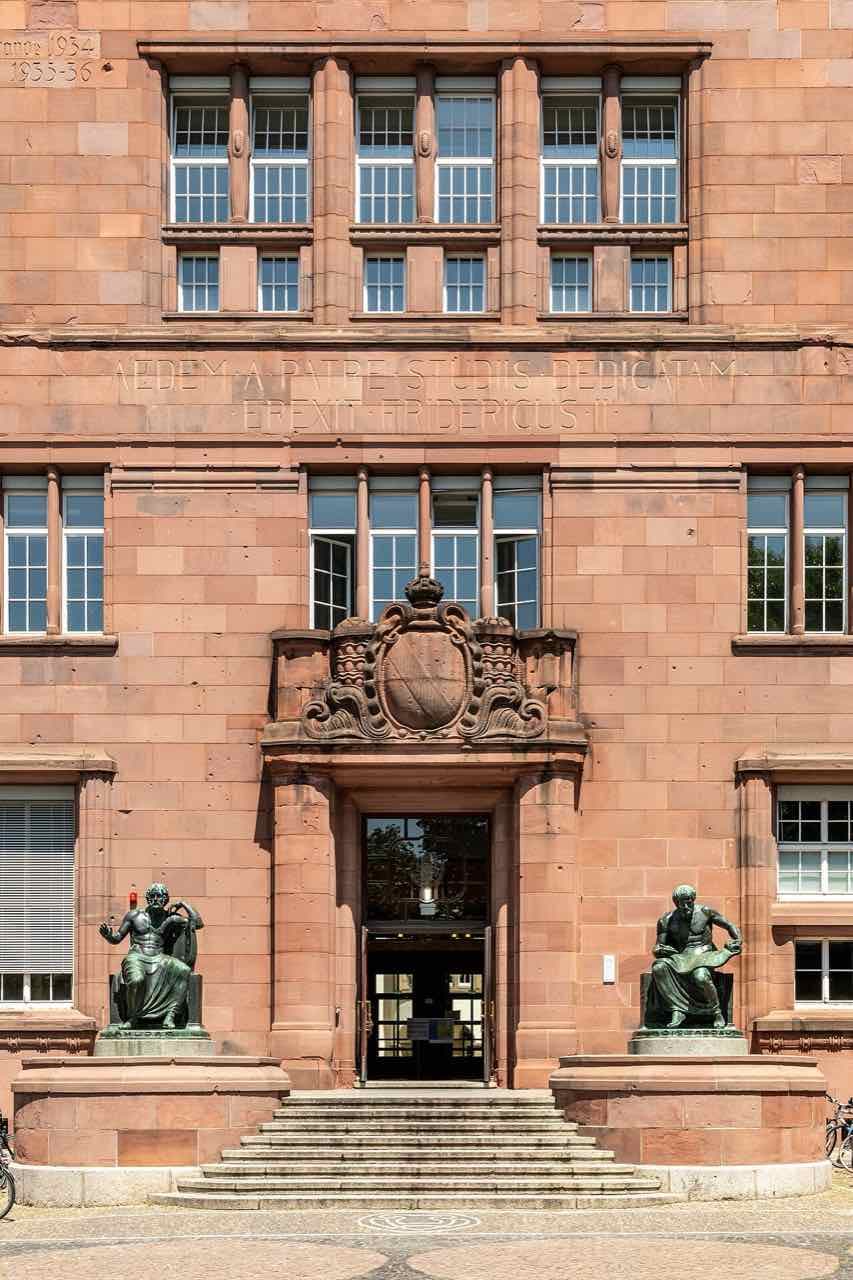
The University of Freiburg has its administration at Friedrichstraße 39 and eleven faculties spread across the city. The Service Center Studium is the first stop for study questions (studium@uni-freiburg.de, hotline +49 761 203 4246), and the International Office looks after exchange students, Erasmus+, Global Exchange and Eucor.
If you apply as a degree student from abroad, read the international applicants page first. It explains the Studienkolleg route, language certificates and enrolment at the Registration Office once you are admitted. For most undergraduate programmes you need a high level of German.
Finding a room
The Studierendenwerk runs dormitories across Freiburg, including Studentendorf Vauban with 607 rooms in eight buildings, about 7 minutes by tram from the centre. Shared rooms there are €263 to €369 a month and include electricity, water, heating and internet. There is also an international quota of University dormitory places managed by the International Office; exchange students are allocated through their Erasmus+ or Global Exchange application, and international Bachelor's and Master's students are nominated by their programme coordinator.
On the private market, the Studierendenwerk's advice is to register on every housing portal, answer new offers quickly, try Facebook groups and look in nearby towns such as Denzlingen, Gundelfingen and Kirchzarten, which are reachable by bus and train. Searching during the lecture period is usually easier than at the start of a semester. If you can, take a temporary room at the start of winter semester and keep looking from there. Never pay a landlord who says they are abroad and cannot show you the flat; you can report suspicious offers to zimmer@swfr.de.
Food, sport and nights out
The Studierendenwerk canteens (Mensen) include Rempartstraße, Institutsviertel, Littenweiler and Flugplatz, plus smaller cafés such as Café Europa and the MusiKantine. Dishes are labelled for vegetarian and plant-based options. Student prices for main courses are around €4.45 to €4.80.
For sport, the Allgemeiner Hochschulsport offers about 450 courses each semester. Thursday evenings at the MensaBar belong to the International Club, and the Studierendenwerk's StudiTours run cheap trips to the Black Forest, the Alps and nearby cities.
Your first weeks
- 1
Before you arrive
Apply for the visa at the German embassy or consulate in your home country once you have your admission; you cannot turn a tourist visa into a residence permit in Germany. Applicants from China, India and Vietnam first go through the Akademische Prüfstelle (APS) at the German embassy at home. Also arrange a room and ask for a buddy.
- 2
Week 1
Register your address at the Bürgerservice, Fehrenbachallee 12 (Rathaus im Stühlinger, tram lines 1 to 4). An appointment is needed; book at freiburg.konsentas.de or on 0761 201-0. Keep the registration confirmation, as you will need it for other offices.
- 3
Week 1 to 2
Open a German bank account, get health insurance (you must show proof to enrol, and statutory insurance is the Studierendenwerk's recommendation) and enrol at the university's Registration Office with your admission letter, passport, a photo and the semester fee.
- 4
Before the visa expires (non-EU)
Apply for the residence permit at the Ausländerbehörde, Berliner Allee 1. Bring your passport, admission letter, photos and proof of how you will pay for your living costs. Some services are walk-in with a ticket, others need an appointment; opening hours are on the city's page.
- 5
First month
Join the International Club and the Buddy Program, buy the semester ticket, and sign up for a Hochschulsport course.
Check before you go
Non-EU students in Baden-Württemberg pay €1,500 in tuition per semester, according to the Studierendenwerk, and have to show they can support themselves. For rules on exemptions, read the University's tuition fee page. Check the current amount before you apply.
Non-EU students with a study residence permit may work 140 full days or 280 half days a year. During the semester, working more than 20 hours a week is possible only on weekends, evenings or nights, within the 26-week rule. Self-employment and freelancing are not allowed. A minijob has to stay under €603 a month. Details are on the Studierendenwerk's page on jobbing.
Applicants from China, India and Vietnam must go through the APS before the visa application. Start early; the University says a visa can take several weeks or even months.
Where you come from matters here
Pick your home country: food, faith, community groups and the consulate that serves you, checked 21 October 2026.
🇮🇳 Living in Freiburg im Breisgau as an Indian student
The city's own lists of migrant associations and religious communities do not include an Indian association or a Hindu temple, so do not expect a ready-made community on arrival. What exists is the consulate that covers Baden-Württemberg, and two places where Indian students will find company.
Consulate General of India, Munich ↗
The consulate's website says it has operational jurisdiction over Bavaria and Baden-Württemberg. It is at Widenmayerstr. 15, 80538 Munich.
Thursday club evenings, a language café and cooking workshops, where students from many countries meet. Country-themed evenings are announced in the programme.
A monthly international cooking evening that regularly features food from different countries. Anyone can join the WhatsApp group.
🇳🇬 Living in Freiburg im Breisgau as a Nigerian student
Freiburg has an Igbo association of its own and several groups run by Africans and for Africans, plus a church where English is spoken.
Igbo Community Union South-West Germany e.V. ↗
A registered association at Sulzburger Str. 18. It promotes Igbo and Nigerian art, culture and tradition, runs the dance group Odenigbo Freiburg and an Igbo language course, and supports homes for motherless children in Nigeria.
International Christian Community Freiburg ↗
An international evangelical church at Engesserstraße 13 with services in English and German, sometimes translated into French. Its members come mainly from Africa and Europe. The link goes to the city's page about it.
Intercultural German-African Association IDAV ↗
An association at Mülhauserstr. 10a that wants Germans and Africans to meet and talk, and is committed to integration and development.
Les Mulilos, the African choir at the KHG ↗
Sings songs from different African countries on Fridays from 19:00 to 20:30 at Lorettostraße 24, and sings at the African Mass on the last Saturday of the month. Open to everyone, no choir experience needed.
🇧🇩 Living in Freiburg im Breisgau as a Bangladeshi student
The city lists no Bangladeshi association. Muslim students can find a prayer room and community at two places.
Bildungs- und Begegnungsverein Freiburg e.V. (BBF) ↗
An independent non-profit association at Rufacherstraße 5. It runs prayer rooms and worship services, Arabic courses, children and youth work, and education and encounter events.
Freiburg DITIB Mevlana Mosque ↗
A mosque association at Mooswaldallee 6 that offers a place to pray and social activities.
🇵🇰 Living in Freiburg im Breisgau as a Pakistani student
The city lists no Pakistani association. It does list Muslim places of prayer, with addresses.
A mosque and cultural centre for education and integration at Habsburgerstraße 79.
A mosque at Habsburgerstraße 56A.
🇬🇭 Living in Freiburg im Breisgau as a Ghanaian student
Ghana has its own association in Freiburg, and the University has an Enhanced Partnership with the University of Ghana.
Promotes and shows the culture of Ghana, works with the Ghanaian embassy in Berlin and is open to anyone. Its members talk about family, school, citizenship, insurance and integration, and celebrate summer and Christmas parties. It has no website, so the city's page with the contact details is linked.
University of Freiburg and the University of Ghana ↗
In October 2026 the Registrar of the University of Ghana visited Freiburg, the first administrative exchange under the universities' Enhanced Partnership.
Intercultural German-African Association IDAV ↗
Brings Germans and Africans together for conversation and works with other associations.
Les Mulilos, the African choir at the KHG ↗
Friday evening choir rehearsals at Lorettostraße 24, open to all.
🇨🇲 Living in Freiburg im Breisgau as a Cameroonian student
The city lists no Cameroonian association. What exists is pan-African, and Cameroonian students use it.
Cooperation and Progress of Africans and All (CaPoA) Freiburg e.V. ↗
A registered association at Guntramstraße 8 with an office open Monday to Wednesday from 10:00 to 16:00. It runs a literature festival (Tales & Souls) and a library and book club (Hekima). The association says it is supported by the city's Office for Migration and Integration.
Intercultural German-African Association IDAV ↗
A meeting point for Germans and Africans, at Mülhauserstr. 10a.
International Christian Community Freiburg ↗
Evangelical services in English and German, sometimes translated into French, with members mostly from Africa and Europe.
🇺🇸 Living in Freiburg im Breisgau as an American student
American students find a German-American institute in town, English-language church life and a lot of English in the University itself.
Carl-Schurz-Haus (Deutsch-Amerikanisches Institut Freiburg) ↗
A German-American cultural institute at Eisenbahnstraße 62, in operation since 1952, with a cultural programme, an English-language library, English courses and advice on study and exchange. The main entrance is closed for renovation until about December 2026, so use the back entrance.
International Christian Community Freiburg ↗
A church at Engesserstraße 13 with services in English and German.
The Catholic student community has an English version of its site, a Sunday service at 19:00 in the University Church and a Wednesday evening at 18:30 at Lorettostraße 24.
English-taught programmes in Freiburg im Breisgau
Soonest open deadline first. Every entry links to its official source.
- Master of Arts in Social Sciences (Global Studies Programme)University of Freiburg · Freiburg im Breisgaumaster30 Nov 2026Closing soon
- MA Linguistics – Language, Communication and CognitionUniversity of Freiburg · Freiburg im Breisgaumaster15 Mar 2027Open
- MSc NeuroscienceUniversity of Freiburg · Freiburg im Breisgaumaster31 Mar 2027Open
- Forest SciencesUniversity of Freiburg · Freiburg im Breisgaumaster15 May 2027Open
- Environmental SciencesUniversity of Freiburg · Freiburg im Breisgaumaster15 May 2027Open
- Master of Science in Earth SciencesUniversity of Freiburg · Freiburg im Breisgaumaster15 May 2027Open
- Environmental Governance (MEG)University of Freiburg · Freiburg im Breisgaumaster15 May 2027Open
- Master of Science in Microsystems EngineeringUniversity of Freiburg · Freiburg im Breisgaumaster15 Jul 2027Open
- Master of Science in Sustainable Materials – Polymer Sciences BinationalUniversity of Freiburg · Freiburg im Breisgaumaster15 Jul 2027Open
- Master of Science Physics (MSc)University of Freiburg · Freiburg im Breisgaumaster15 Jul 2027Open
- Master of Science in Computer ScienceUniversity of Freiburg · Freiburg im Breisgaumaster15 Jul 2027Open
- Liberal Arts and Sciences (BA/BSc) at University College FreiburgUniversity of Freiburg · Freiburg im Breisgaubachelor15 Jul 2027Open
- Master of Science in Embedded Systems EngineeringUniversity of Freiburg · Freiburg im Breisgaumaster15 Jul 2027Open
- Master of Science in Applied Physics (MSc)University of Freiburg · Freiburg im Breisgaumaster15 Jul 2027Open
- Binational Double Master's in Biomedical Sciences (IMBS)University of Freiburg · Freiburg im Breisgaumaster30 Sept 2026Deadline passed
Is Freiburg im Breisgau right for you? Ask us. Free.
Tell us your passport, grades and budget. We compare Freiburg im Breisgau with the other places you could study, then apply for you. You never pay us.
Get my free plan