Studying in Lower Saxony, Germany
Göttingen
A small university town where the university is the town, and the old centre fits inside a ring of grassy ramparts.
Göttingen is a city of about 130,000 people in southern Lower Saxony, and the university has been at its centre since 1737. Six Nobel laureates are linked to the city in the physical and chemical sciences and in medicine, from Max Planck and Otto Hahn to Thomas Südhof, and research institutes sit beside the university on the same campus. For a student that means a compact town where the old centre, the lecture halls and the market square are close together, an international office that runs a pick-up service, welcome week and a foyer open to everyone, and a wide English-taught offer, mostly at master's level. Three other places to study are in or beside the city: HAWK, with its Göttingen campus, PFH, a private university, and the research institutes of the Göttingen Campus.
- Population
- 130,521 (31 December 2025)
- State and district
- Lower Saxony; capital of the Göttingen district
- University
- Georg-August-Universität, about 28,000 students, more than 210 degree programmes in 13 faculties
- Other places to study
- HAWK (2,180 students on the Göttingen campus) and PFH, a private university (about 4,700 students)
- Nearest international airport
- Hannover Airport, 136 km north
Part 1
Living in Göttingen
A town built around a university
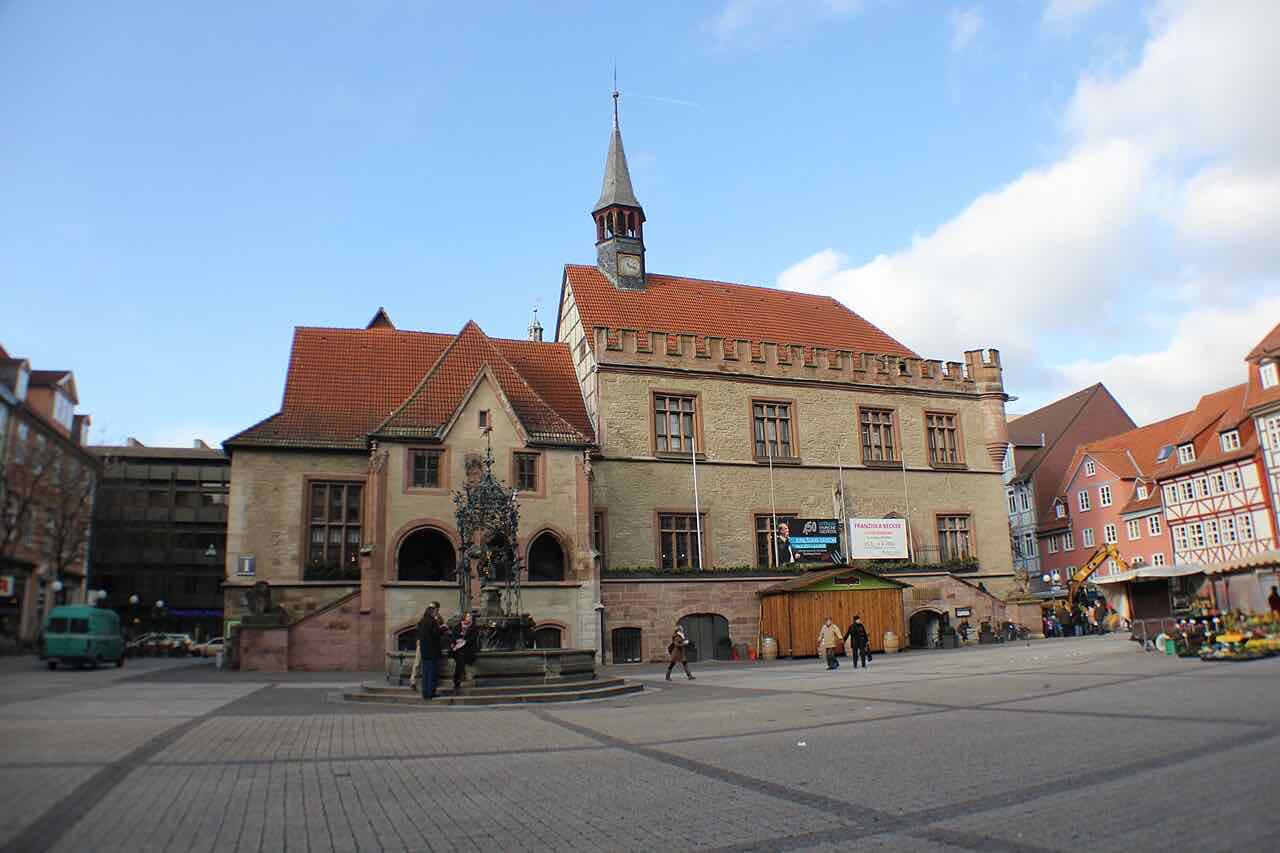
Göttingen's town walls were rebuilt around 1360 to take in the new town, the Old Town Hall was built between 1366 and 1444, and the Gothic hall church of St. Johannis was begun in the first half of the 14th century. The university came later: George II Augustus founded it in 1734, and the first classes were held in 1737. It still carries his name, Georg-August-Universität.
In 1837 seven professors protested against the absolute power of the Hanoverian kings, lost their posts and became known as the Göttingen Seven. In the 1930s the city's mathematics and physics faculty, led by eight men, almost all of them Jewish, was expelled and forced to emigrate; Leó Szilárd and Edward Teller were among them. That history is part of why the town still calls itself the city that creates knowledge, which is how its own tourist office puts it.
Six Nobel laureates are linked to Göttingen on Wikipedia's page for the city: Max Planck (physics, 1918), Richard Zsigmondy (chemistry, 1925), Otto Hahn (chemistry, 1944), Max Born (physics, 1954), Manfred Eigen (chemistry, 1967) and Thomas C. Südhof (physiology or medicine, 2013). You will walk past the buildings where some of them worked without knowing it, because the university has no single campus wall: lecture halls, institutes and libraries are spread through the town and on the northern edge.
What to see in your first month
Most of it is within a short walk of the market square.
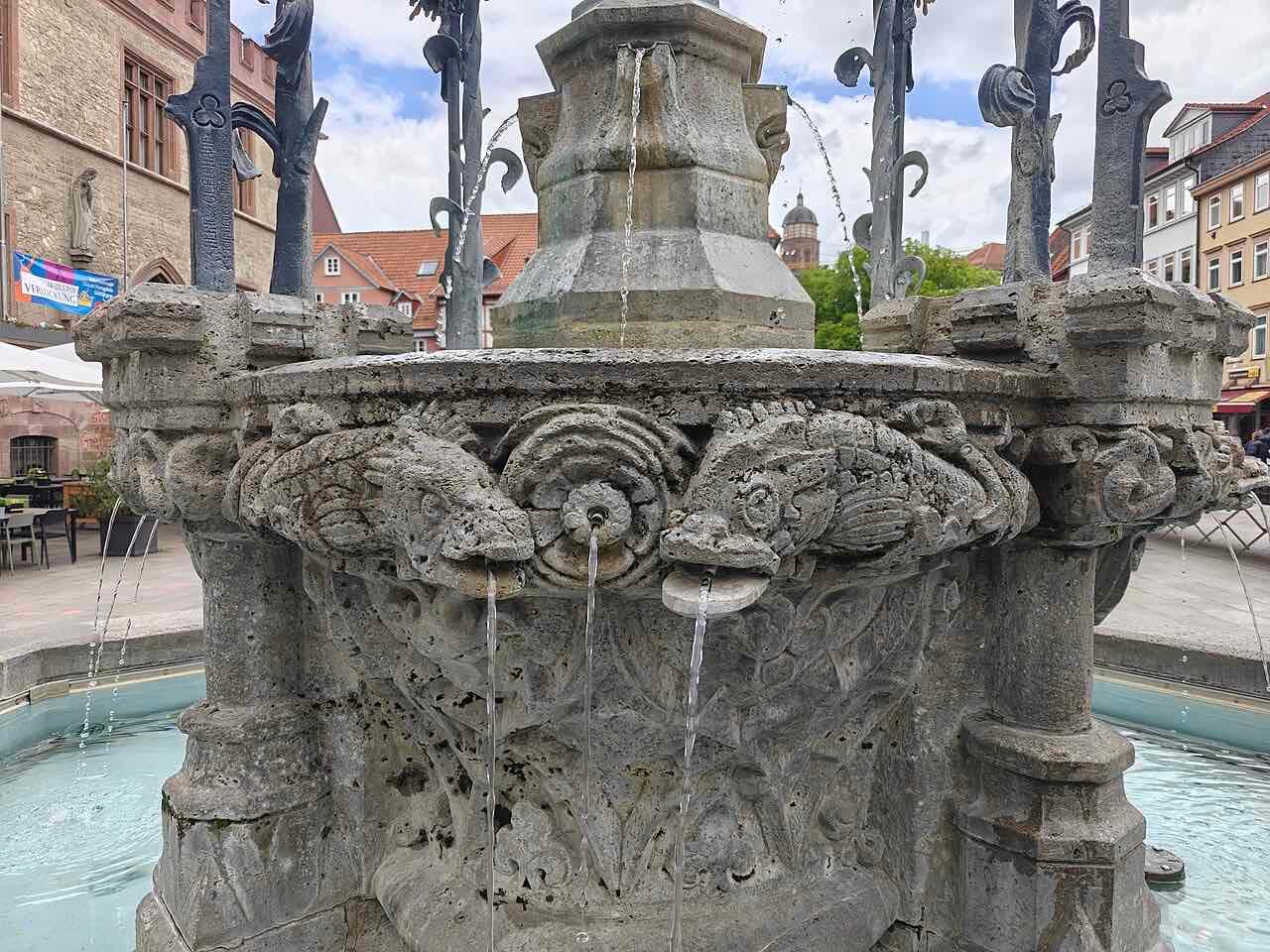
The Gänseliesel and the Old Town Hall ↗
The Gänseliesel fountain stands on the market square beside the Old Town Hall, and the city tourist office calls the statue the unofficial landmark of Göttingen. The tradition is that newly doctoral graduates are carried there and climb the fountain to kiss the figure. The act is formally forbidden but not enforced. The market square is also where the Christmas market is held.
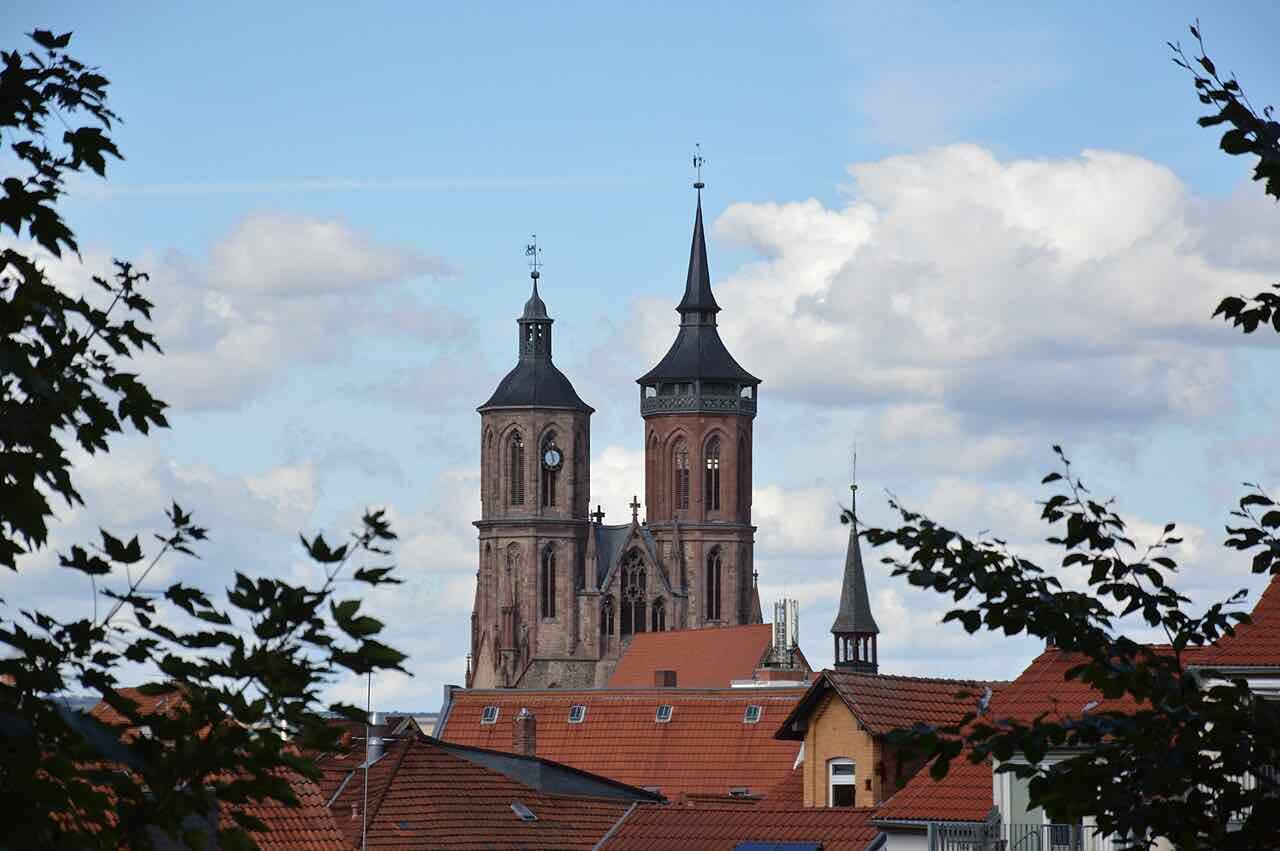
St. Johannis and the old town ↗
The Gothic hall church with two brick towers sits in the middle of the old town. The tourist office lists further historic half-timbered buildings and the art and monuments of the old town on its sights pages.
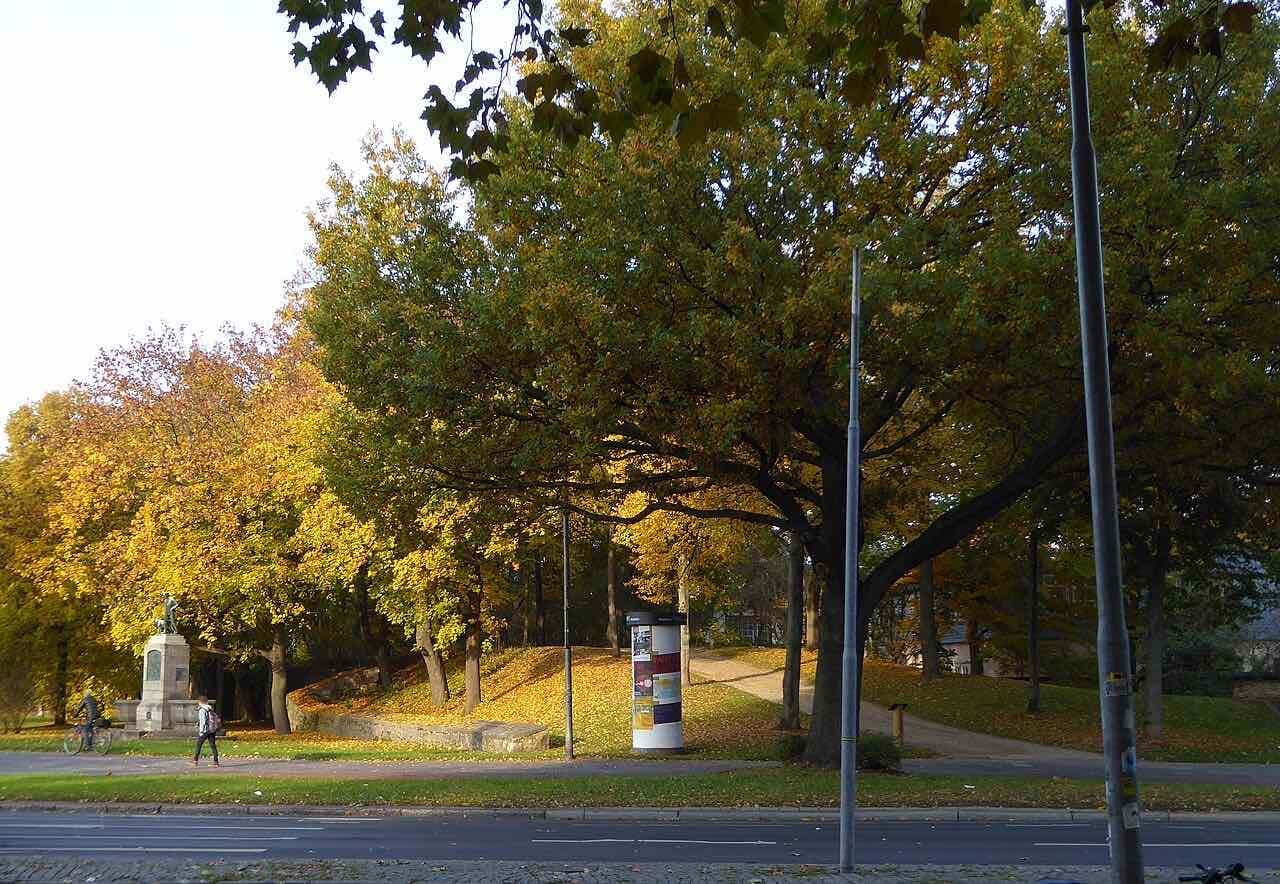
A walking route on the old ramparts that goes all the way around the city centre. It is an easy way to see how small the old town is.
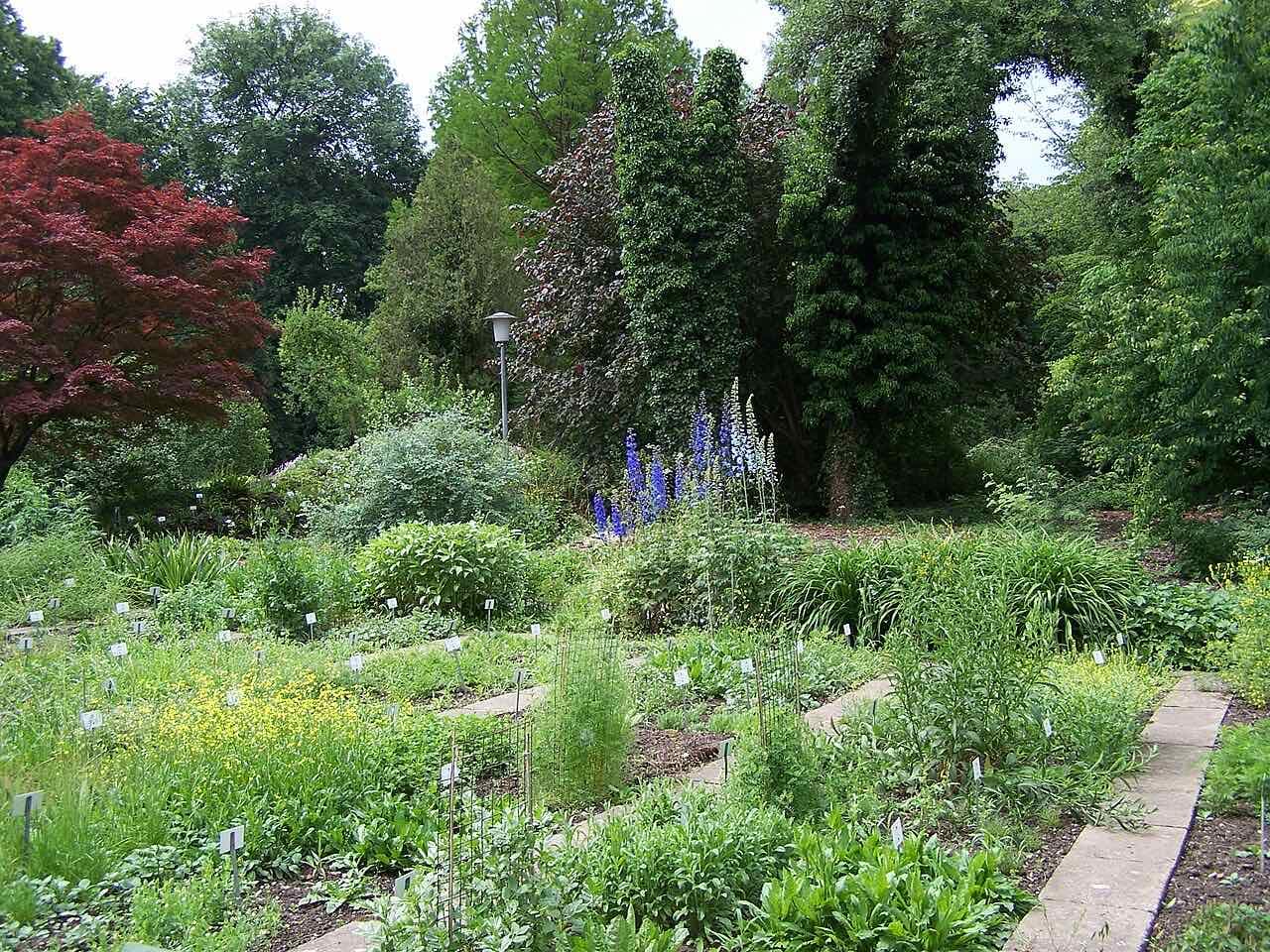
The university maintains three major botanical gardens, among them the Old Botanical Garden in the city centre and the Forest Botanical Garden.
The city museum, the university's ethnographic collection and temporary exhibitions in the Old Town Hall and the Paulinerkirche. The tourist office keeps a list of the museums.
Around the old town
Weekends: green spaces, theatre, basketball
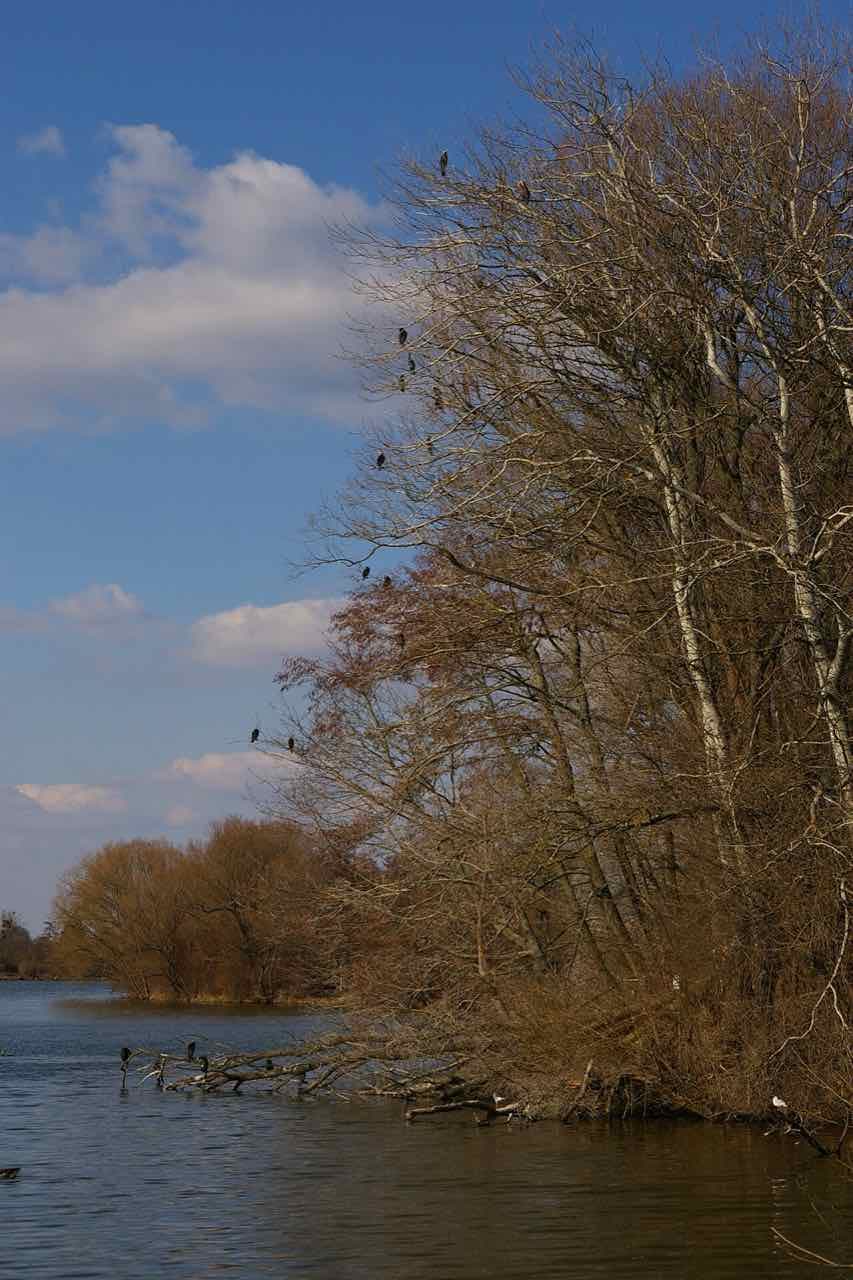
On a free afternoon you can walk the Stadtwall, spend a break in the Old Botanical Garden, or go out to the Kiessee, a gravel-pit lake that the city tourist office lists among the natural places inside the town. The Stadtwald on the Hainberg, the forest above the town, has routes for walkers, hikers and cyclists.
Two professional theatres work in the city, the Deutsches Theater and the Junges Theater, and Theater im OP mostly stages student productions. Every summer the Göttingen International Handel Festival brings concerts to the Stadthalle and several churches. For sport you can watch BG Göttingen, which has played in Germany's first basketball league since 2007.
Göttingen sits on the main north–south railway with ICE trains, so weekends away by train are realistic. The nearest international airport is Hannover Airport, 136 km to the north.
The research campus beside the university
Göttingen Campus is the name of the partnership between the university, its medical centre and the research institutes around it. It has 23 joint professorships between the university and non-university institutions, so research here often reaches into teaching.
Max Planck Institute for Multidisciplinary Sciences ↗
Basic natural science from physics and chemistry to structural and cell biology, neuroscience and biomedical research. It lists open positions and offers for graduate and PhD students on its site.
The partnership's own site. It names the German Primate Center (the Leibniz Institute for Primate Research), the Max Planck Institute for Solar System Research and the Max Planck Institute for Dynamics and Self-Organization among its members, next to the university and its medical centre.
Money: the figures that are published
- Germany-wide semester ticket
- 60% of the normal Deutschlandticket price; digital only, with an official photo IDsource
- Proof of funds for a first student visa (blocked account)
- At least 11,904 EUR for the first year, figure as of 1 January 2025source
- Minimum wage
- 13.90 EUR an hour since 1 January 2026source
- Mini-job limit
- 603 EUR a monthsource
- AStA emergency loan
- A 100 EUR interest-free emergency loansource
Rents and food prices change by the semester, so ask the university's accommodation office before you plan your budget. These are the figures the university and the students' union publish.
Jobs and employers
The biggest employer for a student is the university itself, and its jobs do not count against the day limit for non-EU students. The Göttingen Campus institutes are the next place to look: the Max Planck Institute for Multidisciplinary Sciences publishes open positions on its site, and the university's job portal Stellenwerk lists student jobs.
Outside science, the city is smaller than Hamburg or Berlin, so part-time work is mostly in the shops, cafés and student services of the old town. The work rules for international students are in the first-weeks section further down.
Part 2
Student life in Göttingen
Where you can study
University of Göttingen (Georg-August-Universität) ↗
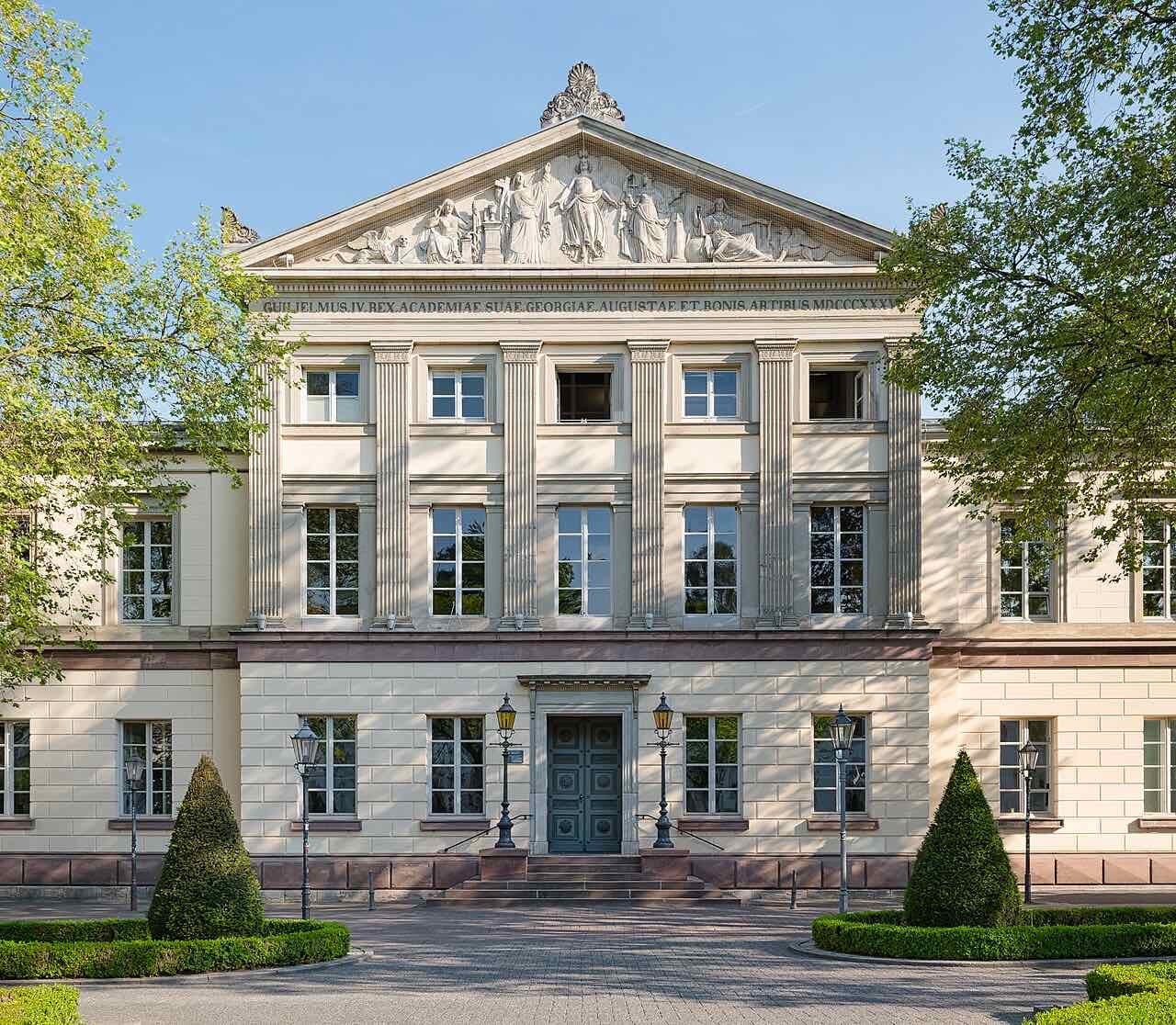
Founded 1734, teaching since 1737. About 28,000 students, more than 210 degree programmes and 13 faculties; the central address is the Aula on Wilhelmsplatz. The English-language list includes bachelor's programmes such as Ecosystem Sciences, and many master's programmes: Applied Computer Sciences, Information Systems, Development Economics, Global Business, Neurosciences, Molecular Medicine, Physics, Mathematics, Tropical and International Forestry, Digital Humanities and North American Studies. Check each programme page for language requirements, because several of them ask for German proof, and half of the PhD programmes are fully taught in English.
International office ↗HAWK has three locations, Hildesheim, Holzminden and Göttingen. The Göttingen campus has 2,180 students, 24 programmes and three faculties: Engineering and Health, the Health Campus, and Resource Management. The engineering sciences campus is in Geismar, on the Zietenterrassen, and the Faculty of Resource Management and the health campus are near the Nordstadt. Its pages do not list English-taught programmes on the Göttingen campus, so ask before you apply.
International office ↗PFH Private University of Applied Sciences Göttingen ↗
Recognised by the Lower Saxony science ministry in 1995 and described as the state's oldest private, state-recognised university. About 4,700 students and 6,000 graduates, with the main campus in Göttingen. It offers four English-taught master's programmes in management: MBA, General Management, UX Management & Design, and AI Management in Computer Science for Business, each 90 ECTS. A private university charges tuition, so read its fee page before comparing it with the public ones.
International office ↗Student unions, services and groups
AStA Göttingen, the students' union ↗
The general student committee of the university: social, legal and trans* counselling, a bike workshop, loan equipment, the semester tickets and an international student ID. Questions on international matters can go to aussen@asta.uni-goettingen.de.
Rat der Internationalen Studierenden (RIS) ↗
The Council of International Students, part of AStA, elected each year by the Parliament of International Students. It is the contact point for problems and questions that international students have.
University sport is run from Gutenbergstr. 60. The programme includes a gym, a climbing and bouldering hall, a swimming pool, a sauna, sports fields and a boathouse in Wilhelmshausen on the Fulda river. Prices and registration are in its online booking store.
ESN Göttingen (Erasmus Student Network) ↗
Part of the international ESN network, supporting international and local students with events and meeting points. The university lists ESN among the ways to meet friends in your first weeks.
The university's meeting place at Von-Siebold-Straße 2, open Monday to Thursday 6:00 to 22:30 and Friday 6:00 to 20:30. All events are free and open to everyone: a language café, an international choir, workshops and game evenings, and a language tandem programme.
ESG, the Protestant student community ↗
Describes itself as open and undogmatic. One of seven religious student groups the university lists.
KHG, the Catholic student community ↗
Describes itself as an international community for students of many nations.
AStA's directory lists the student groups: political, cultural and faculty groups, orchestras and choirs, Amnesty, AIESEC, IAESTE, the Model UN society and groups working on development, refugee support and human rights.
Campus life and getting started
The university runs a pre-arrival online week in September for new international students, a welcome week in October and a welcome event at the foyer of the Central Lecture Hall on Platz der Göttinger Sieben. For the 2026/27 winter semester the welcome week runs from 14 to 23 October, the welcome event is on 15 October, and the lecture period begins on 26 October. If you want somebody to meet you, volunteer student buddies pick up new arrivals at their arrival point, take them to their room and help them get oriented. The request form asks you to register at least three weeks before you arrive, and the busiest arrival periods are March and April, and September and October.
Foyer International is the easiest place to meet people outside your own course. AStA also runs a Council of International Students, and the university lists ESN, a language tandem, a study buddy programme, a first-semester group on Discord and DEGIS Göttingen as further ways to find friends. Orchestras, choirs and a student theatre are among the student groups.
Finding a room
The university does not own rooms or flats and does not act as an estate agent, and being admitted does not mean you will get a place in student accommodation. Start looking as early as you can. Its accommodation support for international exchange students (accommodation@uni-goettingen.de, +49 551 39-21338) keeps an accommodation guide, a how-to-apply guide, a checklist for finding a place and a list of temporary accommodation. The office is at Von-Siebold-Straße 2 and is open on Mondays from 10:00 to 12:00.
Students in a Studentenwerk Göttingen dormitory get their landlord's confirmation for the city registration from the dorm administration; for any other rental the landlord or main tenant gives it to you. The Studentenwerk also publishes a dorm dictionary for international students on its own site.
Your first weeks, in order
- 1
Before you arrive
Apply for a student visa at the German embassy or consulate in the country where you live, if you need one. The university lists the documents: acceptance letter, passport, health insurance proof, proof of finance, accommodation proof and biometric photos. Ask for a buddy at least three weeks before arrival.
- 2
Within 14 days of arriving
Register your address in person at the city's Einwohnermeldeamt. Book the appointment at termin.goettingen.de, and bring your passport or ID and the landlord's confirmation. Keep the Meldebescheinigung, because you need it for the residence permit and for a bank account.
- 3
In the first month
Open a bank account with your passport and Meldebescheinigung. Enrol, then load the digital Deutschland semester ticket into your phone's wallet. Re-register each semester and reload it.
- 4
Residence permit
Non-EU students apply at the Ausländerbehörde 8 to 10 weeks before the visa expires. In Göttingen it is in the Neues Rathaus, Hiroshimaplatz 1-4, and appointments are made by phone on Mondays from 13:30 to 14:30 or by email to auslaenderstelle@goettingen.de. The same office handles extensions, so write to it again 8 to 10 weeks before the permit ends.
- 5
Before your first job
Non-EU students with a student residence permit may work up to 140 full days or 280 half days a year, or as a working student for up to 20 hours a week; jobs at the university and compulsory internships do not count. Self-employment is generally not allowed. Ask the Ausländerbehörde before you start if you are unsure. EU students should not work more than 20 hours a week in term time. Job listings are on the university's job portal Stellenwerk.
Worship, quiet and languages
The university's religion page lists the congregations in the city and says that some offer services in languages other than German. It names a Room of Silence on the ground floor of the Blue Tower on the Central Campus, open to everyone on weekdays from 9:00 to 21:30. The page also lists Catholic, Protestant, Reformed, Baptist and Adventist congregations, the Göttingen International Church, mosques, a Liberal Jewish community and a Buddhist centre.
The university lists free German courses on its site. The international office's hotline is +49 551 39 27777.
Where you come from matters here
Pick your home country: food, faith, community groups and the consulate that serves you, checked 21 October 2026.
🇮🇳 Living in Göttingen as an Indian student
Indian students have their own association in Göttingen, with a Diwali and a Holi event each year. For passports, OCI and visa matters, the nearest Indian mission is the Consulate General in Hamburg; check its site for which consulate covers your address.
Nirmiti, the Indian association in Göttingen ↗
Formed in 2009 by Indians living in the city: students, scientists, professionals and families. It runs Diwali, Holi and Republic Day events and an Indien Stammtisch, and it wrote the First Steps in Göttingen guide for newcomers. Contact: nirmiti@uni-goettingen.de, Von-Siebold-Straße 2.
Consulate General of India, Hamburg ↗
Kohlhöfen 21, 20355 Hamburg. Passport, visa and OCI services and registration for Indian nationals and students; appointments through its site.
🇳🇬 Living in Göttingen as a Nigerian student
The university's list of country groups has no Nigerian community. These two places are open to everyone and describe themselves as international.
Göttingen International Church ↗
Saturday worship from 16:00 to 18:00 and home Bible studies on Tuesdays, at Bürgerstr. 14.
KHG, the Catholic university community ↗
Describes itself as international and open to students from many nations.
🇧🇩 Living in Göttingen as a Bangladeshi student
The university's list of country groups has no Bangladeshi community. A mosque and the university's international foyer are the nearest meeting points.
The university's free meeting place at Von-Siebold-Straße 2, with a language café, workshops, game evenings and a tandem programme, open to everyone.
Islamische Gemeinschaft Al-Iman e.V. Göttingen; prayer times and its Ramadan calendar are on its site.
🇳🇵 Living in Göttingen as a Nepali student
Nepali students have a community in Göttingen that the university lists on its international communities page.
Nepalese in Göttingen (GoNeS blog) ↗
A blog run by Nepali students in Göttingen, with posts on festivals such as Janai Purnima and the Nepali New Year, and on fundraising for flood and earthquake relief. Its newest posts are from 2017, so ask the international office for the current contact.
International communities at the University of Göttingen ↗
The university's list of country groups, including the Nepalese, Indian, Chinese and Ghanaian communities. Contact goes through the Göttingen International incoming office, Von-Siebold-Straße 2, hotline +49 551 39 27777.
🇵🇰 Living in Göttingen as a Pakistani student
The university's list of country groups has no Pakistani community. Mosques in the city are the nearest places to find people who share your habits and holidays; their websites do not state which languages they use.
Güterbahnhofstraße 14. Daily and Friday prayers (Jumu'ah at 13:00 and 14:30), courses for all ages, youth work and interfaith events.
Run by Islamische Gemeinschaft Al-Iman e.V. Göttingen; prayer times and activities are on its site.
🇬🇭 Living in Göttingen as a Ghanaian student
The university lists a Ghanaian community among its country groups. Facebook is where it organises.
International communities at the University of Göttingen ↗
The university lists a Ghanaian community among its country groups, with its contact on the international communities page; the group itself organises on Facebook.
Göttingen International Church ↗
A church with the motto Where Nations meet. Saturday worship from 16:00 to 18:00 and home Bible studies on Tuesdays from 19:00 to 21:00, meeting at the Baptist congregation, Bürgerstr. 14.
🇨🇳 Living in Göttingen as a Chinese student
The Chinese Students and Scholars Association is the main community; for consular matters the nearest mission is the Consulate General in Hamburg, and its site says which states it serves.
Chinese Students and Scholars Association in Göttingen ↗
A non-profit, non-political and non-religious association of Chinese students, scholars and families. It runs a Spring Festival evening, a tandem circle, a winter welcome party and a summer barbecue, and the page has a membership form.
Consulate General of China, Hamburg ↗
The Chinese consulate in Hamburg, with its consular services and contact page on its own site.
English-taught programmes in Göttingen
Soonest open deadline first. Every entry links to its official source.
- Applied Data Science (MSc)University of Göttingen · GöttingenmasterNo tuition01 Nov 2026Closing soon
- Linguistics (MA)University of Göttingen · GöttingenmasterNo tuition01 Dec 2026Closing soon
- Chemistry (MSc)University of Göttingen · GöttingenmasterNo tuition15 Jan 2027Open
- Neurosciences — International Max Planck Research School (MSc/PhD)University of Göttingen · GöttingenmasterNo tuition15 Jan 2027Open
- Molecular Biology — International Max Planck Research School (MSc/PhD)University of Göttingen · GöttingenmasterNo tuition15 Jan 2027Open
- Sustainable Forest and Nature Management (SUFONAMA)University of Göttingen · Göttingenmaster01 Mar 2027Open
- Cardiovascular Science (MSc)University of Göttingen · GöttingenmasterNo tuition30 Apr 2027Open
- M.I.N.C. – Master of International Nature Conservation (MSc)University of Göttingen · Göttingenmaster15 May 2027Open
- Development Economics (MSc)University of Göttingen · GöttingenmasterNo tuition15 May 2027Open
- Master of Laws (LLM) in International Law – GOMILUniversity of Göttingen · Göttingenmaster31 May 2027Open
- Integrated Plant and Animal Breeding (MSc)University of Göttingen · GöttingenmasterNo tuition01 Jun 2027Open
- English: Language, Literatures and CulturesUniversity of Göttingen · GöttingenmasterNo tuition01 Jun 2027Open
- Crop Protection (MSc)University of Göttingen · GöttingenmasterNo tuition15 Jun 2027Open
- Sustainable International Agriculture (SIA), MScUniversity of Göttingen · GöttingenmasterNo tuition15 Jun 2027Open
- Forest and Ecosystem Sciences (FES)University of Göttingen · GöttingenmasterNo tuition15 Jun 2027Open
- LLM in European and Transnational Intellectual Property and Information Technology Law (LIPIT)University of Göttingen · Göttingenmaster30 Jun 2027Open
- Ecosystem Sciences (BSc)University of Göttingen · GöttingenbachelorNo tuition15 Jul 2027Open
- Erasmus Mundus Joint Master's Degree Programme Euroculture: European Politics, Culture, and Society in a Global ContextUniversity of Göttingen · GöttingenmasterRollingApply anytime
- Mathematics (MSc)University of Göttingen · GöttingenmasterNo tuitionSee sourceCheck source
- Modern Indian StudiesUniversity of Göttingen · GöttingenmasterNo tuitionSee sourceCheck source
- Computational Biology and BioinformaticsUniversity of Göttingen · GöttingenmasterNo tuitionSee sourceCheck source
- Molecular Life Sciences: Microbiology, Biotechnology and Biochemistry (MSc)University of Göttingen · GöttingenmasterNo tuitionSee sourceCheck source
- Biodiversity: Ecology, Evolution, and ConservationUniversity of Göttingen · GöttingenmasterNo tuitionSee sourceCheck source
- Applied Statistics (MSc)University of Göttingen · GöttingenmasterNo tuitionSee sourceCheck source
- Intercultural Theology (BA)University of Göttingen · GöttingenbachelorNo tuitionSee sourceCheck source
- Intercultural Theology (MA)University of Göttingen · GöttingenmasterNo tuitionSee sourceCheck source
- Developmental, Neural, and Behavioural Biology (MSc)University of Göttingen · GöttingenmasterNo tuitionSee sourceCheck source
- Master of Science in International Economics (MSc)University of Göttingen · GöttingenmasterNo tuitionSee sourceCheck source
- Applied Computer Science (MSc)University of Göttingen · GöttingenmasterNo tuition15 Oct 2026Deadline passed
- Göttingen Master's Programme in Physics (MSc)University of Göttingen · GöttingenmasterNo tuition15 Oct 2026Deadline passed
Is Göttingen right for you? Ask us. Free.
Tell us your passport, grades and budget. We compare Göttingen with the other places you could study, then apply for you. You never pay us.
Get my free plan