Studying in Hamburg (city-state), Germany
Hamburg
Germany's second-largest city and its biggest port, with canals, two lakes in the centre, and a long list of universities and specialist schools.
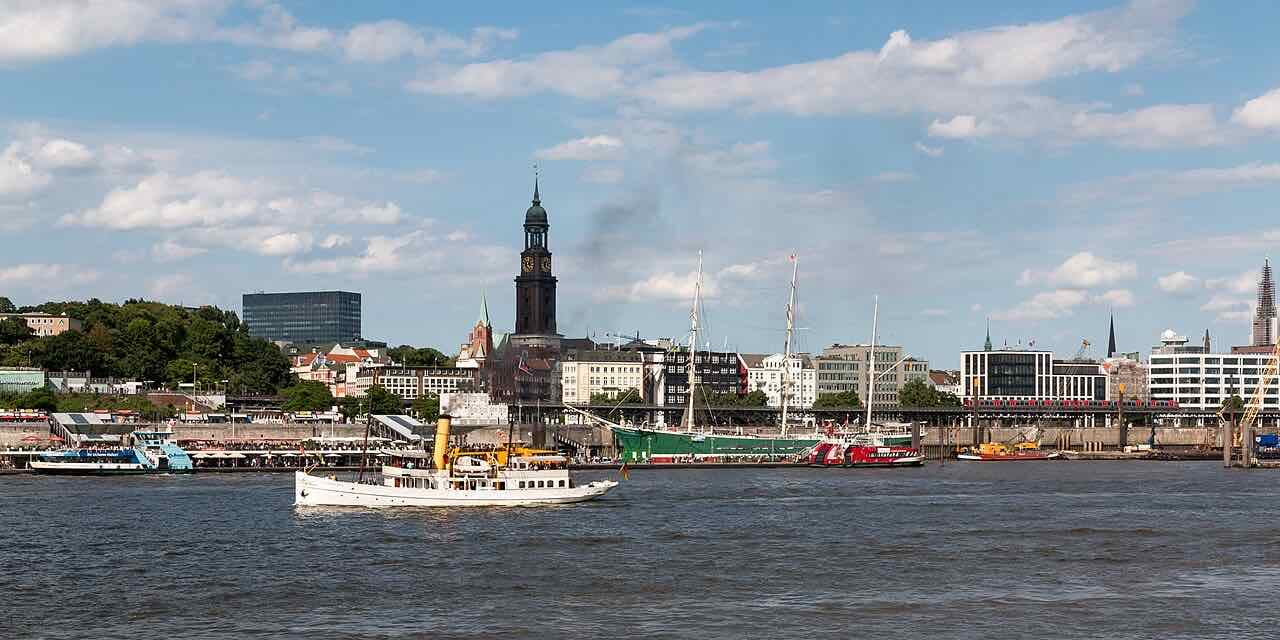
Hamburg is a Free and Hanseatic City: a city and a federal state in one, about 1.97 million people on the Elbe, and about as far as you can get from the postcard idea of a small German university town. The harbour is the centre of the place. It is the third-busiest container port in Europe, the old warehouse district beside it is a UNESCO World Heritage Site, and a concert hall on a former warehouse now looks over the water. For a student the practical picture is this: you can study engineering in the south at TUHH, architecture and urban planning in HafenCity, a very wide range of subjects at Universität Hamburg, applied degrees at HAW, or music, art, law, logistics and business at smaller specialist schools, all in one city. It is big, and rooms are hard to find, but there is a lot to do here on any given evening, and the jobs around you, in logistics, aviation, media and trade, are the kind that fit a degree.
- Semester contribution (Universität Hamburg, winter 2026/27)
- 402 EUR, of which 226.80 EUR is the Deutschlandsemesterticket
- Proof of funds for a residence permit
- at least 992 EUR a month
Part 1
Living in Hamburg
A trading city that rebuilt itself three times
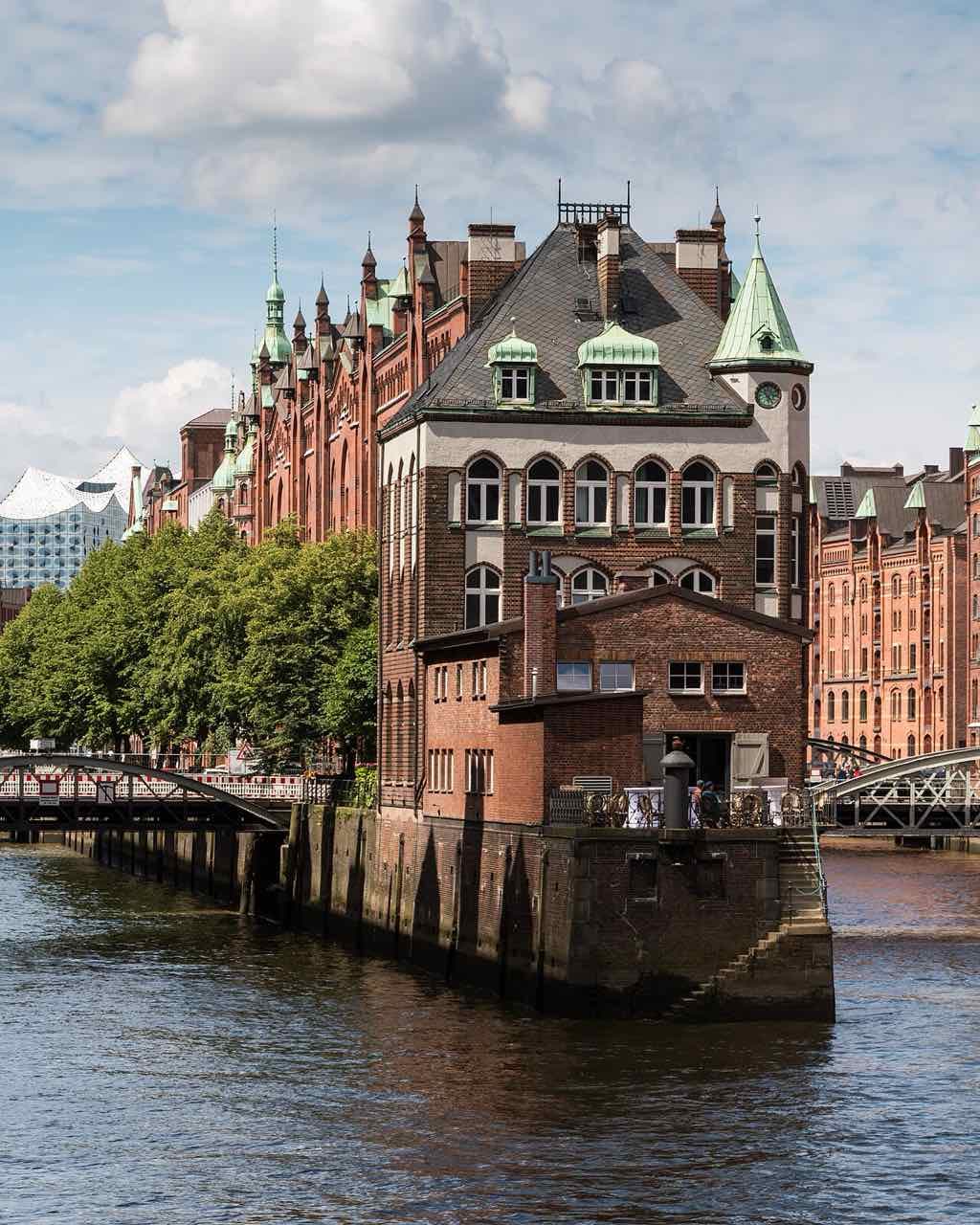
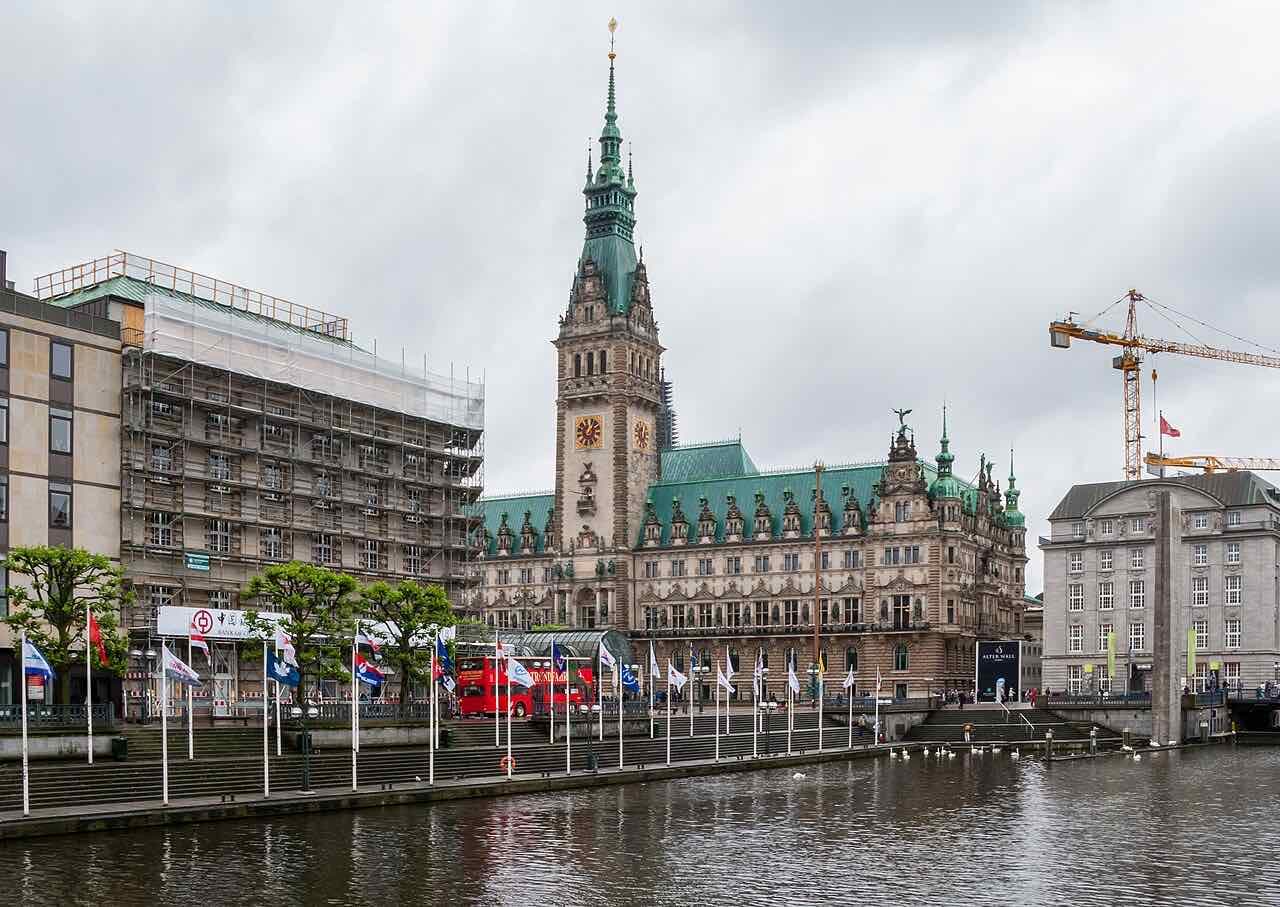
Hamburg has been a trading city for most of its history. The port dates its founding to 7 May 1189, the city was a leading member of the Hanseatic League, and and it was a Free Imperial City, answerable to no prince. The trading history is still visible in the brick warehouses of the Speicherstadt and the canals, called fleets, that run through the old merchants' quarter.
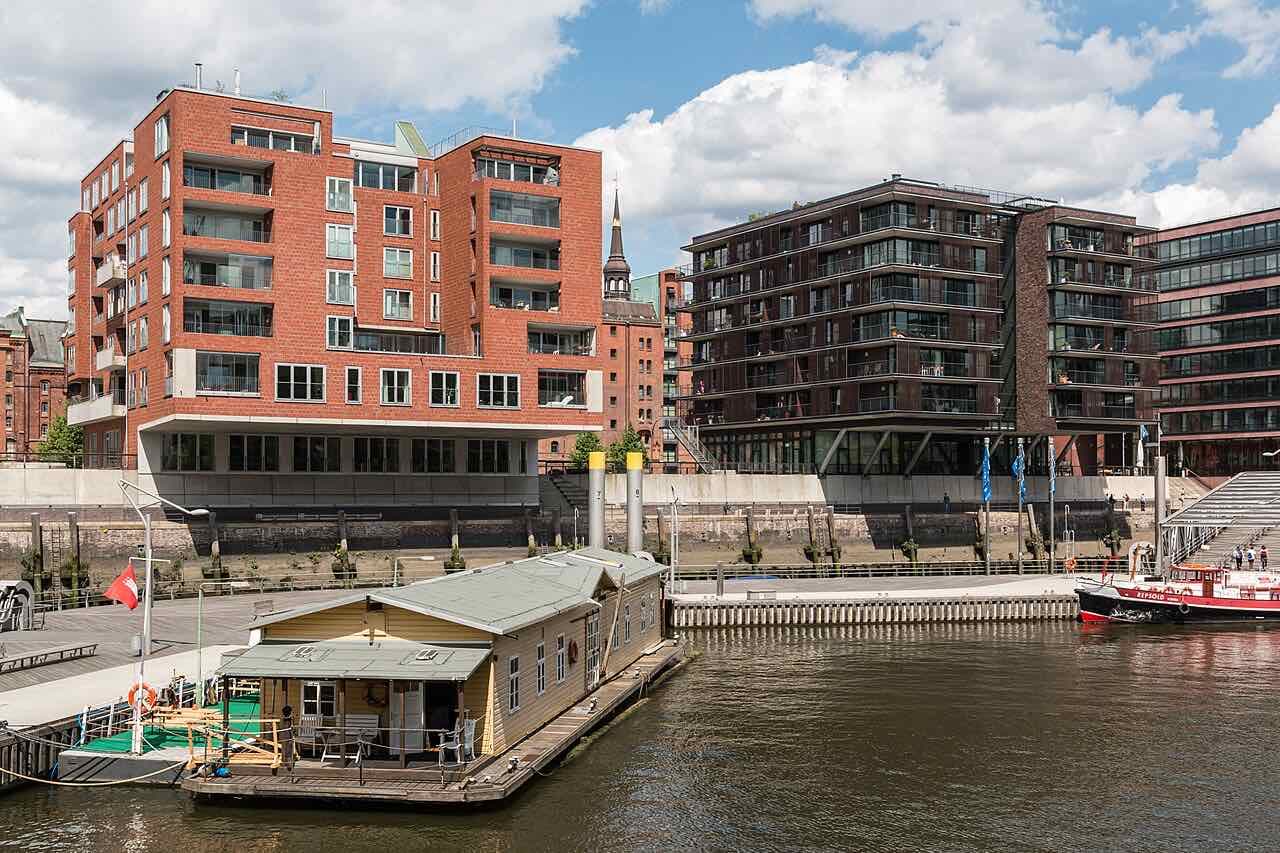
The city has lost large parts of itself more than once. The Great Fire of 1842 destroyed about a quarter of the inner city, Allied bombing in 1943 flattened a great deal more, and the North Sea flood of 1962 put about a fifth of Hamburg under water and killed more than 300 people. What you see today is mostly rebuilt, and the rebuilding is still going on, most visibly in HafenCity, the new district on the old harbour islands where HCU now has its campus.
Two things are worth knowing before you choose Hamburg. First, there are around 2,500 bridges here, more than in any other European city, because water is everywhere: the Elbe, the Alster lakes and a network of canals called fleets. Second, the city is a working port, not a theme park. The harbour, the shipping companies and the industry around them are a large part of where the jobs are.
What to see and do
Most of this is within a few stops of the main station, and several of the best things are free.
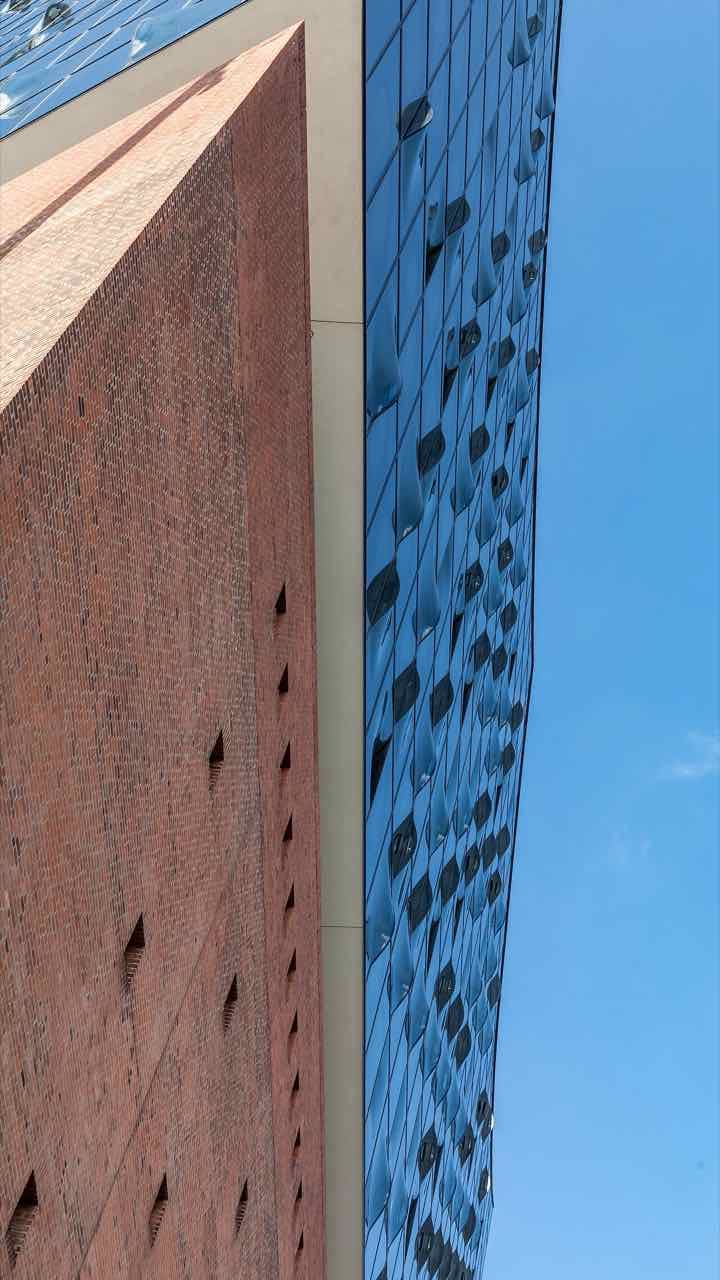
The public viewing terrace of the concert hall sits 37 metres above ground and looks over the harbour and city. It is open to everyone, but you need a timed ticket (a booking fee of 5 EUR for individuals); it is open daily from 10:00 to 24:00. You reach it by an 82-metre curved escalator.
Speicherstadt and Miniatur Wunderland ↗
The Speicherstadt is the warehouse district on the water that UNESCO listed in 2015 with the Kontorhaus district. Miniatur Wunderland, in the same area at Kehrwieder 2-4, calls itself the largest model railway in the world, with 15,400 m of track and 260,000 figures.
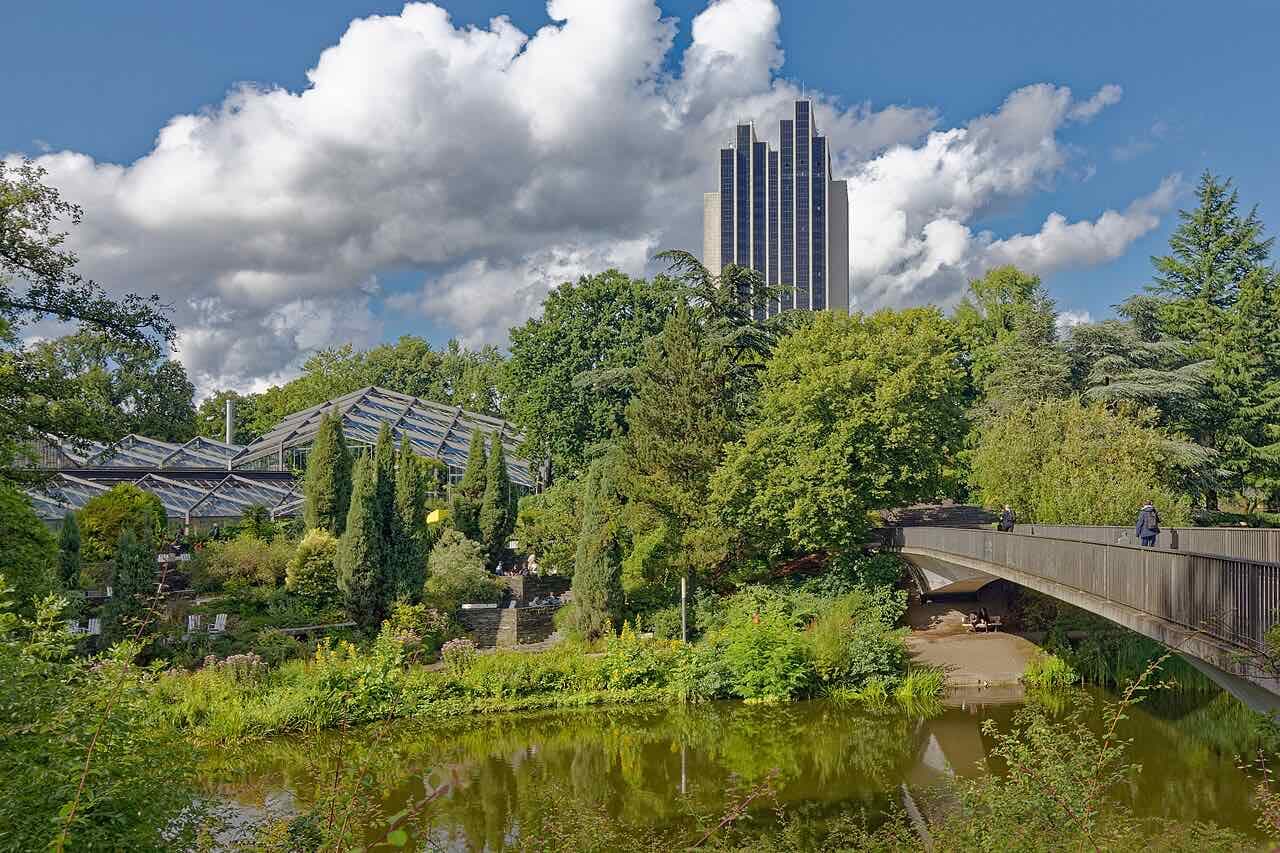
A 47-hectare park in the centre, free to enter all year, with a Japanese garden, a large playground and open-air performances. Dammtor station on the S2 and S5 lines is the nearest stop.
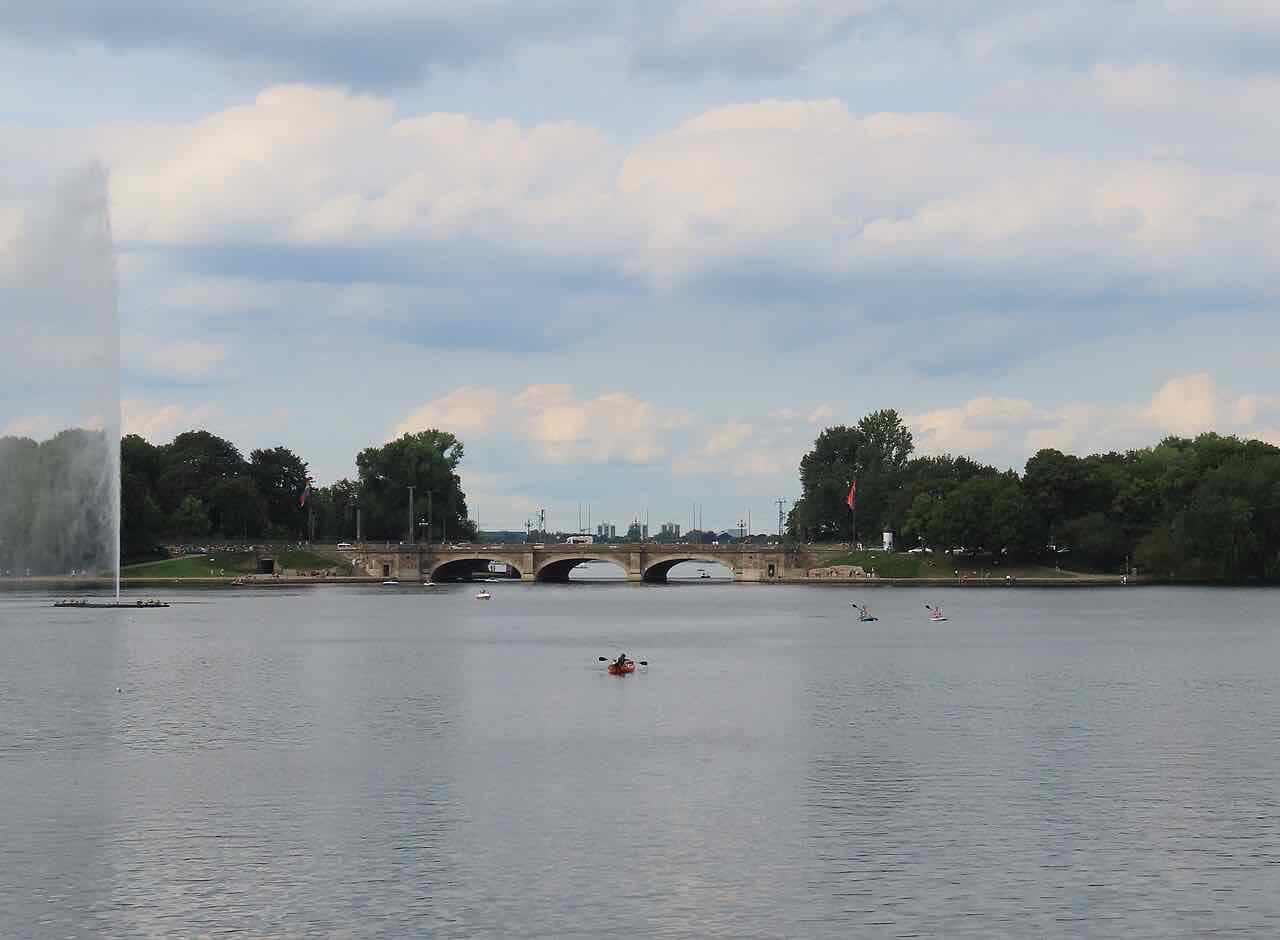
The Alster river is about 56 km long and is dammed into two lakes in the middle of Hamburg, the Binnenalster and the larger Außenalster. Boats, ferries and rowing boats run on the water, and the parks around the lakes are where people run, picnic and sit out on a warm evening.
St. Pauli and the Reeperbahn ↗
The Reeperbahn is about 930 m long and is the city's best-known nightlife street, with clubs, bars and theatres. The Beatles played the Star-Club and other venues here in the early 1960s, and there is a Beatles-Platz at the junction with Große Freiheit. The Reeperbahn Festival is one of the largest club festivals.
Hamburg in pictures
Getting around, and getting out
Hamburg is a city where most students do not need a bicycle or a car. The S-Bahn, U-Bahn and buses run across the whole city, and at Universität Hamburg the semester contribution already includes the Deutschlandsemesterticket: 226.80 EUR of the 402 EUR for winter 2026/27. The contribution also includes 4.60 EUR for a ticket hardship fund, and the AStA gives advice on it.
The airport is on the S1 line, about 8.5 km north of the centre, with trains every ten minutes. The Hauptbahnhof is the busiest station in Germany at about 550,000 passengers a day. From there long-distance trains go to Berlin, Frankfurt, Cologne and the Ruhr, Bremen, Kiel, Rostock and the island of Sylt, and across the border to Copenhagen and Stockholm. For a student who wants to see Germany and Scandinavia on weekends, that is a real advantage over cities with one or two direct lines.
What it costs
- Semester contribution, Universität Hamburg, winter 2026/27
- 402 EUR (student body 19.60, semester ticket 226.80, ticket hardship fund 4.60, Studierendenwerk 101, administration 50)source
- Room in a Studierendenwerk residence
- about 330 to 440 EUR a month, all-inclusive, with a deposit from 400 EURsource
- Deposit tiers at the Studierendenwerk
- 400 EUR up to 300 EUR rent, 500 EUR up to 400, 600 EUR up to 450, 700 EUR up to 600, 800 EUR from 601source
- Statutory health insurance for students under 30
- roughly 140 to 150 EUR a monthsource
- Funds you must show for a student residence permit
- at least 992 EUR a monthsource
- Address registration
- 16 EURsource
These are figures from the universities and the Studierendenwerk. Rooms on the private market in a city of this size cost more than a Studierendenwerk room, and you should plan for that.
Nights out, and staying safe
Hamburg has two main nightlife areas, the Reeperbahn in St. Pauli and the Sternschanze quarter. The Reeperbahn has a high crime rate, and the Senate banned weapons in the area in 2007. People go out there all the time; use the same care you would in any large port city, keep your phone and wallet out of sight, and plan how you get home.
Outside those areas Hamburg is an ordinary, orderly big German city. Most of the student districts, such as Eimsbüttel, Rotherbaum, Winterhude and Altona, are quiet residential streets.
Faith and community in Hamburg
Hamburg is a city of many religions, though most residents are not affiliated with any: on 31 December 2023 about 20% were Protestant, 8.3% Catholic and the rest unaffiliated or in other communities. The places below have their own websites or an official page, and most welcome visitors. Hamburg also has Sikh gurdwaras: Wikipedia's article on Sikhism in Germany names Gurdwara Singh Sabha, the Singh Sabha Sikh Center and Gurdwara Sri Guru Nanak Darbar. The Islamisches Zentrum Hamburg, which ran the Imam-Ali-Moschee (the Blaue Moschee on the Alster), was banned and the mosque closed by the Federal Interior Ministry on 24 July 2024, so neither is listed here.
The council of Hamburg's mosques and Islamic associations, about 40 communities. It runs a counselling office for its members and for individuals, takes part in interfaith dialogue, and works with the city on Islamic religious instruction. Its member list names mosques by district, including Albanian, Afghan, Bosnian, Bangladeshi, Pakistani, Guinea-Bissau and African communities.
BIG: Bündnis der islamischen Gemeinden in Norddeutschland (Islam) ↗
An alliance of mosque communities in Hamburg and northern Germany, with Hamburg members including Centrum, Yeni Beyazıt, Ayasofya, Eyüp Sultan and Yıldız. Its office is at Böckmannstraße 40, and it organises mosque tours and the Open Mosque Day on 3 October.
Centrum-Moschee, Böckmannstraße 40 (Islam) ↗
A Sunni mosque in St. Georg, founded in 1977 and a member of Schura Hamburg and BIG. Schura's member list also names an Islamische Hochschulgemeinde (a student community) at Böckmannstraße 5.
Jüdische Gemeinde in Hamburg (Judaism) ↗
The Jewish community, with an Orthodox and a Reform synagogue, an education centre and the Joseph-Carlebach school. The Synagoge Hohe Weide, Hohe Weide 34, can be visited on a guided tour; tours need advance registration and photo ID.
Bhakti Yoga Zentrum (Hinduism) ↗
Krummholzberg 9. A Vaishnava centre with public Sunday events, and introductions to Hinduism for school groups and interested visitors on weekdays by arrangement.
Hindutempel, Billstraße 77 (Hinduism) ↗
Hamburg's Hindu temple, opened in 1996, run by the Afghanische Hindu Gemeinde. It is open daily from 10:00, with several services a week for Hindus from Afghanistan.
Jyoti Maiyya Hindu Tempel (Hinduism) ↗
A Hindu temple association at Volksparkstraße 81, with a stated aim to unite young and old and pass on religion (Dharam) and knowledge (Gyan). Its site says it must leave its current premises and will announce a new address there.
Buddhistische Religionsgemeinschaft Hamburg (Buddhism) ↗
The umbrella of Hamburg's Buddhist communities, covering Tibetan, Vietnamese, Zen, Soka Gakkai and other traditions, with a calendar of free meditation weekends and talks and the Vesakh festival in Planten un Blomen.
Tibetisches Zentrum (Buddhism) ↗
Tibetan Buddhism under the patronage of the Dalai Lama since 1977, with meditation evenings and a part-time course. Locations in Berne (Hermann-Balk-Straße 106) and the city centre (Güntherstraße 39). No religious affiliation is needed to take part; courses are in German.
Buddhistisches Stadt-Zentrum Hamburg (Buddhism) ↗
Bahrenfelder Straße 201 b in Ottensen. An open meditation evening every Tuesday, plus courses on stress, difficult emotions and sense of direction. The site is in German.
Große Brunnenstraße 55a. Zazen on Tuesday mornings and on Wednesday and Thursday evenings; first-time visitors arrange an introduction to the practice with the dojo first.
The Vietnamese Buddhist pagoda in Billbrook on the Bille, founded in 1984 and at its present site since 2008. It belongs to the Vietnamese Lam Te tradition, and offers Buddhist teaching, recitation and meditation, and support to the community.
Alevitische Gemeinde Hamburg (Alevi) ↗
The city's Landesinstitut lists four Alevi Cem houses, in Hamburg, Haak Bir, Bergedorf and Harburg. This page is the Cem house of the Alevitische Gemeinde Hamburg.
Bahá'í-Gemeinde Hamburg (Bahá'í) ↗
No fixed meeting centre: devotional meetings and events take place in members' homes or rented rooms. Guests are welcome at most; contact through the website, which also has a calendar and a youth and young-professionals programme.
Katholische Hochschulgemeinde Hamburg (Catholic) ↗
A Catholic community for students and trainees, part of the Erzbistum Hamburg. It meets every Wednesday evening at 19:00, offers Mass, excursions and a mentoring programme, runs an interreligious prayer room on campus, and welcomes newcomers from many countries.
Hamburg's Protestant congregations (Nordkirche) ↗
Most churches in the city are Evangelical-Lutheran. The church's Hamburg directory lists all parishes; the Hauptkirchen include St. Jacobi, St. Petri, St. Nikolai, St. Michaelis and St. Katharinen.
Anglican church in Hamburg (English-language) ↗
Services in English: Parish Eucharist every Sunday at 10:30. It describes itself as a welcoming, active and inclusive church.
Friedenskirche Wilhelmsburg, EmK (Methodist, with African congregations) ↗
Weimarer Straße 10. The Methodist congregation meets Sundays at 10:30, and the same building hosts a Togolese congregation (Sundays 14:00) and an Amharic-speaking congregation (Saturdays 14:00).
African Christian Church Borgfelde ↗
A congregation led by Pastor Peter Mansaray, working with the Lutheran St. Georg-Borgfelde parish at the Erlöserkirche near Berliner Tor station; gospel services in English and German.
Ghanaian United Methodist congregations ↗
Calvary, Ebenezer and Wesley. Ebenezer worships in a mix of Twi and English in a church building rented from the Evangelical Church.
Where the jobs are
The port and the industry around it are the base. Airbus, Blohm + Voss, Aurubis, Beiersdorf, Lufthansa Technik and Unilever all have significant sites in Hamburg, and the city's economy was about 168 billion EUR in 2025. Hamburg is also a media city: the broadcaster NDR, the magazine Der Spiegel and the weekly Die Zeit are based here. It has Germany's oldest stock exchange and a long-standing merchant bank, Berenberg. The DESY research laboratory is in Bahrenfeld and works with Universität Hamburg.
For a student, this means student jobs and internships in logistics, aviation, shipping, trade, media and research are easier to find than in a city with only one big industry. Many of them are in German, so your German level decides how many of them you can actually take.
Part 2
Student life in Hamburg
Where you can study
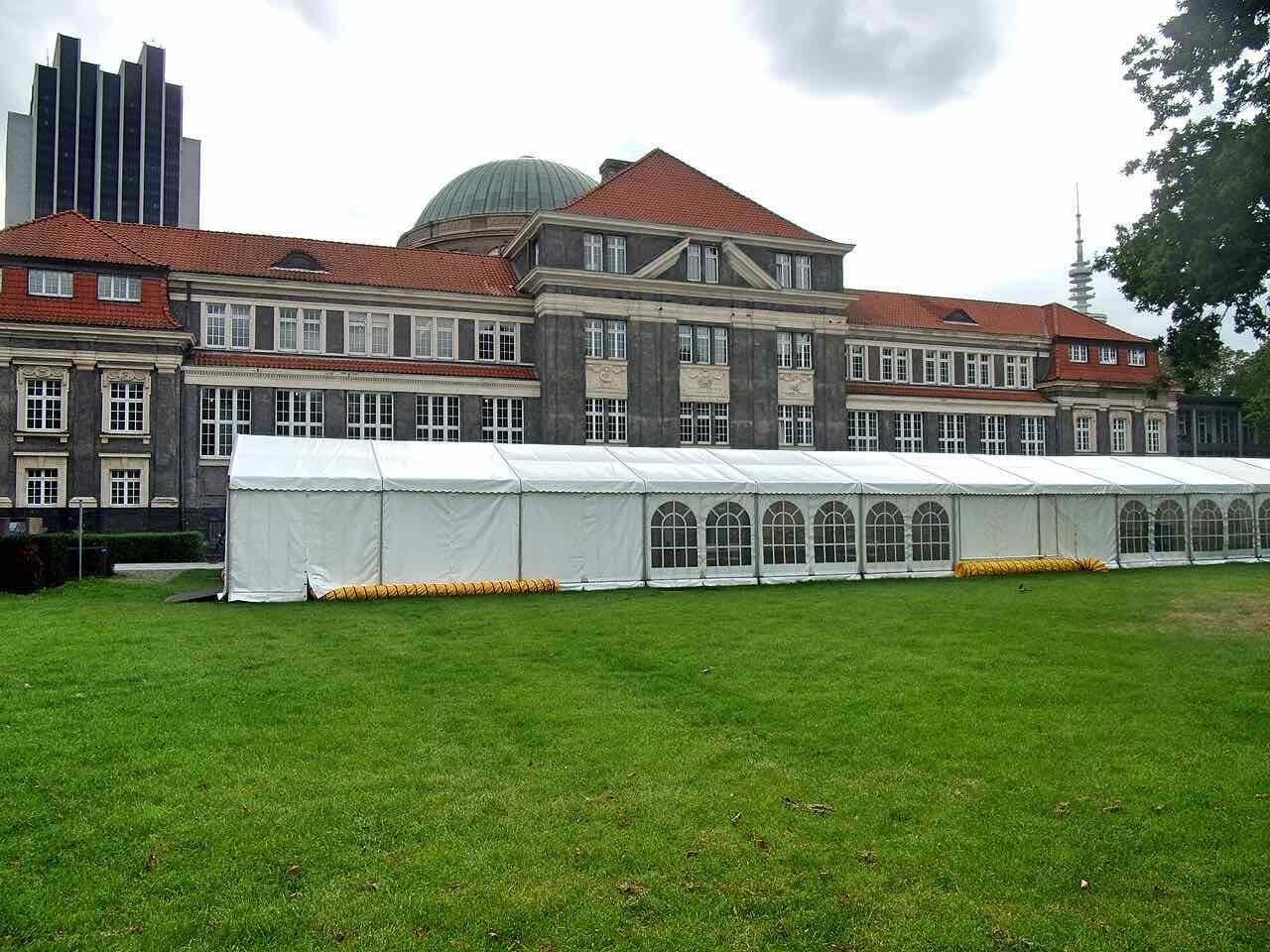
The city's largest university, founded in 1919, with about 43,000 students and sites across the city: the Von-Melle-Park campus, the main building at Moorweide, the Geomatikum, physics and DESY in Bahrenfeld, and the university hospital in Eppendorf. It offers over 100 master's programmes at eight faculties, some entirely or partly in English. The business, economics and social sciences faculty lists English-taught master's degrees in Innovation, Business and Sustainability, Economics, Politics, Economics and Philosophy, Political Science, and Communication and Journalism Research for a Sustainable Society, and bilingual ones in Health Economics and Health Care Management and in Peace and Security Studies.
International office ↗Hamburg University of Technology (TUHH) ↗
A technical university in Harburg, in the south of the city, founded in 1978, with about 7,400 students and a campus at Am Schwarzenberg-Campus. Its international study programmes include master's degrees in Chemical and Bioprocess Engineering, Computer Science, Computational Methods and Machine Learning in Engineering, Data Science, Electrical Engineering and Information Technology, Environmental Engineering, Information and Communication Systems, Materials Science and Engineering, Mechanical Engineering and Management, Mechatronics and Microelectronics and Microsystems, plus the Engineering Science bachelor. The affiliated Northern Institute of Technology Management (NIT) holds all its classes in English.
International office ↗Hamburg University of Applied Sciences (HAW Hamburg) ↗
A public university of applied sciences with about 16,700 students, 39 bachelor's and 37 master's degree courses. Teaching language is shown for each course in the Degree courses A-Z list, which has a filter for English-taught ones. International degree-seeking students are looked after by the International Office, and exchange students by the Student Exchange Coordinators. One of its faculties is Design.
International office ↗HafenCity University Hamburg (HCU) ↗
A public university for the built environment, founded in 2006, with a campus on Überseeallee in HafenCity since 2014. Bachelor's and master's degrees in Architecture, Civil Engineering, Geodesy and Geoinformatics and Urban Planning, plus the master's in Urban Design. The master's in Resource Efficiency in Architecture and Planning (REAP) is taught in English over two years.
International office ↗Helmut Schmidt University / University of the Federal Armed Forces Hamburg ↗
A Bundeswehr university at Holstenhofweg 85 in Hamburg that educates specialists and executives for the armed forces. It offers 28 degree programmes, a bachelor's of seven trimesters and a master's of five more, with classes of no more than 25. It has more than 50 partner universities and an International Office. Check with the university whether you are eligible before planning around it.
Hamburg University of Music and Drama (HfMT) ↗
One of the largest art universities in Germany, with about 1,400 students. It teaches instrumental music, composition, conducting, jazz, church music, singing, drama, dramaturgy, opera singing, directing, music education, music therapy, musicology and culture and media management. Admission is by entrance examination, and the site has an International students page under Apply.
University of Fine Arts Hamburg (HFBK) ↗
An art school with departments in Design, Film, Graphic Art and Photography, Painting and Drawing, Sculpture, Stage Design, Time-based Media, and Theory and History. It offers Bachelor and Master of Fine Arts, art teacher education and doctoral options, and has support for international applicants, Erasmus+ exchanges, language courses and tandems.
International office ↗A private law school at Jungiusstraße 6, founded in 2000, with 120 students per cohort in the law degree. English-taught offers are the Master of Law and Business and the Bucerius Summer Programs. It has partnerships with 102 universities in 37 countries.
Kühne Logistics University (KLU) ↗
A private university for logistics and management at Großer Grasbrook 17, with Bachelor, Master, MBA and PhD programmes and a second campus in Saigon. It runs Summer School and Winter School programmes through its International Office.
HSBA Hamburg School of Business Administration ↗
A dual business school at Willy-Brandt-Straße 75 where bachelor's students combine study with work at one of over 300 partner companies. More than 1,000 students. English-taught programmes are International Management (BSc), Logistics Management (BSc), Innovation Management (MSc) and the MBA.
A private, state-recognised university at Am Kaiserkai 1. It trains health professionals: human medicine, psychology, nursing, physiotherapy, occupational and speech-language therapy, sports science, social work and others, with master's programmes such as Clinical Research and Digital Health Management. It has a student council and counselling services.
A public-private partnership founded in 2003. Degrees are run with TUHH, Universität Hamburg, HFBK and Leuphana: a B.A. in Digital Media, an M.A. in Film, an MBA and EMBA in Digital and Media Management, and further education. The MBA has an International page; check the programme page for the language of each course.
Evangelische Hochschule für Soziale Arbeit & Diakonie (EHSA) ↗
A Protestant university of applied sciences for social work and diaconia, linked to the Rauhes Haus.
SRH University, Campus Hamburg ↗
A campus of the SRH University network in central Hamburg, a few minutes from the Meßberg and Rathaus U-Bahn stations. It offers programmes in Communication, Media and Marketing, Tourism, Hotel and Events, and Business and Law. The campus page currently states that applications are no longer possible at Campus Hamburg, so check with SRH before you plan around it.
Brand University of Applied Sciences ↗
A private university for brands and marketing at Lilienstraße 5-9. On campus: B.A. Brand and Marketing Management, B.A. AI and Brand Communication Design and M.A. Brand Innovation; distance degrees and certificates as well. Its site is in German with an English version.
NBS Northern Business School ↗
A private, state-recognised university of applied sciences at Wandsbeker Marktstraße 103-107, founded in 2007, with about 1,000 students. Bachelor's degrees in business administration, communication management, security management, social work and others; master's in Controlling and Finance, Real Estate Management and MBAs. Study is full-time, online, hybrid or part-time.
Hochschule Fresenius, Hamburg campus ↗
A private university with a Hamburg campus at Alte Rabenstraße 1. The international site hs-fresenius.com lists English-named programmes such as International Business Management (B.A.), International Management (M.A.) and E-Commerce and Logistics (M.Sc.); the university's own advice line can tell you which of them run in Hamburg and in which language.
HFH Hamburger Fern-Hochschule ↗
A state-recognised distance-learning university based in Hamburg, with Bachelor's, Master's and dual degrees studied online through study letters and an online campus, with optional seminars at regional study centres. The site is in German.
Student unions, services and groups
The students' union at Von-Melle-Park 5, with study, legal and social counselling, BAföG and tax advice, tenancy and labour-law advice, psychological counselling by students, counselling for international students, advice on the semester-ticket hardship fund, university groups and a Queer-Referat.
At Am Schwarzenberg-Campus 3. It has an international affairs referat with office hours on Tuesdays, hands out the ESNcard, offers learning rooms, a band rehearsal room and an HVV semester ticket service, and welcomes first-year and guest students.
At Berliner Tor 11, Haus D. Free counselling for all students, an equipment-loan service, and student loans in hardship cases.
AStA of HafenCity University ↗
The students' committee at Henning-Voscherau-Platz 1, room 1.117, elected by the student parliament, representing HCU students.
A public body funded by the city that supports more than 73,000 students at Hamburg's universities. It runs the residences, the Mensa and cafés, counselling on study financing, international affairs and students with children, and has a separate counselling centre for accommodation.
The university sports programme. A FlexiCard or SchwimmCard (three or six months) lets you pick courses freely, a FitnessCard gives access to two fitness studios, and single courses can be booked separately. A trial week is available. Bookings go through the online system; the front office is at Turmweg 2.
PIASTA Welcome Buddy Programme (Universität Hamburg) ↗
Welcome buddies for people arriving from abroad, a Welcome Week with campus tours, International Nights, language cafés and language tandems, and a to-do list for new students.
Campus International at TUHH ↗
Welcome Weeks, a Buddy Programme that pairs new students with experienced ones, and the Intercultural Hub with International Get Togethers and workshops.
The Hamburg section of the Erasmus Student Network, the international organisation for exchange students. The ESNcard is handed out through the TUHH AStA.
HFBK's AStA is listed with the school's student services, which also cover enrolment, semester fees and dates, health insurance and scholarships.
Choosing where to enrol, and what the English offer really is
Hamburg has around twenty higher-education institutions, and they are not interchangeable. Universität Hamburg is the large, broad university with campuses across the city; TUHH is a compact technical campus in Harburg,; HCU sits in HafenCity; HAW is the applied-sciences university with several sites. If the programme you want is on one of these, check its page for the teaching language: Universität Hamburg runs English, German and bilingual degrees, and TUHH lists its international (English-language) programmes on a separate page.
One name you may see on listing sites is EBS University. Its campuses are in Oestrich-Winkel and Wiesbaden, not Hamburg, so it is not a Hamburg option. SRH's Hamburg campus page states that applications are no longer possible there.
However the course page reads, plan for German. The Ausländerbehörde, the bank, the landlord and most part-time employers mostly work in German, and so do many of the smaller student groups.
Housing: apply early
The Studierendenwerk has 26 residences with about 4,770 places, which is roughly one place for every fifteen of the students it serves. It offers rooms in shared flats and one- and two-person apartments at an all-inclusive rent; the Universität Hamburg welcome page gives about 330 to 440 EUR a month for a furnished room, and the deposit starts at 400 EUR. You apply online, at the earliest three months before your move-in date or the start of your studies, and the Studierendenwerk advises applying to all residences to shorten the wait. Paper applications are accepted only in hardship cases such as a disability.
If you arrive without a room, the Studierendenwerk rents rooms for one to six months, and the university suggests hostels or hotels as the next step. Never transfer money before you have seen the flat and signed the lease: the university warns about rental scams on its to-do page.
Food, sport and meeting people
The Mensa and the cafés on campus are run by the Studierendenwerk. Menus are published daily and weekly on its site. For sport, Hochschulsport Hamburg is the place to start: a FlexiCard lets you choose courses freely for three or six months, there is a trial week, and the booking system is online.
To meet people quickly, use the welcome programmes. The University of Hamburg's PIASTA has buddies, a Welcome Week and language tandems; TUHH has Welcome Weeks and its Intercultural Hub; and ESN Hamburg runs events for exchange students. Each AStA runs its own social events and groups; the Universität Hamburg AStA lists its Hochschulgruppen and student initiatives on its site.
Your first weeks
- 1
Before you arrive
Apply online for a Studierendenwerk room as early as the three-month window allows, and book short-term accommodation (one to six months, or a hostel) so you are not looking in a hurry.
- 2
First two weeks
Register your address within two weeks of moving in. Book an appointment through the Hamburg Service portal and bring your passport, the signed registration form and the signed Wohnungsgeberbestätigung from your landlord. The fee is 16 EUR.
- 3
First weeks
Open a student Girokonto (usually free). Bring your passport, registration certificate and enrolment certificate. A German IBAN makes rent and phone contracts much easier.
- 4
First weeks
Arrange health insurance. Statutory insurance for students under 30 costs roughly 140 to 150 EUR a month. The Studierendenwerk's BeSI advisory centre gives free, independent advice.
- 5
Within the first months, if you are from outside the EU
Apply for your residence permit through the city's online service "Aufenthaltserlaubnis Hamburg", uploading your documents. You cannot book the appointment yourself: the Hamburg Welcome Center at Süderstraße 32b, responsible for the first permit after you arrive, sends you one. Apply at the latest eight weeks before your visa expires. Later extensions go to the Hamburg Service office for your home address, again about eight weeks before the permit expires.
- 6
Each semester
Pay the semester contribution only once the amount for that semester is published on the university's website, because it can change. At Universität Hamburg it is 402 EUR for winter 2026/27, and it includes your semester ticket.
Working next to your studies
On a student residence permit you may work up to 140 full days or 280 half days a year; a day with up to four hours of work counts as half a day. Student side jobs, such as being a student assistant at the university, are not counted against this limit. Freelance work needs approval from the immigration authority. Keep your own record of the days you work, because exceeding the limit can put your permit at risk.
With a Studierendenwerk room costing around 330 to 440 EUR and a funds requirement of 992 EUR a month, most students find that part-time work covers extras, not the whole cost of living. Plan your first year on the money you bring.
Where you come from matters here
Pick your home country: food, faith, community groups and the consulate that serves you, checked 21 October 2026.
🇮🇳 Living in Hamburg as an Indian student
India has a Consulate General in Hamburg. Hamburg has two Hindu temples and a Vaishnava centre, and the Sikh gurdwaras are named in the faith list above.
Consulate General of India, Hamburg ↗
Kohlhöfen 21, 20355 Hamburg. Handles passport, OCI, attestation and police clearance certificates, has a registration page for Indian students, and takes appointments through its online portal.
ISKCON Bhakti-Yoga-Zentrum Hamburg ↗
Krummholzberg 9, 21073 Hamburg. Holds a Sunday feast from 14:00 with kirtan, a talk and vegetarian food, and teaches Krishna consciousness; the site is in German with an English version.
Volksparkstraße 81, 22525 Hamburg; phone 040 65 91 60 50. The temple association says it must leave its premises and will announce a new address on its website, so check before you go.
Billstraße 77, 20539 Hamburg, open daily from 10:00. Run by a community of Hindus from Afghanistan, with several services a week.
🇳🇬 Living in Hamburg as a Nigerian student
Nigeria has no consulate in Hamburg; the embassy is in Berlin. Hamburg has African-led congregations, among them one that holds English and German services in Borgfelde and a Methodist church in Wilhelmsburg that hosts African congregations.
Neue Jakobstraße 4, 10179 Berlin. Passport services (fresh, renewal, lost, change of data) need a NIN slip and a biometric appointment; visas go through the VFS Nigeria Visa Application Center in Berlin.
African Christian Church Borgfelde (Erlöserkirche) ↗
A congregation led by Pastor Peter Mansaray, working with the Lutheran St. Georg-Borgfelde parish at the Erlöserkirche near Berliner Tor station. It holds gospel services in English and German that more than 150 guests attend.
Friedenskirche Wilhelmsburg (EmK) ↗
Weimarer Straße 10, 21107 Hamburg. A Methodist church whose building also hosts a Togolese and an Amharic-speaking congregation; contact hamburg-wilhelmsburg@emk.de.
🇻🇳 Living in Hamburg as a Vietnamese student
Vietnam has no consulate in Hamburg: the embassy is in Berlin and the consulate general is in Frankfurt, which does not cover Hamburg. Hamburg has a Vietnamese Buddhist pagoda.
Elsenstraße 3, 12435 Berlin; listed by the Foreign Office with its website vietnambotschaft.org.
The Vietnamese Buddhist pagoda in Billbrook on the Bille, founded in 1984 and at its present site since 2008, in the Vietnamese Lam Te tradition. It serves Vietnamese Buddhists in Hamburg and the surrounding area and offers support to the community.
🇧🇩 Living in Hamburg as a Bangladeshi student
Bangladesh has no honorary consulate in Hamburg; the embassy is in Berlin. A Bangladeshi mosque community is a member of Schura Hamburg.
Embassy of Bangladesh, Berlin ↗
Kaiserin-Augusta-Allee 111, 10553 Berlin; contact info.berlin@mofa.gov.bd.
Bangladesh-Islamisches Zentrum Hamburg e.V. (Schura Hamburg member) ↗
The Bangladesch-Moschee at Adenauer Allee 32, 20097 Hamburg, in the Schura Hamburg member list (dated January 2021; confirm before visiting).
🇳🇵 Living in Hamburg as a Nepali student
The nearest official place for Nepali citizens is the embassy in Berlin.
Guerickestraße 27, 10587 Berlin. Passports, travel documents, powers of attorney, NRN ID and document attestation.
🇵🇰 Living in Hamburg as a Pakistani student
Pakistan has an honorary consulate in Hamburg; the embassy is in Berlin. Two Pakistani mosque communities are members of Schura Hamburg.
Honorary Consulate of Pakistan, Hamburg ↗
Am Sandtorkai 60, 20457 Hamburg, headed by Honorary Consul Christian Koopmann; open Monday, Wednesday and Thursday 09:00 to 12:00 and covering Hamburg, Bremen and Lower Saxony.
Passports, attestations, NADRA services, birth registration and e-visas are listed on the embassy's site.
Pak Islami Majlis and Pak-Islami-Merkez (Schura Hamburg members) ↗
Two Pakistani mosque communities in the Schura Hamburg member list: Pak Islami Majlis at Brennerstraße 12 and Pak-Islami-Merkez (Ehl-e-Sunnat) at Brackdamm 18. The list is dated January 2021, so confirm before visiting.
🇬🇭 Living in Hamburg as a Ghanaian student
Ghana has a Consulate General in Hamburg, and Ghanaian Methodist congregations worship in the city in Twi and English.
Consulate General of Ghana, Hamburg ↗
Kajen 6-8, 20459 Hamburg. Listed by the City of Hamburg and the Foreign Office; phone +49 176 3554 7319.
Ghanaian United Methodist congregations (Calvary, Ebenezer, Wesley) ↗
Three Ghanaian United Methodist congregations in Hamburg. Ebenezer worships in a mix of Twi and English in a church building rented from the Evangelical Church.
🇨🇲 Living in Hamburg as a Cameroonian student
Cameroon has an honorary consulate in Hamburg that sees visitors by appointment; full consular services such as passports are at the embassy in Berlin.
Honorary Consulate of Cameroon, Hamburg ↗
Rütersbarg 46, 22529 Hamburg, headed by Honorary Consul Dr. Stefan Liebing; open by appointment.
Ulmenallee 32, 14050 Berlin. Passports, consular cards, powers of attorney and birth-certificate transcription; appointments via its contact page.
🇺🇸 Living in Hamburg as an American student
The US has a Consulate General in Hamburg, and there is a German-American centre and an English-language church.
US Consulate General, Hamburg ↗
Serves American citizens in northern Germany; it does not handle visas. Contact and appointment details are on the consulate's own site, hamburg.usconsulate.de, and on the Foreign Office listing.
A German-American centre that runs free events, panel discussions, lectures and film screenings, and the EducationUSA programme. It is supported by the US consulate and the city.
An English-language church in Hamburg: Parish Eucharist on Sundays at 10:30, and it describes itself as a welcoming and inclusive church offering Christian ministry in English.
🇨🇳 Living in Hamburg as a Chinese student
China has a Consulate General in Hamburg, and the Confucius Institute teaches Chinese language and culture in the city.
Chinese Consulate General, Hamburg ↗
Elbchaussee 268, 22605 Hamburg. Its district covers Hamburg, Bremen, Lower Saxony and Schleswig-Holstein. The official consulate site is hamburg.china-consulate.gov.cn; the Foreign Office listing gives the address.
Konfuzius-Institut Hamburg e.V. ↗
Wendenstraße 25, 20097 Hamburg. Chinese language courses, seminars on China and a German-Chinese dialogue series; listed by the City of Hamburg among its international cultural institutes.
English-taught programmes in Hamburg
Soonest open deadline first. Every entry links to its official source.
- BSc Mechanical EngineeringHamburg University of Applied Sciences · HamburgbachelorNo tuition30 Nov 2026Closing soon
- EMMaH – European Master of Medical Technology and Healthcare Business (MSc)Hamburg University of Applied Sciences · HamburgmasterNo tuition31 Dec 2026Open
- Master of Arts in African Languages and CultureUniversity of Hamburg · HamburgmasterNo tuition15 Jan 2027Open
- Mathematical Physics (MSc)University of Hamburg · HamburgmasterNo tuition15 Jan 2027Open
- European Master's in Law & Economics (EMLE)University of Hamburg · Hamburgmaster15 Jan 2027Open
- Master's Programme in European and International Law (MEIL)University of Hamburg · Hamburgmaster31 Jan 2027Open
- Master of Public Health (MPH)Hamburg University of Applied Sciences · Hamburgmaster28 Feb 2027Open
- Data ScienceHamburg University of Technology · HamburgmasterNo tuition01 Mar 2027Open
- Joint Master's in Global Technology and Innovation Management & Entrepreneurship (G-TIME)Hamburg University of Technology · Hamburgmaster01 Mar 2027Open
- Information and Communication SystemsHamburg University of Technology · HamburgmasterNo tuition01 Mar 2027Open
- Microelectronics and MicrosystemsHamburg University of Technology · HamburgmasterNo tuition01 Mar 2027Open
- Environmental EngineeringHamburg University of Technology · HamburgmasterNo tuition01 Mar 2027Open
- Chemical and Bioprocess EngineeringHamburg University of Technology · HamburgmasterNo tuition01 Mar 2027Open
- Materials Science and EngineeringHamburg University of Technology · HamburgmasterNo tuition01 Mar 2027Open
- Master of Science in Politics, Economics and PhilosophyUniversity of Hamburg · HamburgmasterNo tuition31 Mar 2027Open
- Atmospheric ScienceUniversity of Hamburg · HamburgmasterNo tuition31 Mar 2027Open
- Communication and Journalism Research for a Sustainable SocietyUniversity of Hamburg · HamburgmasterNo tuition31 Mar 2027Open
- Manuscript CulturesUniversity of Hamburg · HamburgmasterNo tuition31 Mar 2027Open
- Marine Ecosystem and Fisheries SciencesUniversity of Hamburg · HamburgmasterNo tuition31 Mar 2027Open
- Master of Science in EconomicsUniversity of Hamburg · HamburgmasterNo tuition31 Mar 2027Open
- Master of Science in Integrated Climate System Sciences (MSc ICSS)University of Hamburg · HamburgmasterNo tuition31 Mar 2027Open
- Master of Science in Ocean and Climate Physics (MSc)University of Hamburg · HamburgmasterNo tuition31 Mar 2027Open
- Molecular Plant ScienceUniversity of Hamburg · HamburgmasterNo tuition31 Mar 2027Open
- MSc in Business AdministrationUniversity of Hamburg · HamburgmasterNo tuition31 Mar 2027Open
- Master of Science in Intelligent Adaptive Systems (IAS)University of Hamburg · HamburgmasterNo tuition01 Apr 2027Open
- Law of the Sea and International Environmental Law (LoSIEL)University of Hamburg · Hamburgmaster15 Apr 2027Open
- Master of Science in Process EngineeringHamburg University of Applied Sciences · HamburgmasterNo tuition15 May 2027Open
- MSc Pharmaceutical BiotechnologyHamburg University of Applied Sciences · HamburgmasterNo tuition15 May 2027Open
- MSc Renewable Energy SystemsHamburg University of Applied Sciences · HamburgmasterNo tuition31 May 2027Open
- BSc Information EngineeringHamburg University of Applied Sciences · HamburgbachelorNo tuition31 May 2027Open
- British and American Cultures: Texts and MediaUniversity of Hamburg · HamburgmasterNo tuition15 Jun 2027Open
- Master's in Law and Economics of the Arab Region (LLM/MA)University of Hamburg · Hamburgmaster30 Jun 2027Open
- Biomedical Engineering (MSc)Hamburg University of Applied Sciences · HamburgmasterNo tuition15 Jul 2027Open
- Engineering ScienceHamburg University of Technology · HamburgbachelorNo tuition15 Jul 2027Open
- Joint European Master's in Interdisciplinary MathematicsHamburg University of Technology · HamburgmasterNo tuitionRollingApply anytime
- Digital Transformation Management (MSc)SRH University · HamburgmasterSee sourceCheck source
- MSc Innovation, Business and Sustainability (MIBAS)University of Hamburg · HamburgmasterNo tuitionSee sourceCheck source
- International Business & Leadership – Sustainability Management (MA)SRH University · HamburgmasterSee sourceCheck source
- Bachelor of Science in Earth System PhysicsUniversity of Hamburg · HamburgbachelorNo tuitionSee sourceCheck source
- Joint Master's in Ship and Offshore TechnologyHamburg University of Technology · HamburgmasterSee sourceCheck source
- Master of Science in Geodesy and Geoinformatics, Specialisation HydrographyHafenCity University Hamburg · HamburgmasterNo tuitionSee sourceCheck source
- Master's in Real Estate (MSc)EBS Universität für Wirtschaft und Recht · HamburgmasterSee sourceCheck source
Is Hamburg right for you? Ask us. Free.
Tell us your passport, grades and budget. We compare Hamburg with the other places you could study, then apply for you. You never pay us.
Get my free plan