Studying in North Rhine-Westphalia, Germany
Kamp-Lintfort
A small Lower Rhine town on an old coal site, with a campus of Rhine-Waal University, a monastery garden and Düsseldorf's student housing office.
Kamp-Lintfort has about 38,000 residents and sits on the left bank of the Lower Rhine, between the Dutch border region and the Ruhr area. It grew around two things: a Cistercian abbey founded in 1123 and a coal mine that opened in 1912 and closed in 2012. Since 2014 it has a third: a campus of Rhine-Waal University of Applied Sciences, which stands inside the former colliery grounds, the Zechenpark. For a student that means a quiet, compact town where the campus, the canteen and the student halls are all on or near the old colliery grounds. It also means a small-town scale: this is not a city with a big nightlife or a big community of every nationality, and the page below says plainly where you will have to go to Duisburg, Düsseldorf or Wesel for something.
- Population
- 38,150 (31 Dec 2025)
- Area and district
- 63.14 km2; in Kreis Wesel, North Rhine-Westphalia, on the left bank of the Lower Rhine
- Position
- 8 km north-west of Moers; the express bus SB30 runs Geldern - Kamp-Lintfort - Moers - Duisburg Hbf
- Where to study
- Rhine-Waal University of Applied Sciences, Kamp-Lintfort campus, Friedrich-Heinrich-Allee 25
- Semester contribution
- EUR 365.10 for winter 2026/27, including EUR 226.80 for the Deutschlandticket; no tuition fees
- Foreigners' office
- Ausländerbehörde of Kreis Wesel, in Wesel (appointment only)
Part 1
Living in Kamp-Lintfort
Kloster, Kohle, Campus
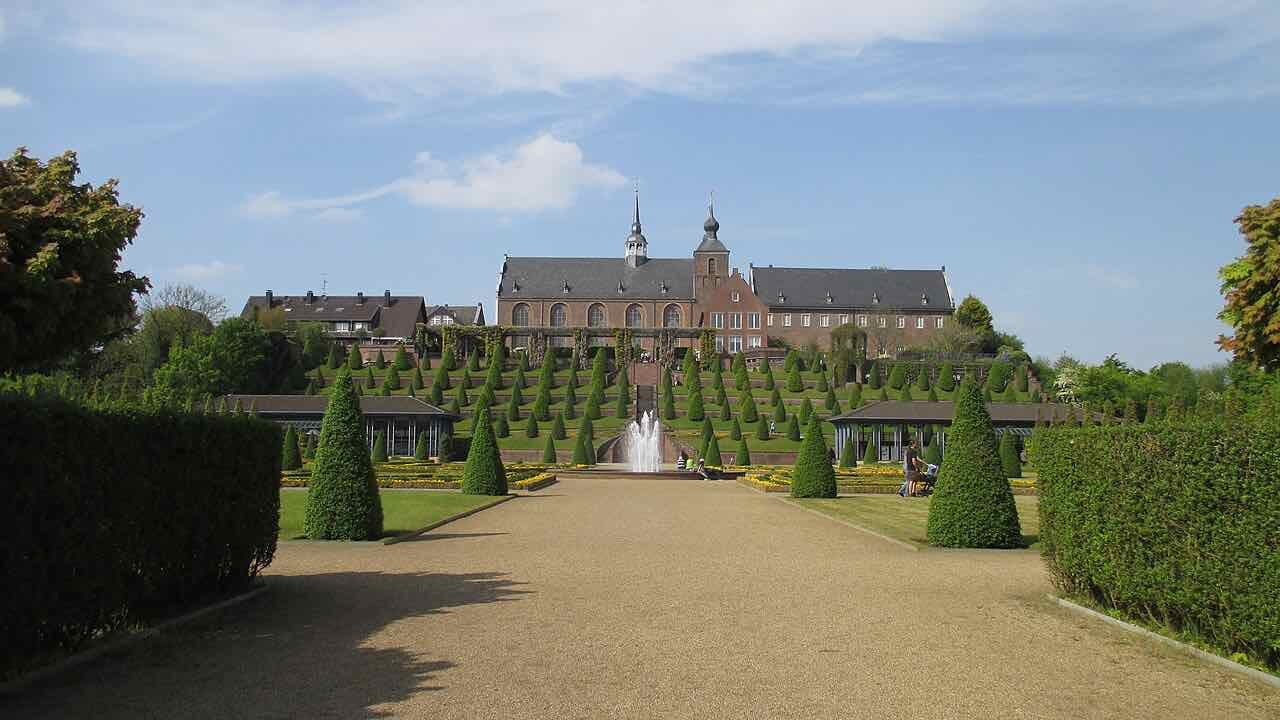
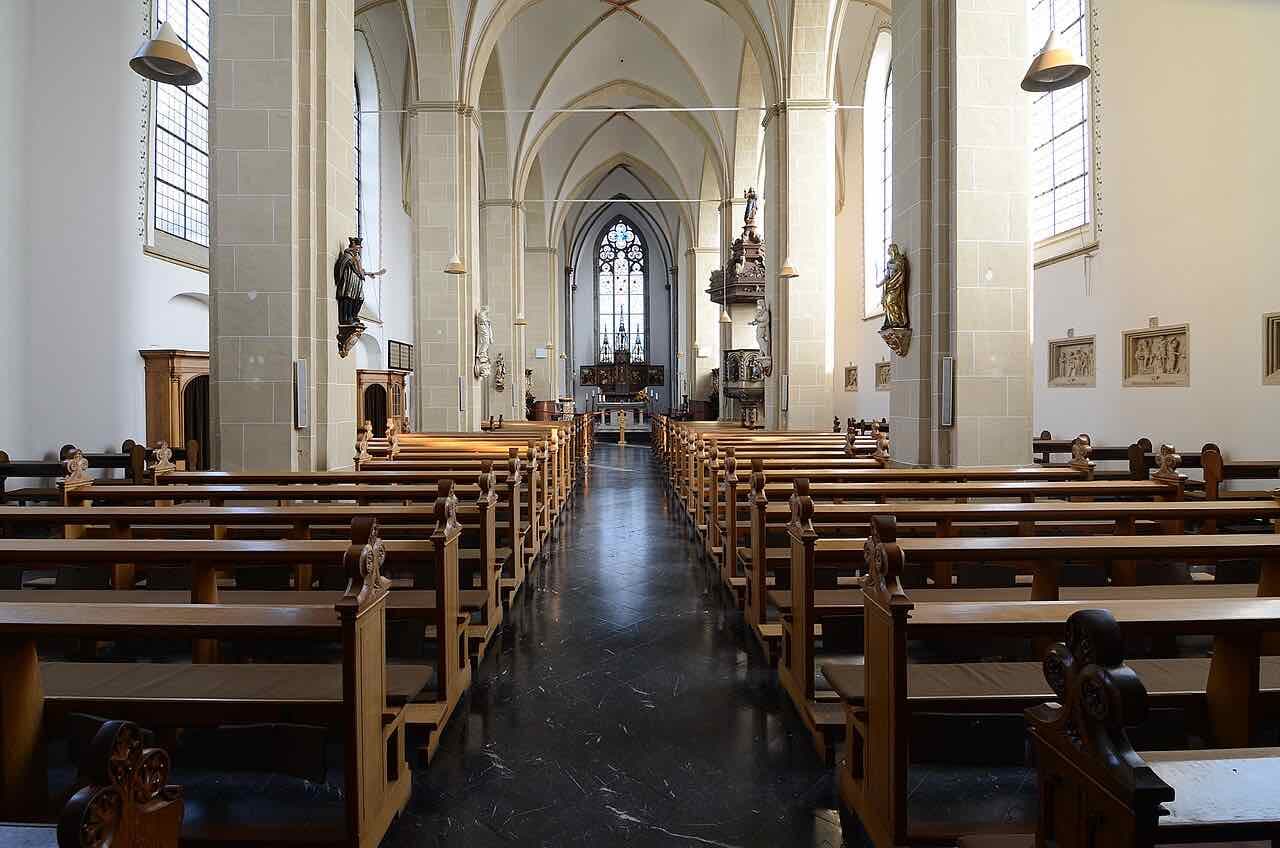
The town's information centre calls its story "Kloster, Kohle, Campus" (monastery, coal, campus). Kloster Kamp was founded on 31 January 1123 by twelve monks from Morimond in Lorraine, and the town calls it the first Cistercian abbey on German-speaking ground. It founded daughter houses as far as Riga, was wrecked in the war of 1582 to 1589, rebuilt after 1648 and dissolved in 1802. Carmelite monks lived there from 1954 until 2003, and since then a church and cultural centre has run the site.
The other half of the town is only a little over a century old. The colliery Friedrich Heinrich opened on 1 July 1912, and the settlement of Lintfort grew around it. The last shift ended on 21 December 2012. The town has spent the years since turning the colliery grounds into a park, a garden-show site (the Landesgartenschau ran from 17 April to 11 October 2020) and, from March 2014, a university campus.
What to see, mostly free
Everything below is in the town itself. Opening hours change, so check the page before you go.
Kloster Kamp and the terrace garden ↗
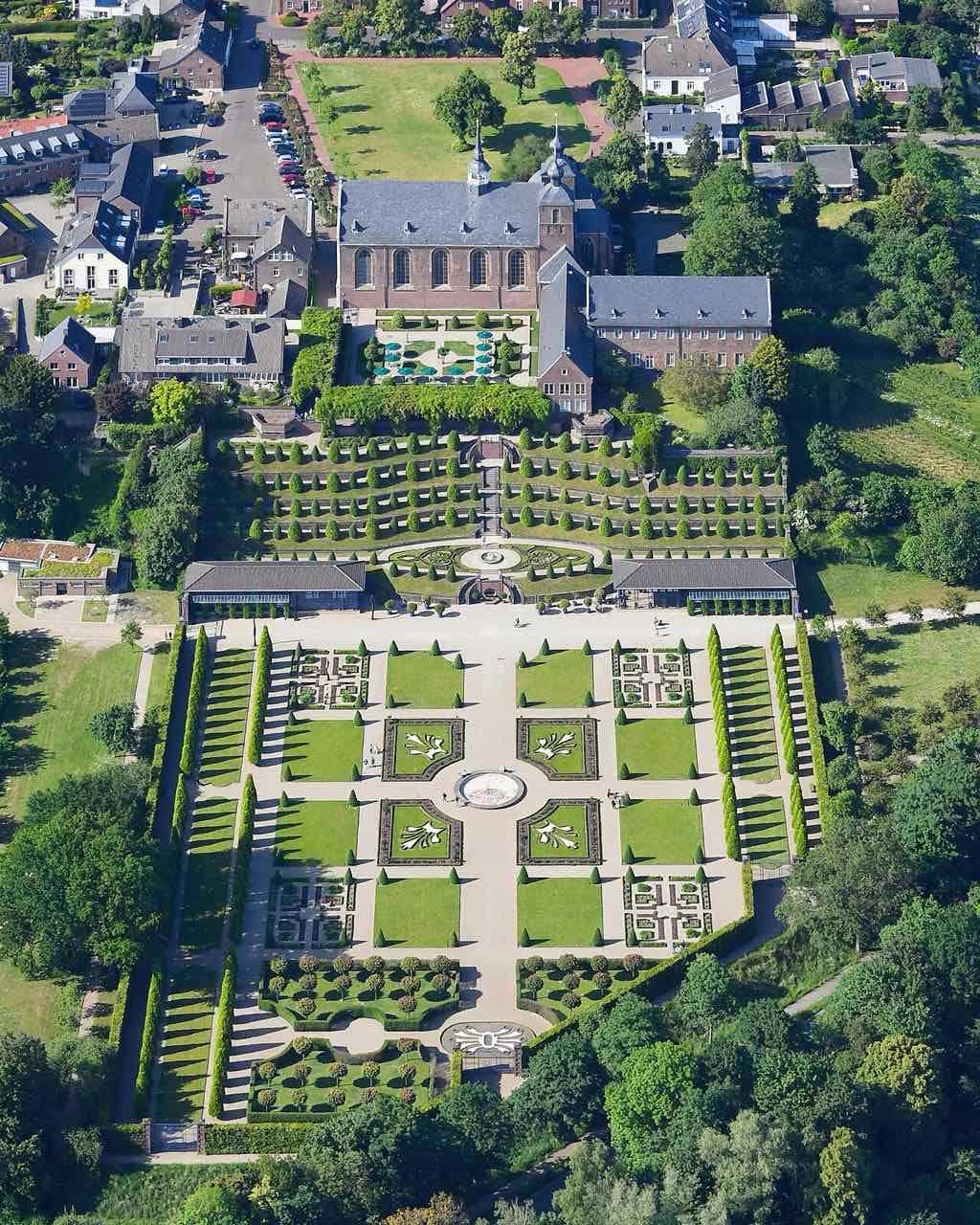
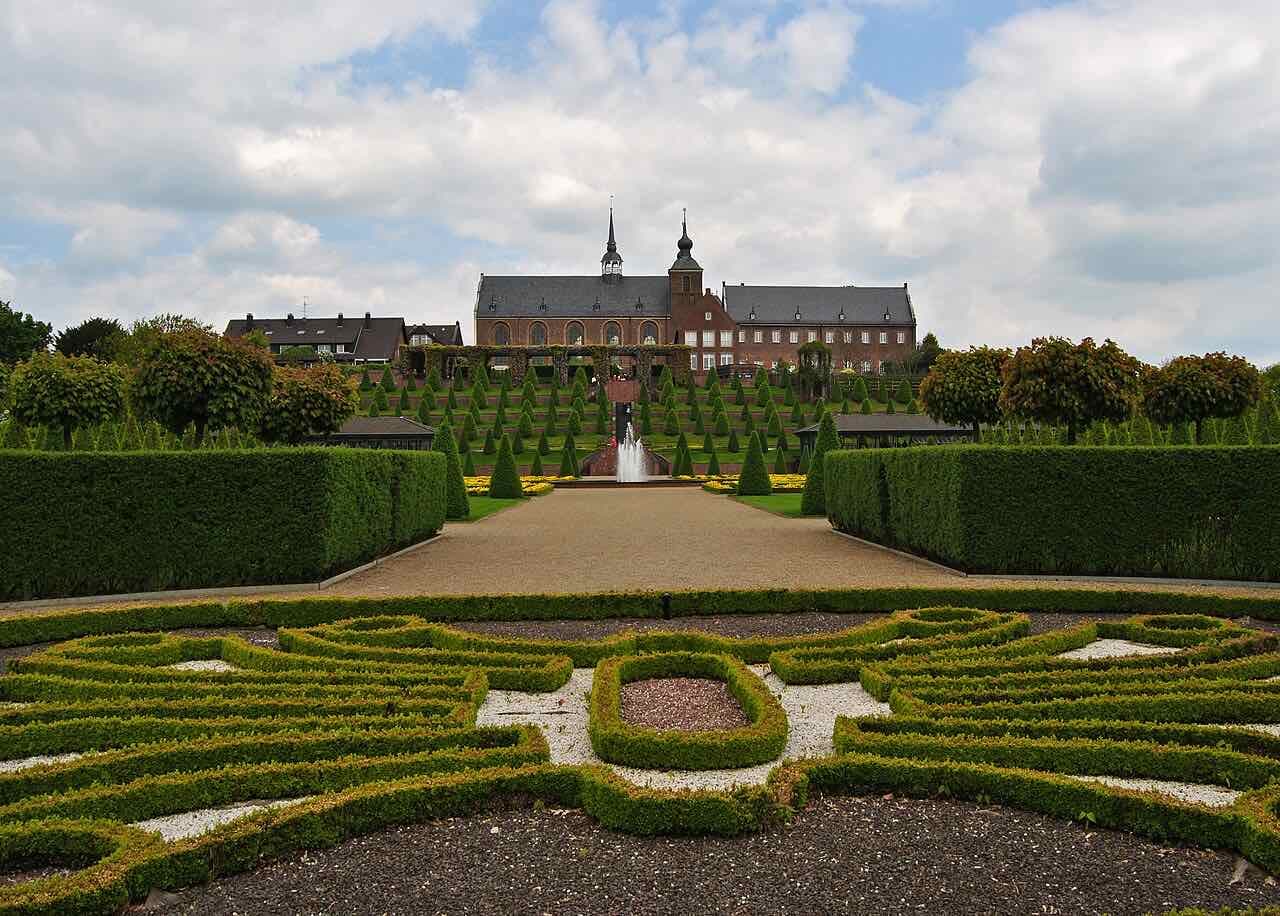
The abbey sits on the Kamper Berg. The baroque terrace garden below it covers 21,700 m2, was rebuilt in 1986 to 1990 from 18th-century descriptions, and is open to the public from 8 am (April to September) or 9 am (October to March) until dusk. The art exhibitions in the western orangery are free as well. The church and cultural centre runs a donation café, a shop and the abbey museum (Tuesday to Saturday 14:00 to 17:00, Sundays and holidays 11:00 to 17:00).
Zechenpark Friedrich Heinrich ↗
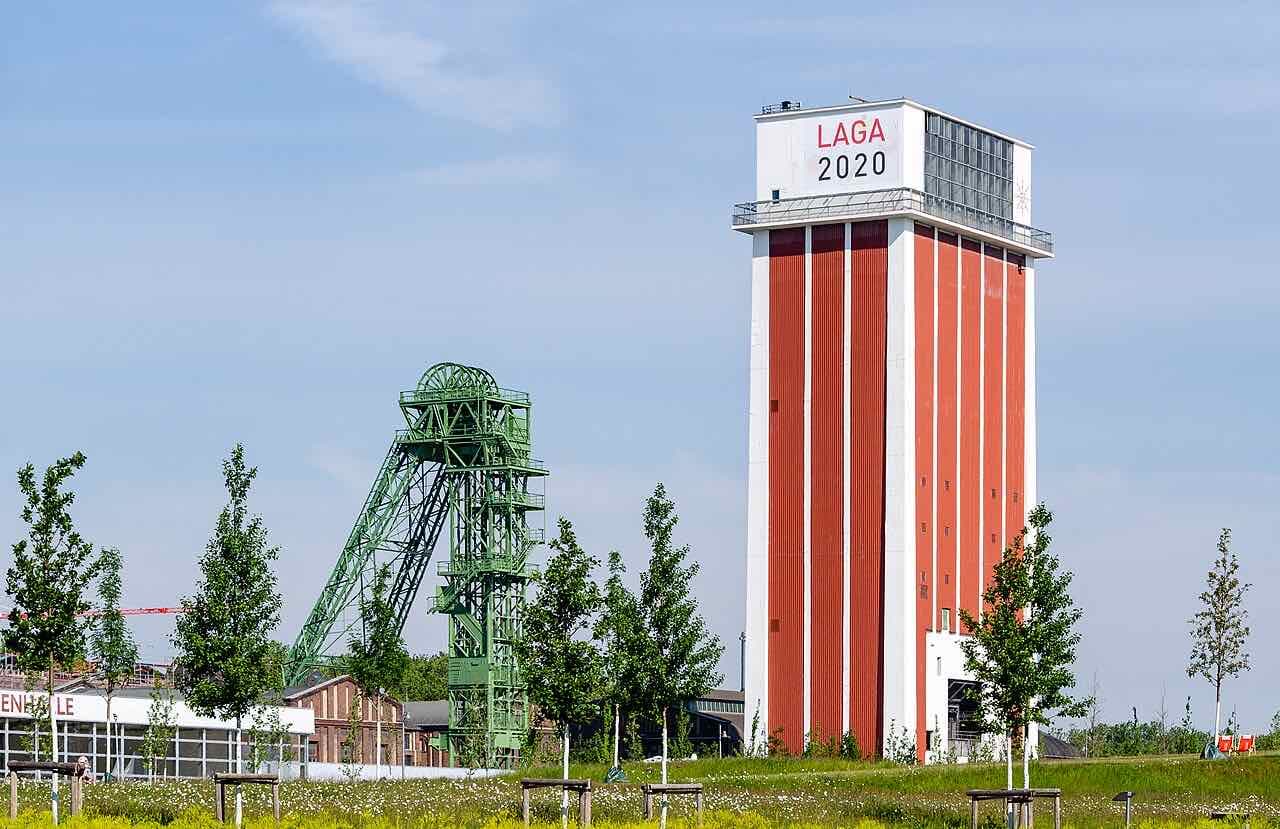
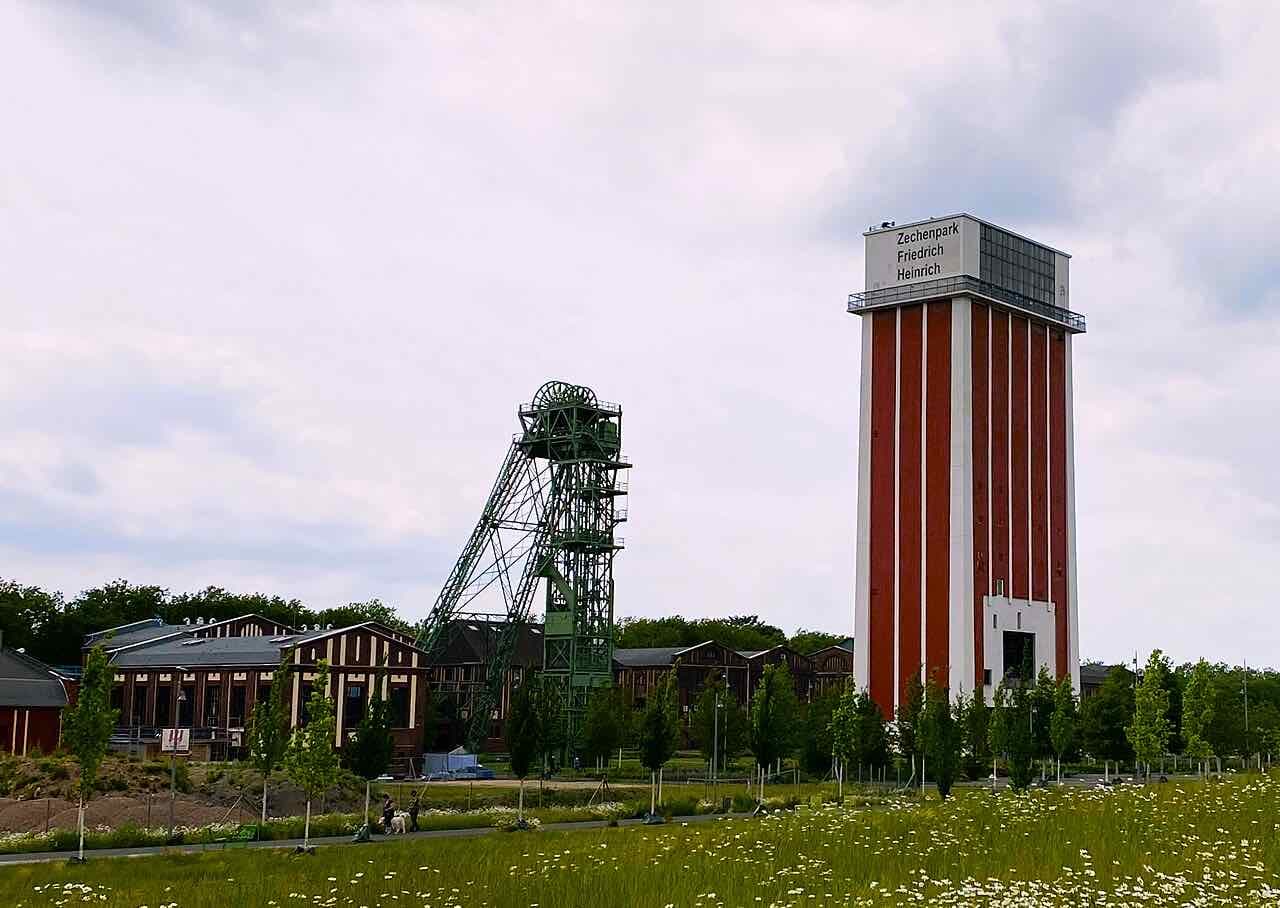
The former colliery grounds, since 2021 an anchor point of the Route der Industriekultur. The town describes it as the only industrial monument west of the Rhine on that route. The green headframe and the tall tower in the photos stand in the park, and the Kalisto animal park is in the same grounds.
Infozentrum Stadt und Bergbau ↗
The town's information point at Friedrich-Heinrich-Allee 81: an exhibition on the town, the mine and the monastery, open Tuesday to Friday 10:00 to 15:00 and Saturday, Sunday and holidays 11:00 to 16:00. Tours and a trip up the winding tower can be booked here.
Haus des Bergmanns and the training gallery ↗
Run by the volunteers of the Fördergemeinschaft für Bergmannstradition. It shows a miners' family home as it was around 1910, and has a training gallery; the club offers tours and meetings with former miners. The club reports about 10,200 visitors a year.
Altsiedlung Friedrich-Heinrich ↗
The company housing estate built from 1909 for the miners, about 76 hectares of small houses in garden-city style. The town calls it the largest preserved company estate in the Rhine-Westphalian industrial area. A 2.5 km path, the Wandelweg, follows the stream Große Goorley and links the Kamper Berg with the Stephanswäldchen in Lintfort.
The former horse stables of the colliery, now a cultural venue at Friedrich-Heinrich-Allee 79c with studios and a 200 m2 hall for concerts, exhibitions and readings.
The monastery and the colliery
Weekends, water and green
For sport, the town lists the Panoramabad Pappelsee (an indoor and outdoor pool at Bertastraße 74, with a view on the Pappelsee park), about 50 sports clubs, sailing and windsurfing on the Rossenrayer See, and marked routes for walking and Nordic walking in the woods north of town. There is also an airfield at Saalhoff where gliders and balloons start on summer weekends. The town library, the Mediathek, lists an English conversation event for Monday 2 November 2026.
The summer open-air theatre on the Kamper Berg draws around 3,000 visitors a year, according to German Wikipedia. Anything bigger than a town festival, a large concert, a museum quarter or a late night out, means a trip by bus or train to Duisburg or Düsseldorf. The SB30 express bus goes to Duisburg Hauptbahnhof, and the Deutschlandticket in your semester contribution covers it.
Getting around
Kamp-Lintfort has no railway passenger service yet. Buses run from the central stop at the Neues Rathaus, with the express line SB30 linking Geldern, Kamp-Lintfort, Moers and Duisburg. The town's page says the line RE 44 is expected to run from Moers to Kamp-Lintfort from the end of 2026, so check the VRR or DB timetable before you plan a commute around it.
Your semester contribution includes the Deutschlandticket (EUR 226.80 of the EUR 365.10 for winter 2026/27). It covers all local and regional buses and trains in Germany, but not ICE or EC trains, only second class, and it does not take a bicycle for free. After you enrol you receive set-up instructions by email, and the ticket lives in the Niag app as a QR code. There is no student ID card; you print a certificate of enrolment from the HISinOne portal.
If you live outside the town, check the first and last bus times before you sign, as HSRW advises.
What it costs
- Semester contribution, winter 2026/27
- EUR 365.10 (social contribution 120.00, student union 15.30, Deutschlandticket 226.80, sports 1.50, music 1.50)source
- Tuition fee
- None at HSRW, a state university in North Rhine-Westphaliasource
- Student hall, Oststraße 18-20
- Single flat, 13-30 m2: EUR 320-370 a monthsource
- Student hall, Friedrich-Heinrich-Allee 27-35
- Single flat, 19 m2: EUR 380; room in a two-person flatshare, 21-23 m2: EUR 320source
- Health insurance
- About EUR 150 a month (student rate)source
- Broadcasting fee
- EUR 18.36 a month per flat, shared by the people in the flatsource
HSRW estimates you need about EUR 900 to 1,200 a month for rent, food, transport and other expenses. Rents in the Studierendenwerk halls are from the Studierendenwerk's own list; private rents vary and are best checked on the Kleve council rent index that HSRW recommends.
Work and the local economy
At its peak the mine employed about 3,500 people, and its closure in 2012 was the main economic event of the last twenty years. German Wikipedia names the Technology Park Dieprahm (set up in 1989), an industrial zone in the north with a Lidl logistics centre, a waste-to-energy plant of Kreis Wesel and a tax office that moved into part of the former BenQ factory site. Ask your faculty about internship partners, and look wider than the town for a student job.
Non-EU students may work 140 full days or 280 half days a year. A job as a student assistant at the university does not count against the limit but the foreigners' office must be told, and self-employment needs its permission. Earning up to EUR 556 a month is free of tax. Your own foreigners' office, the Ausländerbehörde of Kreis Wesel, has the final word on your situation.
Part 2
Student life in Kamp-Lintfort
Where you can study
Rhine-Waal University of Applied Sciences (Hochschule Rhein-Waal) ↗
Two campuses, Kleve on the Dutch border and Kamp-Lintfort, with over 6,200 students from more than 120 countries across both. The Kamp-Lintfort campus at Friedrich-Heinrich-Allee 25 is where the Faculty of Communication and Environment has been since March 2014, in the Zechenpark. Its course finder lists 13 entries at Kamp-Lintfort, nine of them in English: Environment and Energy (BSc), Information and Communication Design (BA), Infotronic Systems Engineering (BSc), International Business Administration (BA), Mobility and Logistics (BSc), Design and Interaction (MA), Information Engineering and Computer Science (MSc), International Management and Psychology (MSc) and Usability Engineering (MSc). German-taught programmes at the campus are E-Government (BSc, also as a dual course), Media Communication and Computer Science (BSc) and Psychology with a focus on industrial and organisational psychology (BSc). The university's other programmes, such as Agribusiness, International Relations and Sustainable Tourism, are at Kleve. HSRW has no tuition fees.
International office ↗Student unions, services and groups
AStA, the General Student Committee ↗
The student executive, elected by the Student Parliament. Its departments include social affairs (housing, jobs, authorities, insurance), an international department for visa and legal questions, an events department, sports and a department for queer students. The Kamp-Lintfort office is at Friedrich-Heinrich-Allee 25, and it runs a WhatsApp group for student volunteers at the campus.
StuPa, the Student Parliament ↗
The top decision body of the student body. Meetings are open, take place at least monthly in term time and alternate between Kleve and Kamp-Lintfort; agendas and minutes are in its Moodle course.
Welcome Centre and Students4Students tutors ↗
HSRW's service for international students. Student tutors help with forms, authorities and everyday questions, and the centre runs language tandems, introductory events, game nights and cinema trips. The Kamp-Lintfort office is open Tuesday to Thursday 10:00 to 12:00 (check the page for holiday closures).
Runs the halls of residence in Kamp-Lintfort and Kleve, the Mensa and café on the Kamp-Lintfort campus, and counselling on authorities, insurance, part-time work and housing.
Hochschulsport (university sports) ↗
Courses for beginners and experienced players in fitness, health and team sports, plus tournaments and workshops. Registration for the winter programme opened on 8 October 2026 and the programme runs until 31 January 2027; you need a German bank account (IBAN) to book.
Register of student societies ↗
The university keeps a list of registered societies; in May 2026 it named one, the Student Association Campus Solidarity Collective, so most student life here runs through the AStA, the faculty student councils and the Welcome Centre instead.
Campus life and study culture
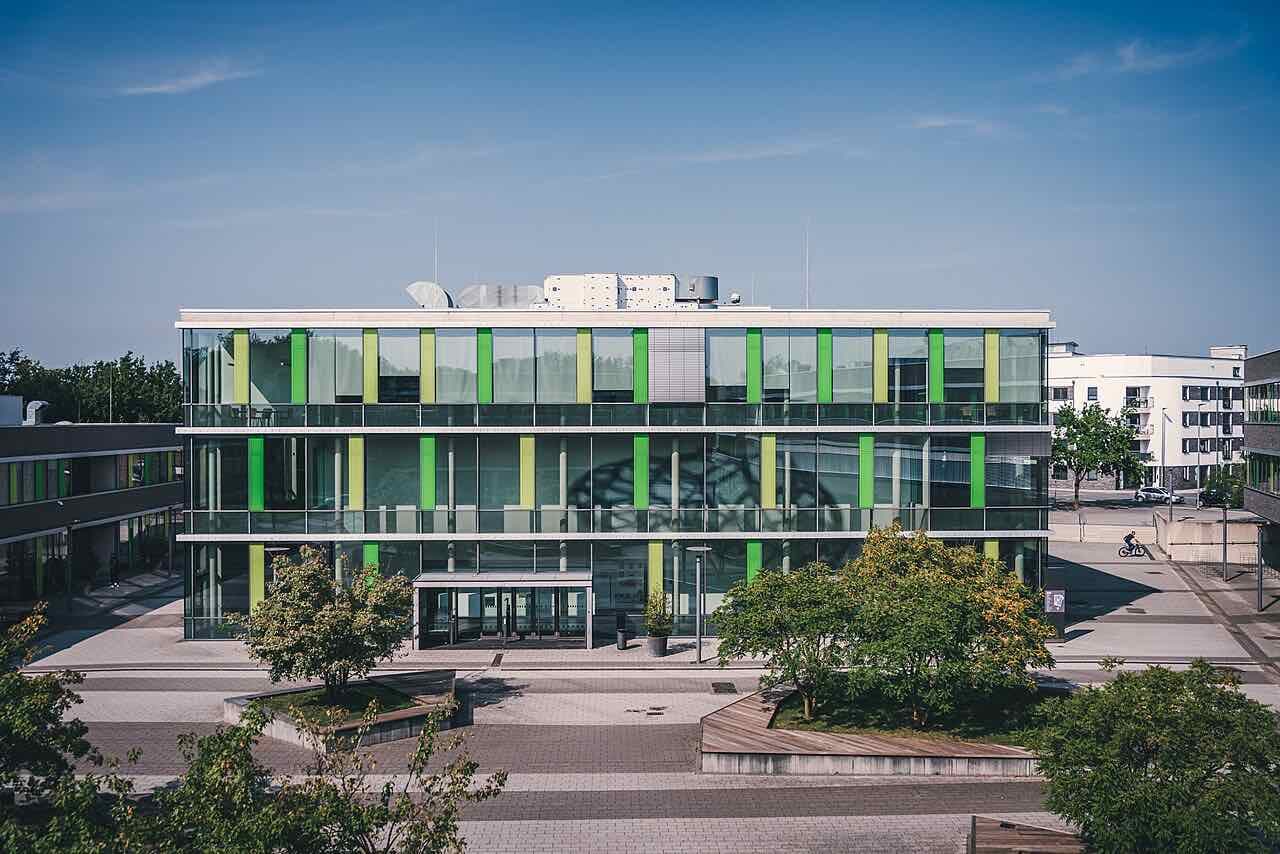
The university describes the Kamp-Lintfort campus as a modern university campus in the Zechenpark. Nine of the 13 programmes here are taught in English, so English works in class, but German makes everything outside it, from the Bürgerbüro to the bakery, easier.
Freshers' Week is where friends are made. In 2026 it ran from 28 September to 2 October, with a campus tour, a Freshers' Market and a music night on the campus grounds, a city rally, an event by the faculty student council (FSR) and a semester opening party organised by the FSR. Attendance is optional, and the schedule changes each year, so look at the Freshers' Week page for your own start.
The faculty student councils are independent of the Student Parliament. Your first stop for questions about your own course is the Study Advisory Service (ZSB), and for confidential problems the university has a counselling service.
Where to live
The Studierendenwerk Düsseldorf has two halls in Kamp-Lintfort: Oststraße 18-20 (single flats of 13 to 30 m2 for EUR 320 to 370) and Friedrich-Heinrich-Allee 27-35 on the Große Goorley (a single flat of about 19 m2 for EUR 380, or a room in a two-person flatshare for EUR 320). Apply online several months before you arrive and ask for a waiting-list place if none is free.
For private rooms, HSRW names WG-gesucht and Kleinanzeigen, local newspaper adverts (new ones appear on Wednesdays and Saturdays), student groups on social media and a list of landlord offers on the university's sciebo. Tips from the university: ask whether the rent is basic rent (Kaltmiete) or total rent (Warmmiete), expect a deposit of one to three months' rent, photograph the flat at move-in, widen your search to villages nearby and book a hotel or hostel for your first nights if you have no room yet. HSRW does not check listings and does not take part in tenancies.
Housing is the first thing to fix. The campus is small, and so is the market: if you cannot find a room in Kamp-Lintfort, look at towns on the SB30 route and check the first and last bus times.
Food, sport and evenings
Mensa and café, Friedrich-Heinrich-Allee 25 ↗
Run by the Studierendenwerk on the campus. Hot food is served Monday to Friday 11:30 to 14:30; the café opens Monday to Thursday 08:00 to 17:00 and Friday 08:00 to 14:00 during the semester. The daily menu is online.
Besides the university courses, the town counts about 50 sports clubs, the Panoramabad Pappelsee pool and sailing on the Rossenrayer See. The town's sport office lists them and offers a brochure.
The town's culture pages list the theatre in the Stadthalle, exhibitions, concerts and the Schirrhof programme; the volunteer agency KALI AKTIV lists ways to take part.
The AStA's events department organises lectures, film nights and parties, and the faculty student council runs the semester opening party. A larger scene means Duisburg, at the end of the SB30 bus line, or Düsseldorf.
Your first weeks
- 1
Before you arrive
Apply for a hall room or find temporary lodging, and read the Welcome Centre pages for international students. Non-EU students from most countries need a visa for study; nationals of a short list of states, including the USA, may enter freely but must apply for a residence permit for study within three months, according to the Kreis Wesel.
- 2
In the first days
Register your address at the Bürgerbüro in the town hall, Am Rathaus 2. It is open Monday to Friday 8:00 to 12:00, Tuesday 14:00 to 16:00 and Thursday 14:00 to 18:00, without an appointment according to the town's page. Then enrol, set up the Germany ticket in the Niag app and download your certificate of enrolment.
- 3
Within a few weeks
Book the residence permit at the Ausländerbehörde of Kreis Wesel (Kreishaus, Reeser Landstraße 31, 46483 Wesel). It works by appointment only and serves Kamp-Lintfort. HSRW's Wednesday residence-permit help with tutors is for students registered at the Kleve office, and students registered elsewhere, such as Wesel, are not eligible, so ask the Welcome Centre what help you can get.
- 4
Soon after
Take out health insurance (about EUR 150 a month), open a German bank account (the university sports booking asks for an IBAN) and read the Consumer Advice Centre checklists that HSRW links on insurance and phone contracts.
Where you come from matters here
Pick your home country: food, faith, community groups and the consulate that serves you, checked 21 October 2026.
🇮🇳 Living in Kamp-Lintfort as an Indian student
Kamp-Lintfort has no Indian consulate and no Indian student society at the campus register. North Rhine-Westphalia belongs to the Consulate General in Frankfurt, and the nearest Indian community groups are in Düsseldorf and in Duisburg-Essen.
Consulate General of India, Frankfurt ↗
Serves Hesse, North Rhine-Westphalia, Rhineland-Palatinate and Saarland, according to its page on the jurisdiction of Indian missions in Germany. It also hosts a registration form for Indian nationals.
Indian community associations list (consulate) ↗
The consulate's own list of associations names, among others, Indische Gemeinde Düsseldorf e.V., Deutsche Indische Gesellschaft Düsseldorf and Düsseldorf Kannada Balaga. Contact persons are named in the list.
Duisburg Essen Indian Students Association (DEISA) ↗
A student-run body at the University of Duisburg-Essen founded in 2019, which describes itself as a bridge between Indian students and the Indian embassy. It is a UDE group, so ask whether HSRW students can join events.
🇳🇬 Living in Kamp-Lintfort as a Nigerian student
Nigerians in Kamp-Lintfort use the embassy in Berlin; its site also mentions a Consulate General in Frankfurt/Main. Look for community groups in the larger cities nearby.
Neue Jakobstraße 4, 10179 Berlin. Submission of documents Monday to Thursday 10:00 to 14:00. The site covers visas, passports and fees.
Passport procedure and contact addresses, including the new e-passport notice.
🇵🇰 Living in Kamp-Lintfort as a Pakistani student
The Pakistan embassy in Berlin lists the states it serves, and North Rhine-Westphalia is not one of them. Pakistan also has a Consulate General in Frankfurt and an honorary consulate for NRW in Düsseldorf.
Honorary Consulate of Pakistan for North Rhine-Westphalia, Düsseldorf ↗
Hildebrandtstraße 15, 40215 Düsseldorf, telephone +49 211 4407227. The embassy's page gives the address and contact details.
Consulate General of Pakistan, Frankfurt ↗
The embassy's page links this consulate's own site, with passport, visa and attestation services.
Embassy of Pakistan, consular jurisdiction ↗
The page lists the German states served by the Berlin embassy and the services it offers (e-visa, attestations, passports).
🇨🇲 Living in Kamp-Lintfort as a Cameroonian student
Cameroon has no office in Kamp-Lintfort; the embassy is in Berlin.
Embassy of Cameroon, consular affairs ↗
Ulmenallee 32, 14050 Berlin. Opening hours Monday to Wednesday 11:00 to 12:30, according to the page.
Embassy, passport application ↗
Passport applications are made online first, through the Cameroon passport pre-registration website, before any embassy visit.
🇺🇸 Living in Kamp-Lintfort as an American student
US citizens in North Rhine-Westphalia are served by the consulate general in Düsseldorf.
US Consulate General, Düsseldorf ↗
Covers the state of North Rhine-Westphalia; the consul general's page names Preeti V. Shah as in office since August 2024.
US Embassy and Consulates in Germany ↗
The embassy site for services to US citizens in Germany, appointments and travel advisories.
🇨🇳 Living in Kamp-Lintfort as a Chinese student
There is no Chinese consulate in Kamp-Lintfort. The Consulate General in Düsseldorf serves North Rhine-Westphalia and has a section for students.
Chinese Consulate General in Düsseldorf ↗
The consulate's home page, with consular services and news. The site is mainly in Chinese and has a German version.
Student services, notices for Chinese students in NRW and a list of student associations in North Rhine-Westphalia (linked there). A notice dated 26 April 2026 sets up a dedicated email address for education questions.
English-taught programmes in Kamp-Lintfort
Soonest open deadline first. Every entry links to its official source.
- Usability Engineering, MScRhine-Waal University of Applied Sciences · Kamp-LintfortmasterNo tuition15 Jan 2027Open
- Environment and Energy, BScRhine-Waal University of Applied Sciences · Kamp-LintfortbachelorNo tuition15 Jul 2027Open
- Information and Communication Design, BARhine-Waal University of Applied Sciences · Kamp-LintfortbachelorNo tuition15 Jul 2027Open
- Infotronic Systems Engineering, BScRhine-Waal University of Applied Sciences · Kamp-LintfortbachelorNo tuition15 Jul 2027Open
- Information Engineering and Computer Science, MScRhine-Waal University of Applied Sciences · Kamp-LintfortmasterNo tuition15 Jul 2027Open
- Mobility and Logistics, BScRhine-Waal University of Applied Sciences · Kamp-LintfortbachelorNo tuition15 Jul 2027Open
- Design and Interaction, MARhine-Waal University of Applied Sciences · Kamp-LintfortmasterNo tuition15 Jul 2027Open
- International Management and Psychology, MScRhine-Waal University of Applied Sciences · Kamp-LintfortmasterNo tuition15 Jul 2027Open
- International Business Administration, BARhine-Waal University of Applied Sciences · Kamp-LintfortbachelorNo tuition15 Jul 2027Open
Is Kamp-Lintfort right for you? Ask us. Free.
Tell us your passport, grades and budget. We compare Kamp-Lintfort with the other places you could study, then apply for you. You never pay us.
Get my free plan