Studying in Schleswig-Holstein, Germany
Kiel
A university city on a Baltic fjord, with sailing, ferries to Scandinavia and the state's only comprehensive university.
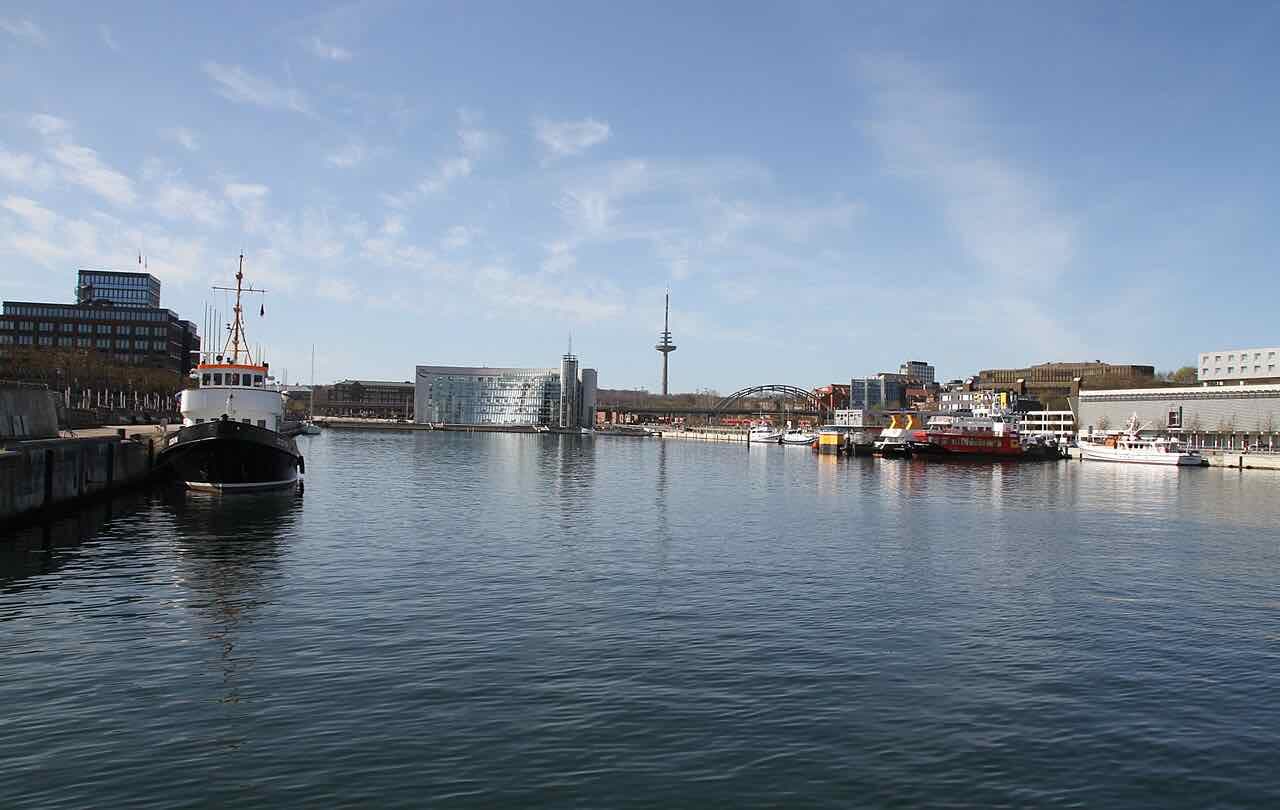
Kiel is the capital of Schleswig-Holstein and sits at the end of a fjord on the Baltic coast. About 252,000 people live here. The city has been a naval port, a shipyard town and a university town since 1665, and today you notice the water everywhere: ferries that take students to work, a promenade along the fjord, beaches inside the city limits, and the Kiel Week sailing festival every June. Kiel University is the only full university in the state, and it sits next to a university of applied sciences and an art university, so the student population is large for a city of this size. Rooms in the Studierendenwerk halls start around 200 euros. Hamburg is an hourly train away for big-city weekends, and overnight ferries leave from the Kiel harbour to Gothenburg and Oslo.
- Students
- about 24,500 at Kiel University, about 7,400 at HAW Kiel, about 660 study places at Muthesius
- Semester contribution (Kiel University, winter 2026/27)
- 403 EUR, including 226.80 EUR for the Deutschland-Semesterticket
- Dorm rooms (Studierendenwerk SH)
- 1,964 places in ten halls, rent 201 to 489 EUR a month
- Blocked account for a student visa
- 11,904 EUR per year (992 EUR a month)
- Nearest big airport
- Hamburg, about 90 km, with a KIELIUS bus to Kiel central station
- Kiel Week
- 19 to 27 June 2027
Part 1
Living in Kiel
A port city that kept its university
Kiel was founded around 1233 and joined the Hanseatic League in 1284, was thrown out in 1518 for sheltering pirates, and became Prussian in 1867. The city grew into a naval base and shipbuilding centre, and in November 1918 a sailors' mutiny here started the revolution that ended the German Empire. Much of the old centre was lost in the Second World War, so do not expect a medieval town. The oldest building is St. Nikolai, a church from the 13th century, and the town hall tower from 1911 still has a working paternoster lift.
What you get instead is a city built around the water. The fjord reaches into the centre at the Hörn, and the Kiellinie promenade follows its western shore. Kiel was one of the founding cities of the European Green Capital Award in 2006. It is the state capital, so the parliament and ministries are here, and it is the main city for everything in Schleswig-Holstein that is not Lübeck or Flensburg.
Be honest with yourself about the weather. Winters are grey, wet and windy, with the sea keeping temperatures around 2 degrees on average, and summer is mild at about 17. People who like long cold nights and a quiet city in January will be fine. People who need sun will find it in June.
What to see and do
Most of this is free or costs a few euros, and almost all of it is reachable by bus, ferry or bike from the university.
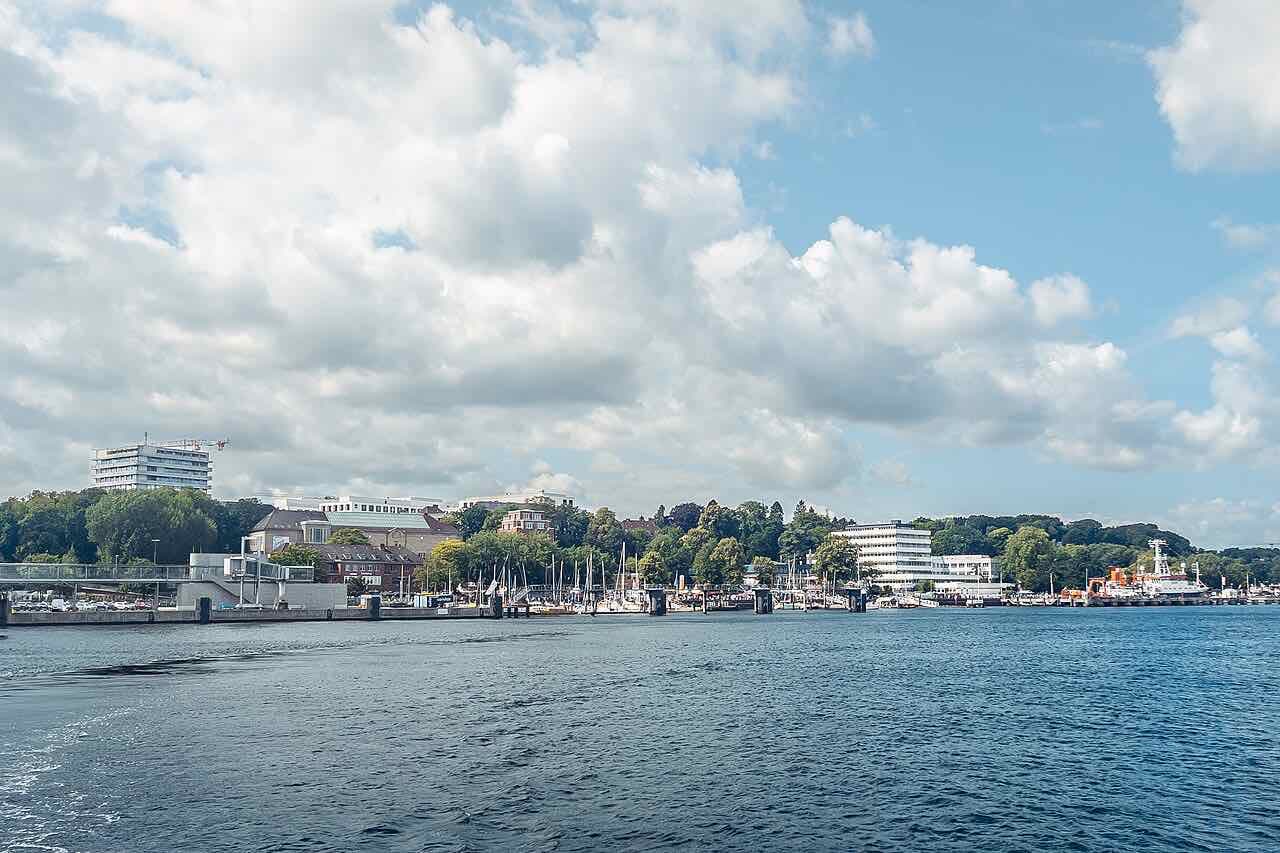
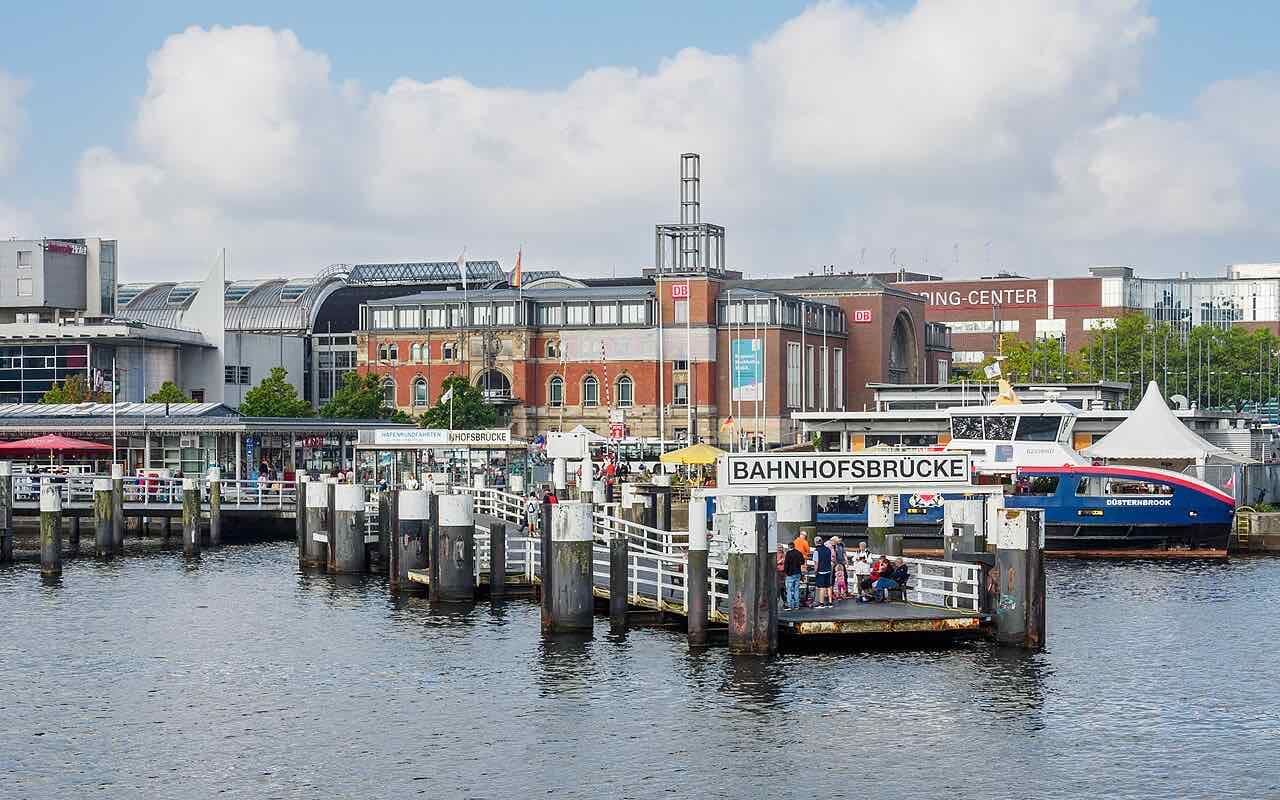
Kiel's Fördeschifffahrt boats run on the fjord, and the Deutschland-Semesterticket is valid on them without a surcharge. The Bahnhofsbrücke pier is next to the central station.
A 67 m panoramic view over the harbour and fjord. The city's tourism site lists it as one of the main sights.
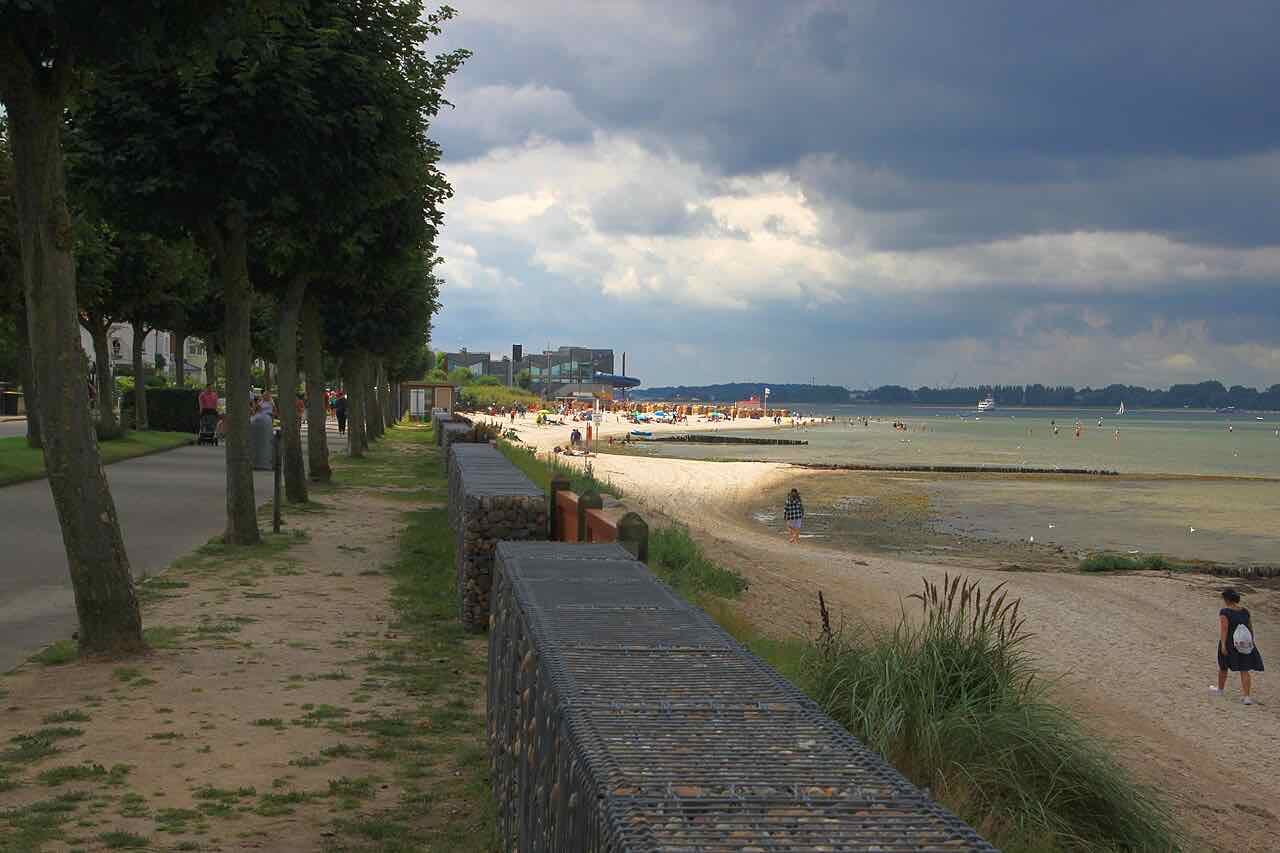
The promenade runs along the fjord, and the same tourism page lists bathing spots and fjord areas such as Holtenau, Pries-Friedrichsort, Mönkeberg and Heikendorf. Schilksee, at the northern end of the city, is on open water.
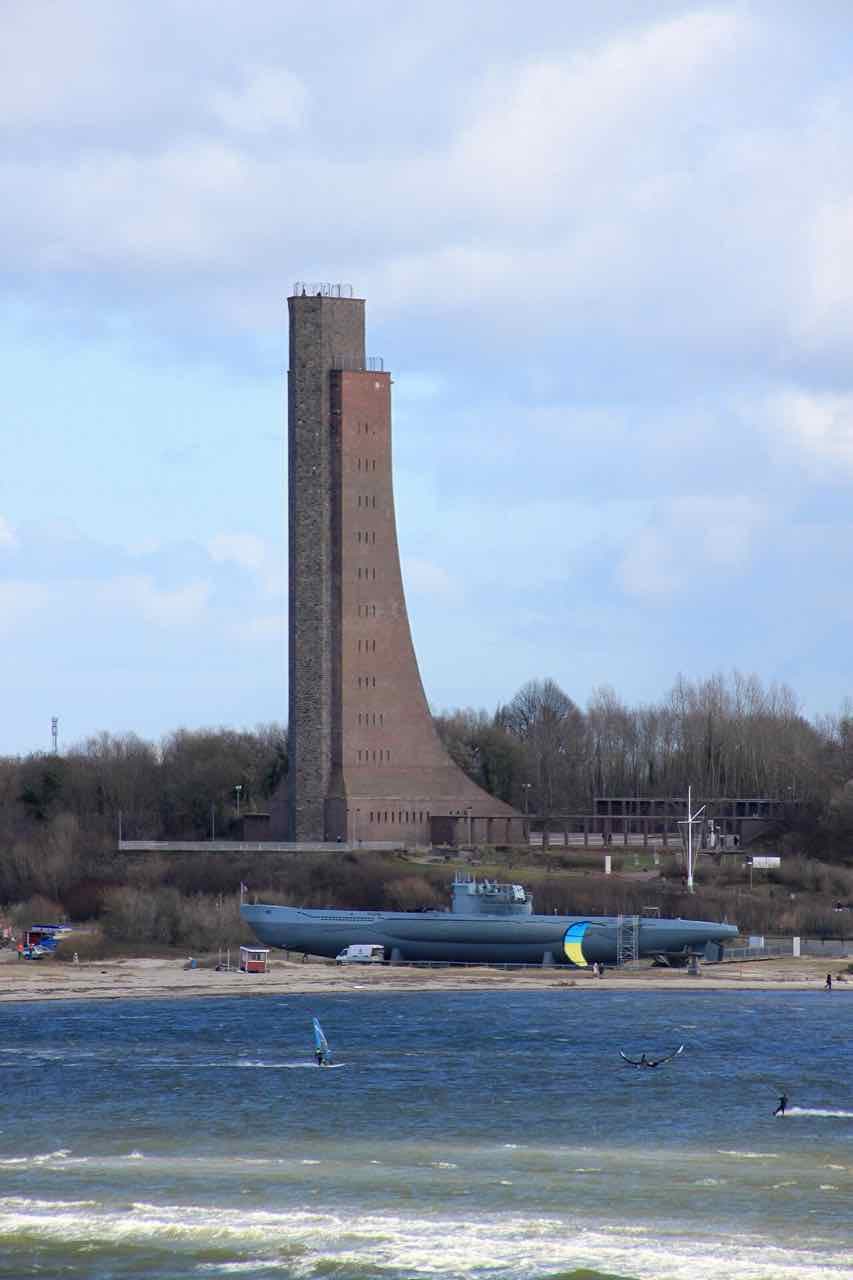
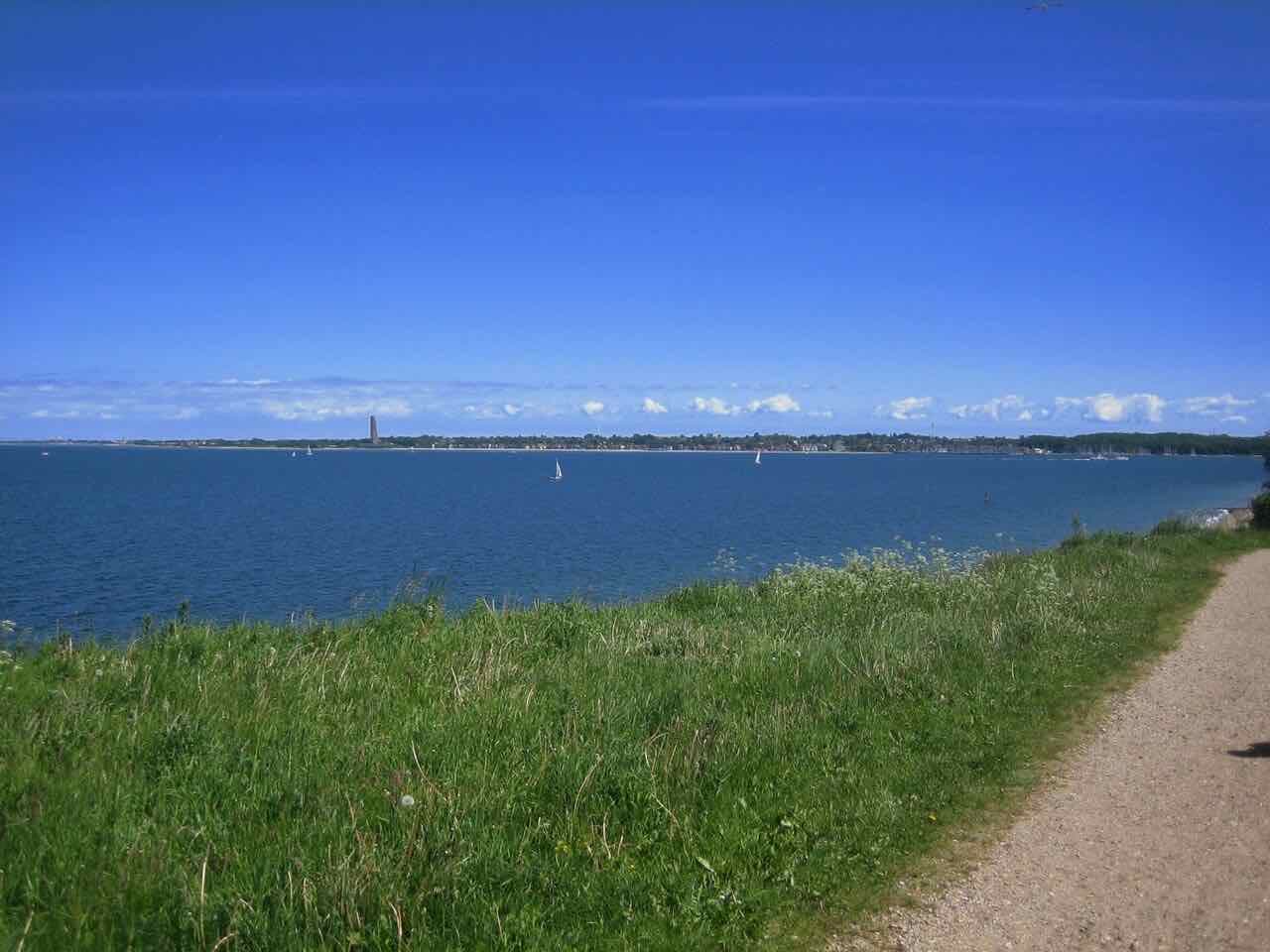
A 72 m brick tower on the eastern shore of the fjord, with an observation deck at 85 m and the submarine U-995 next to it. Begun in 1927, completed in 1936, and since 1954 dedicated to sailors of all nationalities lost at sea.
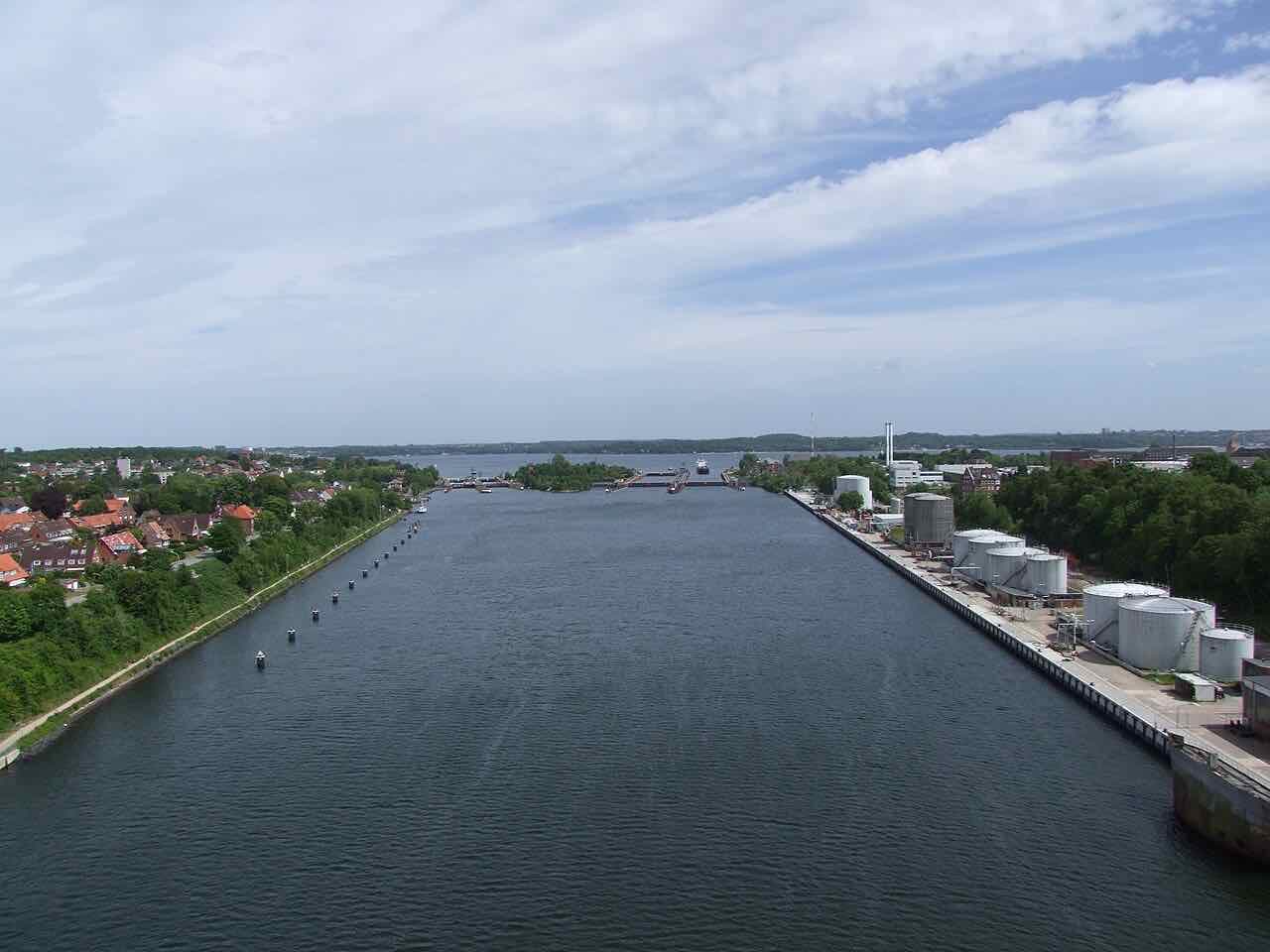
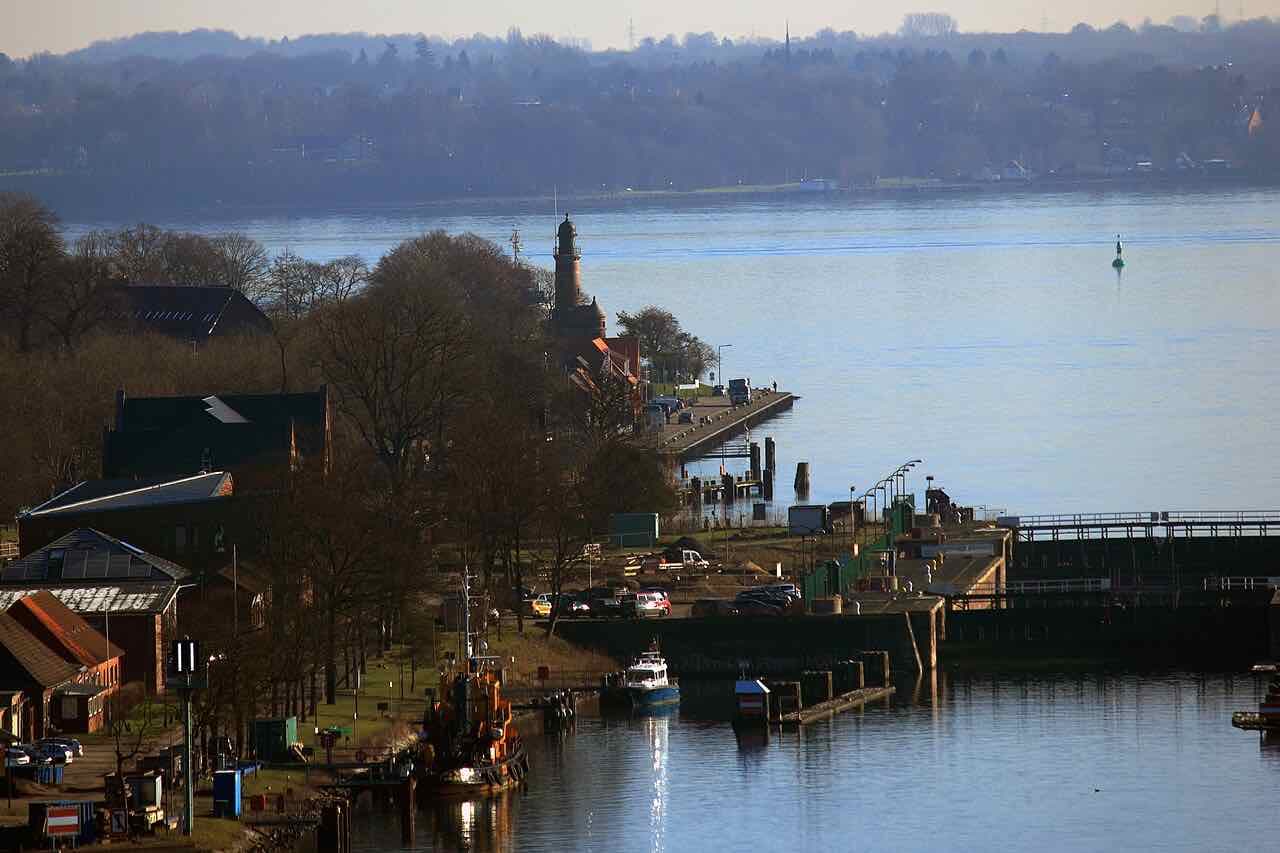
The canal opened on 20 June 1895 and runs about 98 km to the Elbe. Around 32,000 ships use it a year. Its eastern end is at Holtenau in the north of the city, where you can see ships passing close to the bank.
The tourism page counts more than 30 museums, including the Maritime Museum and the SEALEVEL experience centre.
Closed for renovation until the end of 2029, with exhibitions at other venues in the meantime.
Kiel has two botanical gardens and the Schrevenpark in the middle of town.
Canal, fjord and ferry
Kiel Week and the sailing habit
Kiel Week (Kieler Woche) is the city's big summer festival and is described as the largest sailing event in the world. The first one was in 1882, it takes place in the last full week of June, and the next one runs from 19 to 27 June 2027. The programme is regattas on the fjord, a parade of traditional sailing ships and stages on land. Olympic sailing was held in the Bay of Kiel in 1936 and 1972.
You do not need a boat to take part. The university sports office runs a sailing centre, a rowing and canoeing centre and a diving centre, so a student can learn to sail on the same fjord that hosts the regattas. Others windsurf, kite or paddle on the water, and the city rents out bikes through the SprottenFlotte scheme. Winter has its own light show: the tourism site lists a sea of lights from 1 November 2026 and an ice festival from 18 November 2026 to 17 January 2027.
Spectator sport is local too. THW Kiel is the record champion of German handball, and Holstein Kiel plays in the 2. Bundesliga at the Holstein-Stadion, which is being rebuilt. Both sell tickets in online shops.
Getting around, and getting out
Your Deutschland-Semesterticket is part of the semester contribution and covers local and regional transport (bus, train, tram, S-Bahn) in second class across Germany, any hour and as often as you like. In Kiel it also covers the fjord ferries, and in Hamburg the harbour ferries that run on the hvv tariff. Long-distance buses such as KIELIUS and Flixbus are excluded.
Hamburg Airport is about 90 km away, and there are hourly trains from Kiel central station to Hamburg. Most students from outside Europe fly into Hamburg and take a train or the KIELIUS bus. From the Kiel harbour, ships leave daily for Gothenburg (about 13.5 hours with Stena Line) and Oslo (about 19.5 hours with Color Line), and several times a week for Klaipėda in Lithuania. A night on the water to Norway or Sweden is a real weekend option from here.
A bicycle is worth having for getting along the fjord.
Out on the water
Where the work is
Kiel's employers are marine science, shipbuilding, health and public administration. None of this is a promise of a job, but it shows where an internship or a student job can come from.
GEOMAR Helmholtz Centre for Ocean Research ↗
Research on ocean circulation and climate, marine chemistry, marine ecology and the sea floor. Its site lists internships, apprenticeships and a Welcome to Germany page for newcomers.
Kiel Institute for the World Economy ↗
A research institute on global economics at Kiellinie 66 in Kiel, with a second office in Berlin. Relevant if you study economics or social sciences.
The state government and parliament ↗
Kiel is the state capital, so ministries and the Landtag are based here. The state's administration college trains its civil servants in nearby Altenholz.
Part 2
Student life in Kiel
Where you can study
Christian-Albrechts-Universität zu Kiel (CAU) ↗
Founded in 1665 and the only comprehensive university in Schleswig-Holstein. About 24,500 students, eight faculties (theology, law, medicine, arts and humanities, agriculture and nutrition, mathematics and natural sciences, business, economics and social sciences, and engineering) and about 190 degree programmes. About 2,572 international students are enrolled. It lists 25 international degree programmes, among them English-language Master's in Economics, Quantitative Finance, Mathematical Finance, Biological Oceanography, Climate Physics, Marine Geosciences, Molecular Biology and Evolution, Materials Science and Engineering, Environmental Management and Medical Life Sciences, and two joint degrees (Electric Vehicle Propulsion and Control, and Applied Ecology).
International office ↗Hochschule für Angewandte Wissenschaften Kiel (HAW Kiel, formerly Fachhochschule Kiel) ↗
The largest university of applied sciences in the state, with about 7,400 students. The main campus is at Sokratesplatz 1 in Dietrichsdorf, at the mouth of the Schwentine river. Seven faculties: agriculture, health, computer science and electrical engineering, mechanical engineering, media, social work and early childhood education, and business management. It offers Bachelor's, Master's and dual-study programmes. Ask the international office which programmes are taught in English before you apply.
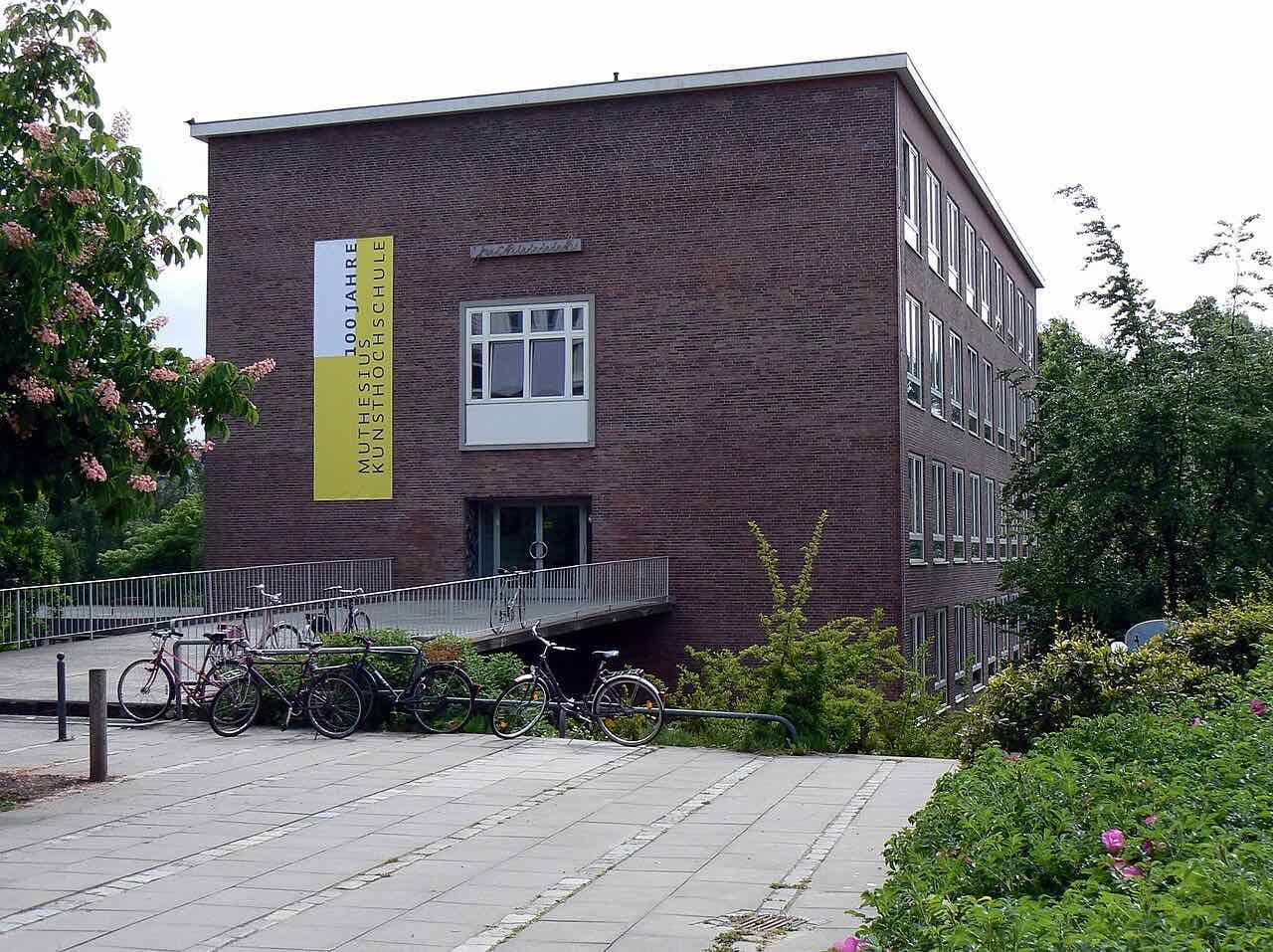
International office ↗The only art university in Schleswig-Holstein, founded in 1907, with about 660 study places. It teaches free art and art teacher training, spatial strategies (scenography and interior design), communication design (photography, illustration, interactive media, typography) and industrial design (with Master's in interface design and medical design). Classes are small, with at most 20 students per semester. About 14 percent of students are international, from more than 30 countries. The campus is in the Damperhof district around Legienstraße and Knooper Weg.
International office ↗Duale Hochschule Schleswig-Holstein (DHSH) ↗
A dual university with sites in Kiel, Flensburg and Lübeck. The Kiel campus is at Hans-Detlev-Prien-Straße 10. Its Bachelor's programmes are business administration, business informatics, software engineering and social work, combined with paid work at a partner employer, plus a part-time Master's. The site is in German with an English version.
Fachhochschule für Verwaltung und Dienstleistung (FHVD) ↗
The state's college for public administration, in Altenholz next to Kiel at Rehmkamp 10. It trains for general administration, the police, pension insurance and tax administration. It is aimed at people entering the state's civil service, not at general admissions from abroad.
Student unions, services and groups
The student union. Free advice on studies, BAföG, social and legal questions, a counselling service for international students, queer counselling and a free Kulturticket for theatre. The office is in Mensa 1 at Westring 385, and the public AStA meeting is on Thursdays at 18:00. Its international department answers questions from international students, mediates problems with the dorms and organises country evenings and excursions.
AStA international department (CAU) ↗
A student-run contact point for international students. It represents them on committees, including the one that decides on loans for students in financial trouble. Write to international@asta.uni-kiel.de.
Studierendenwerk Schleswig-Holstein ↗
Dorms, canteens, BAföG, psychological counselling, advice for international students, a culture office and daycare. The Kiel office is at Westring 385, phone +49 431 8816-0.
Hochschulsport Kiel University ↗
The university sports office runs the Segelzentrum for sailing, a rowing and canoeing centre and a diving centre, plus dance and fitness courses. Contact the sailing centre at info@segeln.uni-kiel.de.
Segelzentrum Kiel University ↗
The sailing centre of the university sports office. Ask here before the season how to join a course.
The Erasmus Student Network section for international students. It runs a buddy programme that pairs newcomers with local contacts, and events.
ESG Kiel (Protestant student community) ↗
Open to all students whatever their faith. The ESG WeltWeit meetup for international and German students is on Mondays from 18:00 to 20:00 at Westring 385/387a, with conversation in German and English. Register first by email to the student pastor. The ESG also helps with a hardship application to refund the semester ticket.
The student union of the university of applied sciences, at Heikendorfer Weg 93a. It runs advice, the semester-ticket refund, events and the sports programme for HAW students. Its meetings are open to all students.
AStA of Muthesius Kunsthochschule ↗
The student body of the art university, together with the Fachschaft and student parliament.
Forum for Migrants of the city of Kiel ↗
The city's participation body for residents with a migration background, founded in its present form in 2002. Meetings are usually on the first Tuesday of the month at 17:00 in the town hall, are public, and are in German. Its member list includes Ghana Union Kiel, Sisters - Frauen für Afrika and the Jewish community.
Campus life and study culture
Kiel University has a main campus around Leibnizstraße and Olshausenstraße, with the university library and the Mensa at Westring. Most of the student services (AStA, Studierendenwerk, the ESG and the sailing centre) are within a few hundred metres of each other, which makes arriving easier than in a spread-out city. Check where your own faculty's building is before you rent a room.
The HAW campus is at Sokratesplatz in Dietrichsdorf, on the other side of the fjord, reached by bus or ferry. Its Bunker-D culture centre has had a café, cinema and gallery since 2014, and student groups there include a campus radio and several engineering teams. The art university is in a small, central campus where the studio is the main place to work.
The mix is practical: a lot of marine science, engineering, agriculture, economics and law, and a lot of students who come for one semester through Erasmus and stay for two. CAU lists more than 600 students from abroad arriving each year, in addition to those who apply for a full degree.
What you pay each semester and each month
- Studierendenwerk contribution (counselling, canteens, dorms)
- 89.00 EUR per semestersource
- Deutschland-Semesterticket
- 226.80 EUR per semester, valid on local and regional transport across Germanysource
- University administrative cost contribution
- 60.00 EUR per semestersource
- Total semester contribution
- 403 EUR, to be paid in full for re-registration to be validsource
- Cheapest dorm rooms
- from 201 EUR a month (Dr Oetker House, Professor Anschütz House)source
- Most expensive dorm range
- up to 489 EUR a month (Edo-Osterloh House)source
- Blocked account for the visa
- 11,904 EUR a year, 992 EUR a monthsource
- Minijob income without tax
- up to 556 EUR a monthsource
Figures for Kiel University in the 2026/27 winter semester and the Studierendenwerk halls. Food and private rent are not included.
Housing: dorms first
The Studierendenwerk runs ten halls of residence in Kiel with 1,964 places. Apply online through ipack.studentenwerk.sh as soon as you have a place to study, and write to wohnen@studentenwerk.sh with questions.
The largest hall with 535 places, rent 224 to 489 EUR. A tutor for international students is listed for it.
301 places, rent 240 to 350 EUR, with an international-student tutor.
239 places, rent 258 to 377 EUR, with an international-student tutor.
206 places, rent 201 to 451 EUR.
Student halls of Kiel University: international office housing form ↗
The International Center takes room offers from private landlords, especially furnished rooms for one or two semesters, and publishes them to international students.
Food, sport and evenings
The Studierendenwerk runs canteens and cafeterias at the university sites in Kiel, with a Campus Card for payment, and publishes the menu and a CO2 score for each meal. There has been building work on the Mensa II site and some closures and reduced seating in recent months, so check the website for the canteen nearest your lecture hall.
Sport is easy to find. Kiel University's Hochschulsport covers sailing, rowing, canoeing and diving, and HAW students have their own sports programme through the AStA, booked through an external platform. Many students also join a club for handball or football, and watching THW Kiel or Holstein Kiel is a regular weekend plan.
Evenings are mostly café, cinema, house parties and the city's cultural offers. The AStA gives Kiel University students a free Kulturticket for theatre. In June the whole city is on the Kiellinie for Kiel Week, and in winter the light festival and ice festival give you something to do in the dark months.
Your first weeks
- 1
Before you fly
Apply for a room at the Studierendenwerk online. Open the blocked account (11,904 EUR a year for the visa) and have your health insurance proof ready. Ask your university's international office what to bring on day one.
- 2
First week
Register your address at the Kiel Einwohnermeldeamt. It works by appointment only, booked through the online portal at kiel.de. New slots appear every morning from 7:30, up to four weeks ahead. Call 115 or write to ema@kiel.de if you cannot find a slot.
- 3
First two weeks
Enrol at your university and pick up your student card. Your semester contribution already includes the Deutschland-Semesterticket, so you do not need to buy a separate transport pass.
- 4
Within the first month
Book an appointment at the Ausländerbehörde (Immigration Office) through the same kiel.de portal, listed there as Zuwanderung. Bring your passport, visa, enrolment certificate and proof of funds and insurance. Registration first, then the residence permit.
- 5
In the first semester
Open a German bank account if you have not, join one student group (AStA events, ESG WeltWeit, ESN buddy programme), and look at the Hochschulsport programme.
Working while you study
Students from outside the EU may work 140 full days or 280 half days a year. Working more needs permission from the Agentur für Arbeit and the Ausländerbehörde. A minijob that earns up to 556 EUR a month is tax-free. Student assistant jobs at the university or at GEOMAR are an exception to the day limit, though you still have to tell the foreigners' office.
The International Center of Kiel University has a programme called Fit 4 your Future in Germany for international graduates preparing for the German job market. The HAW also runs an Edu+Career project for its international students.
Where you come from matters here
Pick your home country: food, faith, community groups and the consulate that serves you, checked 21 October 2026.
🇮🇳 Living in Kiel as an Indian student
Kiel is a long way from the big Indian communities in Frankfurt and Munich, and the associations here are small. The city's list of foreign societies includes a Punjabi cultural society in Kiel and a German-Indian society in Postfeld, near Kiel. The city's interfaith map of places of worship lists no Hindu or Sikh site, so for a temple or gurdwara you will probably go to Hamburg.
Indische Panjabi Kulturgesellschaft e. V. ↗
A Punjabi cultural society at Wiker Straße 48, 24106 Kiel, listed by the city of Kiel among its foreign societies. Contact them to ask what they organise.
Consulate General of India, Hamburg ↗
Kohlhöfen 21, 20355 Hamburg. Passport, OCI and attestation by appointment, visa queries by email to the consulate.
🇳🇬 Living in Kiel as a Nigerian student
Kiel has a registered Nigerian association, and the African-German groups run by the city's migrant forum are open to many backgrounds. The Nigerian Embassy is in Berlin.
Nigerian Community Kiel e. V. ↗
A Nigerian association at Kreisauer Ring 94, 24145 Kiel, listed by the city of Kiel among its foreign societies.
Sisters - Frauen für Afrika e. V. ↗
An association of African and German women with about 30 members and contacts in 15 African countries. Open group meetings on the third Friday of each month from 4 p.m. at the Vinetazentrum in Gaarden, with childcare. It also takes part in Kiel Week and the Afrikatage in Kiel.
Neue Jakobstrasse 4, 10179 Berlin. Passport matters go to the embassy, and visa applications go through the authorised visa centre at Zimmerstrasse 68, 10117 Berlin.
🇧🇩 Living in Kiel as a Bangladeshi student
The city's list of foreign societies has no Bangladeshi association. Kiel's mosques are the places to start, and the Bangladeshi embassy is in Berlin.
Islamisches Zentrum As-Salam Kiel ↗
A mosque at Diedrichstraße 2, 24143 Kiel. Its site lists the daily prayer times.
Islamischer Verein Kiel e. V. ↗
A mosque at Schwedendamm 9, 24143 Kiel with a women's section and Friday sermons.
🇵🇰 Living in Kiel as a Pakistani student
Kiel has about ten mosques, and a German-Pakistani society. Pakistani students come from different traditions, so the mosques below are named by their own pages and not by nationality.
Deutsch-Pakistanische Gesellschaft e. V. ↗
A German-Pakistani society at Augustenstraße 39, 24143 Kiel, listed by the city among its foreign societies. A separate Deutsch-Pakistanisches Forum is listed next to it.
Islamischer Verein Kiel e. V. (Ibnu-Taymiyya mosque) ↗
Schwedendamm 9, 24143 Kiel. Its site has Friday sermons, classes, a women's section and information for non-Muslims. It does not state the Friday prayer time, so ask via the contact form.
Islamisches Zentrum As-Salam Kiel ↗
A mosque community at Diedrichstraße 2, 24143 Kiel, with Friday prayer at 13:30 listed on its site, weekly Quran lessons on Wednesdays and an Arabic school.
🇬🇭 Living in Kiel as a Ghanaian student
Ghanaians in Kiel have an association that has been running for years, with a general meeting, a welfare committee and a cultural group, and it joins in Kiel Week and the city's WeltFest.
Ghana Union Kiel Schleswig-Holstein e. V. (GUKSH) ↗
The association's site shows committees for welfare, food and communications and a cultural troop, with photo galleries from World Fest, Kiel Week activities and a children's programme. Contact address: Gerhardstraße 3, 24105 Kiel. Check with them for current meeting dates.
Deutsch-Ghanaischer Entwicklungshilfeverein e. V. ↗
A development-aid association in Böklund, listed by the city of Kiel among its foreign societies.
🇨🇲 Living in Kiel as a Cameroonian student
Kiel has a Cameroonian students' association, so you do not arrive without a first contact. It is a small group, and has only a postal address and an email on the city list.
Kamerunischer Studentenverein e. V. ↗
The Cameroonian students' association in Kiel, with a postal address (Postfach 2704, 24026 Kiel) and the email ksv.kiel@yahoo.de on the city's list of foreign societies.
Sisters - Frauen für Afrika e. V. ↗
A Kiel association of African and German women that meets in the Vinetazentrum in Gaarden on the third Friday of the month and runs events across the year.
🇺🇸 Living in Kiel as an American student
Kiel has an American society with its own house, and an English-speaking student meetup. For consular matters the city's list points to the US embassy in Berlin.
Amerika-Gesellschaft Schleswig-Holstein e. V. ↗
Founded in 1964, with its office in the Kennedy-Haus at Walkerdamm 18 in Kiel. It runs talks, English conversation groups, language courses and EducationUSA advising.
A Monday meetup for international and German students at Westring 385/387a. Conversation is in German and English.
US Embassy, consular section Berlin ↗
The city of Kiel lists the consular section in Berlin, Clayallee 170, as the office for Schleswig-Holstein.
🇨🇳 Living in Kiel as a Chinese student
Kiel University has a China Centre, which means a student from China arrives in a city that already teaches about China. The Chinese Consulate General in Hamburg covers Schleswig-Holstein, and a German-Chinese society has its seat near Kiel.
Consulate General of the People's Republic of China, Hamburg ↗
Elbchaussee 268, 22605 Hamburg. The consular district covers Hamburg, Bremen, Lower Saxony and Schleswig-Holstein.
China Centre, Kiel University ↗
Research, language courses and intercultural seminars on China, led by Prof. Angelika Messner, at Leibnizstraße 10, 24118 Kiel. Part of the ChiKoN network of China expertise in northern Germany.
Deutsch-Chinesische Gesellschaft Schleswig-Holstein e. V. ↗
A German-Chinese society with its address in Eckernförde, listed by the city of Kiel.
English-taught programmes in Kiel
Soonest open deadline first. Every entry links to its official source.
- Computer ScienceKiel University of Applied Sciences · KielmasterNo tuition15 Jan 2027Open
- Battery TechnologiesKiel University of Applied Sciences · KielmasterNo tuition15 Jan 2027Open
- Dairy ScienceKiel University · KielmasterNo tuition31 Mar 2027Open
- Master of Science in Sustainability, Society and the EnvironmentKiel University · KielmasterNo tuition31 Mar 2027Open
- Master of Science in Climate Physics: Meteorology and Physical OceanographyKiel University · KielmasterNo tuition15 Apr 2027Open
- Master of Science in Marine GeosciencesKiel University · KielmasterNo tuition15 Apr 2027Open
- Master of Science in Mathematical FinanceKiel University · KielmasterNo tuition31 May 2027Open
- Master of Science in Molecular Biology & Evolution (MAMBE)Kiel University · KielmasterNo tuition15 Jun 2027Open
- Master of Science in Computer ScienceKiel University · KielmasterNo tuition15 Jun 2027Open
- Data ScienceKiel University of Applied Sciences · KielmasterNo tuition15 Jul 2027Open
- Medical Life SciencesKiel University · KielmasterNo tuitionSee sourceCheck source
- Master of Science in EconomicsKiel University · KielmasterNo tuitionSee sourceCheck source
- Master of Science in Electrical and Information EngineeringKiel University · KielmasterNo tuitionSee sourceCheck source
- Electric Vehicle Propulsion and Control (E-PiCo)Kiel University · KielmasterSee sourceCheck source
- Master of Laws in International LawKiel University · KielmasterNo tuitionSee sourceCheck source
- Master of Science in Biological OceanographyKiel University · KielmasterNo tuitionSee sourceCheck source
- Master of Science in Environmental and Resource EconomicsKiel University · KielmasterNo tuitionSee sourceCheck source
- Master of Science in Quantitative EconomicsKiel University · KielmasterNo tuitionSee sourceCheck source
- Master of Science in Quantitative FinanceKiel University · KielmasterNo tuitionSee sourceCheck source
- Industrial EngineeringKiel University of Applied Sciences · Kielmaster15 Sept 2026Deadline passed
Is Kiel right for you? Ask us. Free.
Tell us your passport, grades and budget. We compare Kiel with the other places you could study, then apply for you. You never pay us.
Get my free plan