Studying in Saxony, Germany
Leipzig
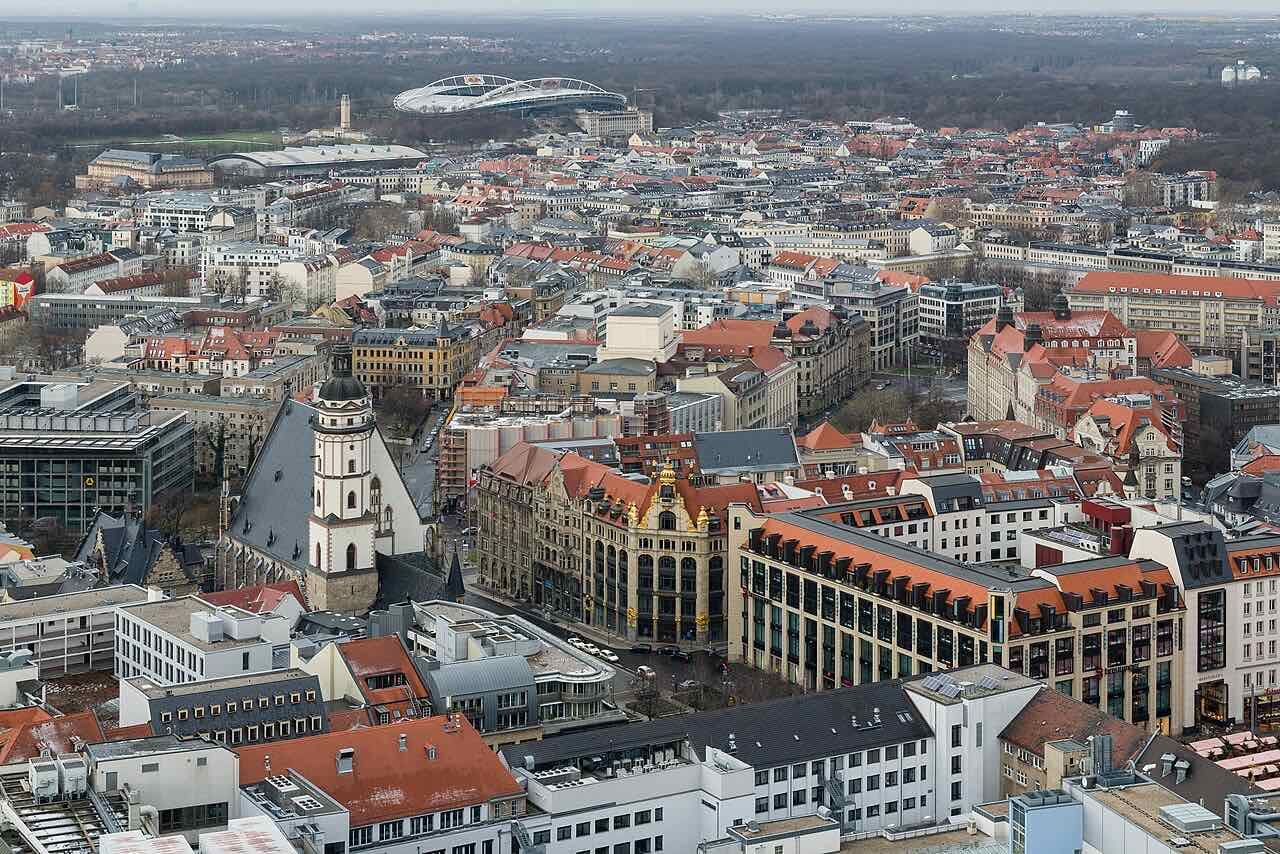
A trade, music and university city in eastern Germany, with lakes on its southern edge and a large arts and student scene.
Leipzig is the biggest city in Saxony, with about 633,000 people, and one of the oldest university towns in Germany: the university opened in 1409. It is also the city where Johann Sebastian Bach spent his last 27 years, where the Monday prayers of 1989 grew into a mass protest against the East German state, and where a former cotton mill now holds more than 100 artists' studios. For a student the practical picture is this. Around 8,000 new students start in Leipzig every winter semester. The city has a large university, a university of applied sciences, a business school and two art and music schools. A single room in a Studentenwerk hall costs 215 to 325 EUR, and the lakes of the Neuseenland, where you can swim in summer, begin just south of the city. It is a place to study among people from many countries: about one in eight students is from abroad, and the Vietnamese community alone numbers over 4,000.
- Area
- 297.8 km2
- Residents with a migration background
- 131,638 at the end of 2024, 20.8 percent of the population
- Students from abroad
- 5,104 at Leipzig's universities in winter 2022/23, 12.6 percent of all students; China 336, India 222, Vietnam 177
- New students each autumn
- about 8,000 start at a Leipzig university or art school every winter semester
- Distance to Berlin
- about 150 km to the north-east
- Dorm rent (Studentenwerk Leipzig)
- single rooms in shared flats mostly 215 to 325 EUR a month, apartments 295 to 435 EUR, all utilities and internet included (as of 1 Oct 2026)
- Blocked account for a student visa
- 11,904 EUR per year (992 EUR a month)
- Lakes south of the city
- more than 20 lakes with about 70 km2 of water
Part 1
Living in Leipzig
A city of fairs, choirs and protests
Leipzig has been a trading city for centuries. Its trade fair dates back to 1190 and is described as the oldest surviving trade fair in the world, and the university, founded in 1409, is one of the oldest in Europe.
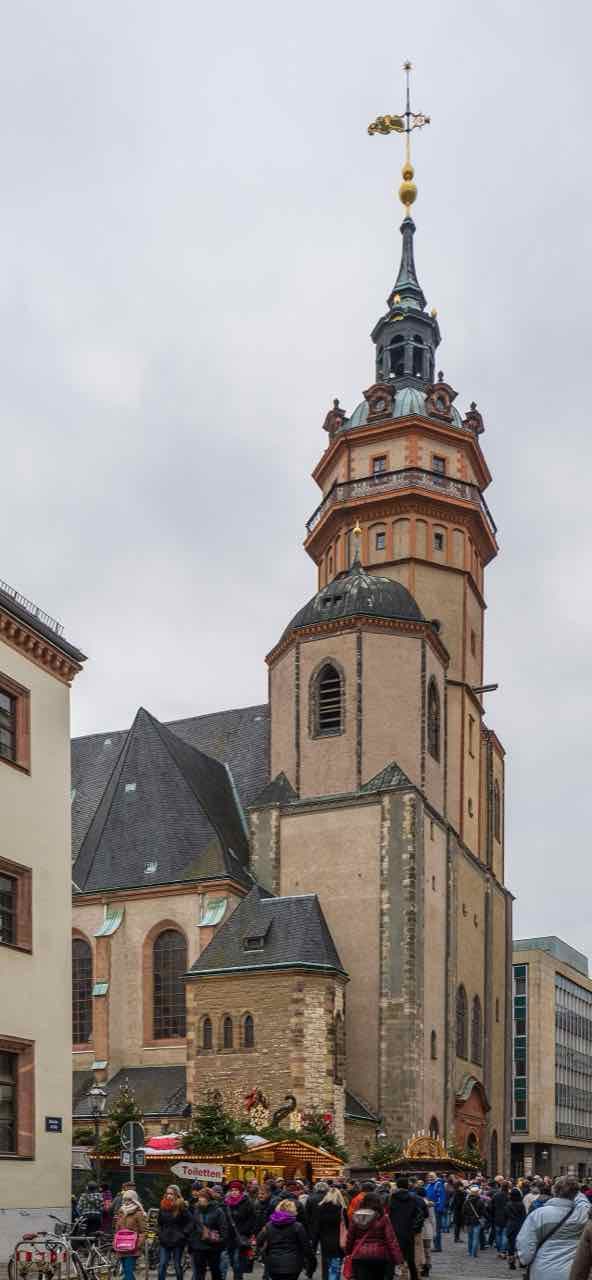
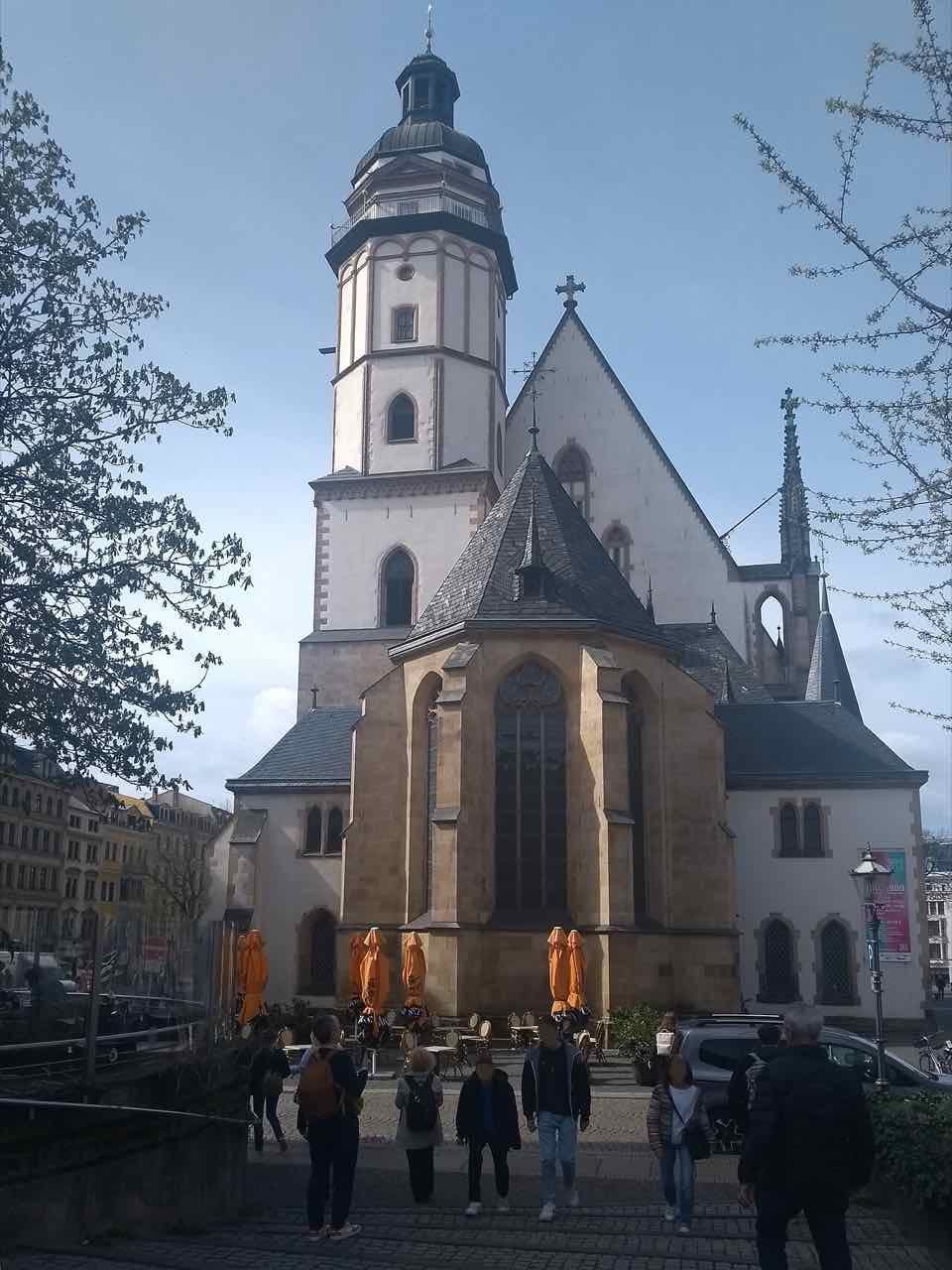
In the 20th century the city was part of East Germany. On Monday evenings in the autumn of 1989 people gathered for prayers at the Nikolaikirche, and the demonstrations that followed became one of the starting points of the Peaceful Revolution. You can still visit the church today, and its parish page lists opening hours (Monday to Friday 11:00 to 18:00, Saturday 11:00 to 16:00, Sunday 11:30 to 14:30, closed during services and events).
Leipzig's population keeps growing, in recent years mostly through people arriving from other countries. The city's own statistics show that one in five residents has a migration background, and the biggest groups come from Syria, Ukraine, Russia, Poland, Romania and Vietnam. Its fashionable scene earned it the nickname "Hypezig", but affordable rooms are no longer easy to find. Plan for that early (see the finding-a-room section below).
Music city
Music is not a slogan here. Several of the places below are working institutions that students can visit on an ordinary week.
Thomaskirche and the Thomanerchor ↗
Bach lived and worked in Leipzig from 1723 to 1750, and his grave has been in the chancel of the Thomaskirche since 1950. The Thomanerchor, the boys' choir of the church, was founded in 1212. For the motet it announced for Friday 23 October 2026 (18:00), the programme cost 3 EUR, free with the Leipzig-Pass, sold at the church entrances from 45 minutes before the start, with free seating and no reservations.
At Thomaskirchhof 15/16 opposite the church. The Bachfest takes place every June and has a tradition going back to 1904.
Founded in 1743. It plays in the Gewandhaus, in the Opera and in the Thomaskirche, and the Gewandhaus has a Mendelssohn Hall and a Mendelssohn Foyer. Prices are listed per event, with reductions for eligible people.
The music and drama university, founded by Mendelssohn in 1843, with degrees in music, drama, dramaturgy, theory and pedagogy.
Art, parks and things to do
Most of this is free or costs a few euros and is reached by tram, S-Bahn or bike from the university buildings.
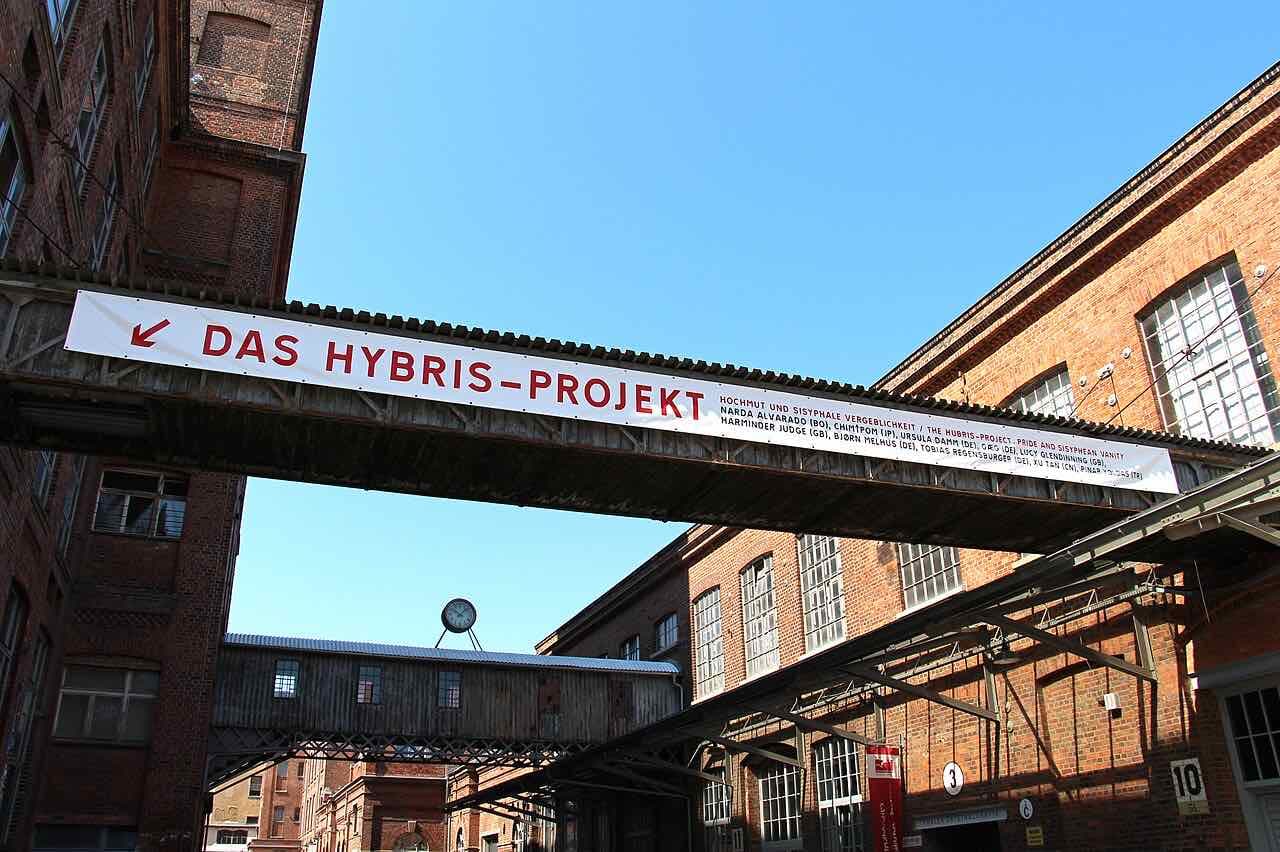
A former cotton mill that became the largest in continental Europe, now with over 100 artists' studios, 14 galleries, workshops, a cinema and a theatre venue. Spinnereistraße 7, open Tuesday to Saturday from 11:00 to 18:00 (general hours). The city's art academy, the HGB, was founded in 1764.
At Pfaffendorfer Straße 29, open 365 days a year, with Gondwanaland, a themed world of three continents under one roof. Look up the current ticket price before you go.
The Monument to the Battle of the Nations, 91 m tall and finished in 1913, described as the tallest monument in Europe.
Clara-Zetkin-Park and the Auwald ↗
The Clara-Zetkin-Park and the Johannapark are the big parks near the city centre, and the floodplain forest (Auwald) covers about 2,500 hectares.
Leipzig Book Fair and Wave-Gotik-Treffen ↗
The book fair is the second-largest in Germany after Frankfurt, and the Wave-Gotik-Treffen, held at Pentecost, is described as the largest gothic festival in the world.
The tourism board sells a Leipzig Card and a Regio Card with public transport and discounts at sights and restaurants.
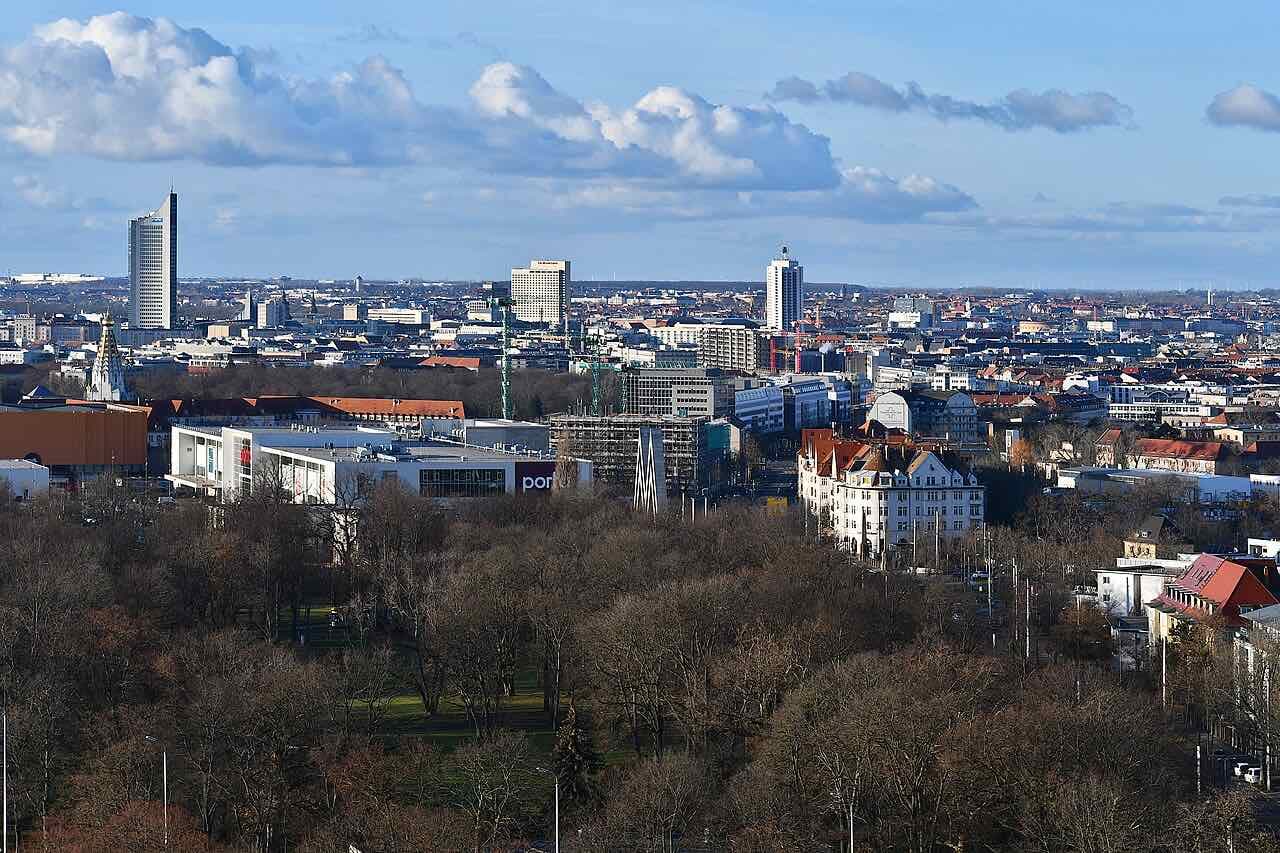
Park, art and old town
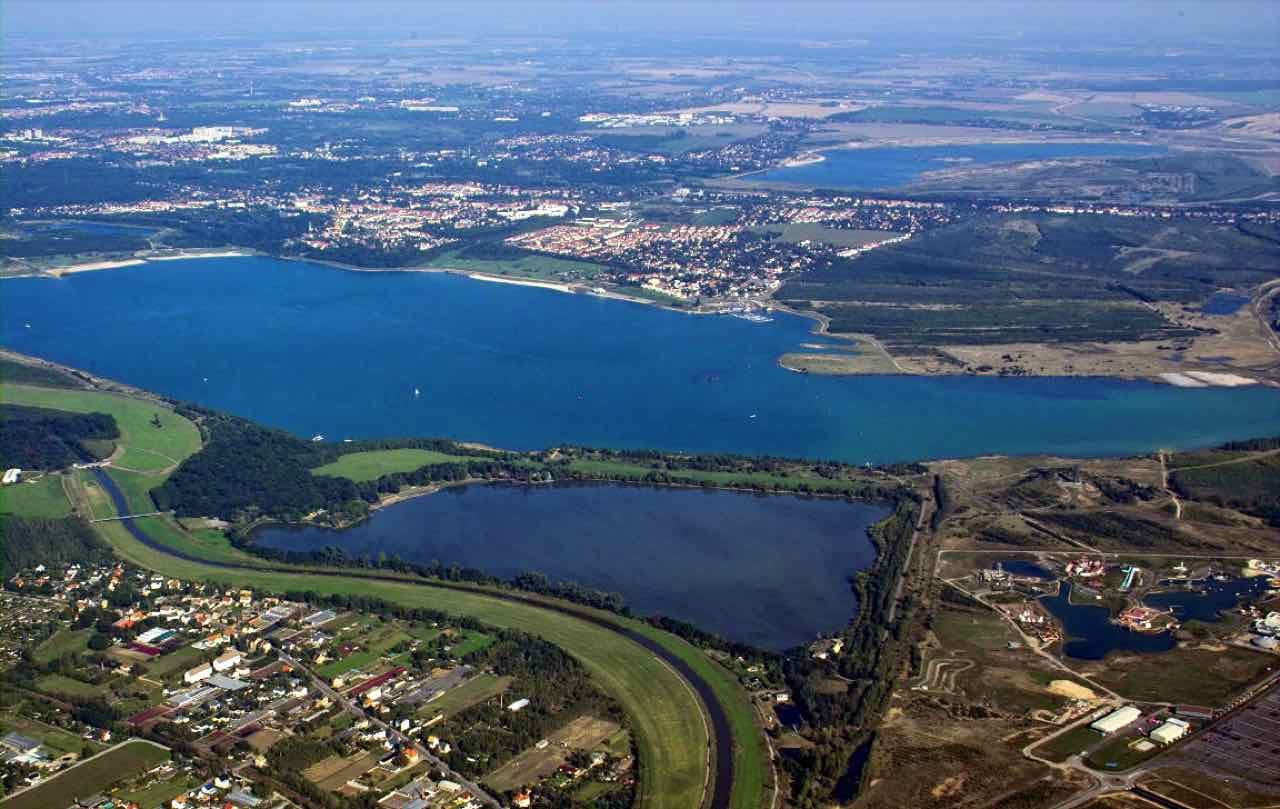
The lakes south of the city
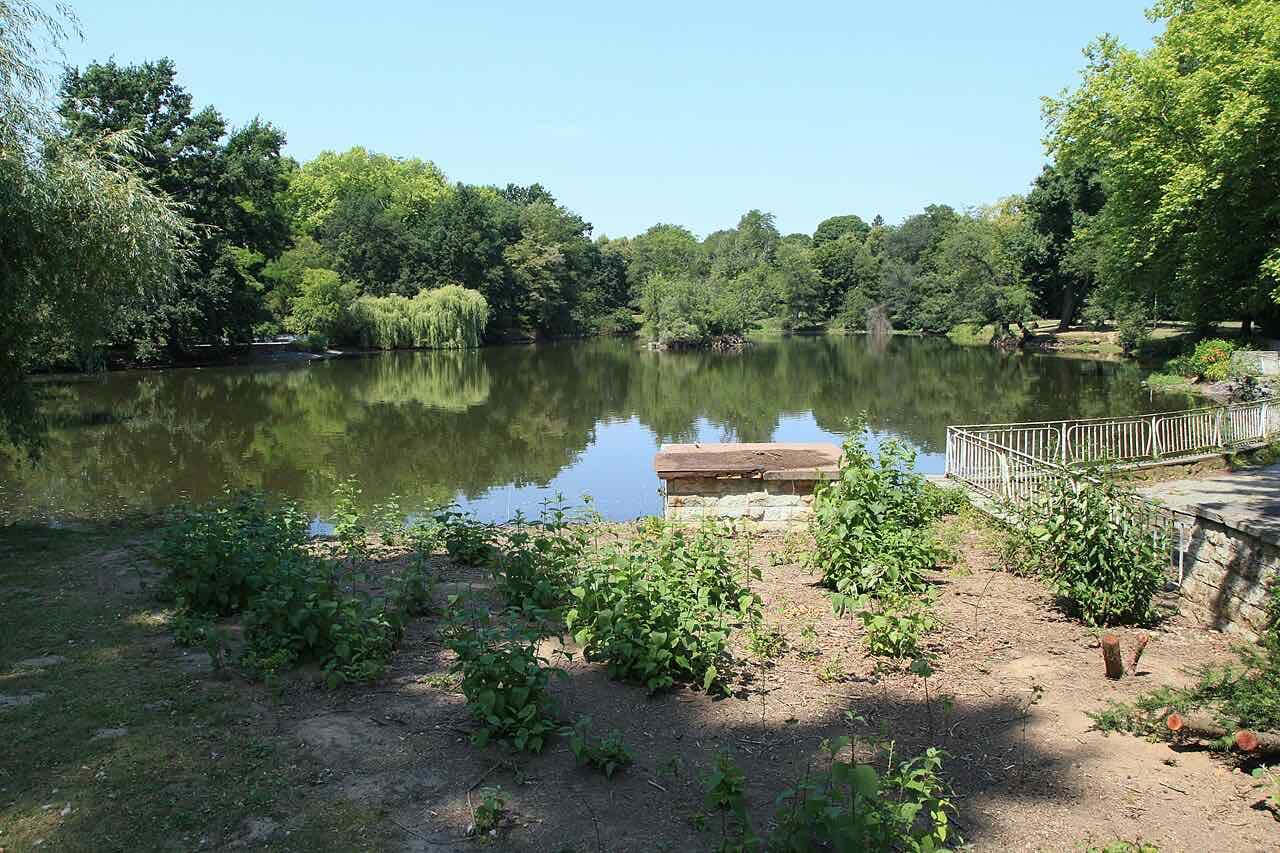
Leipzig's best weekend asset is the Neuseenland, the chain of lakes that were opencast lignite mines until the 1990s. The tourism board counts more than 20 lakes with a combined 70 km2 of water, and says the swimming water quality is excellent.
The Cospudener See (414 hectares) lies just south of Leipzig and opened in 2000. It has what the board calls Saxony's longest sandy beach on its north shore, a harbour at Zöbigker with boat rental, a sauna and restaurants, and a canal route for paddlers from Leipzig's city harbour. The Markkleeberger See (252 hectares) has a whitewater canoe park, the Störmthaler See (721 hectares) hosts the three-day Highfield rock festival every August, and the Zwenkauer See (970 hectares) lies about 12 km south of the city and is best explored by sailing or paddling. The Kulkwitzer See (170 hectares), between Leipzig and Markranstädt, has been open for swimming since the 1970s and is known among divers.
Take a bike or check the public transport map before you go, because the lakes are spread out and the shores of the bigger ones are long.
On the Cospudener See

What things cost
- Dorm: single room in a shared flat (Studentenwerk Leipzig)
- mostly 215 to 325 EUR a month, utilities and internet includedsource
- Dorm: single apartment
- mostly 295 to 435 EUR a month, utilities and internet includedsource
- Dorm deposit
- 450 EUR, refunded six to eight weeks after moving out if there are no debtssource
- Average dorm rent according to the Studentenwerk's 2026 survey
- 310 EUR a month all in, about 100 EUR less than a room in a private shared flat and more than 200 EUR less than a flat on the open marketsource
- BAföG housing allowance, quoted by the Studentenwerk
- 380 EURsource
- Blocked account for the student visa
- 11,904 EUR a year, 992 EUR a monthsource
- Thomaskirche motet programme
- 3 EUR, free with a Leipzig-Passsource
Figures for student housing and entering Germany. Food, private rent and the semester contribution of your own university are not included, because they depend on where you study.
Getting around, and getting out
The Leipziger Verkehrsbetriebe run the trams and buses, and the regional S-Bahn network runs through the City-Tunnel under the centre. The tram network is described as 146 km long with 15 lines, and the S-Bahn has 30 stations inside the city area. The Mitteldeutscher Verkehrsverbund (MDV) sells single and 24-hour tickets, student tickets and the Deutschlandticket. Students at Leipzig University have a Semesterticket negotiated by their student council, with an option to upgrade to the Deutschlandticket; check with your own university what yours covers.
The central station opened in 1915 and is described as the largest railway station in Europe by built-up area. Berlin is about 150 km away. Leipzig/Halle Airport is mainly known as the central European hub of the parcel carrier DHL; check the airport's own site for passenger routes before you book.
Where the work is
None of this is a promise of a job. It shows where internships and student jobs can come from, and the Studentenwerk's own job office is the first stop for part-time work.
Leipzig/Halle Airport and the DHL hub ↗
DHL moved the bulk of its European air operations here in 2011 and 2012, and the airport's cargo business is the second largest in Germany behind Frankfurt (figure from 2011).
Both companies build cars in large plants north of the city.
Matches enrolled students with part-time jobs through an online portal. Goethestraße 6, open Tuesday 14:00 to 17:00 and Thursday 10:00 to 13:00. Students from outside the EU bring their residence permit and work permit.
Leipzig University lists its student-assistant and other jobs on its job opportunities page, and student assistant work is the one kind of job that does not count against the day limit for non-EU students (you still have to inform the foreigners' office).
Part 2
Student life in Leipzig
Where you can study
Leipzig University (Universität Leipzig) ↗
Founded on 2 December 1409 and today with more than 29,000 students in 14 faculties, from theology and law to veterinary medicine, physics and earth sciences. 3,375 of its students (10.8 percent) came from abroad in winter 2022/23. Most of the city's English-taught Master's degrees on our board are here: American Studies, African Studies, Global Studies with a focus on peace and security in Africa, Anthropology, Buddhist Studies and Contemplative Traditions, Earth System Data Science and Remote Sensing, Economics, Quantitative Economics for Sustainability, Mathematics, Mathematical Physics, Meteorology, Physics, Advanced Spectroscopy in Chemistry, the Joint International Master's in Sustainable Development and the SEPT MBA, plus the Bachelor's International Physics Studies Programme. Applicants without a direct entrance qualification can look at the Studienkolleg Sachsen, a one-year preparatory course at Lumumbastraße 4 that needs German at B1.
International office ↗HTWK Leipzig (Hochschule für Technik, Wirtschaft und Kultur) ↗
Founded in 1992, with 6,580 students in winter 2023/24 and six faculties: architecture and social sciences, business administration and industrial engineering, civil engineering, computer science and media, engineering, and digital transformation. The main campus is in Connewitz with 13 buildings, and the Hopper and Shannon buildings in Plagwitz opened in 2019. It offers more than 40 degree programmes. Since 2018 its Telekom-endowed faculty of digital transformation has offered degrees in related fields; the Telekom's own Hochschule für Telekommunikation Leipzig closed on 31 December 2022. Ask the office which programmes are taught in English; 919 of its students (12.6 percent) were from abroad in 2022/23.
International office ↗HHL Leipzig Graduate School of Management ↗
A private business school with roots in 1898, re-established in 1992, accredited by AACSB. It teaches Master's programmes in Management, Finance, Strategy and Business Consulting and Entrepreneurship, full-time and part-time MBAs and a three-year doctoral programme, in Leipzig and at study locations in Cologne and Munich. Its site lists students of 56 nationalities, and about 100 exchange students arrive each year. Exchange teaching is in English. On our board it appears with the full-time MSc in Management, the full-time MBA, the Master's in Entrepreneurship and Finance, and the part-time MSc and MBA. 257 of its students (34.8 percent) came from abroad in 2022/23.
International office ↗Hochschule für Grafik und Buchkunst Leipzig (HGB) ↗
One of the oldest art schools in Germany, founded in 1764, with about 500 students in book design and graphic design, media art, photography, painting and printmaking, and curatorial studies. The main building from 1896 is at Wächterstraße 11 in the Musikviertel. The Leipzig School of painting grew out of it in the 1970s. It has exchange partners at more than 50 academies in over 25 countries, and 150 students (28.4 percent) came from abroad in 2022/23.
International office ↗Hochschule für Musik und Theater "Felix Mendelssohn Bartholdy" (HMT) ↗
One of the oldest music academies in Germany, founded by Mendelssohn in 1843, with degrees in music, drama, dramaturgy, theory and pedagogy in three faculties. 344 of its students (31.1 percent) came from abroad in 2022/23, the highest share among the public universities of the city. The international office is at Grassistraße 8 and handles Erasmus+ and partner exchanges.
International office ↗SRH University, Campus Leipzig ↗
A private university campus at Prager Straße 40 in Reudnitz, near parks, student housing and a canteen. In Leipzig it teaches Bachelor's degrees in International Business Administration with Supply Chain Management, Computer Science, Applied Mechatronic Systems and, in German, Psychology; Master's degrees in Computer Science (Big Data and AI, Cyber Security) and a dual Computer Science Master'sand a Bachelor's for Physician Assistants in German. Check that your programme is state-recognised before you rely on it for a residence permit.
Duale Hochschule Sachsen, location Leipzig (Staatliche Studienakademie) ↗
One of the seven sites of the Duale Hochschule Sachsen, at Schönauer Straße 113a. It offers dual study in technology and business at the Leipzig site. The programme list is on its Leipzig page, which is in German.
Student unions, services and groups
StuRa of Leipzig University (Student*innenRat) ↗
The student council at Universitätsstraße 1, whose plenum includes representatives of 32 Fachschaftsräte. It runs social, psychosocial, BAföG, legal, rental and employment-law advice. Phone +49 341 97 37 850.
Referat für Ausländische Studierende (StuRa Leipzig) ↗
Free advice on studies, residence permits and visas, admission and student housing, and help with going to offices with you if you struggle with the language. It works in English, German, Portuguese, Spanish, Slovak and Czech. Write to ras@stura.uni-leipzig.de.
StuRa HTWK (StudierendenRat) ↗
The student council of the HTWK, at Gustav-Freytag-Straße 43-45 (Trefftz-Bau, room TR A 1.35). It offers counselling referrals, social loans, an international student ID, equipment lending and a bike repair station.
Student halls (15), twelve canteens and cafeterias, BAföG, social and psychosocial counselling, advice for international students and a semester ticket and mobility fund. It serves Leipzig University, HTWK, HMT, HGB, HHL, the DHSN Leipzig site and iba Leipzig.
Zentrum für Hochschulsport (ZfH), Leipzig University ↗
More than 160 sports from outdoor sports and dance to ball sports, plus about 40 university championships. The office is at Jahnallee 59. For winter 2026/27, students and staff could book courses from 6 October and external participants from 13 October.
ESG Leipzig (Evangelische Studierendengemeinde) ↗
The Protestant student community in the Georg-Siegfried-Schmutzler-Haus at Alfred-Kästner-Straße 11. It has an English page, Taizé prayers, a choir, a Bible group and a gardening group, and links to projects in India and Ukraine.
Leipzig English Church, International Students group ↗
An Anglican congregation with English-language services, a monthly prayer meeting and a link to an international students group. Services are at the Gedächtniskirche, Ossietzkystraße 39.
Part-time job matching for enrolled students, at Goethestraße 6.
Campus life and study culture
Leipzig University's central buildings are around the Augustusplatz and Universitätsstraße, where the StuRa has its office at Universitätsstraße 1, and its sports centre is at Jahnallee 59. The HTWK's main campus is in Connewitz, the HGB is in the Musikviertel, and the Studentenwerk lists a canteen at the medical campus and one at the veterinary clinics.
The university's international side is organised around the International Centre, which advises prospective and enrolled international students and books appointments online. It can be reached at international.student@uni-leipzig.de, and telephone hours are Monday 9:00 to 11:00 and 15:00 to 17:00 and Thursday 9:00 to 11:00. Its event listings include international meet-ups and an Arqus café. For subject questions, the student councils (Fachschaftsräte) of each department are the people who know the exam rules.
International students are a big part of the numbers. In winter 2022/23 there were 5,104 students from abroad, led by Austria (411), Syria (337), China (336), Russia (275), India (222), Vietnam (177), Italy (173), Ukraine (158), Egypt (139) and Spain (137). So you will not be the only person in the seminar who is new to the language.
Finding a room
Housing is the part of Leipzig that needs the earliest planning. The Studentenwerk's survey of almost 4,000 Leipzig students, published in April 2026, found that 79 percent find it hard to find an affordable place, and 58 percent only received their admission one to two months before the semester began. More than half of first- and second-semester students live in a Studentenwerk hall, and international students and BAföG recipients live there more often than other groups.
The Studentenwerk runs 15 halls. Most rooms are single rooms in shared flats for two students, with a shared kitchen and bathroom, plus a limited number of single apartments. Rooms are furnished, rent includes heating, water, electricity and internet, and the deposit is 450 EUR. You apply online with an admission letter or an enrolment certificate. Winter-semester rooms are usually allocated from August, you receive one offer per application, and the Studentenwerk says that international students are not given priority, while students of Leipzig's own universities come before students of other cities. The usual minimum stay is one academic year, and exchange students such as Erasmus participants can stay as little as three months. Contact: wohnen@studentenwerk-leipzig.de.
A dorm is the surest way to arrive with an address. If you do not get a place, start the private search from a temporary room, and expect to see the pressure in the numbers above.
Canteens, food and money
The Studentenwerk lists twelve canteens and cafeterias. Meal prices are on its payment-and-prices page.
Listed with a bistro and a cafeteria of the same name.
A canteen and cafeteria in the Studentenwerk's list, alongside the Mensa am Elsterbecken, Peterssteinweg and Schönauer Straße.
Mensa & Cafeteria am Medizincampus ↗
The canteen of the medical campus, one of the twelve on the Studentenwerk's list.
The semester fee is made of the Studentenwerk share, the Semesterticket, the student council share and, depending on the university, an ID card charge. Each university publishes the total. The Studentenwerk also explains who can be exempted or reimbursed.
Faith and quiet places
Congregations and places with their own sites that students can walk into.
The events it listed for October 2026 included Taizé prayer, a Gemeindeabend, a choir rehearsal and a Sunday university service.
English-language services in an Anglican church, with a German service as well, and a link to its international students group.
DITIB Leipzig (Eyüp Sultan Moschee) ↗
The Turkish-Islamic association's Leipzig site, with prayer rooms, youth and children's work and a student dorm named in its menu. Its pages are in German.
Open to visitors Monday to Sunday outside services; the church of the 1989 Monday prayers.
Your first weeks
- 1
Before you fly
Apply for a dorm room online as soon as you have an admission letter. Open the blocked account (11,904 EUR a year for the visa) and arrange health insurance. If your entrance qualification is only indirect, ask the Studienkolleg Sachsen about its preparatory year.
- 2
First days
Register your address at a Bürgerbüro of the city. You can walk in or book an appointment; new appointments are released every day at 17:00, about two weeks ahead, and the city shows current waiting times online.
- 3
Within the first weeks
Apply for your residence permit at the Ausländerbehörde, in the Technisches Rathaus, Haus B, Prager Straße 126-128, 04317 Leipzig. Visits are possible only with a booked appointment, so read the city's page for the documents and ask your university's International Centre if anything is unclear.
- 4
First month
Enrol, and ask your university what your Semesterticket covers. If you have questions about visas, housing or offices, the StuRa's Referat für Ausländische Studierende helps in English.
- 5
Jobs
Students from outside the EU may work 140 full days or 280 half days a year. Working more needs permission from the Agentur für Arbeit and the Ausländerbehörde. A minijob that earns up to 556 EUR a month is tax-free. Student assistant jobs at the university are an exception to the day limit, though you must tell the foreigners' office. The Studentenwerk's Job Office is the first place to look.
Where you come from matters here
Pick your home country: food, faith, community groups and the consulate that serves you, checked 21 October 2026.
🇮🇳 Living in Leipzig as an Indian student
222 Indian students were enrolled in winter 2022/23, the fifth-largest group. Leipzig has no Indian association or temple with its own website that we can point to, so the useful addresses are in Berlin and online.
Tiergartenstraße 17, 10785 Berlin. Since 20 January 2026 consular applications are accepted only through an online appointment.
Indian Students in Germany (ISG) ↗
A portal run by the embassy with arrival tips, advisories, regional contacts, an events calendar and a directory of Indian student associations across Germany. Some content needs a login.
🇳🇬 Living in Leipzig as a Nigerian student
There is no Nigerian association in Leipzig with its own website that we can point to. For passports and documents the Nigerian embassy is in Berlin, and English-speaking Nigerians will find an English-language church here.
Neue Jakobstraße 4, 10179 Berlin. It handles passports, emergency travel certificates and document legalisation for a 30 EUR administrative charge on top of the statutory fees; visa applications go through the provider VFS.
English-language Anglican services and a link to an international students group.
A non-profit founded in Leipzig in 2016, mostly for young people from Gambia and Senegal and open to other nations. It runs the annual 1000 Drums Afrika-Festival with free concerts and workshops and helps with integration and paperwork. Rödelstraße 22, info@yilp.de.
🇻🇳 Living in Leipzig as a Vietnamese student
Leipzig has one of the biggest Vietnamese communities in Germany: the city counts 4,140 residents from Vietnam, and its own page on its partnership with Ho Chi Minh City says the community is the second largest in the country. Vietnamese students have come here since the 1950s, and 177 Vietnamese students were enrolled in winter 2022/23.
Verein der Vietnamesen Leipzig e.V. ↗
The Vietnamese association of the city. It supports members in daily matters, promotes integration and keeps traditions alive, and with the Verein der vietnamesischen Frauen in Leipzig it organised the Tết new-year celebration in the Paulinum hall of the university on 26 January 2025. The Verein Deutsch-Vietnamesisches Haus e.V., founded in the Neues Rathaus on 24 January 2020, works alongside it. The city's partnership page for Ho Chi Minh City describes both.
Pagoda Phước Nghiêm, Leipzig-Schönefeld ↗
A Vietnamese Buddhist pagoda, dedicated on Sunday 8 September 2024 and founded by the Venerable Shifu Tam Vien and her nuns' community. The text of the dedication speech is online.
A traditional temple made in Vietnam and shipped in nine containers in 2018 is being built in Taucha, just outside Leipzig. The temple is due to stand by the end of 2026, and the whole complex is planned to open in 2028 for meetings, seminars and meditation.
The embassy's consular section handles passports and other documents. Check its site for scam warnings and the current appointment steps.
🇨🇲 Living in Leipzig as a Cameroonian student
There is no Cameroonian association in Leipzig with its own website that we can point to. The embassy is in Berlin, and Anglophone Cameroonians have an English-language church and a West African cultural association here.
Ulmenallee 32, 14050 Berlin. Passports (with a pre-enrolment portal), consular card, birth-certificate transcription and powers of attorney; appointments are booked through the contact page. It also covers several other countries.
English-language Anglican services and a link to an international students group.
A Leipzig association of young West Africans that stages the 1000 Drums Afrika-Festival and offers integration help and German classes.
🇺🇸 Living in Leipzig as an American student
The United States is not among the ten biggest student nationalities the city lists, but Leipzig has real ties to the United States: its partner city is Houston, and the university has a full Institute for American Studies.
Institute for American Studies, Leipzig University ↗
Offers a Bachelor's and a Master's in American Studies in English, at Beethovenstraße 15. Its office hours are Monday to Thursday 9:00 to 12:00 and by appointment.
An Anglican congregation with English-language services at the Gedächtniskirche, Ossietzkystraße 39, and a link to an international students group.
A city partnership since 1993 with cultural events, school exchanges, university cooperation and ties between the Thomaskirche and a Lutheran church in Houston. The city's page names the two associations behind it.
🇨🇳 Living in Leipzig as a Chinese student
336 Chinese students were enrolled at Leipzig's universities in winter 2022/23, the third-largest group among students from abroad. Leipzig and Nanjing have been partner cities since 1988. Chinese students have no association of their own with a website that we could point to; the two places below are the open ones.
A centre for Chinese language and culture run with Leipzig University, the Chinese International Education Foundation and Renmin University of China as partners, and the City of Leipzig as sponsor. It offers language courses up to HSK 6, calligraphy, a tea school, tandem evenings and the CHAI Chinese Film Festival.
The city's page on its partnership with Nanjing, which started in 1988 and has produced exchanges between companies, universities, hospitals and cultural institutions.
English-taught programmes in Leipzig
Soonest open deadline first. Every entry links to its official source.
- Buddhist Studies and Contemplative Traditions MALeipzig University · LeipzigmasterNo tuition31 Dec 2026Open
- Master's in MathematicsLeipzig University · LeipzigmasterNo tuition31 Dec 2026Open
- Global Studies with a Special Emphasis on Peace and Security in AfricaLeipzig University · Leipzigmaster28 Feb 2027Open
- Master of Science in Mathematical PhysicsLeipzig University · LeipzigmasterNo tuition31 May 2027Open
- Master's in FinanceHHL Leipzig Graduate School of Management · Leipzigmaster31 May 2027Open
- Earth System Data Science and Remote SensingLeipzig University · LeipzigmasterNo tuition31 May 2027Open
- MeteorologyLeipzig University · LeipzigmasterNo tuition31 May 2027Open
- PhysicsLeipzig University · LeipzigmasterNo tuition31 May 2027Open
- Part-Time Master’s in Management (MSc)HHL Leipzig Graduate School of Management · Leipzigmaster30 Jun 2027Open
- Part-Time MBA in General ManagementHHL Leipzig Graduate School of Management · Leipzigmaster30 Jun 2027Open
- Full-Time Master's Programme in Management (MSc)HHL Leipzig Graduate School of Management · Leipzigmaster30 Jun 2027Open
- International Physics Studies Programme (Honours)Leipzig University · LeipzigbachelorNo tuition15 Jul 2027Open
- Computer Science (BSc)SRH University · LeipzigbachelorRollingApply anytime
- Industrial Biotechnology and BioengineeringSRH University · LeipzigmasterRollingApply anytime
- International Business Administration – Supply Chain Management (BA)SRH University · LeipzigbachelorRollingApply anytime
- Small Enterprise Promotion & Training (SEPT MBA)Leipzig University · LeipzigmasterSee sourceCheck source
- Master of Arts African StudiesLeipzig University · LeipzigmasterNo tuitionSee sourceCheck source
- Advanced Spectroscopy in Chemistry (ASC)Leipzig University · LeipzigmasterSee sourceCheck source
- American StudiesLeipzig University · LeipzigmasterNo tuitionSee sourceCheck source
- Full-Time MBAHHL Leipzig Graduate School of Management · LeipzigmasterSee sourceCheck source
- Joint International Master's Programme in Sustainable DevelopmentLeipzig University · LeipzigmasterSee sourceCheck source
- Master of Arts AnthropologyLeipzig University · LeipzigmasterNo tuitionSee sourceCheck source
- Master of Science in EconomicsLeipzig University · LeipzigmasterNo tuitionSee sourceCheck source
- Master of Science in Quantitative Economics for SustainabilityLeipzig University · LeipzigmasterNo tuitionSee sourceCheck source
- Master's in EntrepreneurshipHHL Leipzig Graduate School of Management · LeipzigmasterSee sourceCheck source
Is Leipzig right for you? Ask us. Free.
Tell us your passport, grades and budget. We compare Leipzig with the other places you could study, then apply for you. You never pay us.
Get my free plan