Studying in Lower Saxony, Germany
Lüneburg
A small salt-trade town on the Ilmenau, with one university, a heath on the doorstep and Hamburg 50 km away.
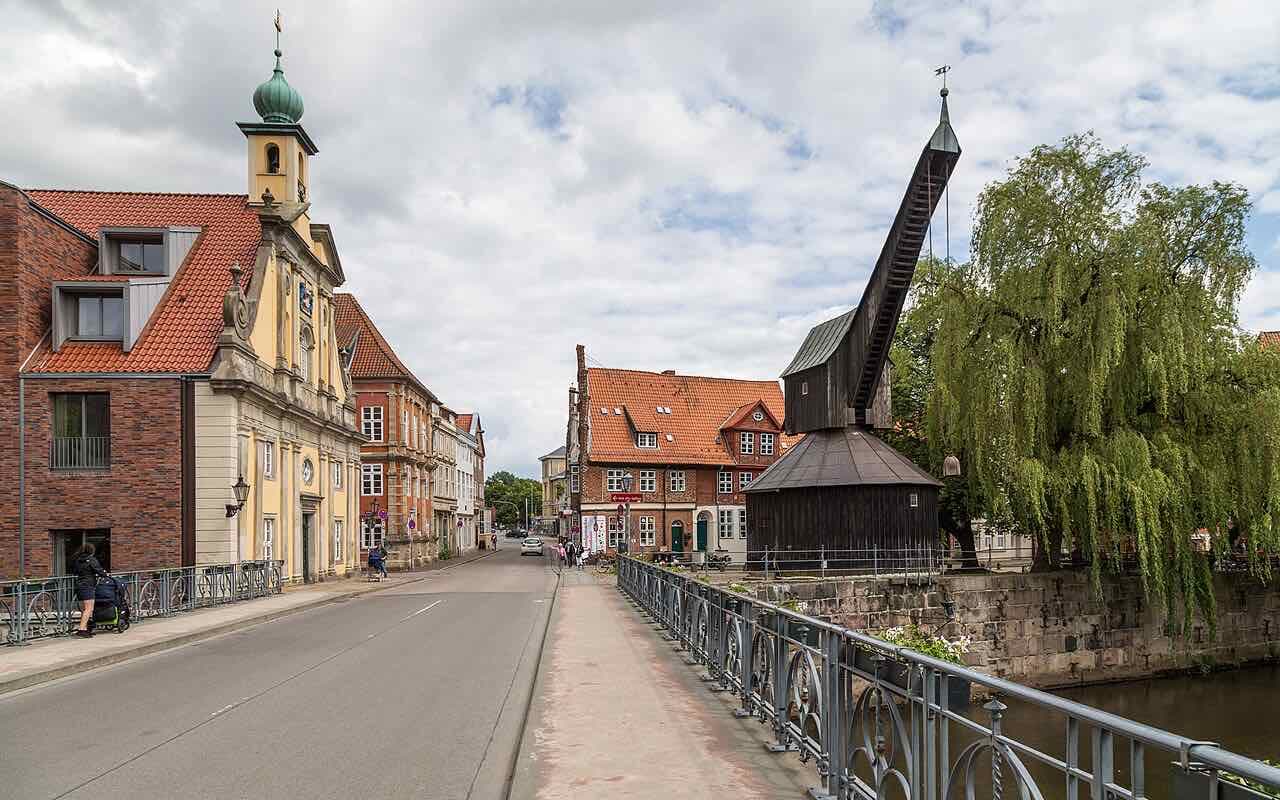
Lüneburg is a town of about 75,000 people in Lower Saxony, on the edge of the Lüneburg Heath and roughly 50 km south-east of Hamburg. Salt from the ground under the old town made it one of the richest members of the Hanseatic League, and the brick gables, the harbour crane and the leaning streets of the old town are what that money left behind. Leuphana University has about 9,800 students, so students are a visible part of a town this size, and the town is compact enough to cross on foot or by bike. It offers English-taught Bachelor's majors, and Hamburg, Berlin and Hanover are on direct train lines for weekends. If you want a large community from your own country around you, plan to look in Hamburg as well as here.
- Population
- 74,502 (31 Dec 2025)
- Deutschland-Semesterticket
- 226.80 EUR per semester, part of the Leuphana semester contribution
- Rent for a room in a shared flat
- 320 to 530 EUR a month, about 425 EUR on average
- Minimum wage
- 13.90 EUR per hour since January 2026
Part 1
Living in Lüneburg
Salt, brick and a town that sinks
Lüneburg first appears in a deed of 956, and for centuries its wealth came from the salt in the ground beneath the old town. After Henry the Lion destroyed nearby Bardowick in 1189, Lüneburg received town rights and became the main trading place of the region. It sold its salt to the Hanseatic towns, joined the League and became one of its wealthiest members. It was a free imperial town from 1392 to 1637. When the Hanse declined the town lost its customers and became poor, which is partly why so much of the medieval centre was never rebuilt. The saltworks closed in 1980.
The old town survived the Second World War largely intact, although the town was bombed 19 times between 1940 and 1945. In 1945 the German surrender of three armies in north-west Germany was signed on the Lüneburg Heath. Today the town uses the title Hansestadt, which it has done since 2007.
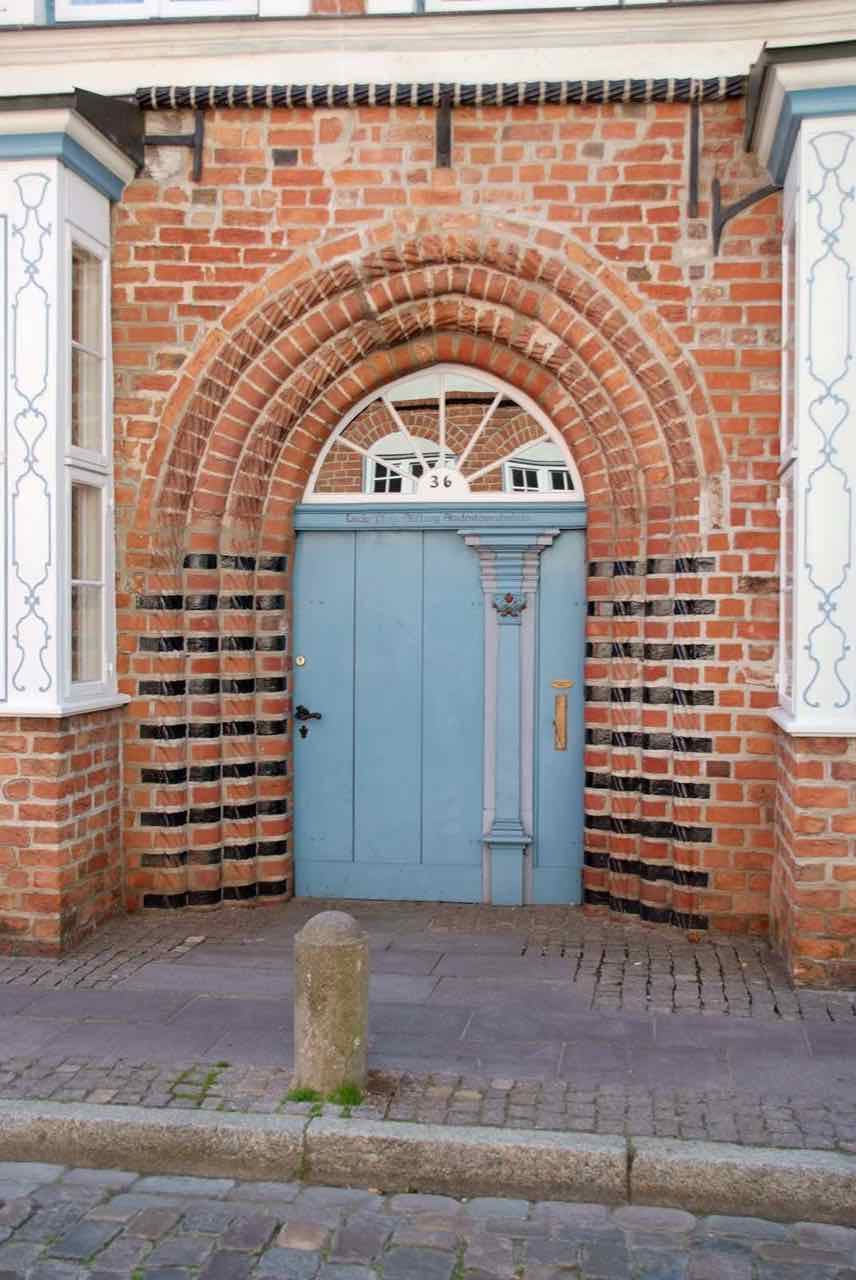
The city's tourism site lists the Westliche Altstadt, a historic district in a subsidence area known for its unusual history, and the Schwangeres Haus, a building known for its bulging shape, among the ten main sights. A student hall, the Lucia-Pfohe-Stiftung at Auf dem Meere 36, sits in this district.
What to see and do
Nearly all of this is within a short walk or bike ride of the centre. The city's tourism site lists the ten sights below.
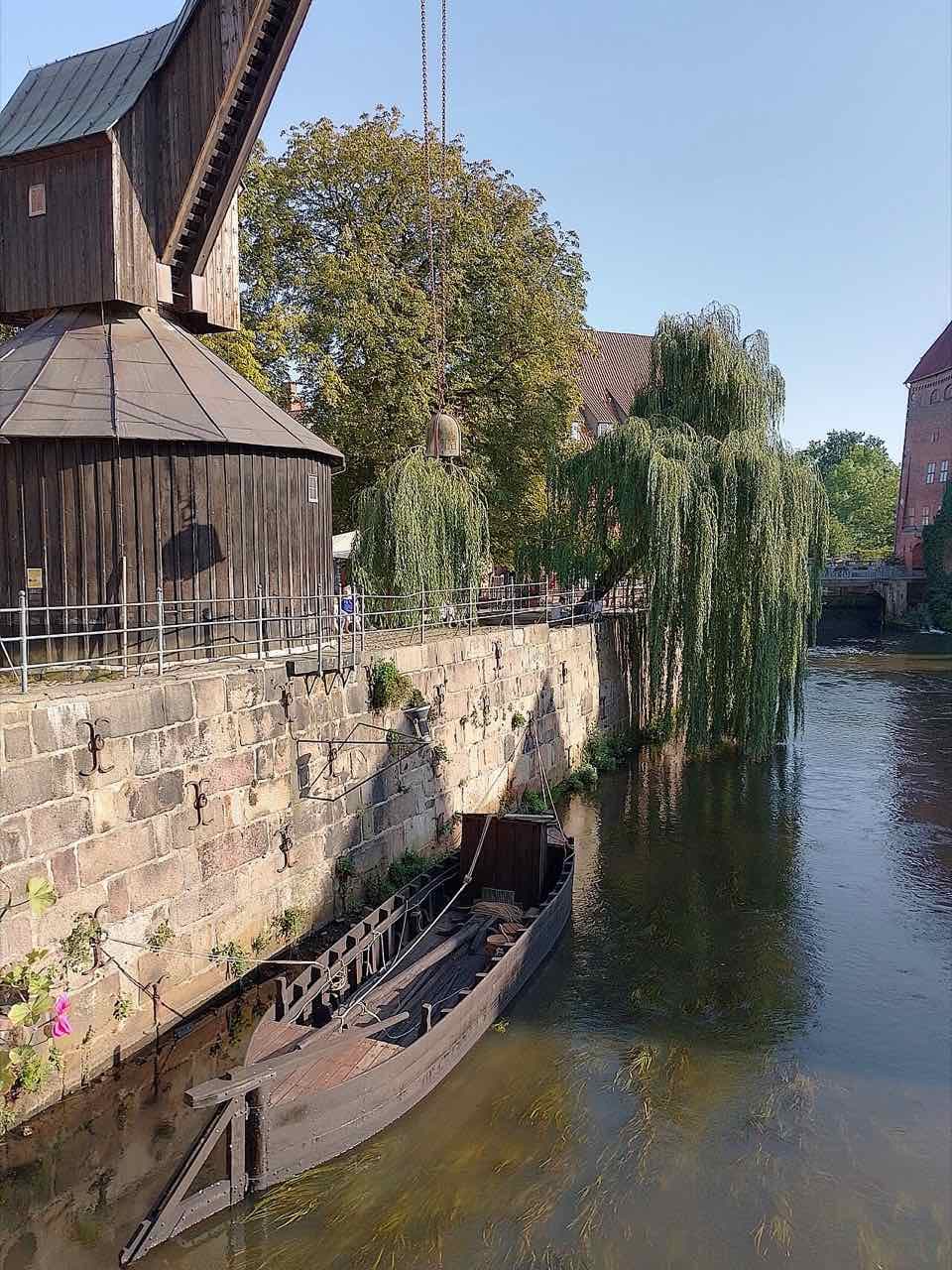
Alter Kran and the Wasserviertel ↗
A historic harbour crane at the old Ilmenau port, a standard photo spot and a symbol of the Hanseatic past.
The tourism site calls it the main nightlife strip, along the Ilmenau harbour.
A water tower with a public observation platform. It gives the panorama over the town and out to the campus.
The town hall, also the seat of the administration, with a baroque front on the market square. The tourist information office is inside, at Am Markt.
A hands-on museum about salt, in part of the former saltworks.
A small gypsum hill on the western edge of the town with a wide view over the roofs.
The town's salt-water spa and swimming complex, listed under active leisure by the tourism site.
The Christmas market runs from 19 November to 30 December in 2026.
A night of live music in town, on 7 November in 2026.
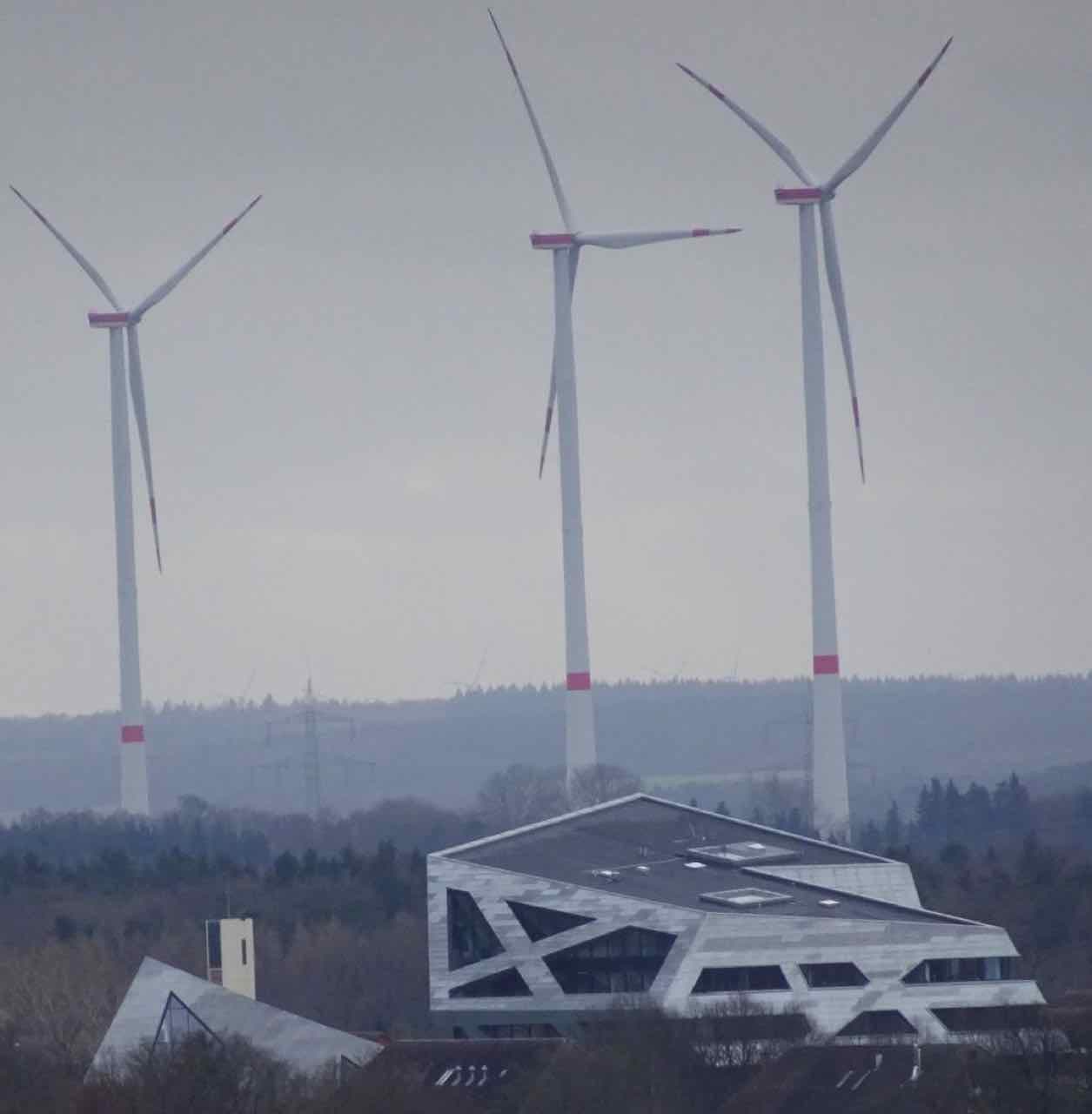
Old town and campus
The heath and weekends away
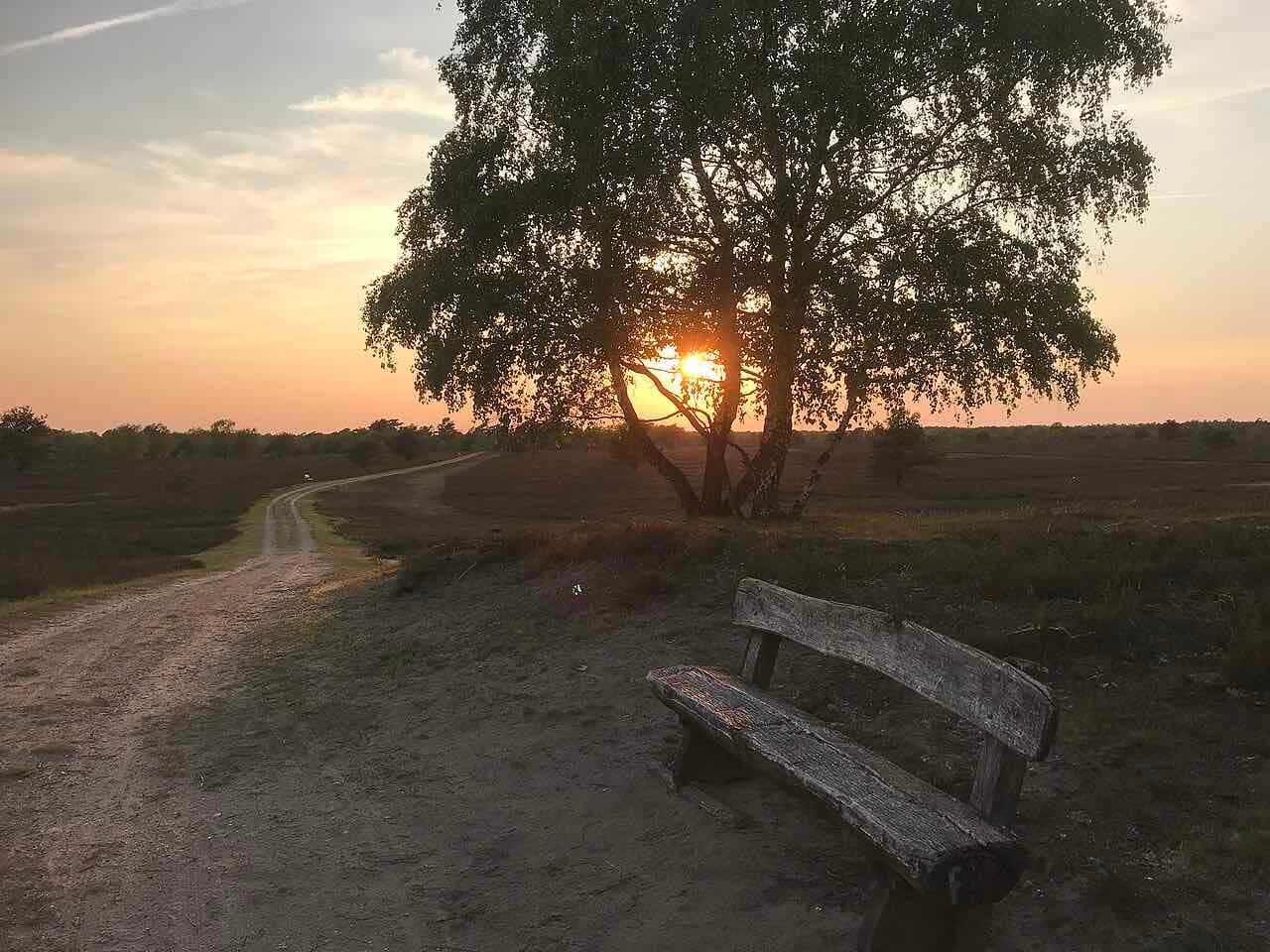
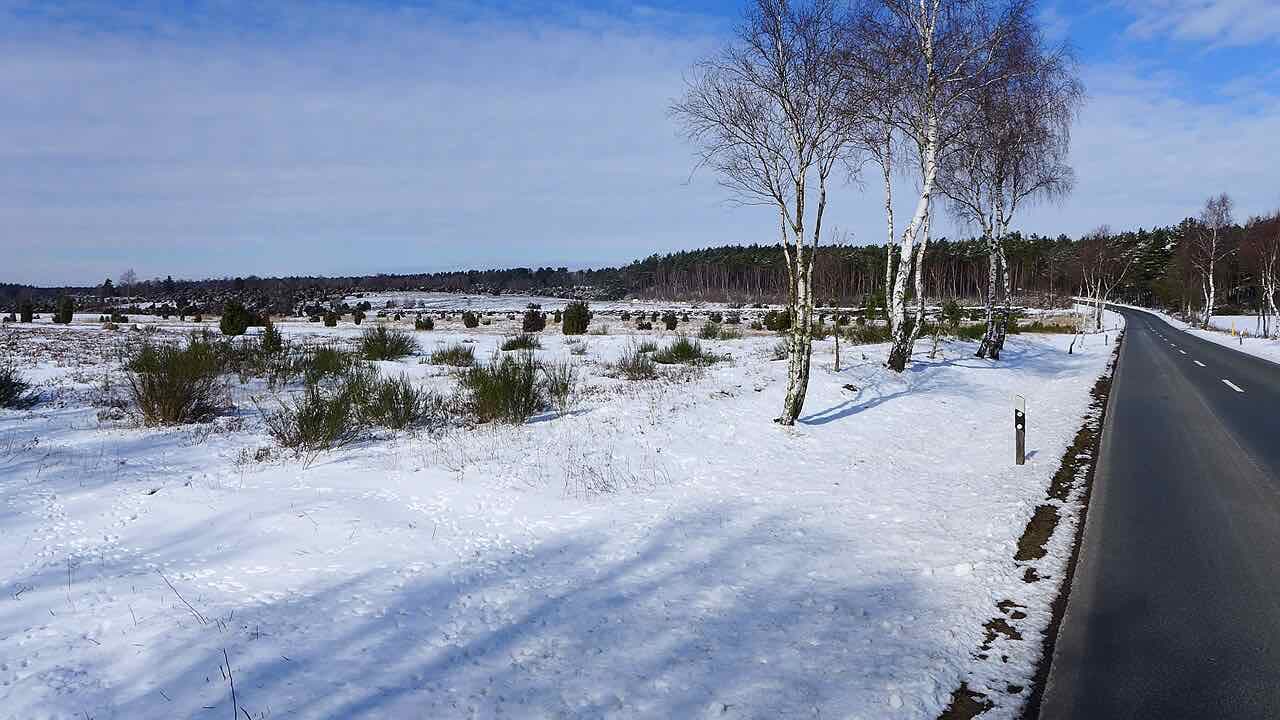
The Lüneburg Heath begins south of the town. The tourism site lists day-trip destinations such as the Wilseder Berg, the Totengrund and Amelinghausen. The heath looks very different in different seasons, as the two photos below show. Leuphana's own page for newcomers says the town is compact enough to reach most places on foot or by bike.
For a city weekend there are direct trains: Leuphana's page on living in Lüneburg names connections to Hamburg, Berlin and Hanover. Hamburg is the big-city option, with its airport, consulates and large communities from many countries. Plan your first flight into Germany with that in mind and check the train timetable for your date on the Deutsche Bahn site rather than trusting a rule of thumb.
Out on the heath and at the quarry lake
Weather, honestly
The climate is mild and damp: about 9.9 degrees on average over the year, about 749 mm of rain and roughly 105 days with rain. The sun shines about 6.2 hours a day on average over the year. Winters are grey and wet more than snowy, so a proper waterproof jacket and a bicycle light are worth more here than a heavy winter coat.
Where the work is
Lüneburg is a small labour market, and a lot of student jobs are close to the university or in Hamburg. None of this is a promise of work.
Academic assistant jobs, such as student assistant posts at a university, are an exception to the 140-day limit for non-EU students, but you still have to inform the foreigners' office.
Berufsakademie Lüneburg (VWA) ↗
Its dual Bachelor's programmes in business administration, media and IT management and social work are built around paid work at partner companies; the site mentions 181 of them, which shows which kinds of firms recruit locally.
Part 2
Student life in Lüneburg
Where you can study
Leuphana Universität Lüneburg ↗
Founded in 1989 by merging economics and cultural studies departments with the College of Education, on the site of the former Scharnhorst barracks. About 9,800 students. It is organised in three schools: the College (Bachelor's), the Graduate School (Master's and doctorates) and the Professional School (further education). The main campus has the Central Building, opened in 2017, and a second campus at Volgershall beside a flooded quarry lake. In English at Bachelor's level it teaches the majors Cultural Studies: Organization, Society and the Arts; Digital Media; Economics; Global Environmental and Sustainability Sciences; International Business Administration and Entrepreneurship; and Psychology, plus the individually designed Studium Individuale. Business Information Systems, Engineering, Environmental Sciences, Law, Political Science and teacher training are taught in German. The Graduate School lists Master's programmes such as Sustainability Science, Management and Data Science, Economics and Transformation, Politics and Democracy, Media and Digital Cultures and Psychology and Sustainability; check each programme page for its language before you apply.
International office ↗Berufsakademie Lüneburg (VWA) ↗
A dual-study academy at Wichernstraße 34, run by the Verwaltungs- und Wirtschaftsakademie, with Bachelor of Arts programmes in business administration, media and IT management and social work. You apply to a partner company, not to the academy, and study alternates with paid work there. The site is in German, so it suits you if you already speak the language well.
Student unions, services and groups
The student union. Its office is in building C9.103 at Universitätsallee 1. It runs the semester ticket, advice services, the Vakuum cultural office with concerts, readings and parties, and a Bettenbörse for first-semester students who need a temporary bed.
International Society (AStA) ↗
A volunteer group inside the AStA for regular and exchange students from abroad. It organises city trips, museum visits and parties, collects feedback for the university and gives informal tips on housing and visas. Email international@asta-lueneburg.de or look for the Instagram account international.society.lg.
The highest decision-making body of the student body: it elects the AStA, passes the student budget and funds student initiatives and university sport.
DSi, the umbrella of student initiatives ↗
Contact point for students who want to join or start an initiative, and organiser of the Markt der Möglichkeiten where the groups introduce themselves. It also runs a coworking space on campus.
Leuphana student initiatives list ↗
The official list of registered groups. International ones include AIESEC, IAESTE, the Internationale Studierenden Initiative, Junges Afrokollektiv, the Refugee Law Clinic and the Zugvögel regional group; there are also groups for sustainability, culture, politics, sport, debating and business.
Email buddy@leuphana.de to get a buddy who answers questions and sometimes meets you at Lüneburg station. Sign up early, matching is first come, first served.
More than 150 sport and fitness offers, including Studio 21 on campus, a bouldering block, dance, team sports, the Campus Liga tournament and a student riding group.
EHG & KHG, the Protestant and Catholic student communities ↗
Based in room C40.352 at Universitätsallee 1, with a morning devotion and breakfast from 7:00, open space for working and coffee from 9:00, short theology talks on Thursdays and yoga and meditation in the evening. Contact buero@ehg-khg.de.
Studierendenwerk OstNiedersachsen, Lüneburg ↗
Halls of residence, the Mensa, BAföG, social and psychotherapeutic counselling, legal advice, childcare and the Kulturwerk.
The Studierendenwerk's culture programme at Munstermannskamp 3: free workshops each semester in visual arts, photography, dance, theatre, music and literature, advice for your own projects and funding for them.
Campus life and study culture
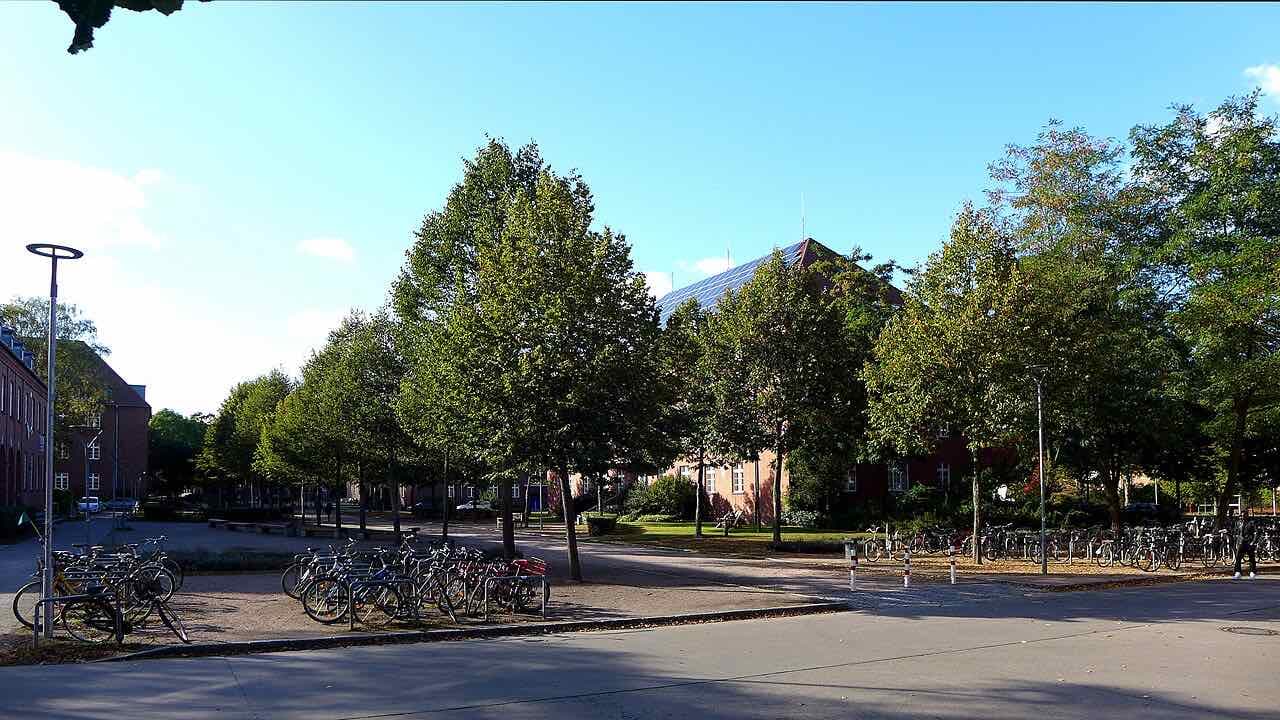
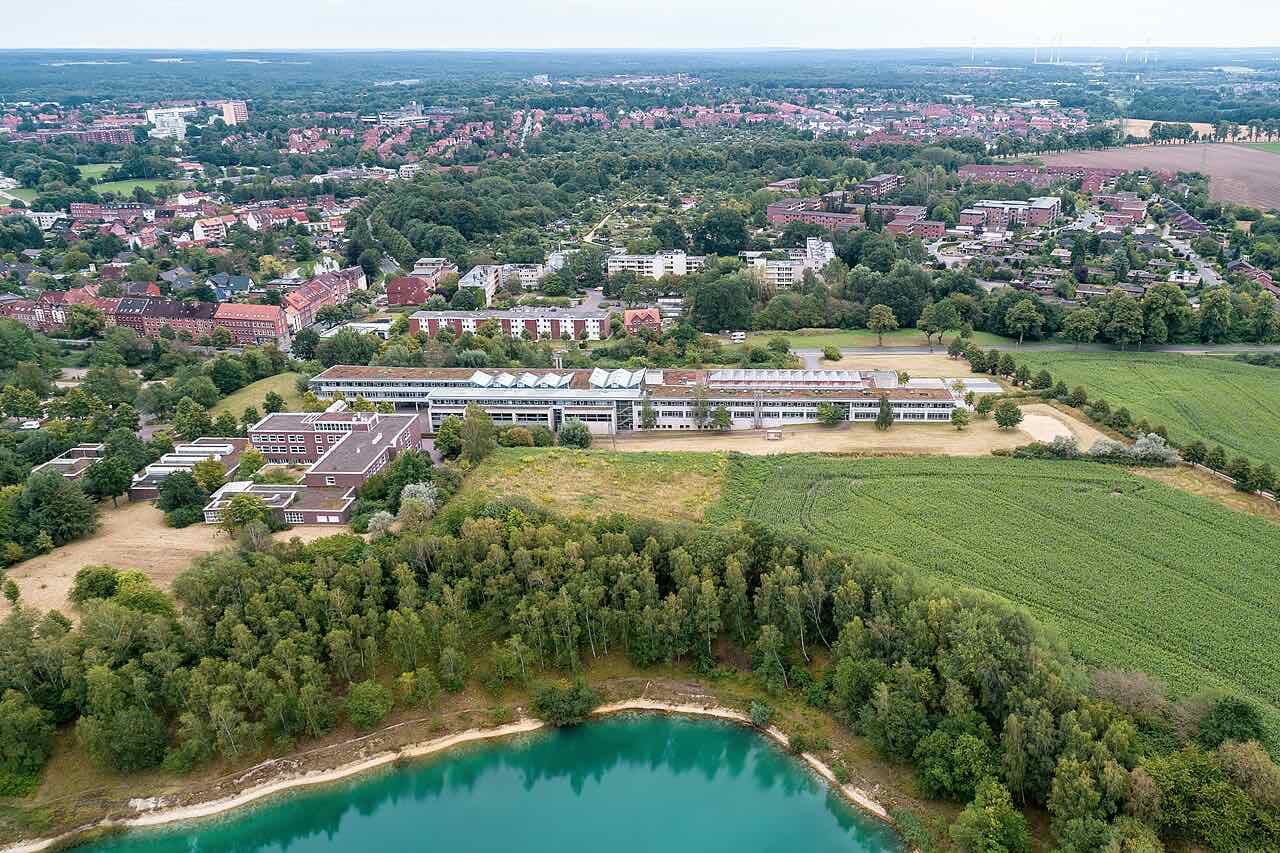
Leuphana has one main campus in town and a second, Volgershall, beside the quarry lake. Bachelor's students study in the College, where a degree combines a major with a minor, for example an English-taught Economics major with a Philosophy or Sustainability Science minor. Check the programme pages for the language of each.
The Leuphana International Center is the first stop for degree-seeking international students. It lists the programmes by language, explains entry and residence rules and runs the Language Cafés. The Central Building houses a room of silence and the Protestant and Catholic university communities on the same floor.
The Mensa, the Hochschulsport and the student initiatives are all on or near campus, which makes it easy to find a group in your first weeks.
What it costs
- Room in a shared flat
- 320 to 530 EUR, about 425 EUR on average; studios cost roughly 100 to 200 EUR moresource
- Food, eating in the student canteen
- 200 to 230 EUR a monthsource
- Health insurance
- about 120 to 130 EUR a monthsource
- Books, clothes, leisure, other
- 80 to 250 EUR a monthsource
- Deutschland-Semesterticket (inside the semester contribution)
- 226.80 EUR per semester, valid on regional buses, trains and local trains across Germanysource
- Minijob income without tax
- up to 556 EUR a monthsource
Figures published by Leuphana and the AStA. Budget about 1,000 EUR a month for basic costs, according to the university's page for newcomers.
Housing: start before you arrive
Leuphana does not run halls of residence and your admission letter does not include a room. The university advises starting the search as soon as you have the letter, and says the winter semester is especially tight. Towns along the regional rail lines, such as Adendorf, Reppenstedt or Melbeck, are an option for the first months.
Studierendenwerk OstNiedersachsen halls ↗
Six halls in Lüneburg: Erstsemesterhaus Wichernstraße, Lessingstraße, Munstermannskamp, Salzbrücker Straße, Wichernstraße and Willi-Watt-Straße. Furnished rooms exist only in Willi-Watt-Straße and Salzbrücker Straße, with a few in Munstermannskamp, so say in your application if you want furnished. The housing information office is at Munstermannskamp 3, phone +49 4131 9927-501.
Leuphana Accommodation Support ↗
For exchange students, Accommodation Support suggests rooms, including a limited number of furnished ones; do not apply to the halls directly if you are an exchange student. Email accommodation@leuphana.de or call +49 4131 677-2646.
A list of temporary beds for first-semester students who have not yet found a room.
Food, sport and evenings
The Mensa is at Scharnhorststraße 1. It serves lunch from 11:20 to 14:15 on Monday to Thursday and to 14:00 on Friday, and an evening meal from 15:30 to 19:00 on Monday to Thursday; the evening Mensa is closed on Fridays. The current menu is posted as a PDF on the Studierendenwerk page.
The Hochschulsport lists over 150 offers and has its own studio and bouldering wall on campus. For evenings out, the tourism site names the Stintmarkt on the harbour as the town's main nightlife strip. The AStA's Vakuum cultural office organises concerts, readings, cinema and parties on campus, and the Kulturwerk runs free creative workshops. In November there is the Nacht der Musik, and the Christmas market opens on 19 November.
If you want to meet people from outside the university, the Haus der Kulturen mosaique at Katzenstraße 1 holds language courses, regulars' tables and concerts, mostly on a donation basis, and is open Monday to Thursday from 14:00 to 18:00.
Your first weeks
- 1
Before you fly
Look for a room as soon as you have your admission letter, and apply to the Studierendenwerk halls. Never transfer money to an account outside Germany for a room: the university warns about this directly. Email buddy@leuphana.de to get a buddy.
- 2
First days
If you stay longer than three months you must register your address. The Bürgeramt is at Bardowicker Straße 23 and you generally need an appointment, booked online through the city's site; phone 04131 309-0 or email buergeramt@stadt.lueneburg.de if you cannot find one.
- 3
First weeks
Enrol at Leuphana. The semester contribution already includes the Deutschland-Semesterticket, so you do not buy a separate pass. Pick up the student card, and go to the Leuphana International Center if your entry or residence rules are unclear.
- 4
Within the first month
Book the residence-permit appointment with the foreigners' office (Ausländerbehörde). The Landkreis Lüneburg takes appointments online at landkreis-lueneburg.termine-reservieren.online and has its Infothek at Am Graalwall 4; ask the Leuphana International Center which office handles your permit. Bring your passport, visa, enrolment certificate and proof of funds and insurance.
- 5
In the first semester
Join one group from the initiatives list, the International Society or the Hochschulsport, and look at the Language Cafés at the International Center.
Working while you study
Students from outside the EU may work 140 full days or 280 half days a year. Freelance work needs permission from the foreigners' office, and more work needs permission from the Agentur für Arbeit and the foreigners' office, granted only in cases of special financial need. Academic assistant jobs at the university have no day limit, but you must still inform the foreigners' office.
A minijob lets you earn up to 556 EUR a month without paying tax, and the minimum wage is 13.90 EUR per hour since January 2026. Over 20 hours a week, health, unemployment and nursing care contributions apply and your studies are likely to suffer. Ask the International Center if you are unsure about a particular job.
Where you come from matters here
Pick your home country: food, faith, community groups and the consulate that serves you, checked 21 October 2026.
🇮🇳 Living in Lüneburg as an Indian student
The nearest Indian consulate is in Hamburg. Inside the university, the International Society is the place to meet other international students.
Consulate General of India, Hamburg ↗
Kohlhöfen 21, 20355 Hamburg. Passport, OCI and attestation matters by phone 040 338036 or by email to cons.hamburg@mea.gov.in; visa queries go to visa.hamburg@mea.gov.in. Appointments are booked online. Check with the consulate which office handles Lower Saxony before you book.
International Society at Leuphana ↗
Student-run group for international students, with trips, parties and informal advice on housing and visas.
🇳🇬 Living in Lüneburg as a Nigerian student
Nigerian students at Leuphana can start with the Junges Afrokollektiv student initiative. The Nigerian Embassy is in Berlin, and Lüneburg has no consulate.
Neue Jakobstrasse 4, 10179 Berlin. Passport submissions Monday to Thursday 10:00 to 14:00; an enhanced e-passport needs a National Identification Number and a biometric appointment booked first. Visa applications go through VFS at Zimmerstrasse 68, 10117 Berlin.
Junges Afrokollektiv (JUA Kollektiv) ↗
A student initiative at Leuphana that is a member of the DSi. Ask the DSi how to reach it.
🇨🇲 Living in Lüneburg as a Cameroonian student
The Cameroonian Embassy in Berlin is the consular contact for Germany, and the DSi can point you to student groups on campus.
The embassy's site says it covers Germany and nine other countries in Europe.
Junges Afrokollektiv (JUA Kollektiv) ↗
A student initiative at Leuphana that is a member of the DSi.
🇺🇸 Living in Lüneburg as an American student
The US Consulate General in Hamburg covers Hamburg, Bremen, Mecklenburg-Vorpommern, Lower Saxony and Schleswig-Holstein, and has no visa services. At Leuphana there is a student initiative for transatlantic exchange.
US Consulate General Hamburg ↗
The nearest US consulate for Lüneburg. The official listing gives phone +49 40 411 711 00 and the email HamburgPA@state.gov.
A student initiative listed on Leuphana's official initiatives page.
🇨🇳 Living in Lüneburg as a Chinese student
Lüneburg has no Chinese consulate. The nearest is in Hamburg, and the buddy programme gives you someone local from the first day.
Consulate General of the People's Republic of China, Hamburg ↗
The nearest Chinese consulate to Lüneburg. Check on its site which office covers Lower Saxony before you book.
Email buddy@leuphana.de for a buddy who answers questions and sometimes picks you up from Lüneburg station.
English-taught programmes in Lüneburg
Soonest open deadline first. Every entry links to its official source.
- Sustainable Chemistry (MSc)Leuphana University Lüneburg · Lüneburgmaster15 Jan 2027Open
- International Joint Master of Research in Work and Organisational PsychologyLeuphana University Lüneburg · Lüneburgmaster01 Mar 2027Open
- International Law of Security, Peace and Sustainable Development (MA)Leuphana University Lüneburg · Lüneburgmaster01 May 2027Open
- Economics and TransformationLeuphana University Lüneburg · LüneburgmasterNo tuition01 May 2027Open
- Individual Research MasterLeuphana University Lüneburg · LüneburgmasterNo tuition01 May 2027Open
- International Law of Security, Peace and Sustainable Development (LLM)Leuphana University Lüneburg · Lüneburgmaster01 May 2027Open
- Management & Data ScienceLeuphana University Lüneburg · LüneburgmasterNo tuition01 May 2027Open
- Politics and DemocracyLeuphana University Lüneburg · LüneburgmasterNo tuition01 May 2027Open
- Social Work ResearchLeuphana University Lüneburg · LüneburgmasterNo tuition01 May 2027Open
- Sustainability Science: Ecosystems, Biodiversity and SocietyLeuphana University Lüneburg · LüneburgmasterNo tuition01 May 2027Open
- Sustainability Science: Entrepreneurship, Agency and LeadershipLeuphana University Lüneburg · LüneburgmasterNo tuition01 May 2027Open
- Sustainability Science: Governance and LawLeuphana University Lüneburg · LüneburgmasterNo tuition01 May 2027Open
- Sustainability Science: Resources, Materials and ChemistryLeuphana University Lüneburg · LüneburgmasterNo tuition01 May 2027Open
- Management & Sustainable Accounting and FinanceLeuphana University Lüneburg · LüneburgmasterNo tuition01 Jun 2027Open
- Psychology & SustainabilityLeuphana University Lüneburg · LüneburgmasterNo tuition01 Jun 2027Open
- International Law and SustainabilityLeuphana University Lüneburg · Lüneburgmaster01 Jun 2027Open
- Cultural Studies: Culture and OrganisationLeuphana University Lüneburg · LüneburgmasterNo tuition01 Jun 2027Open
- Management & EntrepreneurshipLeuphana University Lüneburg · LüneburgmasterNo tuition01 Jun 2027Open
- Arts and Cultural Management (MA)Leuphana University Lüneburg · Lüneburgmaster15 Jun 2027Open
- Master in Governance and Human Rights (MA)Leuphana University Lüneburg · Lüneburgmaster15 Jun 2027Open
- Studium Individuale (BA)Leuphana University Lüneburg · LüneburgbachelorNo tuition15 Jul 2027Open
- Digital Media (BA)Leuphana University Lüneburg · LüneburgbachelorNo tuition15 Jul 2027Open
- Global Environmental and Sustainability Sciences (BSc)Leuphana University Lüneburg · LüneburgbachelorNo tuition15 Jul 2027Open
- International Business Administration & Entrepreneurship (BSc)Leuphana University Lüneburg · LüneburgbachelorNo tuition15 Jul 2027Open
- Psychology (BSc)Leuphana University Lüneburg · LüneburgbachelorNo tuition15 Jul 2027Open
- Cultural Studies — Organisation, Society, and the Arts (BA)Leuphana University Lüneburg · LüneburgbachelorNo tuition15 Jul 2027Open
- Economics (BSc)Leuphana University Lüneburg · LüneburgbachelorNo tuition15 Jul 2027Open
Is Lüneburg right for you? Ask us. Free.
Tell us your passport, grades and budget. We compare Lüneburg with the other places you could study, then apply for you. You never pay us.
Get my free plan