Studying in Hesse, Germany
Marburg
A university town on the Lahn where the town and the students are the same crowd.
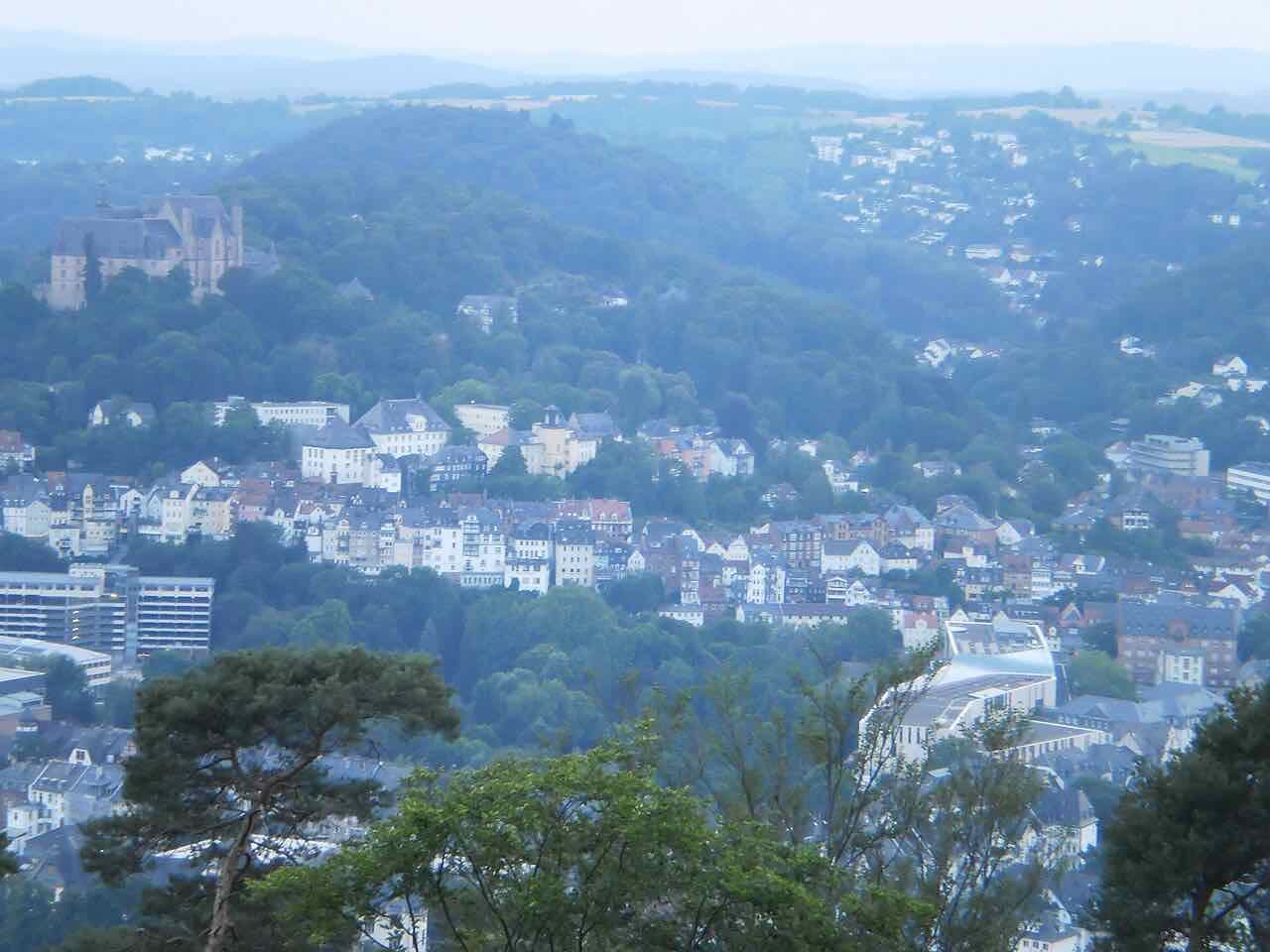
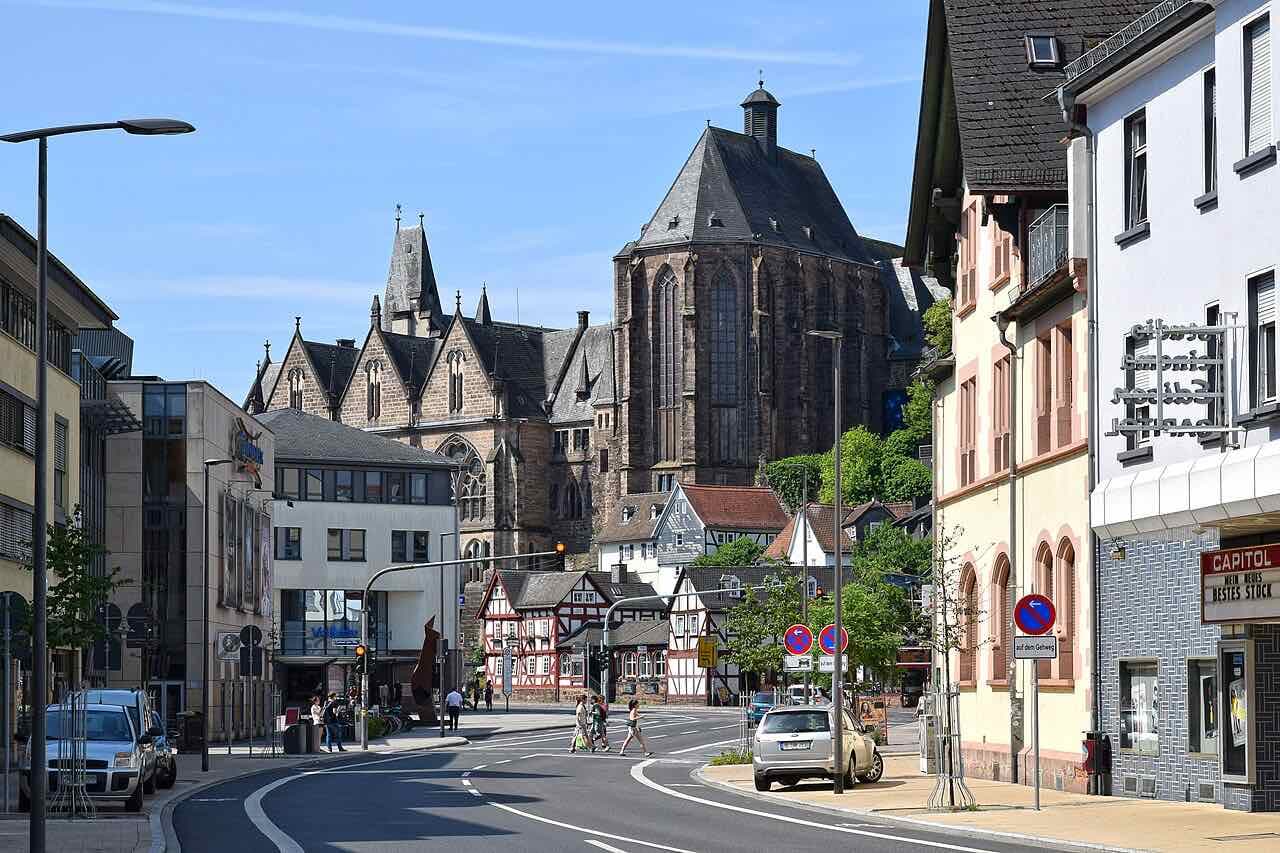
Marburg has about 73,500 residents, and more than 20,000 of them are students at Philipps-Universität, founded in 1527 and described by the university itself as the world's oldest Protestant university still in existence. The old town climbs the slope below a castle, the university buildings sit among half-timbered houses, and the river runs through the valley below. You will see the same faces in the lecture hall, the Mensa and the bar, and almost everything you need in daily life is close together. It is a good fit if you want a student town where the university is the main thing happening, and a city as large as Frankfurt is within reach for the weekends when you want one.
Part 1
Living in Marburg
A town that grew up around a church and a university
In 1228 Elisabeth of Thuringia, a landgravine who had been widowed young, made Marburg her home. She died in 1231 aged 24, and the Elisabethkirche was begun over her grave in 1235; the church's own site says it was built between 1235 and 1283 and calls it the oldest Gothic hall church in Germany. It was a pilgrimage site for centuries and is now a parish church and a centre for church music.
Landgrave Philipp founded the university in 1527 after bringing the Reformation to Hesse. It began with 11 professors and about 90 students. The Landgrafenschloss above the old town was the setting in 1529 of the Marburg Colloquy, where Luther and Zwingli argued over the Eucharist. Jacob and Wilhelm Grimm studied at the university, and the town's tourist office runs a guided tour about their years here, from 1802 to 1805.
Marburg also has a long industrial side. It is a historic centre of the pharmaceutical industry, and Emil von Behring received the first Nobel Prize in Medicine in 1901. The university lists him among its notable people, with Robert Bunsen and the philosophers of the Marburg School. The university hospital employs over 4,200 people in Marburg.
What to see in your first weeks
Everything below is within walking distance of the old town, and most of it is free from the outside.
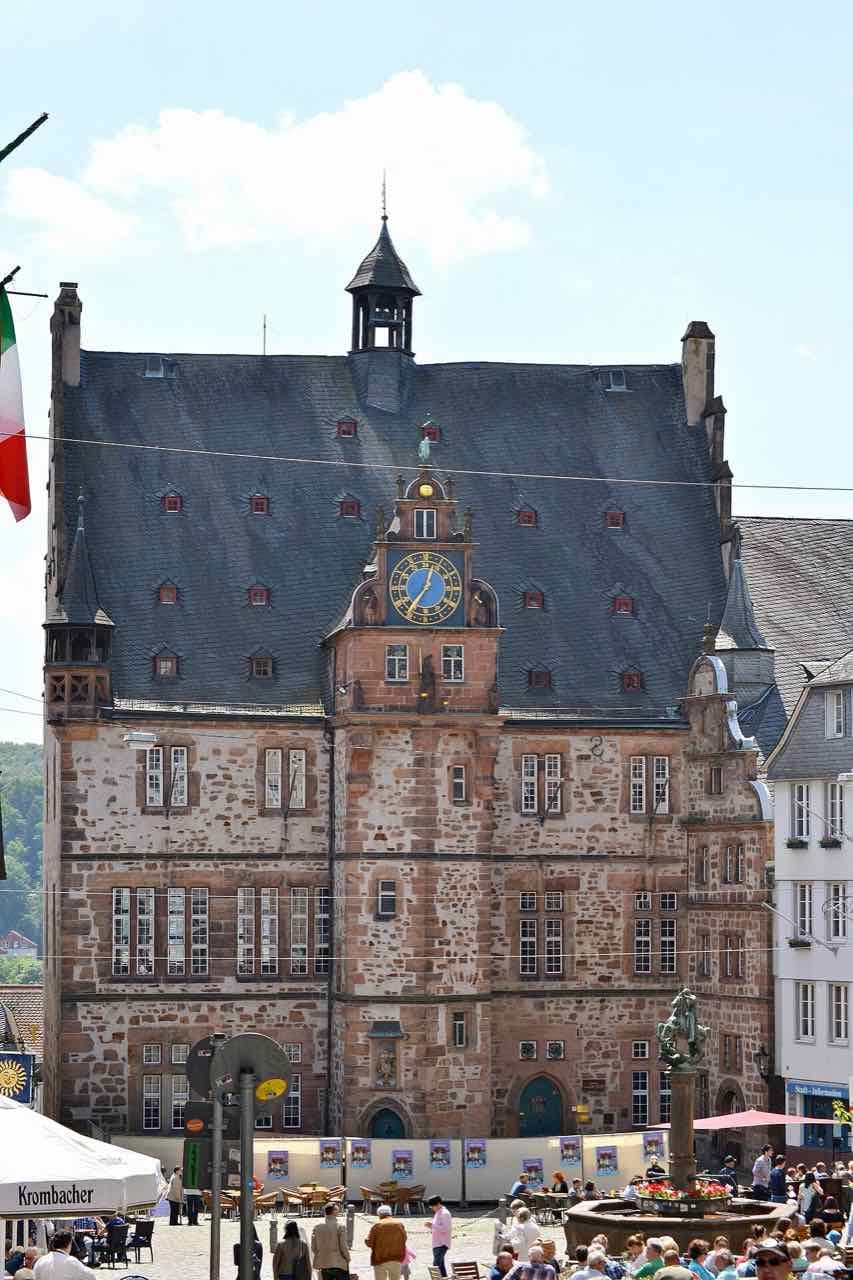
The old town below the castle, with narrow lanes, half-timbered houses and the Rathaus on the market square. The Tourist-Info Oberstadt is at Wettergasse 6.
Elisabethstraße 3. Open daily, 10:00 to 16:00 from November to March and 10:00 to 18:00 from April to September. Some rear parts of the church are closed for renovation, but the nave and the Elisabeth shrine can be visited.
The castle high above the old town. The city describes it as the crown of Marburg, with a wide view over the roofs and the valley, and its Fürstensaal is called the largest Gothic secular hall in Germany.
The tourist office offers guided walks, among them one on the witch trials in Marburg and one on the Brothers Grimm.
River, meadows and woods
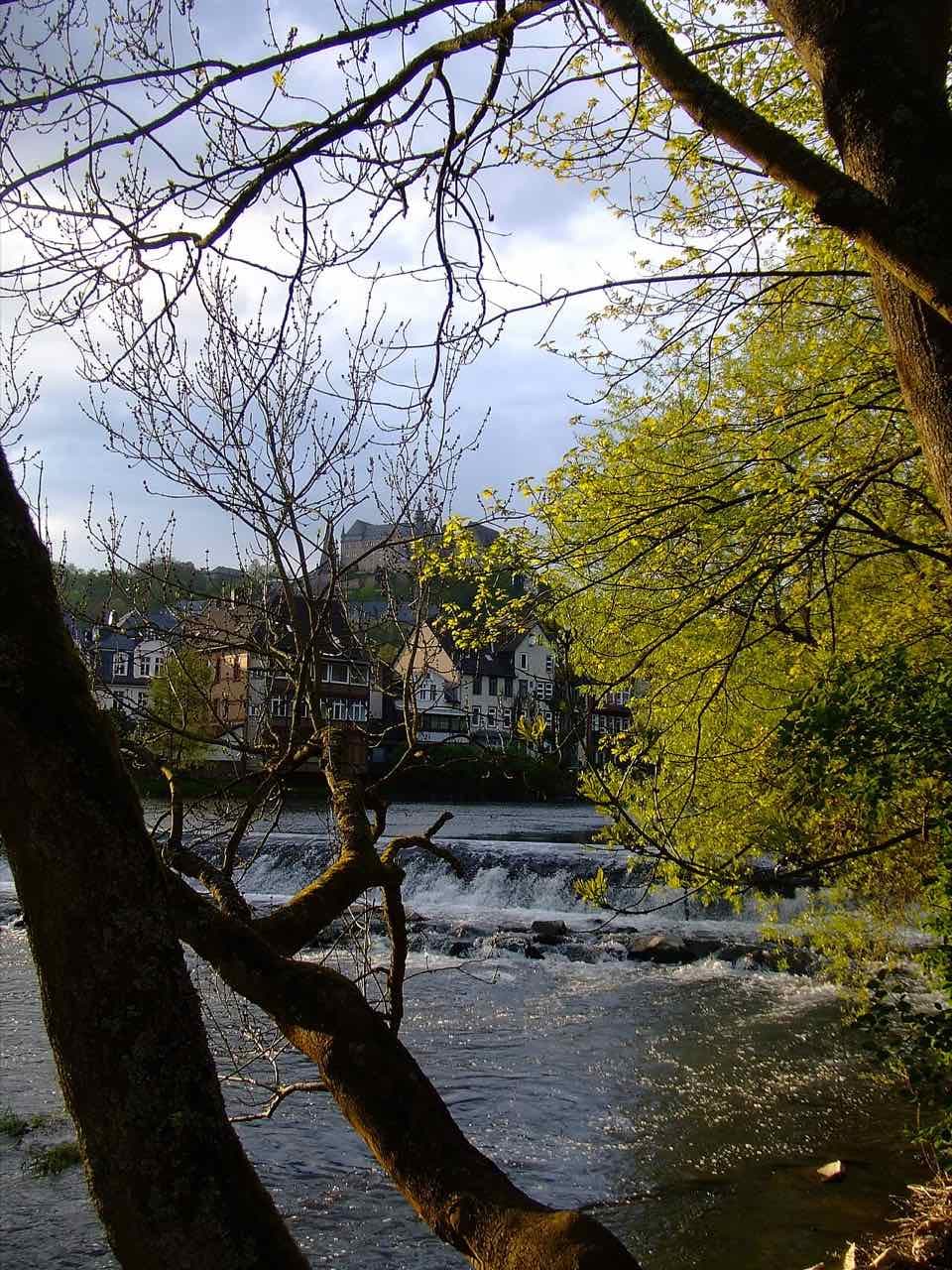
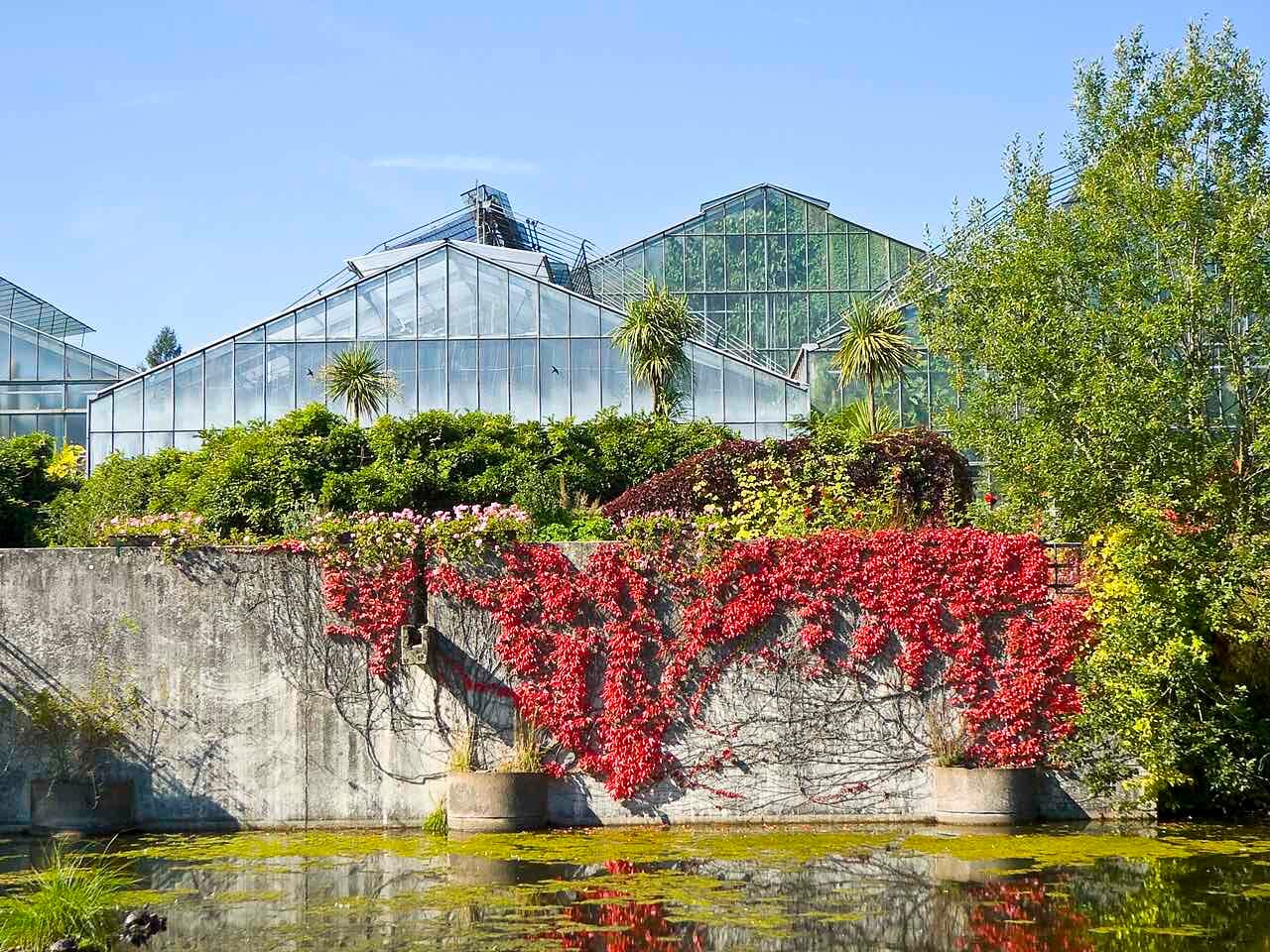
The Lahn flows from north to south through the valley, and the city lists the Lahnwiesen, the meadows along the river, among its green places, together with the Botanischer Garten. East of the centre rise the Lahnberge, the wooded heights that carry part of the university and the hospital; the city's highest point, the Störner, is 412 m, and the lowest point on the Lahn is 173 m above sea level.
The AStA offers nextbike hire, and 3.70 EUR of the semester fee is for nextbike.
What things cost
- Semester contribution, winter 2026/27
- 424.80 EUR (Deutschland-Ticket and nextbike 230.50, Studierendenwerk 125.50, student body 18.80, administration 50.00)source
- Dorm room, Atlashaus
- 331 to 439 EUR per month, furnished, 13.79 to 25.35 m²source
- Dorm room in a shared flat, Hasenherne
- 355 to 383 EUR per month including internet; rooms only go to students with a Wohnberechtigungsscheinsource
- Main dishes in the Mensa
- About 3.15 to 4.75 EURsource
- Passport photo at the Ausländerbehörde self-terminal
- 6 EURsource
Figures are from the university and the Studierendenwerk, checked on the date of this page. Private rents are not listed here because no reliable local figure was found.
Culture, nights out and sport
A small city, so a handful of places carry most of the evenings.
Hessisches Landestheater Marburg ↗
The state theatre. Students of Philipps-Universität can see performances free of charge with the Kulturticket, which is part of the semester fee (1.40 EUR).
A former railway depot, now a stage for theatre, concerts, comedy and dance, with a restaurant. Rudolf-Bultmann-Straße 2a, about five minutes on foot from the main station.
A cultural centre listed by the university among the places for concerts and events.
A small theatre listed by the university among the town's cultural venues.
Filmriss, the university cinema ↗
A student-run cinema listed on the university's campus-life page.
Work in and around the city
The university is the biggest employer, with 4,054 full-time employees in December 2025, and the university hospital adds more than 4,200 jobs. Marburg is also a historic site of the pharmaceutical industry, and a BioNTech plant here produces COVID-19 vaccines. The university's Career Service explains the work rules for international students and graduates.
Part 2
Student life in Marburg
Where you can study
Philipps-Universität Marburg ↗
Founded in 1527 and the oldest Protestant university still in existence. In winter semester 2025/26 it had 20,899 students, 4,739 of them international (22.7%), 208 degree programmes in the 2026/27 winter semester, 16 departments and 12 scientific centres. Its buildings are spread between the old town and the Lahnberge campus above the town, where the second Mensa is. The degree programme search lets you filter by language of instruction, German or English, so you can see the current English-taught offer. Studienkolleg Mittelhessen, which prepares international applicants for study in Marburg, Gießen and the Technische Hochschule Mittelhessen, is part of the university and sits on Wilhelm-Röpke-Straße 6.
International office ↗Student unions, services and groups
The elected student union. It offers free social and legal counselling, a hardship fund for the semester ticket, nextbike, a van to rent and project funding. Office at Erlenring 5; the Geschäftszimmer is open Mondays and Thursdays 11:00 to 13:00.
ARAS, the AStA unit for international students ↗
An independent unit of the AStA run by and for students from abroad. It organises the international week and country evenings, and advises on language, money, housing, jobs, residence rights and discrimination. Speaking hours by email appointment: aras@asta-marburg.de.
The student services body: 2,100 dorm places, the Mensas and cafés, social and psychological counselling (free and confidential), BAföG, and information on childcare. Erlenring 5.
Zentrum für Hochschulsport (ZfH) ↗
University sport with around 200 courses per semester, competitive teams for university championships, the university stadium on Jahnstraße, the Institut für Leibesübungen, tennis courts and a boathouse on the Lahn. Course places are in demand and online registration opens in the first week of the semester.
MarMento, mentoring for new international students ↗
Pairs a new student from abroad with a more experienced student for a semester, one to one or in small groups, online or in person. Registration for mentees runs before each semester in the Mobility-Online form; questions go to marmento@uni-marburg.de.
Mentoring & Buddy Program of the International Office ↗
Volunteer students support newly arrived international students.
International Stammtisch (Freiwilligenagentur Marburg-Biedenkopf) ↗
A monthly evening in a pub where international students meet people from Marburg. It is run by the volunteer agency and open to anyone interested in intercultural exchange; you register online and receive the venue by email. The page linked here is a past edition, so check the International Office news for the current date.
Evangelische Studierendengemeinde (ESG) ↗
The Protestant student community, at Rudolf-Bultmann-Straße 4. A service on Wednesdays at 19:00, a band, choir, theatre and garden group, a student residence and an emergency fund.
Katholische Hochschulgemeinde (KHG) ↗
The Catholic student community at Biegenstraße 18a, open to students of any origin or religion, with counselling, mentoring and student apartments.
The university lists the Studentisches Sinfonieorchester, a student big band, the university choir, and the Filmriss cinema among the ways to join in without a sport.
Campus and study culture
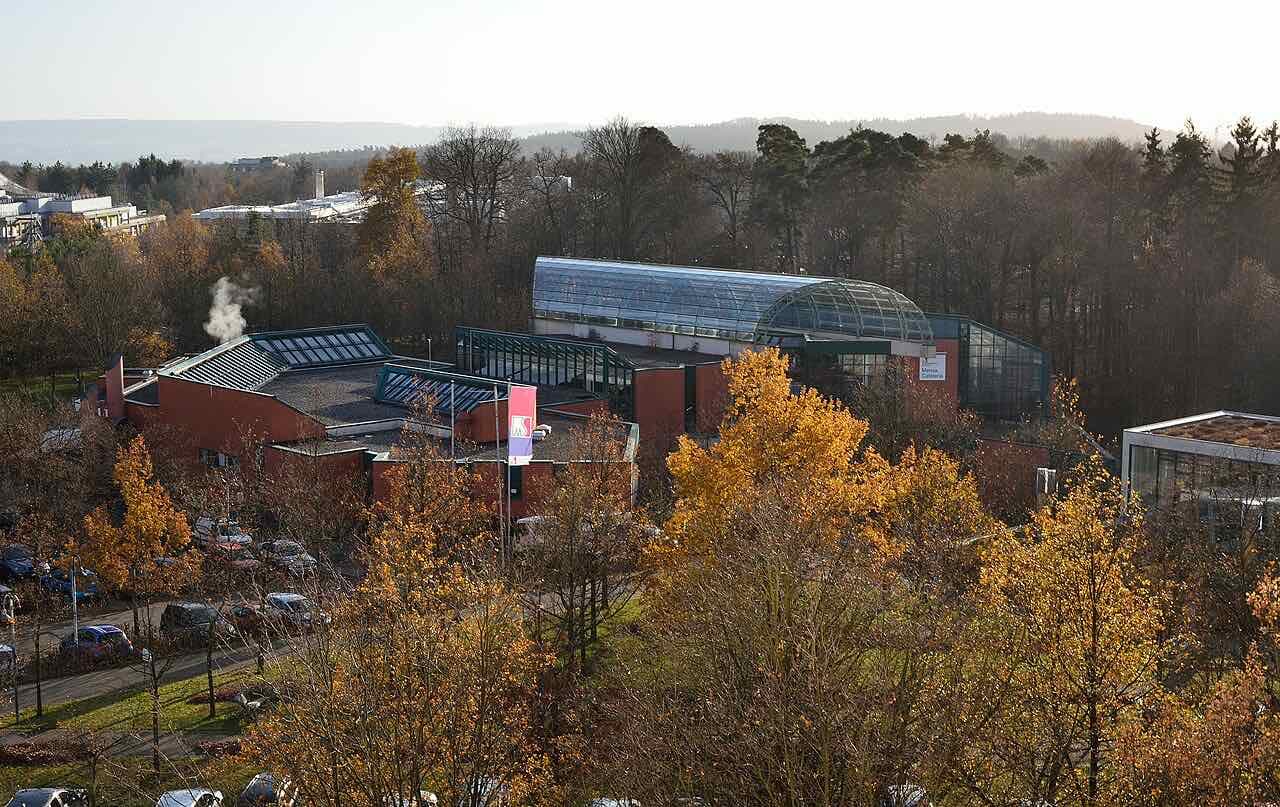
Philipps-Universität has 16 departments, so a lot of subjects are taught in one place. The main address is Biegenstraße 10, in the centre, and part of the university sits on the Lahnberge. Student life is a short walk from the old town: Mensa Erlenring, the AStA and the Studierendenwerk share the Studentenhaus at Erlenring 5.
For new international students the International Office runs an orientation before each semester (programmes in March and September, and in April and October), an online intercultural awareness training, a Successful Studies seminar that explains how studying works in Germany, and a podcast. Degree-seeking students may earn ECTS credits for the seminar. If you are still preparing for admission, the Studienkolleg offers the preparatory route.
Housing: dorms first, private room second
The Studierendenwerk runs 12 student residences with 2,100 places. The Studentendorf alone has eight houses and 811 places: 392 single rooms, 313 apartments and 106 shared-flat rooms. The Atlashaus has furnished single rooms at 331 to 439 EUR per month, and the Hasenherne has shared-flat rooms at 355 to 383 EUR including internet, though those are reserved for students with a Wohnberechtigungsschein. Applying online is free and non-binding, and you can apply before you have enrolled.
If there is no dorm place, the Studierendenwerk keeps a private room exchange (Privatzimmerbörse). The AStA has a housing unit as well. The Studierendenwerk does not publish waiting times, so ask wohnen@stw-mr.de early.
Food, bikes and getting around
Mensa Erlenring, in the Studentenhaus, serves food from 11:30 to 14:15 on weekdays, and one menu a day is fully vegan. The Studierendenwerk also runs Mensa Lahnberge, Mensa Vital, a bistro and several cafés. Main dishes on its page run from about 3.15 to 4.75 EUR.
The semester ticket is a Deutschland-Ticket for local and regional transport across Germany, plus nextbike. It does not cover long-distance trains. Whether it fits a particular route is for you to check before you buy a separate ticket.
Sport and free time
Besides the Hochschulsport, the university's campus-life page lists the Aquamar swimming and leisure pool, the Volksbank climbing hall, a climbing forest, a riding club, a diving club and the BSC Samurai Marburg e.V.. For music, the Musizierhaus in the Alter Botanischer Garten can be used for a small fee when you cannot practise at home.
Your first weeks
- 1
Before you travel
Join the International Office's orientation programme and check the VisaFlow tracker the university offers for the paperwork before and after arrival.
- 2
In the first days
Book an appointment for the address registration (Anmeldung) at the Stadtbüro, Frauenbergstraße 31, through termine-reservieren.de/termine/marburg. New slots are released on Mondays. Bring your passport and residence documents in original.
- 3
In the first weeks
Book the residence permit appointment at the Ausländerbehörde, which sees visitors only by appointment: online at termine-reservieren.de/termine/marburg, by email to auslaenderbehoerde@marburg-stadt.de or by phone on 06421 201-1010. Students can start the application for a permit for study online at the city's digital service. Digital photos are compulsory; the self-terminal at the office costs 6 EUR.
- 4
Enrolment
Pay the semester contribution, which includes the Deutschland-Ticket. The amount for winter semester 2026/27 is 424.80 EUR.
- 5
Meet people
Sign up for MarMento or the buddy programme, go to the International Stammtisch, and look at the Hochschulsport programme in the first week, when registration opens.
Working next to your studies
Students from outside the EU, Iceland, Liechtenstein, Norway and Switzerland may work 140 full days or 280 half days a year, according to the DAAD. The University of Marburg adds that during lectures the limit is 20 hours a week, that jobs as research or teaching assistants (Hiwi, SHK) are allowed in addition to the 140 days, and that voluntary internships count towards the days while compulsory ones do not. Self-employment needs special permission from the Ausländerbehörde. Check your own permit, and ask the Career Service if unsure.
Where you come from matters here
Pick your home country: food, faith, community groups and the consulate that serves you, checked 21 October 2026.
🇮🇳 Living in Marburg as an Indian student
The Consulate General of India is in Frankfurt, and a Krishna temple is in Offenbach, next to Frankfurt.
Consulate General of India, Frankfurt ↗
Friedrich-Ebert-Anlage 26, Frankfurt. Passport, visa, OCI, attestation and police clearance services are listed on its site; check its jurisdiction page for your situation.
A Krishna temple at Kaiserstraße 26, Offenbach, open every Sunday from 13:00 with kirtan, a lecture in English and Russian, and a shared vegetarian meal.
🇳🇬 Living in Marburg as a Nigerian student
The Consulate General of Nigeria in Frankfurt covers Hesse, and the English-language Catholic parish meets in Frankfurt.
Consulate General of Nigeria, Frankfurt ↗
Weißfrauenstraße 12, Frankfurt. The Foreign Office lists Hesse, Baden-Württemberg, Bavaria, North Rhine-Westphalia and Rhineland-Palatinate in its district.
The embassy site explains passport requirements, fees, appointments and the visa application centre.
International English-Speaking Parish, Frankfurt ↗
A Catholic parish with weekly English Mass at St. Leonhard's in the city centre, at Holy Cross in Bornheim and at St. Mary's in Liederbach; times are on its contacts and Mass schedule page.
🇻🇳 Living in Marburg as a Vietnamese student
Vietnam's Consulate General in Frankfurt covers Hesse, and the Vietnamese-Buddhist community place listed here is in Frankfurt too.
Consulate General of Vietnam, Frankfurt ↗
Kennedyallee 49 (Villa Hanoi), with the consular department at Rubensstraße 30. The Foreign Office lists Hesse in its consular district.
A Vietnamese-Buddhist Zen monastery at Hanauer Landstraße 443, with meditation on Wednesdays 19:00 to 20:00 and the Tết festival.
🇳🇵 Living in Marburg as a Nepali student
Nepal's embassy is in Berlin.
Guerickestraße 27, Berlin. Passport, visa, travel document, power of attorney and document attestation services.
The student-run unit for international students is the first local contact for any country, including Nepal.
🇵🇰 Living in Marburg as a Pakistani student
The Consulate General of Pakistan is in Frankfurt.
Consulate General of Pakistan, Frankfurt ↗
Eschenbachstraße 28, Frankfurt. It describes its work as consular services, guidance for the Pakistani community and support for community events. Phone 069 69867850.
Embassy of Pakistan, consular services ↗
The list of services (passport, attestation, e-visa, birth registration, NADRA) and the page on consular jurisdiction.
🇨🇳 Living in Marburg as a Chinese student
The Consulate General of China is in Frankfurt.
Consulate General of the People's Republic of China, Frankfurt ↗
Its site lists consular protection, documents and consular services; check the district page for whether your case belongs to it.
Konfuzius-Institut Frankfurt ↗
A language and culture institute at Eschersheimer Landstraße 60-62, open weekdays 10:00 to 15:00, with Chinese courses, HSK exams and an events calendar.
English-taught programmes in Marburg
Soonest open deadline first. Every entry links to its official source.
- Sustainable Development (MSc)Marburg University · MarburgmasterNo tuition15 Jul 2027Open
- Economics, Institutions, and Behaviour (MSc)Marburg University · MarburgmasterNo tuition15 Jul 2027Open
- International Political Economy (MSc Double Degree)Marburg University · MarburgmasterNo tuition15 Jul 2027Open
- Molecular Biotechnology (MSc)Marburg University · MarburgmasterNo tuition15 Jul 2027Open
- Master of Peace and Conflict Studies (MA) (International Joint Degree)Marburg University · MarburgmasterRollingApply anytime
- Business Mathematics (MSc)Marburg University · MarburgmasterNo tuitionSee sourceCheck source
- Computer Science (MSc)Marburg University · MarburgmasterNo tuitionSee sourceCheck source
- North American Studies (MA)Marburg University · MarburgmasterNo tuitionSee sourceCheck source
- Mathematics (MSc)Marburg University · MarburgmasterNo tuitionSee sourceCheck source
- Economics of the Middle East (EMEA)Marburg University · MarburgmasterNo tuitionSee sourceCheck source
- Business Informatics (MSc)Marburg University · MarburgmasterNo tuitionSee sourceCheck source
- Data Science (MSc)Marburg University · MarburgmasterNo tuitionSee sourceCheck source
- Applied Methods of Social Science Research (MA)Marburg University · MarburgmasterNo tuition21 Aug 2026Deadline passed
- International Political and Social Science Research (MA)Marburg University · MarburgmasterNo tuition21 Aug 2026Deadline passed
Is Marburg right for you? Ask us. Free.
Tell us your passport, grades and budget. We compare Marburg with the other places you could study, then apply for you. You never pay us.
Get my free plan