Studying in Bavaria, Germany
Neu-Ulm
A Bavarian city on the Danube, one bridge from Ulm, with a campus built around a lake.
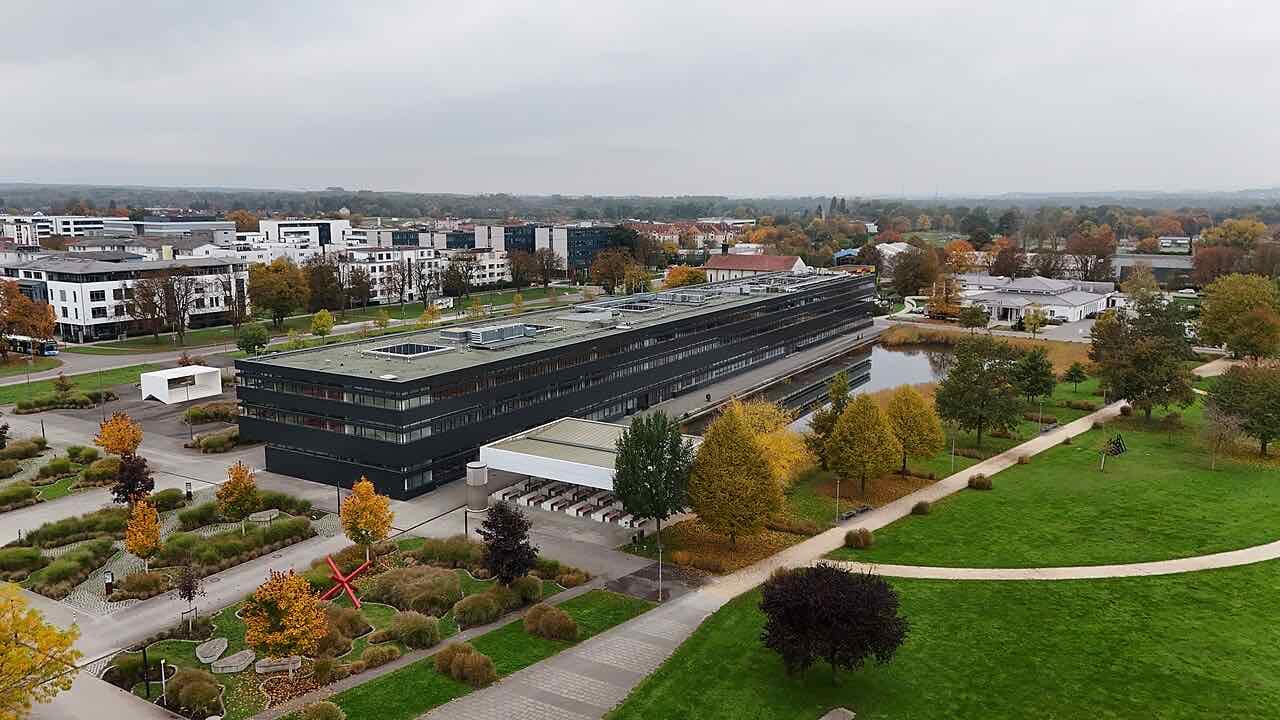
Neu-Ulm is a city of about 63,000 people on the right bank of the Danube, directly opposite Ulm. The river is the state border, so Neu-Ulm is in Bavaria and Ulm is in Baden-Württemberg, but the two work as one double city of roughly 193,000 people. The Hochschule Neu-Ulm (HNU) sits on a former US Army site, the Wiley, with its own lake, a sports park with a skatepark and a disc golf course in the same district, and a student residence a seven-minute walk away. Nine of its Master's programmes are taught entirely in English. HNU states that international students pay no tuition fees in Bavaria, and it estimates about 1,000 euros a month for a student on a budget. You study at a business-focused university of applied sciences, and across the river there is a research university and a technical university of applied sciences, so exchanges and events draw on three campuses.
- State and district
- Bavaria, administrative district of Swabia; seat of the Neu-Ulm district
- Tuition for international students
- none in Bavaria; an administration fee of 85 EUR at the start of each semester
- Monthly budget
- about 1,000 EUR, with rent of 400 to 600 EUR
Part 1
Living in Neu-Ulm
A fortress town that became a city
Neu-Ulm exists because of a border. When Ulm passed to Württemberg in 1810, the land on the right bank of the Danube stayed Bavarian, and a new community grew there that was named Neu-Ulm by 1814. The Bundesfestung Ulm, decided in 1841 and built from 1844 to 1857, brought a garrison, and the railway reached the town in 1853. King Ludwig II gave Neu-Ulm town rights in 1869.
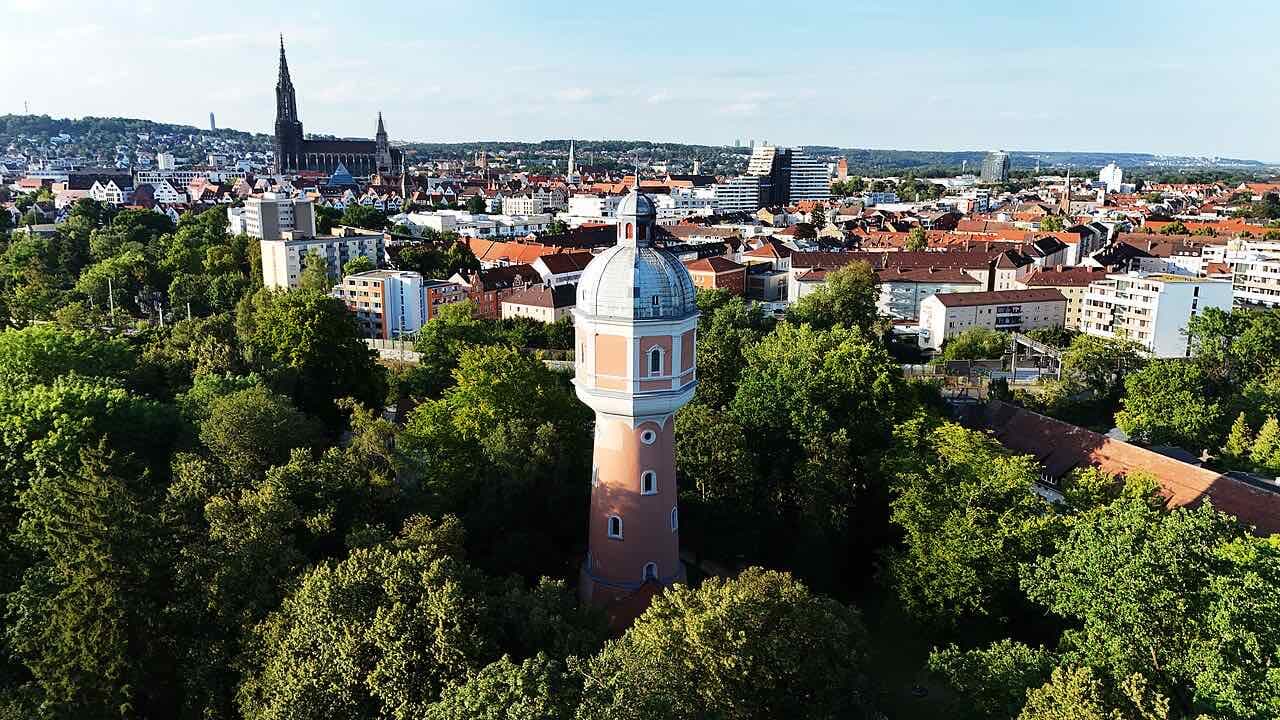
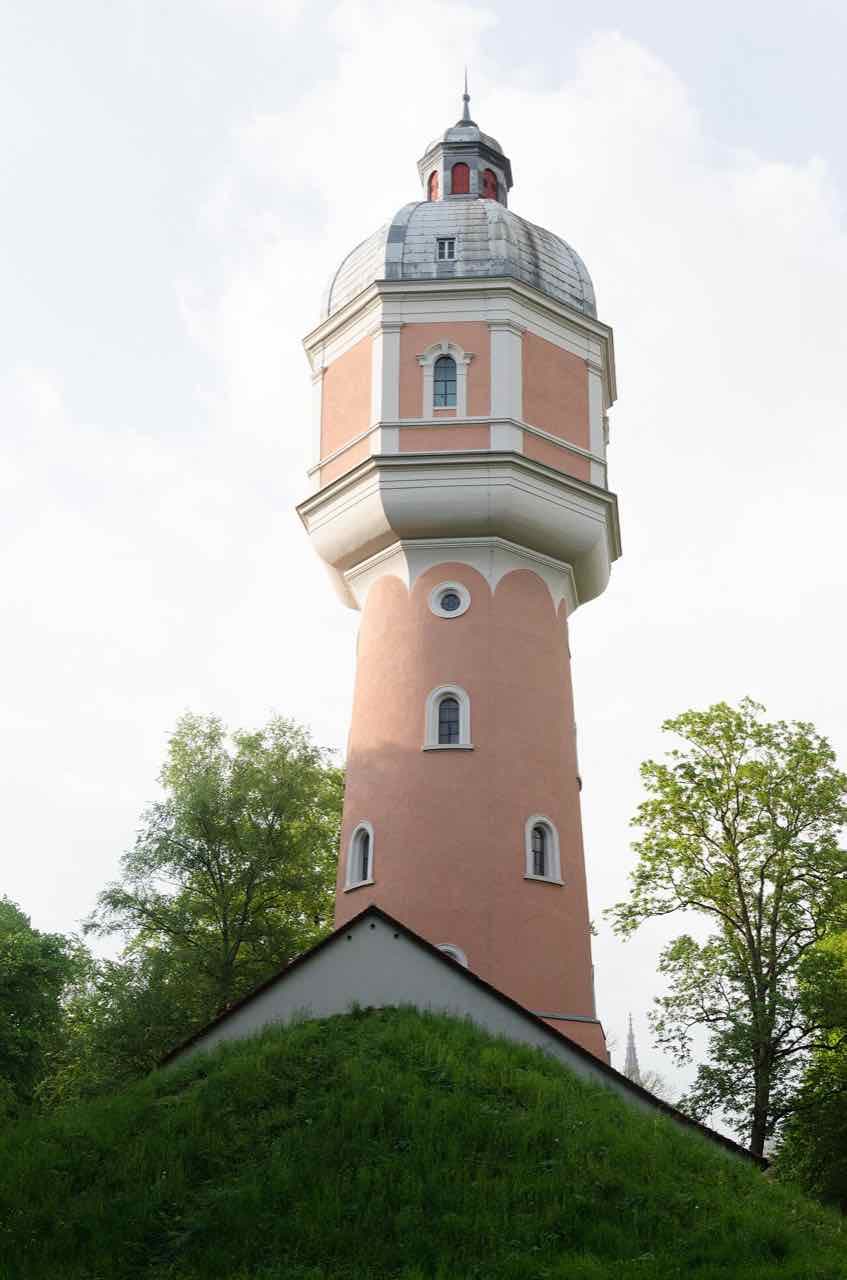
About 80 percent of the town was destroyed in the bombing of 1945. What you see today is mostly post-war, with a few older landmarks: the neo-Gothic Petruskirche from the 1860s, the Edwin-Scharff-Haus congress hall from 1977, and the pink water tower of 1900 that serves as the town's symbol. US forces were stationed here from 1951 until 1991, and their former barracks area, the Wiley, is now where the university and a large new housing district stand. The sports park followed the 2008 state garden show and the student residence opened in 2015, so the area around the campus is new.
What to see and do
Most of this is in the middle of town or a short bus or bike ride from the campus. The city's own tourism pages list more.
Glacis park and the old fortress ↗
A park on the western part of the former fortress, with surviving fortress works (Caponniere 4 to 8) and an open-air venue. The name comes from the French word for the earth slope in front of a fortification.
Kollmannspark and the water tower ↗
A park laid out in 1910 around the water tower, with old trees. The tower stands on a former powder magazine of the fortress, and the park has hosted a family festival every year since 1997.
A museum at Petrusplatz named after Edwin Scharff, with a hands-on children's museum for ages 4 to 12 in the same complex.
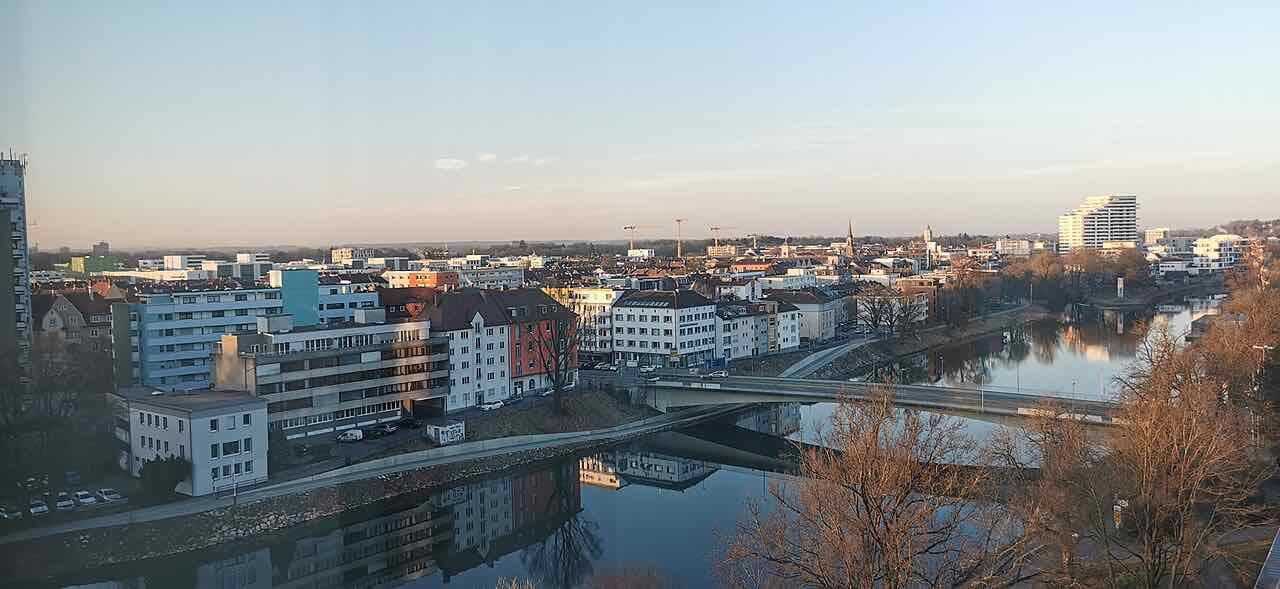
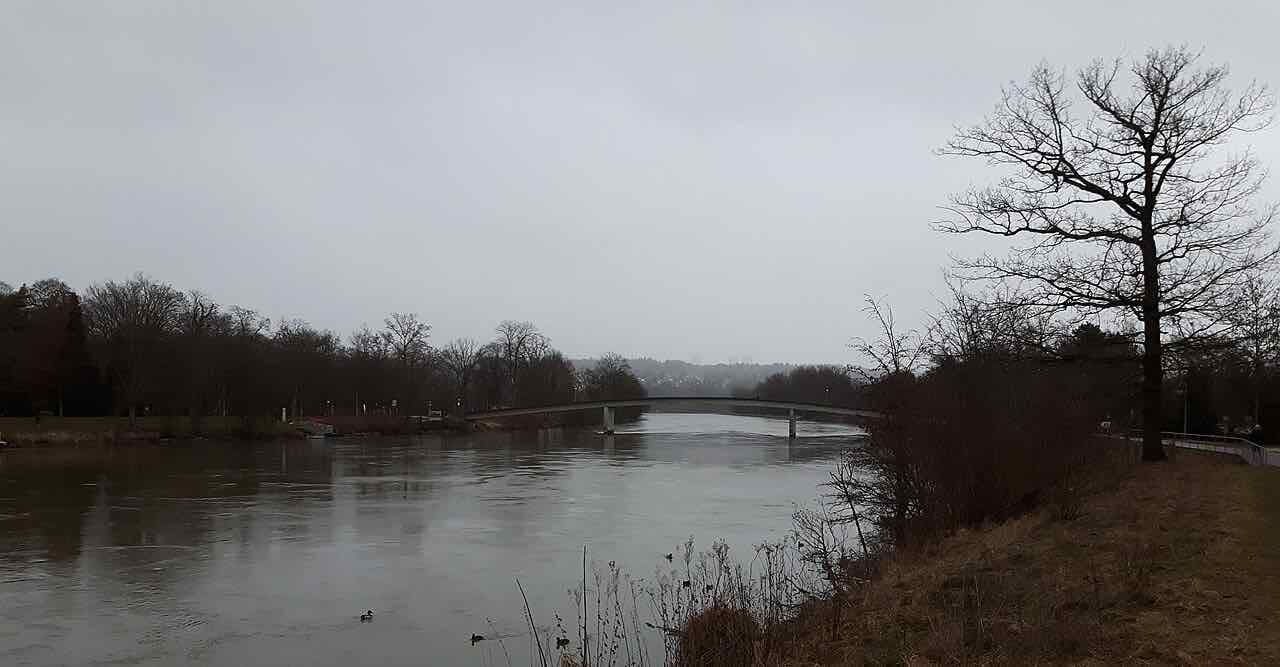
Two small riverside parks. At the Edwin-Scharff-Haus there are grass steps down to the water and a chess board; the Herbelhölzle runs from the Barfüsser beer garden to the footbridge in Offenhausen under old trees.
Sport and leisure park Wiley ↗
Created for the 2008 state garden show. It has a skatepark, a beach volleyball court, an outdoor gym with seven stations and a disc golf course that anyone can use without registering. A foot and bike bridge, the Grüne Brücke, connects it to the centre.
The city's event pages list the Donaufest, Rock in den Mai, a town festival, an orchid days show, a craft market and a medieval Christmas market.
On the river
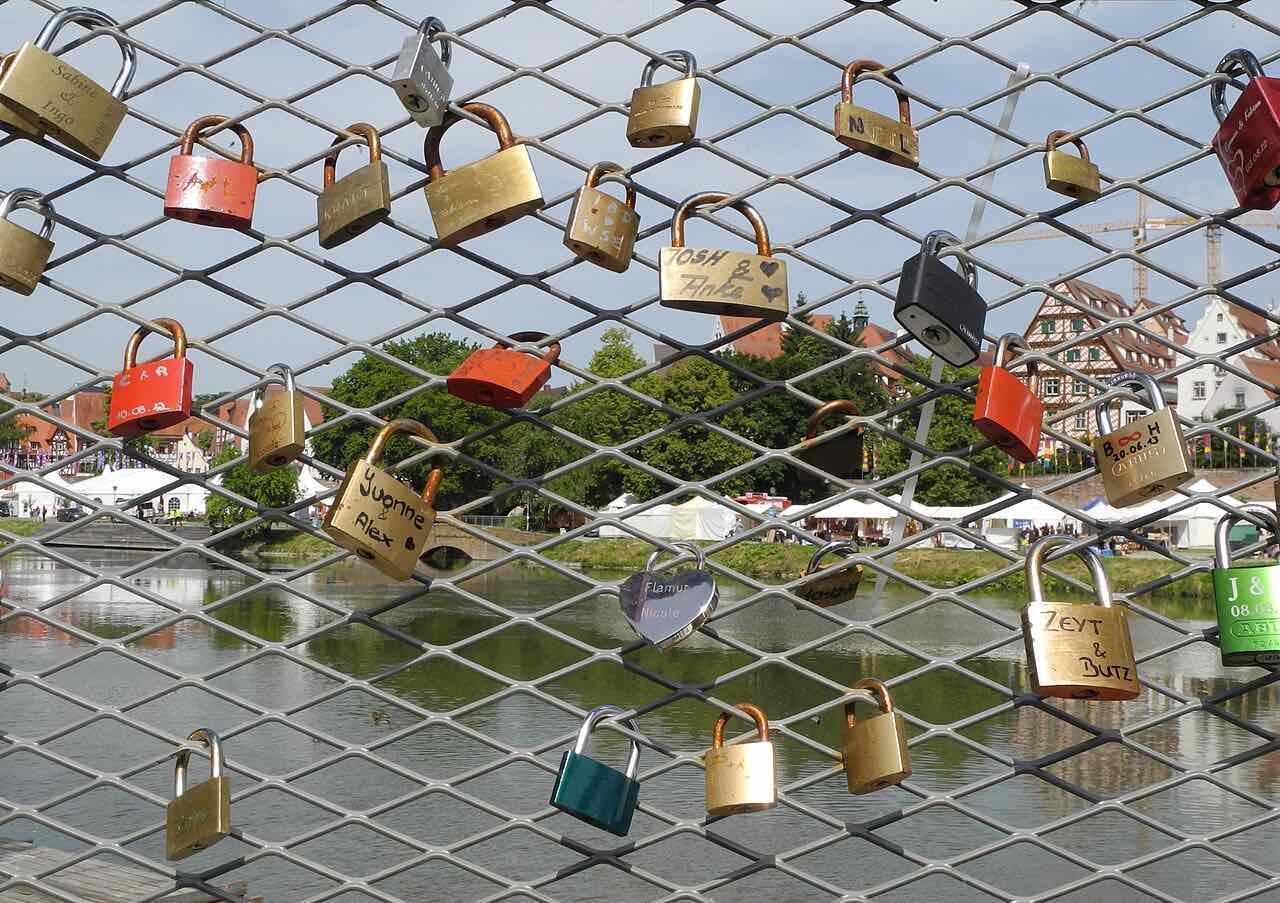
Lakes, bikes and weekends
Neu-Ulm has two supervised bathing lakes inside the city boundary. The Ludwigsfeld lake has about 12 hectares of water and a public barbecue zone that is open from 1 May to 30 September. The Pfuhl lake, in the forest north of Pfuhl, has 7.5 hectares of water and a beach volleyball court. Both have a kiosk and a lifeguard building. The Wiley, where the campus stands, belongs to the Ludwigsfeld district.
The Danube cycle path and the EuroVelo 6 route, which runs from the Atlantic to the Black Sea, both pass through Neu-Ulm. For a day trip you can follow the river or take a regional train: Augsburg, Memmingen, Kempten and Stuttgart are all on the lines from Neu-Ulm station.
Getting around
Neu-Ulm and Ulm are separated only by the Danube, so most students move between the two every day.
Neu-Ulm took over responsibility for local public transport on 1 January 2024. A new city bus network, built on the existing Ulm and Neu-Ulm concepts with fewer changes between the two cities, is due to start on 1 January 2027, so lines may change during your studies.
The Studierendenwerk lists bus line 5, stop Memminger Straße, for the student residence in Heinz-Rühmann-Straße.
The university points students to the Ermäßigungsticket Bayern. Check what your semester fee covers before you buy a monthly ticket.
The Danube cycle path and the EuroVelo 6 route both pass through Neu-Ulm.
Where the work is
Neu-Ulm and Ulm share one job market. The first three below are named in the encyclopedia's list of companies based in Neu-Ulm, which may not be current, and none of this is a promise of a job.
Final assembly of Setra buses and the Mercedes Integro, with about 3,650 employees, the biggest production site of the former EvoBus.
A logistics service provider with 25 sites in Germany and Romania.
Treatment couches and medical training equipment for physiotherapy and rehabilitation.
The city's housing company with about 2,000 homes. It builds and manages a large share of the city's social housing; you can register on its waiting list.
The city's own business pages name commercial vehicles, pharma and medical technology and electronics and IT as the main fields of the Ulm and Neu-Ulm region.
Welcome Center Ulm/Oberschwaben ↗
HNU points international students to it for contacts with regional companies, thesis placements and a job fair.
Part 2
Student life in Neu-Ulm
Where you can study
Founded in 1994, an independent university since 1998 and a university of applied sciences since 2008. About 4,400 students study in three faculties (Health Management, Information Management, Business and Economics) and a Centre for Postgraduate Studies. The campus is in the Wiley district beside a lake. It lists nine Master's programmes taught entirely in English, among them Artificial Intelligence and Data Analytics, Artificial Intelligence and Health Informatics, Digital Innovation Management, Digital Transformation and Global Entrepreneurship, International Corporate Communication and Media Management and Social Entrepreneurship for Sustainable Development. Most Bachelor's programmes are in German, and each programme page states its language of instruction.
International office ↗On the other side of the Danube. Founded in 1967, the youngest university in Baden-Württemberg, with faculties of Engineering, Computer Science and Psychology, Mathematics and Economics, Medicine and Natural Sciences. Its International Office runs buddy and welcome programmes for international students. HNU students can use the university sports programme run with Ulm.
International office ↗Technische Hochschule Ulm (THU) ↗
Ulm's technology-focused university of applied sciences. Its own figures list 2,851 students, 28 Bachelor and 8 Master programmes, six faculties and 15 research institutes, on two campuses at Prittwitzstraße 10 and Albert-Einstein-Allee 53/55. It is known for mobility, digital technologies, medical technology and energy systems.
International office ↗Student unions, services and groups
HNU student representation (StuVer) ↗
Elected student body with an office in the main building, room A.1.37. It votes on the use of student funds, sits in the senate and organises events.
Local Erasmus+ Initiative Neu-Ulm (LEI) ↗
Student group that welcomes international exchange and degree students and answers everyday questions. It runs get-togethers, joint visits to cultural and sport events and trips in the region, partly funded so that prices are lower.
Overview page for Ingenieure ohne Grenzen, the student consultancy ponte consult, ROCK YOUR LIFE! mentoring, Einstein Motorsport, Arbeiterkind, Student team move and the LIONS Club Campus Neu-Ulm.
University sports (Healthy University) ↗
Dancing, yoga, team sports and fitness, run each semester with Ulm University. HNU's health pages also link the sports programme app and city clubs.
Studierendenwerk Augsburg, Neu-Ulm ↗
The student services body for Neu-Ulm runs the residence in Heinz-Rühmann-Straße and a private-room database.
Ulm University buddy programme ↗
Pairs newcomers with an experienced student, with events such as guided tours and pumpkin carving evenings. Open to Ulm University students.
Ulmer Studentengemeinden (ESG and KHG) ↗
The Protestant and Catholic student communities in Ulm, Münchner Straße 1, with weekly services and community evenings. HNU lists them for its students.
Lectures, semester openings, city tours, iftar evenings and free tutoring and mentoring for new students. Everyone is welcome.
Campus life and study culture
HNU describes itself as the leading international business school of the region. Its profile stresses professors from practice and joint projects with regional companies, and it offers dual study routes (the Ulmer Modell) that combine study with work in a company. Its programmes are in business, information management and health management, so expect group projects, presentations and a lot of company contact.
Several of the English-taught Master's programmes include an exchange semester in a third country. HNU says to include it in your visa application and to contact that country's embassy early.
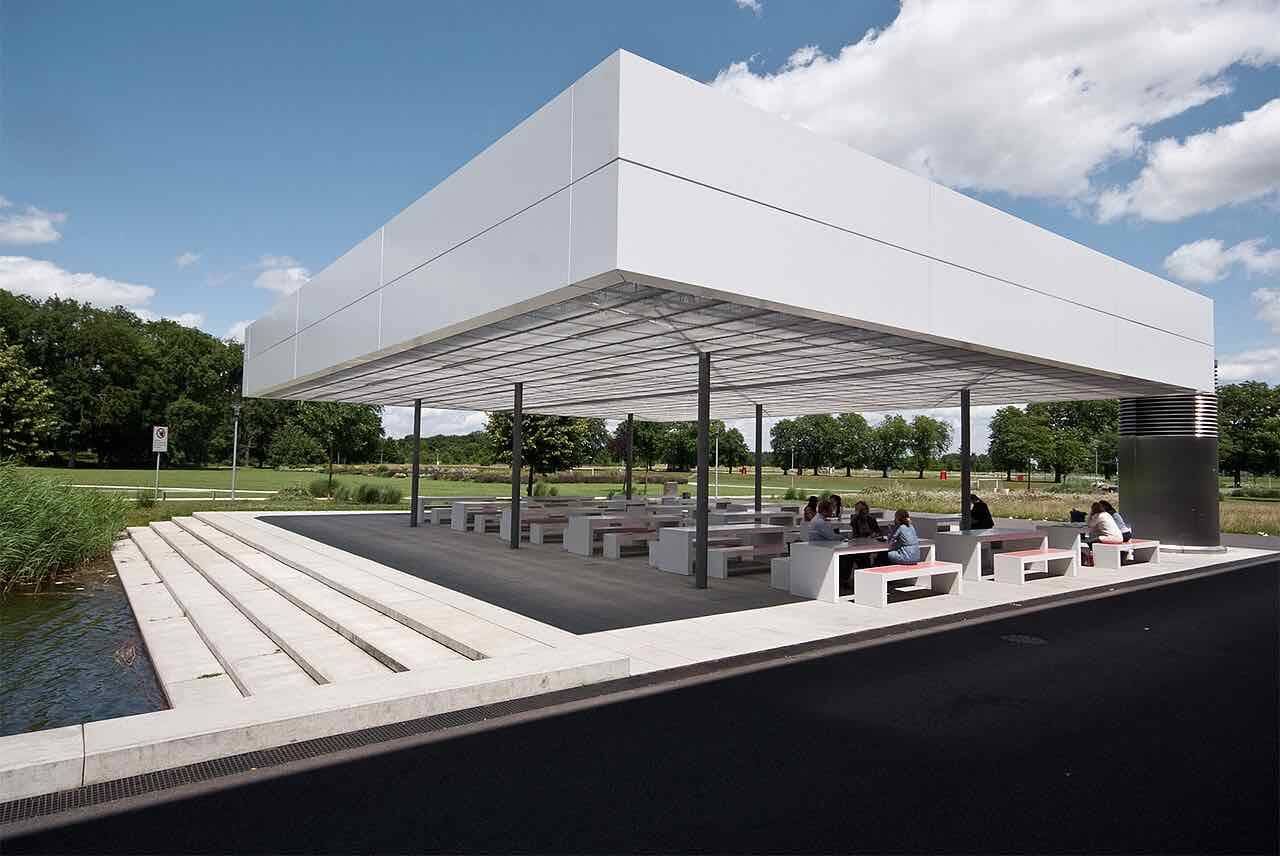
Between lectures students use the lake terrace, a relaxation room called Club F in building A and a campus choir. Student groups put on events, from the orientation week to the International Week.
What it costs a month
- Rent (private or shared room)
- 400 to 600 EUR; an average shared room in Ulm is 480 EURsource
- Student residence, single apartment (about 21 m2, furnished)
- 397 EUR all-inclusive, deposit 700 EURsource
- Student residence, shared double apartment (per place)
- 382 EUR, deposit 600 EURsource
- Food, teaching materials and transport
- about 350 EURsource
- Public health insurance
- about 145 EURsource
- German broadcasting licence
- 20 EURsource
- Administration fee
- 85 EUR at the start of each semestersource
- Electronic residence permit
- 100 EUR once, when you apply for the visa extensionsource
These are the university's own estimates for international students and the Studierendenwerk's published rents.
Housing: start before you arrive
HNU says plainly that you have to organise your own room and that rooms are very scarce at the start of the winter semester.
Heinz-Rühmann-Straße 9, built in 2015 next to the Wiley park and a seven-minute walk from HNU. 116 single apartments, 10 double apartments and 5 flats for parents with children or groups of three. Furnished, with a roof terrace, a common room and a garden. Waiting time is one to two semesters, the maximum rental period is six semesters, and only HNU students may live there. Apply on the Studierendenwerk Augsburg site as soon as you are admitted.
The Studierendenwerk Augsburg runs a free service for private rooms and flats for students in Augsburg, Kempten and Neu-Ulm.
A private residence in Neu-Ulm at higher prices. It needs proof of private liability insurance and a tenant self-disclosure form.
The university lists the Brickstone Hostel in Neu-Ulm, the Orange Hotel and the Ulm youth hostel for up to three months while you search.
HNU links WG-Gesucht for finding a shared flat, with guides on writing an application.
Food, sport and evenings
The HNU canteen in building A has two to three hot dishes a day, one of them vegetarian, plus a salad and dessert buffet, and a terrace on the lake. You pay with the CampusCard. A cafeteria in building B sells sandwiches, pretzels and coffee. The canteen is open Monday to Thursday from 11:30 to 14:00 and Friday until 13:45.
For sport, HNU students can use the Ulm University sports programme, which has a booking system and an app. In the city, the Vereine page lists clubs for football, rowing, canoeing, climbing with the Alpine Club section, diving, basketball and martial arts. The Wiley park is free to use.
A good first evening is the international Stammtisch Mosaik at Café Bistro Edison, Edisonallee 19. The city runs it a few times a year and the group speaks German together, so it is also practice.
Your first weeks
- 1
Before you fly
Apply for the national student visa, category D. A tourist visa is not enough. You usually have to prove your funds for the whole stay in advance, and depending on the embassy this means a blocked account. HNU says the process can take several weeks or months.
- 2
Arrival
Book a bed for the first weeks. The Brickstone Hostel, the Orange Hotel and the Ulm youth hostel are the university's suggestions for up to three months. Once you have a room, ask the landlord to sign the Wohnungsgeberbestätigung.
- 3
Within two weeks of moving in
Register your address at the Bürgerbüro of the city of Neu-Ulm, Petrusplatz 15, with your passport, the landlord's confirmation (Wohnungsgeberbestätigung) and your visa. If you live in Ulm you register in Ulm instead.
- 4
Then
Apply for the electronic residence permit at the Landratsamt Neu-Ulm, Kantstraße 8, which is the Ausländerbehörde for Neu-Ulm residents. The office takes digital passport photos from machines it provides. Bring your passport, your visa and proof of funds, and check the office's current document list.
- 5
Enrolment
HNU needs proof of health insurance. Public insurance costs about 145 EUR a month. Then pay the 85 EUR administration fee at the start of the semester.
- 6
In the first month
Join the LEI Neu-Ulm, go to the orientation week and open a bank account.
Working next to your studies
International students from outside the EU may work a maximum of 140 full days or 280 half days (four hours a day) a year without a separate work permit. Students from the EU may work freely, and all students may work at most 20 hours a week in lecture periods to keep student status. HNU cautions that a job is not certain and that German is often required. Working-student jobs (Werkstudent) in English exist in the Ulm, Stuttgart and Munich region.
HNU's job platform, the Innovation Region Ulm job portal and the Welcome Center Ulm/Oberschwaben are the university's own pointers. Volunteering counts as well, and the LEI is one way to start.
Where you come from matters here
Pick your home country: food, faith, community groups and the consulate that serves you, checked 21 October 2026.
🇮🇳 Living in Neu-Ulm as an Indian student
The city's club and integration lists name no Indian association or Hindu temple. The consulate for Bavaria is in Munich.
Consulate General of India, Munich ↗
Its site says its operational jurisdiction covers Bavaria and Baden-Württemberg. Passport services and appointments are booked there.
Internationaler Beirat of Neu-Ulm ↗
The city's advisory council for migration and integration. Hindi is one of the languages its members cover.
Ulm University buddy programme ↗
Pairs new international students with a student already living there and runs welcome events.
🇳🇬 Living in Neu-Ulm as a Nigerian student
The city's lists name no Nigerian association or African church. The Nigerian embassy is in Berlin, with a consulate general in Frankfurt.
Neue Jakobstraße 4, 10179 Berlin. The site's consular section lists passport and visa services and the Consulate General in Frankfurt am Main.
The Protestant and Catholic student communities in Ulm hold services and community evenings and help students who need an emergency bed at the start of a semester.
The city's international Stammtisch at Café Bistro Edison. All languages and nationalities are welcome.
🇻🇳 Living in Neu-Ulm as a Vietnamese student
The city's lists name no Vietnamese association or pagoda. The Vietnamese embassy is in Berlin.
Elsenstraße 3, 12435 Berlin-Treptow. Its site is mainly in Vietnamese.
The city's international meet-up at Café Bistro Edison, Edisonallee 19, where German is spoken together.
Stabsstelle Interkulturelles Neu-Ulm ↗
The city's office for intercultural questions, Steubenstraße 17. It coordinates the integration network and the Internationaler Beirat.
🇨🇲 Living in Neu-Ulm as a Cameroonian student
The city's lists name no Cameroonian association or community church. The embassy is in Berlin and also covers nine other countries.
The site is available in English, French and German.
Protestant and Catholic student communities in Ulm, Münchner Straße 1, with services and community evenings.
Landratsamt Neu-Ulm, foreign residents and integration ↗
Department 51 of the district office is the contact point for migrants, including EU citizens and refugees, with an integration officer.
🇺🇸 Living in Neu-Ulm as an American student
Neu-Ulm has a partner city in the United States, and the US Consulate General for Bavaria is in Munich.
U.S. Embassy and Consulates in Germany ↗
The official site, with a page for the Consul General in Munich and services for US citizens, including emergency contacts.
New Ulm, Minnesota, Neu-Ulm's partner city ↗
The city's partner towns page lists New Ulm in the USA alongside Bois-Colombes in France, Trissino in Italy and Meiningen in Thuringia.
Student group that welcomes international students and answers everyday questions.
🇨🇳 Living in Neu-Ulm as a Chinese student
The Chinese consulate for Bavaria is in Munich. In Neu-Ulm there is a Chinese martial arts club and an advisory council whose members speak Chinese.
Consulate General of the People's Republic of China, Munich ↗
The consulate's website has a section on its Bavarian consular district and consular services. The site is mostly in Chinese.
Internationaler Beirat of Neu-Ulm ↗
Chinese is one of the languages in which the council's members work. It advises the city on migration and integration.
CKI Neu-Ulm (Chinese Kuoshu Institute) ↗
A martial arts club listed among the city's sports clubs. The city's list of clubs has the current entry.
English-taught programmes in Neu-Ulm
Soonest open deadline first. Every entry links to its official source.
- International Corporate Communication and Media Management (ICCMM)Neu-Ulm University of Applied Sciences · Neu-UlmmasterNo tuition15 Jan 2027Open
- International Entrepreneurship, Digitalisation and Sustainability (MSc)Neu-Ulm University of Applied Sciences · Neu-UlmmasterNo tuition15 Jan 2027Open
- Artificial Intelligence and Health Informatics (MSc)Neu-Ulm University of Applied Sciences · Neu-UlmmasterNo tuition15 Jul 2027Open
- Social Entrepreneurship for Sustainable Development (MA)Neu-Ulm University of Applied Sciences · Neu-UlmmasterNo tuition31 Aug 2027Open
- Digital Innovation Management (MSc)Neu-Ulm University of Applied Sciences · Neu-UlmmasterNo tuition31 Aug 2027Open
- Digital Transformation and Global Entrepreneurship (MSc)Neu-Ulm University of Applied Sciences · Neu-UlmmasterNo tuition31 Aug 2027Open
- Digital Leadership in Information Management (MSc)Neu-Ulm University of Applied Sciences · Neu-UlmmasterNo tuitionSee sourceCheck source
- Artificial Intelligence and Data Analytics (MSc)Neu-Ulm University of Applied Sciences · Neu-UlmmasterNo tuitionSee sourceCheck source
- Communication & Design for Sustainability (MA)Neu-Ulm University of Applied Sciences · Neu-UlmmasterNo tuition31 Aug 2026Deadline passed
Is Neu-Ulm right for you? Ask us. Free.
Tell us your passport, grades and budget. We compare Neu-Ulm with the other places you could study, then apply for you. You never pay us.
Get my free plan