Studying in Lower Saxony, Germany
Osnabrück
A mid-sized university city of peace history, short train rides to Münster, Bielefeld and Bremen, and hills on its doorstep.
Osnabrück is a city of about 166,000 people in the south-west of Lower Saxony, close to the border with North Rhine-Westphalia. It sits between two ranges of hills, the Wiehengebirge to the north and the Teutoburg Forest to the south, so a walk or bike ride out of the centre ends in woods and fields. The city calls itself the Friedensstadt, the peace city, because the Peace of Westphalia that ended the Thirty Years' War in 1648 was negotiated here and in Münster. For a student that history is not only a museum: the city runs a peace-culture office, a round table of religions and a yearly festival of cultures, and people from about 140 countries live here. Around 28,000 students attend the university and the university of applied sciences, roughly one resident in six. The Studierendenwerk lists 21 student housing complexes in the city, the semester ticket is the Deutschlandticket, and Münster, Bielefeld and Bremen are each between half an hour and an hour away by train.
- Train times used by students
- Münster about 30 minutes, Bielefeld and Bremen about 1 hour each
- Semester contribution and transport
- The Deutschlandsemesterticket, with the same scope as the Deutschlandticket, has been part of enrolment at the university since 1 October 2024
- Rent in a student hall
- A room in a shared flat at the Alte Fabrik costs 272 to 297 euros a month including gas, water and electricity
- Living costs the university gives
- Rent 250 to 500 euros, food 170 to 250 euros, leisure 50 to 70 euros a month
Part 1
Living in Osnabrück
A peace city with a long memory
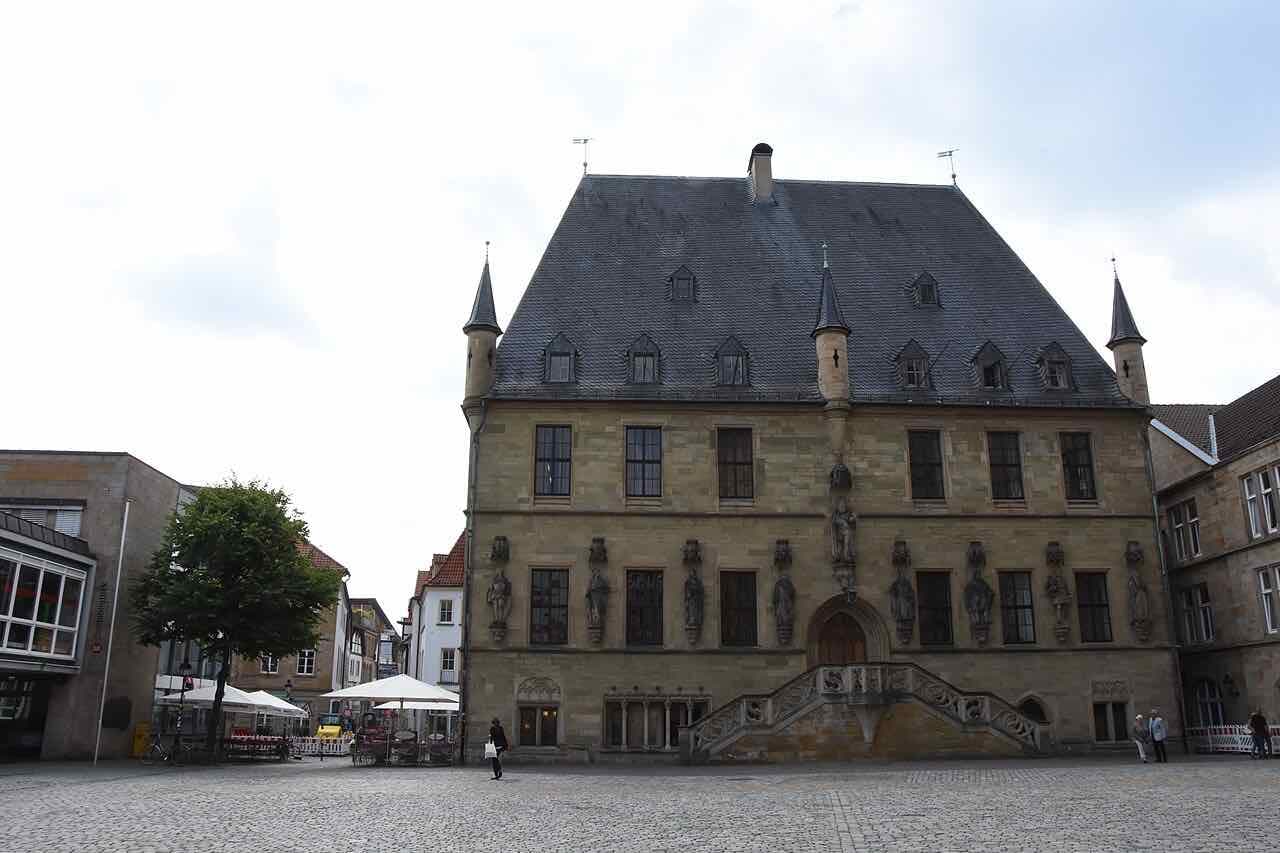
The city grew around a bishop's seat founded in the year 780, and in the late Middle Ages it was a Hanseatic town. Together with Münster it was where the Peace of Westphalia was negotiated and signed in 1648, and the slogan Osnabrück, die Friedensstadt comes from that. The town hall on the market square, in the photo above, is still the symbol of it.
The city keeps the idea alive in ordinary ways. Every year the primary-school children ride hobby horses through the old town in the Steckenpferdreiten. Every two years the city awards the Erich Maria Remarque Peace Prize, named after the writer. The city's Büro für Friedenskultur organises the Internationale Wochen gegen Rassismus in March and the Fest der Kulturen in September, and since 2008 a Round Table of Religions has brought together Jewish, Christian, Muslim and Bahá'i representatives four to six times a year.
The painter Felix Nussbaum, who was Jewish, is remembered in a museum building by Daniel Libeskind. The city's own peace portal presents the Nussbaum house, the memorial at the former synagogue and the sites of the Nazi period as part of the same story, and the Villa at the museum quarter is described as a place to learn about democracy and the Nazi era.
The old town
What to see in the old town and nearby
Most of this is within walking distance of the market square.
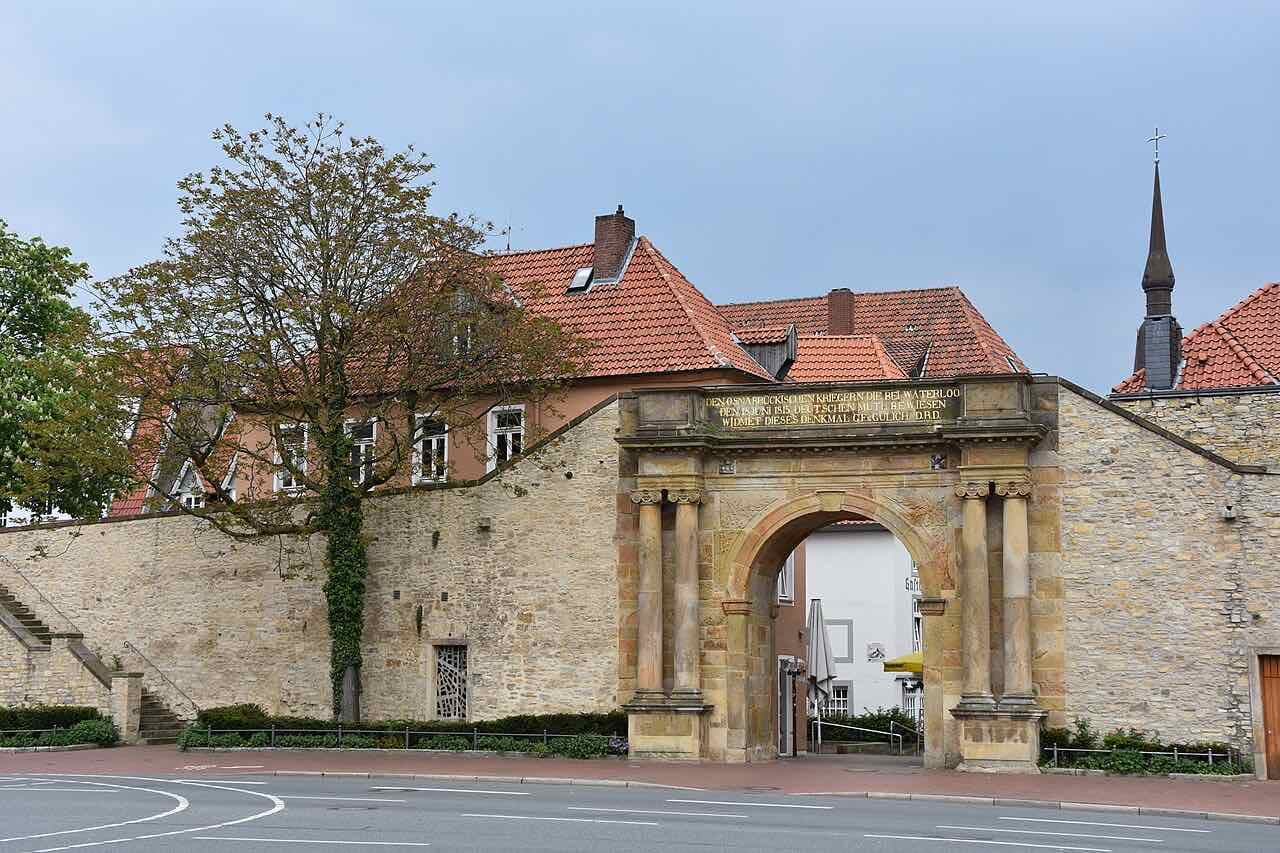
Town Hall of the Peace of Westphalia ↗
The medieval town hall where the 1648 negotiations took place, on the market square.
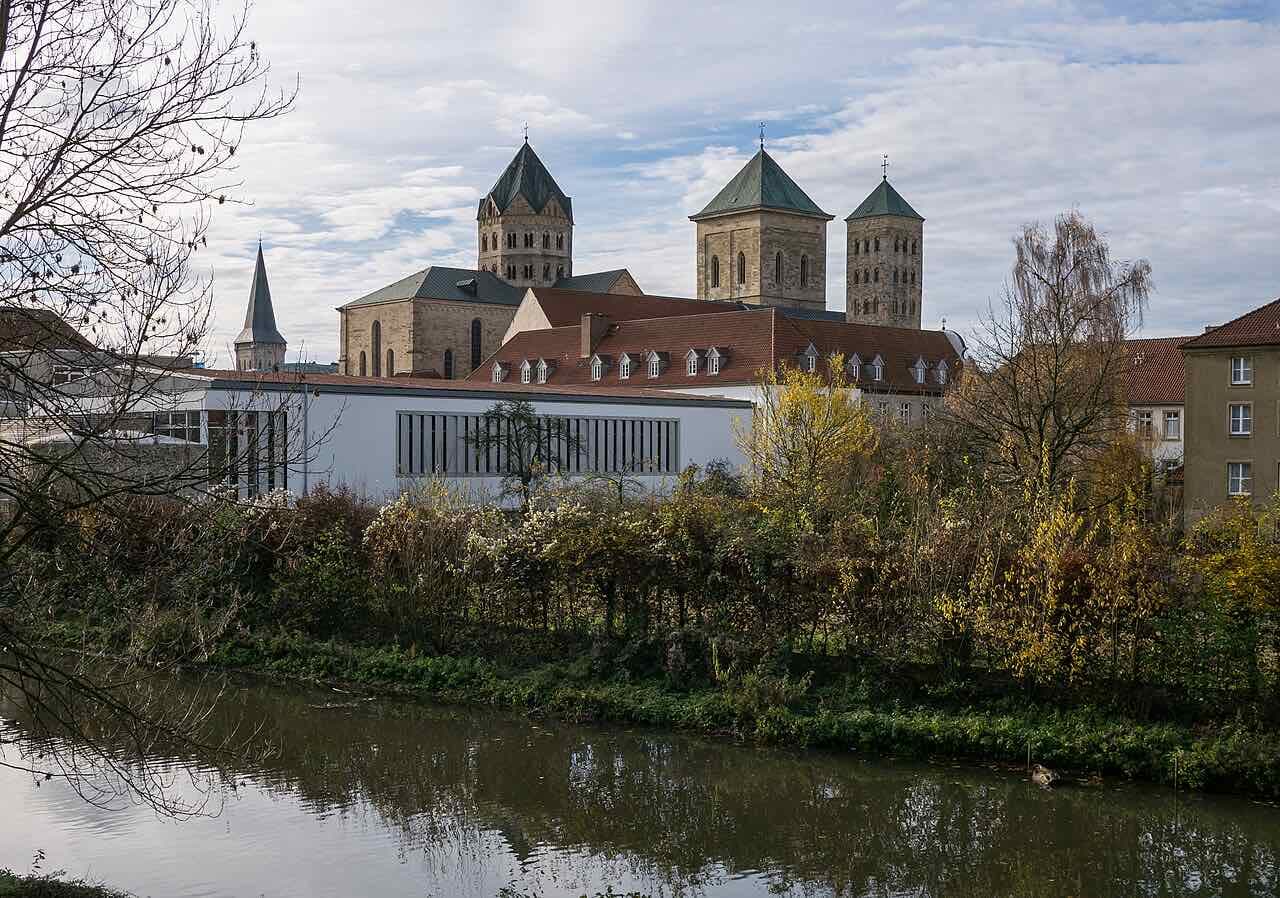
The cathedral, with origins in the 8th century and a Romanesque body. The parish is at Große Domsfreiheit 2.
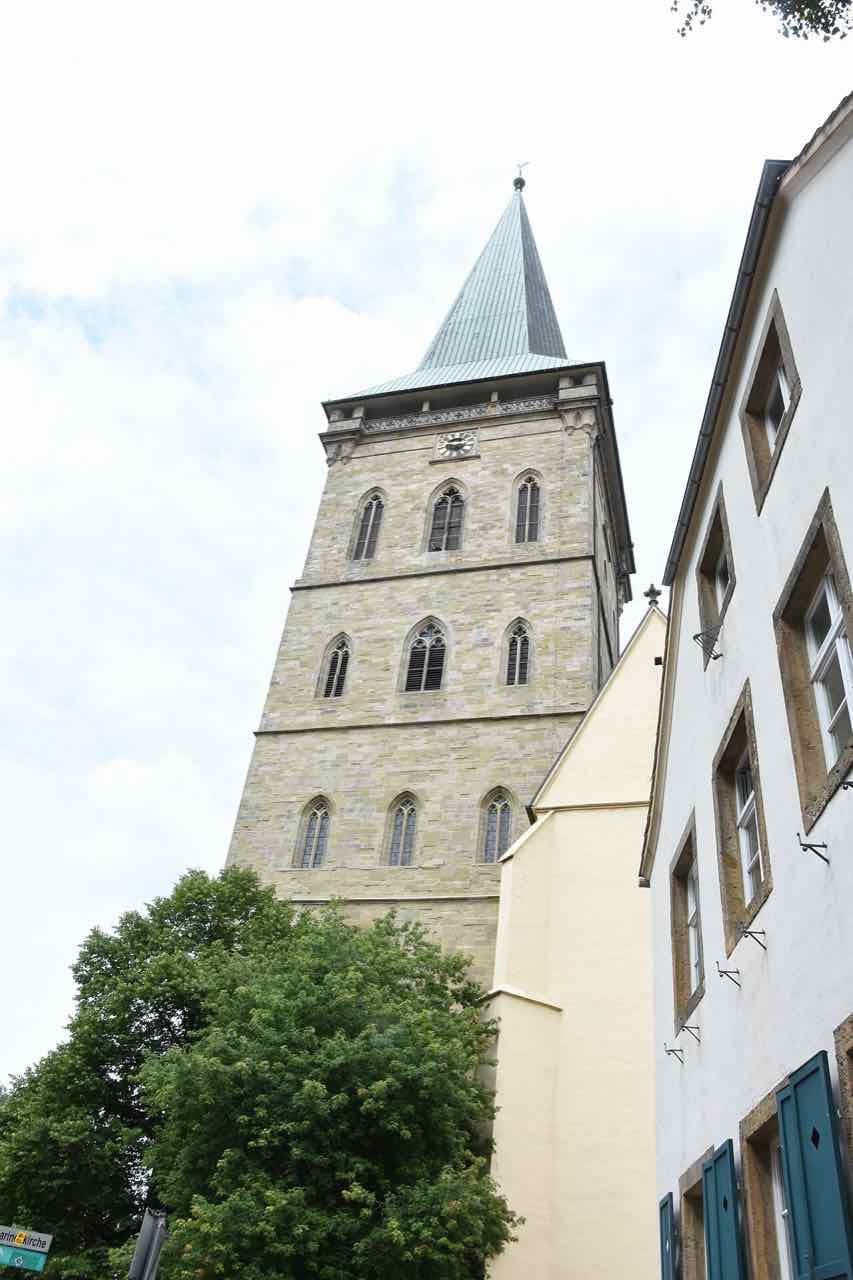
St Katharinen
The church tower is 103.5 metres high and shapes the skyline of the centre.
An important example of Baroque architecture on the Neuer Graben; its address belongs to the university.
Felix Nussbaum House, the Cultural History Museum and the Villa, at Lotter Straße 2. Open Tuesday to Sunday, closed Mondays. Students from Osnabrück with a student card enter free (Kulturticket); students from other cities pay 5 euros.
Museum of Industrial Culture (MIK) on the Piesberg ↗
Shows the industrial development of the region on the hill above the city.
A nature and environment museum with a planetarium and exhibitions on the history of the Earth.
Concerts, theatre and festivals
Lagerhalle, Hyde Park and Botschaft ↗
Three long-established venues for live concerts.
The city's hall for larger concerts.
Theater Osnabrück and the emma-theater ↗
The main theatre at the Domhof with classic productions and dance, and a studio stage for experimental work. There is also a puppet theatre and a small room theatre.
Popsalon and Morgenland Festival ↗
Popsalon brings new bands to the stage, the Morgenland Festival brings international musicians.
In May the whole city centre becomes a stage.
A spring festival on the Mensa forecourt at Westerberg, run by students for more than 40 years and described as the largest volunteer-run student festival in northern Germany.
Cinema-Arthouse, the Filmtheater Hasetor, the Hall of Fame cinema at the main station, the open-air cinema in the Schlossgarten in summer and the student cinema Hochschulkino.
Green Osnabrück
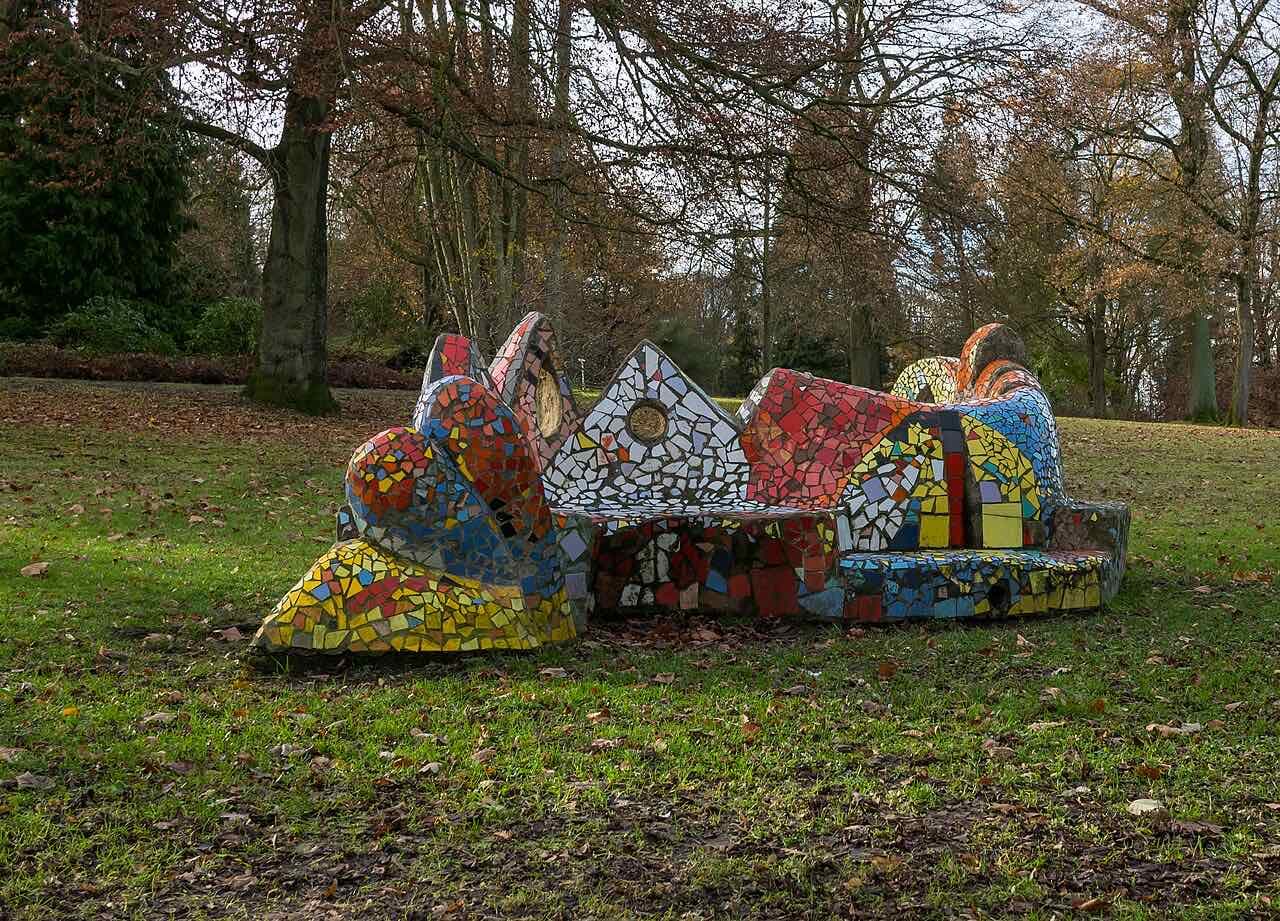
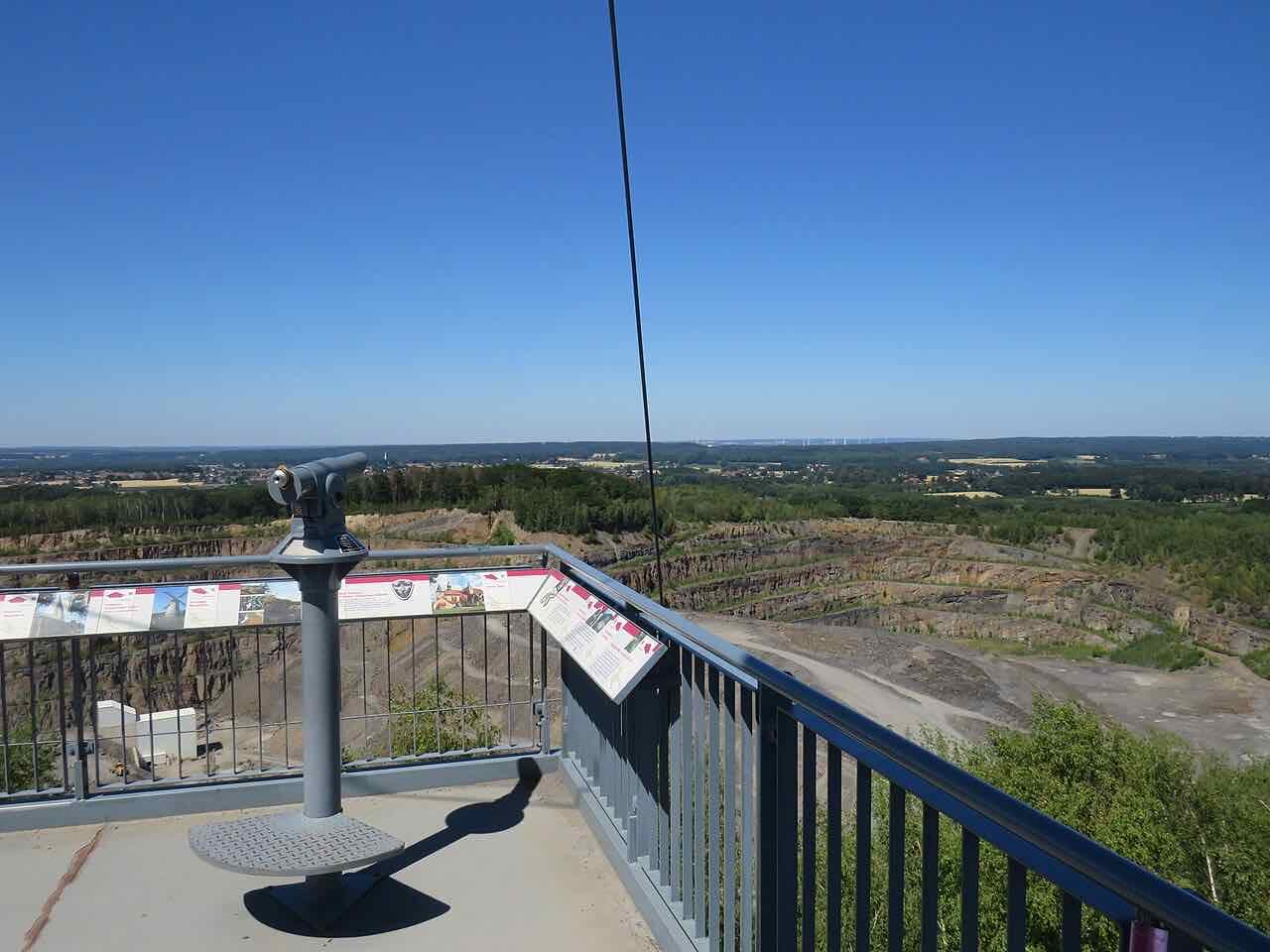
Nature and weekends
Inside the city, the Rubbenbruchsee nature reserve is for long walks, the Bürgerpark for lazy afternoons and the Piesberg for a hike with a view over the old quarry. The Botanical Garden of the university lies on the Westerberg campus. Osnabrück Zoo and the Christmas market around the town hall are the usual outings, and a fair at Halle Gartlage takes place twice a year.
The countryside around is part of the UNESCO Global Geopark TERRA.vita, which covers the Teutoburg Forest and the Wiehengebirge. The Hochschule's own student pages suggest the Ahornweg circular trail, the Hünenweg through heathland towards Meppen, and the Wittekindsweg along the Wiehengebirge, plus cycle routes of 12 to 63 kilometres. Kalkriese, the museum park on the site of the Varus Battle, opened in 2000 and covers more than ten hectares. Bad Iburg has a castle, a monastery and a treetop walkway, and Tecklenburg has half-timbered houses and open-air theatre.
For city weekends the same pages recommend Bielefeld for nightlife and the Sparrenburg castle, Bremen for its Viertel district and the Weser promenade, Hanover for the Maschsee and Herrenhausen Gardens, and Enschede and Hengelo across the Dutch border for shopping. With the semester ticket the regional trips cost nothing extra; check the fare conditions for the exact area.
Places for a day out
The Varus Battle museum park in the Osnabrück region, with an exhibition and grounds on Roman history.
Osnabrücker Land tourism site ↗
Lists hiking and cycling tours, the TERRA.vita geopark, the Piesberg industrial heritage park, Alfsee leisure park and the spa towns of Bad Essen, Bad Iburg, Bad Laer and Bad Rothenfelde.
Regional trips from the Hochschule ↗
Hiking and cycling routes, Kalkriese, Bad Iburg, Tecklenburg and city trips as suggested to students.
Getting around
Buses are run by the VOS network, and the Hochschule points students to the VOSpilot journey planner, the DB Navigator app and Google Maps. The Deutschlandsemesterticket has the same scope as the regular Deutschlandticket, is offered digitally only, and is paid together with enrolment or re-registration. Bus stops at the Hochschule campuses include Caprivistraße (line 16) for Caprivi and Campus Westerberg (M2, 16, S10) for Westerberg.
Most students cycle. The Hochschule lists free repair stations with air pumps at Westerberg, Caprivi, Haste and Lingen, a free self-repair workshop (Ride2Repair) in the AStA garden at Westerberg, and a secure bike station with repairs and rentals at the central station. The AStA also runs its own bicycle workshop.
What things cost
- Rent, monthly range the university quotes
- 250 to 500 eurossource
- Room in a shared flat, Alte Fabrik (Jahnplatz 6), 12 to 19 m²
- 272 to 297 euros a month, utilities includedsource
- Double apartment for couples, Alte Fabrik, 34 to 57 m²
- 537 to 577 euros a monthsource
- Food, per month
- 170 to 250 eurossource
- Leisure, per month
- 50 to 70 eurossource
- Study materials, per month
- 25 to 50 eurossource
- Public broadcasting fee, per month
- 18.36 eurossource
- Residence permit for up to one year (non-EU students)
- 100 eurossource
Figures are those the universities and the Studierendenwerk publish. They change, so check the source before you plan around them.
Jobs and work
Osnabrück is a logistics centre on important European transport axes, with the motorway and rail network and an inland port linked to the Mittelland Canal by the 14.5 km Stichkanal. The Hochschule and the university are themselves large local employers, and student jobs are advertised on the university's notice board and on Stud.IP.
The Welcome & Connect Center, run by the city's economic development agency, gives newcomers a welcome folder, orientation advice and old-town tours, and also arranges events such as Students meet Business. How many hours a non-EU student may work depends on the residence permit, so read the permit and ask the International Office before signing a contract.
Part 2
Student life in Osnabrück
Where you can study
Osnabrück University (Universität Osnabrück) ↗
A full university with eight faculties, from Cultural and Social Sciences and Educational and Cultural Studies to Biology/Chemistry, Mathematics/Computer Science/Physics, Language and Literary Studies, Human Sciences, Business Administration and Economics, and Law. The Baroque palace on the Neuer Graben is part of its address, and the International Office is at Neuer Graben 27. Nine Master's programmes are taught fully in English: Biology (M.Sc.), Cognitive Computing (M.Sc., part-time), Cognitive Science (M.Sc.), Conflict Studies and Peacebuilding (M.A.), Economics (M.Sc.), English and American Studies (M.A.), European Technology Law (LL.M., part-time), Nanosciences (M.Sc.) and Physics (M.Sc.). Many more courses are partly in English, and the university also offers a Studienkolleg preparatory course for international applicants.
International office ↗Osnabrück University of Applied Sciences (Hochschule Osnabrück) ↗
13,071 students in the winter semester 2024/25, spread over four locations: the Caprivi campus (Business Management and Social Sciences, 5,517 students), Westerberg (Engineering and Computer Science, 2,549, and the Institute of Music, 415), Haste (Agricultural Sciences and Landscape Architecture, 2,443) and Lingen (Management, Culture and Technology, 2,147). The Hochschule says it offers more than 100 accredited degree programmes. The English-taught list is on its A to Z page of degree programmes, so check it for the subject you want.
International office ↗Student unions, services and groups
AStA of Osnabrück University ↗
The student committee. It runs BAföG advice, semester-ticket information, the Studibulli van, a bicycle workshop and a form to report right-wing violence, and lists dozens of student initiatives.
Referat für ausländische Studierende (AStA) ↗
An autonomous department of the AStA for international students. It helps with housing, visa extensions and residence permits, doctors, German-only documents and workshops against racism. Office at Alte Münze 12; use your university email address to write.
Housing in 21 halls in the city, five canteens plus cafés, psychological and social counselling, BAföG advice and emergency loans.
AStA of the Hochschule Osnabrück ↗
The student site of the Hochschule: counselling on BAföG and study funding, semester ticket and refunds, carsharing, bike services, equipment loans and a first-year guide with a campus map.
A Hochschule student initiative for international students and refugees. Free German tutoring conversation every Monday from 18:00 to 20:00 during term, no registration, and a tandem project. Office at Artilleriestraße 46, Westerberg.
Zentrum für Hochschulsport (ZfH) ↗
University sport for both Osnabrück institutions: up to 150 activities a semester, a free basic programme, special courses and trips with small fees. Office at Jahnstraße 77.
The local group of the European student network AEGEE: intercultural events and a lot of travel. Events are announced on Instagram.
PERSOS, Persian Students of Osnabrück ↗
A student initiative for Persian-speaking students of both institutions, with community events and academic and cultural exchange.
Evangelische Studierendengemeinde (ESG) ↗
Protestant student community at Arndtstraße 19: a Wednesday breakfast service, a Wednesday supper, a choir, dance courses, counselling, and an emergency fund and scholarships page for international students.
Katholische Hochschulgemeinde (KHG) ↗
Catholic student community with services, a choir, film and city-tour events and a menu entry for international students. All are welcome.
The student-run festival held each spring on the Mensa forecourt at Westerberg; the team recruits volunteers each year.
Campus Osnabrück
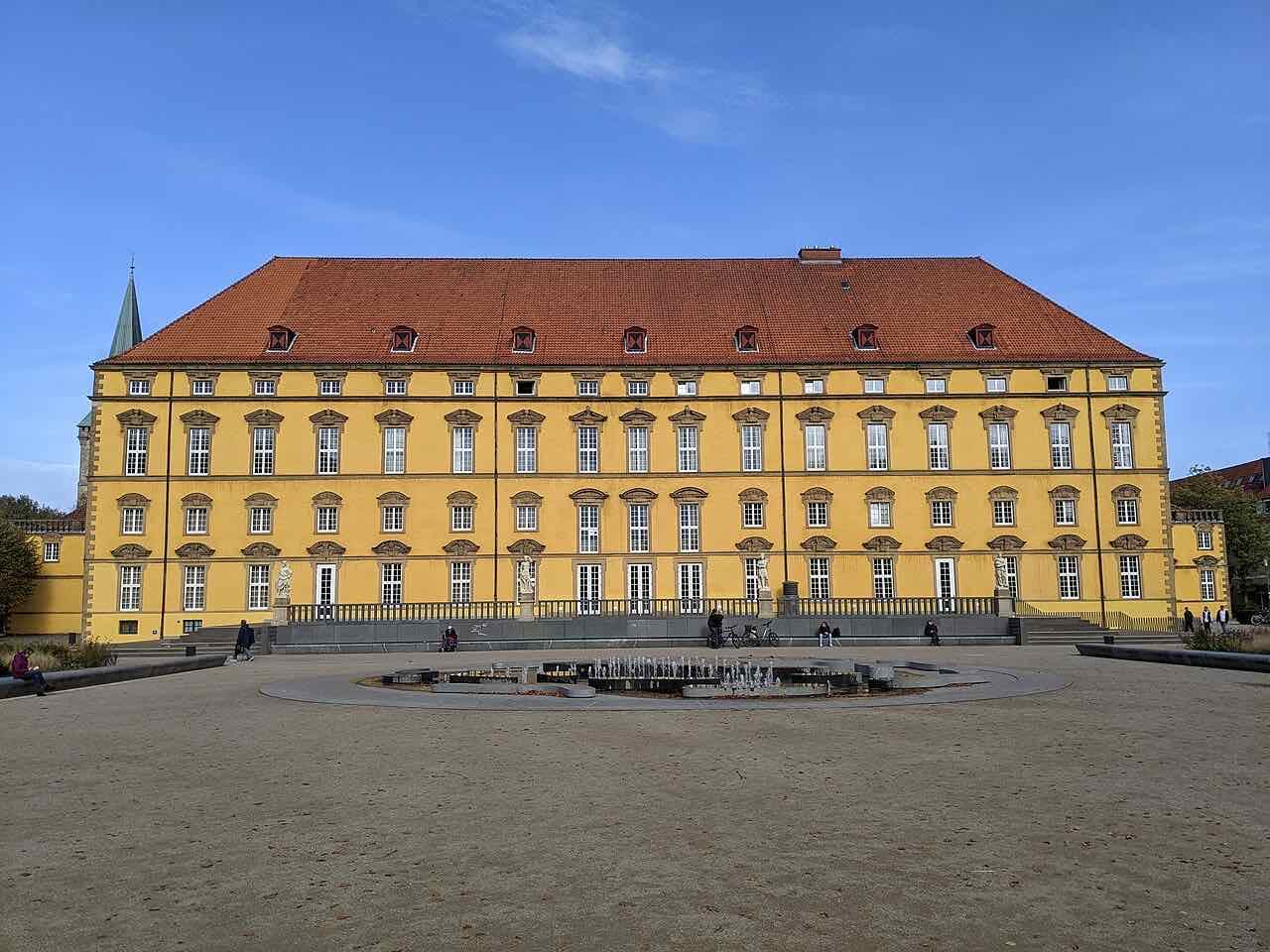
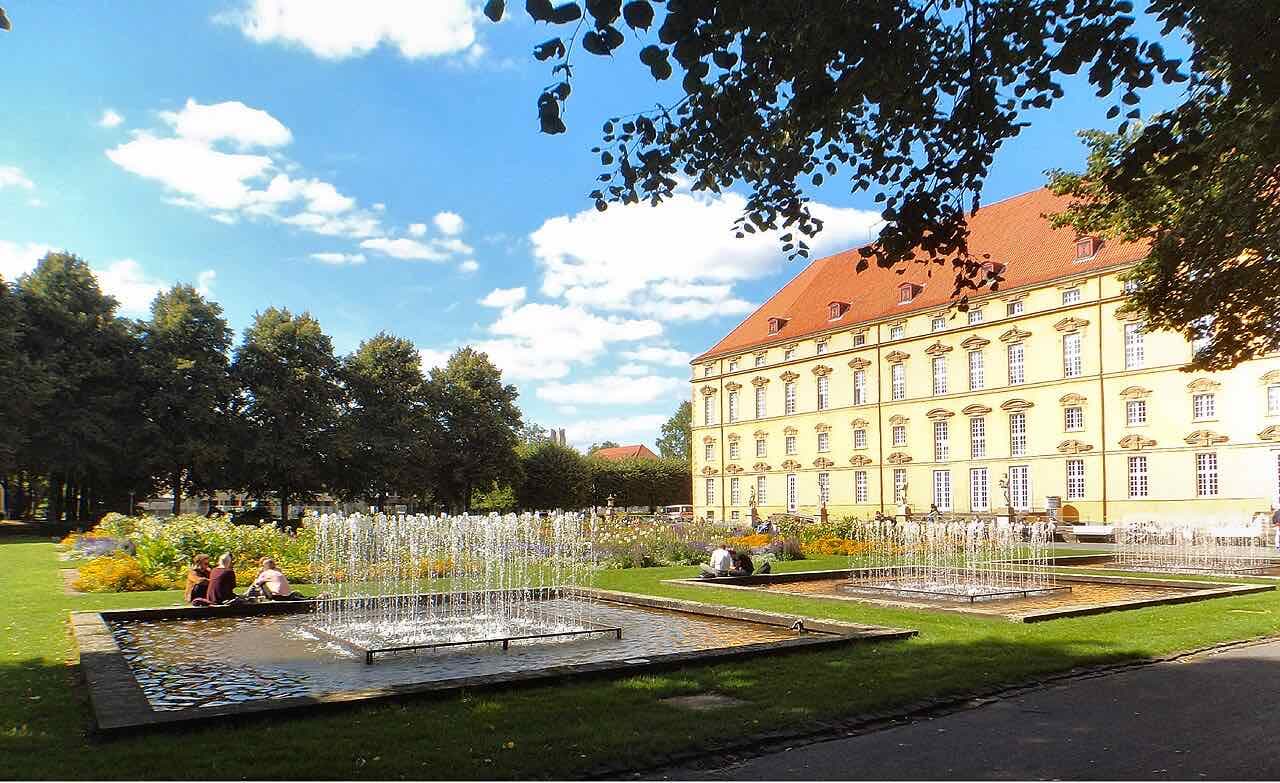
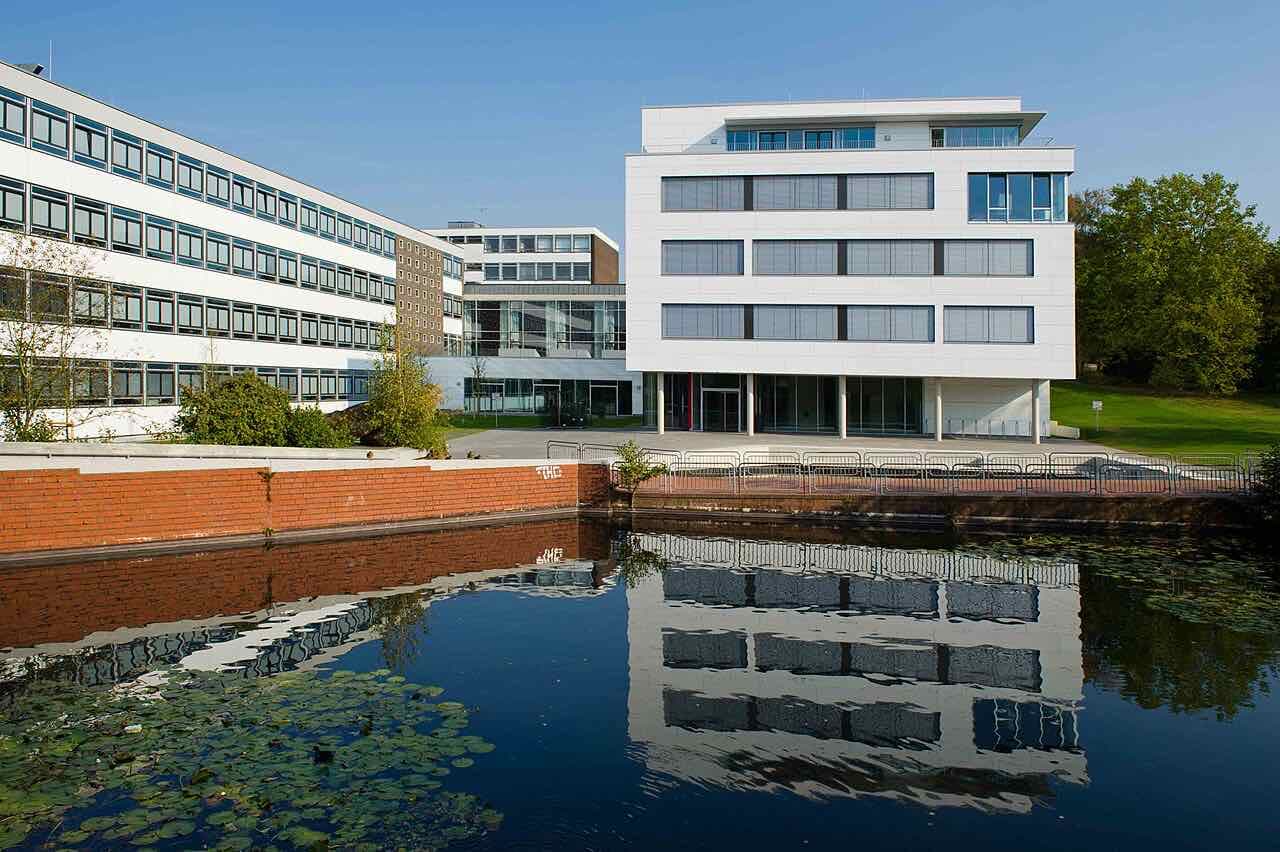
Study culture and support for international students
The two institutions are close neighbours and share a lot: the sports centre, the Studierendenwerk, and some student initiatives. The Hochschule has campuses at Caprivi, Westerberg and Haste in the city, and the university is built around the palace and its garden in the centre.
The university runs Welcome Sessions for international degree-seeking students before the faculties' introductory weeks, with help on formalities and a chance to meet others. A Language Café and language tandems are open to everyone, German as a foreign language courses are offered, and a pre-sessional German course exists. The Central Study Counselling Service holds online group counselling for prospective international students on the first Tuesday of each month from 4 to 6 pm (register at info@zsb-os.de). The Hochschule lists the same online consultation on its page for prospective international students and answers questions at international@hs-osnabrueck.de.
The ESG runs an emergency fund for international students from the Global South and Eastern Europe, up to three payments of at most 500 euros each, and the university lists scholarships including the Deutschlandstipendium and the Landesstipendium Niedersachsen. The Studierendenwerk and the AStA both offer small emergency loans.
Housing and food
The Studierendenwerk Osnabrück says it has room for more than 2,000 students across its sites. Its Osnabrück complexes are listed by postcode, among them these:
Single rooms in shared flats of 4 to 10 people, double apartments for couples and family apartments. All rents include gas, water and electricity.
The list covers Alte Fabrik, CampusQuartier Bei den Linden, Gartenhaus am Bürgerpark, Haus auf der Stadtmauer, StudierQuartier im WissenschaftsPark, Salzmarkt and 14 more. A vacancy overview is published on the site, and apply online.
Mensa Schlossgarten, Ritterstraße 10 ↗
Open Monday to Friday 11:30 to 14:15 and Saturday 11:45 to 13:45, with a café lounge open on weekdays from 9:00 to 16:30. The CampusCard is topped up at machines in the foyer.
Five Mensen serve about 8,000 meals a day, with cafés and bistros. Mensen listed on the site include Schlossgarten, Westerberg, Caprivi and Haste in Osnabrück, plus Vechta and Lingen.
In autumn the AStA ran an anonymous survey on student housing together with the city's housing contact point.
Sport, clubs and evenings
The Zentrum für Hochschulsport is run jointly by the Hochschule and the university and is centred on the sports facility on Jahnstraße. It offers up to 150 activities per semester from team sports to climbing, the basic programme is free for students, and most courses suit beginners. There is a sports-partner search, free loan of sports equipment at the StudZ in the Schlossgarten with a student card, a university football league each summer, and pitch booking for basketball, badminton, beach volleyball, calisthenics, football and tennis.
For evenings, the city centre has pubs, cocktail bars and clubs, and the Katharinenviertel, Adolf-Reichwein-Platz and Redlinger Straße are named by students as places to sit in cafés. VfL Osnabrück play football at the Bremer Brücke and the Panthers play women's basketball.
Faith and community places
The city's own list (November 2025) names many Christian parishes, a Jewish community, mosques, a Bahá'i community and several Orthodox parishes. These have pages of their own:
The Jewish community at In der Barlage 41 to 43, with a German-language site that lists Shabbat times and service pages.
Zentrum für Begegnung, Erziehung und Kultur (Ibrahim-al-Khalil mosque) ↗
A Muslim community at Goethering 14 with an Arabic school, Quran lessons, a prayer course and regular community events.
The Catholic cathedral parish at Große Domsfreiheit 2; services are listed on the parish site, in German.
Antiochian Orthodox parish of the Holy Mother of God ↗
At Lerchenstraße 131. Orthros at 11:00 and the Divine Liturgy at 12:00 on the second and fourth Sunday of the month.
The city's interfaith body, with Jewish, Christian, Muslim and Bahá'i members. Its page tells how it works and how to contact it.
Your first weeks
- 1
Before you travel
Non-EU students usually need a visa. A student visa is normally valid for three months and is turned into a residence permit after arrival; a tourist visa cannot be converted. The university warns that the process often takes several months, so apply early. Proof of funding and health insurance are required.
- 2
Week 1
Book an appointment at the Bürgeramt and register your address, then keep the Meldebescheinigung. Everything else needs it.
- 3
Week 1 to 2
Go to a Welcome Session if you are a degree-seeking international student, and look for the Welcome & Connect Center welcome folder (welcome@osnabrueck.de). The semester ticket comes with enrolment.
- 4
Within the validity of your visa
Apply online for the residence permit at the city's Ausländerbehörde. The fee for up to one year is 100 euros, and the permit is a chip card. The office sees people by appointment only; its phone line is open Monday and Tuesday 8:00 to 10:00, Wednesday 14:00 to 15:00, Thursday and Friday 8:00 to 10:00.
- 5
Month 1
Open a bank account, sort out health insurance, and visit the AStA's Referat für ausländische Studierende if anything is unclear. The city's Wegweiser Willkommen in Osnabrück is a 130-page guide with a digital city map in eleven languages, including English and Vietnamese.
Where you come from matters here
Pick your home country: food, faith, community groups and the consulate that serves you, checked 21 October 2026.
🇳🇬 Living in Osnabrück as a Nigerian student
The city's list names no Nigerian association. It does name two Africa-focused groups, Afro-Info-Pool and Kenia-Projekt Osnabrück, and the city's welcome guide (a PDF) has their addresses. The Embassy of Nigeria is in Berlin.
Neue Jakobstrasse 4, 10179 Berlin. Passport questions go to the embassy; visa applications go to a visa centre at Zimmerstrasse 68, 10117 Berlin, by online appointment. Passport appointments are booked on the Nigeria Immigration site and are free.
Willkommen in Osnabrück, the city's guide for newcomers ↗
A 130-page guide (3rd edition, November 2025) with the migrant organisations of the city, including Afro-Info-Pool at Carl-von-Ossietzky-Straße 15.
🇻🇳 Living in Osnabrück as a Vietnamese student
There is no Vietnamese association in the city's own list. The city's digital map for newcomers and the printed guide exist in Vietnamese, and the Vietnamese Embassy has its consular section in Berlin.
Elsenstraße 3, 12435 Berlin-Treptow. Consular hours are Monday, Wednesday and Thursday, and e-passport applications have been accepted at the embassy since 1 April 2026.
Willkommen in Osnabrück (city page) ↗
The city says its map of services is available in eleven languages, including Vietnamese, and that the guide covers daily help, family, advice, culture, education and language.
🇵🇰 Living in Osnabrück as a Pakistani student
The city's list has no Pakistani association. The Fest der Kulturen in September includes a Pakistani food stall among its stands, and the city's overview names many mosques; students from Pakistan come from different traditions, so the mosque below is listed on its own merits.
A Sunday in September on the market square with more than 60 associations, communities and artists from about 25 nations, with food from Pakistan among the stalls and a stage programme of music and dance.
Zentrum für Begegnung, Erziehung und Kultur ↗
A Muslim community at Goethering 14 with an Arabic school, Quran lessons and regular events. The site does not say which languages are used, so ask them.
🇺🇸 Living in Osnabrück as an American student
Osnabrück is not a city with a large American community, but its university has an English and American Studies degree and a student initiative on North American Indigenous peoples. Courses taught in English are listed by subject on the university's site.
Native American Studies initiative (AStA) ↗
An interdisciplinary student group on the history, culture and politics of Indigenous peoples in the Americas. At least three lectures or discussion evenings a semester, and non-students are welcome.
Study programmes and courses in English ↗
Lists nine English-taught Master's programmes, including English and American Studies (M.A.), and English-taught courses by subject for exchange students.
🇨🇳 Living in Osnabrück as a Chinese student
The consular district of the Chinese Consulate General in Hamburg covers Lower Saxony, so Osnabrück is under it. The city's list of migrant organisations that the city published in November 2025 has no Chinese association, so the first local contact for most students is the AStA's department for international students.
Consulate General of the People's Republic of China, Hamburg ↗
At Elbchaussee 268 in Hamburg. Its district covers Hamburg, Bremen, Lower Saxony and Schleswig-Holstein, and its site has pages on visa applications, passports and notarisation.
Referat für ausländische Studierende (AStA) ↗
Help with housing, residence permits and German-only documents from other international students; office at Alte Münze 12.
English-taught programmes in Osnabrück
Soonest open deadline first. Every entry links to its official source.
- International Management (BA)Osnabrück University of Applied Sciences · OsnabrückbachelorNo tuition15 Dec 2026Closing soon
- PhysicsOsnabrück University · OsnabrückmasterNo tuition15 Jan 2027Open
- Design EntrepreneurshipOsnabrück University of Applied Sciences · OsnabrückmasterNo tuition15 Apr 2027Open
- EconomicsOsnabrück University · OsnabrückmasterNo tuition15 Jun 2027Open
- Cognitive Science (MSc)Osnabrück University · OsnabrückmasterNo tuitionSee sourceCheck source
- English and American StudiesOsnabrück University · OsnabrückmasterNo tuitionSee sourceCheck source
- Erasmus Mundus Joint Master's MemBioMed (From Membrane Biology to Neuroscience and Experimental Medicine)Osnabrück University · OsnabrückmasterNo tuitionSee sourceCheck source
- International Business and Management (MA)Osnabrück University of Applied Sciences · OsnabrückmasterNo tuitionSee sourceCheck source
- Cognitive ComputingOsnabrück University · OsnabrückmasterSee sourceCheck source
- LLM Master of European Technology LawOsnabrück University · OsnabrückmasterSee sourceCheck source
- MA Conflict Studies and PeacebuildingOsnabrück University · OsnabrückmasterNo tuitionSee sourceCheck source
- Management in Non-Profit OrganisationsOsnabrück University of Applied Sciences · OsnabrückmasterNo tuitionSee sourceCheck source
- Biology – From Molecules to Organisms (MSc)Osnabrück University · OsnabrückmasterNo tuitionSee sourceCheck source
- Land Use TransformationOsnabrück University of Applied Sciences · OsnabrückmasterNo tuition01 Oct 2026Deadline passed
Is Osnabrück right for you? Ask us. Free.
Tell us your passport, grades and budget. We compare Osnabrück with the other places you could study, then apply for you. You never pay us.
Get my free plan