Studying in Bavaria, Germany
Regensburg
A Roman camp turned medieval trading city on the Danube, with two large universities and about 32,000 students.
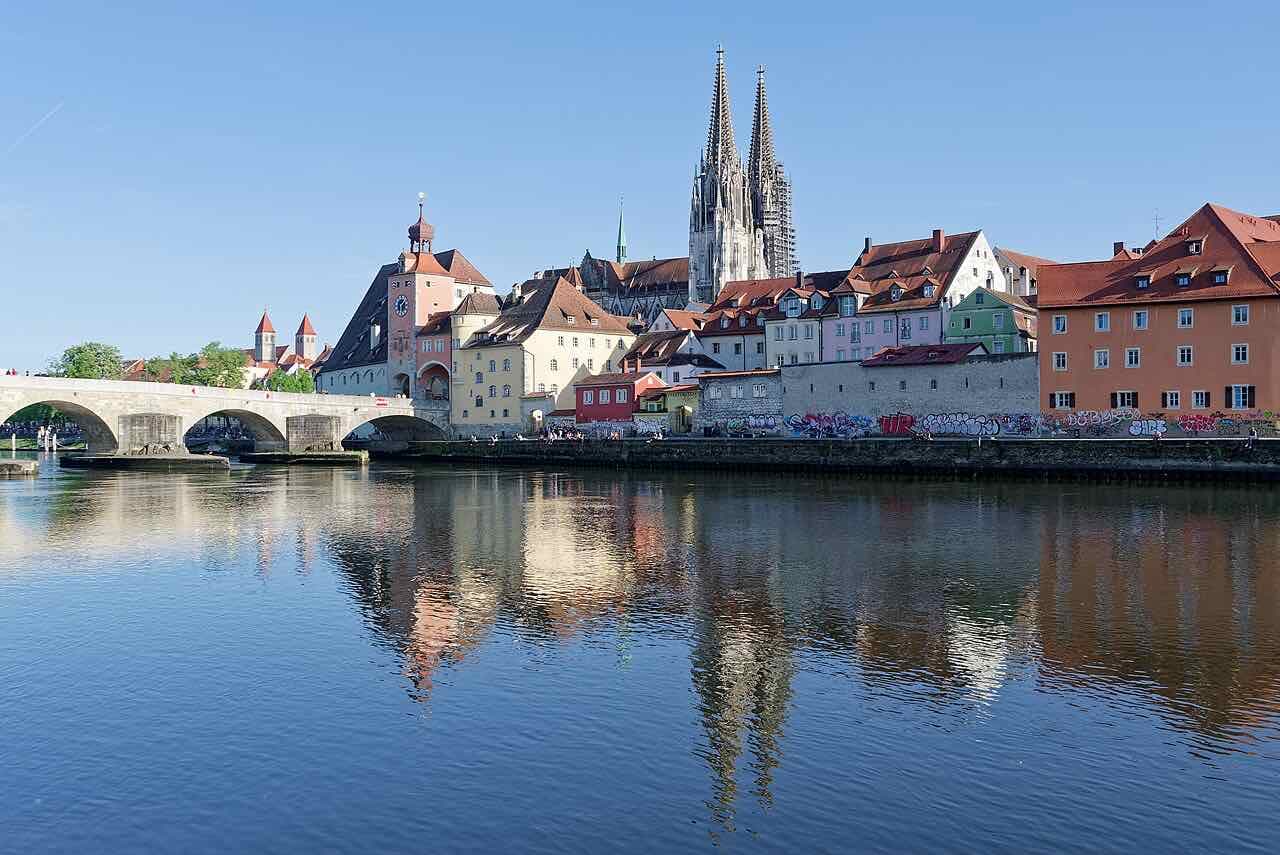
Regensburg sits where the Danube reaches its northernmost point, and its old town has been on the UNESCO World Heritage list since 2006. Around 150,000 people live here and roughly 32,000 students study here, so a large share of the people on the street, in the bars and on the buses are students. The University of Regensburg is a campus university with about 18,000 students; the OTH Regensburg is a university of applied sciences with about 11,000, and it runs bachelor's and master's programmes that are taught mostly or fully in English. The trade-off is housing: rooms are scarce, and the cheap ones go early.
- State and region
- Bavaria, in the Upper Palatinate (Oberpfalz)
- Students in the city
- About 32,000, of them around 10,500 at OTH Regensburg
- University of Regensburg
- 18,127 students in summer semester 2026, including 1,430 international students
- Semester contribution at OTH
- 208 EUR per semester (winter 2026/27), including the RVV semester ticket and the Studierendenwerk fee
Part 1
Living in Regensburg
A Roman camp that became a trading city
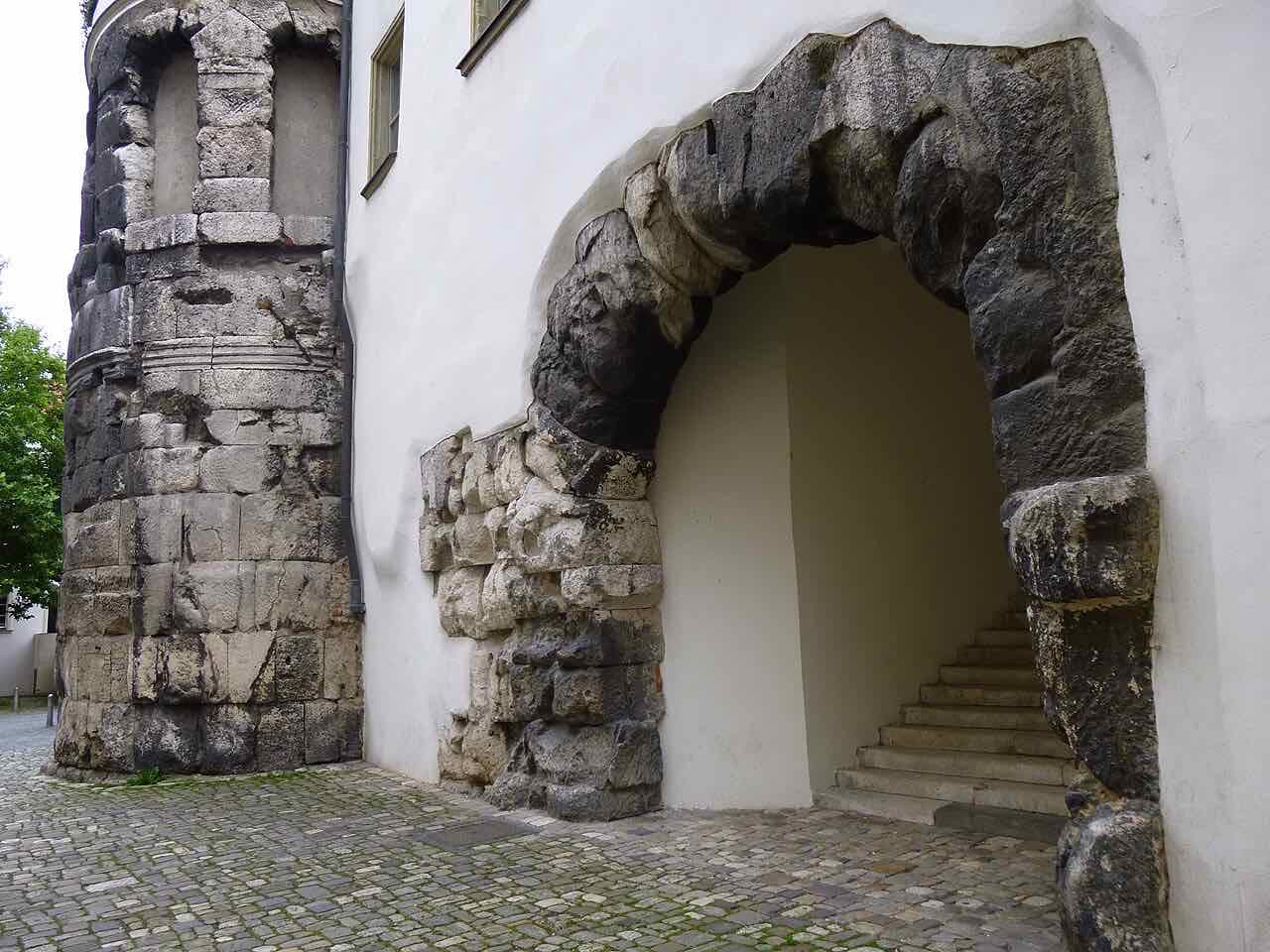
The Romans founded Castra Regina here on the Danube, and the old town grew up inside and around the walls of that legion camp. The Porta Praetoria, a Roman gate, still stands in the old town, and the remains of the camp's north gate are built into the walls of the bishop's palace next to the cathedral. In 2021 UNESCO added the Roman Danube frontier to the city's heritage, a second listing after the old town itself.
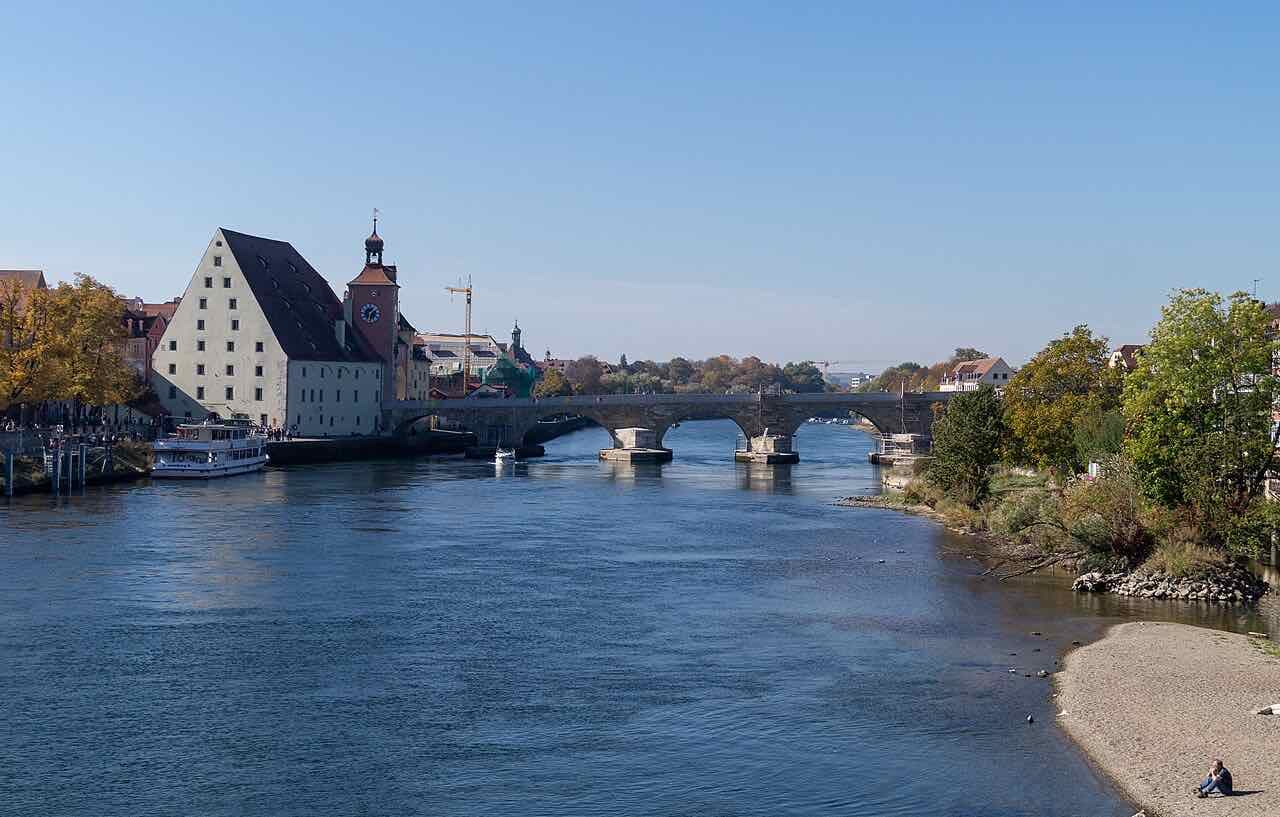
In the Middle Ages Regensburg lived from long-distance trade along the river. The Stone Bridge, begun in 1135 and about 300 metres long, was the only bridge across the Danube here for nearly 800 years, until 1935. The city tourism office says the old town has more than 1,000 individual monuments and calls Regensburg the best-preserved medieval large city in Germany. The Imperial Diet later sat here permanently, in the Old Town Hall.
None of this is a museum. The old town is where students live, eat and go out, and the cathedral's boys' choir, the Domspatzen, is described by the tourism office as the oldest boys' choir in the world.
Seven places to see in your first weeks
All of these are in or beside the old town, and none needs more than a walk or a short bike ride from the centre.
Stone Bridge and Bridge Tower ↗
The oldest surviving bridge in Germany, with sixteen piers. The bridge tower on the old-town side can be climbed for a view over the roofs.
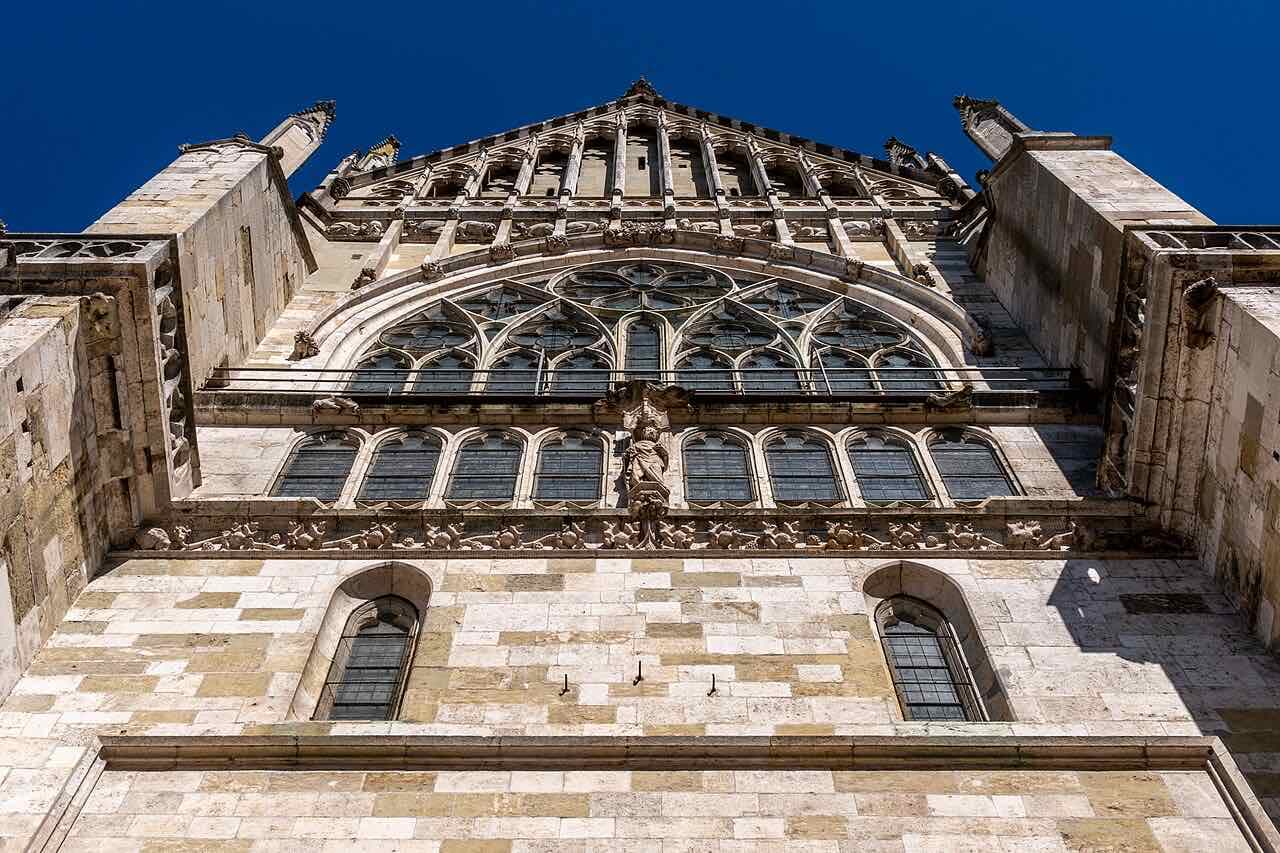
A Gothic cathedral begun around 1273, with 13th- and 14th-century stained glass and towers that were only finished in 1869. The cathedral treasury sits next to it in the bishop's palace.
Visitor Centre World Heritage ↗
Two floors in the historic Salzstadel by the bridge, covering the story from Roman camp to modern city. The Kepler Memorial House (Keplerstraße 5) is a five-minute walk away.
A museum right on the Danube with a permanent exhibition of around 1,000 objects on about 2,500 square metres, running from the Romans to the kingdom of 1806.
The small district on the north bank across the Stone Bridge, part of the World Heritage listing and a quieter place for a walk or a drink.
Regensburg is the northernmost point of the Danube. Ships run along the old-town promenade, and trips go downstream to the Walhalla.
The building of the Perpetual Imperial Diet, in the middle of the old town.
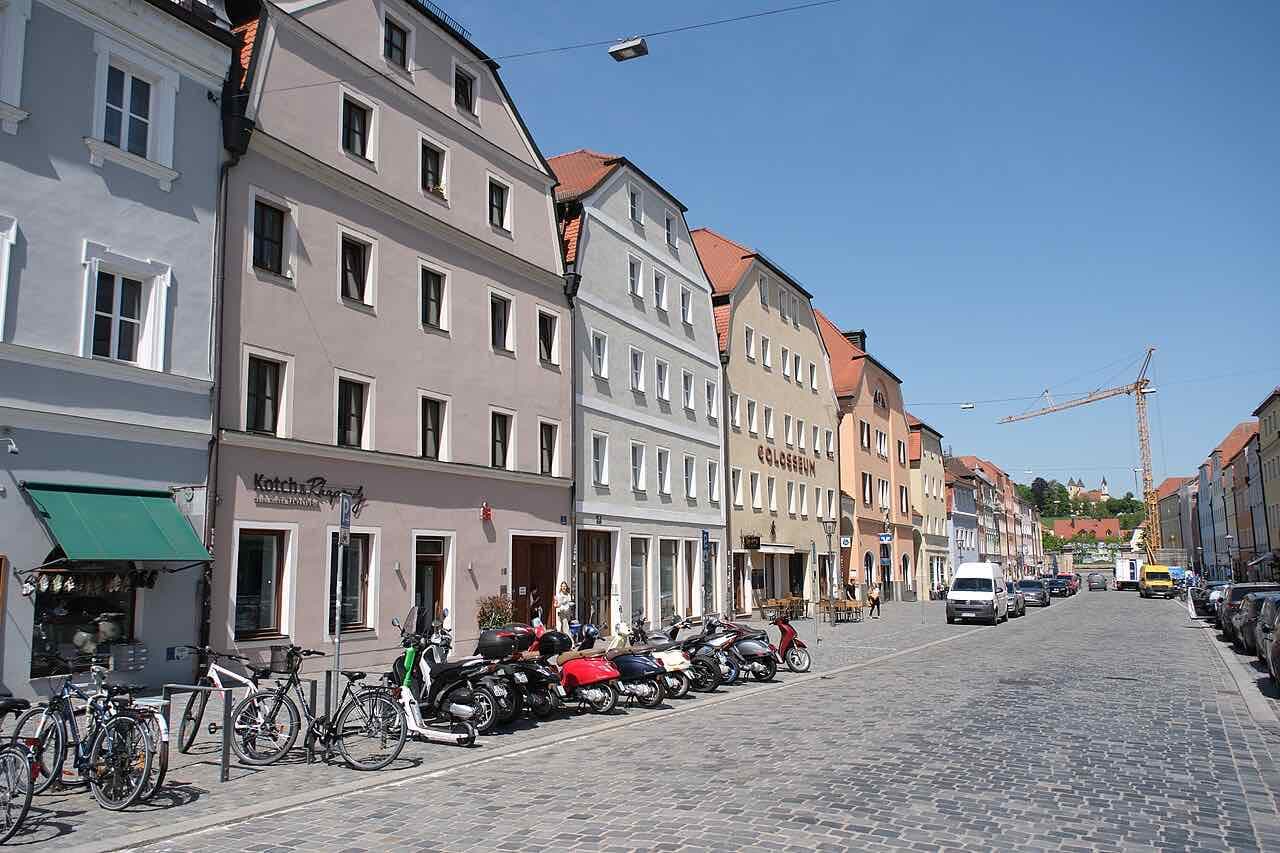
The old town
Weekends on the river
Three rivers meet at Regensburg, the Danube, the Naab and the Regen, and the University of Regensburg itself lists the water as one of its six reasons to study here: boating on the Naab or sitting on the bank of the Regen is a few minutes from campus. A green belt of tree-lined avenues and small parks runs around most of the old town.
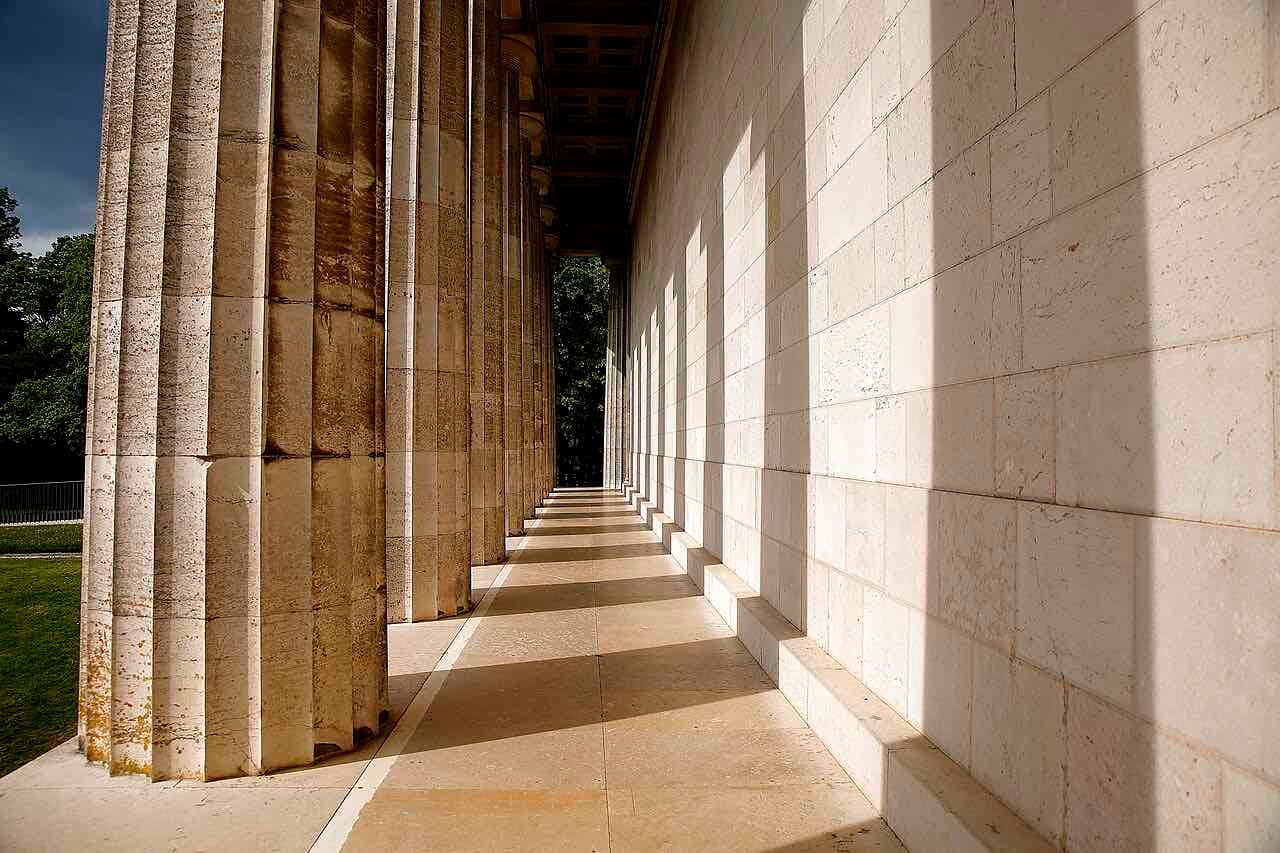
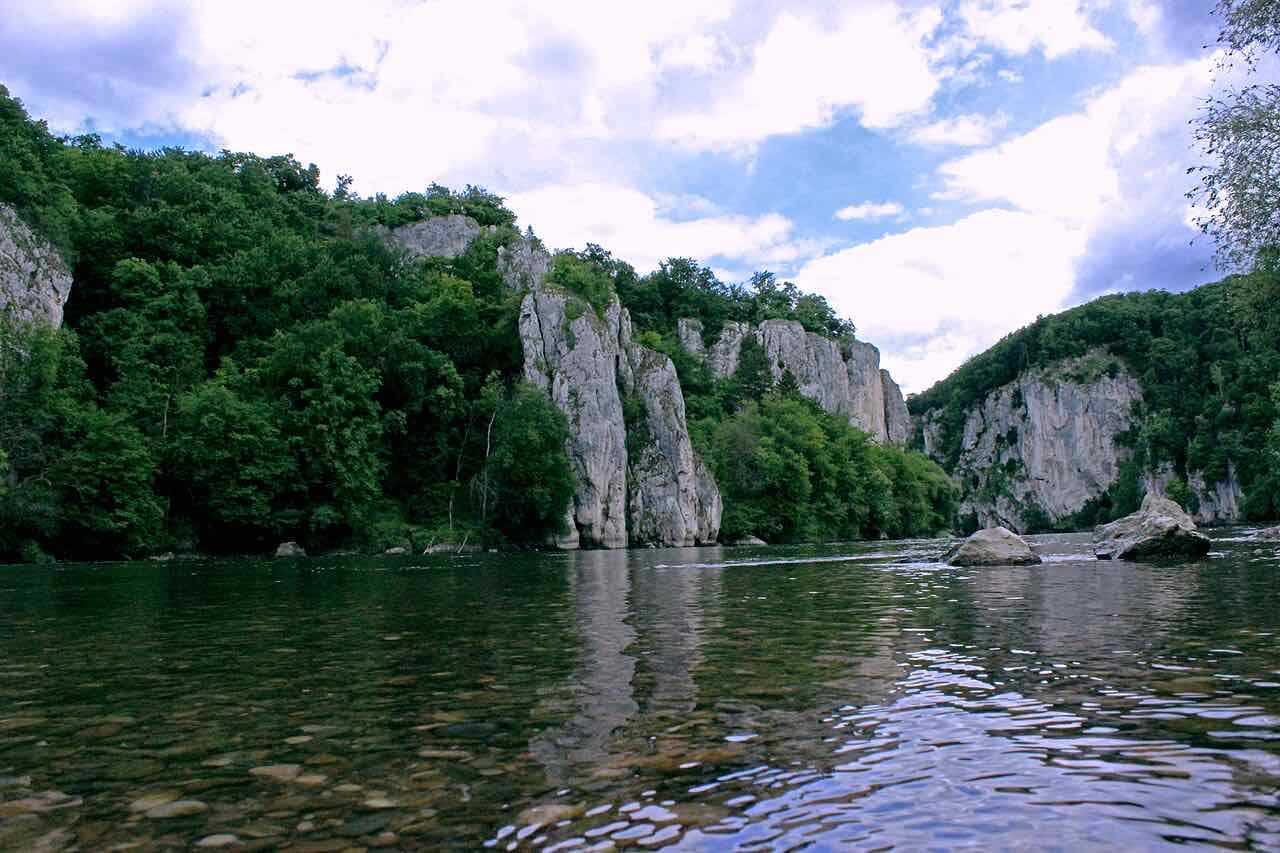
Beyond the city, the tourism office points to river trips by ship. Downstream there is the Walhalla, a classicist temple built for King Ludwig I on a hill above the Danube. Upstream a boat goes to Kelheim, where the Befreiungshalle stands, and on through the Danube gorge to Weltenburg Abbey.
On campus, the university's botanical garden was founded in 1977, holds about 5,000 plant species and is free to enter during opening hours.
Outside the city
Getting around
The old town is compact and the University of Regensburg says buses and bikes reach most places quickly. Students ride on the RVV semester ticket, which is part of the semester contribution: at OTH Regensburg the 208 EUR contribution covers the ticket and the Studierendenwerk fee. OTH also notes that the ticket lets you commute from surrounding villages at no extra cost, which matters because rooms near campus are limited.
By rail, Regensburg Hauptbahnhof is a regional hub. Trains run between Regensburg and Munich via Landshut, and since December 2018 there has been a direct connection to Munich Airport. The consulates and embassies named on this page are in Munich, Frankfurt or Berlin.
What things cost
- Dormitory room (OTH estimate)
- 300-510 EUR per monthsource
- Shared flat room (OTH estimate)
- 350-600 EUR per monthsource
- Own apartment (OTH estimate)
- 500-900 EUR per monthsource
- Average shared-flat room (University of Regensburg)
- about 424-518 EUR per monthsource
- Groceries (OTH estimate)
- 300-400 EUR per monthsource
- A main course in the Mensa / a restaurant
- 3-7 EUR / 15-25 EURsource
- Total monthly budget (OTH advice)
- 1,000-1,200 EURsource
- Semester contribution at OTH, incl. semester ticket
- 208 EUR per semestersource
- Full Hochschulsport programme
- 20 EUR per semestersource
Figures are the ones the universities and the Studierendenwerk publish. Private rents are higher than dormitory rents and vary widely.
Work and employers
Regensburg's economy is built on manufacturing, especially automotive, mechanical and electrical engineering and microelectronics. Among large German cities only Frankfurt has more jobs per inhabitant, according to the figures quoted on the city's Wikipedia article. The BMW Group plant in Regensburg is a visible local employer and sponsors the city's Interkulturelle Wochen, the intercultural weeks run by the Integrationsbeirat.
For students, the main bridges to employers are OTH's own Jobbörse for part-time jobs and CONNECTA, one of the oldest company contact fairs in Bavaria, held every year on the OTH campus since 1996 and organised by students. OTH's English-language Regensburger Modell bachelor's programmes are designed with the regional economy and the city administration in mind, and the University of Regensburg runs a Campus2Company initiative to help international students into the labour market. None of this promises a job; it is where to start looking.
Events through the year
A free festival on the shared university and OTH campus with four stages, organised by the student association Campus Regensburg e.V.; the University of Regensburg calls it a highlight of the study year.
The city's fairground festival, held twice a year, at the start of May and at the end of August.
In December, including the Christkindlmarkt on Neupfarrplatz.
Part 2
Student life in Regensburg
Where you can study
University of Regensburg (Universität Regensburg) ↗
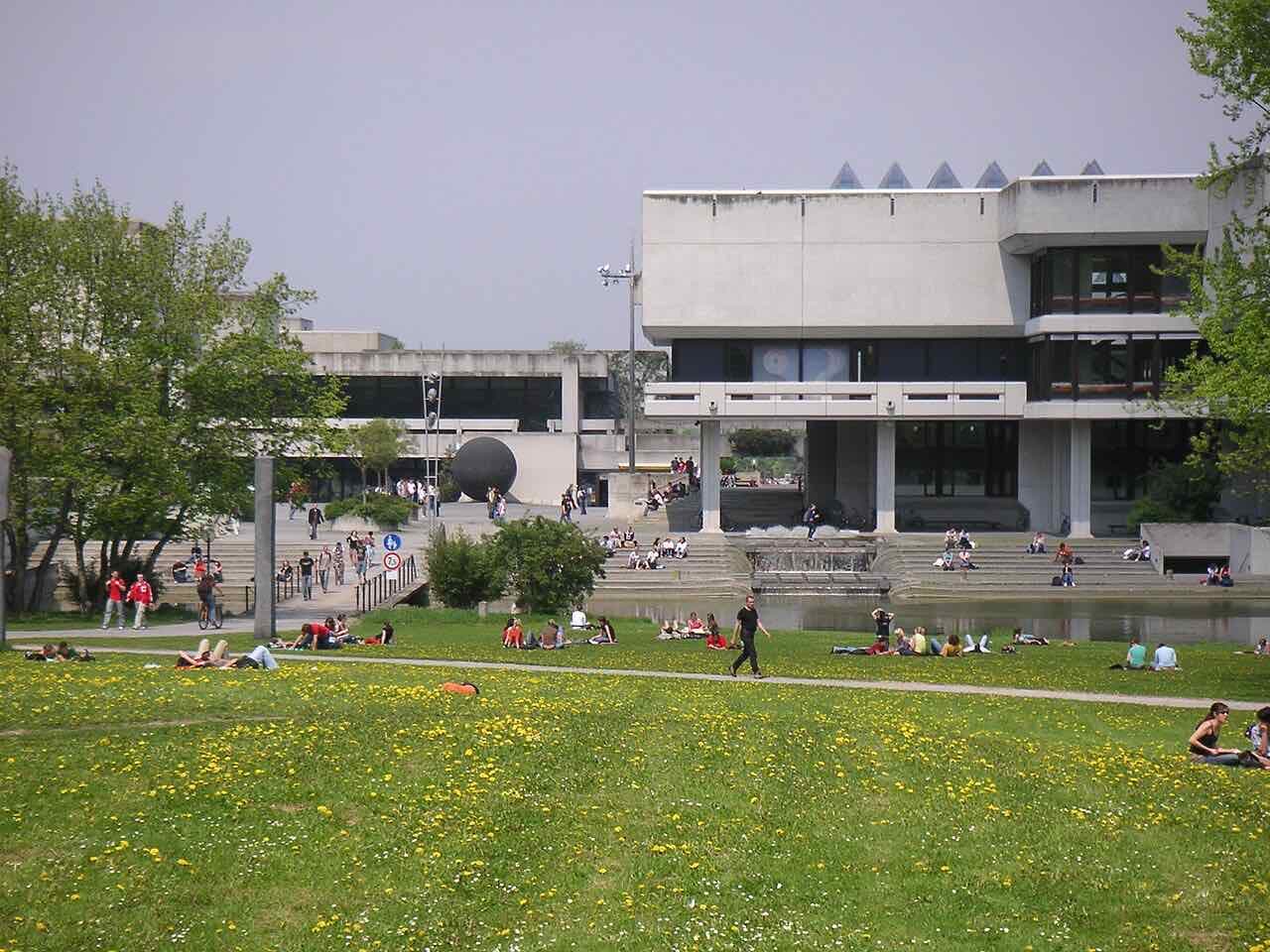
Founded in 1962, with 18,127 students in summer semester 2026, 1,430 of them international. It is a campus university in the Galgenberg district on the southern edge of the old town, on a 150-hectare site with eleven faculties plus a twelfth faculty for computer science and data science at Bajuwarenstraße 4. Library, canteen, sports centre and lecture halls are all on one campus, within walking distance of each other. The university has a broad subject range including medicine and the humanities, and many courses are taught in English; use its degree-programme finder to see which degrees can be studied in English.
International office ↗OTH Regensburg (Ostbayerische Technische Hochschule) ↗
11,134 students in winter semester 2025/26 in eight faculties covering engineering, business, social work, health, architecture and design. It offers 37 bachelor's and 23 master's programmes and works with about 265 partner companies for dual study. Most programmes are in German. Taught mostly or fully in English are the bachelor's programmes International Computer Science, International Mechanical Engineering and International Electrical Engineering (English in the first semesters, German at A2 level required, mandatory German courses from B1), and the master's programmes International Management, Electrical and Microsystems Engineering and Mathematics for Business and Industry, which can be studied entirely in English. Non-EU students in English-taught programmes pay a service fee of 500 EUR per semester on top of the semester contribution.
International office ↗Hochschule für katholische Kirchenmusik und Musikpädagogik (HfKM) ↗
A small Catholic music university at Andreasstraße 9 in the old town, training church musicians and music teachers. It offers Catholic church music (bachelor's and master's), other music programmes and a teacher-training route for Gymnasium school music. Its website is in German, and it states that its students come from more than a dozen countries. It is the right place only if you are a trained musician; for all other subjects look at the two institutions above.
International office ↗Student unions, services and groups
Studentischer Sprecher*innenrat (AStA), University of Regensburg ↗
The elected student representation of the university, also called AStA. It speaks for students towards the university, organises events, accredits student groups and runs peer self-help groups open to students of both the university and OTH. The students' parliament is the Studentischer Konvent.
Studierendenvertretung OTH Regensburg ↗
OTH's student representation: the Studentischer Konvent (the student parliament, with elected representatives from every faculty), the Sprecher:innenrat and the faculty student councils (Fachschaften). Each faculty has one, and they help with getting through the studies.
Studierendenwerk Niederbayern/Oberpfalz ↗
Runs the student housing, the Mensas and cafeterias, and student-life and psychological counselling in Regensburg. Its twelve Regensburg residences include Vitusstraße, Plato-Wild-Straße and the medieval Goldener Turm.
Hochschulsport, University of Regensburg ↗
The central university sport. Courses run from classic sports to underwater rugby and flag football on the campus sports facilities, including sports halls, a gym, a swimming pool, tennis courts and a disc-golf course. OTH's own study-start page points its students to the same Hochschulsport.
ESN Regensburg (Erasmus Student Network) ↗
Founded in 2008 by students to support exchange students of the University of Regensburg and OTH academically, socially and culturally, with events and trips and part of the national ESN Germany network.
Campus Friends, OTH Regensburg ↗
An initiative of OTH's student representation, supported by the International Office, that organises welcome events, a weekly Coffee Hour at the Studierendenhaus on Campus Galgenberg and cultural evenings for international and local students together.
Campusgemeinde: Catholic university parish (KHG) and Protestant student parish (ESG) ↗
A joint Christian offering at the university and OTH: services, a free breakfast and a short morning prayer on Thursdays in the OTH Studierendenhaus, a café and evening gatherings. Their website says the offers are open to everyone.
Muslimische Hochschulgruppe Regensburg (MHR) ↗
Muslim student group at the University of Regensburg, accredited by the student council. It has co-hosted a cultural evening at the end of Ramadan with OTH's Campus Friends.
The student association that organises the free Campusfest on the shared campus, and looks for volunteers in organisation, technology, sponsoring and design.
Dynamics e.V. (Formula Student team) ↗
The OTH Regensburg Formula Student racing team, listed among the University of Regensburg's student initiatives.
A student group of the association Campus Asyl e.V., listed among the University of Regensburg's student initiatives; the association also has a seat on the city's Integrationsbeirat.
Campus life and study culture
The University of Regensburg is a true campus university: all faculties apart from the newest one, the libraries, canteens and leisure facilities are on one site, so distances between lecture, library and Mensa are short. The student card, the UR-Karte, is also your library card and bus ticket and works as a payment card on campus, and it has to be validated every semester. Students log in to the SPUR campus portal, and use GRIPS for course material.
OTH Regensburg is spread over several locations (its postal address is Seybothstraße 2, and it has a campus at Galgenbergstraße 30). Its programmes are practice-oriented, in eight faculties, with partner companies and more than 120 laboratories.
Both institutions have a lot going on outside lectures. The University of Regensburg lists more than 15 student theatre groups, a stage called Theater an der Uni, orchestras, choirs and big bands with seven to twelve concerts a term, and a long list of accredited student initiatives from a debating club to a law students' association.
Housing: start early
Rooms are the hardest part of studying here. OTH says the housing market is tight, recommends starting at least two months ahead, especially for the winter semester, and says international students get no priority in dormitories, where places go by waiting list. OTH has no dormitories of its own.
The largest provider is the Studierendenwerk Niederbayern/Oberpfalz with twelve residences in Regensburg. You can and should apply before you have a place on a degree programme: the application itself creates no obligation. The Studierendenwerk's own pages list rents such as 239-311 EUR at Vitusstraße (single apartments and shared flats, depending on the type), 294-346 EUR at Plato-Wild-Straße, 265-436 EUR at the Goldener Turm, a medieval tower converted for students, and 367-556 EUR at the renovated Fort-Skelly-Straße barracks next to the two universities. It states that an average apartment is about 220-400 EUR including heating and water. You pay a deposit before moving in.
The Studierendenwerk also runs a room exchange that lists private rooms, and the University of Regensburg has a link to its own Zimmerbörse. If you cannot find a room near campus, the semester ticket lets you live in a village and commute.
Food, sport and nights out
The University Mensa is at Albertus-Magnus-Straße 2 and serves lunch on weekdays; an evening Mensa was introduced in Regensburg from 30 June 2025. OTH quotes 3-7 EUR for a Mensa main course.
The University of Regensburg says the full Hochschulsport programme costs 20 EUR per semester. For free, the old town and the Danube banks are where students meet. The university describes the pub density as one of the highest in Germany, and OTH counts about 350 bars, clubs and restaurants in the old town alone. In summer there is something on most weekends, from city festivals to open-air concerts.
Your first weeks
- 1
Before you arrive
Apply for a room at the Studierendenwerk Niederbayern/Oberpfalz as early as you can; you can apply before you have an admission. Sort out health insurance, which is required to enrol.
- 2
First days: enrol
Complete enrolment at your university and pay the semester contribution. At OTH it is 208 EUR (winter 2026/27) and includes the RVV semester ticket. Non-EU students in OTH's English-taught programmes also pay the 500 EUR service fee.
- 3
Within days of moving in: register your address
Citizens of non-EU countries register at the Amt für Ausländerangelegenheiten, Maximilianstraße 26, 93047 Regensburg. EU citizens register at the Bürgerbüro Stadtmitte, D.-Martin-Luther-Straße 3, 93047 Regensburg.
- 4
Residence permit
If you entered without a visa, apply for a residence permit within your first 90 days; if you entered on a visa, apply before it expires. The permit is tied to your subject and university, so tell the Ausländerbehörde before changing either, and apply at least six weeks before an extension is due. The Ausländerbehörde also holds regular mobile office hours on the university campus.
- 5
Meet people
Go to the Campus Friends welcome events at OTH, or ESN Regensburg and the student groups above. International students at OTH can start at the International Office, which is the first contact for everything from applications to arrival.
Part-time work and what the rules allow
Students from EU countries may work up to 20 hours a week during the semester and full-time in the holidays. Students from outside the EU may normally work 140 full days or 280 half days a year, and your residence permit must allow the work. A day of up to 4 hours counts as a half day; more than 4 hours counts as a full day. Work as a student assistant at a university, and compulsory internships, are handled differently: ask the Ausländerbehörde before starting.
OTH's job board (Jobbörse) lists part-time jobs for its students. In a city with this many bars and restaurants, word of mouth also works, as OTH says itself.
Where you come from matters here
Pick your home country: food, faith, community groups and the consulate that serves you, checked 21 October 2026.
🇮🇳 Living in Regensburg as an Indian student
Indian students are one of the fastest-growing groups at OTH Regensburg: from 68 in winter semester 2021/22 to 327 in winter 2025/26, many of them in master's programmes. The city's register of migrant organisations lists no Indian association, so start with the consulate and the campus groups.
Consulate General of India, Munich ↗
The Indian consulate in Munich. The Consul General visited OTH Regensburg on 8 June 2026.
OTH Regensburg: Indian students and partner universities ↗
OTH's report on the Consul General's visit: partnerships with universities in the Delhi and Bengaluru regions and the growth in Indian students, with the Campus Friends and the buddy programme named as ways in which they are welcomed.
The student-run welcome and events group at OTH, open to local and international students.
🇳🇬 Living in Regensburg as a Nigerian student
The city's register of migrant organisations lists no Nigerian association. The embassy is in Berlin. The Christian student communities below are open to everyone.
The embassy's own website, at Neue Jakobstraße 4, Berlin.
Katholische Hochschulgemeinde Regensburg ↗
The Catholic university parish, part of the joint Campusgemeinde, with services, a café and a free breakfast on Thursdays at OTH.
Evangelische Studierendengemeinde Regensburg ↗
The Protestant student parish, the other half of the Campusgemeinde.
🇧🇩 Living in Regensburg as a Bangladeshi student
The city's register of migrant organisations lists no Bangladeshi association. The Muslim centre and student group below and the OTH welcome events are open to everyone.
Islamisches Zentrum Regensburg ↗
Mosque and community centre at Alte Straubinger Straße 33, 93053 Regensburg.
Muslimische Hochschulgruppe Regensburg ↗
Muslim student group at the University of Regensburg, co-host of a Ramadan-end cultural evening at OTH.
The welcome and events group at OTH, open to local and international students.
🇵🇰 Living in Regensburg as a Pakistani student
The city's register of migrant organisations lists no Pakistani association. For consular matters the Pakistani embassy in Berlin and the consulate general in Frankfurt are the contacts, and for prayer and community the city has an Islamic centre and a Muslim student group.
The embassy's own website, in Berlin.
Consulate General of Pakistan, Frankfurt ↗
The consulate's own website, for consular services and visa questions.
Islamisches Zentrum Regensburg ↗
Mosque and community centre at Alte Straubinger Straße 33, 93053 Regensburg, listed in the city's register of migrant organisations with religious services, interfaith dialogue, youth work and education among its aims.
Muslimische Hochschulgruppe Regensburg ↗
Muslim student group at the University of Regensburg.
🇨🇲 Living in Regensburg as a Cameroonian student
The city's own register of migrant organisations lists a Cameroonian association.
A.K.A.R., Kamerunischer Verein im Raum Regensburg e.V. ↗
Founded in 2010 by Cameroonians studying and living in the Regensburg area. It runs seminars and cultural and sports events. Address in the city register: Friedrich-Viehbacher-Allee 32, 93055 Regensburg. The city register carries its profile and contact details.
The embassy's own website; it also covers nine other countries.
🇺🇸 Living in Regensburg as an American student
There is no US consulate in Regensburg; the U.S. mission in Germany lists a consulate in Munich.
U.S. Consulate General Munich ↗
The Munich page on the U.S. Embassy and Consulates in Germany website.
University of Regensburg: exchange programmes ↗
How incoming exchange students plan a stay at the university, within Erasmus+ or another partnership agreement; the university says it has many English-language courses.
The student network that looks after exchange students of both universities.
🇨🇳 Living in Regensburg as a Chinese student
The city's register of migrant organisations lists no Chinese association. The consulate general is in Munich.
Consulate General of the People's Republic of China, Munich ↗
The consulate's own website, in German.
OTH Regensburg: Shenzhen Technology University ↗
OTH's news page on a professor appointed to the international advisory board of the business school of Shenzhen Technology University, an example of OTH's ties to China.
English-taught programmes in Regensburg
Soonest open deadline first. Every entry links to its official source.
- ChemistryUniversity of Regensburg · RegensburgmasterNo tuition01 Dec 2026Closing soon
- Master's Programme in Mathematics (MSc)University of Regensburg · RegensburgmasterNo tuition01 Dec 2026Closing soon
- International MSc Ecology, Evolution and Conservation (EEC)University of Regensburg · RegensburgmasterNo tuition15 Dec 2026Closing soon
- Electrical and Microsystems EngineeringOTH Regensburg · Regensburgmaster15 Dec 2026Closing soon
- Mathematics for Business and Industry MScOTH Regensburg · Regensburgmaster15 Jan 2027Open
- Master of Science in PhysicsUniversity of Regensburg · RegensburgmasterNo tuition15 Jan 2027Open
- Master's in European StudiesUniversity of Regensburg · RegensburgmasterNo tuition01 Jun 2027Open
- Human-Centred Artificial IntelligenceUniversity of Regensburg · RegensburgmasterNo tuition01 Jun 2027Open
- Media InformaticsUniversity of Regensburg · RegensburgmasterNo tuition01 Jun 2027Open
- Computer ScienceUniversity of Regensburg · RegensburgmasterNo tuition01 Jun 2027Open
- EconomicsUniversity of Regensburg · RegensburgmasterNo tuition01 Jun 2027Open
- British Studies (MA)University of Regensburg · RegensburgmasterNo tuition01 Jun 2027Open
- Data ScienceUniversity of Regensburg · RegensburgmasterNo tuition01 Jun 2027Open
- English Linguistics (MA)University of Regensburg · RegensburgmasterNo tuition01 Jun 2027Open
- European-American Studies (MA)University of Regensburg · RegensburgmasterNo tuition01 Jun 2027Open
- BiologyUniversity of Regensburg · RegensburgmasterNo tuition15 Jun 2027Open
- International ManagementOTH Regensburg · RegensburgmasterNo tuition15 Jun 2027Open
- Cancer and Immunity, Master of ScienceUniversity of Regensburg · RegensburgmasterNo tuition15 Jun 2027Open
- Liberal Arts: Culture, History, SocietyUniversity of Regensburg · RegensburgbachelorNo tuition15 Jul 2027Open
- International Mechanical Engineering BEngOTH Regensburg · Regensburgbachelor15 Sept 2027Open
- International Computer Science BScOTH Regensburg · RegensburgbachelorSee sourceCheck source
Is Regensburg right for you? Ask us. Free.
Tell us your passport, grades and budget. We compare Regensburg with the other places you could study, then apply for you. You never pay us.
Get my free plan