Studying in Baden-Württemberg, Germany
Reutlingen
A mid-sized Swabian city at the foot of the Swabian Alb, with a university of applied sciences of its own and Tübingen and Stuttgart on the same rail line.
Reutlingen has about 119,000 people and sits in the Echaz valley right below the Swabian Alb, the limestone upland that rises behind the city. It is a place of medieval walls, textile and machine-building history and a university of applied sciences that takes international students seriously: about one student in five at Reutlingen University comes from abroad, and the campus holds the ESB Business School and the TEXOVERSUM School of Textiles. You get a small campus, a compact old town, hills and woods at the edge of the city, and regional trains that reach Tübingen, a much larger university town about 15 km away, and Stuttgart, about 35 km away. It is a good fit if you want a focused degree and a manageable city rather than a big-city scene, and if you are happy to take a train for the rest.
- Students at Reutlingen University
- about 5,000, with about 20% international students from more than 80 nations
- Distance to Tübingen and Stuttgart
- about 15 km to Tübingen and about 35 km to Stuttgart
- Semester contribution (Reutlingen University)
- 199.30 EUR per semester, without a transport ticket
- Tuition for non-EU students in Baden-Württemberg
- 1,500 EUR per semester, with exemptions
- Blocked account for a student visa
- 11,904 EUR per year (992 EUR a month)
- Nearest big airport
- Stuttgart, reached by the hourly eXpresso airport bus from Reutlingen
- Reutlinger Kulturnacht
- held every October
Part 1
Living in Reutlingen
A walled textile city under the Alb
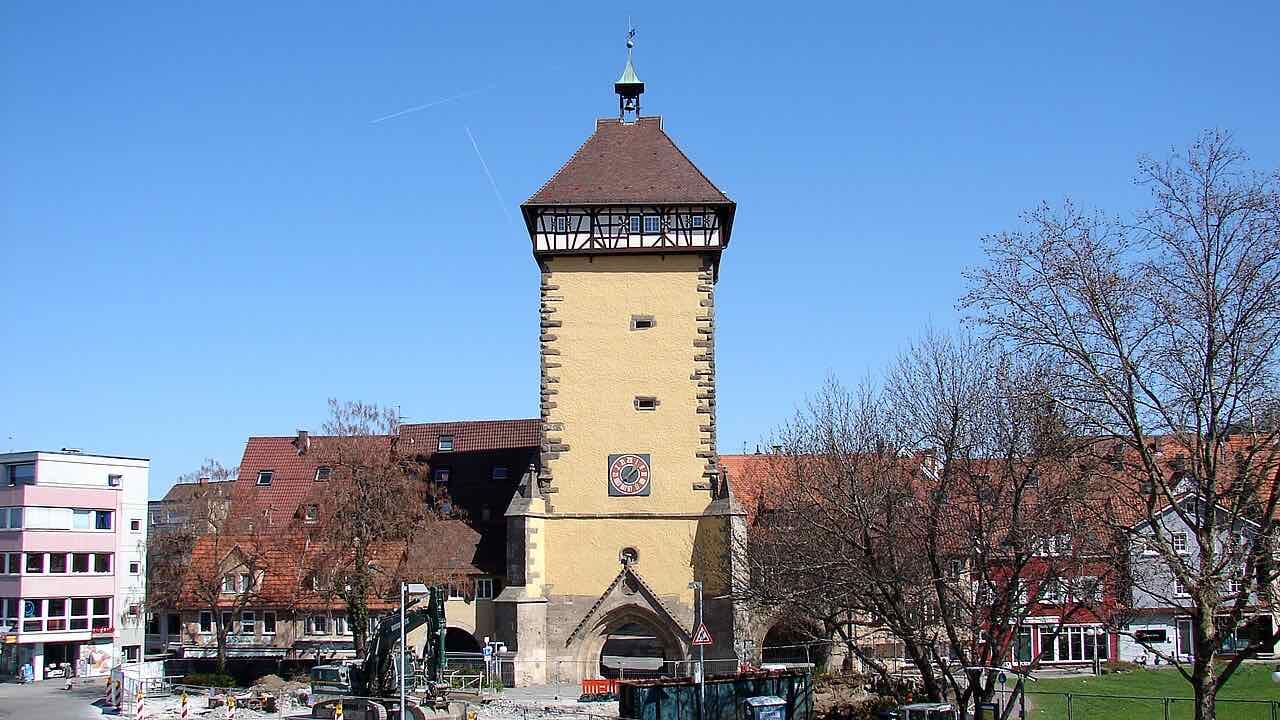
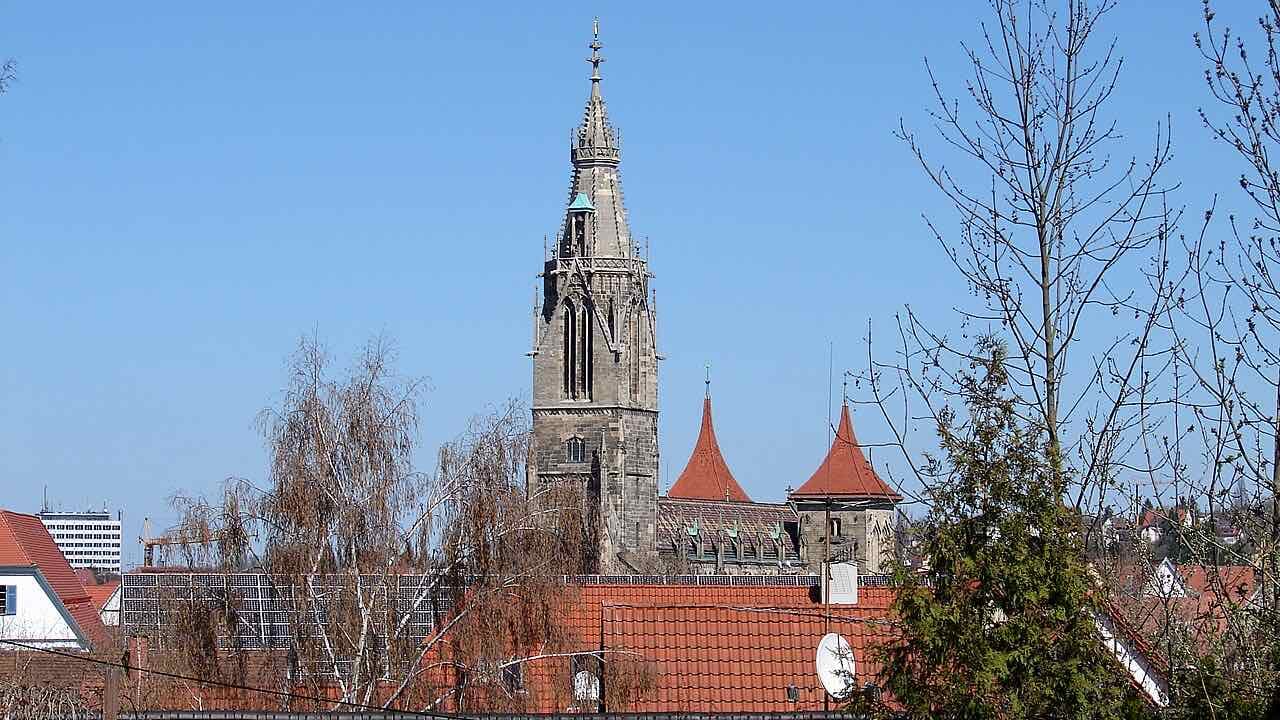
Reutlingen got market rights around 1180 and city status in the first half of the thirteenth century, and it later became a free imperial city before falling to Württemberg in 1803. A fire in 1726 destroyed about 80 per cent of the houses, so the old centre you walk through is mostly rebuilt after that. What survived includes the Marienkirche, a Gothic church finished in 1343 whose spire still defines the skyline, and the Tübinger Tor, a gate from the old city wall.
The city grew rich on textiles, knitting machines and paper goods in the nineteenth century, and the weaving school founded in 1855 in the Spendhaus became today's Reutlingen University. Friedrich List, the economist who argued for industrial development and a German customs union, was born here. After the Second World War Reutlingen was known as a town of millionaires, which tells you it was an industrial place first and a university town second.
That order is still visible. You will meet engineers, designers and managers in the cafes along the Echaz as often as you meet professors. If you want a city that never sleeps, Stuttgart is a train ride away.
What to see and do
Most of it is within a short walk of the Hauptbahnhof, and most of it is free.
The Protestant church that is the landmark of the city. Construction began in 1247 according to local tradition and was finished by 1343.
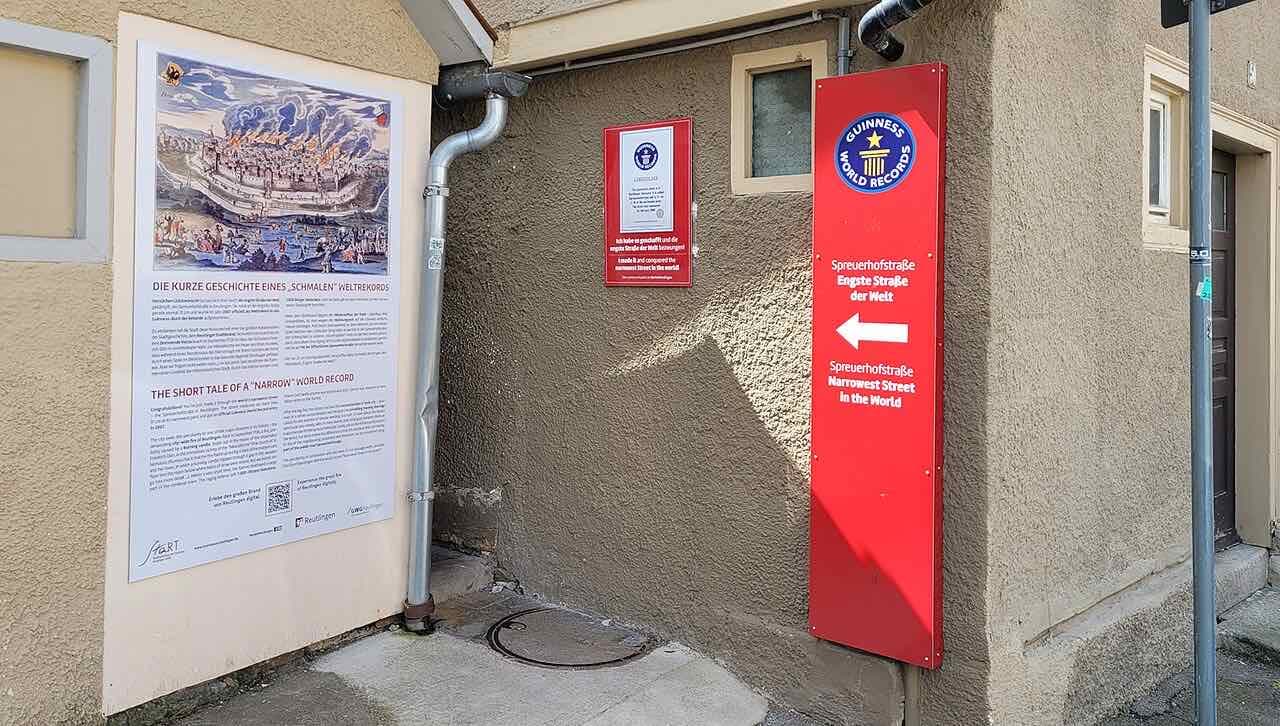
A lane that the Guinness book has listed since 2007 as the narrowest street in the world, about 40 cm wide on average and 31 cm at its tightest. It takes a minute to see and everyone takes the photo.
Tübinger Tor and the old wall ↗
A surviving part of the city fortifications, now part of the walk through the centre.
Königsbronner Hof and the Heimatmuseum ↗
A stone house from 1278, extended with timber framing in 1537, which houses the local history museum founded in 1890.
The art museum in the building where the weaving school started.
StaRT Stadtmarketing und Tourismus publishes guided tours of the old town, events and travel information.
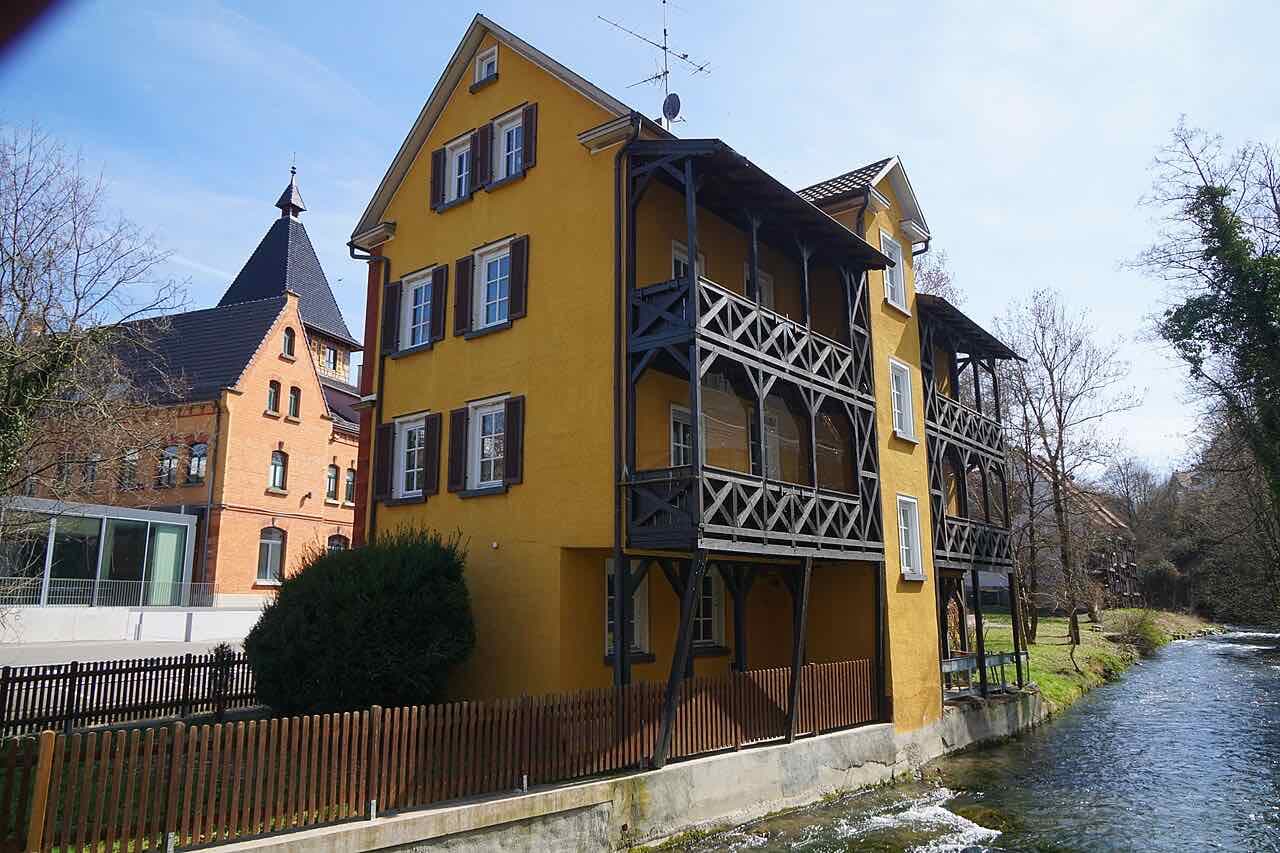
Lanes and rivers in the old town
The Achalm and the Swabian Alb
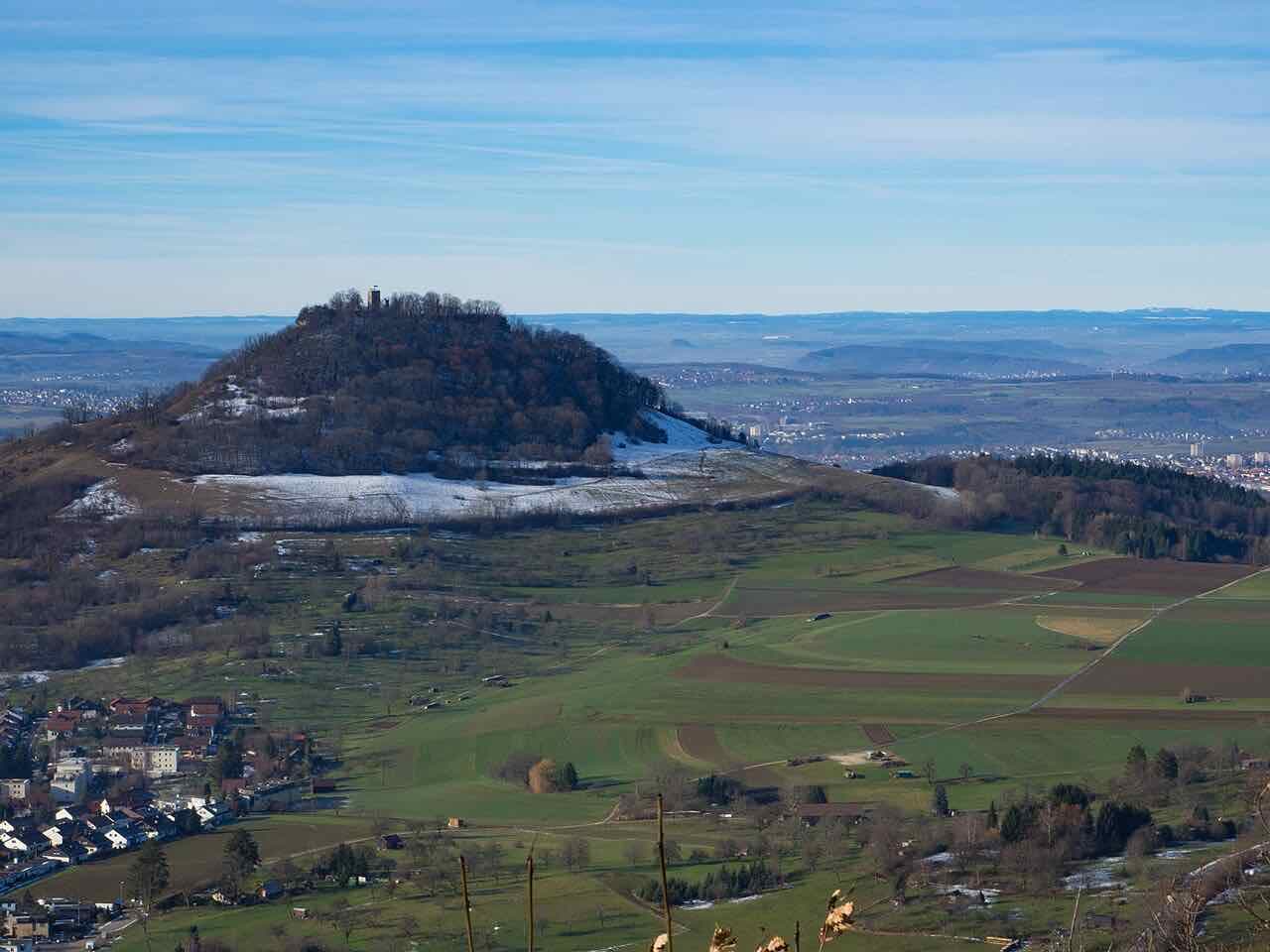
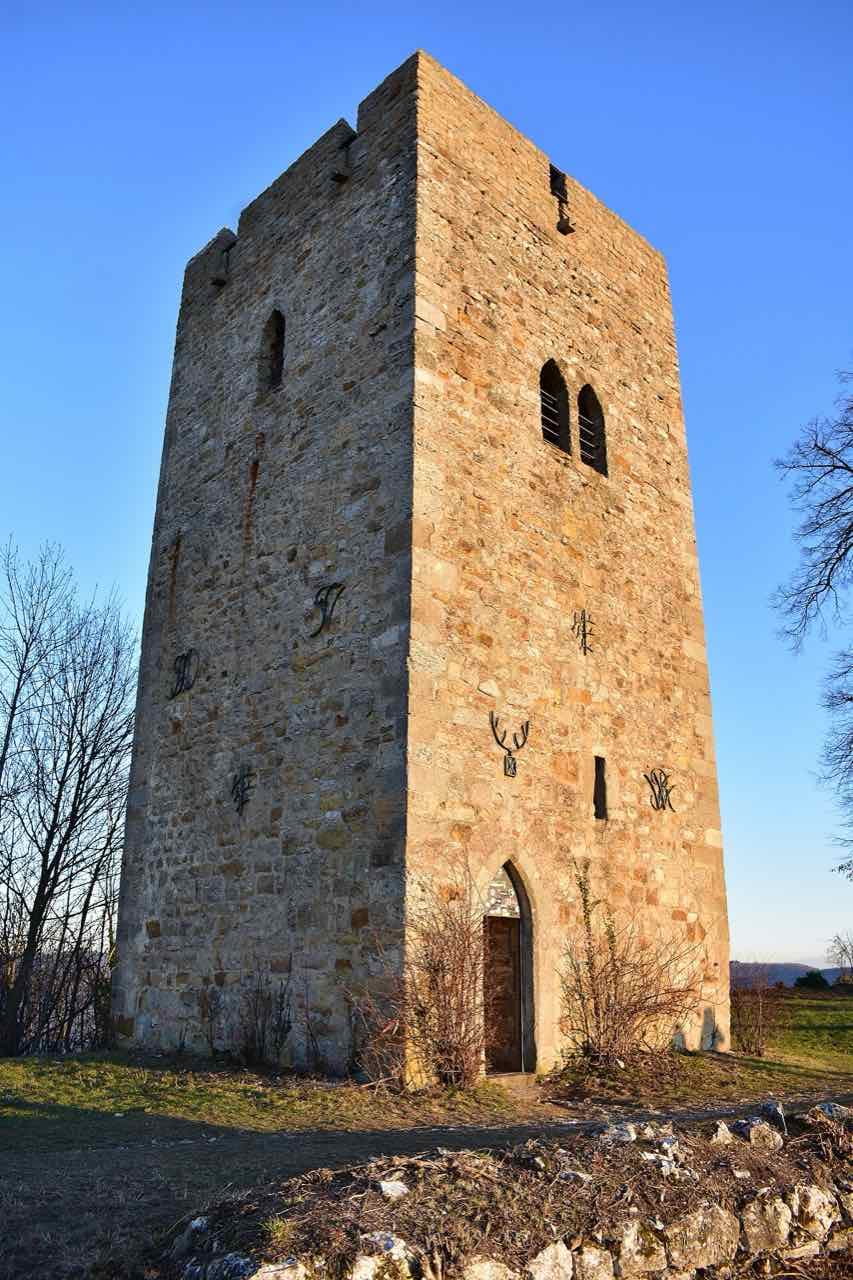
The Achalm is a wooded hill of 706 m right above the city. A castle began there around 1030, it was taken down in the seventeenth century, and in 1822 a lookout tower was built on its old foundations. Walking up takes an afternoon and rewards you with a view over the valley and the Alb edge. Locals go up for a sunset or for a Sunday walk, and students use the paths for running too.
The Swabian Alb itself starts at the edge of town. The city lies next to it and is often called the gateway to the Alb. In practice that means forest paths, orchards and limestone cliffs within a bus or bike ride, plus the Listhof nature reserve inside the city's own area, 123 hectares and the largest of the city's four nature reserves.
The largest sports club is the Reutlingen section of the German Alpine Club, with 11,771 members at the end of 2025, a sign of how many people here spend weekends outdoors. If you hike, climb or ride a bike, Reutlingen is a very good base. If you are used to a tropical climate, expect real winters on the Alb, and bring a proper coat.
The hill above the city
Festivals and the year in Reutlingen
The calendar is full of small local events. The Toskanischer Markt in April, the KuRT festival and the Stadtfest in June and July (the Stadtfest every second year), the Schwörtag in July, the Weindorf Reutlinger Herbst in September and the Reutlinger Kulturnacht in October all take place in the centre. The Christmas market closes the year. None of them is huge, but they are free to walk through and a good way to meet people outside the university.
Evenings are quiet by big-city standards. The larger cultural programme is at Stuttgart, where trains leave from the Hauptbahnhof, and Tübingen, about 15 km away on the same regional line, is a much larger student town.
Getting around, and getting out
The Hauptbahnhof is the hub. Regional trains run hourly to Plochingen, Herrenberg and Bad Urach, a Regional-Express connects Stuttgart and Tübingen through Reutlingen, and the RE 6a runs every two hours towards Stuttgart or Aulendorf. City buses are run by the Reutlinger Stadtverkehrsgesellschaft in the NALDO transport association, and the eXpresso airport bus to Stuttgart Airport runs hourly.
Reutlingen has no motorway junction of its own, and the A8 and A81 are about 25 to 30 minutes away by car. You will not need a car as a student. For a day out, Tübingen, Esslingen and Stuttgart are each a train ride away, and the international office organises group trips such as the winter-semester outings to Waldenbuch and Esslingen.
The fee breakdown of 199.30 EUR lists no transport ticket, so ask the StudentServiceCenter what applies before you budget your travel.
Where the work is
Reutlingen is an industrial city, and the employers are engineering, automotive electronics, textile machines and wholesale. None of this is a promise of a job, but it shows where internships and student jobs come from.
The city's profile names Bosch, with a focus on automotive electronics, among its large employers.
Stoll, Wafios, Manz, Reusch and RWT ↗
Machine builders and technical companies listed in the city's profile. Stoll, a knitting-machine maker, moved to Reutlingen in 1878.
Center for Entrepreneurship, Reutlingen University ↗
Seminars, events and advice on career services, start-ups and starting a career, open to students.
Part 2
Student life in Reutlingen
Where you can study
Reutlingen University (Hochschule Reutlingen) ↗
Founded in 1855 as a weaving school and a university of applied sciences since 1971. About 5,000 students, 49 study programmes and about 20% international students from more than 80 nations. Six schools: the ESB Business School, Informatics, Life Sciences, Sustainability and Technology (NXT), Engineering and the TEXOVERSUM School of Textiles. English-taught or bilingual degrees include International Business (BSc), Industrial Engineering with International Project Engineering (BEng), and Master's programmes such as Digital Industrial Management and Engineering, Global Management and Digital Competencies, European Management Studies, International Business Development and International Accounting, Controlling and Taxation. The campus is at Alteburgstraße 150.
International office ↗Eberhard Karls Universität Tübingen ↗
About 15 km from Reutlingen and reachable by regional train. Founded in 1477, with 28,046 students in winter 2025/26, 4,495 of them international, and more than 200 degree programmes. Faculties: Protestant and Catholic theology, law, medicine, humanities, economics and social sciences, science, and a Center for Islamic Theology. It is a separate university with its own application and enrolment, not part of Reutlingen University.
International office ↗Theologische Hochschule Reutlingen ↗
A small theological university in Reutlingen with Bachelor's and Master's programmes in theology and a Master's in Christian spirituality. It also lists a page for international students.
Student unions, services and groups
AStA of Reutlingen University ↗
The General Students' Committee, the student union. It is reachable at asta@reutlingen-university.de, and the student parliament (StuPa) funds student events and student representation.
Studierendenwerk Tübingen-Hohenheim ↗
Runs the Reutlingen refectory and three halls of residence on Pestalozzistraße, and offers BAföG advice and counselling.
Hochschulsport Reutlingen University ↗
University sport from Aikido to Zumba, open to students and staff, with many courses free. You register through the intranet login.
Reutlingen International Office (RIO) ↗
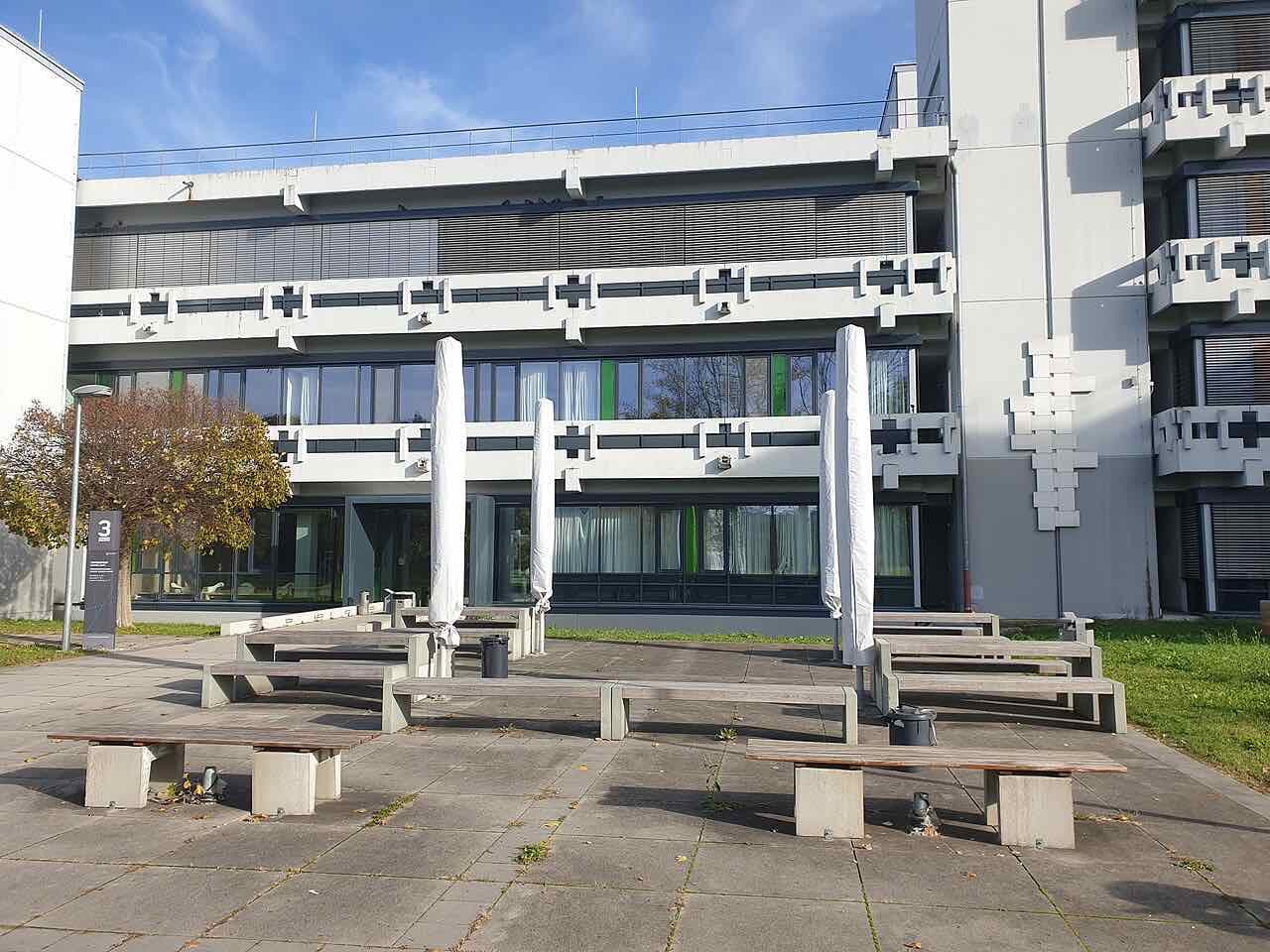
The central point of contact for international students: exchange programmes, German courses and intercultural events. Rooms 216 to 219 in building 3.
Get staRTed, support for international students ↗
Individual advice, German courses, writing support and excursions, for example the 23 October 2026 trip to the Ritter Sport Museum in Waldenbuch. Email getstarted@reutlingen-university.de.
ESB Business School student network ↗
Student groups at the business school, including ESB Student Consulting, an investment club, an oikos chapter and the National Model United Nations team.
A student-run consultancy that works on projects for companies.
Studierendenrat (StuRa) at Tübingen University ↗
The student body of the neighbouring university, with its office in Tübingen, useful if you are looking for events in the wider area.
University Sports Center Tübingen ↗
The sports centre of Tübingen University, which runs a large course programme on its own site.
Integrationsrat of the city of Reutlingen ↗
The city's advisory council for migration and integration, appointed by the city council. It advises on integration policy and helps connect migrant organisations.
Campus life and study culture
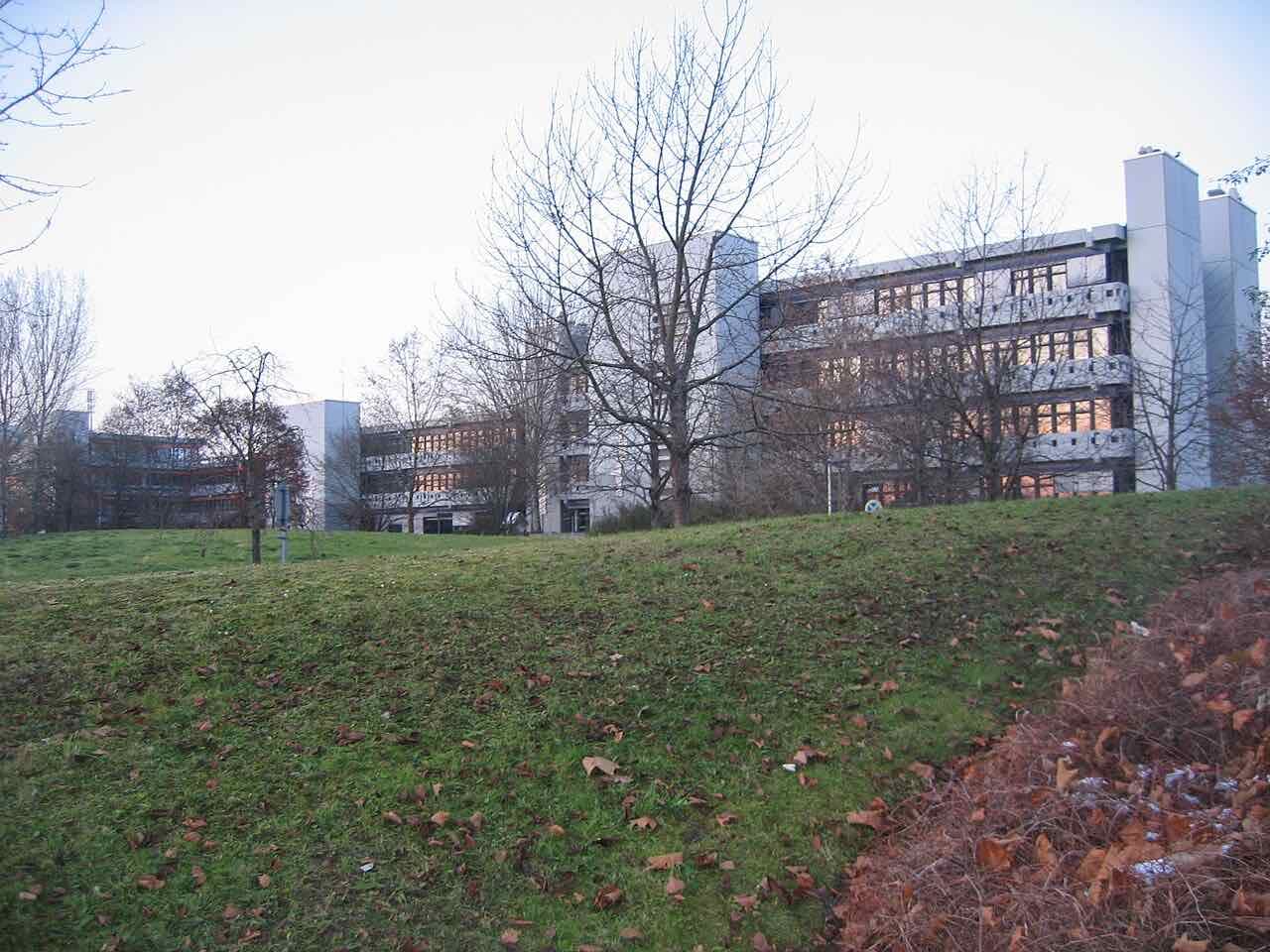
The campus is on the Alteburg, a compact set of buildings numbered one to nine on the hill above the city centre. It is small enough that you will meet the same people in the hallway, the refectory and the library, and the schools run their own student councils (Fachschaften). Lecture groups are small, projects are common, and many degrees include a practical semester in industry.
Study culture is practical. The ESB Business School has more than 1,500 students from over 70 nationalities and works with more than 100 partner universities, and the TEXOVERSUM School of Textiles has twelve labs for weaving, knitting, nonwovens and electronic textiles. Informatics, Engineering and Life Sciences share the same site. If you want a degree that ends in a clear profession, this is a good place. If you want a broad humanities education, look at Tübingen.
The university offers German courses at the Institute for Foreign Languages, writing consultations in German or English and a Central Student Advisory Service for personal and financial questions. Take them early.
What you pay each semester and each month
- Studierendenwerk contribution
- 104.80 EUR per semestersource
- Administrative costs
- 80 EUR per semestersource
- Student union (StuPa) contribution
- 14.50 EUR per semestersource
- Total semester contribution
- 199.30 EUR per semester, due even in a practical semester or while abroadsource
- Tuition for non-EU students
- 1,500 EUR per semester, plus the contribution; exemptions exist, for example for exchange studentssource
- Average monthly cost for a student not living with parents
- 864 EUR (DSW social survey)source
- Blocked account for the visa
- 11,904 EUR a year, 992 EUR a monthsource
- Minijob income without tax
- up to 556 EUR a monthsource
Figures for Reutlingen University as published on its student-finance page, and the DAAD and visa pages. Private rent and food are not included.
Housing: apply early
Student housing in Reutlingen is limited and in demand, so apply as soon as you have your admission. For winter 2026/27 the Studierendenwerk reports places in shared accommodation still available but no single-room flats.
Studierendenwerk halls on Pestalozzistraße ↗
Three halls at Pestalozzistraße 41, 63 and 65, and 67. Apply through the Studierendenwerk online form. The page gives no rents, so ask before you sign.
Student halls run by private and municipal landlords ↗
The university lists the halls of GWG Reutlingen (Adolf-Reichwein-House and Alice-Salomon-House), Heilbrunnen and Möve, ranging from single flats with kitchenette to rooms in shared flats.
Passes on landlords' contact details for private offers on the university's room search. Phone +49 7121 271 1060 or email info.studium@reutlingen-university.de.
Food, sport and evenings
The Studierendenwerk runs the Reutlingen refectory with a published daily menu. Beyond that the town has the usual German mix of bakeries, doner shops, Italian places and Swabian restaurants, plus the S-Haus restaurant at Rommelsbacher Straße 1, a volunteer-run place that cooks warm meals for people with little money and is open to everyone.
For sport, the Hochschulsport offers courses from Aikido to Zumba, many of them free. The wider town has large clubs such as the TSG Reutlingen and TSV Betzingen, and the German Alpine Club section is the biggest of all. Evenings are quiet: student parties are organised by the Fachschaften and the StuPa, and anything bigger means a train to Tübingen or Stuttgart.
Your first weeks
- 1
Before you fly
Apply for a hall room at the Studierendenwerk and ask the StudentServiceCenter about private rooms. Open the blocked account (11,904 EUR a year for the visa) and have health insurance proof ready. Check your exemption options for the 1,500 EUR tuition before you enrol.
- 2
First week
Register your address at one of the city's two Bürgerämter, Stadtmitte or Orschel-Hagen. Book an appointment online at reutlingen.de/Online-Termin, and bring your passport, visa and rental contract with your landlord's confirmation.
- 3
First two weeks
Enrol at the university, pick up your student card, activate your university account and see the Get staRTed team for German courses and individual advice. Pay the 199.30 EUR semester contribution in full.
- 4
Within the first month
Apply for your residence permit at the Ausländerbehörde of the city of Reutlingen. Its online services for the residence card, permit for education and work conditions are listed on reutlingen.de/bundid.
- 5
In the first semester
Open a German bank account if you have not, join a student group (a Fachschaft or ESB Student Consulting) and pick a Hochschulsport course.
Working while you study
Students from outside the EU may work 140 full days or 280 half days a year. Working beyond that needs approval from the Agentur für Arbeit and the Ausländerbehörde. A minijob earning up to 556 EUR a month is tax free, and academic assistant positions at the university do not count against the day limit, though you must tell the Ausländerbehörde. The statutory minimum wage has been 13.90 EUR an hour since January 2026.
Reutlingen has industrial employers close to the campus, and the Center for Entrepreneurship offers seminars on careers and start-ups. The Diakonieverband Reutlingen offers internships, mostly for students, if you prefer a social-sector placement.
Where you come from matters here
Pick your home country: food, faith, community groups and the consulate that serves you, checked 21 October 2026.
🇮🇳 Living in Reutlingen as an Indian student
The organised Indian communities of the region are in Stuttgart, about 35 km away, and the Consulate General in Munich covers both Bavaria and Baden-Württemberg.
Deutsch-Indische Gesellschaft, Zweiggesellschaft Stuttgart ↗
Founded in 1953 as a national society, with a Stuttgart branch re-founded in 2007 to promote cultural exchange between India and Germany in the Stuttgart region.
Tamilische Bildungsvereinigung ↗
A Tamil education association with an office phone on +49 711 870 97 67, open Monday to Friday from 15:00 to 17:30. Based in the Stuttgart region.
ICF, India Culture Forum e.V. ↗
Listed among the member associations of the Forum der Kulturen Stuttgart.
Consulate General of India, Munich ↗
Serves Bavaria and Baden-Württemberg for passports, OCI and attestation. Contact details are on its site.
🇳🇬 Living in Reutlingen as a Nigerian student
The Haus der Kulturen lists a Black community association in Reutlingen, and Stuttgart has a Yoruba cultural society. The embassy is in Berlin.
A young Reutlingen association for the participation of Black people in the city, listed among the members of the Haus der Kulturen.
Egbe Omo Oduduwa Stuttgart e.V. ↗
A Yoruba cultural society in Stuttgart that promotes Yoruba culture and tradition.
Passport and consular matters by email and phone, with a list of NIN enrolment centres in Germany.
🇻🇳 Living in Reutlingen as a Vietnamese student
The nearest real contact for Vietnamese students is the embassy in Berlin.
Consular procedures and citizen protection for Vietnamese in Germany.
🇳🇵 Living in Reutlingen as a Nepali student
The nearest real contact for Nepali students is the embassy in Berlin.
Guerickestraße 27, 10587 Berlin. Passports and consular services, with a notice board on its site.
🇵🇰 Living in Reutlingen as a Pakistani student
The Pakistan German Cultural Society is listed in Stuttgart, and the Consulate General in Frankfurt serves students in Baden-Württemberg.
Pakistan German Cultural Society e.V. ↗
Listed among the member associations of the Forum der Kulturen Stuttgart.
Consulate General of Pakistan, Frankfurt ↗
Provides consular services to seven German states, including Baden-Württemberg.
🇬🇭 Living in Reutlingen as a Ghanaian student
Stuttgart has two Ghanaian associations, and Reutlingen has a Black community association.
Ghana Union Stuttgart e.V. and DEGHA ↗
Both are listed among the member associations of the Forum der Kulturen Stuttgart, along with the German-Ghanaian friendship society Deutsch-Ghanaische Freundschaft (DEGHA) e.V.
Blacks Connected e.V., Reutlingen ↗
An association for the participation of Black people in Reutlingen, member of the Haus der Kulturen.
Black Community Foundation Stuttgart ↗
A non-profit by Black people for Black people, founded in 2020, based in Stuttgart, with events and workshops.
🇨🇲 Living in Reutlingen as a Cameroonian student
The nearest Cameroonian association is in Stuttgart, and the embassy in Berlin handles passports and consular matters.
CamAS, the Cameroonian Association of Stuttgart and Environs ↗
A Cameroonian association with events, sport, entrepreneurship activities and family outings for members of all ages.
Consular service for passports and documents, with the page in English, French and German.
🇺🇸 Living in Reutlingen as an American student
Reutlingen University has exchange programmes with the USA, and the German-American Center in Stuttgart runs cultural events and language programmes.
Deutsch-Amerikanisches Zentrum / James-F.-Byrnes-Institut ↗
A cultural and educational institute in Stuttgart, supported by the Federal Foreign Office, the state and the city, with an events programme, language courses and German-American groups.
Reutlingen International Office, USA exchange ↗
The RIO coordinates the central exchange programmes with the USA and the Kettering University state programme.
🇨🇳 Living in Reutlingen as a Chinese student
The Chinese associations of the region are in Stuttgart, which has several, including a Chinese school and a women's network.
Deutsch-Chinesisches Forum Stuttgart e.V. ↗
A German-Chinese forum that organises trips and cultural events, such as an October 2025 excursion to Rottweil.
A network founded by Chinese women in Germany to support other Chinese women living and working in Germany and Europe.
Chinesische Schule Stuttgart ↗
A non-profit Chinese school founded in 1995 that offers 16 courses for all ages.
English-taught programmes in Reutlingen
Soonest open deadline first. Every entry links to its official source.
- ESB Business School: International Business (Bachelor of Science)Reutlingen University · Reutlingenbachelor15 Nov 2026Closing soon
- ESB Business School: Global Management and Digital Competencies (Master of Science)Reutlingen University · ReutlingenmasterSee sourceCheck source
- ESB Business School: MBA International Management (Full-Time)Reutlingen University · ReutlingenmasterSee sourceCheck source
Is Reutlingen right for you? Ask us. Free.
Tell us your passport, grades and budget. We compare Reutlingen with the other places you could study, then apply for you. You never pay us.
Get my free plan