Studying in Baden-Württemberg, Germany
Stuttgart
A hilly valley city of about 609,000 people where the car, the engineering degree and the vineyard all sit within one tram ride.
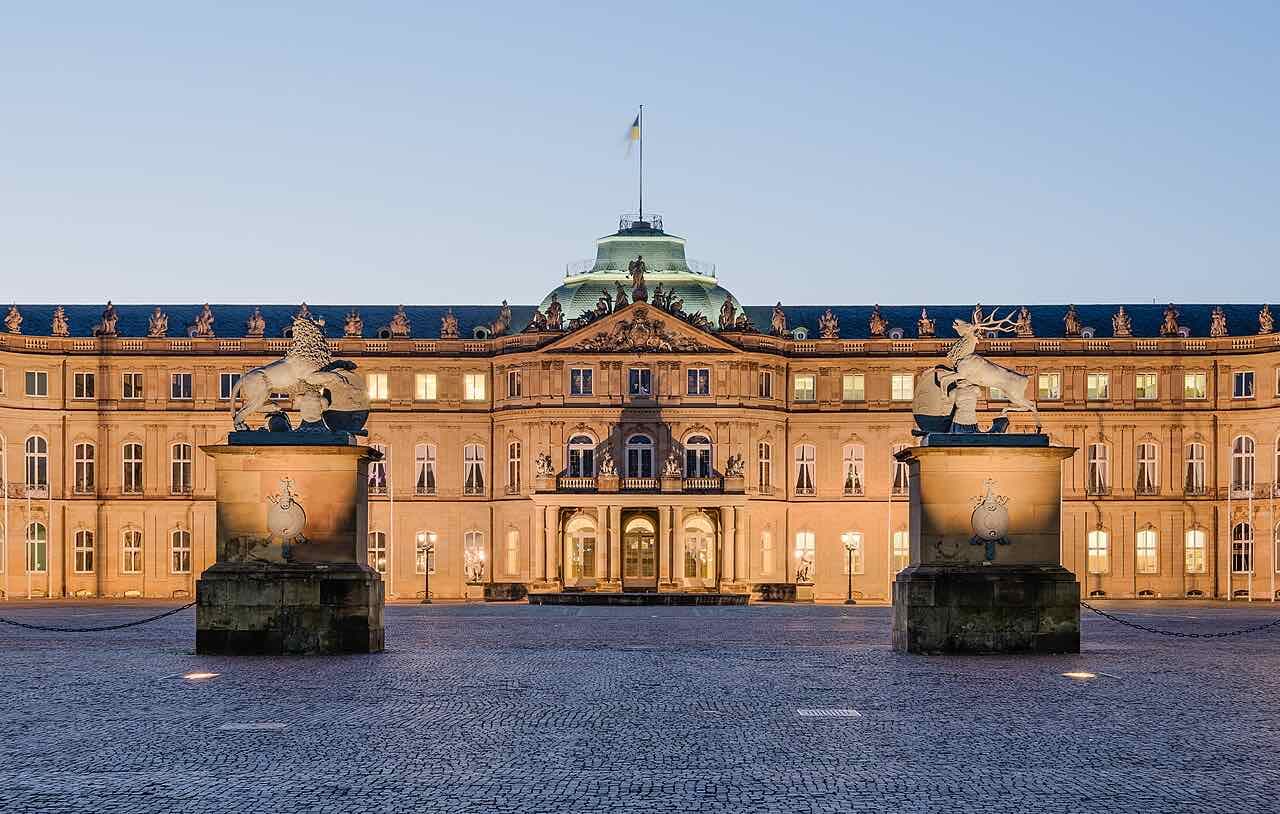
Stuttgart lies in a valley called the Kessel, on the Neckar, with vineyards on the slopes above the centre. It is the capital of Baden-Württemberg, and it is where Mercedes-Benz and Porsche have their headquarters and where Robert Bosch started his workshop in 1886. For a student that means a technical university with about 20,500 students, a second old university in a palace at Hohenheim, art, music and media schools, and a job market full of engineers' employers within a short ride of campus. It also means a city where roughly one resident in four does not hold a German passport, so nobody here expects you to arrive already knowing everything. Be ready for two things: rooms are scarce and expensive, and a student from outside the EU pays a tuition fee of 1,500 EUR per semester at the state universities on top of the semester contribution.
- Residents without German citizenship
- 27.6% in 2022; about 47% had a foreign background
- University of Stuttgart
- 20,536 students in winter 2025/26, more than 60 bachelor's and about 100 master's programmes
- Tuition for non-EU students
- 1,500 EUR per semester, plus the semester contribution (Hohenheim 174.50 EUR, University of Stuttgart 184 EUR)
- Dorm rent (Studierendenwerk)
- from about 280 to 505 EUR a month, utilities included
Part 1
Living in Stuttgart
A city of engineers, built in a bowl
Stuttgart began in the 10th century as a stud farm for warhorses, founded by Duke Liudolf of Swabia, and got its town charter in 1320. From the 15th century to 1918 it was the seat of the House of Württemberg.
The industry came later and it is why most students arrive. Carl Benz founded Benz & Cie. in 1883, Gottlieb Daimler and Wilhelm Maybach founded Daimler Motoren Gesellschaft in 1890, and the two firms merged in 1926. Robert Bosch opened his precision-mechanics workshop in Stuttgart in 1886. Today Mercedes-Benz Group has its headquarters in Untertürkheim, Porsche and Bosch are headquartered in Stuttgart, and the Stuttgart stock exchange is the second largest in Germany.
Be clear about what you are choosing. This is not a postcard old town: much of the centre was rebuilt after the war and the Stuttgart 21 rail project has long dominated the main station area. What you get instead is a city on hills, with parks and vineyards inside the boundary, a very good tram and train network, and universities that sit close to the companies they work with. If you want a small campus town, Stuttgart is bigger and busier than that. If you want an engineering or business degree next to real employers, it is one of the strongest places in Germany.
What to see and do
Start with the places that tell you what Stuttgart is.
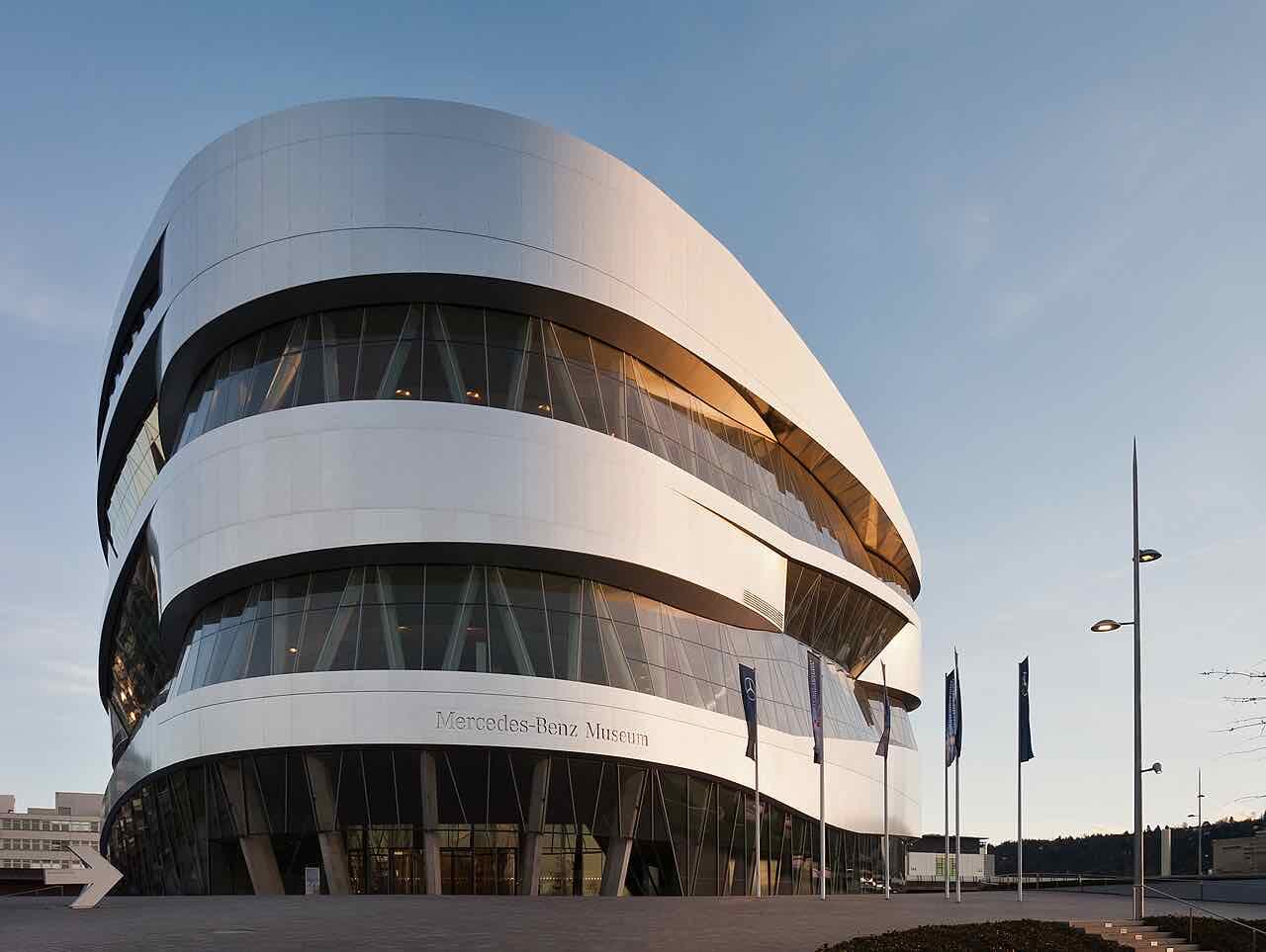
Opened in 2006 at Mercedesstraße 100, directly outside the Mercedes-Benz factory gate. More than 160 vehicles on about 16,500 square metres, with free audio tours in several languages.
The sports-car maker's own museum, with guided tours and special exhibitions. Its exhibition on 75 years of Porsche motorsport runs from 1 July 2026 to 17 January 2027, and the museum closes for refurbishment from 18 January to 1 February 2027.
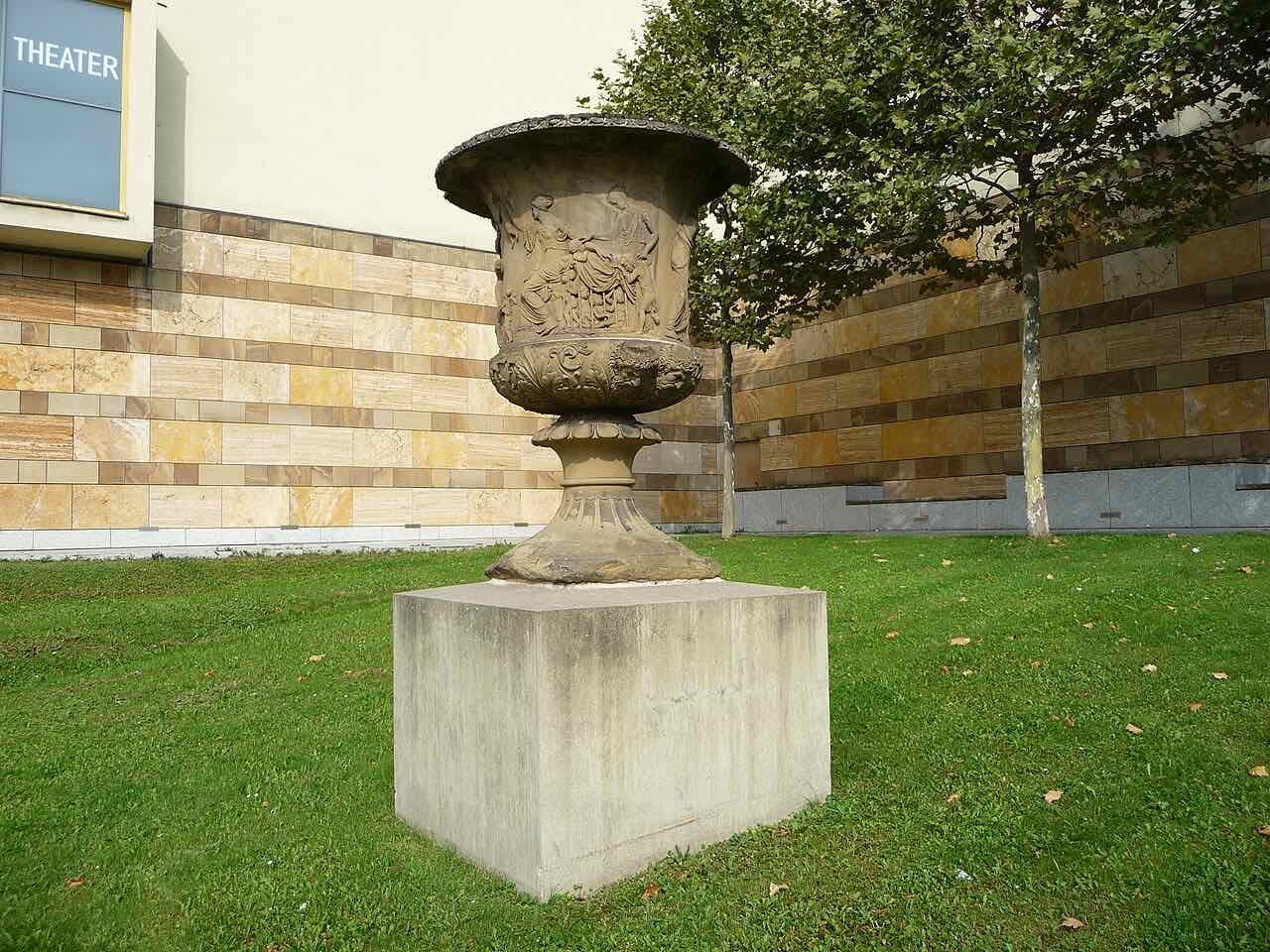
The state art museum, with foundations laid in 1843 and a postmodern extension that opened in 1984.
A museum of world cultures at Hegelplatz 1, with collections from Africa, the Americas, the Orient, East Asia, Oceania and South and Southeast Asia. Worth a visit to see objects from home regions put in context.
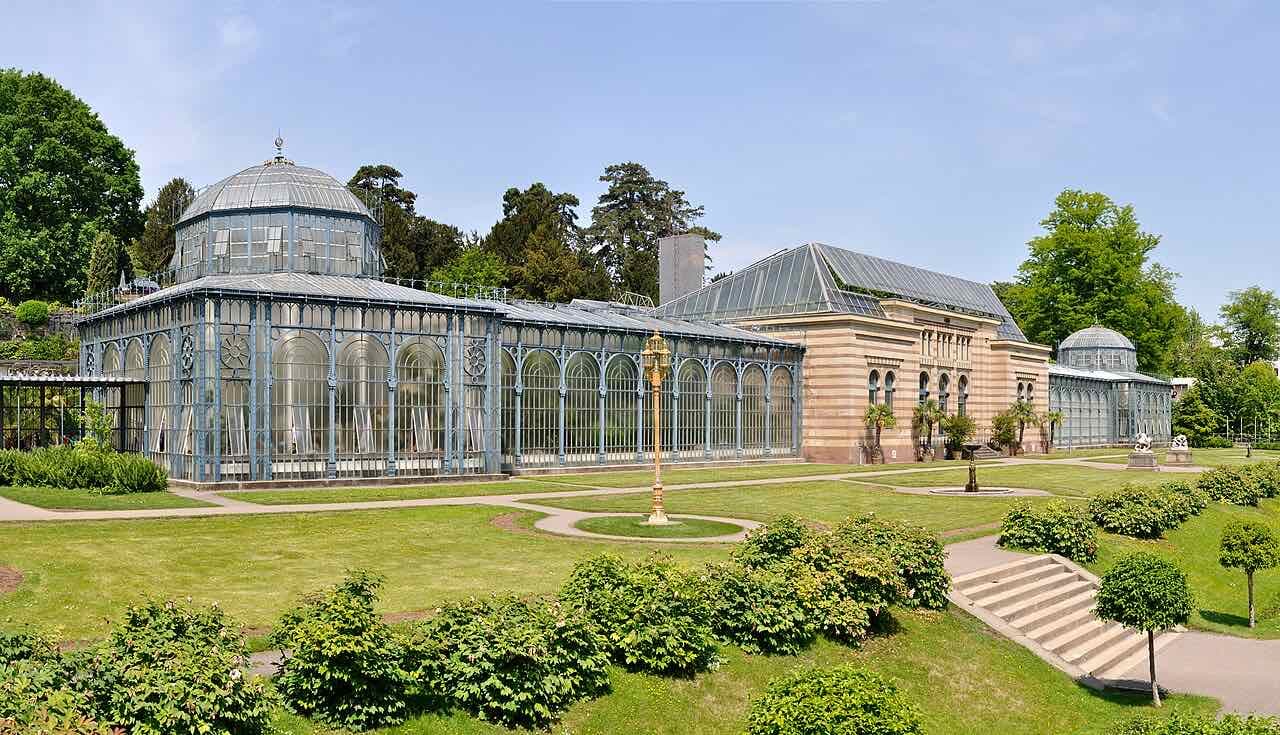
A zoo and botanical garden of about 30 hectares in Bad Cannstatt, in a Moorish-style palace garden. About 1,200 animal species and roughly 6,000 plant species.
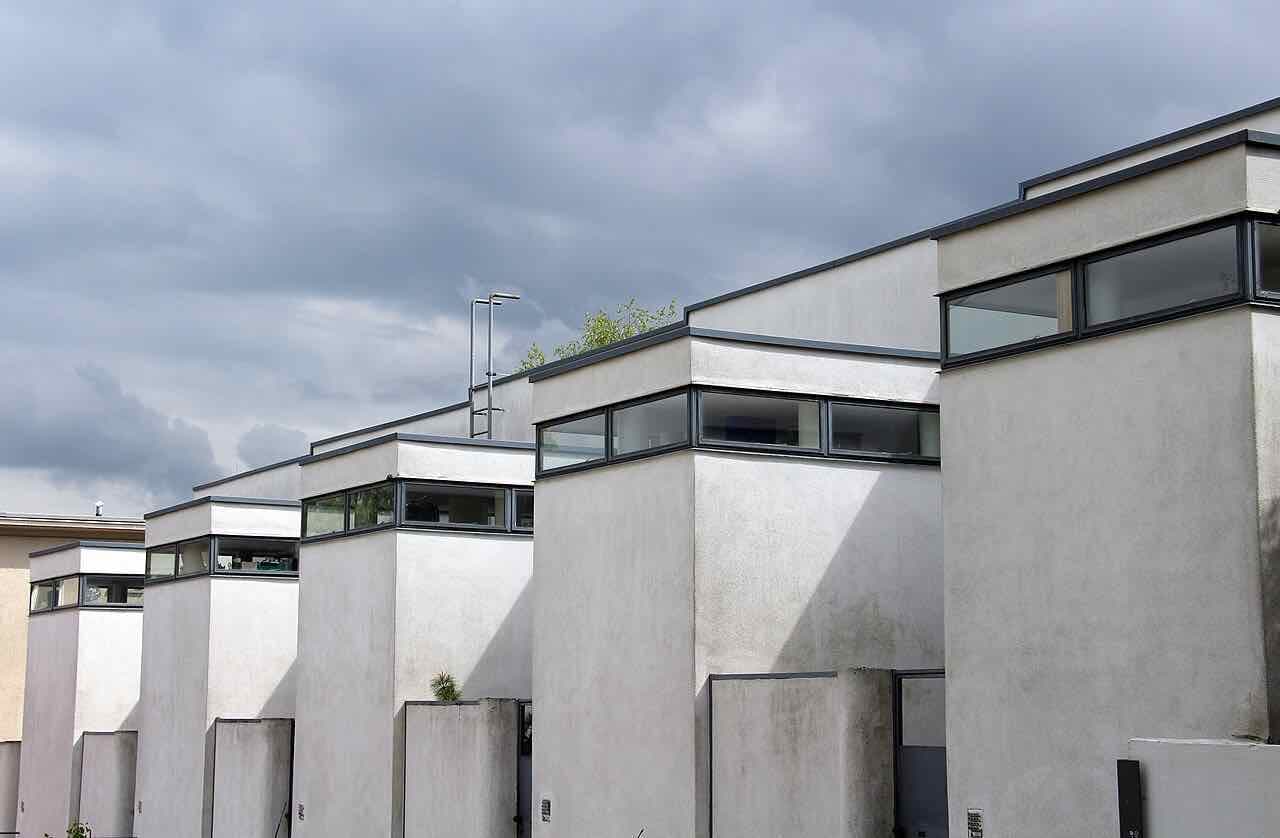
A housing estate from 1927 built for a Werkbund exhibition, with houses by architects including Le Corbusier. It is part of the story of modern architecture and is a short ride from the centre.
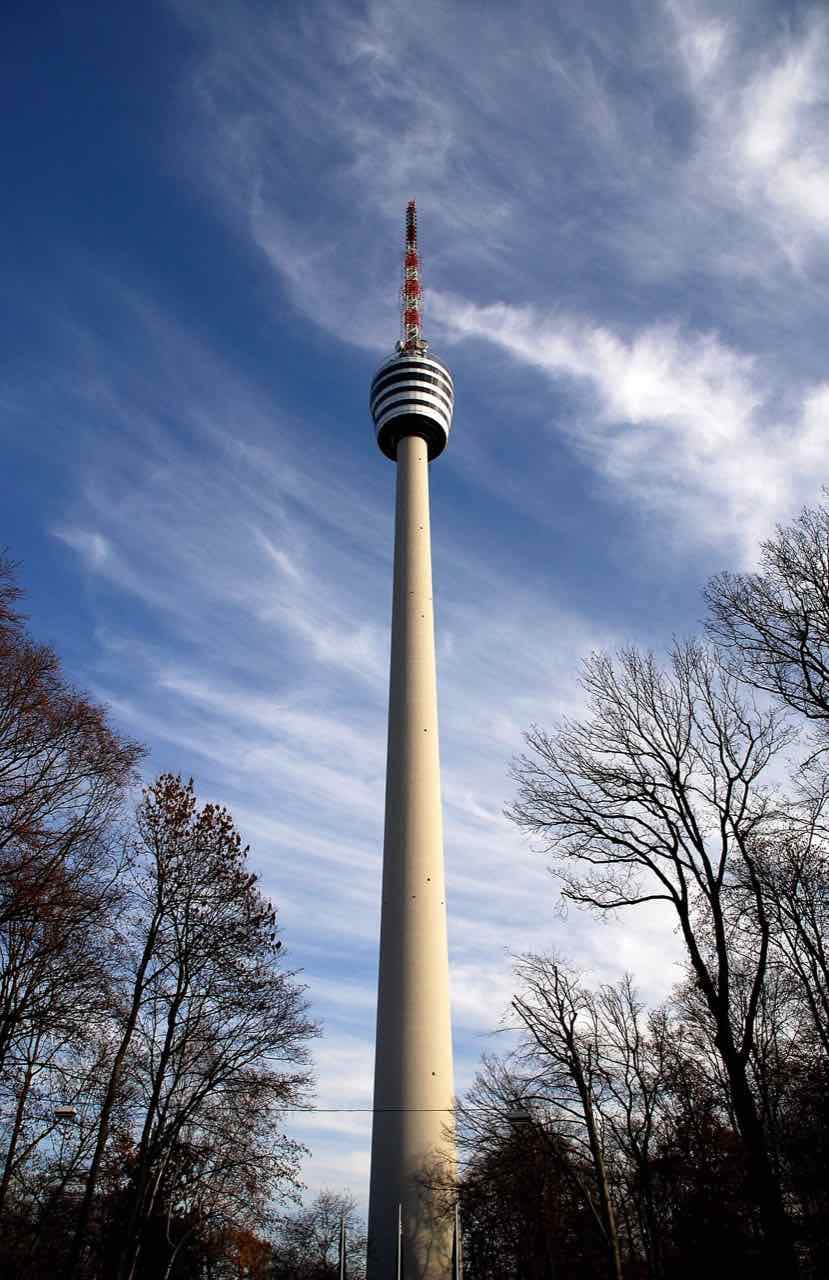
The SWR television tower, designed by Fritz Leonhardt in 1956 and open daily from 10:00 to 22:00, with open-air platforms and a café. It is Stuttgart's highest viewpoint.
Water, wine and weekends outside
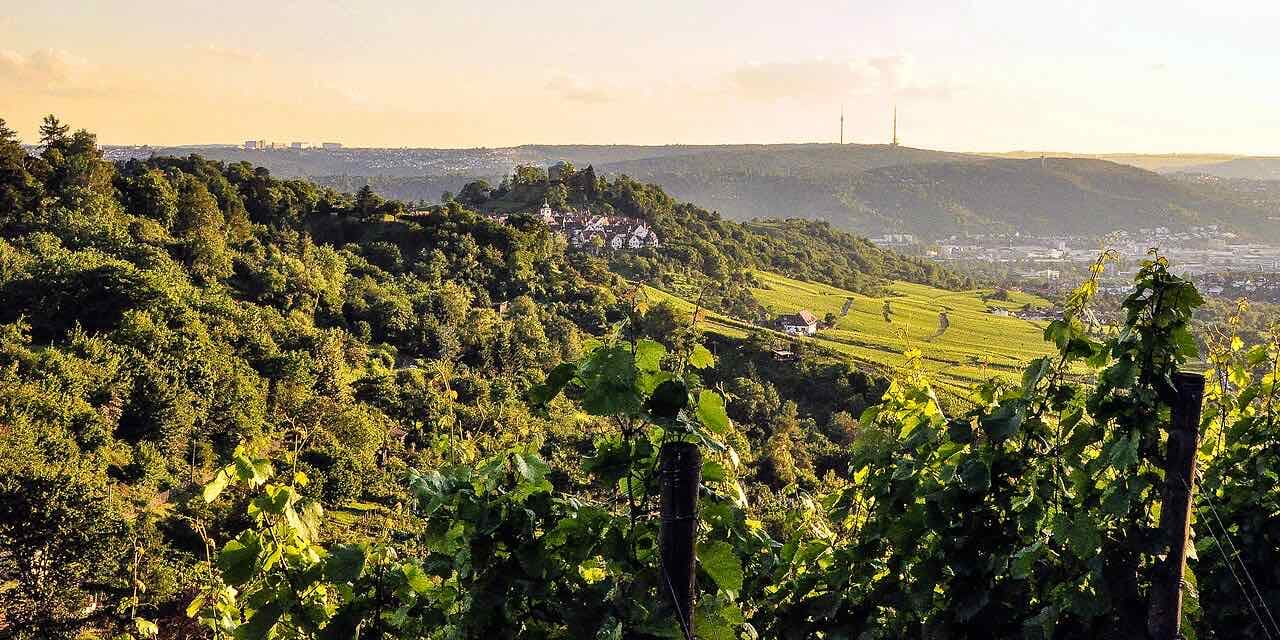
Stuttgart has the second-largest mineral water deposits in Europe after Budapest, with more than 250 springs in the urban area. The hills are covered with vineyards, orchards and woods, and some of them are inside the city boundary, so a walk through the vines can start at a tram stop. The photo below shows the Neckar valley at Untertürkheim.
Killesbergpark in the north hosted the 1939 garden show and the 1993 International Garden Show, and the Lantern Festival is held there in early July. The Cannstatter Volksfest, a harvest festival, has been held since 1818 and is the big city fair. The Christmas market runs from late November to 23 December with more than 200 stands. The Black Forest and the Swabian Jura are each about an hour away.
Getting around
You will not need a car in Stuttgart.
The Stadtbahn has around fifteen lines with 200 stations across the valley and up the hills. The S-Bahn, run by a Deutsche Bahn subsidiary since 1978, reaches Vaihingen, the airport and the towns around Stuttgart. Tickets across both are coordinated by the transport association VVS.
Stuttgart still runs a rack railway (line 10) and a cable car (line 20) as part of its public transport network.
Stuttgart's airport is in neighbouring Leinfelden-Echterdingen and the sixth-busiest in Germany by 2019 numbers. The University of Stuttgart's buddies meet new students at the airport or the main station if you register three weeks ahead.
What it costs
- Monthly budget the University of Stuttgart tells international students to plan for
- at least 992 EURsource
- Room in a shared flat
- about 350 to 600 EUR plus utilitiessource
- Studierendenwerk dorm room
- from about 280 to 505 EUR, heating, water, electricity and waste includedsource
- Health insurance (up to age 30)
- about 130 EUR a monthsource
- Public transport budgeted by the university
- about 30 EUR a monthsource
- Cheapest canteen main course
- 2.99 EUR (the vegan dish at the Studierendenwerk Mensa)source
- Tuition for students from outside the EU/EEA
- 1,500 EUR per semester, on top of the semester contributionsource
- Semester contribution
- Hohenheim 174.50 EUR (no semester ticket included); University of Stuttgart 184 EURsource
Stuttgart is one of the more expensive student cities in Germany, mainly because of rent. Figures are from the universities and the Studierendenwerk.
Work and the job market
Stuttgart is headquarters town for Mercedes-Benz Group (about 175,000 employees worldwide in 2024), Porsche, and Bosch (about 412,800 associates worldwide at the end of 2025), as well as Exyte and the state bank LBBW. Their engineers, software developers, finance and HR people need suppliers, researchers and interns, which is why thesis placements and student jobs in engineering and IT are easier to find here than in most cities. That is not a promise of a job: employers choose, and many roles ask for German.
The rules on working are the same as anywhere in Germany. With a study residence permit (section 16b) you can work up to 20 hours a week during term, or 140 full days or 280 half days a year. A job at the university as a student assistant is capped at 19.5 hours a week. Full-time outside work in the lecture-free period is only allowed for temporary jobs of at most 26 weeks a year. The minimum wage is 13.90 EUR an hour in 2026 and 14.60 EUR in 2027. Check with the Ausländerbehörde before you sign a contract if you are unsure.
Around Stuttgart
Part 2
Student life in Stuttgart
Where you can study
Founded in 1829, a university since 1967, and a member of TU9, the alliance of leading German universities of technology. It has 20,536 students (winter 2025/26), more than 60 bachelor's and about 100 master's programmes, and over 5,600 staff. It combines engineering and natural sciences with humanities, management, economics and social sciences. Campuses in Vaihingen and the city centre. Language of instruction differs by programme: check the programme page.
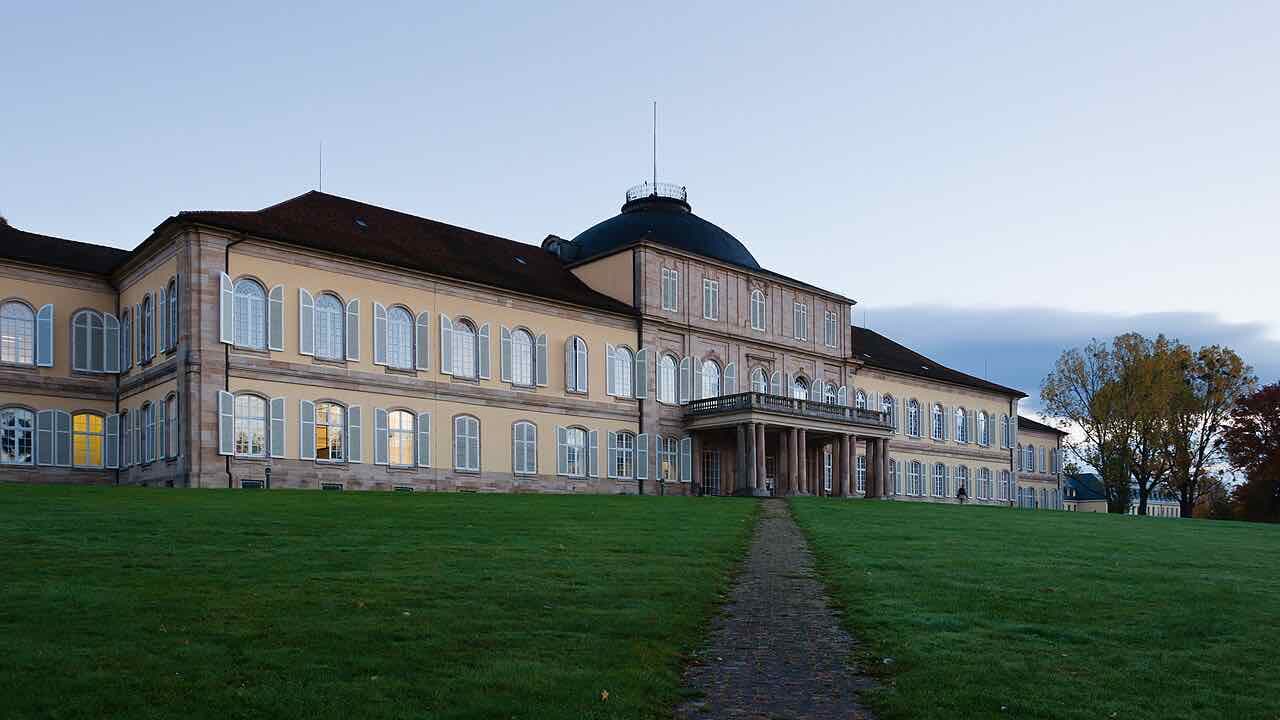
International office ↗Founded in 1818 and the oldest university in Stuttgart, based in the 18th-century Hohenheim palace at Schloss Hohenheim 1, with gardens and museums on campus. Non-EU students pay 1,500 EUR tuition per semester and a semester contribution of 174.50 EUR that does not include a ticket. The university has an English-language website and an international affairs office.
International office ↗HFT Stuttgart (Hochschule für Technik) ↗
About 3,850 students and 36 bachelor's and master's programmes in architecture and design, civil engineering, building physics, computer science, mathematics, surveying and business. English-taught master's programmes: Photogrammetry and Geoinformatics, International Project Management, Smart City Solutions and Software Technology.
International office ↗Media university at Nobelstraße 10 with 19 bachelor's programmes across media and communication, business, computing and engineering, and library and information. Master's programmes include Audiovisual Media Creation and Technology, Computer Science and Media, Crossmedia Publishing & Management, Digital Design and Master of Media Research. Check each programme page for its language of instruction.
International office ↗Duale Hochschule Baden-Württemberg (DHBW) Stuttgart ↗
Dual bachelor's degrees in three faculties: Social Work, Technology, and Business and Health, with campuses in Stuttgart and Horb. Dual means you study in a programme tied to a partner organisation, so it is a different route from a standard university place. The site has English pages for international and exchange students.
Staatliche Akademie der Bildenden Künste Stuttgart (ABK) ↗
State art academy at Weißenhof offering architecture, design (industrial, communication and textile), fine arts, stage and costume design, art teaching, intermedia design and conservation and restoration of paintings, sculpture, media, objects, paper and wall paintings. Also a Meisterschüler programme and doctorates.
International office ↗Staatliche Hochschule für Musik und Darstellende Kunst Stuttgart (HMDK) ↗
Music and performing arts university with over 50 degree programmes, including acting, puppetry theatre and an opera school, as well as instrumental training. Admission is by audition, so apply to the programme itself.
International office ↗State-recognised university of applied arts, design and media, part of the Merz Bildungswerk. Bachelor's programmes in Film and Video, New Media, Visual Communication and Theory; master's programmes in Photography, Film, Graphic Design, Illustration, 3D / Interaction / Games, Media Art and Artistic Research. The site is available in English.
International office ↗In Esslingen am Neckar, a short S-Bahn ride from Stuttgart, with campuses in the city centre and on the Flandernstraße hilltop, and a site in Göppingen. About 6,200 students, 27 bachelor's and 14 master's programmes in engineering, computer science, business, social work and nursing. Its Graduate School runs international master's programmes taught entirely in English.
International office ↗Student unions, services and groups
stuvus, the student representation of the University of Stuttgart ↗
The student parliament, subject groups, working groups such as the bike workshop and Green Canteen, first-semester events and counselling. Has an English version. The Haus der Studierenden is at Pfaffenwaldring 5c on the Vaihingen campus.
University groups of the University of Stuttgart ↗
A list of the recognised student groups, from debating and theatre to sport, environmental work and exchanges with international students. Includes AIESEC and IAESTE chapters.
AStA, the student body of the University of Hohenheim ↗
Runs the student body's money and events at Fruwirthstraße 24 in Hohenheim. Meets every Wednesday in term, and students can join its departments and committees.
Looks after about 57,000 students at 13 universities in Stuttgart, Ludwigsburg, Esslingen, Göppingen and Horb: dorms, canteens, BAföG, childcare and counselling, including for international students.
Hochschulsport, University of Stuttgart ↗
About 500 courses in more than 100 sports each semester, taught by roughly 300 instructors. Registration is online and opens shortly before courses start.
The local section of the Erasmus Student Network, which organises events for exchange students. Hochschule der Medien names it on its own buddy page.
ready.study.stuttgart buddy programme ↗
Run by the University of Stuttgart and the Studierendenwerk for all new international students. Buddies pick you up at the airport or main station, help you move in, and organise events. Free to join; register at least three weeks before you arrive.
KHG Stuttgart, the Catholic student community ↗
At Hospitalstraße 26 near Rotebühlplatz. Weekly Tuesday service, with Holy Mass in English, an international evening on Thursdays, an international Mass at St. Nikolaus on Sundays and a student residence hall.
ESG Stuttgart, the Protestant student community ↗
Fritz-Elsas-Straße 44, entrance on Hohe Straße. Services, a choir and a newsletter, part of the Evangelical Church in Württemberg.
Vereinigung Stuttgarter Studentenwohnheime (VSSW) ↗
A student-founded non-profit since 1969 with seven halls and 2,578 places on the Vaihingen campus and in the city centre. Apply through its own portal.
Campus life and study culture
Stuttgart has no single campus. The University of Stuttgart is split between Vaihingen, on the southwest edge with its own Mensa, dorms and student house, and the city-centre buildings. Hohenheim is a palace campus on the southern hills, and the art, music and media schools are spread across the centre and Weißenhof. Most students live in one part of the city and ride the S-Bahn or Stadtbahn to class, so a monthly ticket is the first thing you will use daily.
The University of Stuttgart's International Office runs an intercultural mentoring programme, German courses and a buddy programme, and gives drop-in advice on site at the International Center in Vaihingen. HdM, Esslingen and the others have their own international offices, linked above. At all of them the pattern is the same: engineering and media courses are practical, with labs and projects built around industry partners.
Housing: how hard is it
Short answer: hard. The University of Stuttgart itself says student housing is in short supply and advises searching early, ideally before you are accepted.
32 dormitories listed, from about 280 to 505 EUR a month all-in. You apply online and can name up to three dorms; the maximum stay is 36 months. Apply as soon as you hold an offer.
Vereinigung Stuttgarter Studentenwohnheime ↗
Seven halls, 2,578 places in Vaihingen and the centre. A separate application at portal.vssw.de.
The Studierendenwerk keeps a private accommodation service. Use it and the university notice boards, and watch for rental scams: never pay a deposit for a room you have not seen or confirmed in writing.
Food, sport and nights out
Canteens at Vaihingen (Pfaffenwaldring 45), Stuttgart-Mitte (Ossietzkystraße 3), ABK (Am Weissenhof 1), HMDK (Urbanstraße 25) and in Esslingen. The cheapest main course on the site is a vegan dish at 2.99 EUR.
A semester starts with about 500 courses in 100-plus sports, open to students and staff. Contact the sport office if you are at another university in the city.
Cannstatter Volksfest and Christmas market ↗
The two big city festivals: a harvest fair on the Wasen since 1818, and a Christmas market with more than 200 stands from late November.
Wilhelma, Killesberg and the vineyards ↗
Cheap days outside the lecture hall. The Wilhelma is a zoo and botanical garden in Bad Cannstatt.
Your first weeks
- 1
Before you travel
Register for the ready.study.stuttgart buddy programme at least three weeks before arrival if you study at the University of Stuttgart, and apply for a dorm place as soon as you hold an offer.
- 2
Within two weeks of moving in
Register your address (Anmeldung) at a Bürgerbüro. Stuttgart has 22 of them, for example Bürgerbüro Mitte at Eberhardstraße 39 and Bürgerbüro Ost at Schönbühlstraße 65. Bring your passport, your landlord's confirmation (Wohnungsgeberbestätigung) and your residence permit if you have one. Tuesday and Thursday afternoons need an online appointment; mornings are walk-in with a ticket. Dorm residents use the move-in letter from the Studierendenwerk or VSSW instead.
- 3
Week one to three
Enrol at your university. Open a bank account (the Anmeldung confirmation is needed). Sort out health insurance. A student job needs German public health insurance, not just the European card.
- 4
Residence permit
Apply to the Ausländerbehörde at Eberhardstraße 39 for a residence permit for studies. Visits are by confirmed appointment only; request one by contact form or phone (service line 0711 21691857, Monday to Friday 10:00 to 13:00). The University of Stuttgart advises sending complete documents through the online application portal and not resubmitting, as processing is slow. Apply for extensions one to two months before expiry.
- 5
First month
Go to your International Office orientation, join the student group or sports course that fits you, and book a Studierendenwerk counselling appointment if you have money or study questions. It is confidential and covers international students.
Where you come from matters here
Pick your home country: food, faith, community groups and the consulate that serves you, checked 21 October 2026.
🇮🇳 Living in Stuttgart as an Indian student
Stuttgart's Forum der Kulturen lists several Indian associations. Two of them have sites you can open today. For passports and visas, the Consulate General of India in Munich covers Baden-Württemberg.
Deutsch-Indische Gesellschaft Stuttgart ↗
The Stuttgart branch of the German-Indian Society, re-founded in 2007. Indian dance and cultural events, lectures, film evenings, student exchanges between schools and a monthly get-together with talks and Indian food.
Tamilische Bildungsvereinigung ↗
A Tamil educational association, listed among Stuttgart's Forum der Kulturen members, with departments for education, examinations, arts and sport. Phone 0711 870 97 67, open weekdays 15:00 to 17:30.
Consulate General of India, Munich ↗
Handles passports, visas and OCI for Indians in Bavaria and Baden-Württemberg, and registers Indian nationals living there. It links the Indian students in Germany portal.
🇳🇬 Living in Stuttgart as a Nigerian student
Nigerian communities in Stuttgart are organised by ethnic group. The consular work happens in Berlin.
A Yoruba cultural association with community gatherings and events, a membership form and a photo gallery.
A three-day African festival on Erwin-Schoettle-Platz with music, dance, workshops, film and a church service. The 21st edition ran from 10 to 12 July 2026.
Neue Jakobstraße 4. Passports are by free appointment; visa applications go through the VFS centre at Zimmerstraße 68.
🇻🇳 Living in Stuttgart as a Vietnamese student
No Vietnamese association is listed in Stuttgart's Forum der Kulturen. The nearest real contact is the embassy in Berlin.
Elsenstraße 3, Berlin-Treptow. Consular procedures and citizen protection. Vietnam joins the Apostille Convention on 11 September 2026, which changes how documents are legalised.
🇳🇵 Living in Stuttgart as a Nepali student
No Nepali association is listed in Stuttgart's Forum der Kulturen. The nearest real contact is the embassy in Berlin.
Guerickestraße 27. Document attestation, visa, passport and power of attorney; consular enquiries by email.
🇵🇰 Living in Stuttgart as a Pakistani student
The Forum der Kulturen lists one Pakistani association. For passports and attestation you will deal with Pakistan's embassy in Berlin.
Pakistan German Cultural Society e.V. ↗
Listed among the Forum der Kulturen Stuttgart's member associations.
🇬🇭 Living in Stuttgart as a Ghanaian student
Stuttgart has a Ghanaian association and a wider African and Black community scene that you can join as a Ghanaian student.
Listed among the member associations of the Forum der Kulturen Stuttgart.
Black Community Foundation Stuttgart ↗
Founded in 2020, run by and for Black communities. Workshops, dinners, game nights and a family day, and advice for people hit by racism. Based at Schlossplatz 2.
The city's big African festival, held each July on Erwin-Schoettle-Platz.
🇨🇲 Living in Stuttgart as a Cameroonian student
Cameroonians in the Stuttgart area have their own association, and the embassy is in Berlin.
CamAS, the Cameroonian Association of Stuttgart and Environs ↗
A non-profit that supports integration and personal development with events, sport, entrepreneurship activities, a children's outing and a family day.
Ulmenallee 32. Passports, consular cards, powers of attorney and birth-certificate transcription.
An annual African festival in Stuttgart with music, workshops and a church service.
🇺🇸 Living in Stuttgart as an American student
Stuttgart is home to the US European Command, based at Patch Barracks in Vaihingen, and has a long-running German-American cultural centre.
Deutsch-Amerikanisches Zentrum / James-F.-Byrnes-Institut ↗
German-American Center at Charlottenplatz 17 with a library, events, American Days and welcome events for new students. Open Tuesday to Friday.
In Stuttgart-Vaihingen, it hosts US European Command and Special Operations Command Europe, so there is a US community in the city.
🇨🇳 Living in Stuttgart as a Chinese student
Stuttgart has a visible Chinese community with associations, a weekend language school and professional networks.
Deutsch-Chinesisches Forum Stuttgart ↗
Connects people and cultures with autumn hikes, a New Year celebration and a careers seminar for Chinese students in Stuttgart.
A network of Chinese women in Germany founded in 2023, based at Schurwaldstraße 32 in Stuttgart. Online sessions on careers and leadership, plus an annual forum.
Chinesische Schule Stuttgart ↗
Chinese language and culture school founded in 1995, with 16 courses from kindergarten age to adults.
Its East Asia collection is a good place to see Chinese objects in context; the Deutsch-Chinesisches Forum attended the opening of its East Asia exhibition in 2024.
English-taught programmes in Stuttgart
Soonest open deadline first. Every entry links to its official source.
- Electrical EngineeringUniversity of Stuttgart · Stuttgartmaster15 Jan 2027Open
- Water Resources Engineering and Management (WAREM)University of Stuttgart · Stuttgartmaster15 Jan 2027Open
- Computer ScienceUniversity of Stuttgart · Stuttgartmaster15 Jan 2027Open
- MSc Geomatics for Environmental MonitoringUniversity of Stuttgart · Stuttgartmaster15 Jan 2027Open
- Information Technology – INFOTECHUniversity of Stuttgart · Stuttgartmaster15 Jan 2027Open
- Materials ScienceUniversity of Stuttgart · Stuttgartmaster15 Jan 2027Open
- International Master's Programme in Infrastructure Planning – MIPUniversity of Stuttgart · Stuttgartmaster15 Jan 2027Open
- Environmental Science – Soil, Water and Biodiversity (EnvEuro)University of Hohenheim · Stuttgartmaster15 Jan 2027Open
- Engineering Cybernetics MScUniversity of Stuttgart · Stuttgartmaster15 Jan 2027Open
- Integrative Technologies & Architectural Design Research (ITECH)University of Stuttgart · Stuttgartmaster15 Feb 2027Open
- Air Quality Control, Solid Waste and Waste Water Process Engineering (MSc WASTE)University of Stuttgart · Stuttgartmaster15 Feb 2027Open
- Computational Mechanics of Materials and Structures (COMMAS)University of Stuttgart · Stuttgartmaster15 Feb 2027Open
- PHYSICS International Master of ScienceUniversity of Stuttgart · Stuttgartmaster15 Feb 2027Open
- Smart City SolutionsStuttgart Technical University of Applied Sciences · Stuttgartmaster28 Feb 2027Open
- Landscape Ecology (LandEcol)University of Hohenheim · Stuttgartmaster15 Mar 2027Open
- Transformation Management for Sustainable Agri-Food Systems (Transformation)University of Hohenheim · Stuttgartmaster15 Mar 2027Open
- Earth and Climate System ScienceUniversity of Hohenheim · Stuttgartmaster15 Mar 2027Open
- Agricultural Economics (AgEcon)University of Hohenheim · Stuttgartmaster15 Mar 2027Open
- Advisory and Innovation Services in Agri-Food SystemsUniversity of Hohenheim · Stuttgartmaster15 Mar 2027Open
- Environmental Protection and Agricultural Food Production (EnviroFood)University of Hohenheim · Stuttgartmaster15 Mar 2027Open
- Sustainable Agriculture and Food Systems (SAFS)University of Hohenheim · Stuttgartbachelor15 Mar 2027Open
- Organic Agriculture and Food Systems (EUR-Organic)University of Hohenheim · Stuttgartmaster15 Mar 2027Open
- Plant Breeding and Seed ScienceUniversity of Hohenheim · Stuttgartmaster15 Mar 2027Open
- Plant Nutrition and ProtectionUniversity of Hohenheim · Stuttgartmaster15 Mar 2027Open
- Agricultural Sciences in the Tropics and Subtropics (AgriTropics)University of Hohenheim · Stuttgartmaster15 Mar 2027Open
- Animal ScienceUniversity of Hohenheim · Stuttgartmaster15 Mar 2027Open
- Master of Science in International Business and Economics (IBE)University of Hohenheim · Stuttgartmaster15 May 2027Open
- Master of Science in Economics with Data ScienceUniversity of Hohenheim · Stuttgartmaster15 May 2027Open
- BioeconomyUniversity of Hohenheim · Stuttgartmaster15 Jun 2027Open
- Food Science and TechnologyUniversity of Hohenheim · Stuttgartmaster15 Jun 2027Open
- BiotechnologyUniversity of Hohenheim · Stuttgartmaster15 Jun 2027Open
- Computational LinguisticsUniversity of Stuttgart · Stuttgartmaster15 Jul 2027Open
- Fundamentals and Applications of Mechanical Engineering, MScUniversity of Stuttgart · Stuttgartmaster15 Jul 2027Open
- Chemical SciencesUniversity of Stuttgart · Stuttgartmaster15 Jul 2027Open
- Print Media & Packaging TechnologiesHochschule der Medien Stuttgart · Stuttgartbachelor16 Jul 2027Open
- International Project ManagementStuttgart Technical University of Applied Sciences · StuttgartmasterSee sourceCheck source
- Photogrammetry and GeoinformaticsStuttgart Technical University of Applied Sciences · StuttgartmasterSee sourceCheck source
- Software TechnologyStuttgart Technical University of Applied Sciences · StuttgartmasterSee sourceCheck source
- Research in Design, Art and Media — Designing the Future (Master of Arts)Merz Akademie, University of Applied Arts, Design and Media Stuttgart · StuttgartmasterSee sourceCheck source
- Integrated Urbanism and Sustainable Design (IUSD)University of Stuttgart · StuttgartmasterSee sourceCheck source
- Social Media Marketing & ManagementHochschule der Medien Stuttgart · StuttgartbachelorSee sourceCheck source
Is Stuttgart right for you? Ask us. Free.
Tell us your passport, grades and budget. We compare Stuttgart with the other places you could study, then apply for you. You never pay us.
Get my free plan