Studying in Baden-Württemberg, Germany
Tübingen
A small river town where about one in three residents is a student, with a university founded in 1477 and one of Germany's densest research clusters.
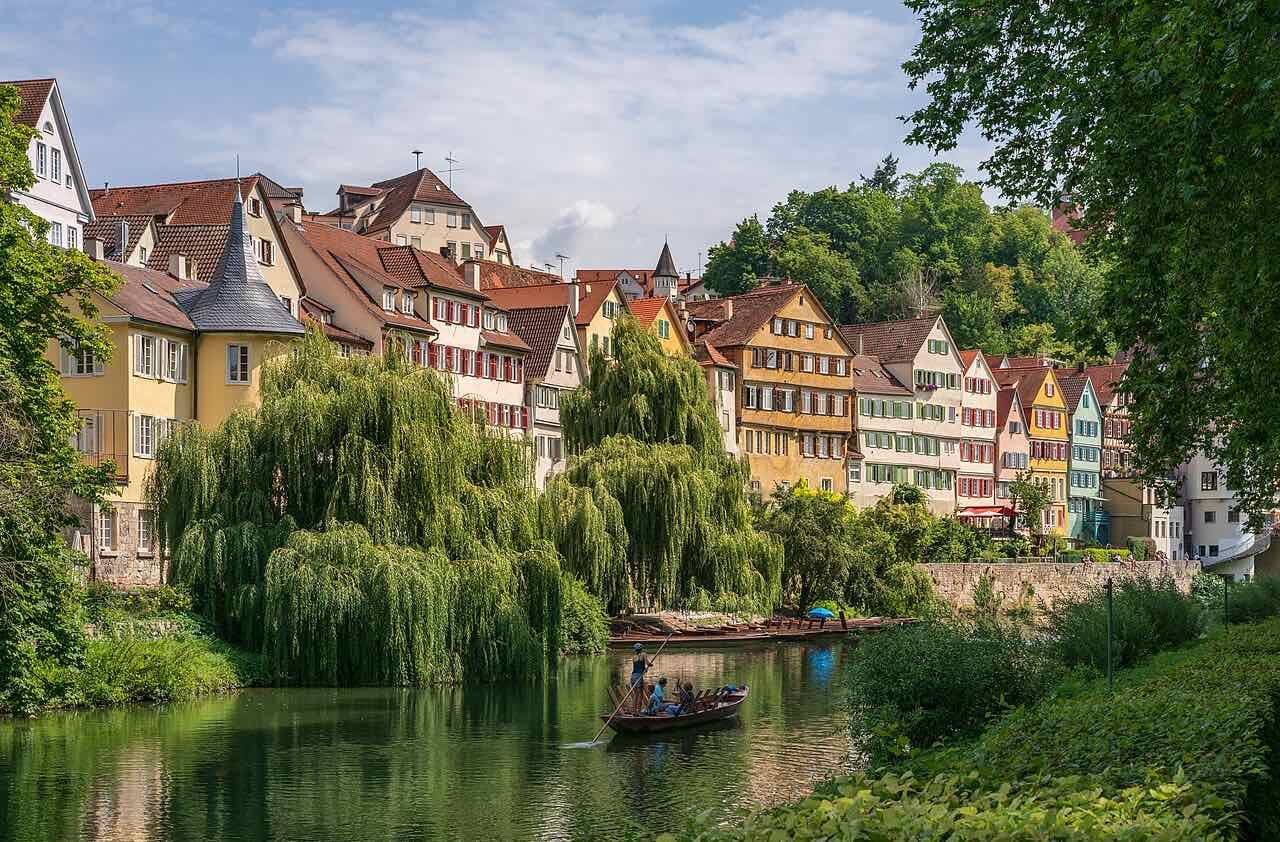
Tübingen is a town of about 92,600 people on the Neckar, roughly 30 km south of Stuttgart, and students make up almost one in three of its residents. The University of Tübingen was founded in 1477 and has 28,046 students this winter, 4,495 of them from abroad. The old town came through the Second World War almost untouched, so you study among half-timbered houses, steep lanes and a river front that people punt along in flat-bottomed boats. For a town this size the research is unusually deep: six Clusters of Excellence at the university, several Max Planck institutes next door, and an AI research cluster called Cyber Valley. The price is that non-EU students pay tuition fees of 1,500 EUR a semester, and that you should apply early for a dorm room. If you want a place small enough to cross on foot, with a lot of other students in it, this is one.
- Population
- 92,607 (31 Dec 2025), on 108 km2
- Residents with a migration or refugee background
- about one in three, according to the city
- Semester contribution (winter 2026/27)
- 194.80 EUR, charged to every student
- Tuition fee for students from outside the EU/EEA
- 1,500 EUR per semester on top of the contribution, for Bachelor's and consecutive Master's programmes
- Dorm places (Studierendenwerk)
- 3,604 beds in Tübingen
- Blocked account for a student visa
- 11,904 EUR per year (992 EUR a month)
- Climate
- mean 10.0 C a year, about 730 mm of rain and about 1,754 hours of sunshine (1991 to 2020 averages)
- Stuttgart and its airport
- Stuttgart is about 30 km north of the town and Stuttgart Airport about 35 km away
Part 1
Living in Tübingen
A town that is the university
Count Eberhard V founded the university in 1477, and it is one of the oldest north of the Alps. The town's tourist office quotes the rhetorician Walter Jens: Tübingen does not have a university, Tübingen is a university. In the old town you walk past the Alte Aula and the Burse, where the university began, and past institutes where people still teach and research every day. The old town has 350 listed buildings, narrow lanes, small squares, cafés and shops that sell unpackaged and fair-trade goods.
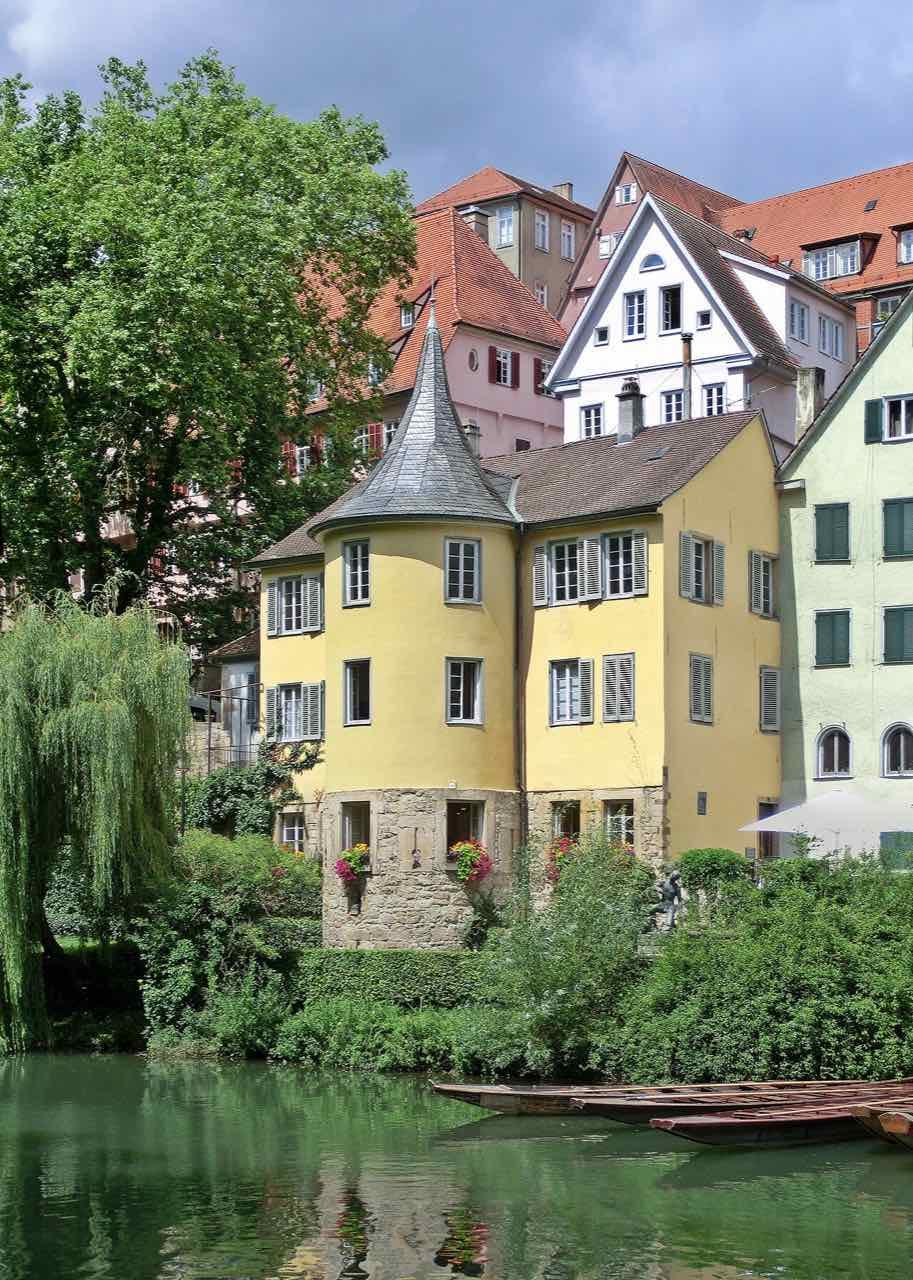
The poet Friedrich Hölderlin spent the last 36 years of his life in the tower on the Neckar that now carries his name, and is buried in the town cemetery.
The scale is the thing to understand. Tübingen is small, the student share is high, and the average age is just under 40. The city says about one third of its residents have a migration or refugee history of their own or in the family, and that 50.2 percent have no religious affiliation or belong to a community other than the Protestant and Catholic churches (2022). You will not be the only newcomer in the room.
What to see and do
Most of it sits within a short walk of the Neckar bridge, and several of these are free or cost a few euros.
The Neckarfront and the Platanenallee ↗
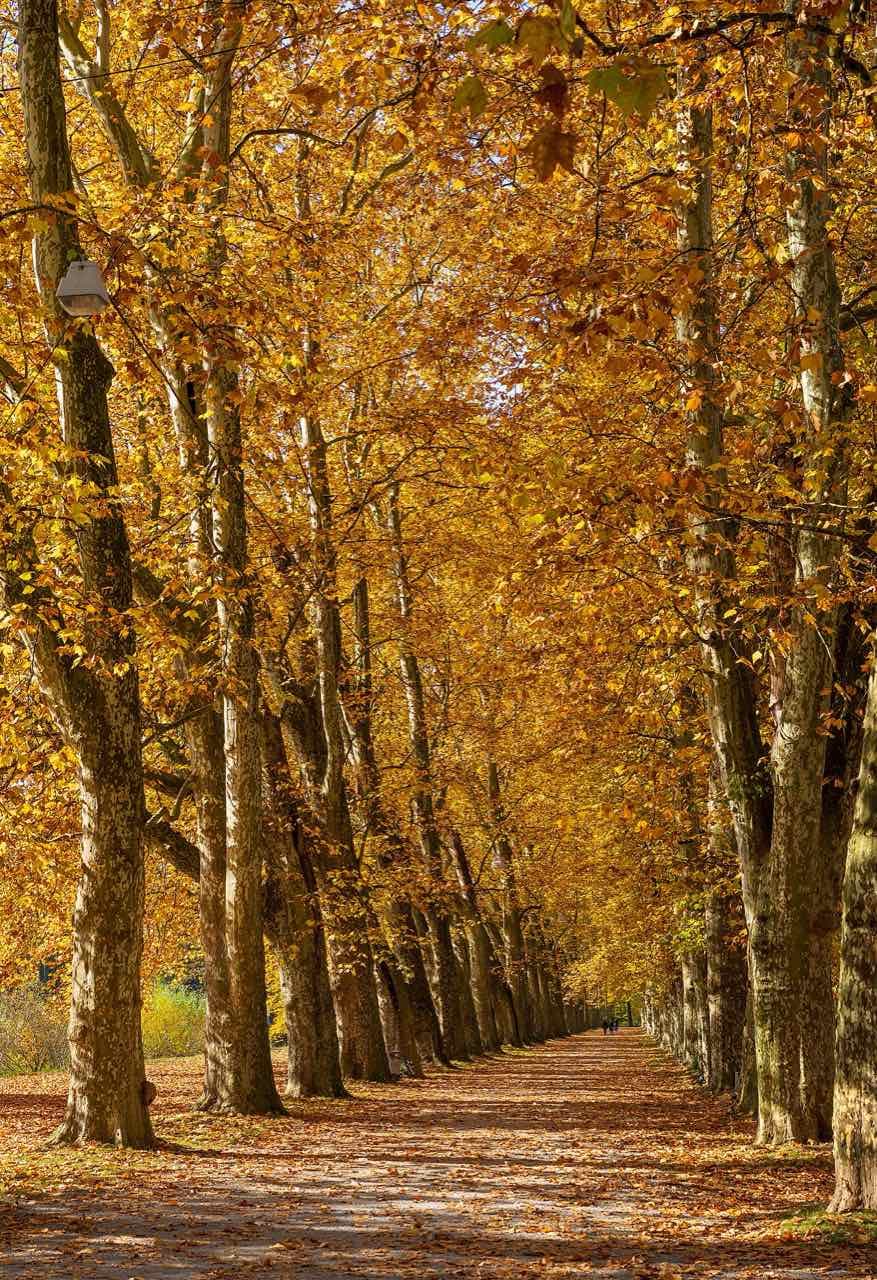
The old town's river front is a favourite photo spot. Below it the Neckarinsel carries an avenue of plane trees that is a place to read, run or sit with friends.
Locals use the flat-bottomed boats themselves, and so can you. Public rides for up to six people run from May to September, and a Stocherkahn race takes place on the Neckar on the second Thursday of June.
The tower where Hölderlin lived is now a museum with an exhibition across three floors, his only surviving piece of furniture and a poem trail in the garden.
Schloss Hohentübingen and the Riesenfass ↗
The castle above the old town has the oldest preserved giant wine barrel in the world, ordered by Duke Ulrich in 1549: about 6.8 m long, 4.7 m high and about 84,000 litres. A guided visit costs 3 EUR plus museum entry.
Vegetables, fruit, cheese, bread and flowers, on Monday, Wednesday and Friday from 7 to 13 and on Saturday from 8 to 13.
A former Cistercian monastery founded around 1183/84 and one of the best-preserved medieval monastery complexes. It is a district of Tübingen about 4 km from the centre. A guided tour costs 9 EUR for adults and 4.50 EUR reduced.
An art museum; the tourist office lists current and upcoming exhibitions.
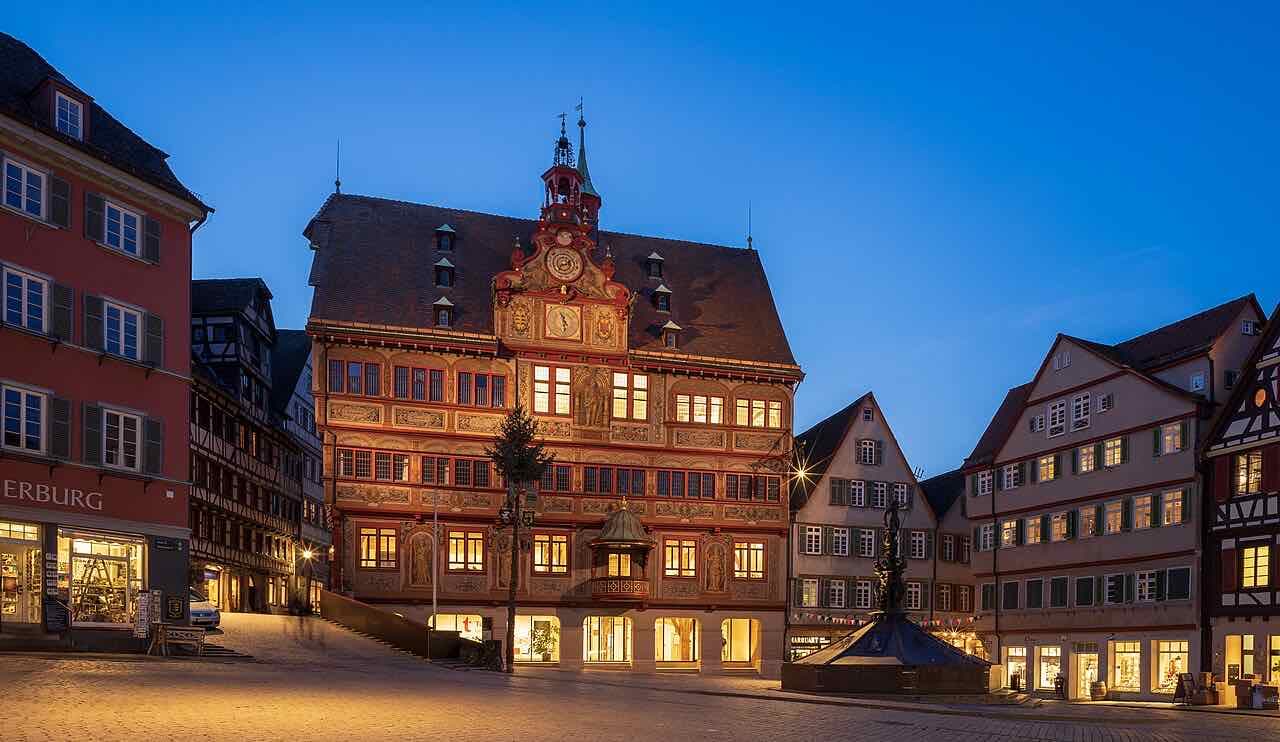
Old town, castle and market square
Weekends: river, forest and the Alb
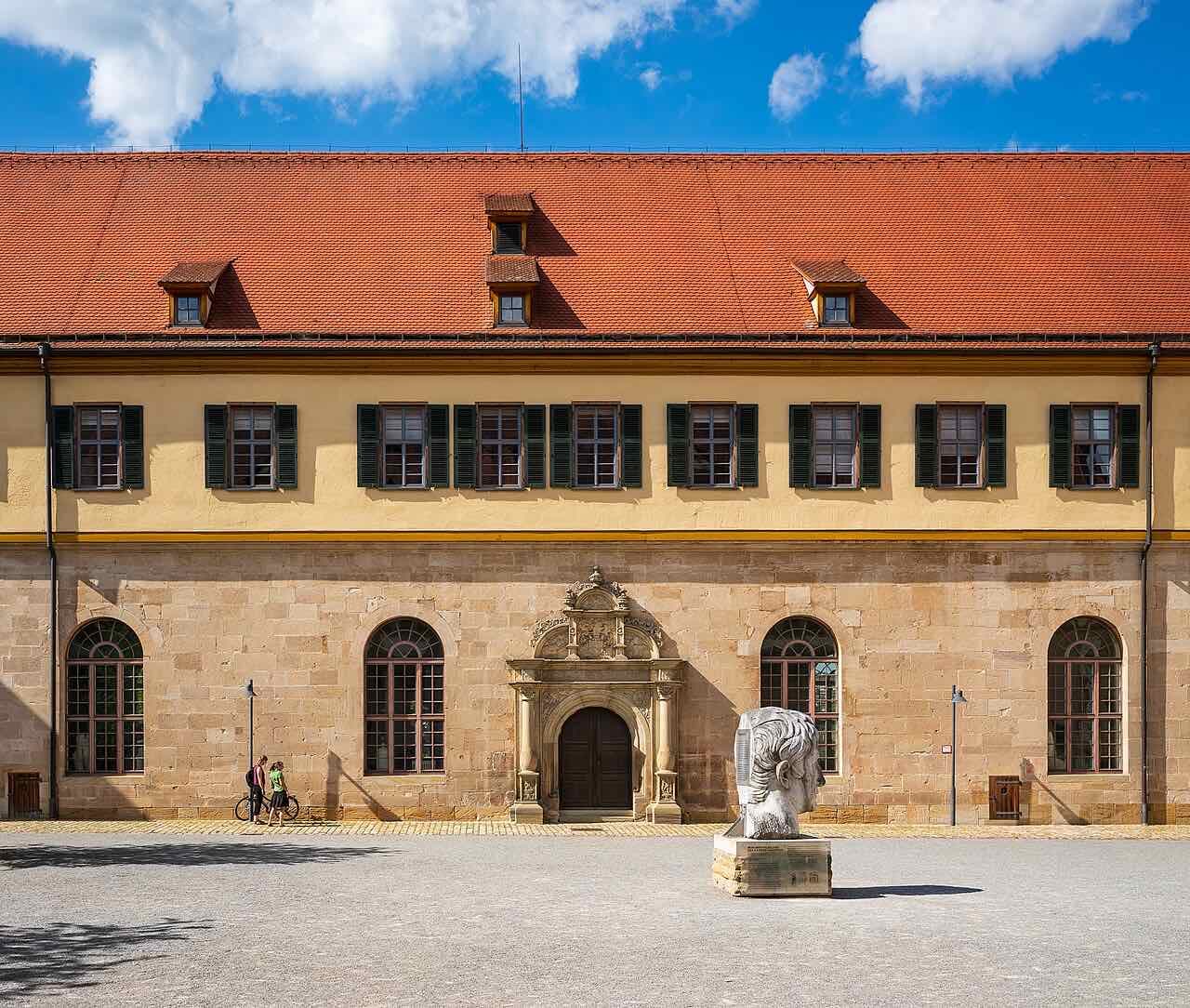
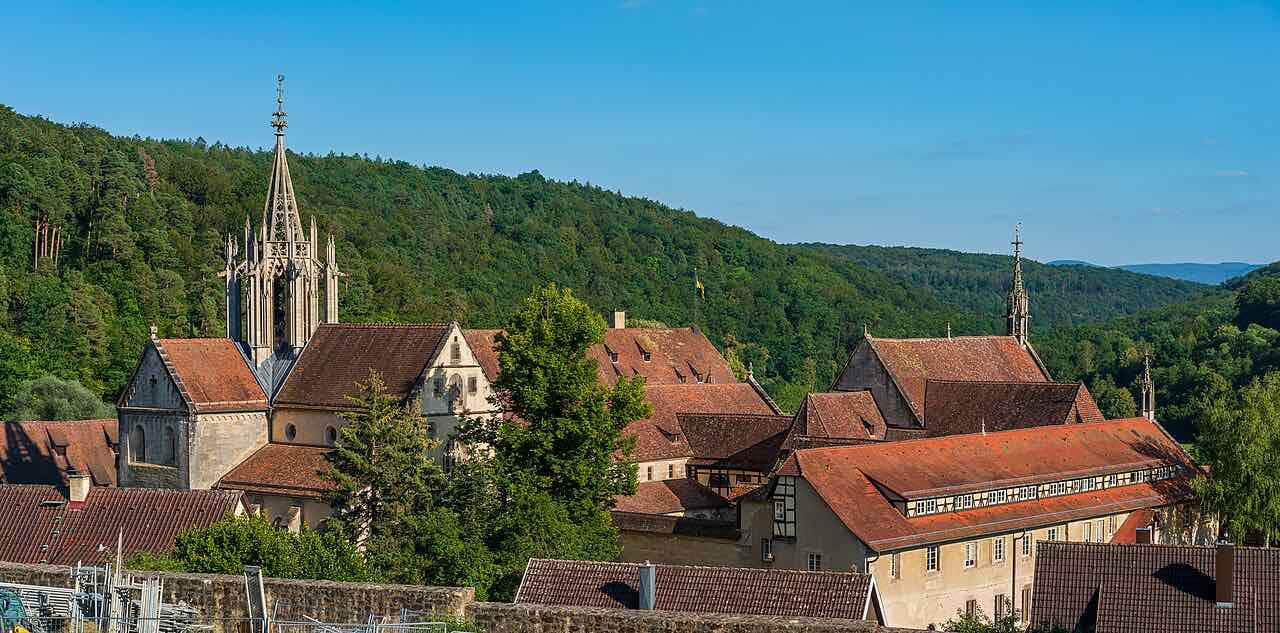
The tourist office describes Tübingen as a mix of city, country and river, with the landscape of the Swabian Alb around it. In practice that means the river from May to September, when public Stocherkahn rides run, and walking or cycling the rest of the year. The Schönbuch nature park publishes marked walking routes, cycling and mountain-bike routes, barbecue sites and a lookout tower on its own site, and Kloster Bebenhausen, a former monastery, is 4 km from the centre.
For a city day, Stuttgart is about 30 km north. Saturdays are the easy day to explore at home: the tourist office says the TüBus within the city is free on Saturdays.
Be realistic about the weather. The mean is 10 degrees, the rain is steady at about 730 mm a year, and winter is grey. Over a year you get about 1,750 hours of sunshine.
Getting around, and getting out
The old town is compact and walkable. For the wider region you need the naldo transport network, which covers the districts of Tübingen, Reutlingen, Zollernalbkreis and Sigmaringen. The naldo semester ticket is sold separately from the semester contribution; the university lists it at 153.10 EUR per semester, and the contribution already includes a solidarity share of 28.80 EUR towards it. Check the current price with naldo before you pay. With only a valid student ID you can ride in the naldo network every day after 19:00 and the whole day at weekends and on public holidays, but you must buy a regular ticket for other times, because tickets cannot be bought on trains.
Stuttgart Airport is about 35 km from Tübingen. The Tübingen main station is at Europaplatz.
Where the work is
The university, its hospital and the research institutes are the largest employers. None of this is a promise of a job, but it shows where a student job, an internship or a doctoral place can come from.
University of Tübingen and the University Hospital ↗
The university is the city's largest employer, including the hospital. The university lists 5,757 faculty and 2,755 staff.
About 1,200 people from more than 50 nations work at its four scientific institutes, and the campus is linked to Cyber Valley and the ELLIS network for AI research.
A network of 14 research institutions in the city, with its own jobs page and an industry liaison office.
A consortium for AI and robotics research that describes itself as Europe's largest. It runs an AI incubator for founders.
The city has its own career site for jobs at the Universitätsstadt.
Part 2
Student life in Tübingen
Where you can study
Eberhard Karls Universität Tübingen ↗
Founded in 1477. In winter 2025/26 it had 28,046 students, of whom 4,495 were international and 12,508 studied at graduate level. Seven faculties (Protestant Theology, Catholic Theology, Law, Medicine, Humanities, Economics and Social Sciences, Science) plus a Center for Islamic Theology. It is a University of Excellence with six Clusters of Excellence, in infection research, plant research, human evolution, cancer research, machine learning and the geo and life sciences. It offers over 200 degree programmes, and the international programmes it names include Behavioural and Neuroscience, Computational Linguistics, Applied and Environmental Geoscience and International Economics and Business Administration. Check the programme database for the language of each degree.
International office ↗Hochschule für Kirchenmusik der Evangelischen Landeskirche in Württemberg ↗
A small church music university at Gartenstraße 12 in Tübingen. It teaches a Bachelor's in church music (general or jazz and pop), a Master's in church music and a Master's in church popular music, and an organ programme (KA Orgel). It trains church musicians, so it suits you only if that is your path.
Hochschule für Forstwirtschaft Rottenburg (HFR) ↗
In Rottenburg am Neckar, the neighbouring town. Its campus is surrounded by 2,500 ha of teaching forest. Bachelor's programmes in renewable energy, forestry, wood economics, sustainability management in regional development and water resource management, and Master's programmes in forestry, resource-efficient construction and sustainable energy (SENCE). The Studierendenwerk Tübingen-Hohenheim runs halls and a canteen there too.
Max Planck Institute for Biology Tübingen ↗
Fundamental research in modern biology. It is part of the Max Planck Campus and does not award degrees itself.
Max Planck Institute for Biological Cybernetics ↗
Research on how the brain processes information. It is a research institute on the Max Planck Campus and does not award degrees itself.
Max Planck Institute for Intelligent Systems ↗
Research on and development of intelligent systems. The Max Planck Campus describes it as a think tank and hotbed of AI research, and it is part of Cyber Valley. It does not award degrees itself.
Hertie Institute for Clinical Brain Research (HIH) ↗
A clinical brain research institute and a partner in the Tübingen Research Campus.
German Center for Neurodegenerative Diseases (DZNE), Tübingen site ↗
Research into diseases such as Alzheimer's and Parkinson's. The DZNE has a site in Tübingen and is a partner in the Tübingen Research Campus.
Leibniz-Institut für Wissensmedien (IWM) ↗
Studies how people use digital media and artificial intelligence to learn, find information and share knowledge. It celebrates its 25th anniversary in 2026.
Student unions, services and groups
Verfasste Studierendenschaft (VS) Tübingen, with the Studierendenrat ↗
The student body of the university. Its Studierendenrat has working groups on social issues and the semester ticket, equality, studies and teaching, environment and political education, and press, and it runs an Anlaufstelle, the Cafeteria project and a mental health café. Its office has regular opening hours in term time, and it also runs a booking service for stands and rooms.
Fachschaften (subject student councils) ↗
The most basic form of student representation: each subject has its own council that sits on committees, helps run orientation weeks and organises parties, film nights and advice.
Studierendenwerk Tübingen-Hohenheim ↗
Dorms, canteens, BAföG advice, counselling and international tutors who organise events and excursions in the student villages. Office at Wilhelmstraße 15, 72074 Tübingen.
University sports (Hochschulsport) ↗
More than 350 courses a semester, with about 9,000 participants per semester and 300 instructors. Tübingen's university sport was placed among the nation's best in the adh ranking.
International Coffee Hour and get-together programme ↗
The International Office hosts a weekly International Coffee Hour every Friday from 15:00 to at least 17:00 in the Brechtbau, Wilhelmstraße 50, open to degree students and exchange students. The get-together programme for international degree students runs excursions and events and has no registration deadline.
Buddy Program for degree-seeking students ↗
Pairs a new international student with a Tübingen student for a semester, with joint excursions. Registration for winter 2026/27 has closed; the summer 2027 call is published on the page from January 2027.
ESG Tübingen (Protestant student community) ↗
Open to all, whatever your faith. A Thursday evening community meeting at 19:00, a monthly English-language communion service and potluck (Church@Six), and a Tübinger Sonntagsküche that serves meals on Sundays.
KHG Tübingen (Catholic student community) ↗
Runs the ComeTogether evenings for internationals with the ESG, where people cook, eat and talk. Its site also lists student halls (Erasmushaus, Carl-Sonnenschein-Haus), choirs and the KHG Stocherkahn.
A Christian student movement of Campus für Christus with a Tübingen group.
Scottish dancing (Ceilidh Tübingen) ↗
A Scottish dancing group that dances weekly; the page gives the current times and rooms, including the Clubhaus on Wilhelmstraße 30 and the Ambrosianum at Brunsstraße 19.
Campus life and study culture
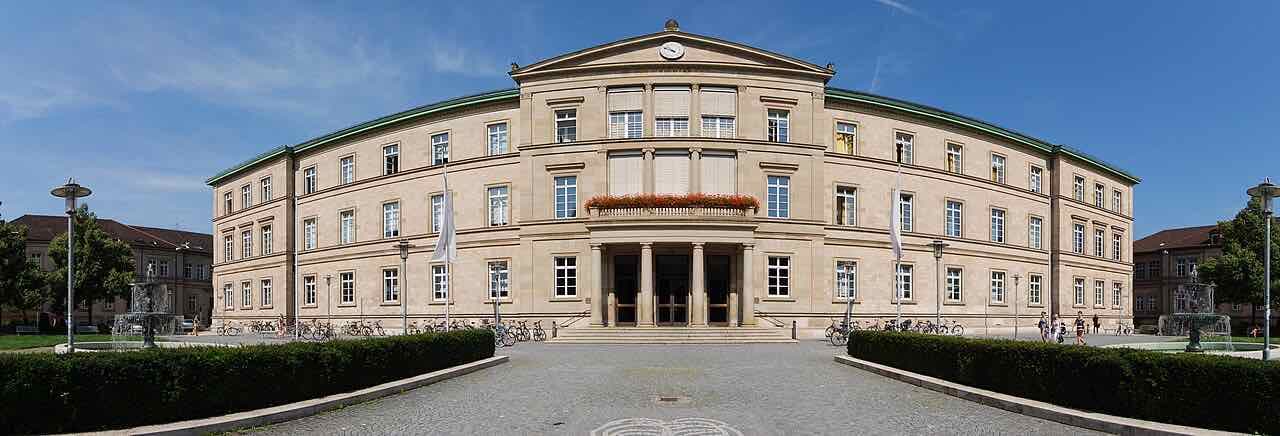
The university does not have one campus. Much of it sits along Wilhelmstraße in the old town, with the Neue Aula at Wilhelmstraße and the Brechtbau for the modern languages. The canteen network follows that: the Studierendenwerk runs canteens on Wilhelmstraße, at Morgenstelle and at Prinz Karl, plus cafeterias at Wilhelmstraße and in the university library.
Student life is organised by the students themselves. The Verfasste Studierendenschaft runs the Clubhaus on Wilhelmstraße 30, where groups from Scottish dancing to a mental health café meet. In the student villages, residents keep their own bar, common rooms and village council. Student orchestras, choirs and a Baroque ensemble all appear on the university's own list of music groups, and so do an English-language theatre group and a dance circle.
Settle the money and visa questions before term starts. The International Office, a Help Desk for international degree students and a counselling service for international students are the places to start.
What you pay each semester and each month
- Semester contribution (Studierendenwerk, administration, student body)
- 194.80 EUR: 107.80 EUR to the Studierendenwerk including a solidarity share for the naldo ticket, 80.00 EUR administration, 7.00 EUR student bodysource
- Tuition fee for non-EU/EEA students
- 1,500 EUR per semester, in addition to the contributionsource
- Tuition fee for a second degree
- 650 EUR per semester, in addition to the contributionsource
- naldo semester ticket
- 153.10 EUR per semester on the university's page; check naldo for the current pricesource
- Dorm room, Waldhäuser-Ost (single rooms)
- from 295 EUR a month for about 12.5 m2source
- Dorm room, old town (Haaggasse 36)
- 259 to 440 EUR a month, for rooms between about 7.7 and 18.5 m2source
- Blocked account for the visa
- 11,904 EUR a year, 992 EUR a monthsource
- Minijob income without tax
- up to 556 EUR a monthsource
Figures for the University of Tübingen in winter 2026/27 and the Studierendenwerk halls. Food and private rent are not included.
Housing: dorms first
The Studierendenwerk has 3,604 beds in Tübingen. Applications are online only, and one application is enough: sending more does not improve your chances. A room is not certain, and demand is lower for the summer semester.
Waldhäuser-Ost student village ↗
The biggest complex in Tübingen, with 1,732 rooms in 24 buildings north-east of the centre. It has the Kuckuck students' bar, the Dodo common room, a barbecue area, a volleyball court, table tennis and music rooms. A village council and tutors look after the residents.
French quarter halls (Hibuka) ↗
Three halls in the French quarter south of the centre, on the old barracks site, with a meeting point called Sieben and a common, music and fitness room.
Froschgasse 1, Haaggasse 36 and Hafengasse 6 (Prinz Karl) are run by the Studierendenwerk. Five of the eight old-town halls are self-administered: the residents choose the next tenants, so you contact them as well as applying online.
Tutors in the student villages help new arrivals find their way and run events, excursions and leisure activities.
Private rooms and shared flats ↗
The university lists notice boards in the canteen, the Kupferbau and the Brechtbau, the local newspaper's Wednesday housing ads, Facebook groups for flat shares, and the Studierendenwerk's private room service.
Food, sport and evenings
The Studierendenwerk canteens on Wilhelmstraße (renovated), Morgenstelle and Prinz Karl publish their menus in the my-stuwe app and on its website. The old town fills the evening gaps with cafés and bars, and the student villages have their own bars.
Sport is the easy way to meet people. The university sports centre lists more than 350 courses a semester. Student clubs add choirs, orchestras, theatre and dance.
For nights out, the city's association list includes the Epplehaus youth centre, Kulturnetz Tübingen and Filmtage Tübingen, and your Fachschaft or village tutor will know what is on this term.
Your first weeks
- 1
Before you fly
Apply online for a Studierendenwerk room, open the blocked account (11,904 EUR a year for the visa) and have your admission papers and health insurance proof ready. The university's International Office and Help Desk answer questions about arrival.
- 2
First two weeks in the flat
Register your address at a Bürgerbüro of the city, by appointment through the city's online booking. The deadline is two weeks after you move in, it costs nothing, and a late registration can be fined. Your landlord must give you a written confirmation (Wohnungsgeberbestätigung).
- 3
First two weeks
Enrol at the university and collect your student ID. Buy your naldo ticket through the student portal or at the Deutsche Bahn counter at Europaplatz 17 in the main station.
- 4
Within the first months
If you arrived with a national visa, apply for your residence permit at the Ausländeramt, Bei der Fruchtschranne 5, before the visa expires. It works by appointment, and the city lists its phone as 07071 204-2550 and email as auslaenderamt@tuebingen.de. The permit card is made by the Bundesdruckerei and is usually ready for collection four to six weeks after the fingerprint appointment. Citizens of countries that can enter without a visa, such as the USA, need a permit if they stay more than 90 days.
- 5
In the first semester
Join one group: the Coffee Hour on Fridays, a Fachschaft event, a sports course or the ESG and KHG internationals evenings.
Working while you study
Students from outside the EU may work 140 full days or 280 half days a year. Working more needs permission from the Agentur für Arbeit and the Ausländerbehörde, which is only granted in cases of special financial need. A job as a student assistant at the university has no limit on days. A minijob up to 556 EUR a month is tax-free.
The Ausländeramt's page for students adds that working more than the allowance, for example full-time in the semester breaks or because of a financial emergency, needs the approval of the competent office first, and that internships need approval too, even unpaid ones, unless your study regulations require them. Read your residence permit, which states what you may do.
Where you come from matters here
Pick your home country: food, faith, community groups and the consulate that serves you, checked 21 October 2026.
🇮🇳 Living in Tübingen as an Indian student
Tübingen has a long-standing German-Indian cultural society and a Sikh gurdwara listed by the city. Indian citizens in Baden-Württemberg register with the Consulate General of India in Munich, which lists Bavaria and Baden-Württemberg as its area.
Deutsch-Indische Kulturgesellschaft Tübingen e.V. ↗
Founded in 1983 to promote cultural exchange between India and Germany, with cultural events for the public. Address: Pfleghofstraße 1, 72070 Tübingen; email info@dikg-tuebingen.de.
Gurudwara Sahib (Indian temple) ↗
Listed by the city of Tübingen among its religious communities at Schaffhausenstraße 3, 72072 Tübingen.
Consulate General of India, Munich ↗
Handles passports, OCI and other services for Indian nationals in Bavaria and Baden-Württemberg and asks students in its area to register on the MADAD portal.
🇳🇬 Living in Tübingen as a Nigerian student
The city's directories of associations and places of worship list no Nigerian association. The nearest places to start are the international evenings of the student churches and the embassy in Berlin, with a consulate general in Frankfurt.
The Protestant student community welcomes people of any nationality or faith on Thursdays at 19:00, and runs a monthly English-language service with a potluck dinner.
Neue Jakobstrasse 4, 10179 Berlin. Passport and visa matters are handled there.
Consulate General of Nigeria, Frankfurt ↗
The Frankfurt consulate publishes its consular fees and services on the embassy's website.
🇻🇳 Living in Tübingen as a Vietnamese student
Tübingen has a Vietnamese Buddhist pagoda, in the district of Bühl. The embassy's consular section is in Berlin.
A gathering place of the Vietnamese Buddhist community in southern Germany at Knollstraße 17/2, 72072 Tübingen-Bühl, with regular devotions and retreats and public events on holidays such as Vesak and Ullambana.
Embassy of Vietnam, consular section, Berlin ↗
Elsenstraße 3, 12435 Berlin-Treptow, for passports and consular services.
🇳🇵 Living in Tübingen as a Nepali student
The city's lists show no Nepali association. For Buddhist students the city lists several centres, and the embassy in Berlin handles consular matters.
Buddhistisches Zentrum Tübingen (Diamond Way, Karma Kagyü) ↗
A centre of the Tibetan Buddhist Karma Kagyü line at Schwärzlocher Straße 38, which invites newcomers to get to know Buddhism in a modern, friendly setting.
A Buddhist community with a Wednesday Sangha evening and Sunday meditation, listed at Georgstraße 8.
Guerickestrasse 27, 10587 Berlin; the site gives separate contact details for consular matters.
🇵🇰 Living in Tübingen as a Pakistani student
Tübingen has a Pakistani welfare and culture society and three mosques listed by the city. The Consulate General of Pakistan in Frankfurt lists Baden-Württemberg among the states it serves.
Pakistan Welfare and Culture Society Tübingen e.V. ↗
A non-profit, politically independent association in Tübingen that promotes art, culture, education and international understanding. It is listed with the city's integration associations.
The city lists Masjid al Wanne at Philosophenweg 70, Tübingen Camii (IGMG) at Reutlinger Straße 30-32 and the DITIB Zentralmoschee at Beim Kupferhammer 5.
Consulate General of Pakistan, Frankfurt ↗
Its jurisdiction page lists Hessen, Rheinland-Pfalz, Baden-Württemberg, Bayern, Thüringen, Saarland and Nordrhein-Westfalen.
🇨🇲 Living in Tübingen as a Cameroonian student
The city's lists show no Cameroonian association in Tübingen. The nearest consular contact is the embassy in Berlin, and the two student churches run international evenings that are open to everyone.
Handles consular matters for Cameroonians in Germany; the site has a consular affairs page.
The Catholic student community and the ESG invite internationals to cook, eat and talk together on regular evenings.
🇺🇸 Living in Tübingen as an American student
Tübingen has a German-American institute, and US citizens can enter Germany without a visa but need a residence permit if they stay more than 90 days.
Deutsch-Amerikanisches Institut Tübingen (d.a.i.) ↗
A forum for German-American exchange at Karlstraße 3 with talks, readings, language courses, an English-language library of more than 13,000 media items and advice on the USA.
US Embassy and Consulates in Germany ↗
The official page lists the embassy in Berlin and the consulates, with services for US citizens.
A monthly English-language communion service and potluck dinner open to everyone.
🇨🇳 Living in Tübingen as a Chinese student
The university has a China Centre, and the Chinese consulate general in Frankfurt lists Baden-Württemberg in its district. The city's lists show no Chinese student association.
A university centre at Hintere Grabenstraße 26, 72070 Tübingen, with a small office that is open on weekday mornings.
Consulate General of the PRC, Frankfurt ↗
Its district overview lists Baden-Württemberg alongside Hessen, Rheinland-Pfalz and Saarland.
English-taught programmes in Tübingen
Soonest open deadline first. Every entry links to its official source.
- Nanoscience (MSc)University of Tübingen · Tübingenmaster15 Jan 2027Open
- Advanced Biochemistry (MSc)University of Tübingen · Tübingenmaster15 Jan 2027Open
- Advanced Quantum Physics (MSc)University of Tübingen · Tübingenmaster15 Mar 2027Open
- Astro and Particle Physics (MSc)University of Tübingen · Tübingenmaster15 Mar 2027Open
- American Studies (MA)University of Tübingen · Tübingenmaster15 Mar 2027Open
- Cellular & Molecular NeuroscienceUniversity of Tübingen · Tübingenmaster31 Mar 2027Open
- Computational NeuroscienceUniversity of Tübingen · Tübingenmaster31 Mar 2027Open
- Neural & Behavioural SciencesUniversity of Tübingen · Tübingenmaster31 Mar 2027Open
- Molecular Medicine (Master of Science)University of Tübingen · Tübingenmaster15 Apr 2027Open
- Population-Based MedicineUniversity of Tübingen · Tübingenmaster15 Apr 2027Open
- Applied & Environmental Geoscience (AEG)University of Tübingen · Tübingenmaster30 Apr 2027Open
- Machine Learning (MSc)University of Tübingen · Tübingenmaster30 Apr 2027Open
- European Economics (MSc) – Double DegreeUniversity of Tübingen · Tübingenmaster15 May 2027Open
- Management and Economics (MSc)University of Tübingen · Tübingenmaster15 May 2027Open
- Comparative and Middle East Politics and Society (CMEPS)University of Tübingen · Tübingenmaster15 May 2027Open
- Economics and Finance (MSc)University of Tübingen · Tübingenmaster15 May 2027Open
- Quantitative Data Science Methods — Psychometrics, Econometrics and Machine Learning (QDS)University of Tübingen · Tübingenmaster31 May 2027Open
- Cellular and Immunological Biosciences — From Single Cells to Plants, Animals, and Humans (MSc)University of Tübingen · Tübingenmaster31 May 2027Open
- Microbiology and Infection BiologyUniversity of Tübingen · Tübingenmaster31 May 2027Open
- Master of Peace Research and International Relations (MA)University of Tübingen · TübingenmasterNo tuition31 May 2027Open
- Biodiversity, Ecology and Evolution (BEE)University of Tübingen · Tübingenmaster31 May 2027Open
- Neurobiology (MSc)University of Tübingen · Tübingenmaster31 May 2027Open
- Master's in Public Policy and Social ChangeUniversity of Tübingen · Tübingenmaster31 May 2027Open
- ArchaeologyUniversity of Tübingen · Tübingenmaster15 Jul 2027Open
- Transdisciplinary Studies of Climate, Environment and Energy (TRACEE)University of Tübingen · TübingenmasterSee sourceCheck source
- English and American StudiesUniversity of Tübingen · TübingenbachelorSee sourceCheck source
- Economics (MSc) with Double Degree Option with the University of NottinghamUniversity of Tübingen · TübingenmasterSee sourceCheck source
- Computational Linguistics / ComputerlinguistikUniversity of Tübingen · Tübingenmaster15 Sept 2026Deadline passed
- Bioinformatics (MSc)University of Tübingen · Tübingenmaster15 Sept 2026Deadline passed
- Computational Linguistics / ComputerlinguistikUniversity of Tübingen · Tübingenbachelor15 Sept 2026Deadline passed
- Medical Informatics (MSc)University of Tübingen · Tübingenmaster15 Sept 2026Deadline passed
- Mathematical Physics (MSc)University of Tübingen · Tübingenmaster15 Sept 2026Deadline passed
Is Tübingen right for you? Ask us. Free.
Tell us your passport, grades and budget. We compare Tübingen with the other places you could study, then apply for you. You never pay us.
Get my free plan