Studying in Bavaria (Lower Franconia), Germany
Würzburg
A baroque palace, a fortress on the hill and vineyards inside the city limits, with a 600-year-old university and about 35,000 students among 134,000 residents.
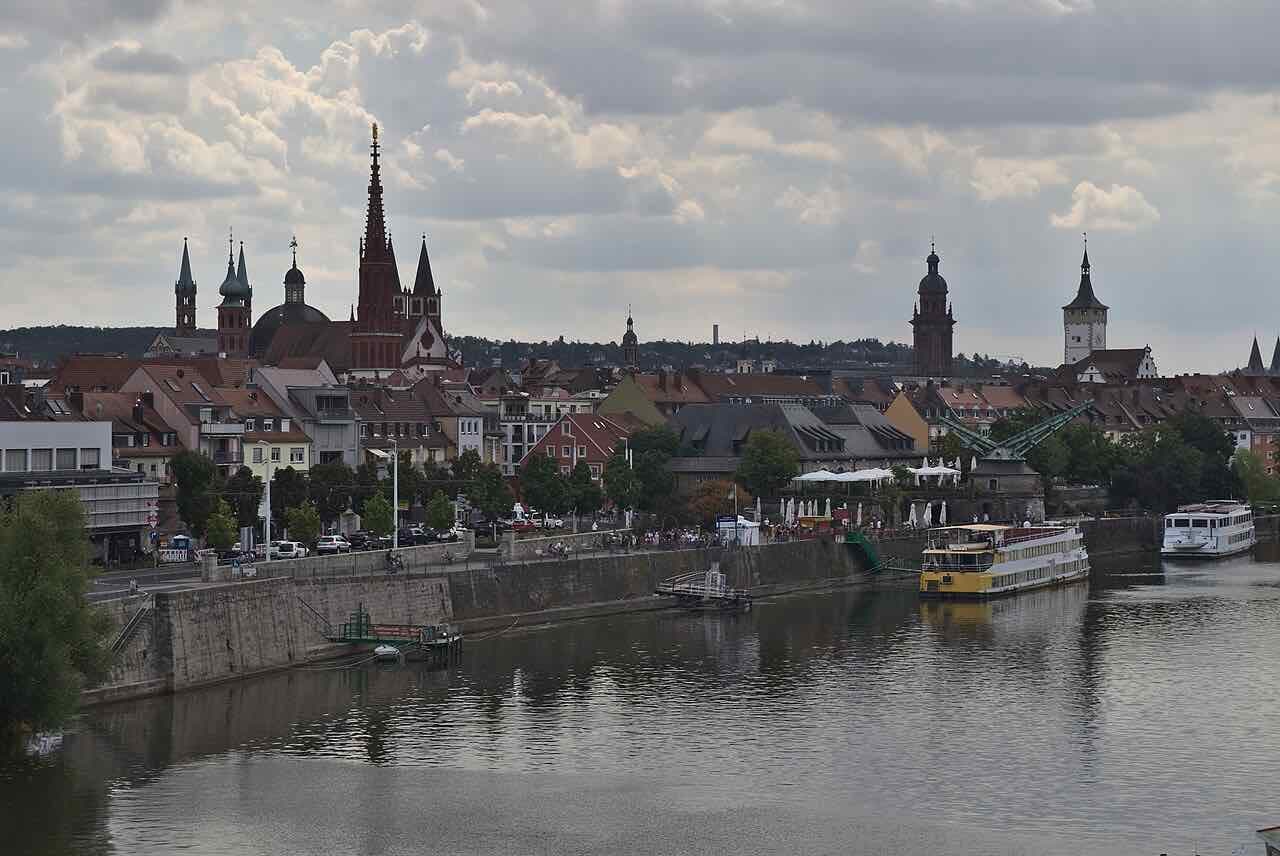
Würzburg is a student city in the plainest sense: about 35,000 students live among roughly 134,000 residents on the Main in Lower Franconia, so one person in four you pass on a weekday is studying. The city is small enough to cross on foot or by bike, and it still has a university founded in 1402, a baroque Residence that is a UNESCO World Heritage Site, a fortress on the hill across the river, and the Stein, a vineyard on the city's northern edge that is among the largest single vineyards in Germany. Wilhelm Conrad Röntgen found X-rays here in 1895. For a student, the practical picture is this: Julius-Maximilians-Universität (JMU) offers a large English-taught master's list in the sciences, humanities and economics, THWS offers applied degrees in engineering, design, business and social work, and the music university teaches performers and teachers. A dorm room costs a few hundred euros a month, the semester ticket is included in your fees, and Nuremberg and Frankfurt, with their airports and bigger communities, are about 110 and 120 km away.
- Semester contribution (JMU, winter 2026/27)
- 182.10 EUR, of which 110.10 EUR is the semester ticket and 72.00 EUR goes to the Studierendenwerk
- Dorm rent (Studierendenwerk)
- about 270 to 500 EUR a month depending on hall and room type, running costs and internet included
- Study costs, JMU estimate
- about 1,000 EUR a month in total, of which 375 EUR for housing and 275 EUR for food
Part 1
Living in Würzburg
A prince-bishops' city on the Main
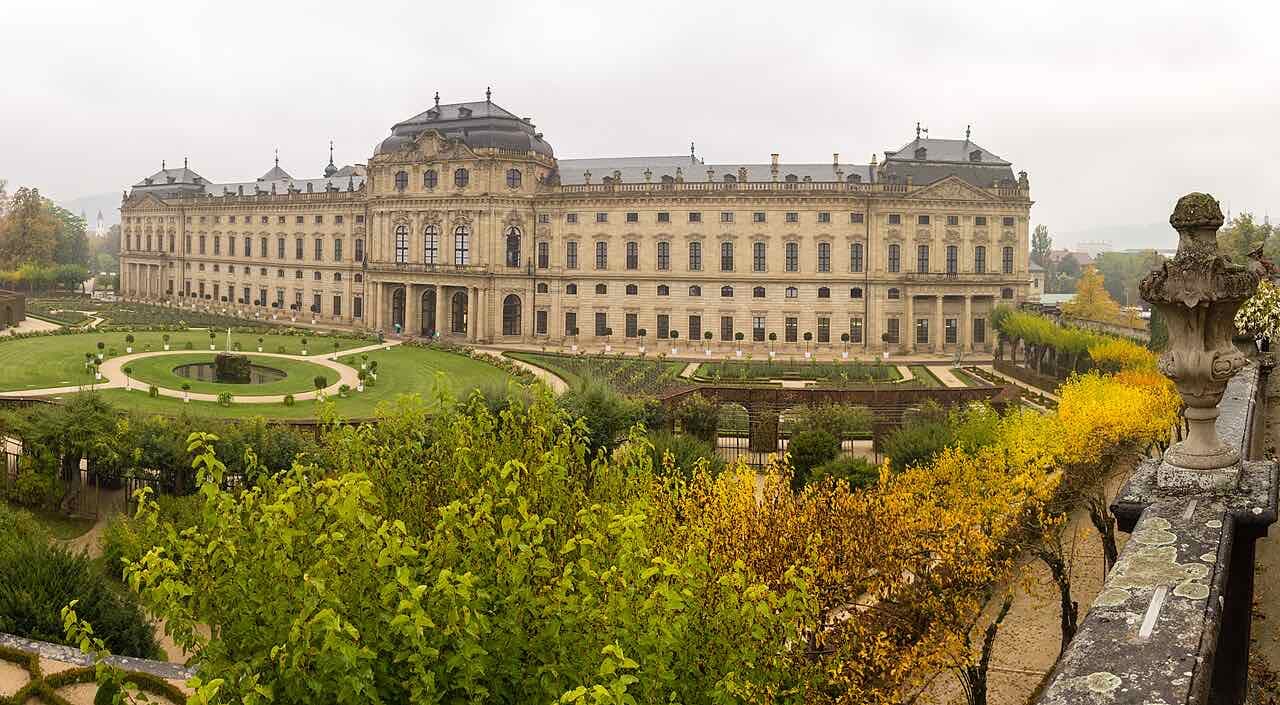
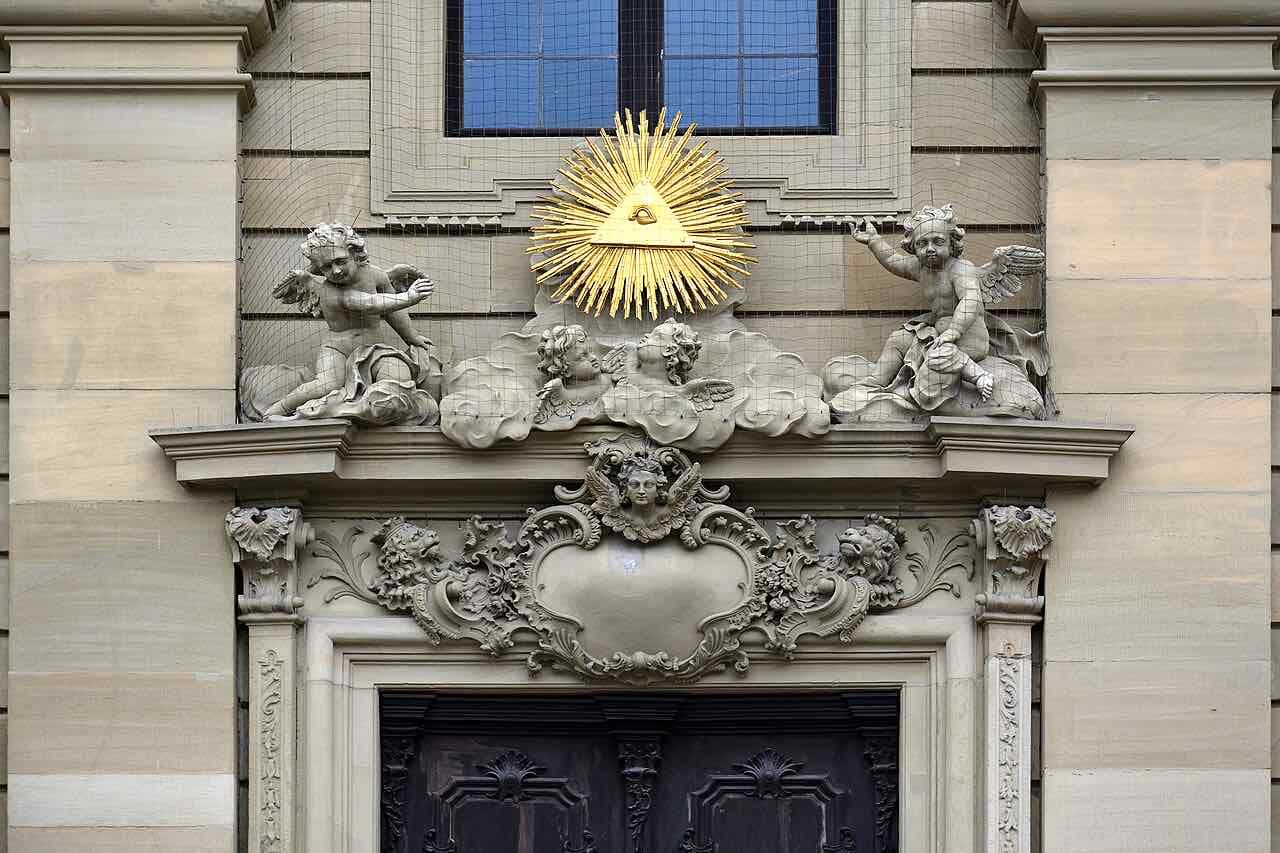
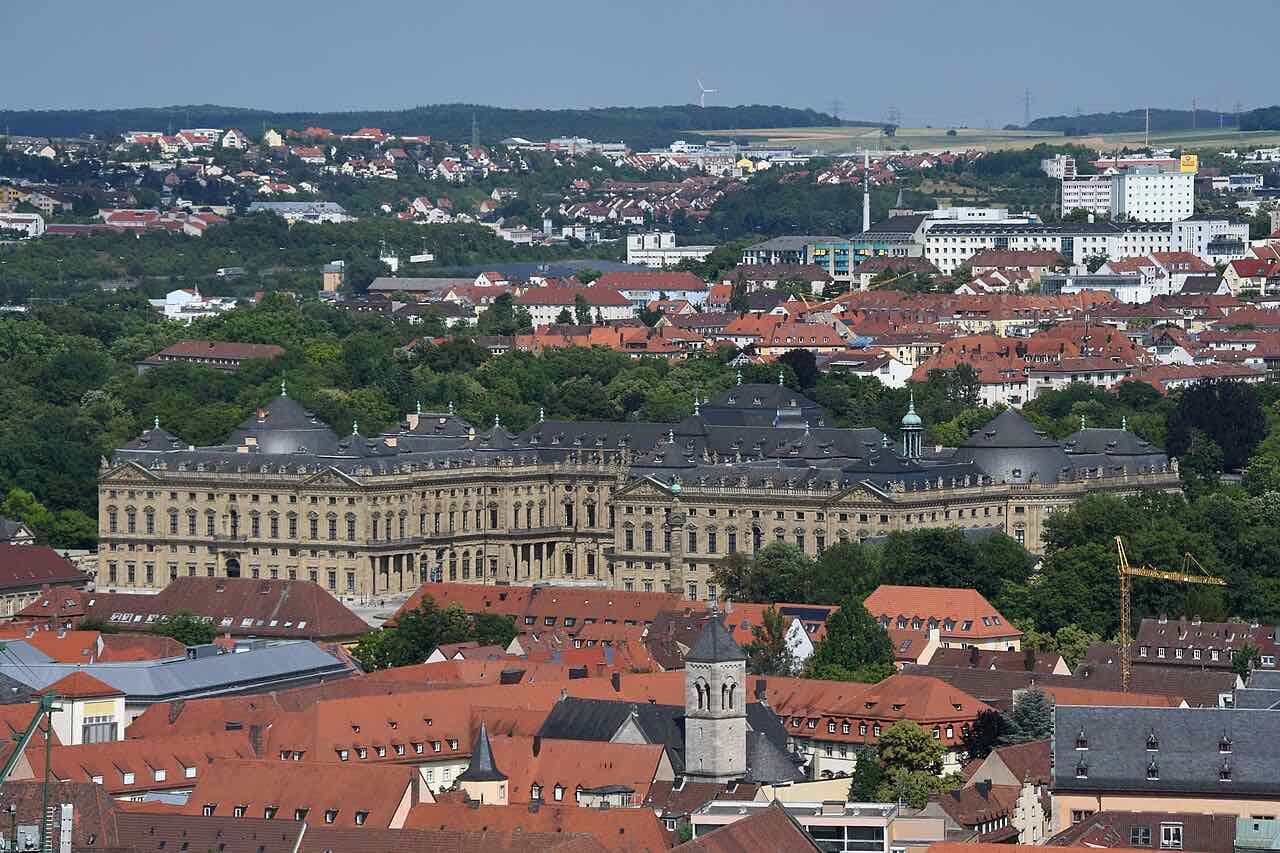
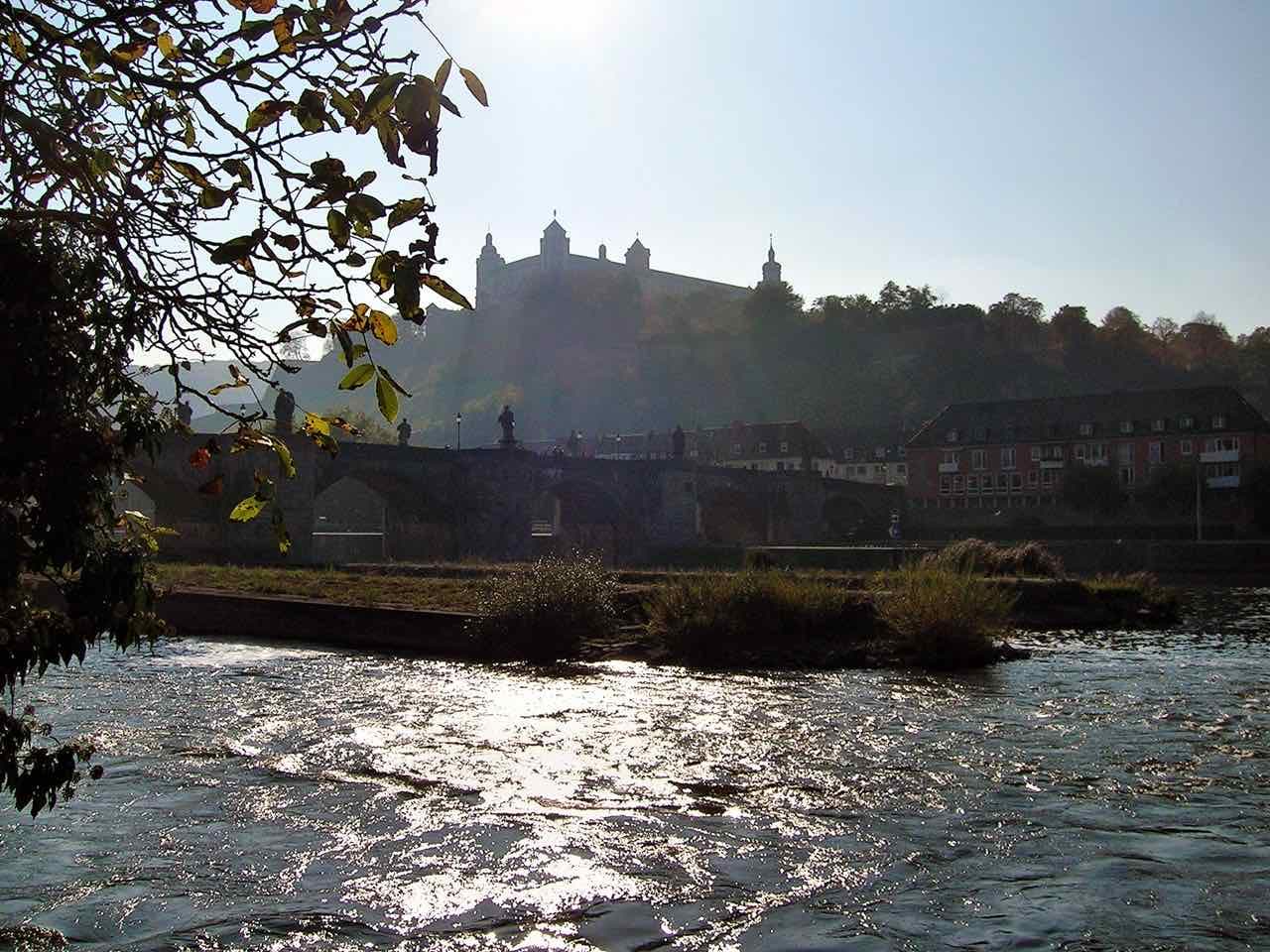
For centuries Würzburg was ruled by prince-bishops, and they left the city its look. The Residence was begun with a foundation stone on 22 May 1720 and its shell was finished in December 1744; the architect Balthasar Neumann led the work, and Giovanni Battista Tiepolo painted the staircase fresco between 1750 and 1753. The palace, the Hofgarten behind it and Residenzplatz in front were inscribed as a UNESCO World Heritage Site in 1981. On the other bank the Marienberg fortress sits on its hill, with a chapel whose foundations go back to the 8th century.
The Old Main Bridge, built between 1473 and 1543, is lined with baroque saint statues added from 1730. The cathedral of St Kilian is described by the city as the fourth-largest Romanesque church in Germany.
Science is part of the character too. Röntgen discovered X-rays in 1895 in his laboratory at the university, and the city has kept a research culture around the medical faculty, the Fraunhofer institute and the university's physics, chemistry and life-science institutes.
The city in pictures
What to see in your first months
Most of this is within a 20-minute walk of the main station. Ask at the Tourist Information in the Falkenhaus on the market square for opening hours and prices, which change.
Würzburg Residence and Hofgarten ↗
The baroque palace with Tiepolo's staircase fresco and the formal court garden behind it, designed from the mid-18th century and laid out mainly between 1759 and 1770.
The hilltop fortress above the river, mostly Renaissance and baroque; the wine slopes of the Schlossberg and Innere Leiste lie below it.
The stone bridge built 1473 to 1543, with baroque saint statues added from 1730. THWS lists time by the Main among the most popular things students do here.
A pilgrimage church (Wallfahrtskirche) on a hill above the Main, known for a Pietà to which miracles are attributed.
Dom St. Kilian, Neumünster and the Lusamgärtlein ↗
The Romanesque cathedral with the Schönborn chapel, the Neumünster church next to it, and a small quiet garden between them.
Wine, vineyards and the river
Würzburg is a wine city in a plain sense: vineyards start at the edge of the old town. The Würzburger Stein, a curved slope north of the centre along the Main, covers 85 hectares and is described as the largest contiguous single vineyard in Germany. It mainly grows Silvaner, Riesling and Weißer Burgunder, and the Stein-Berg site has held the EU protected designation of origin since November 2020. The oldest drinkable wine the city still knows of is a 1540 Steinwein stored at the Bürgerspital. The Bürgerspital, the Juliusspital and the state-owned Hofkeller are the three big estates.
You do not need to be a wine person to use this. The three estates run public tastings and cellar walks (the Hofkeller cellars lie under the Residence), and the vineyard paths on the Stein and below the fortress are a short walk from town. Franconian wine is known for its Bocksbeutel bottle, and the city tourism site has a page on it. Wine is part of local culture, but the vineyard paths and the river are there for everyone.
The Main itself is a place to spend time: the city lists boat trips and long-distance cycle routes among its leisure offers, and THWS names time by the river and hikes through the vineyards among the things students do.
Vineyards inside the city


Wine tastings you can book
Prices and times are on each estate's own listing, so check before you go.
Staatlicher Hofkeller (Residenz Hofkeller) ↗
Public cellar tours and tastings in the cellars beneath the Residence, a wine tradition the city dates to 1128.
Guided cellar walks (Kellerschlendern) and public tastings in the historic winery; it owns the Stein-Harfe site.
A walk-around tasting (Schlenderweinprobe) and a Vinothek; the foundation dates to 1576 and its winery income funds social work.
Festivals and what happens when
Held in May since 1989 and described as Europe's largest and oldest festival of African music and culture; the 37th edition ran 22 to 25 May 2026.
Classical music festival; the 2027 season runs 29 May to 27 June, with presale from 27 January 2027.
Lower Franconia's largest fair, with rides, a festival tent and beer gardens. It runs 17 days; the next one is 2 to 18 July 2027.
A summer festival whose 2026 edition reported a record number of visitors.
Christmas market and spring fair ↗
The city runs a Christmas market (Würzburger Weihnacht) and a Frühjahrsvolksfest in spring.
Getting around, and getting out
Inside Würzburg you walk, cycle, or take the trams and buses of WVV. Line 29 runs to the Hubland campus and was redesigned together with the student body; night buses run on lines 91 to 99. All three universities' students already hold a semester ticket (see the costs below), valid across Würzburg city, the districts of Würzburg, Kitzingen and Main-Spessart, and a few named stations such as Markt Bibart and Uffenheim.
Würzburg has no airport. You will most likely arrive via Frankfurt (about 103 km) or Nuremberg (about 89 km), and the main station has long-distance trains in both directions, with Berlin reachable in a little under four hours. A Deutschland-Ticket upgrade is possible: the D-Ticket Studium costs 24.65 EUR a month, bought in the WVVmobil app, with the semester ticket fee credited.
What things cost
- Semester contribution at JMU (includes the semester ticket)
- 182.10 EUR per semestersource
- Semester ticket (inside the contribution)
- 110.10 EUR per semester, valid on trams, buses and regional trains in the VVM areasource
- D-Ticket Studium (optional upgrade)
- 24.65 EUR per month net of the semester ticket feesource
- Studierendenwerk dorm room
- about 270 to 500 EUR a month, depending on hall and room type; deposit on topsource
- Dorm parking space (Zürnstraße)
- 8 EUR a monthsource
- JMU's monthly budget estimate
- about 1,000 EUR: food 275, housing 375, health insurance 110, other 222, broadcasting fee 18source
- Tuition fees at JMU
- none for most programmes; the LL.M. Digitalization and Law charges a feesource
Figures are the official ones for winter 2026/27 where a date is given; rents and prices change, so check the linked page before you commit.
Employers and research places nearby
Würzburg has no giant corporate campus, but it has several places where a degree turns into a job or a student assistant position.
Universitätsklinikum Würzburg ↗
The university hospital, with a jobs page, 18 training occupations, dual studies, a practical year for medical students and an English version of the site.
A materials research institute in Würzburg working on battery materials, ceramics, coatings and glass; its career pages include students and internships.
A printing-machine manufacturer whose group headquarters are in Würzburg, with a career portal for jobs and internships.
Part 2
Student life in Würzburg
Where you can study
Julius-Maximilians-Universität Würzburg (JMU) ↗
Founded in 1402 and re-founded in 1582, JMU has about 25,000 students on five sites (Sanderring in the centre, Röntgenring, Hubland Nord, Hubland Süd and Campus Medizin) and ten faculties: biology, chemistry and pharmacy, human sciences, Catholic theology, mathematics and computer science, medicine, arts, physics and astronomy, law, and business and economics. It lists 280 degree programmes. English-taught options include the bachelor's Diversity, Ethics and Religions and more than twenty master's programmes: among them Quantum Engineering, Satellite Technology, Artificial Intelligence and Extended Reality, International Economic Policy, Management International, Physics International, Mathematics International, Computational Humanities, Translational Neuroscience, Biochemistry, Chemistry, Chinese Studies, China Language and Economy, English Speaking Cultures, Global Challenges for Sustainability and an LL.M. in Digitalization and Law, which charges a tuition fee. Computer Science, Artificial Intelligence, Biosciences and Aerospace Informatics are offered in English or German. There are no tuition fees for most programmes; you pay the semester contribution.
International office ↗Technische Hochschule Würzburg-Schweinfurt (THWS) ↗
THWS has nearly 8,000 students and works at two locations, Würzburg and Schweinfurt, in ten faculties, among them architecture and civil engineering, computer science and business information systems, electrical engineering, mechanical engineering, plastics engineering and surveying, visual design, applied social sciences, and economics and business administration. The Würzburg campuses are Münzstraße (central, with the library and university management), Röntgenring and Sanderheinrichsleitenweg. THWS says you can complete a full degree in German or in English, and has taken in international students from more than 80 countries and works with more than 170 partner universities. Its international office runs orientation weeks before the semester and intercultural trainings and trips during it.
International office ↗Hochschule für Musik Würzburg ↗
About 250 instructors teach around 650 students a year in artistic, pedagogical and scholarly music degrees, in buildings at Residenzplatz, Bibrastraße and Hofstallstraße. The school dates from 1797. Its international office handles Erasmus+, partner institutions and an international buddy programme, and there is an FAQ for foreign students.
International office ↗Student unions, services and groups
Studierendenvertretung JMU (StuV) ↗
The student representation of JMU at Sanderring 2, with office hours Monday to Thursday 10:00 to 14:00 and Friday 10:00 to 13:00. It runs departments for health, mobility, ecology, queer feminism, democracy, awareness and more, plus events such as Campuslichter and a Running Dinner, the bus services to campus, and advice for problems.
Würzburg International Network (WIN) ↗
Students and volunteers inside the StuV who help new international students settle: pub crawls, wine hikes, day trips, karaoke and trivia nights. Team meetings are twice a month on Wednesdays at 7 pm at the ESG, and anyone can join the team or just come to events.
Studierendenvertretung THWS (STV) ↗
The student body of THWS, with an office at Sanderring 8a (room S.2.08) in Würzburg and one in Schweinfurt. It runs the Fachschaften for ten faculty areas, a party and events calendar for both cities, WhatsApp channels, and student groups such as a board-game club, a robotics group and a Model United Nations group.
Runs the 12 dorms, the canteens, BAföG advice, social, legal and psychotherapeutic counselling, the student culture offers and the international students' ID. Its social counselling for international students is confidential and independent of the universities; phone +49 931 8005-302.
The university sports programme linked from the JMU site, where courses and sign-up are listed each semester; check there which of the three institutions' students can join which course.
A long-term buddy programme that pairs international and local THWS students; you can register through a form or write to the peer team, and take part for a certificate. Help covers exam registration, the e-learning portal, the library and the student ID.
International Coffee Hour (JMU) ↗
A recurring get-together for international and German students run by the international tutors, with coffee, tea and snacks. The first meeting this winter term was 20 October, 14:00 to 16:00, in room 00.102 at Emil-Fischer-Straße 70; register by email.
A student theatre open to everyone, with several groups rehearsing in parallel and free performances on the Stadtmensa's large stage.
A self-managed student culture venue in the basement of the Studentenhaus, with concerts, film evenings and other events that students help organise.
ESG, the Protestant student community ↗
At Friedrich-Ebert-Ring 27b, with a Wednesday lunch called MiMi, a shared student flat and its own pub room (Kneipe); WIN's team meetings are held here. The website is in German.
KHG, the Catholic student community ↗
At Hofstallstraße 4, with Taizé prayer on Tuesdays, a Sunday service, a Veggie-Pause lunch on Thursdays, the multinational theatre group Etcetera, a choir and individual advice for international students. Most talks are in German, but many activities need little German.
Campus life and study culture
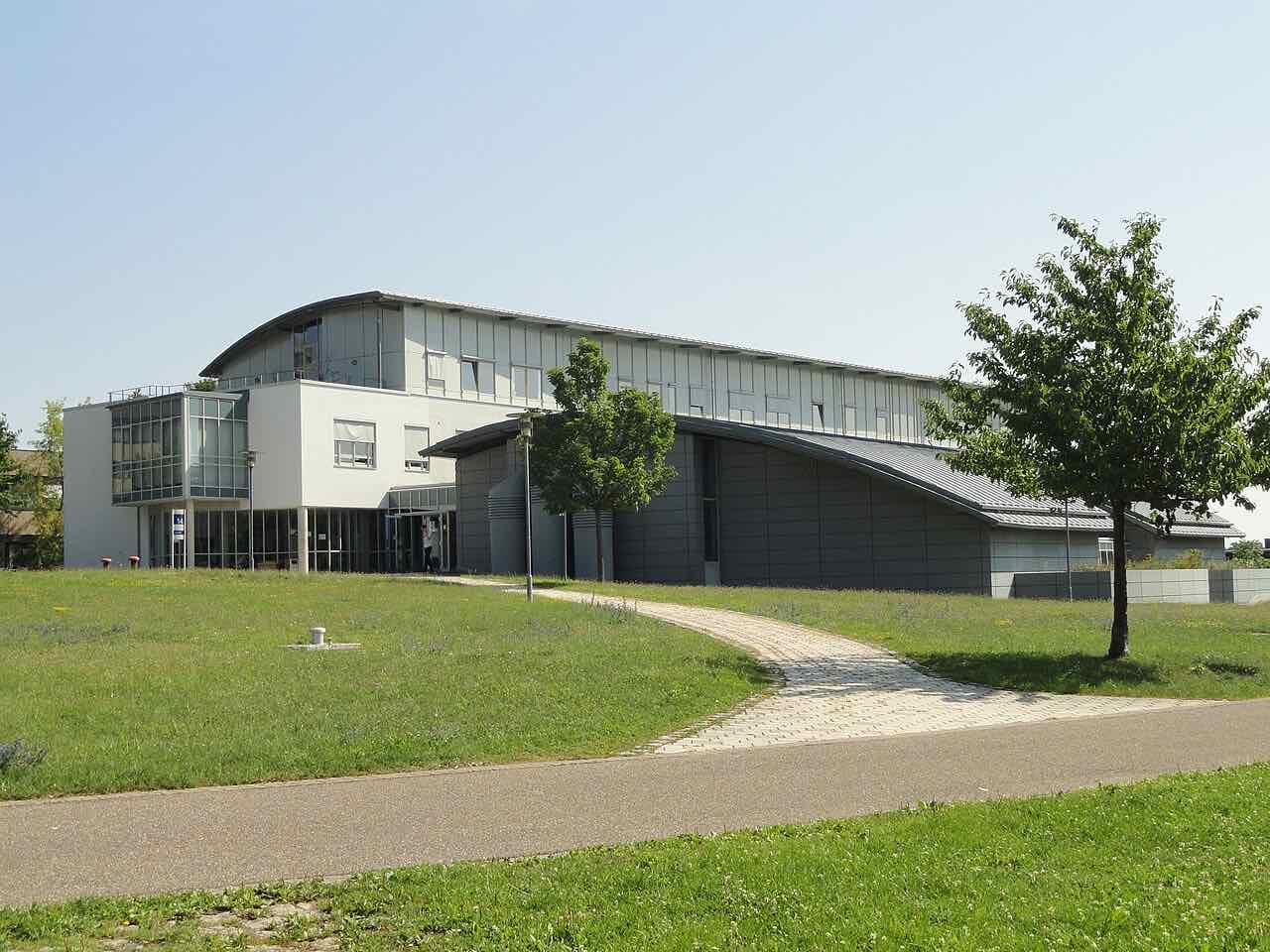
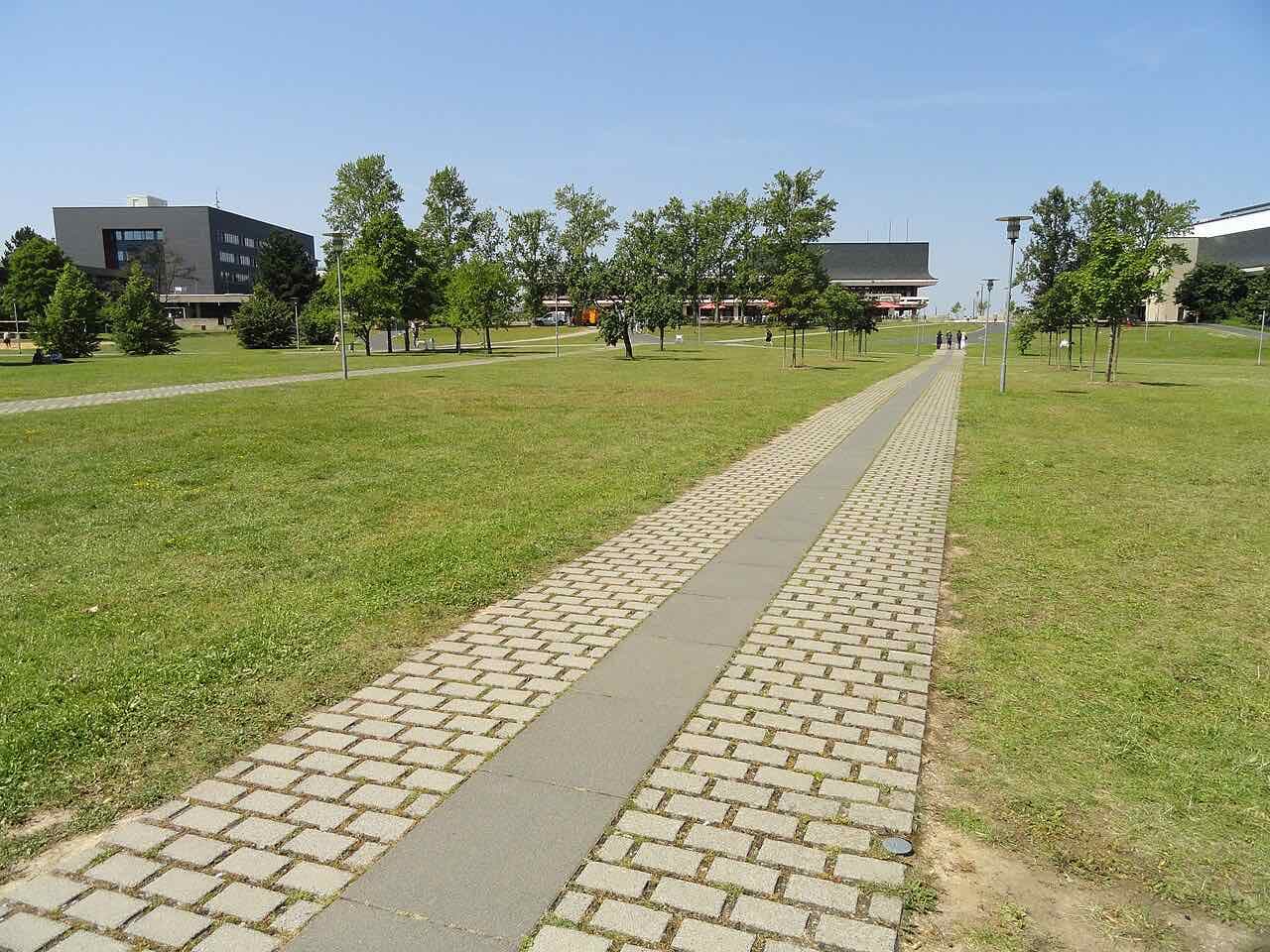
JMU is not one campus. Sanderring and Röntgenring are in the centre, Hubland Nord and Süd are the large campus site with its own canteen and lawns (computer science and geography have their buildings there), and the medical faculty sits at Campus Medizin. THWS is also in town, along Münzstraße and Röntgenring, with design and computer science at Sanderheinrichsleitenweg. Bus line 29 runs to Hubland.
Because 35,000 students share one small city, the city is organised around them: the semester ticket, free entry to Mainfranken Theater for students of all three institutions, a student culture ticket for independent theatres, and Studierendenwerk counselling are part of the normal system. A good first move is to join one of the groups above in your first week.
Hubland campus
Housing: dorms and how to apply
The Studierendenwerk runs 12 student residences in Würzburg, from small blocks to large complexes. Rooms are furnished (wardrobe, shelf, desk, bed with mattress), internet is included in the rent, and you bring bedding, cookware and towels.
Apply online with a scan of your passport and your enrolment certificate or admission notice. Offers usually come two to eight weeks before the contract start. An application expires after 2.5 years, and while on the waiting list you must upload a current enrolment certificate by 1 November or 1 May. The Studierendenwerk aims for a balance of German and international students when it allocates places, and there is a winter-semester contingent for first- and second-semester undergraduates.
Single apartments and shared flats ↗
Halls such as Am Hubland, Straubmühlweg, Leo-Weismantel-Straße and Zürnstraße offer single apartments with their own kitchenette and bathroom, and rooms in shared flats of two to four people, at rents from about 270 EUR (Josef-Schneider-Straße) up to about 500 EUR (Klara-Oppenheimer-Weg), plus a deposit.
The Studierendenwerk's own buddy programme for people living in its dorms, listed on its international-students page.
The Studierendenwerk has a page of tips for finding a room and another with further flat offers. JMU's Welcome Centre notes that housing in Würzburg is in high demand, so search early and plan a temporary place for your first weeks.
Canteens, culture and sport
Five Studierendenwerk canteens are listed: Josef-Schneider-Straße, Röntgenring 12, Am Studentenhaus, and on Hubland the Mensateria Hubland Nord (currently closed, with the Campus Süd canteen as the alternative) and Mensa Campus Hubland Süd. Student prices apply on the chip card; paying cash adds 10%.
Students of JMU, THWS and the music university can use the theatre's season offer for free (up to ten special events are excluded). At least 5% of seats are reserved for students, and you can book up to four tickets from four weeks before a performance.
Up to three tickets per semester at 2 EUR each, each taking 7 EUR off the regular price at seven independent theatres; sold at the Hauptkasse in the Studentenhaus.
THWS student health management offers running groups, workshops, learning coaching and equipment loans.
THWS describes Würzburg as a classic student city with parties, cinemas, flea markets and concerts. Concrete starting points are the Kellerperle, the Studi(o)bühne and the party calendar of the THWS student body; the city's Jazz Festival runs 23 to 25 October 2026 and the Lange Kulturspeichernacht is on 24 October.
Your first weeks
- 1
Before you arrive
Apply for a dorm room as early as you can. JMU advises booking the address-registration appointment about four weeks before you arrive. Book a temporary bed for the first days; do not arrive without one.
- 2
Within two weeks of moving in
Register your address at the Bürgerbüro, Rückermainstraße 2, 97070 Würzburg. Take your passport, your rental contract and the landlord's confirmation (Wohnungsgeberbestätigung) with original signatures; appointments are made online on the city website. Since 21 September 2026 a main residence can also be registered online through a federal platform.
- 3
Enrolment week
Enrol, pay the semester contribution (it includes your semester ticket) and collect your student card. Sort out health insurance too; JMU's enrolment pages explain the options.
- 4
As soon as possible (non-EU)
Make an appointment at the Service-Point of the Ausländerbehörde in the city hall, Rückermainstraße 2, floor 0A, room 17. The student permit has to be issued before your visa expires. Counselling by surname is on +49 931 37-2446 (A-D), 37-2273 (E-K), 37-2767 (L-R) and 37-2461 (S-Z). An online service for an education permit exists.
- 5
First month
Open a bank account, register for the broadcasting fee (about 18 EUR a month, one payer per flat), join an orientation event and a buddy programme, and sign up for a German course at the JMU Language Centre.
Working next to your degree
EU and EEA students can work without a limit. Students from other countries may work a limited number of days a year: the city's page on student residence permits names up to 140 days per calendar year, while an older JMU page names 120 full or 240 half days. The permit in your passport and the Ausländerbehörde are what count, so confirm the number with them before you sign a job contract.
The student representation has a department for student assistants (HiWis) with a regular HiWi Stammtisch, and the hospital and research institutes listed above publish their own job pages. JMU notes that voluntary internships count toward the same day limit, so ask the office before you accept one.
Where you come from matters here
Pick your home country: food, faith, community groups and the consulate that serves you, checked 21 October 2026.
🇮🇳 Living in Würzburg as an Indian student
The Indian embassy runs a portal for Indian students in Germany. Würzburg has an Indian association listed by the city, and the nearest Hindu temple community with its own site is next to Frankfurt.
Consulate General of India, Munich ↗
The consulate for Bavaria and Baden-Württemberg; links to the Indian Students in Germany portal and consular services.
Indian Students in Germany (ISG) ↗
An initiative of the Indian embassy: counselling, career and legal help through affiliated student associations, emergency numbers for the consulates, and a directory of Indian student associations.
Namaste Indian Association e.V. ↗
Indian association in Rottendorf, just outside Würzburg (Hofstr. 10i), listed by the city's foreign residents' council among its expat communities.
ISKCON Frankfurt (Offenbach) ↗
The nearest Hindu temple community with its own site: a Sunday feast from 13:00 with kirtan, a lecture in English and Russian and a shared meal, at Kaiserstraße 26 in Offenbach, in the Frankfurt area, about 120 km from Würzburg.
🇳🇬 Living in Würzburg as a Nigerian student
Nigerian students find a pan-African community in Würzburg rather than a Nigerian one. For passports and visas you deal with the embassy in Berlin.
Initiative Africa Würzburg e.V. (IAW) ↗
A charitable association of Africans in and around Würzburg, with initiatives for students, IT, sport, family and culture, and the CUP INTERNATIONAL football tournament that opened the Global Würzburg (GLOW) series.
Every May since 1989: a festival of African music and culture in the city.
Passports and consular services at Neue Jakobstraße 4, Berlin; visa applications go through the authorised provider VFS in Berlin.
🇻🇳 Living in Würzburg as a Vietnamese student
Würzburg has no Vietnamese community or pagoda we can point you to. The embassy in Berlin publishes community events across Germany.
Consular section and community news for Vietnamese people in Germany.
Ausländer- und Integrationsbeirat (AIW) ↗
The city's council of foreign residents, with counselling on racism and discrimination and on migration and orientation.
🇧🇩 Living in Würzburg as a Bangladeshi student
Würzburg has no Bangladeshi association we can point you to. The embassy in Berlin handles consular services, and a mosque is open for prayer in the city.
Embassy of Bangladesh, Berlin ↗
Passport, visa, attestation and other consular services; all services need a prior appointment booked through the embassy site. It also lists honorary consulates in Germany.
An open Muslim community with daily prayers, religious classes and events at Äußere Aumühlstraße 11.
🇵🇰 Living in Würzburg as a Pakistani student
Würzburg has no Pakistani association we can point you to. Muslim students can pray and meet others at the mosque, and the city's foreign residents' council is the local contact for foreign-national issues.
An open Muslim community with daily prayers, religious classes and events at Äußere Aumühlstraße 11.
Ausländer- und Integrationsbeirat (AIW) ↗
The city's council of foreign residents; its pages list community associations and counselling on discrimination and migration.
🇬🇭 Living in Würzburg as a Ghanaian student
There is no Ghana-specific group in Würzburg we can point you to; Ghanaian students join the African community networks here.
Initiative Africa Würzburg e.V. (IAW) ↗
The city's African association, open to people from across the continent, with student and sports initiatives.
The May festival of African music and culture, the largest and oldest of its kind in Europe according to the organisers.
The university's yearly evening with partner-university stands and an Africa Competence Center pavilion; the 2026 edition was on 23 June at the Hubland sports centre, free to enter.
🇨🇲 Living in Würzburg as a Cameroonian student
Cameroonian students will find the same pan-African network as other African students, and the University's Africa-oriented contacts.
Initiative Africa Würzburg e.V. (IAW) ↗
African association in Würzburg with a student initiative and a football tournament that brings communities together.
Held each May, with African music and culture from many countries.
Includes an Africa Competence Center pavilion for studying, internships and research in Africa.
🇺🇸 Living in Würzburg as an American student
There is no US-specific group in Würzburg we can point you to; American students mostly meet people through these international offers.
Run by the university's international tutors for international and German students, including people who want to share their home country.
Würzburg International Network (WIN) ↗
English-friendly social events for new international students.
English-language introduction to the Catholic student community's welcome event, Taizé prayer and theatre group.
🇨🇳 Living in Würzburg as a Chinese student
JMU teaches China-focused degrees in English; there is no Chinese student association in Würzburg with its own page, and the nearest consulate is in Munich.
Consulate General of China, Munich ↗
The Chinese consulate general in Munich, the nearest in Bavaria; the site has a German-English toggle.
China at JMU: Chinese Studies and China Language and Economy ↗
Two English-taught master's programmes (Chinese Studies; China Language and Economy) on JMU's list of international degree programmes.
English-taught programmes in Würzburg
Soonest open deadline first. Every entry links to its official source.
- International Master of Science in Quantum EngineeringJulius-Maximilians-Universität Würzburg · WürzburgmasterNo tuition31 Oct 2026Closing soon
- MBA International Business with Regional FocusTechnical University of Applied Sciences Würzburg-Schweinfurt (THWS) · Würzburgmaster15 Dec 2026Closing soon
- MSc in Artificial IntelligenceTechnical University of Applied Sciences Würzburg-Schweinfurt (THWS) · WürzburgmasterNo tuition15 Dec 2026Closing soon
- MA in International Social Work with Refugees and MigrantsTechnical University of Applied Sciences Würzburg-Schweinfurt (THWS) · WürzburgmasterNo tuition15 Dec 2026Closing soon
- Adult Education and Management in Lifelong EducationJulius-Maximilians-Universität Würzburg · WürzburgmasterNo tuition15 Jan 2027Open
- MA Theology for a World in Transformation (TWT)Julius-Maximilians-Universität Würzburg · WürzburgmasterNo tuition15 Jan 2027Open
- Cell and Infection Biology, Master of ScienceJulius-Maximilians-Universität Würzburg · WürzburgmasterNo tuition15 Jan 2027Open
- Conservation Biology and Applied EcologyJulius-Maximilians-Universität Würzburg · WürzburgmasterNo tuition15 Jan 2027Open
- Molecular and Computational Biology, Master of ScienceJulius-Maximilians-Universität Würzburg · WürzburgmasterNo tuition15 Jan 2027Open
- International Economic Policy (IEP)Julius-Maximilians-Universität Würzburg · WürzburgmasterNo tuition15 Jan 2027Open
- Molecular Plant SciencesJulius-Maximilians-Universität Würzburg · WürzburgmasterNo tuition15 Jan 2027Open
- Ecology, Master of ScienceJulius-Maximilians-Universität Würzburg · WürzburgmasterNo tuition15 Jan 2027Open
- Translational NeuroscienceJulius-Maximilians-Universität Würzburg · WürzburgmasterNo tuition15 Mar 2027Open
- FOKUS Life SciencesJulius-Maximilians-Universität Würzburg · WürzburgmasterNo tuition15 Mar 2027Open
- International Master of Science in PhysicsJulius-Maximilians-Universität Würzburg · WürzburgmasterNo tuition15 Mar 2027Open
- Master's in Biochemistry (Molecular Life Sciences or Molecular Oncology)Julius-Maximilians-Universität Würzburg · WürzburgmasterNo tuition01 Jun 2027Open
- BEng in Applied Polymer EngineeringTechnical University of Applied Sciences Würzburg-Schweinfurt (THWS) · WürzburgbachelorNo tuition15 Jun 2027Open
- BA in International ManagementTechnical University of Applied Sciences Würzburg-Schweinfurt (THWS) · WürzburgbachelorNo tuition15 Jun 2027Open
- BSc Health and Environmental PsychologyTechnical University of Applied Sciences Würzburg-Schweinfurt (THWS) · Würzburgbachelor15 Jun 2027Open
- Management InternationalJulius-Maximilians-Universität Würzburg · WürzburgmasterNo tuition15 Jul 2027Open
- Molecular and Cellular BiophysicsJulius-Maximilians-Universität Würzburg · WürzburgmasterNo tuition15 Jul 2027Open
- Systems Biology and MetabolomicsJulius-Maximilians-Universität Würzburg · WürzburgmasterNo tuition15 Jul 2027Open
- Digitalisation & LawJulius-Maximilians-Universität Würzburg · Würzburgmaster15 Jul 2027Open
- MA in Managing Global DynamicsTechnical University of Applied Sciences Würzburg-Schweinfurt (THWS) · WürzburgmasterNo tuition15 Jul 2027Open
- Behavioural Neurobiology / Neuroethology, Master of Science in BiologyJulius-Maximilians-Universität Würzburg · WürzburgmasterNo tuition15 Jul 2027Open
- Double Degree Global Change EcologyJulius-Maximilians-Universität Würzburg · Würzburgmaster15 Jul 2027Open
- Exercise Science & TrainingJulius-Maximilians-Universität Würzburg · WürzburgmasterNo tuition15 Jul 2027Open
- Protein Chemistry, Master of ScienceJulius-Maximilians-Universität Würzburg · WürzburgmasterNo tuition15 Jul 2027Open
- Master's Programme International Business with Regional Focus (MBA)Technical University of Applied Sciences Würzburg-Schweinfurt (THWS) · WürzburgmasterSee sourceCheck source
- MSc ChemistryJulius-Maximilians-Universität Würzburg · WürzburgmasterNo tuitionSee sourceCheck source
Is Würzburg right for you? Ask us. Free.
Tell us your passport, grades and budget. We compare Würzburg with the other places you could study, then apply for you. You never pay us.
Get my free plan