Process Engineering and Energy Technology
Bremerhaven University of Applied Sciences · Bremerhaven, Germany
Application deadline
See source
#1a with a Bachelor's degree from an EU university; or #1b with a Bachelor's degree from a non-EU university, and if the applicant already has a valid uni-assist report: ecampus.hs-bremerhaven.de 15 February (for the summer semester) | 15 August (for the winter semester) #2 with a Bachelor's degree from a non-EU university: www.uni-assist.de 31 December (for the summer semester) | 30 June (for the winter semester)
Starts
Winter semester, Summer semester
Tuition
No tuition fees
Duration
3 semesters
Taught in
English
Verified 11 Oct 2026 · Source: DAAD International Programmes
Verify on official page ↗Free, 2 minutes, no agent fees — we only contact you about this request.
Can you get in?
- Academic requirements
- Detailed admission conditions can be found here: https://www.hs-bremerhaven.de/en/study/study-programmes/peet An applicant to the Process Engineering and Energy Technology (PEET) Master's programme must fulfil the following academic requirements: an academic degree in a field relevant to the PEET course content (chemical engineering or similar) a Bachelor's degree equivalent to 210 ECTS credit points (exception: a Bachelor's degree equivalent to 180 ECTS credit points, then an additional learning agreement of…full text
- English
- C1C1 required, please provide an official language certificate, e.g.: telc English: telc English C1 Cambridge English Qualifications: C1 Advanced
- German
- A1 required, please provide an official language certificate, e.g.: Goethe-Zertifikat: Goethe-Zertifikat A1
- How you apply
- Through uni-assist, the central service that checks international certificates for German universities. It charges a fee per application, so start early.
- Application period
- #1a with a Bachelor’s degree from an EU university; or #1b with a Bachelor's degree from a non-EU university, and if the applicant already has a valid uni-assist report: ecampus.hs-bremerhaven.de 15 February (for the…
Not sure your degree or English score is enough? Send us your profile and we check it against this programme, free.
Check my profile — freeWhat your first year costs
- Tuition (2 semesters)
- None
- Semester contribution (2×)
- €840
- Living costs (12 months)
- €13,200
- First year, about
- €14,040
From the programme's DAAD listing. The living-cost figure is the university's own estimate.
Not sure the budget works for you? Your free plan compares this with cheaper options for your passport.
Compare my optionsThe programme
The practice-oriented Master' programme in Process Engineering and Energy Technology (PEET) is based on a Bachelor's degree in chemical engineering (or a related process engineering degree) and is designed as follows: 90 ECTS credit points (min. three semesters), starting from a Bachelor's degree equivalent to 210 ECTS credit points 30 + 90 ECTS credit points (min.
- How it is organised
- The Master's in Process Engineering and Energy Technology (PEET) is based on a 210 ECTS equivalent Bachelor's degree in chemical engineering (or a related process engineering degree) and is structured as follows: First semester: Measurement and Prediction of Physical/Chemical Properties…
- Study abroad
- An ERASMUS-funded semester outside Germany (at a European but non-German university) is possible.
- Internships
- There is no internship integrated in the course of study.
- Part-time work
- Students may work up to 140 days (or 280 half days) per year. The university offers student jobs (student tutor, lab assistant, etc.) currently at a rate of 14.28 EUR per hour (as of 1 February 2025).
- Support for international students
- For support, please contact: Student Advisory Service International Office
From your country
General requirements for master's applicants. Rules change — confirm with the university and your local German mission.
🇮🇳 Applying from India
- An APS India certificate is mandatory before your visa appointment — processing takes weeks, so start it the day you decide to apply.
- Budget for the blocked account (€11,904 for one year in 2026 — verify the current amount with the German Embassy).
- IELTS/TOEFL is typically required; some universities accept a Medium-of-Instruction letter — check the official program page.
🇳🇬 Applying from Nigeria
- Proof of funds is usually a blocked account; open it early — transfers and verification take time.
- WAEC/NECO results are assessed via uni-assist for most universities; a Studienkolleg year may be required for bachelor's entry.
- Visa appointment slots in Lagos and Abuja book out months ahead — book as soon as you have an admission letter.
🇻🇳 Applying from Vietnam
- APS Vietnam certification applies to Vietnamese applicants — schedule the document check before university deadlines.
- Most universities want IELTS 6.0–6.5 for English-taught programs; requirements vary by program.
- Plan finances around the blocked account plus health insurance — both are checked at the visa stage.
🇧🇩 Applying from Bangladesh
- Document verification is strict: keep certificates, transcripts, and bank papers consistent and genuine — discrepancies sink applications.
- The blocked account is the standard proof of funds. You do not need an admission letter to open one, so set it up alongside your applications.
- Apply to several programs in parallel — visa processing in Dhaka can be slow, and an early admission letter buys you time.
Living in Bremerhaven
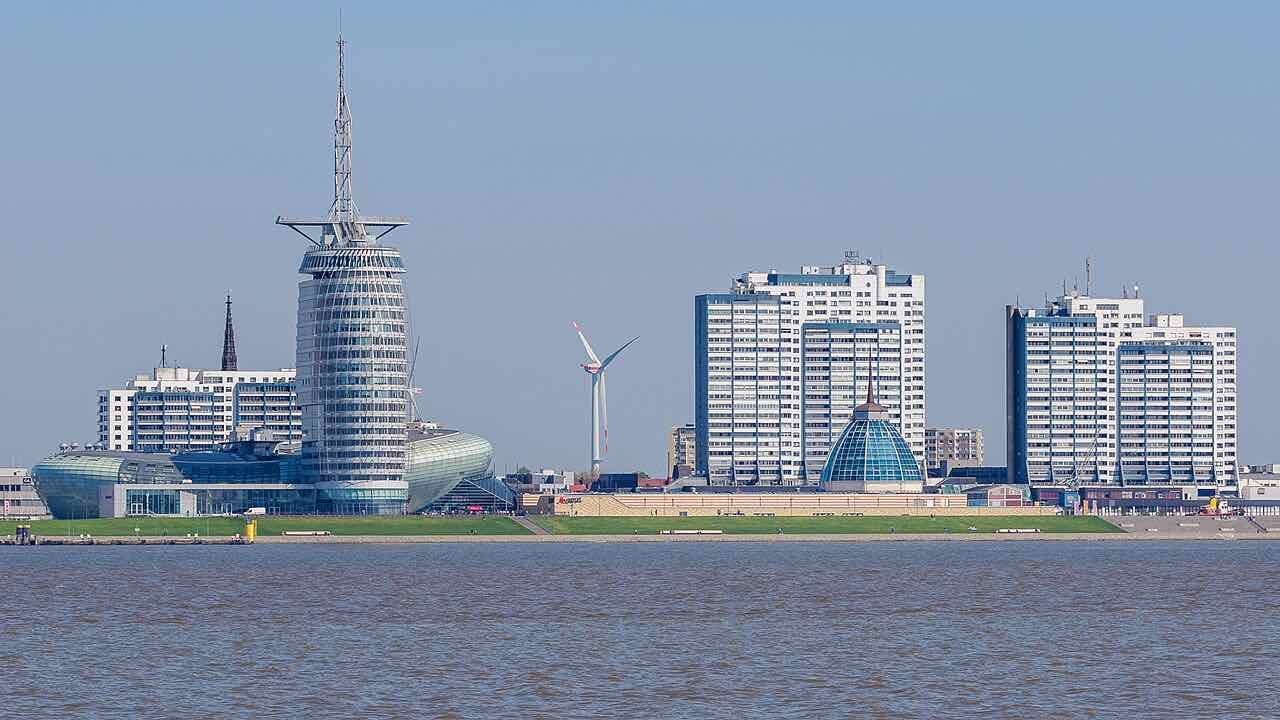
A North Sea port city at the mouth of the Weser, where the university sits five minutes from the dyke and polar research ships are part of the skyline
Bremerhaven is a city of about 118,500 people on the Weser estuary, founded in 1827 when Bremen bought a strip of land to get a harbour of its own.
Student life, costs and the community for your home country in Bremerhaven →
Similar programmes you can still apply to
- Master of Science in Chemical EngineeringUlm University · Ulmmaster15 Nov 2026Closing soon
- Process Safety and Environmental EngineeringOtto von Guericke University Magdeburg · MagdeburgmasterNo tuition15 Jan 2027Open
- Hydrogen Technologies and ApplicationsTechnische Hochschule Ingolstadt · Ingolstadtmaster15 Jan 2027Open
- Master of Science in Energy Science and TechnologyUlm University · Ulmmaster15 Mar 2027Open
More programs at Bremerhaven University of Applied Sciences
- Embedded Systems DesignBremerhaven University of Applied Sciences · BremerhavenmasterNo tuition31 Dec 2026Open
- International Tourism Management (Cruise Business / Innovation)Bremerhaven University of Applied Sciences · BremerhavenbachelorNo tuition15 Jul 2027Open
Want help applying? Free.
- — We check your degree, grades and English against Bremerhaven University of Applied Sciences's requirements.
- — We tell you what to prepare for your passport (documents, certificates, proof of funds) and in which order.
- — We shortlist other programmes that fit you, in Germany and 10 more countries; where a partner school fits, we submit the application for you.
Students never pay us. We never promise admission or a visa.
Was this page helpful?