Studying in Bavaria, Germany
Bamberg
A UNESCO old town on a river, with one university and about 10,400 students in it.
Bamberg is a small city where the university is part of the old town itself: the Mensa Austraße stands in the old town, the central university address is a few streets from the river, and the university's other sites are spread through the city. The old town is a UNESCO World Heritage Site, split into a hill town with the cathedral, an island town on the Regnitz, and a market-gardeners' quarter. Around 19 percent of the university's students come from abroad, so you will not be the only newcomer in the seminar room. The trade-off is size: this is a town of about 77,000 people, with one main university, no metro and nothing like the choice of a big city. If you want a place where you can know the city by the end of your first semester, it fits.
- Population
- 77,218 (31 December 2025)
- Students at the university
- about 10,400 (January 2025), 19 percent international
- Nuremberg
- about 63 km by rail
- Nearest big airport
- Nuremberg Airport; Bamberg has only a small airfield for general aviation
- Semester contribution
- 123.22 EUR per semester, including the 53.22 EUR semester ticket (from summer 2026)
Part 1
Living in Bamberg
A bishop's city on seven hills, and a town on an island
Bamberg is first mentioned in 902. In 1007 Emperor Henry II made it the seat of its own diocese, and the cathedral that stands on the hill today replaced earlier buildings that burned down; the page of the Bamberg tourist office dates the building to 1002 to 1012. Bamberg lost its independence in 1802 and became part of Bavaria in 1803. It was inscribed as a UNESCO World Heritage Site in 1993.
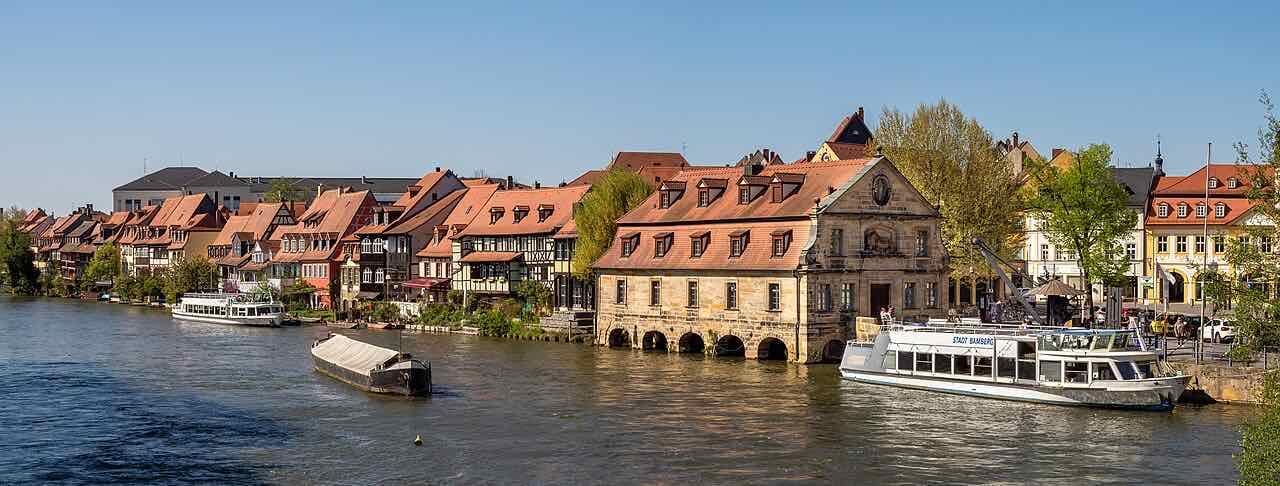
The old town is easiest to understand as three districts. The Bergstadt is the hill town with the cathedral and the former abbey. The Inselstadt is the island between two arms of the Regnitz, with the pedestrian zone and Klein Venedig. The Gärtnerstadt is the old quarter of market gardeners. The Welterbe-Besuchszentrum at Untere Mühlbrücke 5 explains all three with models, films and a city model; entry is free and it is open daily from 10:00 to 18:00.
What to see in your first months
All of these are in or beside the old town, and most cost nothing to look at from outside.
The cathedral holds the tomb of Emperor Henry II and Kunigunde by Tilman Riemenschneider, the Bamberger Reiter statue, and the grave of Pope Clement II. Opening hours change by season, so check the cathedral's own page before you go.
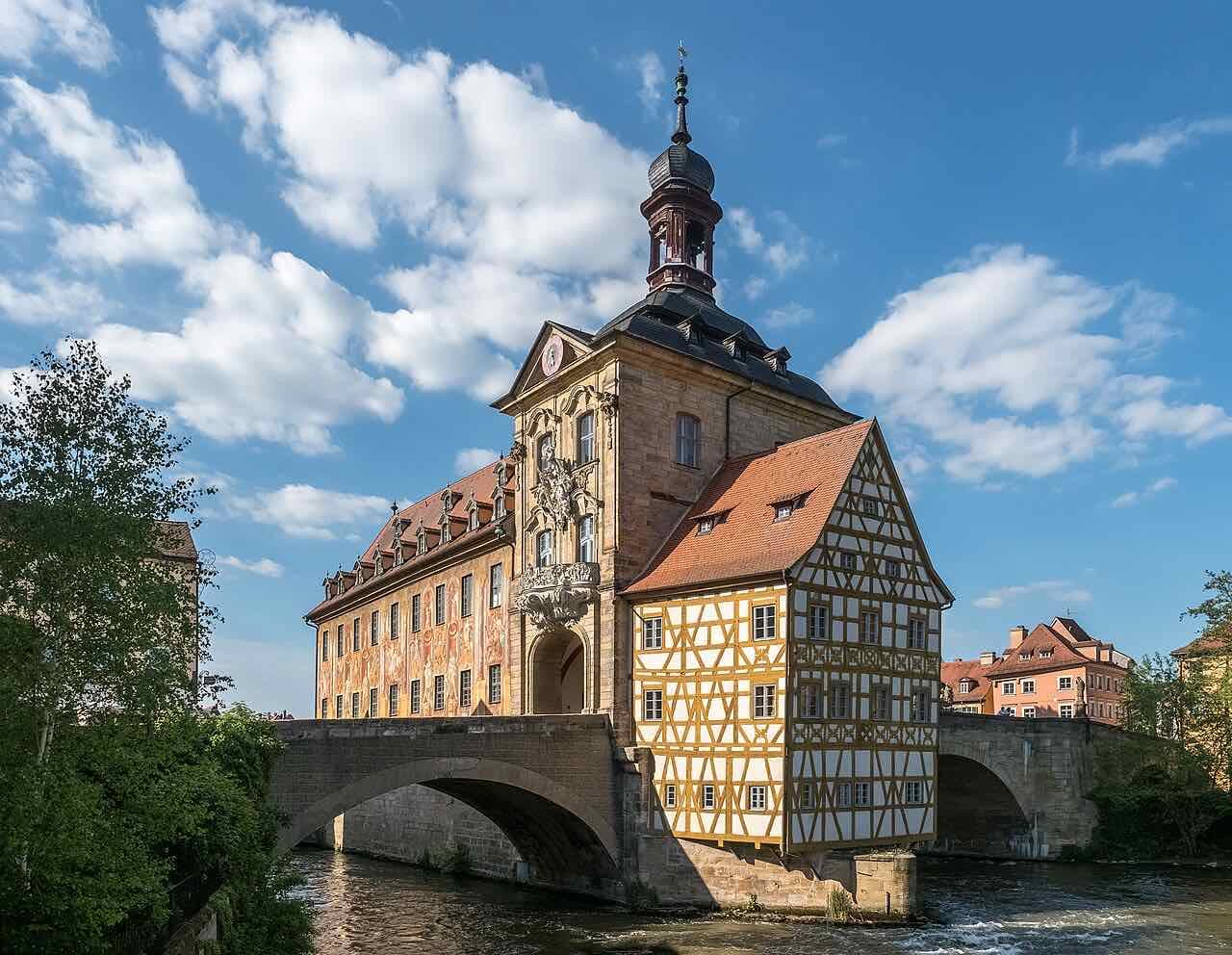
A town hall built on an artificial island in the Regnitz, because according to the legend the bishop would not give the citizens land. Its facade is painted so that the architecture looks three-dimensional.
A former fishing settlement of densely packed, mostly medieval half-timbered houses along the water in the Inselstadt. The best view is from the opposite bank, Am Leinritt.
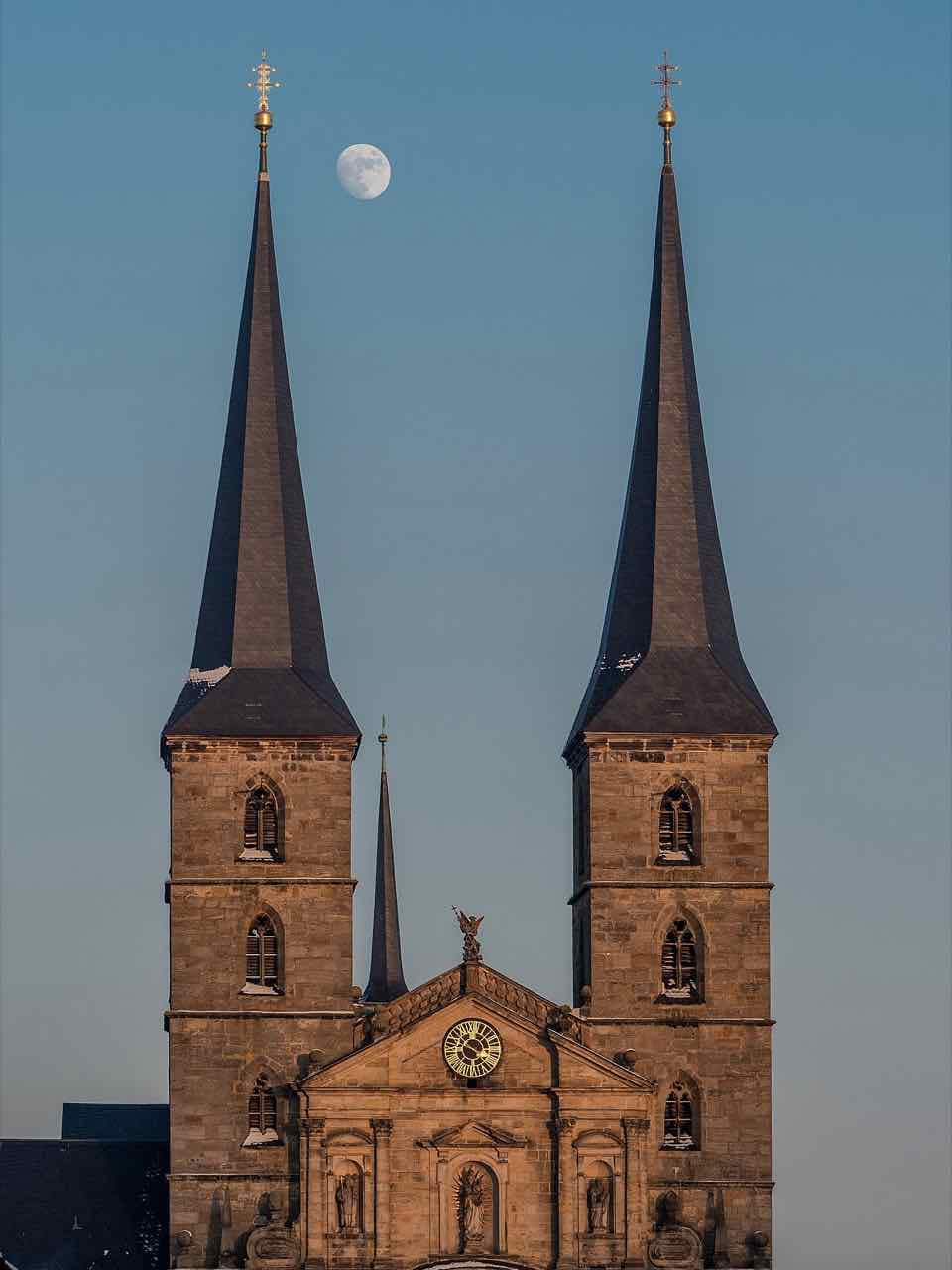
The hilltop site of the former abbey of St Michael. The east plateau is freely accessible and has a view over the old town roofs; the church ceiling shows more than 580 plant species.
A free introduction to the World Heritage site, with an English-language guided tour available for 70 EUR per group by booking.
Beer, and Bamberg's own kind of it
Bamberg is known for Rauchbier, the smoked beer. Schlenkerla, in the Dominikanerstraße, is the house most visitors are sent to: the building is first documented in 1405 as the Haus zum blauen Löwen, the family now running it is the sixth generation of its owners, and the Rauchbier is served from oak casks. English-language pages are available on its site. Wikipedia counts 11 breweries in the city, and the tourist office points to brewery taverns and beer cellars as part of how the city socialises.
The Franconian Brewery Museum is on the Michaelsberg site; check its opening hours before a visit. If you do not drink alcohol you lose very little: the same taverns serve food, and the Hain park, the river banks and the old town are the usual places to meet.
Weekends and nature
You do not need a car for the first three; the others are an easy day out.
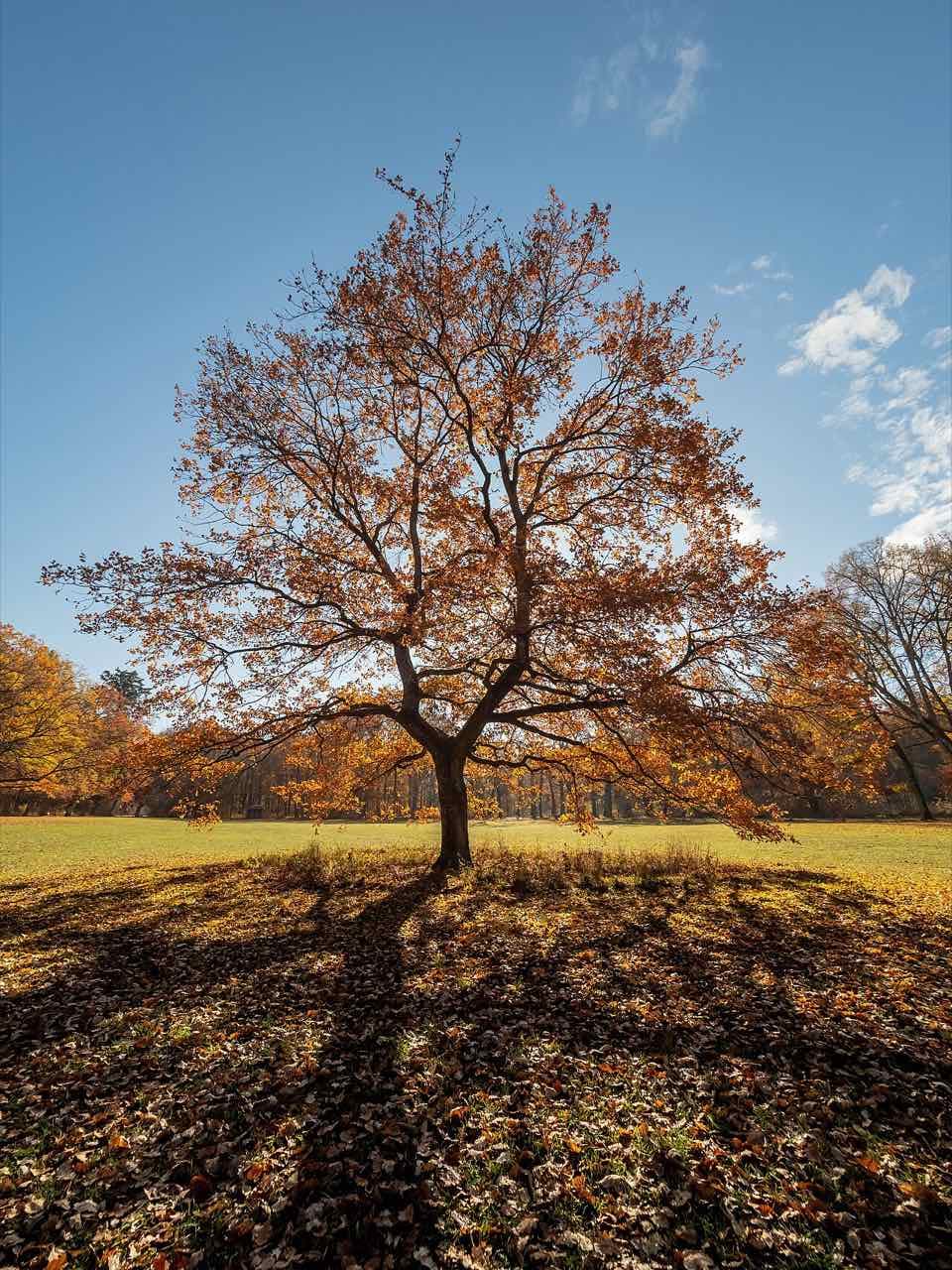
The city park, with the Theresien- and Luisenhain groves and a botanical garden, reached in a few minutes from the old town or along the Alter Kanal by the Regnitz.
The castle on its hill above the city, and the destination of an autumn walk the tourist office advertises for 15 October 2026.
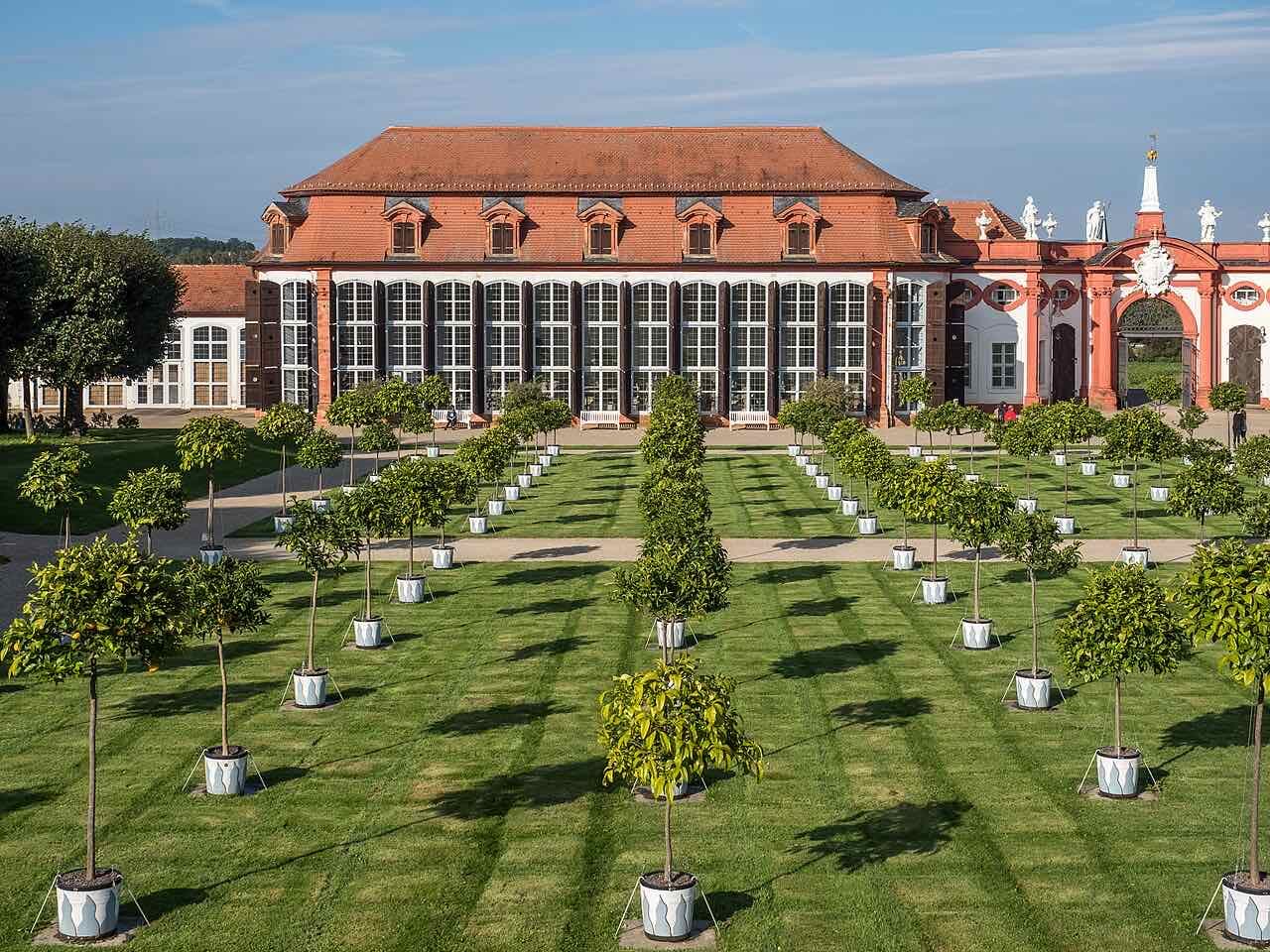
A castle in Memmelsdorf, just outside the city, with an orangery; the tourist office lists it among the sights.
A treetop walkway in the Steigerwald, listed by the tourist office among the excursions from Bamberg.
A museum named for Levi Strauss, listed by the tourist office among the sights around the city.
Festivals and culture
The Sandkerwa is the city's big folk festival, organised by the Bürgerverein 4. Distrikt; its 76th edition is listed for 20 to 24 August 2026, and the houses of Klein Venedig are decorated and lit for it. The Bamberger Symphoniker have played in the Joseph-Keilberth-Saal of the Konzerthalle since 1993, and their U30 programme sells single tickets for 15 EUR to anyone under 30.
In autumn the city's Interkulturelle Wochen, titled "Die Welt zuhause in Bamberg" in 2026, list more than 40 events, and the city also holds a diversity day on the Maxplatz. Those are the easiest places to meet people from outside the university.
What the numbers look like
- Semester contribution (includes semester ticket)
- 123.22 EUR per semestersource
- Of which Studierendenwerk fee
- 70.00 EURsource
- Of which semester ticket
- 53.22 EUR; add the nationwide Deutschlandticket Studium for 34.13 EUR a month (October 2026)source
- Student dorm places of the Studierendenwerk
- 1,010 rooms in six dormssource
- Mensa meal
- card prices posted daily; cash costs 10 percent extrasource
Figures from official pages. Rents and food prices change, so use these as a starting point.
Getting around and getting away
Bamberg has bus lines only; the tram that ran from 1897 to 1922 is long gone. The semester ticket is your student ID card and covers all bus and rail within the city and the Landkreis, plus regional lines such as Bamberg to Oberhaid and Bamberg to Strullendorf, Hirschaid and Buttenheim.
The town is on the main ICE lines between Munich and Nuremberg and Berlin or Hamburg, per Wikipedia, and Nuremberg is about 63 km away by rail. Nuremberg Airport is the nearest major airport. Munich and Nuremberg are also where you will need to go for consulates, as the sections for each country below explain.
Work in the area
Wikipedia lists Bosch, Wieland Electric, RZB and the river port operator bayernhafen among the city's employers, and the tourist trade is large: the city and district report 1.2 million overnight stays in a 2024 report. The university offers career days for students and a Career Center at the WIAI faculty, with a job board and internship programme.
If you study information systems or economics, the university's own career pages are a better first stop than a general job site. Rules on working hours for international students are in the first-weeks section below.
Part 2
Student life in Bamberg
Where you can study
Otto-Friedrich-Universität Bamberg ↗
The city's one public university, with about 10,400 students (January 2025) and 19 percent of them international. It has four faculties: Humanities (GuK), Social Sciences, Economics and Business Administration (SoWi), Human Sciences and Education (Huwi), and Information Systems and Applied Computer Science (WIAI). It offers more than 80 bachelor's, master's and teacher-training programmes and has cooperation agreements with about 370 institutions in more than 65 countries. The central address is Kapuzinerstraße 16, and the WIAI faculty is on the ERBA site at An der Weberei 5.
International office ↗FHM Bamberg (Fachhochschule des Mittelstands) ↗
The Bamberg campus of a university of applied sciences with several locations, at Minna-Neuburger-Straße 3. The Bamberg pages show a health focus, with physiotherapy (B.Sc.), occupational therapy and speech therapy, and its events include business information days. The Bamberg pages list no English-taught programmes, so ask the study office before you apply.
Student unions, services and groups
Studentische Gremien: StuPa and Fachschaften ↗
The student parliament and the four faculty councils (GuK, SoWi, Huwi, WIAI) represent students and help with problems in your faculty. The university's page links each Fachschaft.
Studierendenwerk Würzburg in Bamberg ↗
Runs the dorms, the Mensa Austraße and Mensa Feldkirchenstraße, cafeterias, BAföG advice, and free social, legal and psychotherapeutic counselling.
The university sport centre. All courses require enrolment and a fee, booking is online, and examples include yoga, boxing, fencing, rowing and bowling. Fully enrolled Bamberg students may book.
The International Office pairs a Bamberg student with a new international student to help them settle in. The page notes that conversation is in German.
StiPf (Studierende in Patenfamilien) ↗
Matches Erasmus and exchange students with local families for cooking, hikes, music and celebrations several times a semester.
The local branch of a European student association: parties, thematic events and trips, such as the Erlangen Bergkirchweih in 2026.
ESG Bamberg (Evangelische Studierendengemeinde) ↗
The Protestant student community, with university services and a programme each semester; its site has a section for international students (iesg).
KHG Bamberg (Katholische Hochschulgemeinde) ↗
The Catholic student community at Markusplatz 1, with Tuesday evenings and trips; it offers its rooms for meetings of German and international students.
Peer support and mentoring for students from families without a university background.
A Bamberg association for refugees and other newcomers, with a meeting place at Schützenstraße 2a, a Sprachcafé and mostly German-language offers.
Campus and study culture
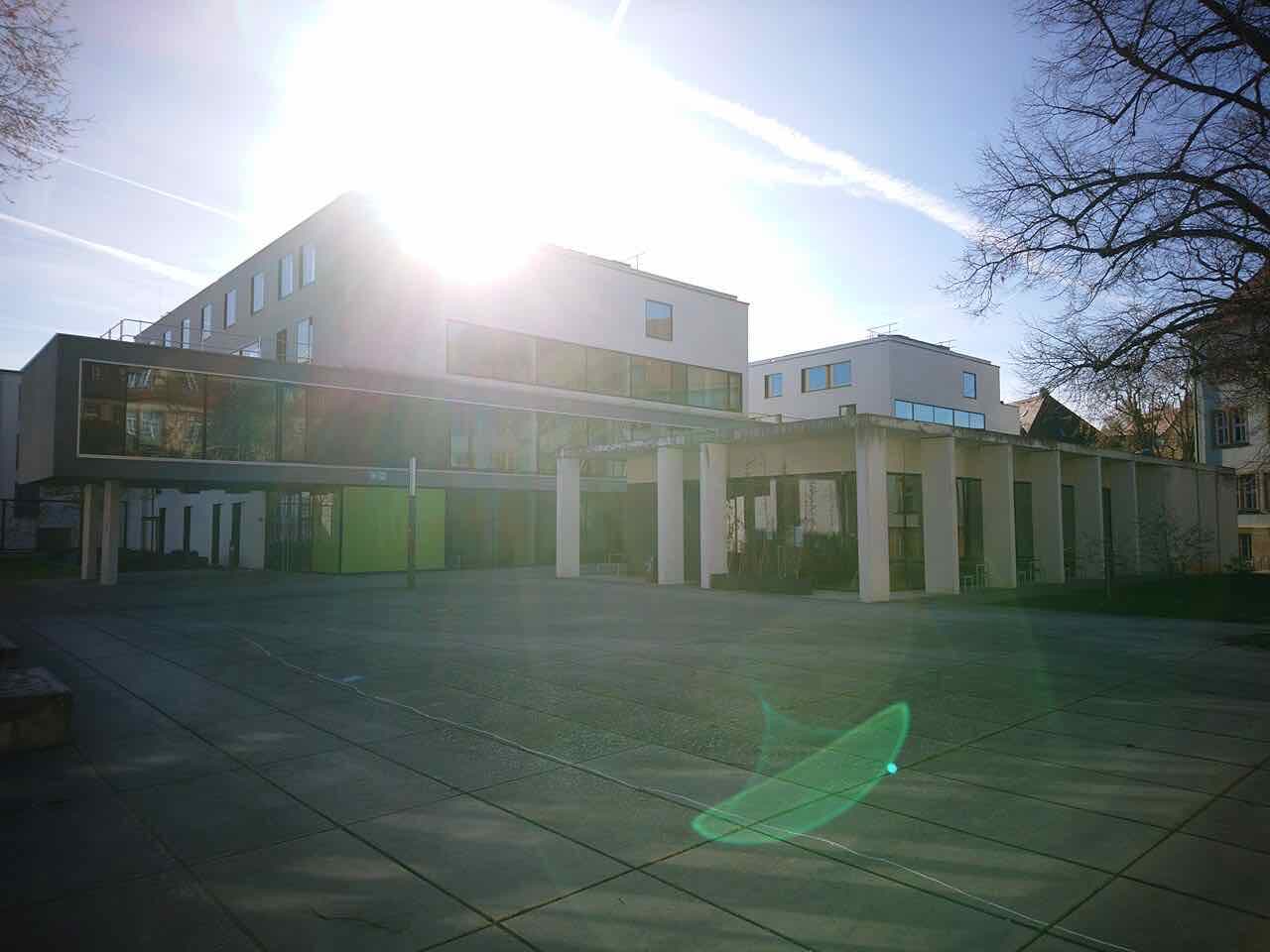
The university is spread through the old town and the districts around it rather than on one green-field campus. The central address is Kapuzinerstraße 16; the Welcome Center for international master's students is at Kapuzinerstraße 25; the WIAI faculty sits on the ERBA site. The library has six locations, and the ERBA library is open around the clock. A room-search tool shows free seminar rooms when study spaces are full.
Each faculty has its own Fachschaft, run by students, and the university has a Language Center (Sprachenzentrum) with German as a foreign language, culture courses, a language tandem programme and a theatre group for international students. For exchange students the International Office also runs a three-week preparation programme with an intensive German course before lectures start.
Finding a room
The university has no dorms of its own and advises starting the search as early as possible, once you hold your admission letter. The Studierendenwerk is the largest local provider, with six dorms and 1,010 rooms, plus one dorm under renovation; the dorms are at Balthasargäßchen, Coburger Straße, Hornthalstraße, Judenstraße and Pestalozzistraße. Other providers named by the university are the Collegium Oecumenicum, the Joseph-Stiftung, the Baugenossenschaft Bamberg and Stadtbau Bamberg.
Contracts start on 1 October or 1 April and last at least a semester. Applications to the Studierendenwerk go only through its online portal, you upload ID and your enrolment certificate or admission letter, and the page tells you to expect a wait, especially for the winter semester. Applications expire after two and a half years. The allocation aims for a mix of German and international students, and exchange students follow special rules set by their university. Ask the Studierendenwerk or the dorm page for current rents before you commit.
If you are an international master's student and cannot find a room, the Welcome Center can answer questions but cannot promise a room. It also runs an online workshop on living in Bamberg on 3 December 2026.
Housing providers
Studierendenwerk Würzburg, Bamberg dorms ↗
Six dorms with 1,010 rooms in total, applied for only through the online portal.
Collegium Oecumenicum Bamberg ↗
A student residence with tutors who help with move-in.
Lets rooms to students.
Student dorm offers.
The city housing company lists current objects.
Food, sport and evenings
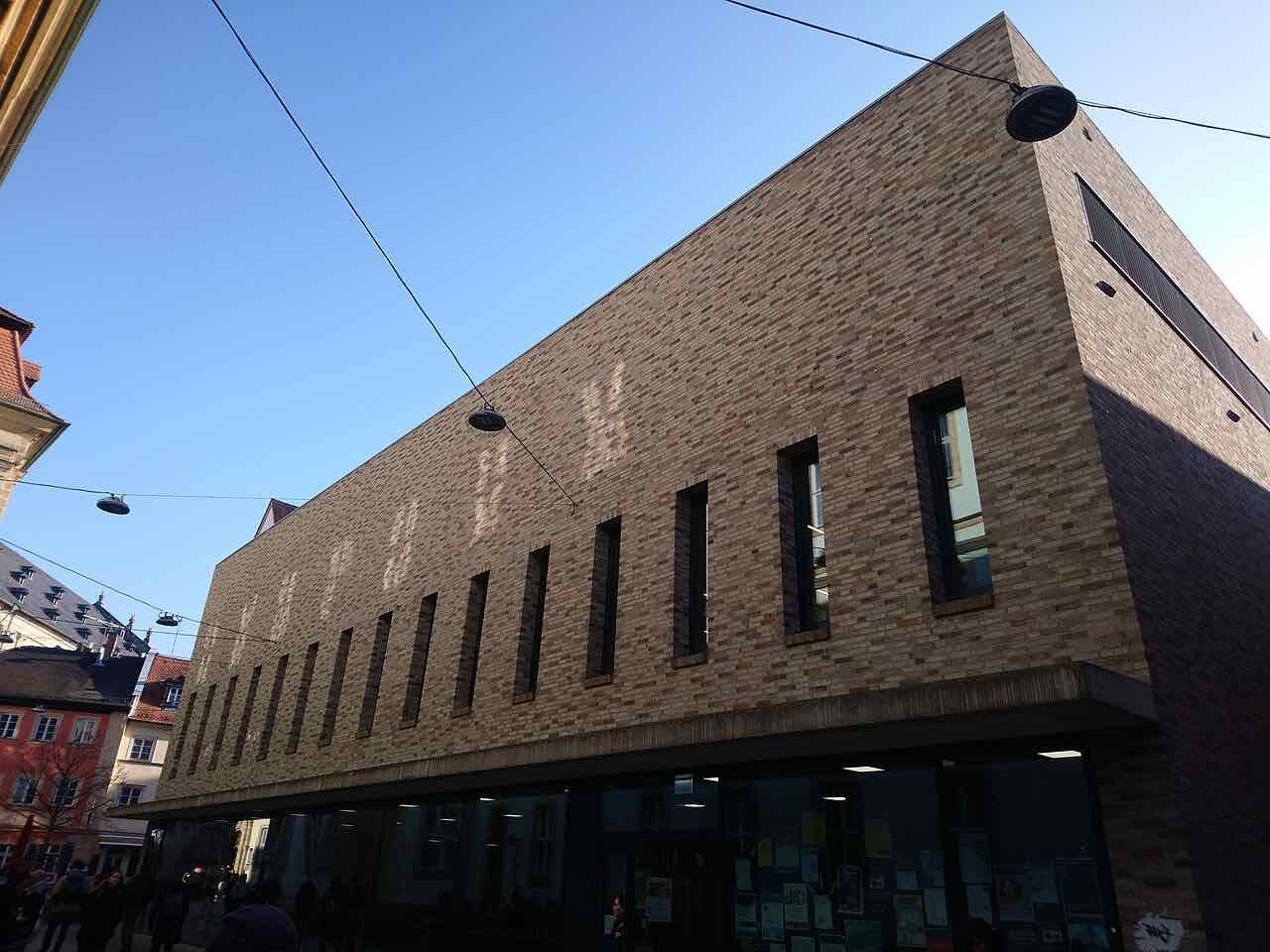
The Studierendenwerk runs two canteens: the Mensa Austraße at Austraße 37 in the old town and the Mensa Feldkirchenstraße at Feldkirchenstraße 21. Both serve lunch from 11:30, meal service runs until 14:15, and hours are shorter in the lecture-free period. Card prices are lower than cash by 10 percent. Cafeterias at Markusplatz and ERBA serve one hot meal Monday to Thursday.
University sport has its own halls at Feldkirchenstraße and in the Volkspark. For winter semester 2026/27 booking ran from 1 to 16 October, with courses from 12 October 2026 to 5 February 2027, so in a normal year book in the first days of the booking window. Evenings mostly happen in the brewery taverns and beer cellars, at the Tuesday evenings of the student churches, and at events of groups such as AEGEE and the Fachschaften.
Your first weeks
- 1
Before you arrive
Apply for a room as soon as you have the admission letter, then email the Welcome Center if you are a master's student. Get proof of statutory health insurance for the university: a private insurer's certificate is not enough, and the university gives sender number H0000164.
- 2
Within two weeks of moving in
Register your address at the Einwohnerwesen, Promenadestraße 2a (Rathaus am ZOB). Book an appointment online or call 0951 87-2828, and have your landlord's Wohnungsgeber-Bestätigung ready.
- 3
In the first weeks
Make an appointment with the Ausländerbehörde, Ordnungsamt, Luitpoldstraße 51, 96052 Bamberg, by email with your name, date of birth, address and purpose. Phone 0951 87-1900.
- 4
Enrolment
Pay the semester contribution of 123.22 EUR to the university. The student ID card is also your bus ticket.
- 5
No address yet?
A Basiskonto bank account needs only a German postal address, such as one from friends. The university's master's FAQ explains this.
- 6
Jobs
The master's FAQ says that with a work permit you may work up to 20 hours a week during the lecture period and more in the lecture-free period. Check your own permit before you sign anything.
Around the university
Where you come from matters here
Pick your home country: food, faith, community groups and the consulate that serves you, checked 21 October 2026.
🇮🇳 Living in Bamberg as an Indian student
For consular matters, the Indian consulate for Bavaria is in Munich, and one national portal lists Indian student associations.
Consulate General of India, Munich ↗
Covers Bavaria and Baden-Württemberg for consular services.
Indian Students in Germany (ISG) ↗
A portal of the Indian embassy in Berlin with emergency contacts by state, city coordinators and a list of Indian student associations.
🇳🇬 Living in Bamberg as a Nigerian student
The embassy is in Berlin; for church life, the two student communities meet German and international students.
Neue Jakobstraße 4, 10179 Berlin; its site lists consular phone lines and emails.
The Catholic student community at Markusplatz 1, which offers its rooms for exchange between German and international students.
The Protestant student community, with an international section on its site.
🇻🇳 Living in Bamberg as a Vietnamese student
The embassy is in Berlin; for local contacts the city's integration office is the starting point.
Its site covers passports, legalisation and consular procedures, and warns of scam calls impersonating embassy staff.
The city's office that works with the migrant council on integration, at Heinrichsdamm 1.
🇧🇩 Living in Bamberg as a Bangladeshi student
The two mosque communities in the city are the places of worship we can point you to.
Turkish-German mosque community with youth and women's work.
Islamisches Kulturzentrum Bamberg ↗
German-Arabic cultural association and mosque; Friday prayer at 13:15.
🇵🇰 Living in Bamberg as a Pakistani student
For prayer, Bamberg has two mosque communities, run in Turkish and Arabic.
A mosque community with a women's committee and a youth committee; its site is in German and Turkish.
Deutsch-Arabischer Kulturverein (Islamisches Kulturzentrum) ↗
An association founded in 2001, with Friday prayer at 13:15 and an Arabic school; its site is in German and Arabic.
🇨🇳 Living in Bamberg as a Chinese student
Consular help for Bavaria comes from Munich, and the city's migrant council is the way into local associations.
Consulate General of China, Munich ↗
Handles passports, travel documents and notarisation; its news shows visits to Nuremberg, Rosenheim and Landshut.
Migrantinnen- und Migrantenbeirat Bamberg ↗
The city's elected council for residents without a German passport; a way to learn which associations exist locally.
English-taught programmes in Bamberg
Soonest open deadline first. Every entry links to its official source.
- Master of Science in International Software Systems ScienceUniversity of Bamberg · BambergmasterNo tuition15 Jan 2027Open
- Double MA in Political ScienceUniversity of Bamberg · Bambergmaster21 Jun 2027Open
- Master's in European Economic Studies (MSc in EES)University of Bamberg · BambergmasterNo tuitionSee sourceCheck source
- Double MA Degree in SociologyUniversity of Bamberg · BambergmasterSee sourceCheck source
- European Joint Master's Programme in English and American StudiesUniversity of Bamberg · BambergmasterNo tuitionSee sourceCheck source
- Sociology and Social Research (MSSR)University of Bamberg · BambergmasterNo tuitionSee sourceCheck source
Is Bamberg right for you? Ask us. Free.
Tell us your passport, grades and budget. We compare Bamberg with the other places you could study, then apply for you. You never pay us.
Get my free plan